“Last week I was vaccinated against smallpox, today I’m going to be treated against typhus, then against cholera–“
“Are you that afraid of those diseases?”
“Oh, that’s not it. But we have a single young doctor…”
(Humoristické listy, Prague, 1915)

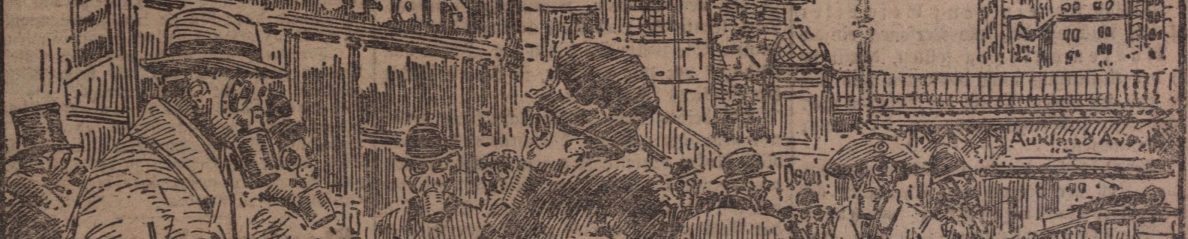
“Last week I was vaccinated against smallpox, today I’m going to be treated against typhus, then against cholera–“
“Are you that afraid of those diseases?”
“Oh, that’s not it. But we have a single young doctor…”
(Humoristické listy, Prague, 1915)
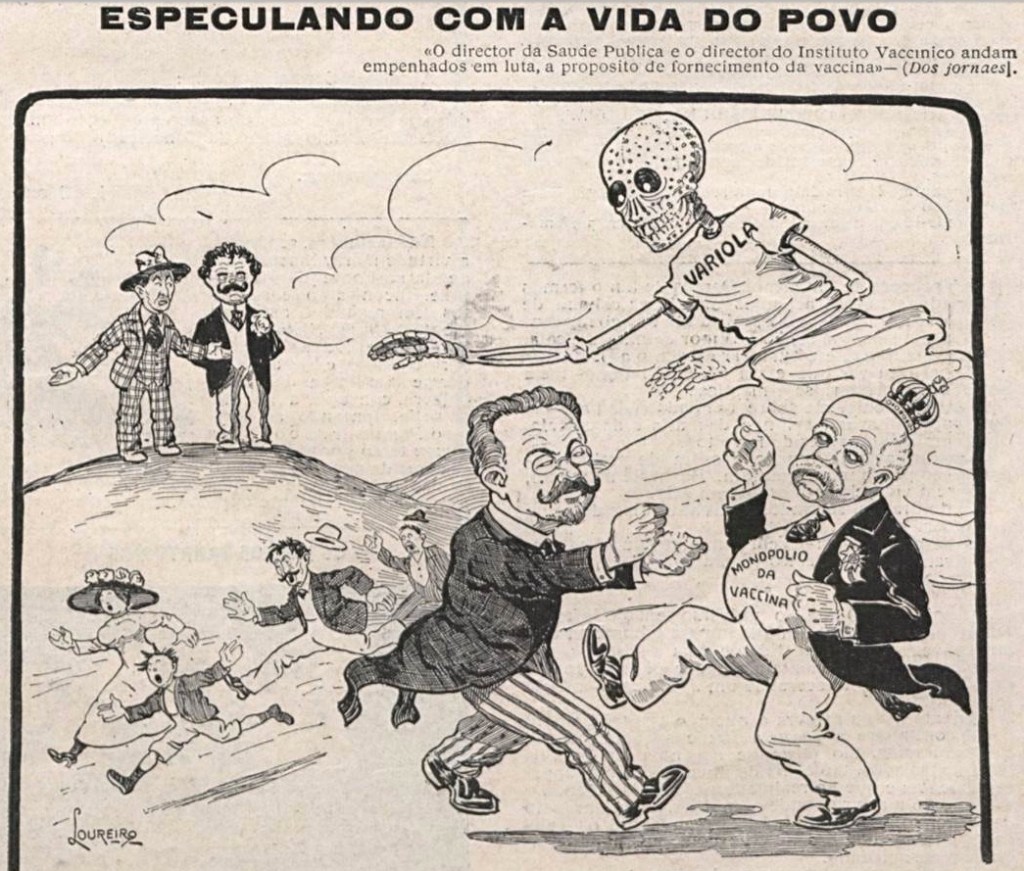
Newspaper reports: The director of Public Health and the director of the Vaccination Institute are engaged in the struggle to supply vaccines.
Hygienist Dr. Carlos Seidl: “Your Excellency, Your Excellency, don’t disturb me in the smallpox war! Just provide vaccine…”
Baron de Pedro Affonso: “Dr. Seidl, Dr. Seidl, don’t get involved in my business!”
Rivadavia [uncertain who this figure is, unless it is historical metonymy for Argentina, which handled vaccination differently?]: “That’s right, Joe! Everything is out of joint! There shouldn’t be a fight when smallpox is threatening…”
Joe Public: “What do you want? They gave His Excellency the vaccine monopoly… They put the vaccine up for negotiation…”
(O Malho, Rio de Janeiro, 1913)
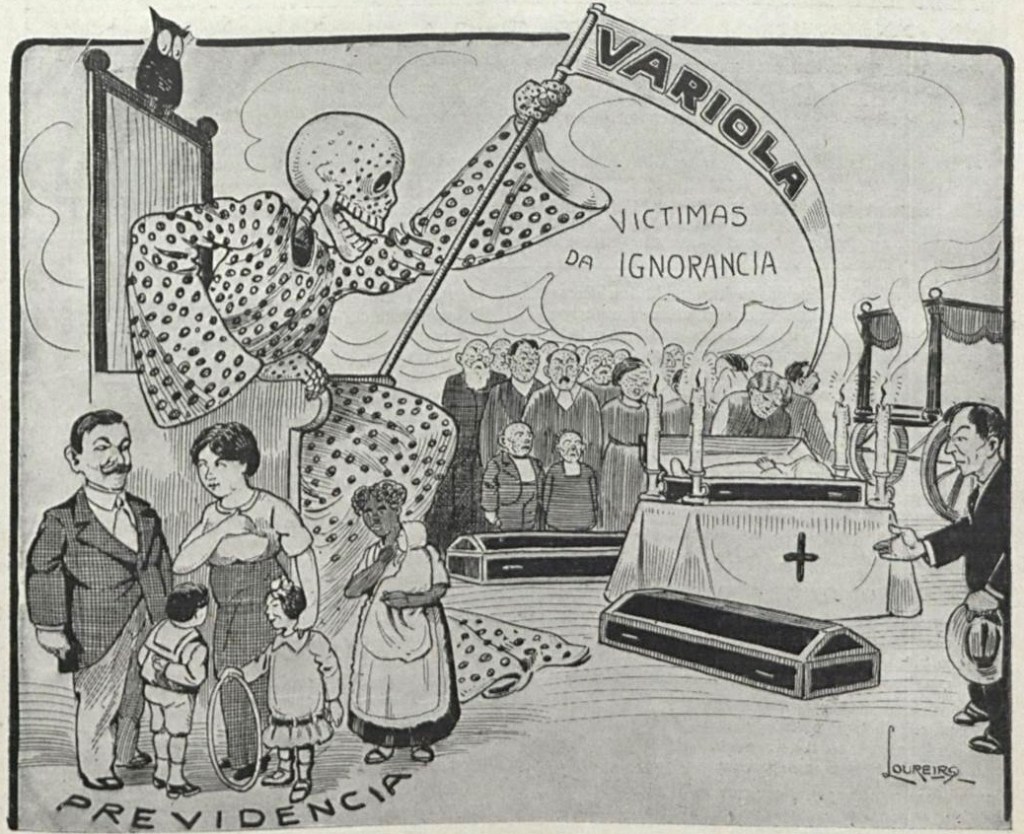
Joe Public: “Just look at what is foresight and what is ignorance! All who vaccinate and revaccinate are clean and healthy against the black plague! All those who do not vaccinate themselves, out of ignorance, through negligence, or simply a spirit of opposition, or are marked for life or go dragging that sucker to the netherworld! Only those who have smallpox and want to die of it; that is, anyone who does not get vaccinated!”
Smallpox: “Shut up, wretch! Do not tell these truths! Do not harm my death harvest!”
(O Malho, Rio de Janeiro, 1914) (shaky on the idiom)
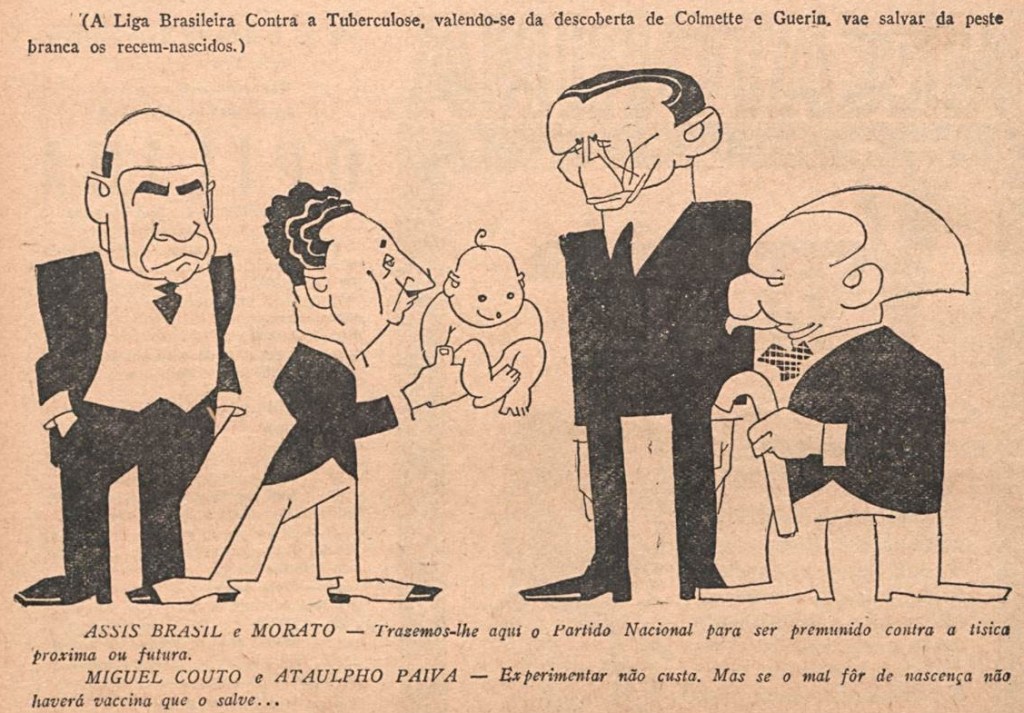
(The Brazilian League Against Tuberculosis, using the discovery of Calmette and Guérin [a French vaccine first introduced in 1921], will save newborn babies from the white plague.)
Joachim Francisco de Assis Brasil (Brazilian politician who had played an important role in securing Amazonian borderlands to the Republic) and Francisco Antônio de Almeida Morato (Brazilian politician and founding figure of the Democratic Party this same year): “We bring you here the National Party in order to be protected against near or future consumption [TB].”
Miguel Couto (Brazilian physician and politician) and Ataulfo de Paiva (magistrate, elite networker, and apparently at one point a figurehead in the Brazilian Academy of Sciences): “There’s no harm in experimenting. But if the disease is born, there will be no vaccine to cure it…”
(O Malho, Rio de Janeiro, 1927)
The political vaccination metaphor was not new to O Malho: see this example from 1904.
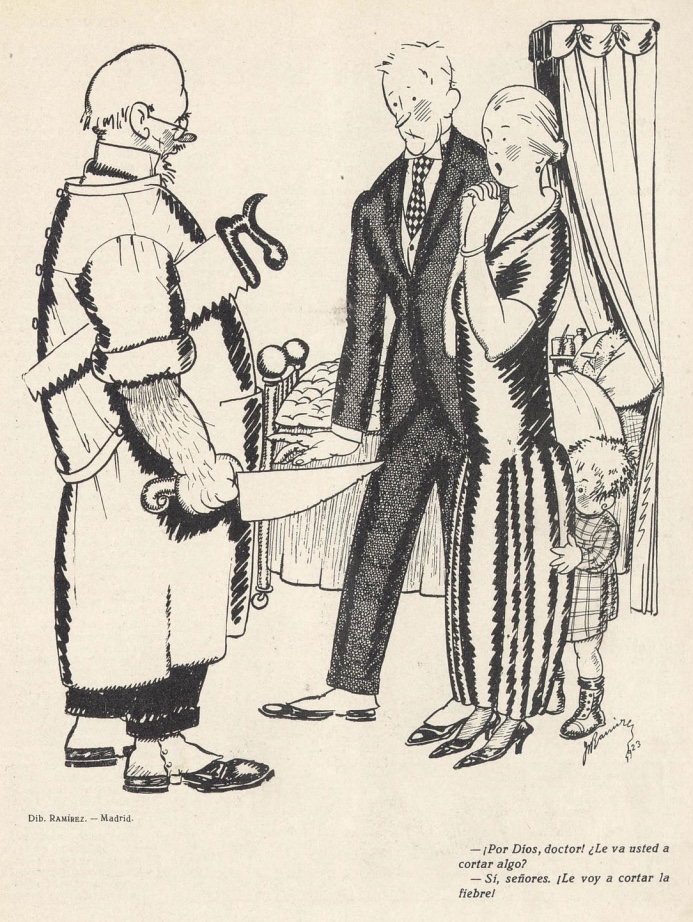
“My God, doctor! Are you going to cut something?”
“Yes, señores. I’m going to cut the fever!”
(Buen Humor, Madrid, 1923)
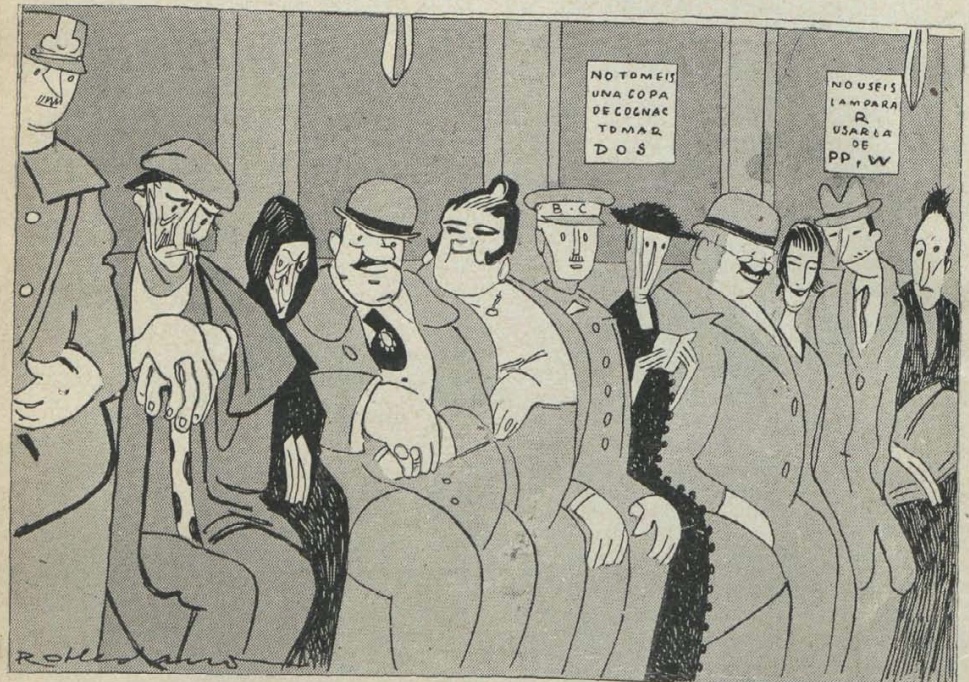
The angel of death on public transportation.
(Buen Humor, Madrid, 1922)
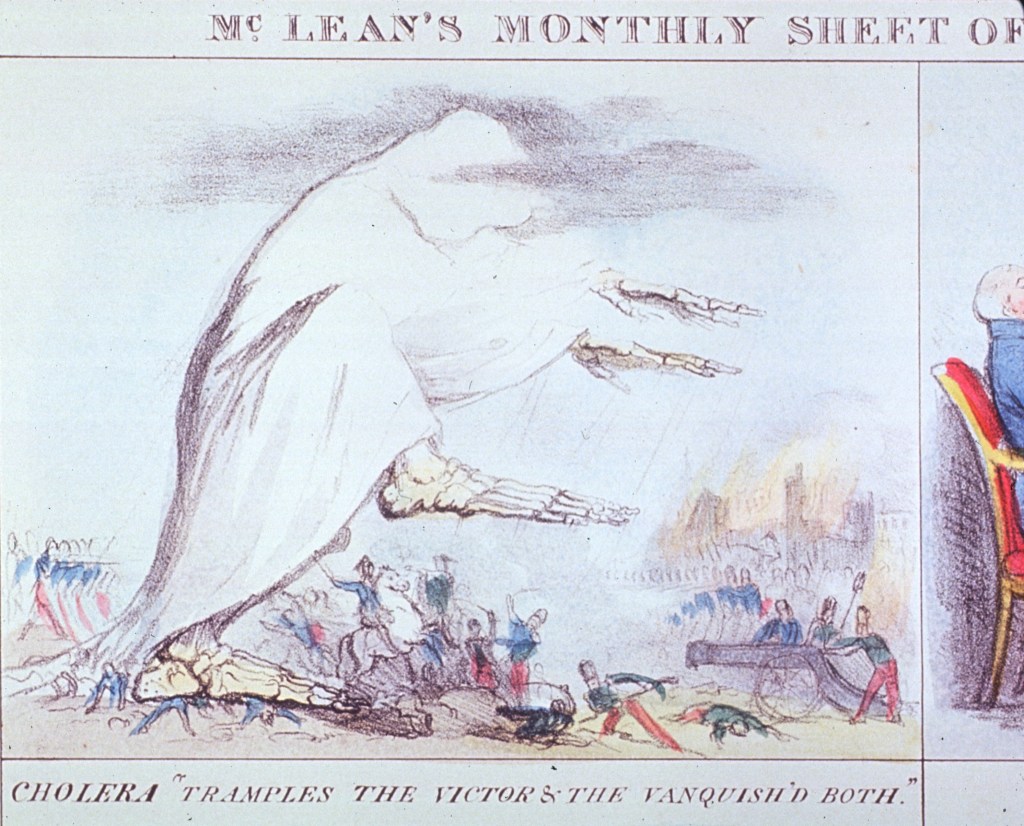
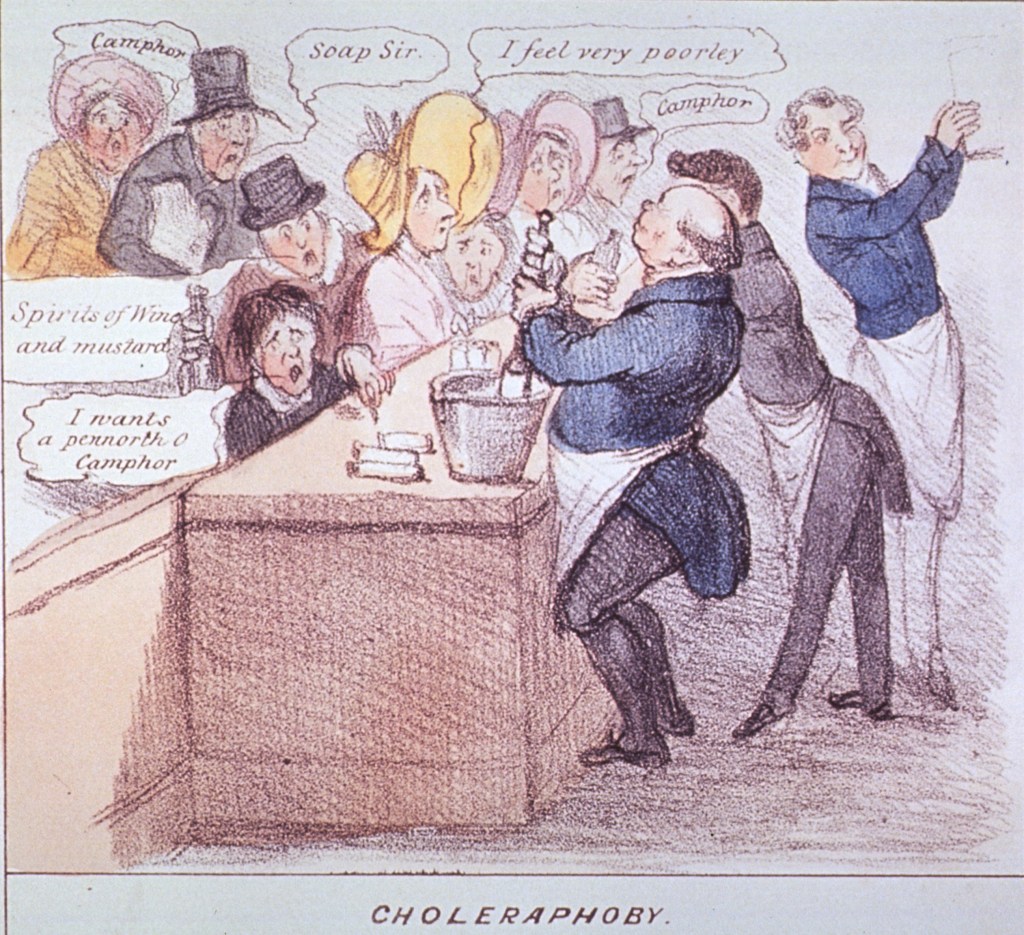
Robert Seymour, presumed McLeans Monthly Sheet of Caricatures, London (1831), via National Library of Medicine
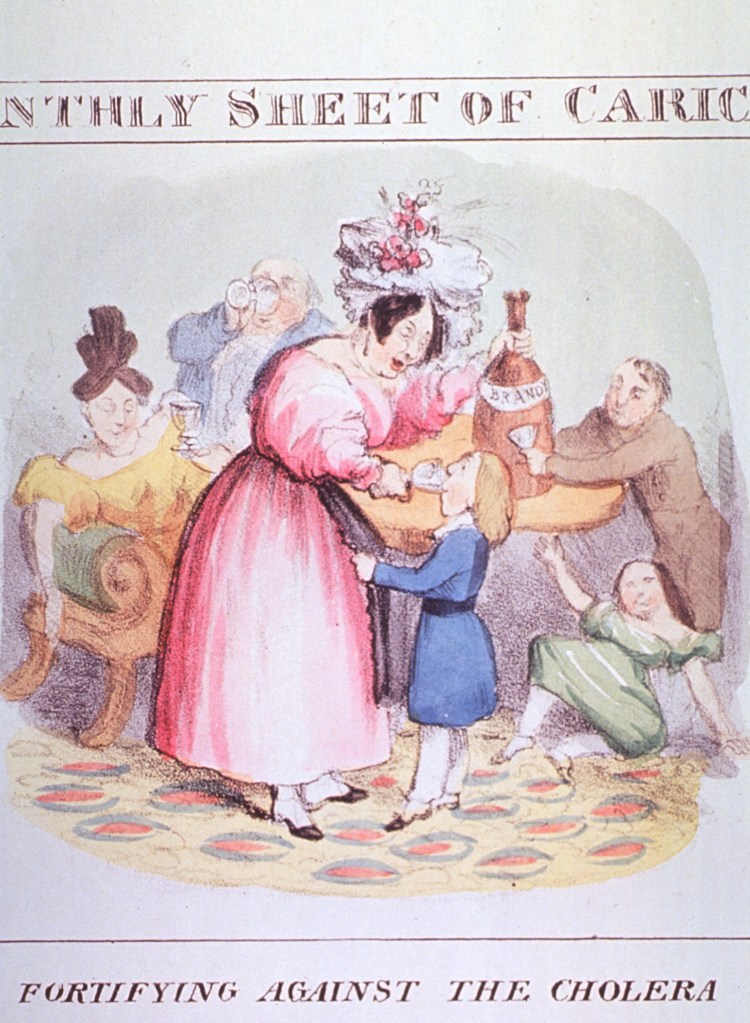
Children imbibing brandy.
Robert Seymour, presumed McLeans Monthly Sheet of Caricatures, London (1831), via National Library of Medicine
“Camphor.” “Soap, Sir.” “I feel very poorly.”
Robert Seymour, presumed McLeans Monthly Sheet of Caricatures, London (1831), via National Library of Medicine
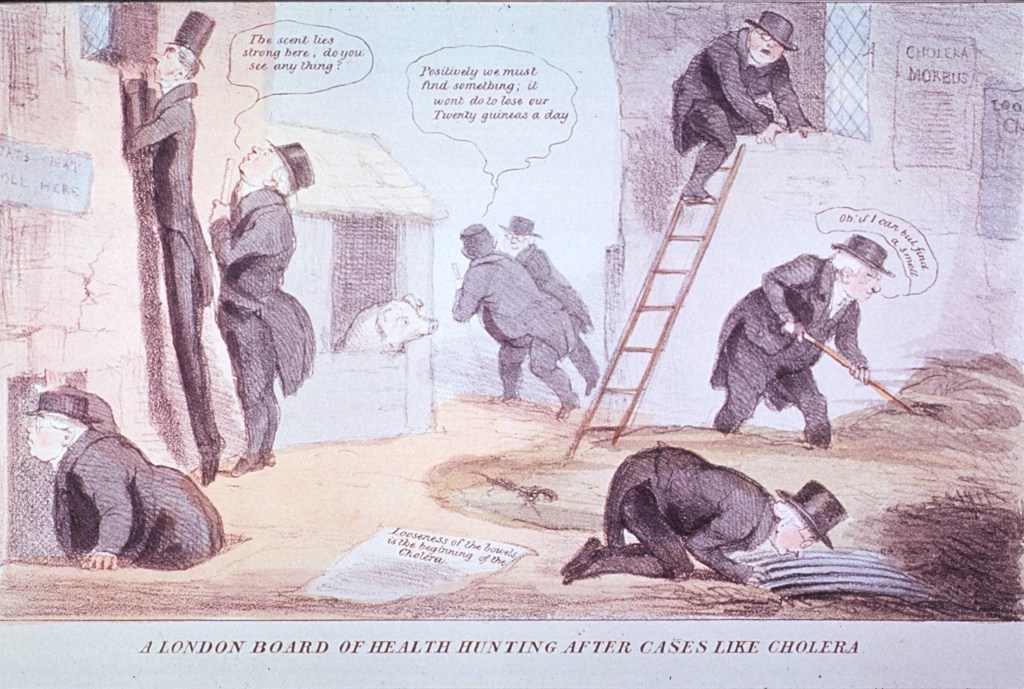
“The scent lies strong here, do you see anything?”
Robert Seymour, presumed McLeans Monthly Sheet of Caricatures, London (1832), via National Library of Medicine
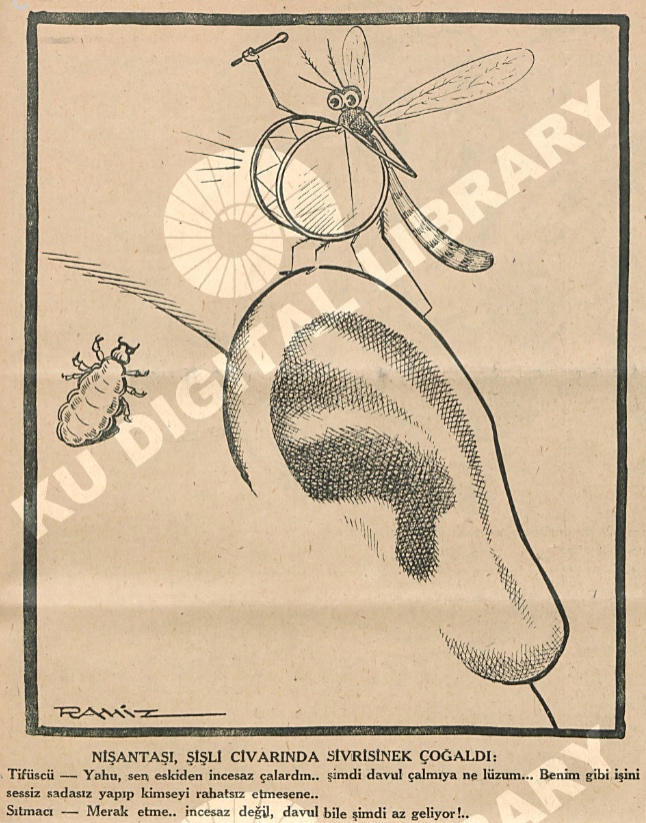
Typhus vector: Yeah, you used to play the saz [traditional lute]… Why do you need to play the drums now? Why don’t you work quietly like me and don’t bother anyone?
Malaria vector: Don’t worry… even the drums are not loud enough now!
(Karikatür, Istanbul, 1943)
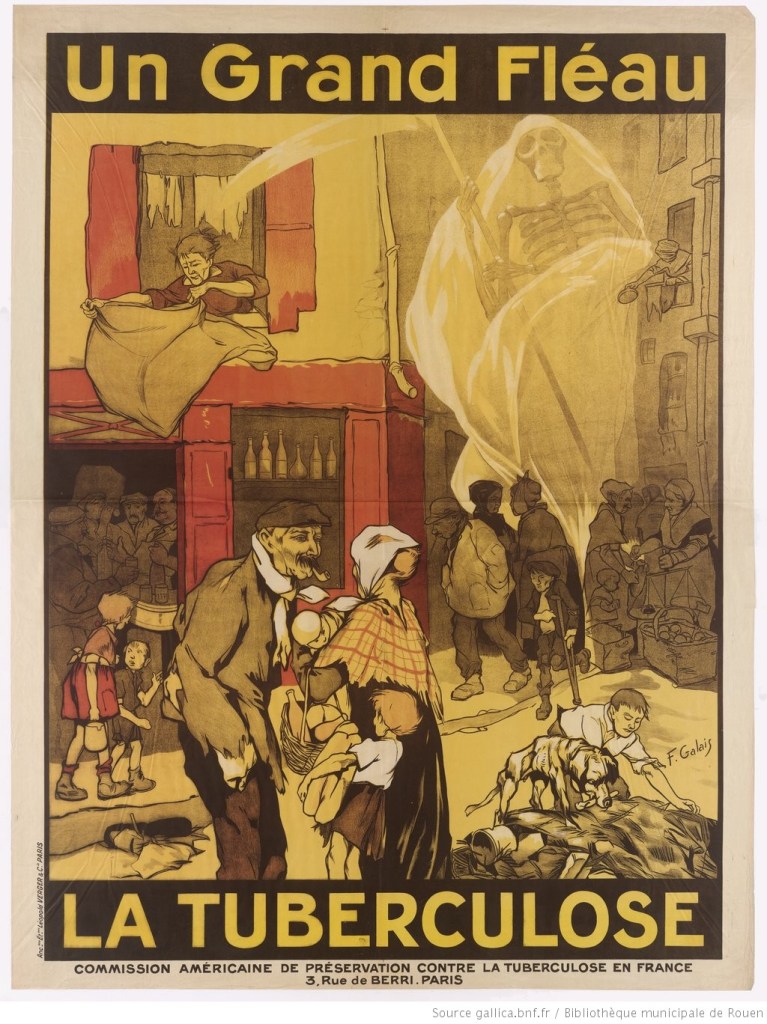
F. Galais, 1918, via Gallica.
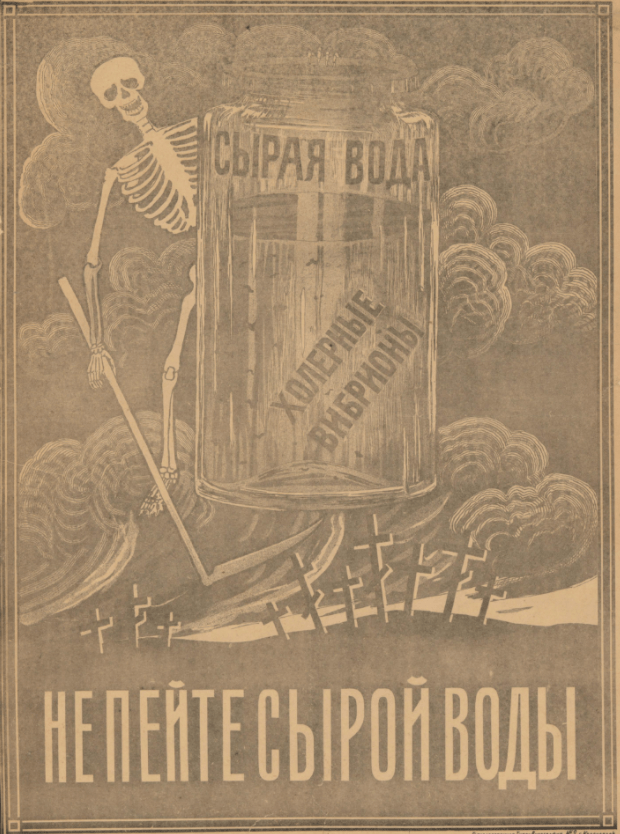
Public health poster featuring water jar with cholera vibrios.
(Krasnoyarsk, circa 1910, via Russian State Library)
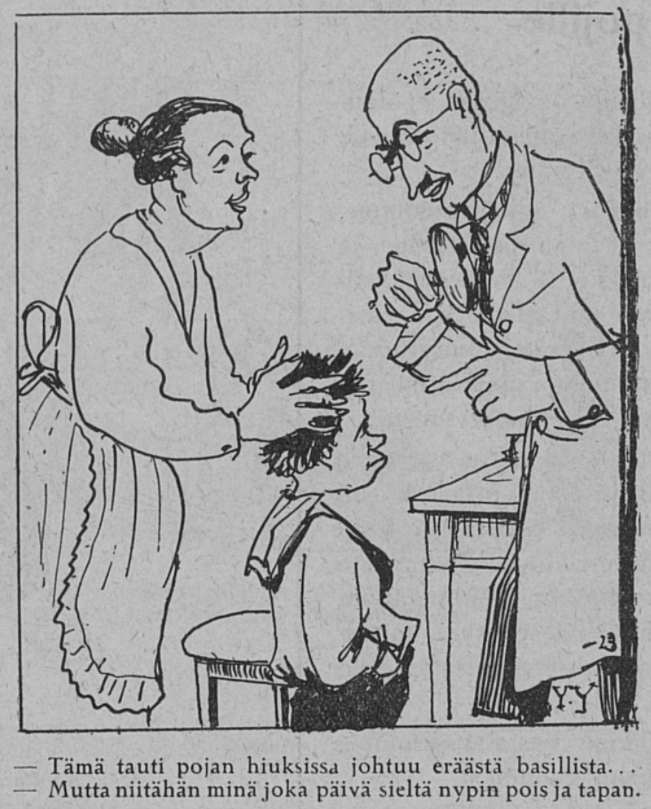
“This disease in the boy’s hair is due to bacteria…”
“But every day I remove them and kill them.”
(Tuulispää, Helsinki, 1923)
Uncle Sam: “Well, we seem to be getting along a little better than the rest of the world, and if we can’t be thankful for all that we have, we may at least be thankful that there are some things which we haven’t.”
(Puck, New York, 1883, via Library of Congress)
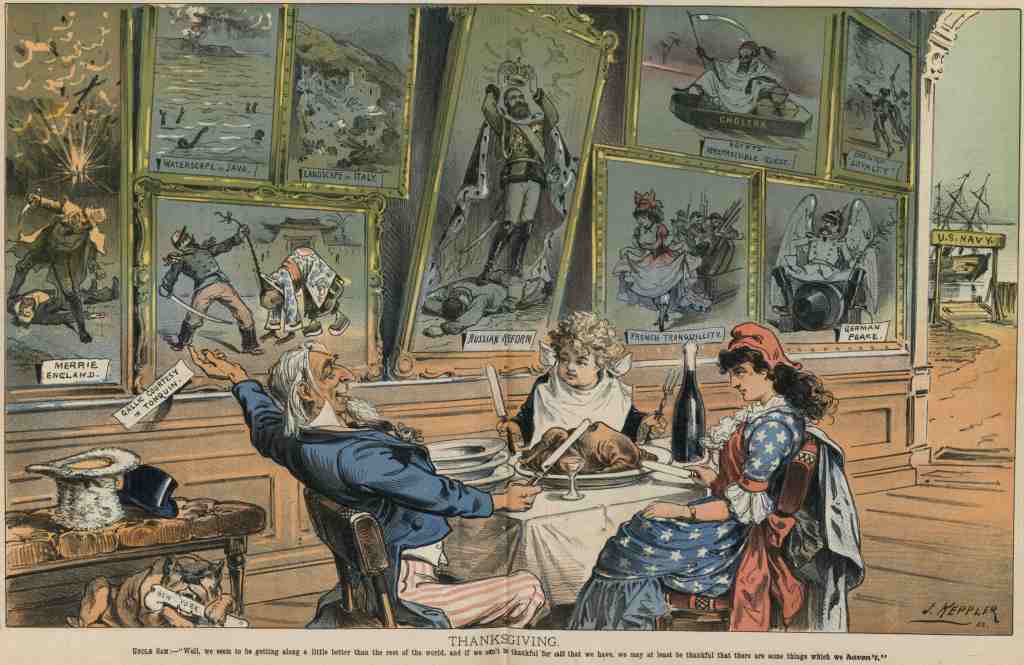
See the detail in the upper right corner:
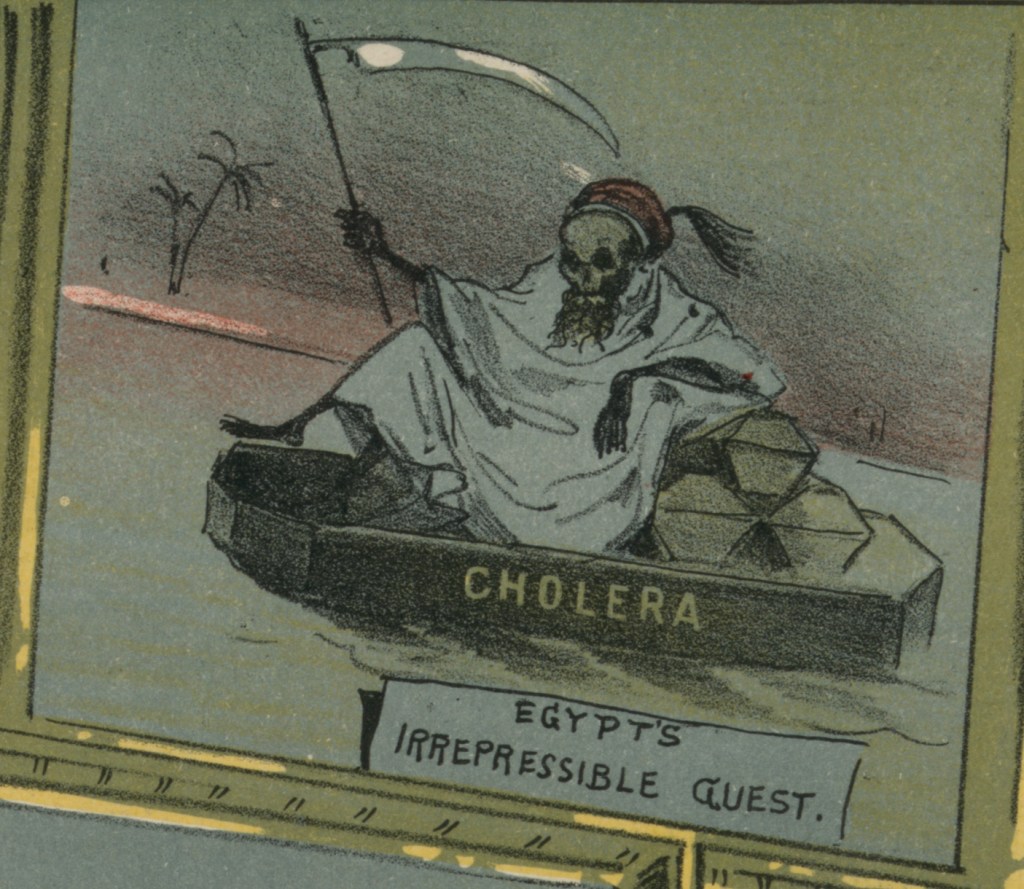
 Sic Transit Pestilentia