“The Spanish flu again?”
“No, now I have alopecia.”
“Ah! so much the better, it won’t give you fever…”
(Le Rire, Paris, 1918)
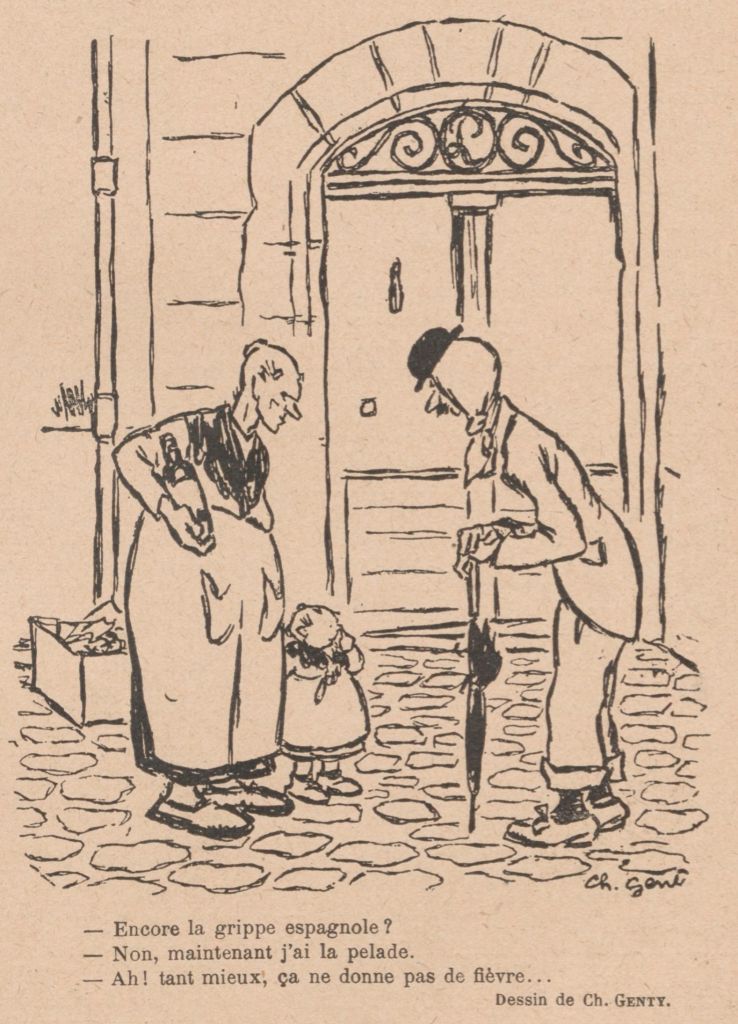
“The Spanish flu again?”
“No, now I have alopecia.”
“Ah! so much the better, it won’t give you fever…”
(Le Rire, Paris, 1918)
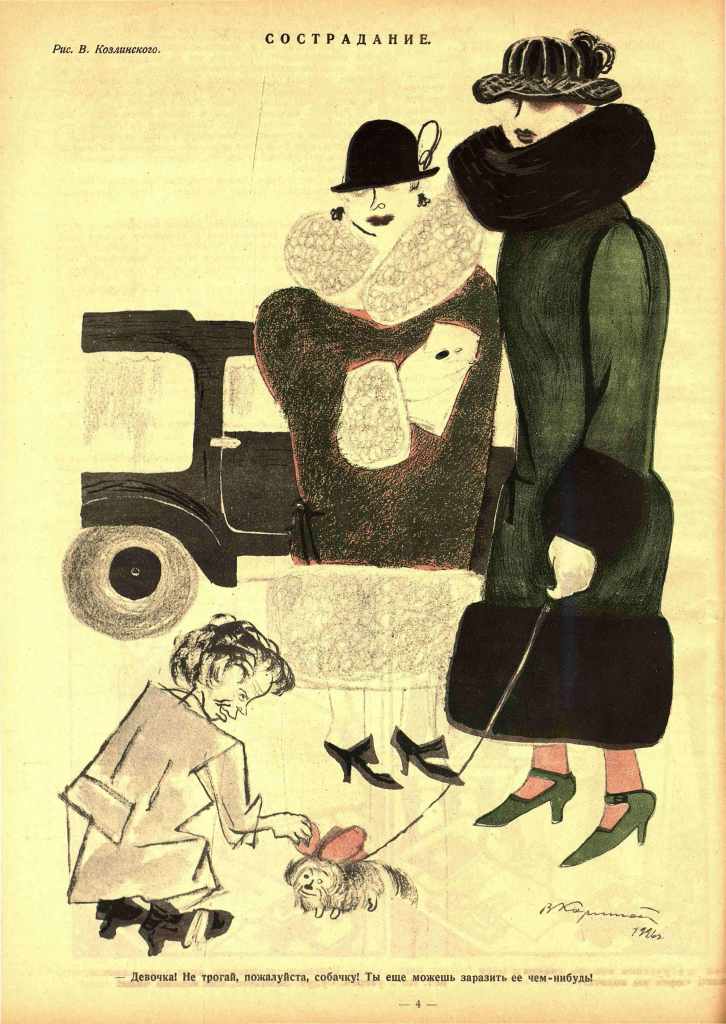
“Little girl! Please don’t touch the doggie! You might still infect her with something!”
(Krokodil, Moscow, 1926)
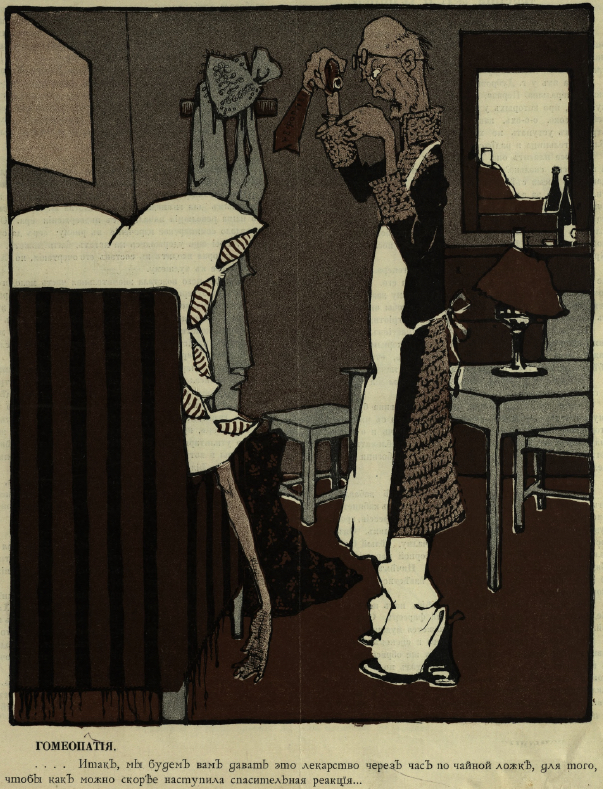
… So, we’ll give you this medicine by teaspoon in an hour, so that a salutary reaction sets in as soon as possible…
(Strekoza, St. Petersburg, 1908) (This cartoon appeared before the cholera outbreak in Russia that same year.)
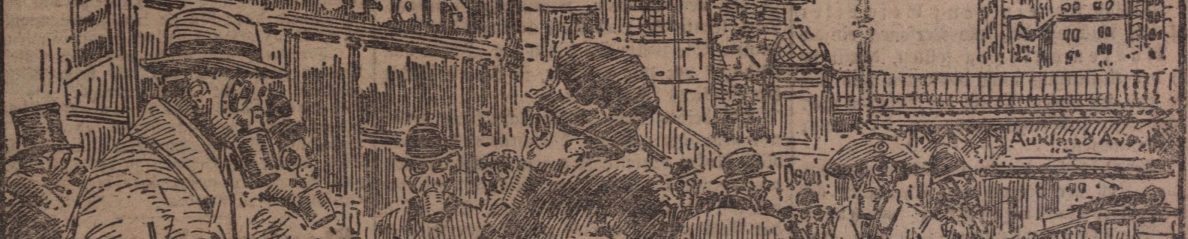
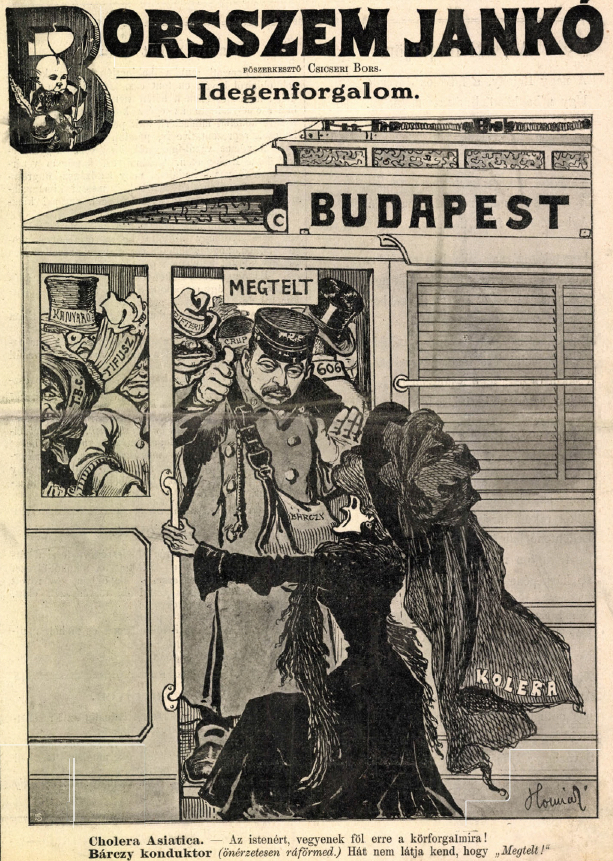
(Riders of the tram include measles, tuberculosis, typhus, diphtheria, croup, and syphilis–the “606” signals Ehrlich’s Salvarsan remedy.)
Cholera Asiatica: “For heaven’s sake, let me onto this route!”
[Budapest mayor István] Bárczy the Conductor (confidently denigrating her): “Well, don’t you see the sign saying it’s ‘Full!’?”
(Borsszem Jankó, Budapest, 1910)
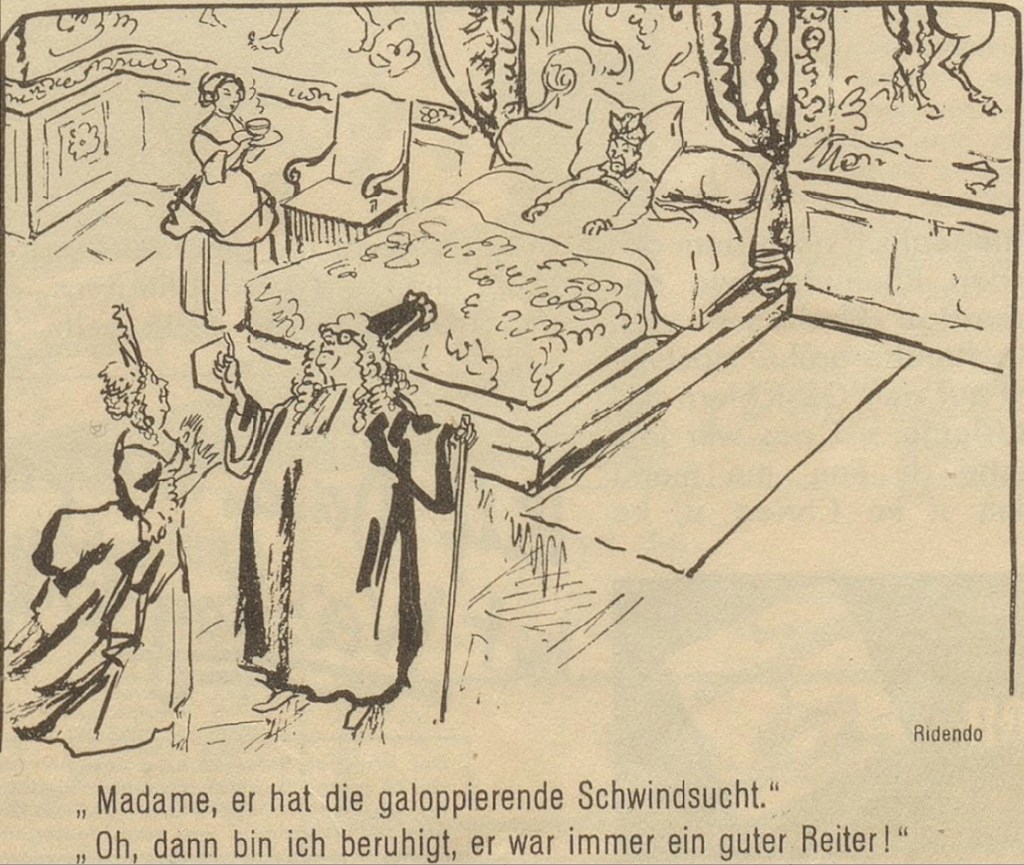
“Madame, he has galloping consumption.”
“Oh, that’s reassuring, he was always a good rider!”
(Nebelspalter, Zurich, 1944)
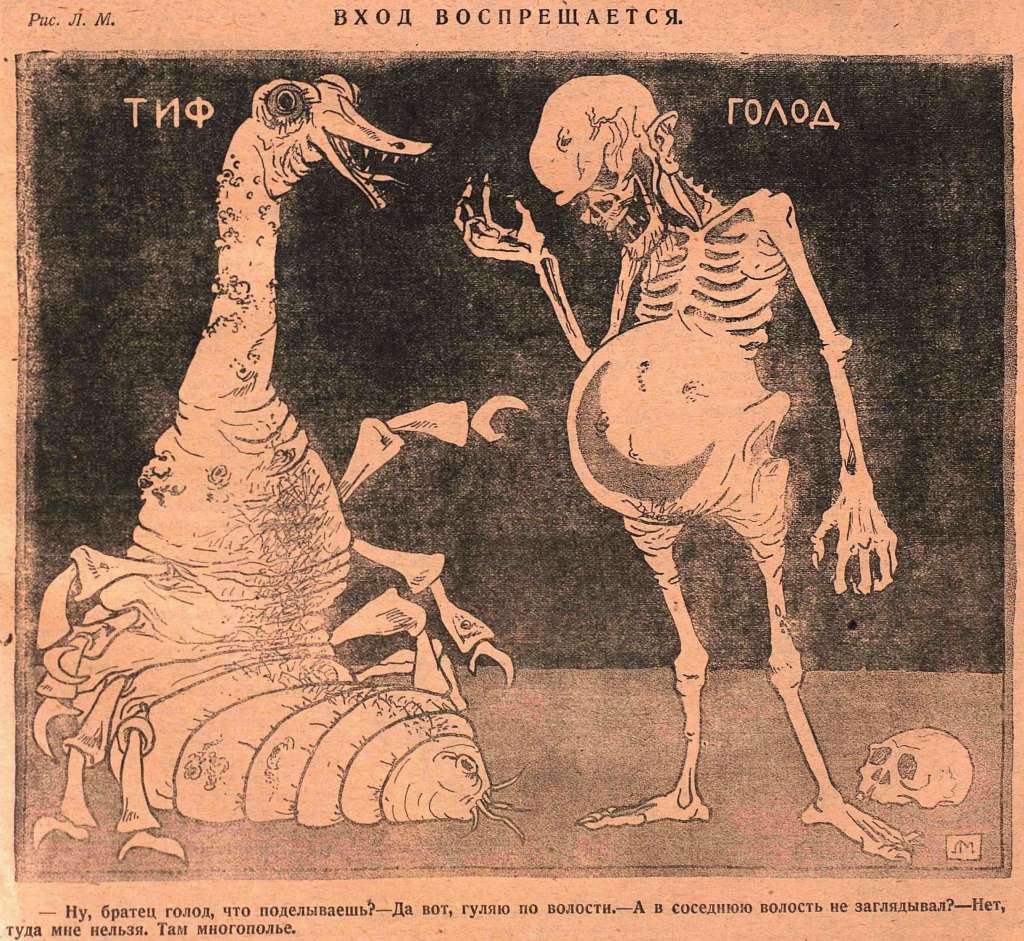
Typhus: “Well, brother famine, what are you up to?”
Famine: “Here I am, wandering around the district.”
Typhus: “Not taking a look at the neighboring district?”
Famine: “No, I’m not allowed over there. They have the rotating crop field system there.”
(Krokodil, Moscow, 1924)
“And how do you protect yourself against contaminated water?”
“First of all: I boil everything, second: I sip it.”
“And third?”
“And third I drink beer!”
(Kakas Márton, Budapest, 1910)
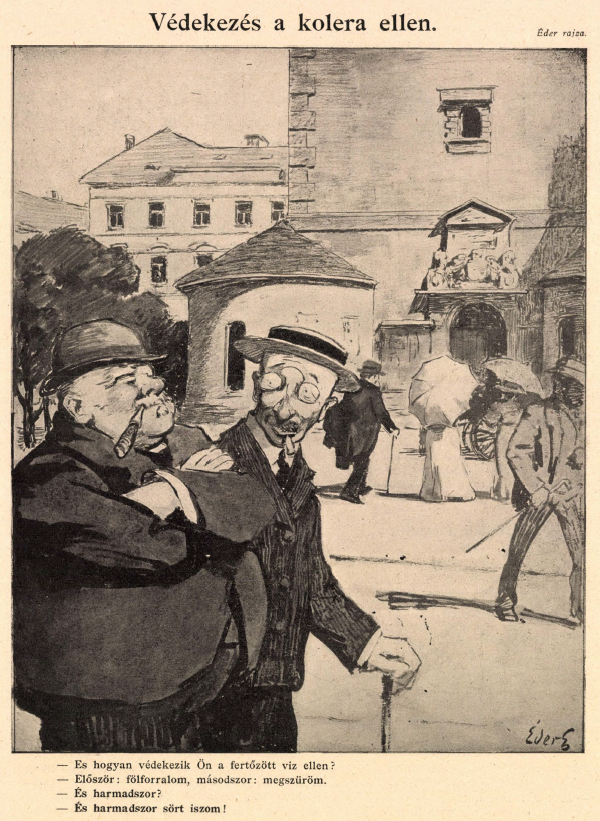
(Kakas Márton, Budapest, 1910)

When there is cholera.
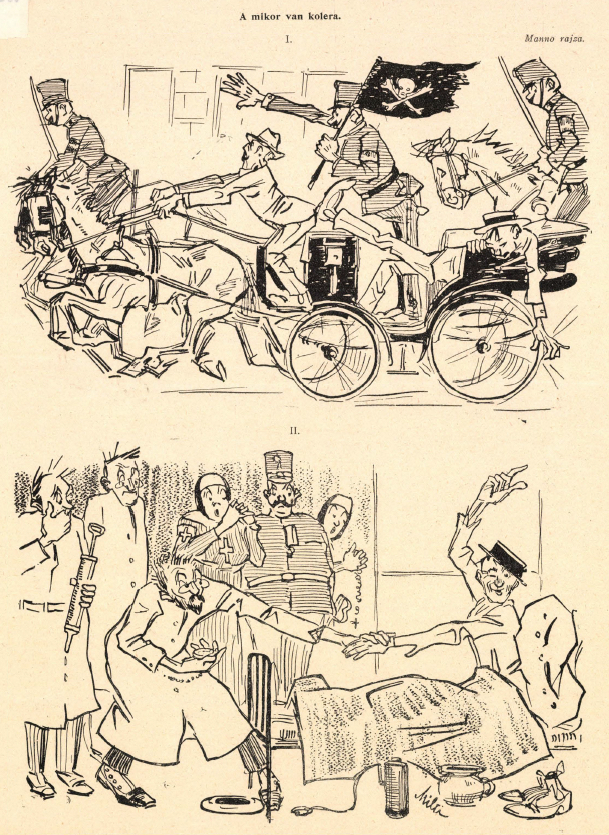
Note the clystère, a recurring theme on this site.
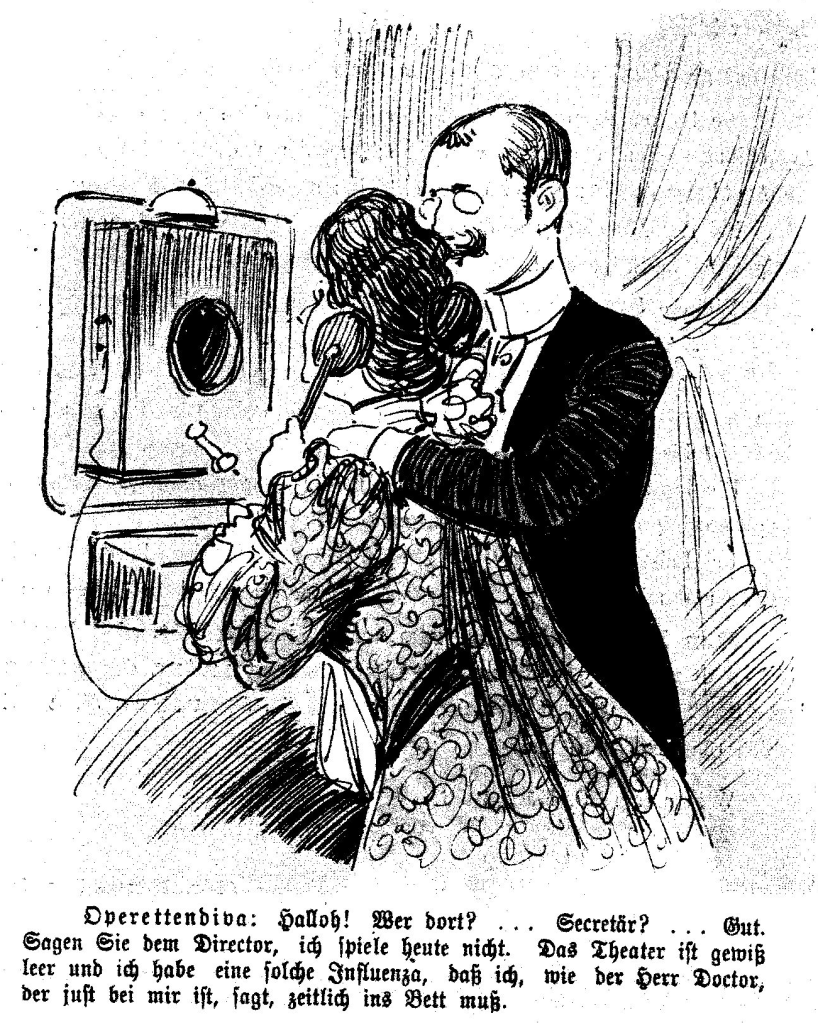
Opera diva: “Hello? Who’s there? … The secretary? … Good. Tell the director that I’m not performing tonight. The theater is definitely empty and I have such a case of flu that the doctor, who’s with me just now, says I have to take to bed for a while.”
(Der Floh, Vienna, 1899) (See a similar version, albeit with the diva invoking only generic illness, in the Russian magazine Oskolki in 1896.)
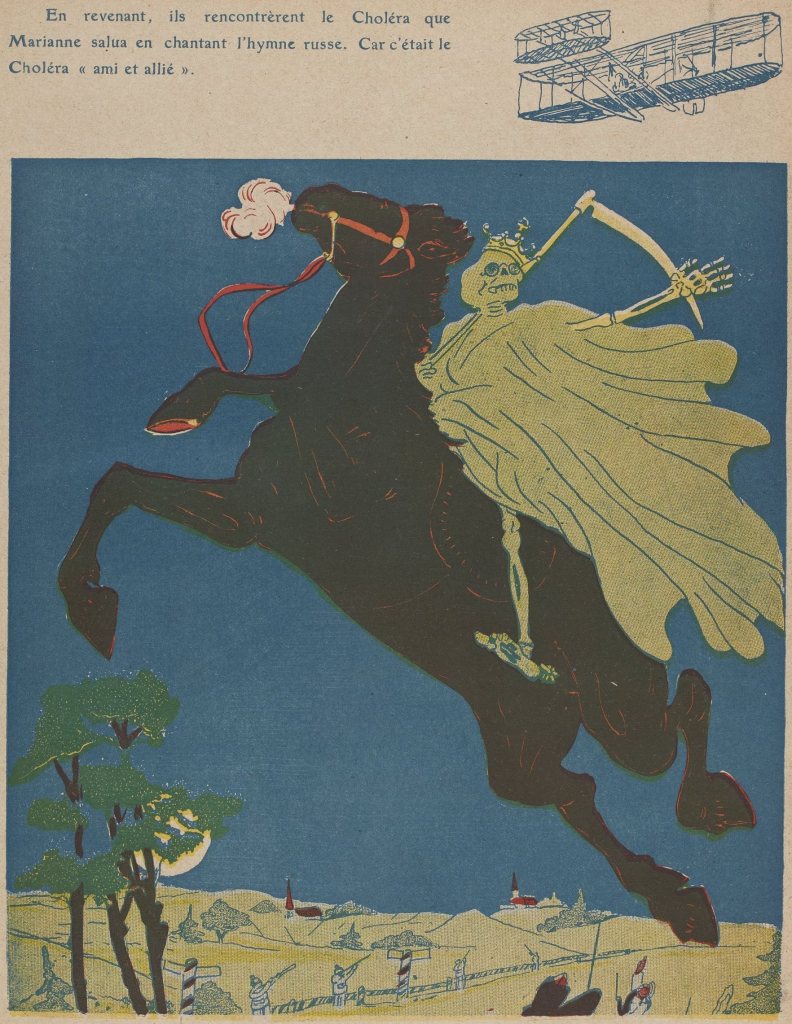
On the way back, they met Cholera whom Marianne [France] greeted by singing the Russian hymn. Because it was the “friend and ally” Cholera.
(L’Assiette au beurre, Paris, 1909) (Drawn at a time of close Franco-Russian diplomatic and military relations, in the midst of the last European cholera pandemic.)
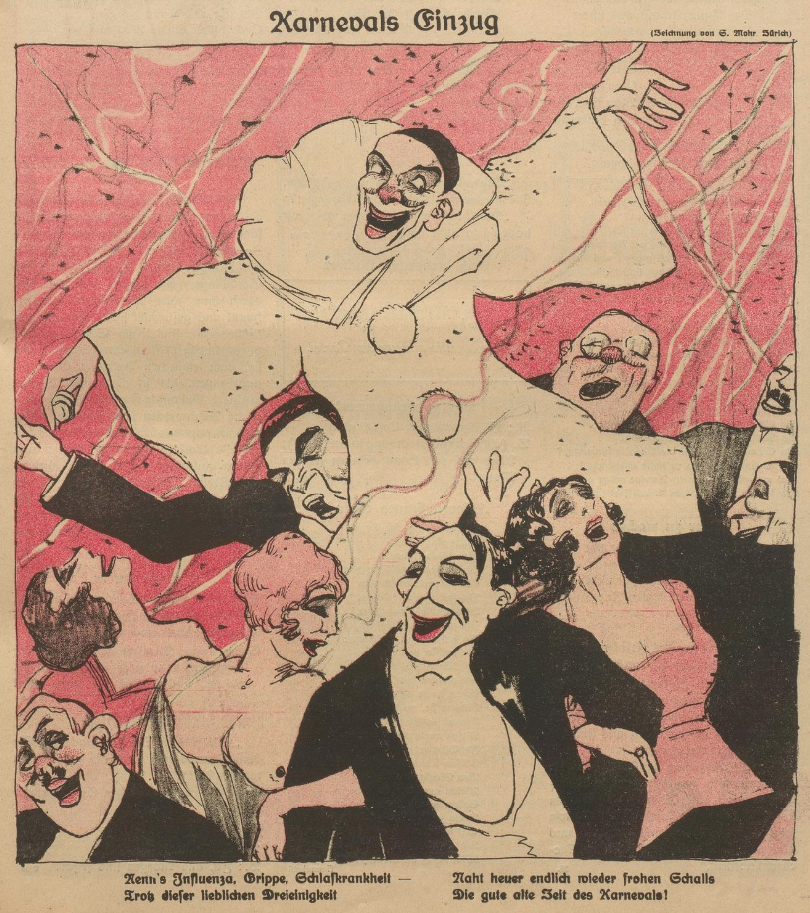
Call it influenza, flu, sleeping sickness–
Despite this lovely trinity
Finally, joyous sounds are coming again this year
The good old days of carnival!
(Nebelspalter, Zurich, 1920)
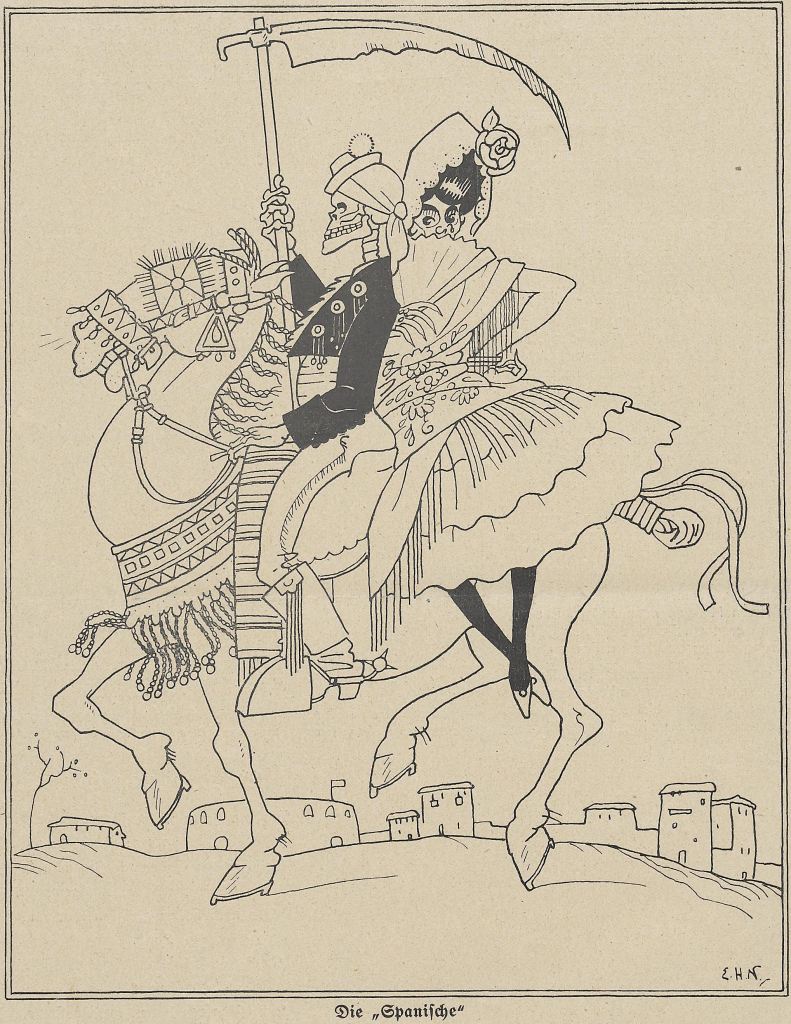
(Der Guckkasten, Munich, 1918)
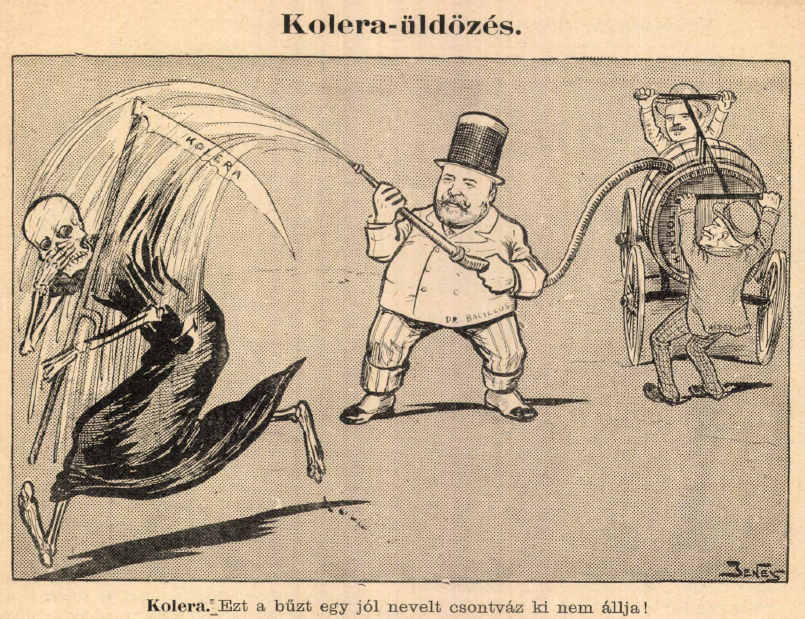
(Dr. Bacillus is spraying carbolic acid solution on the streets of Budapest.)
Cholera: “A well-bred skeleton does not tolerate such a stench!”
(Bolond Istók, Budapest, 1910)
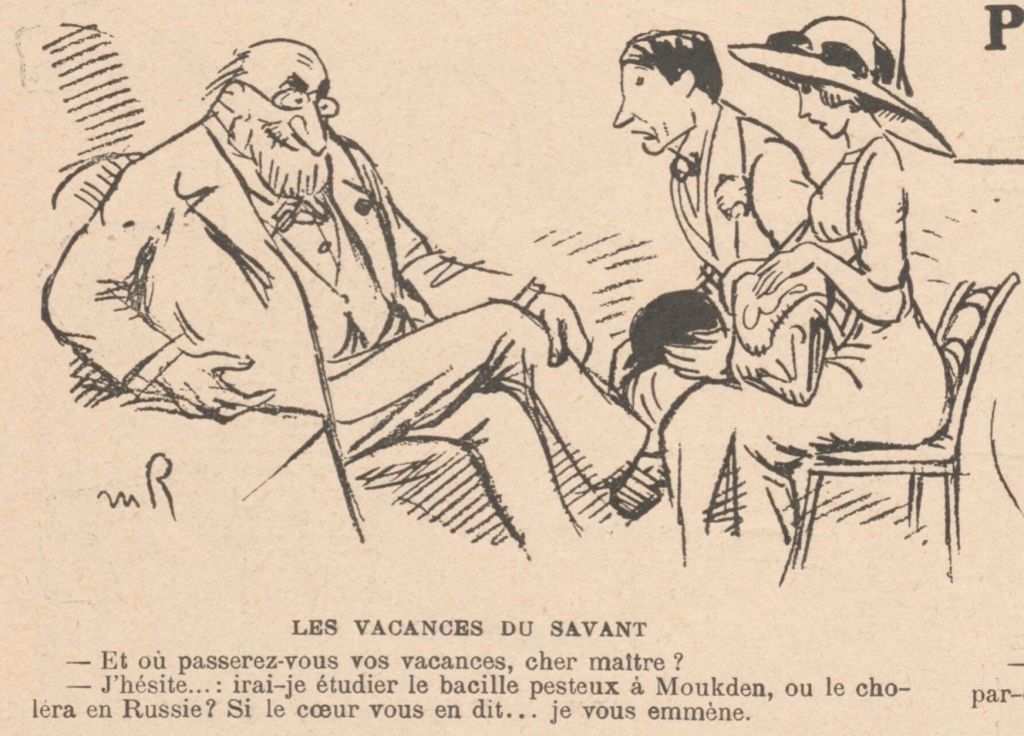
“And where will you spend your holidays, dear master?”
“I hesitate…: will I study the plague bacillus in Moukden, or cholera in Russia? If you feel like it… I’ll bring you along.”
(Le Rire, Paris, 1911)
 Sic Transit Pestilentia