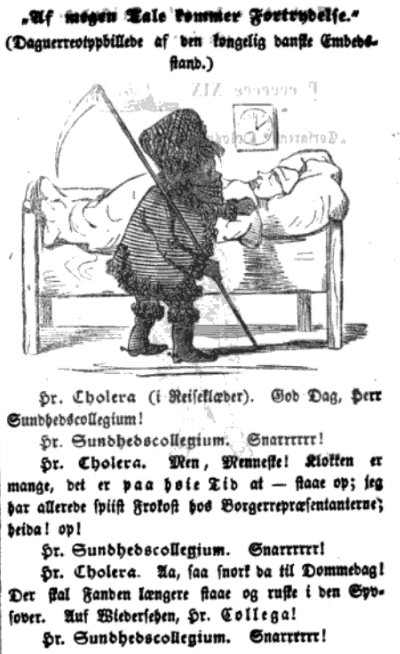
(I can’t make out the main title, though the last word might imply “undoing.”) Mr Cholera (in travel clothes): Good day, Mr Public Health Authority! Mr Public Health Authority: Snore! Mr Cholera: But, man! The clock is ticking, it is high time to get up; I have already eaten lunch with the Citizens’ Representatives; hey there! up! Mr Public Health Authority: Snore! Mr Cholera: Oh, then snore till doomsday! Whoever the hell has to stand it longer and shake the late riser. Auf Wiedersehen, Mr Colleague! Mr Public Health Authority: Snore! (Corsaren, Copenhagen, 1848) (Definitely needs improvement.)
You know what, Mr. Housemaster: if the lord of the manor wants to have cleanliness in the house for the sake of cholera, then let’s wash out your filthy mouth first. (Humoristické listy, Prague, 1883)
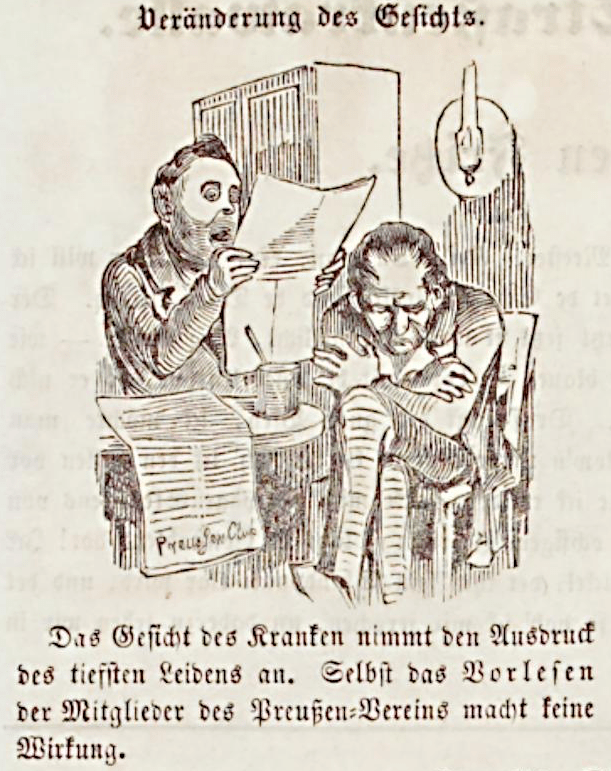
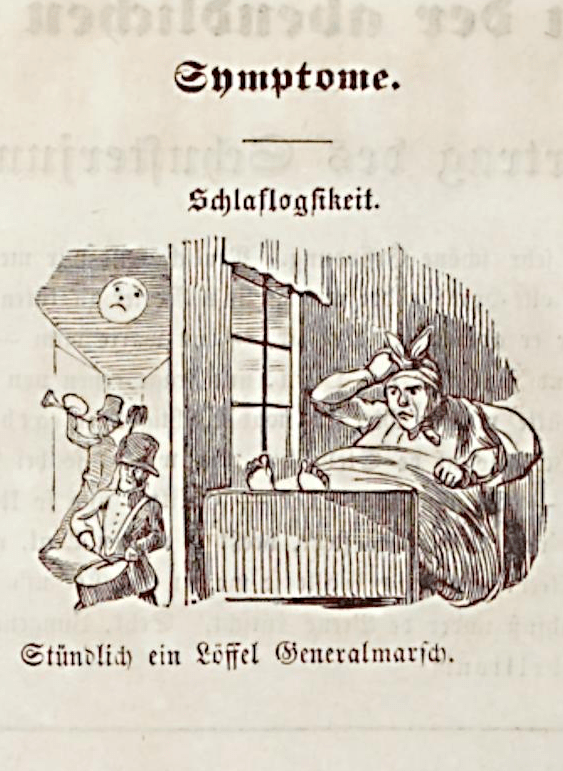
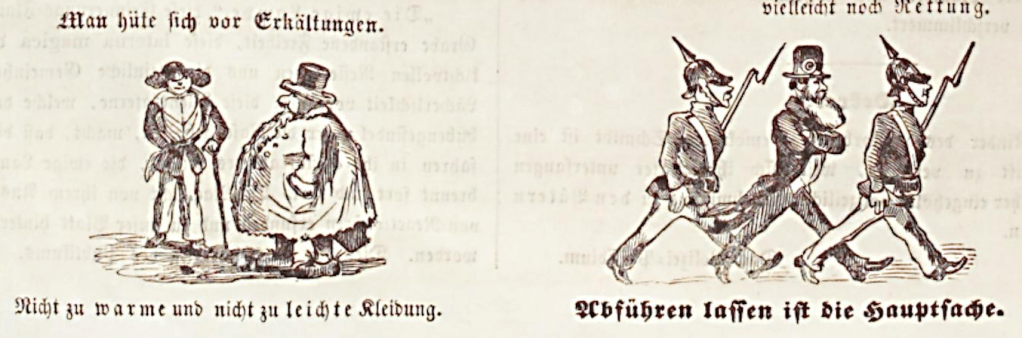
Popular lessons about the occurrence and fight with this contagion. (text by August Ritter, drawings by Wilhelm Scholz, Kladderadatsch, Germany, 1848)
Symptoms
Change of face: The face of the patient assumes an expression of the most profound suffering. Even lectures of members of the Prussian Union have no effect.
German cholera cartoon
Sleeplessness: A spoonful of marching music hourly.
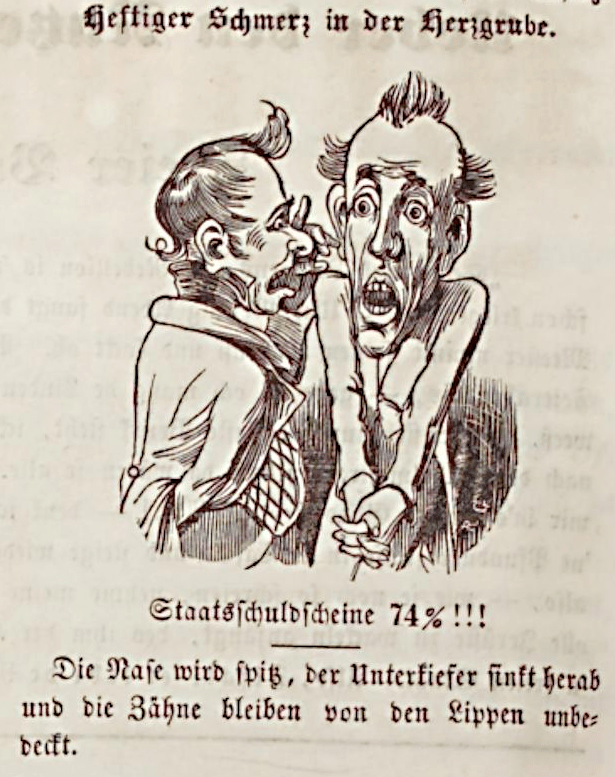
Sharp heartburn: State bonds at 74%!!! The nose becomes sharp, the jaw drops, and the teeth remain uncovered by the lips.
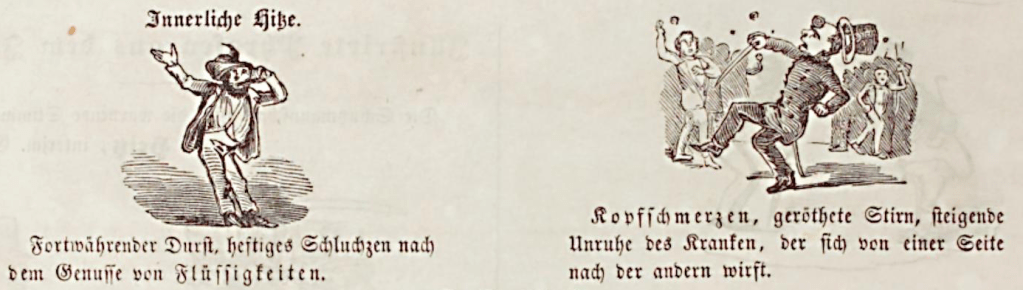
Internal heat: Persistent thirst, powerful sobbing after the pleasure of liquids. Headache, reddened forehead, increasing agitation of the patient, acting from one side to the other. [vegetables are being lobbed from all sides]
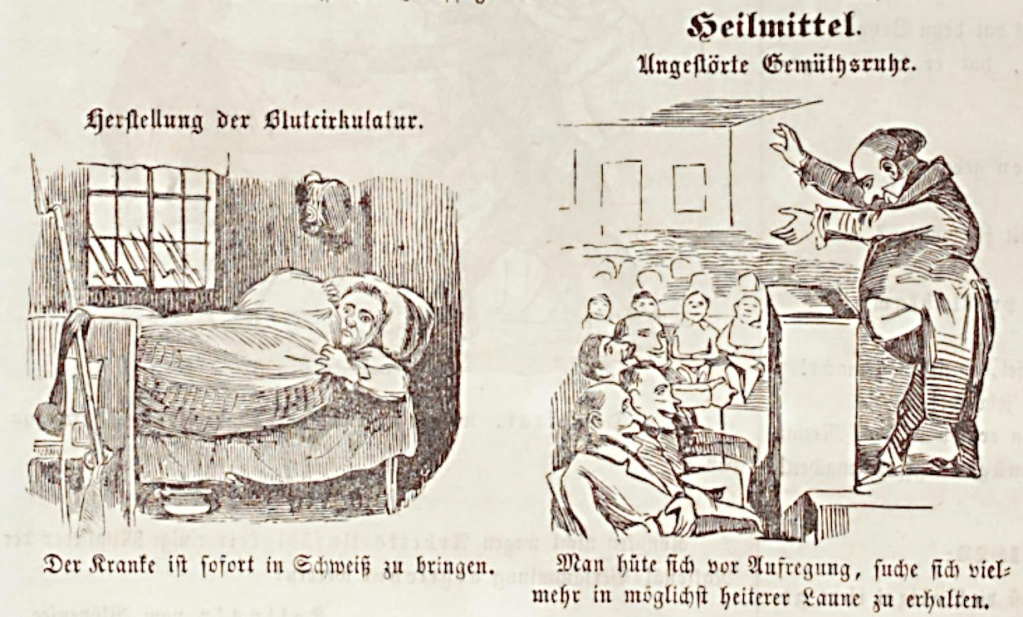
Remedies
Production of blood circulation: The patient easily breaks into a sweat. Undisturbed calm: Avoid stimulation, seek to maintain a the most cheerful possible mood.
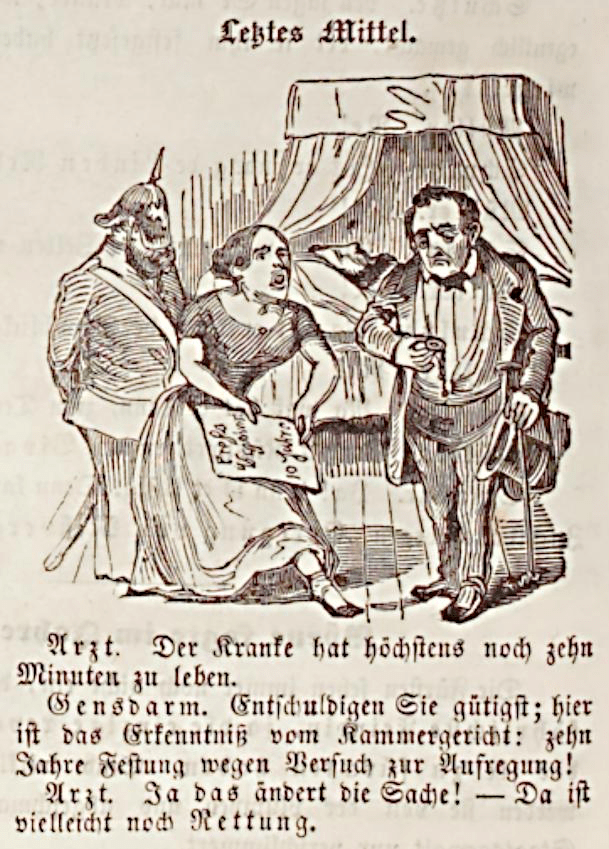
Final remedy Doctor: The patient has at most ten minutes left to live. Gendarme: Excuse me, here is the finding of the chamber court: ten years confinement for seeking stimulation. Doctor: That changes things! Perhaps deliverance lies there.
Avoid chills: Do not wear clothing that is too warm or too light. The main thing is to be led away.
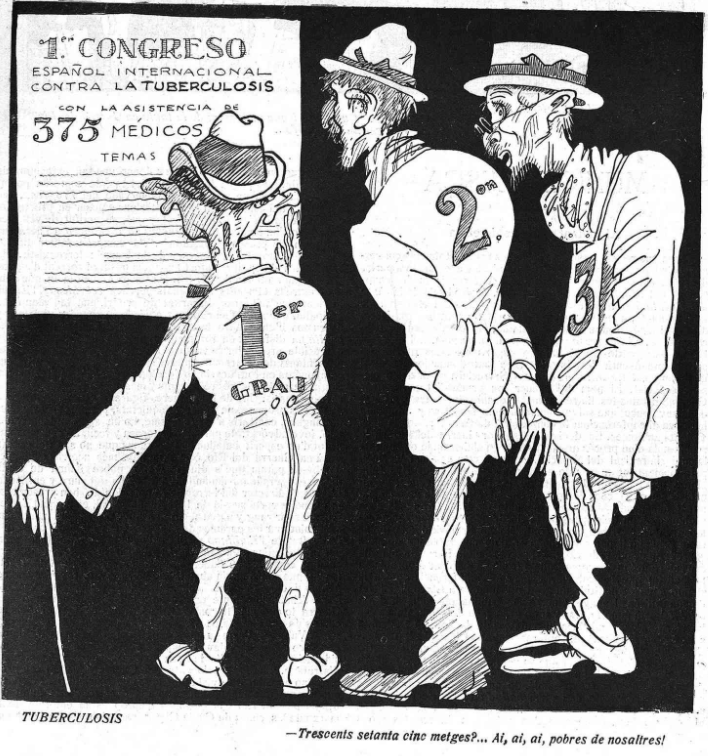
(Elderly figures apparently labeled according to the degree of their consumption affliction, reading poster for 1st Spanish International Congress Against Tuberculosis, convened with the help of 375 physicians.) “Three hundred and seventy-five doctors?… Alas, alas, alas, poor us!” (La Esquella de la torratxa, Barcelona, 1910)
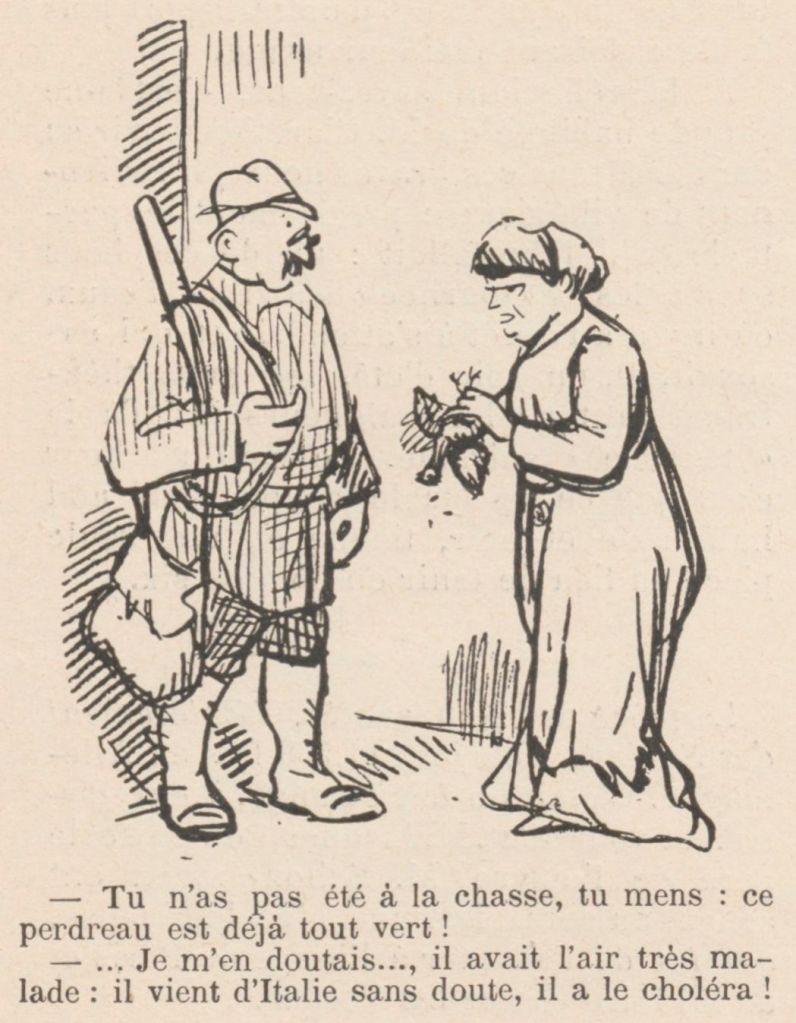
“You haven’t been out hunting, you’re lying: this partridge is already all green!” “…I did have my suspicions…, it looked very sick: no doubt it comes from Italy, it has cholera!” (Le Rire, Paris, 1910)
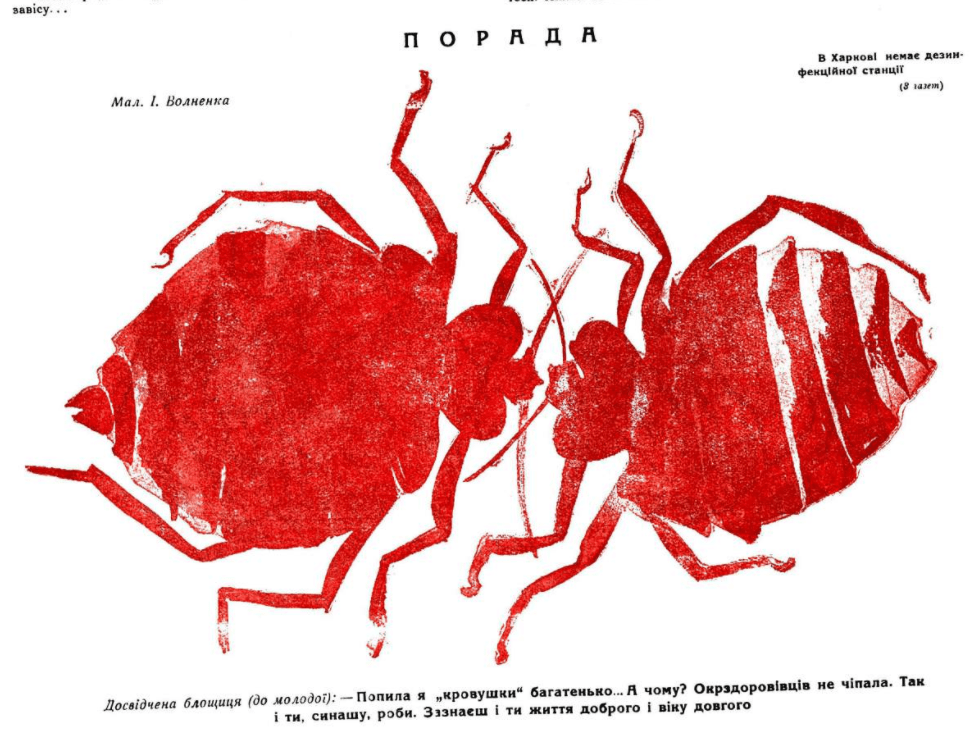
(Newspapers report there is no disinfection station in Kharkiv) Experienced flea (to young one): “I’ve drunk my share of ‘nice blood’… And how did I manage? I didn’t bother with the district’s healthy types. Do it like that, son. You will also experience a good life and a nice old age.” (Perets, Kharkiv, 1928)
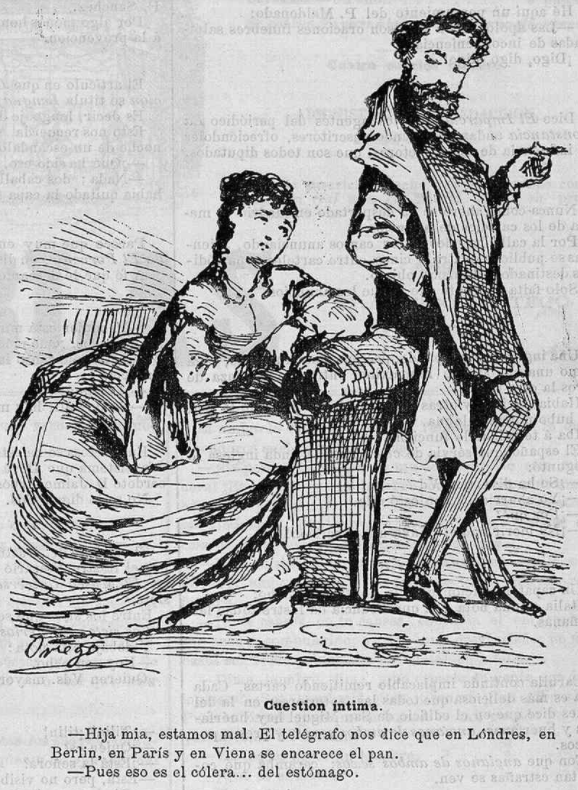
“My daughter, we are wrong. The telegraph tells us that in London, in Berlin, in Paris, and in Vienna bread is more expensive.” “Well, that’s the cholera… of the stomach.” (Gil Blas, Madrid, 1867) (Let’s assume I’m missing some word play here.)
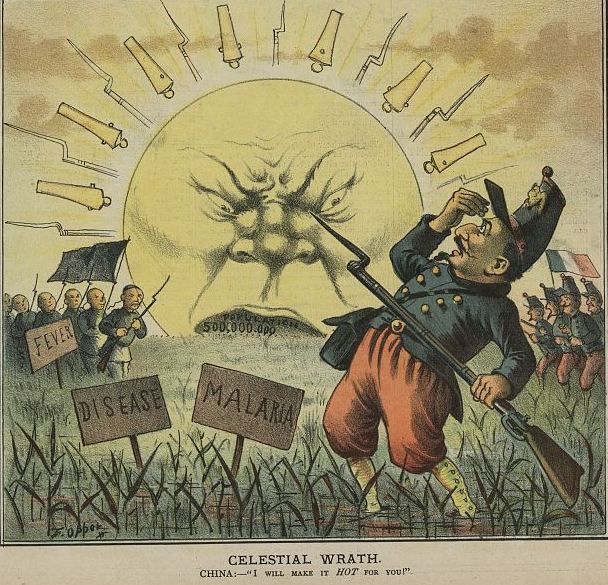
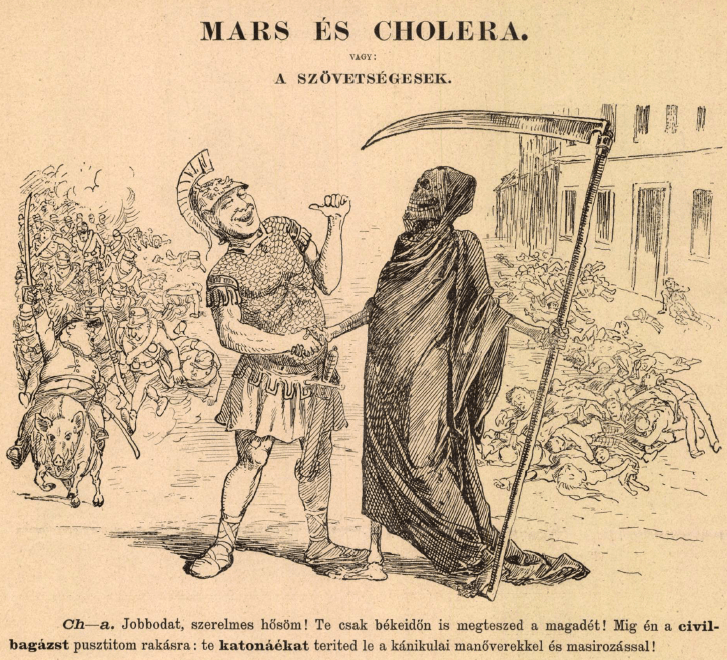
Or: Allies. Cholera. I yield to you, my beloved hero! You only do your thing in peacetime! Whereas I destroy the civilian luggage, you prostrate your soldiers with heatwave maneuvers and marching! (Bolond Istók, Budapest, 1892)
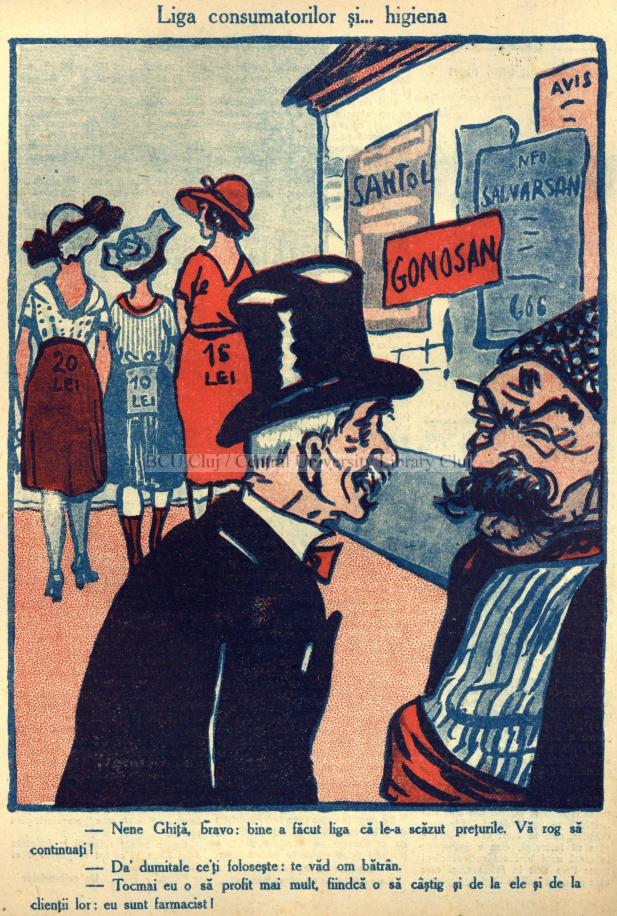
(Various anti-venereal medications like Salvarsan are advertised on the wall. It appears that the prices of young women offering their services are printed on their dresses.) “Uncle Ghiță, bravo: the League did well because their prices dropped. Please continue!” “But what do you use: I see you, old man.” “I will profit more, because I will gain from them and their customers: I am a pharmacist!” (Furnica, Bucharest, 1919)
(Although the war is over, bloody battles are taking place in Russia every day.) St. Peter: “Woman, where do you want to come like that?… Wipe your feet well: don’t you see what prints you leave?” (Furnica, Bucharest, 1919)
“Where did you go, Cholera?” “I’m on the move in the winter, all-powerful.” “But those who follow you, who are they?” “Porters carrying my luggage.” “Porters?!” “Of course!… These are ‘vibrio carriers’!” (Furnica, Bucharest, 1911) (Another in the ongoing clystère theme.)



 Sic Transit Pestilentia