Dear Cholera, I am convinced that only you would be able to reach Pantelimon; please grant me the concession, and in return I promise to order Dr. Bărdescu to take all possible public health measures in the summer to facilitate a pleasant holiday in Romanian hospitals. (Furnica, Bucharest, 1911)
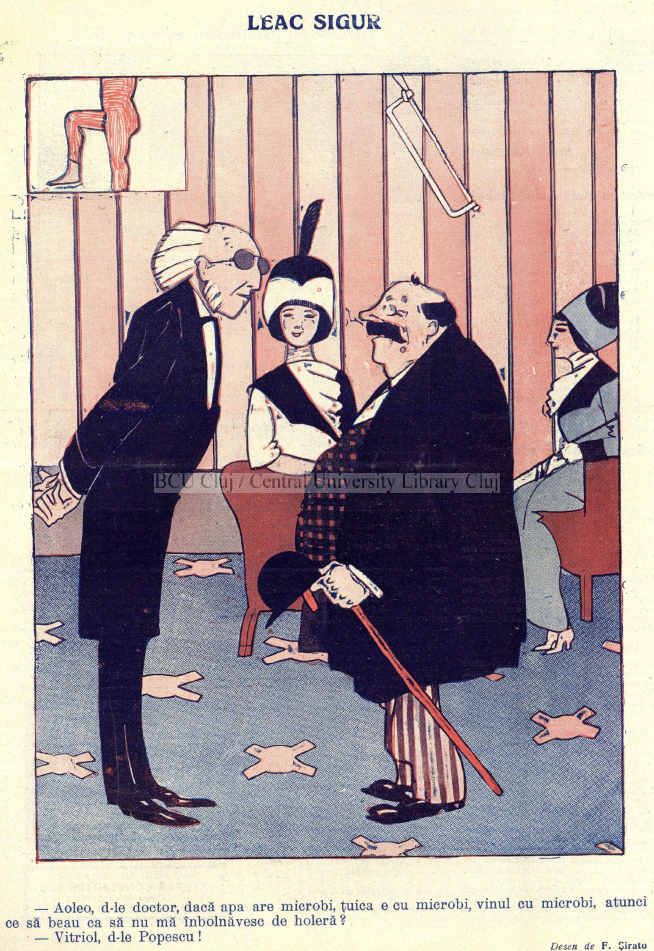
“Good grief, doctor, if the water has microbes, the brandy has microbes, the wine has microbes, then what am I to drink so as not to get cholera?” “Vitriol, Mr. Popescu!” (This might be theater producer Leon Popescu, but I honestly don’t know.) (Furnica, Bucharest, 1911)
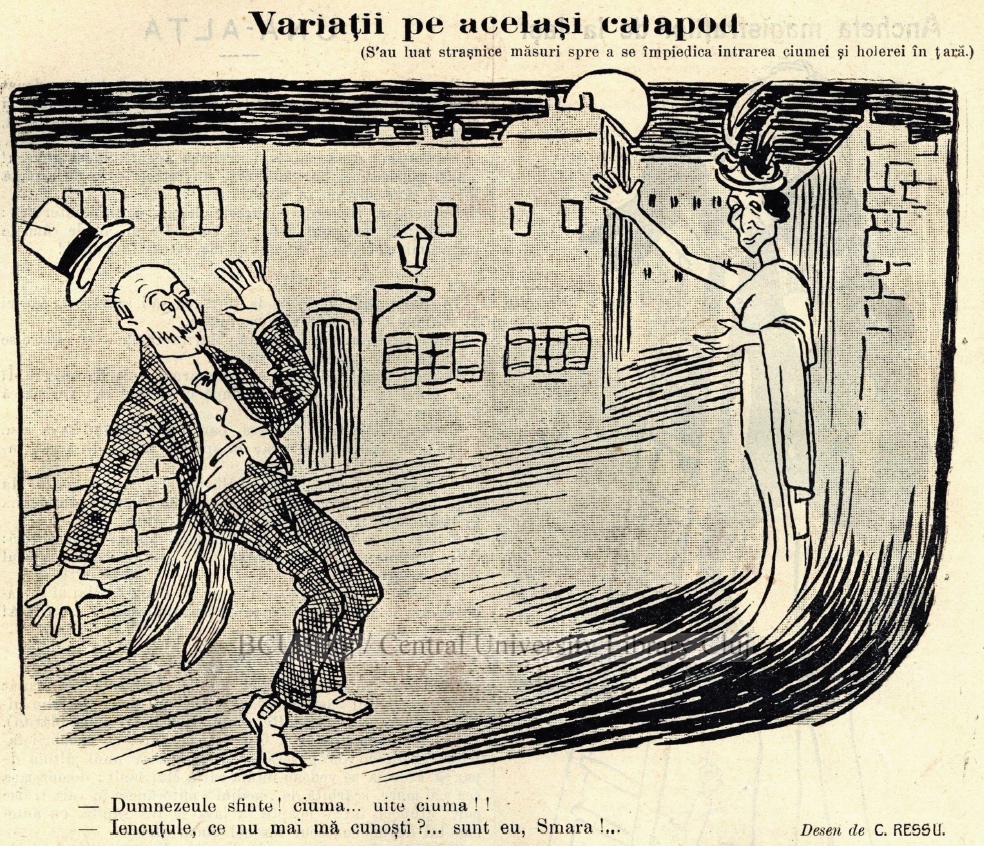
(Strong measures have been taken to prevent plague and cholera from entering the country.) “O my God! plague… look, it’s plague!!” “Iencuțu, don’t you know me anymore?… it’s me, Mother Smara!…” (A dig at Smaranda Gheorghiu, a Romanian writer and feminist from a noble landowning family who frequently traveled abroad and sometimes published under the moniker “Mother Smara.”) (Furnica, Bucharest, 1908)
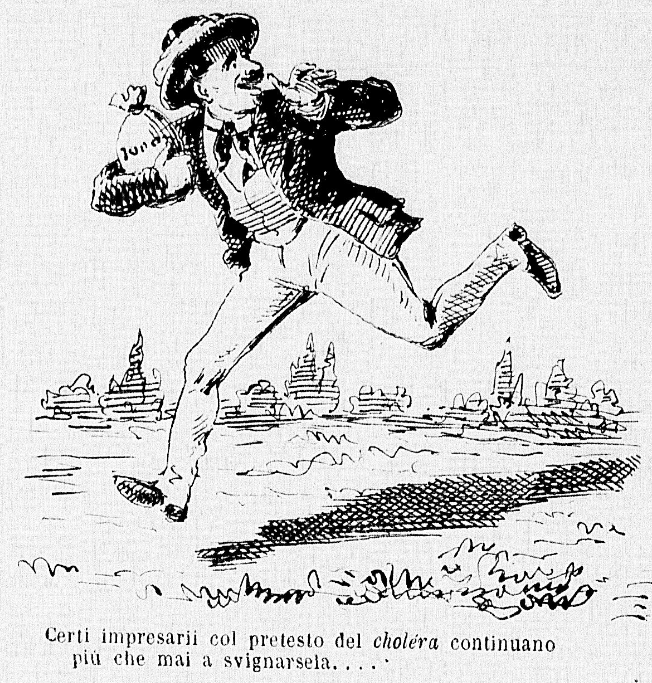
Under the pretext of cholera certain impresarios continue to sneak out of town more than ever….
Italian cholera cartoon
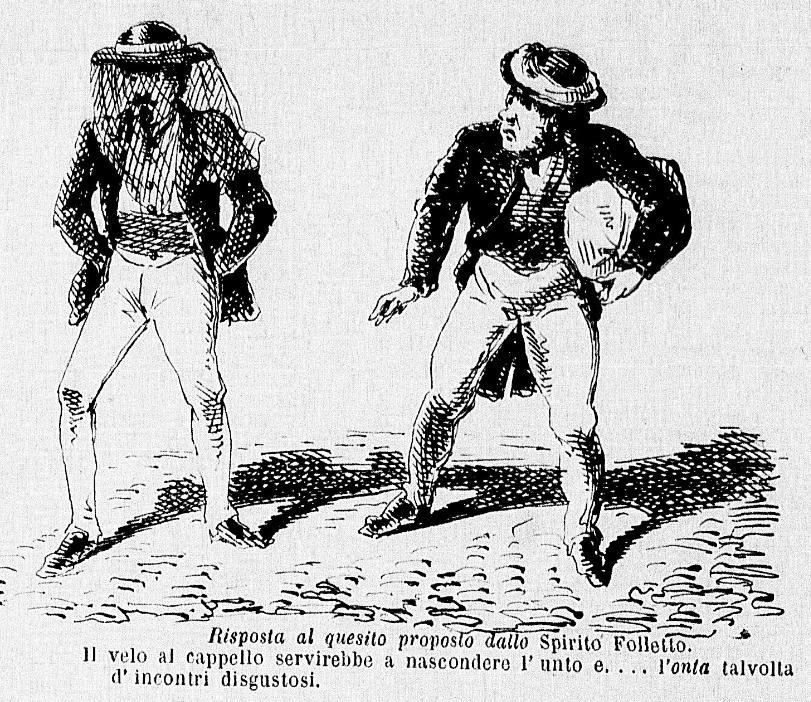
Answer to the question proposed by Spirito Folletto. The veil on the hat serves to hide the person anointed by cholera and… the occasional shame of disgusting encounters.
The true fever-reducing, anti-intestinal cholera treatment is the incomparable Fernet-Branca [an Italian bitter marketed as a cure for cholera].
Ugh! I almost prefer cholera!
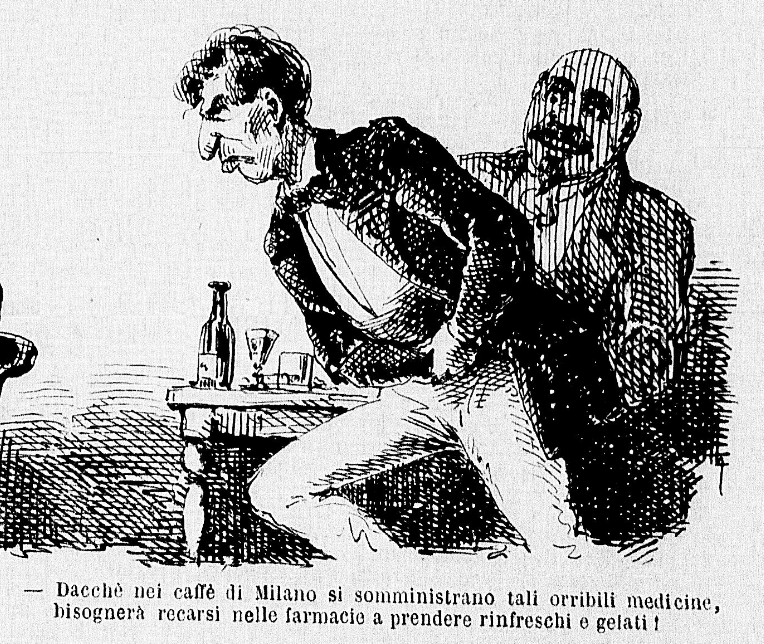
Since these horrible medicines are administered in the cafes of Milan, you have to go to the pharmacies to get refreshments and ice cream!
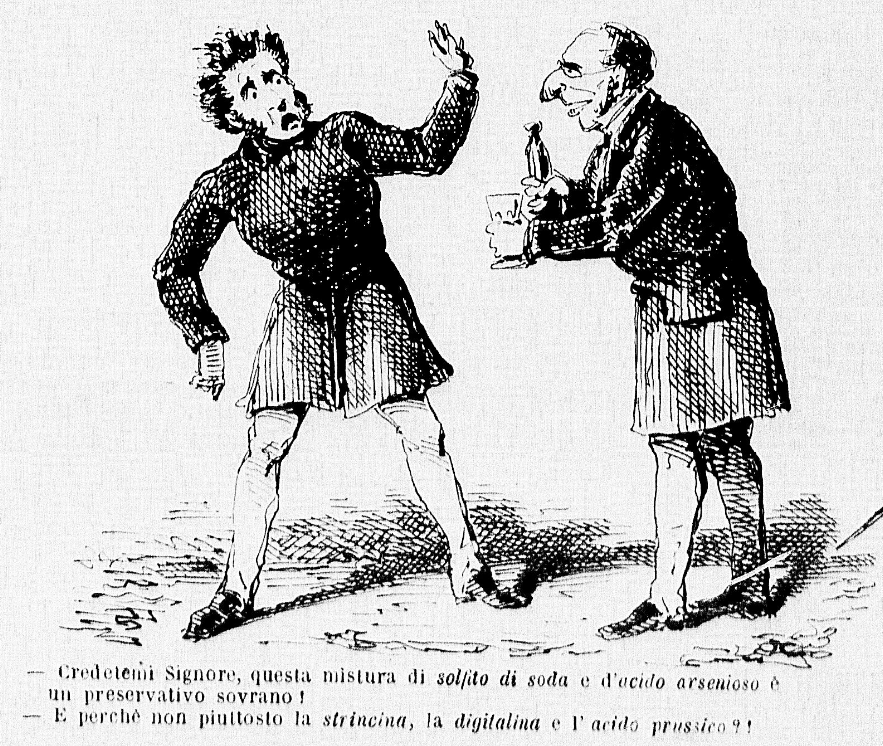
Trust me, sir, this mixture of sulfite of soda and arsenic acid is a sovereign defense!
And why not strychnine, foxglove, and prussic acid?
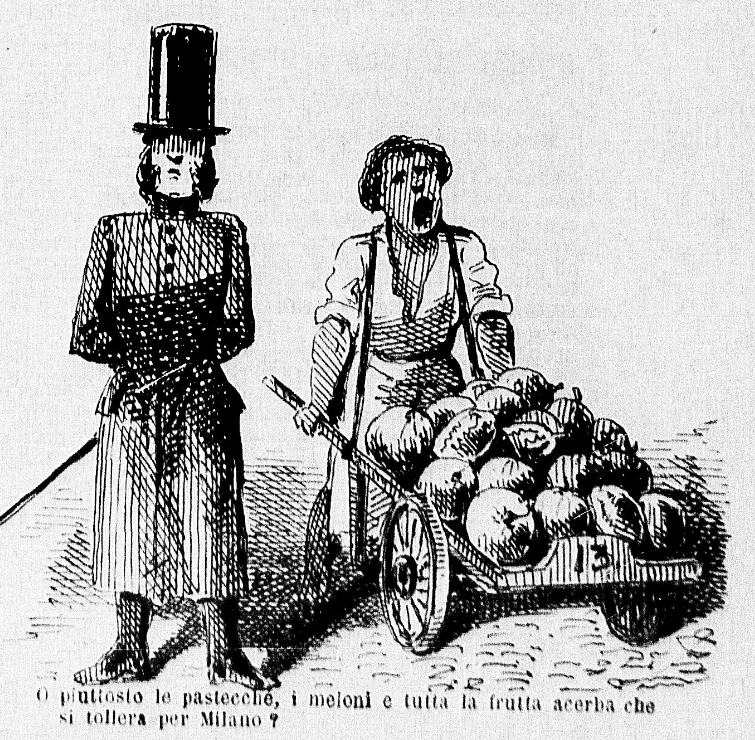
Or rather the pastries, melons and all the unripe fruit that is tolerated for Milan?
(from life in the provinces) “What sloppiness! What a mess here, what terrible air! Are you the chairman of the public health commission? What in the world are you looking at?!” “Please pay it no mind, measures have been taken. Now I will sprinkle some pine water and everything will be fine.” (Krokodil, Moscow, 1927)
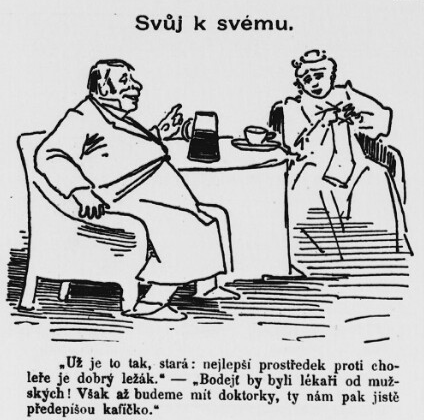
“That’s right, old girl: the best remedy for cholera is a good lager.” “That would be coming from male doctors! But when we have female physicians, they will surely prescribe us coffee.” (Humoristické listy, Prague, 1892)
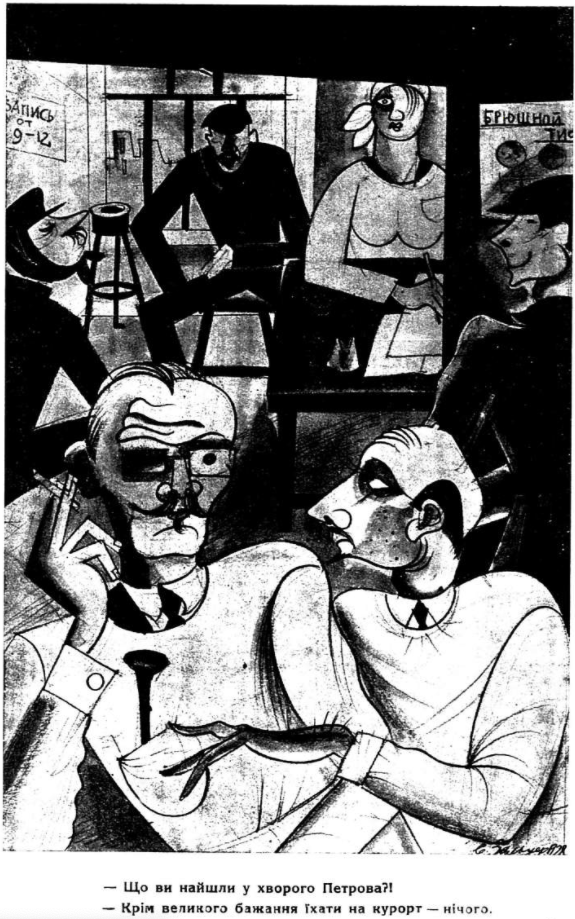
“What did you find with the patient Petrov?” “Aside from a great desire to go to a resort, nothing.” (We’ll include this on a technicality, since there is a public health poster about typhus in the background. More remarkable is the quasi-Cubist style of the artist, Semyon Zaltser, a prolific caricaturist working in Odessa. See also Zaltser’s “Medicine and life.”) (Perets, Kharkiv, 1928)
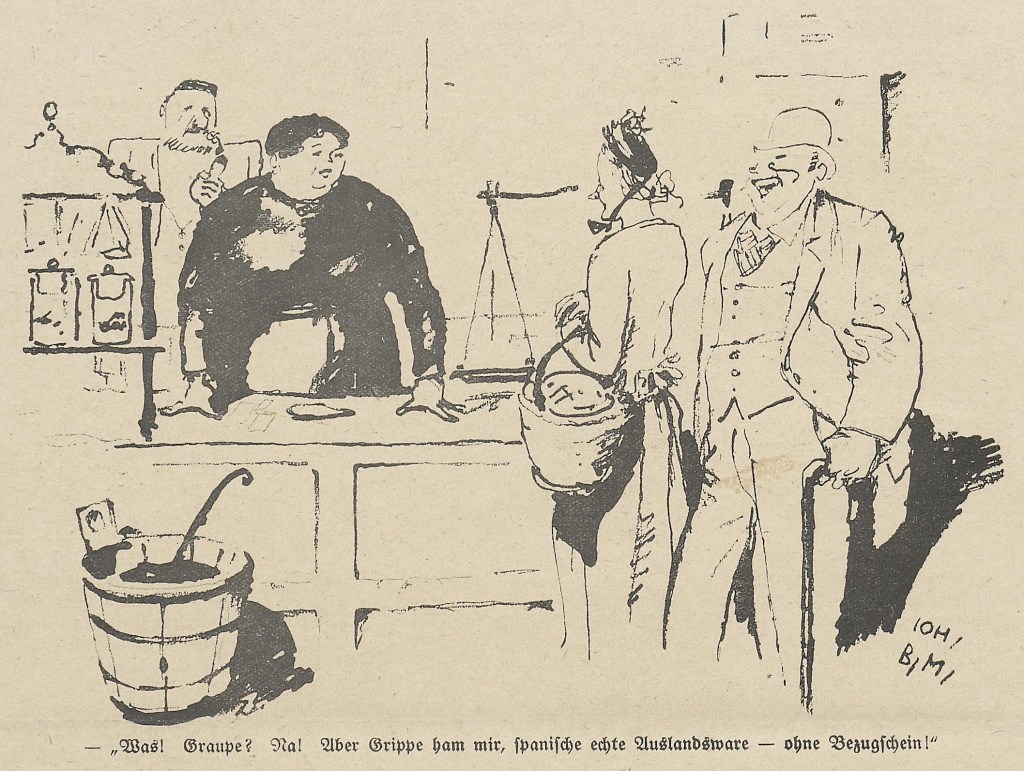
(In the wake of the Spanish flu epidemic.) Child (terrified): Mama, mama, a monster! Mother: Take it easy, it is your father who has tried in vain to come back from a little shopping at the greengrocer!!! (Patapon, Bari, 1921)
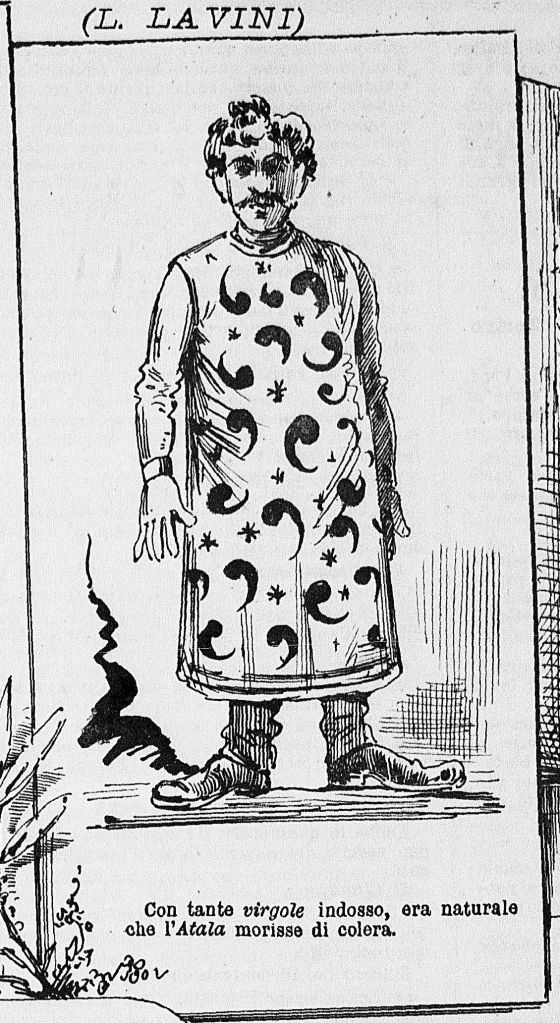
“Wearing so many commas, it was natural for Atala to die of cholera.” In 1884 Filippo Guglielmi’s Atala (libretto by G. Cappuccini) premiered in Milan to mixed reviews, apparently too Wagnerian for Lombard critics. Based on Chateaubriand’s 1801 novella Atala, Guglielmi’s opera presumably featured a Frenchman named René who joined an American Indian tribe, though I haven’t seen the libretto. Chateaubriand was arguing against “noble savage” narratives, and–bypassing a more complex story of intermarriage–for present purposes it is mainly relevant that René eventually meets a violent end. The image must be an inside joke about the costumes, at a time when cholera was resurgent in Naples. We have previously encountered the comma bacillus as proxy for cholera. (Cosmorama pittorico, Milan, 1884)
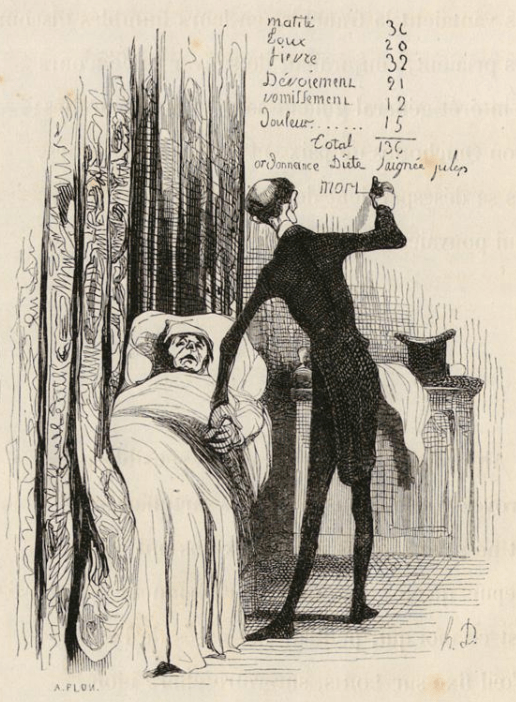
Mocking the quantifying pretensions of the scientific man of medicine, at a time when his clinical interventions were inadequate. François Fabre, Némésis médicale illustrée (1840), with illustrations by Daumier. (ETH Bibliothek)
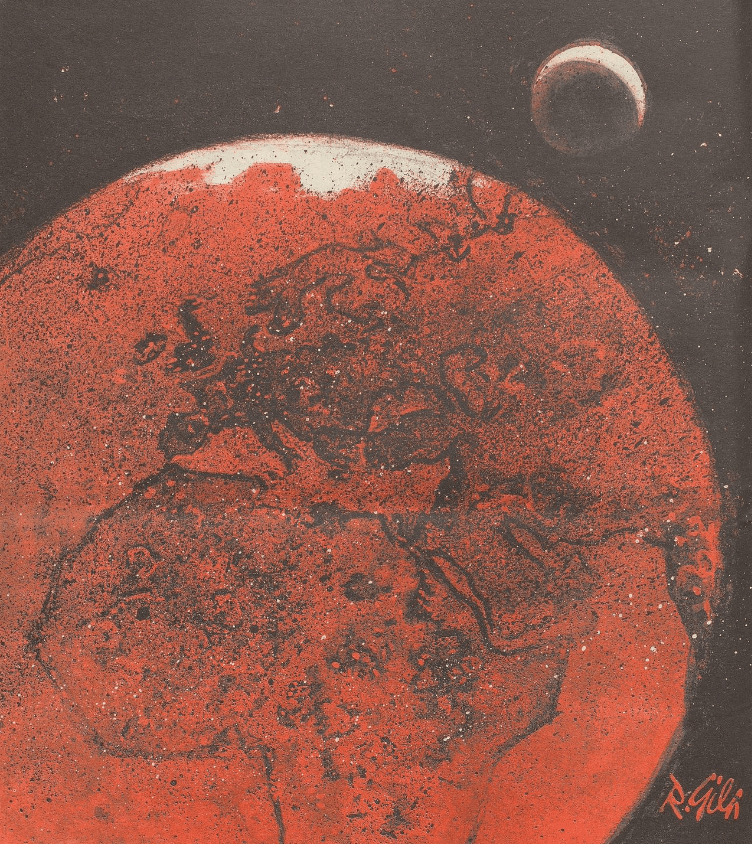
(In 1976 the global population is set to surpass four billion.) A consecration hour of joy For prophets and bards of progress Dear people, there are ever more people Currently it is four billion Who amuse themselves there In a planned energetic quest To consume the planet On which they so happily live (Original text at Nebelspalter, Zurich, 1976)
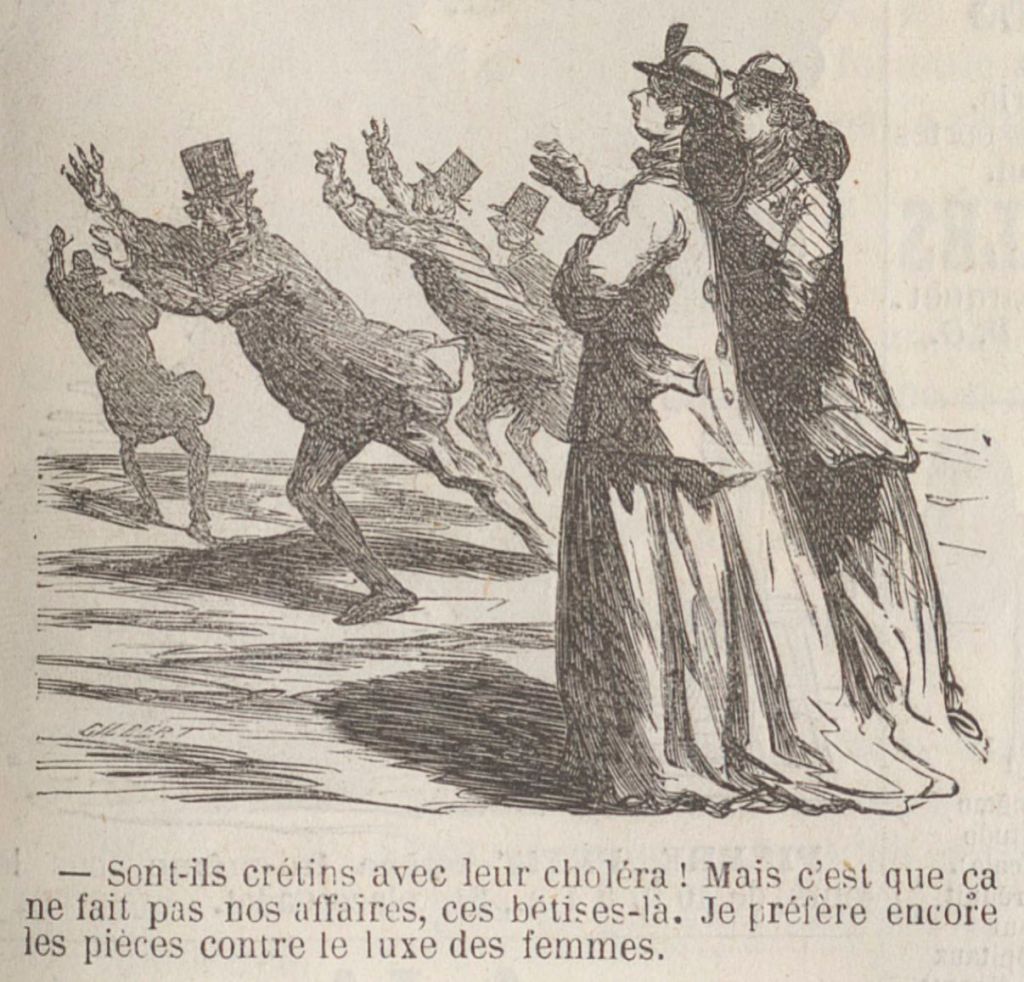
“What fools they are with their cholera! But it’s none of our business, this nonsense. I still prefer newspaper pieces against women’s luxury.” (Le Charivari, Paris, 1865)




 Sic Transit Pestilentia