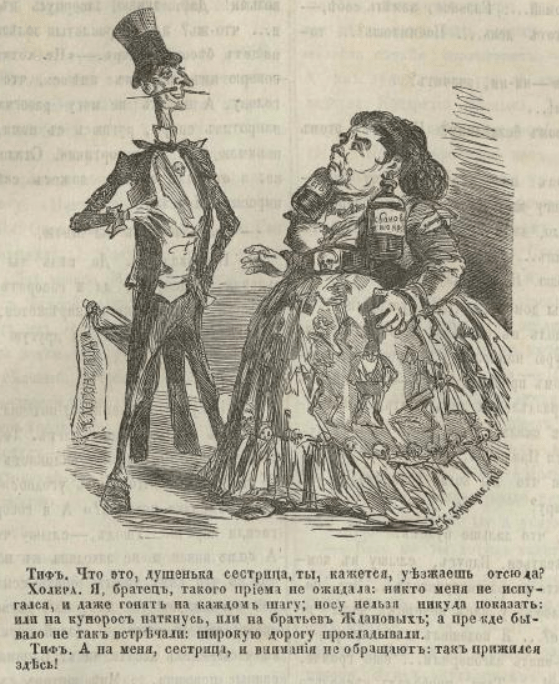
Typhus: “What is it, darling sister, are you going away?” Cholera: “Brother, I did not expect such a reception: no one was afraid of me, and they are even dogging me at every step. You can’t show your face anywhere: either I’ll run up against vitriol, or the Zhdanov brothers [purveyors of a sulphuric deodorant concoction since the 1840s; “Zhdanov liquid” was indeed tested for its effects on cholera and typhus in 1893]. But there was a time when I wasn’t greeted like this: I was given lots of leeway.” Typhus: “And as for me, they don’t pay attention, sister: I have taken root here!” (Razvlechenie, Moscow, 1866)
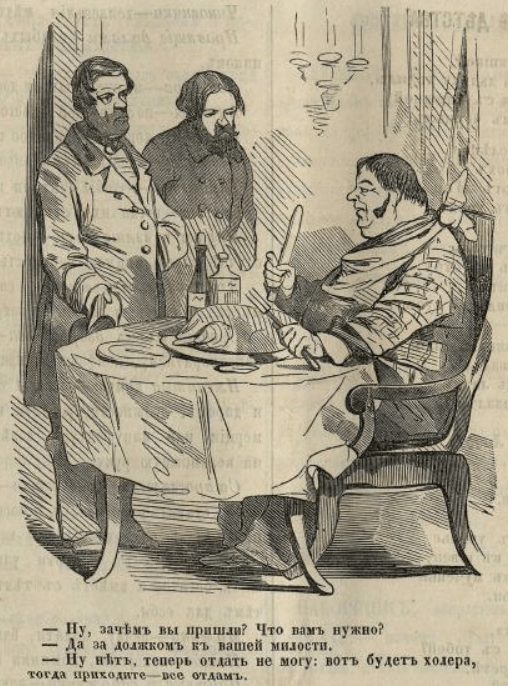
“Why did you come? What do you need?” “For a favor to your grace.” [i.e., a loan] “Well, no, I can’t give it to you now: there’s going to be cholera, come then and I’ll give you everything.” (Razvlechenie, Moscow, 1865)
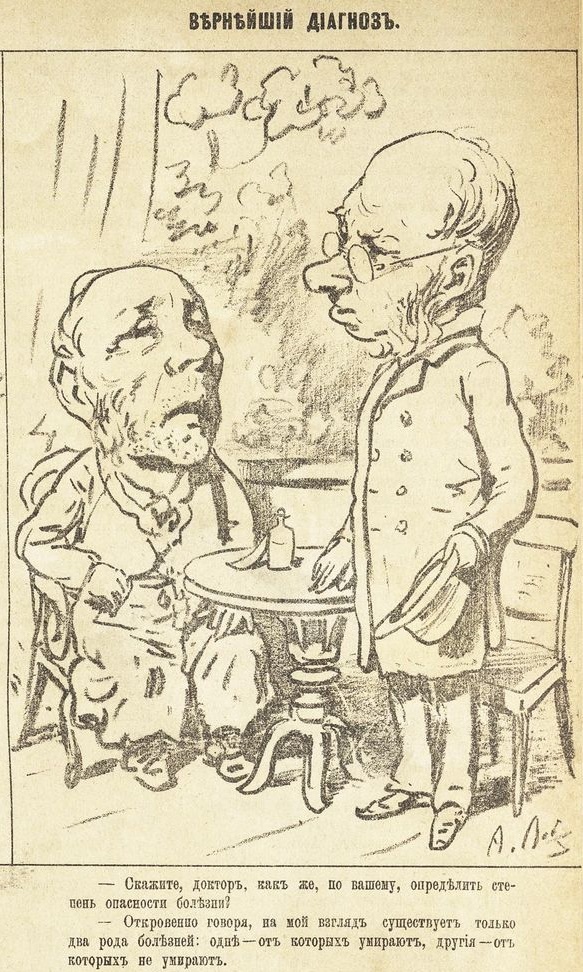
“Tell me, doctor, how do you determine the lethality of a disease?” “To be honest, in my view only two kinds of disease exist: the ones people die from, and the ones they don’t.” (Shut, St. Petersburg, 1887)
From Champfleury’s Histoire de la caricature sous la République, l’Empire et la Restauration (Paris, 1877). Any revolution unfortunately generates excess, any excess is paid for by steps backward. It has been so since the beginning of humanity and it will always be the same, the Progress or Decadence of nations being exercised only imperceptibly and via slow permeations. That a people erect a pyramid at the top of which it engraves the main facts of its history, that a crevasse opens revealing the abyss at the bottom of which a nation is condemned to expiate its faults, long years will pass before the last stone of the commemorative monument is laid, before the collapse in which men and things must disappear.
Many volumes have been written on this theme and had the title page adorned with solemn gentlemen thinkers gaunt as wineskins. The author [Champfleury], predisposed by his studies to fear mockery, considers it appropriate to leave aside the grandeur of the decline of empires as well as banal historical forecasts. His more modest role consists in seeking what futile repercussions sometimes lead to serious events. So one could, according to him, draw a picture of satirical ephemerides relating to important discoveries, to the benefits that humanity accepts only with a mocking smile.
In this order, the century opens with the discovery of vaccine. As soon as Jenner’s name is mentioned, the cartoon catches your eye. “Were the discovery of vaccine,” said Cuvier in a report to the Institut de France, “to be the only thing that medicine had obtained in the present period, it would suffice to forever illustrate our era in the history of science.” But just as there are mockingbirds which parody the song of the nightingale, so also people who practice mockery never lose their rights. They are useful, moreover, helping to popularize a discovery, although their pencil is not cut out for this purpose The discovery of vaccine was therefore set upon by cartoonists, without giving them a strong inspiration.
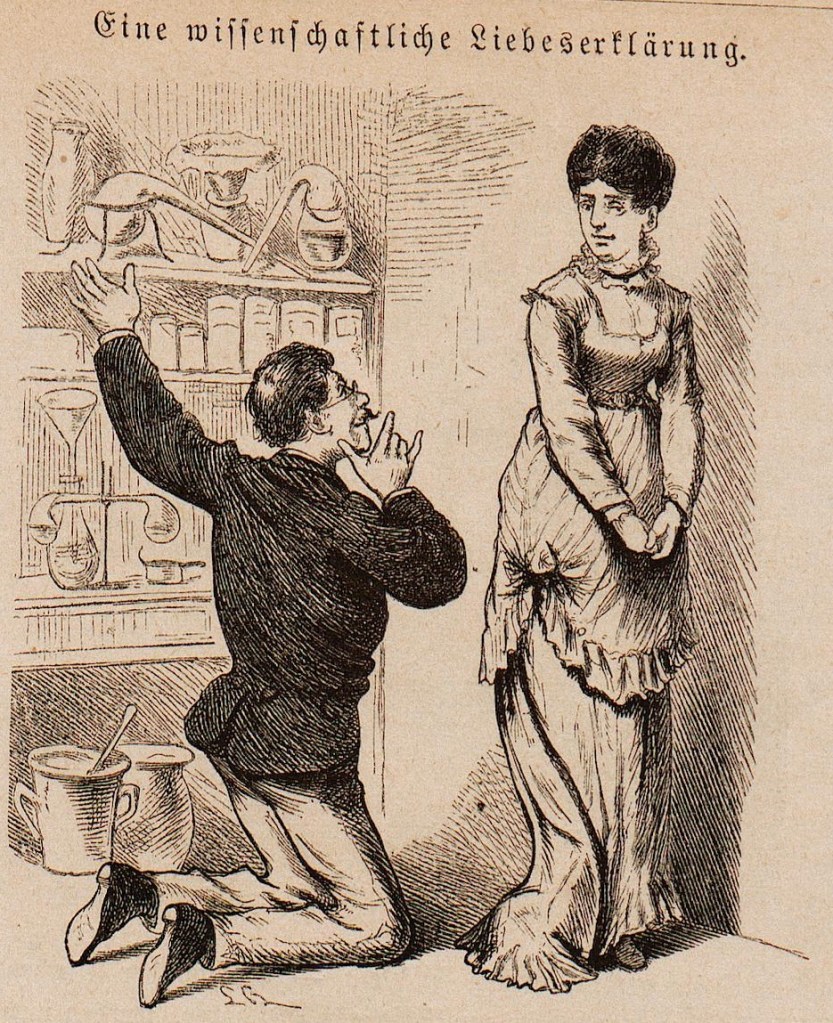
(This image is accompanied by a lengthy poem for pandemic times; just a few phrases here.)
Oh, maiden, the power of your beauty Has kindled me so powerfully That my body temperature Is so high as only with typhus; It increases to 40,5, My pulse beats as never before, One hundred beats per minute, That is how much feeling you arouse in me. …. Oh, most beautiful, see my fever! You are its antiphlogisticum, My hydropathic foment, Known for working eminently. Let’s be allopaths here, Be ice and cool my pain, Yet when kissing I’ll say later: Similia similibus.
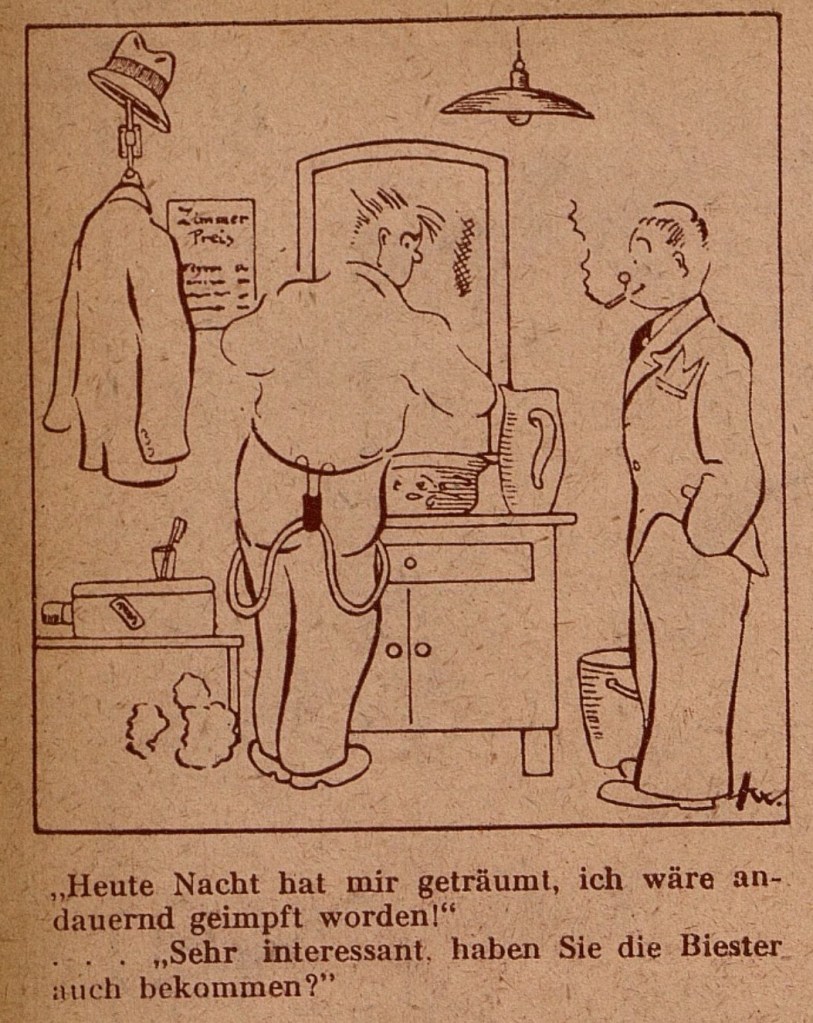
“Last night I dreamed that I was constantly being vaccinated!” “Very interesting, did you get the beasts too?” (Der Lichtblick, Vienna, 1946) (Idiom needs improvement)
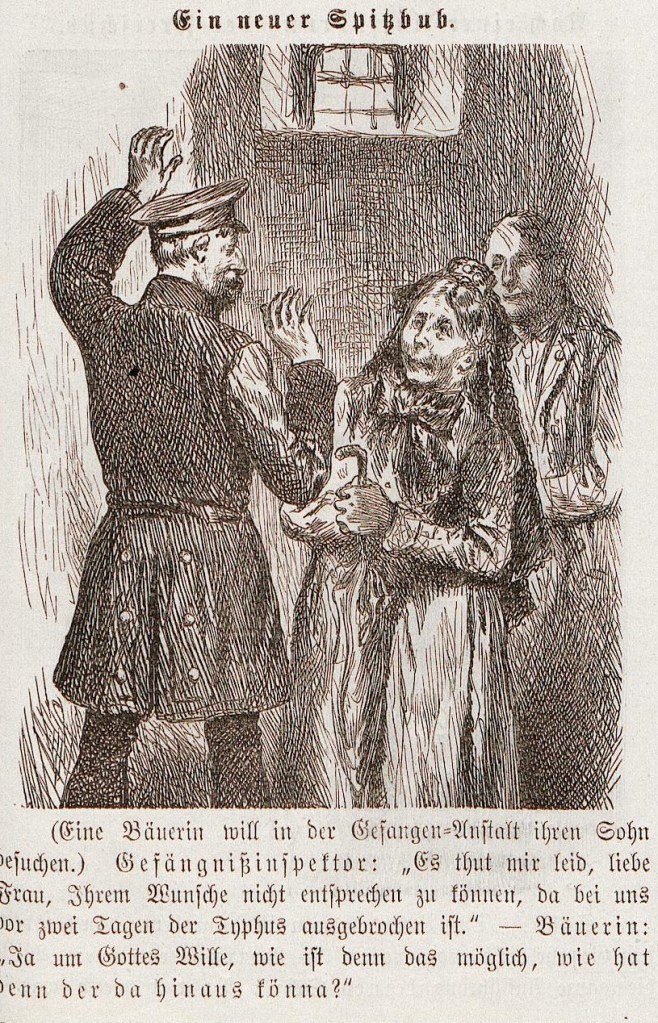
(A farmer woman wants to visit her son in prison.) Prison warden: “I’m sorry I can’t accommodate your wish, dear lady, two days ago the typhus broke out here.” Farmer woman: “Oh for God’s sake, how is that possible, how could he have gotten out of there?” (Some untranslatable wordplay here, with the farmer woman confusing “typhus” [Typhus] and “type” [Typus], as in, “the type of guy who would try to break out of prison.”) (Fliegende Blätter, Munich, 1873)
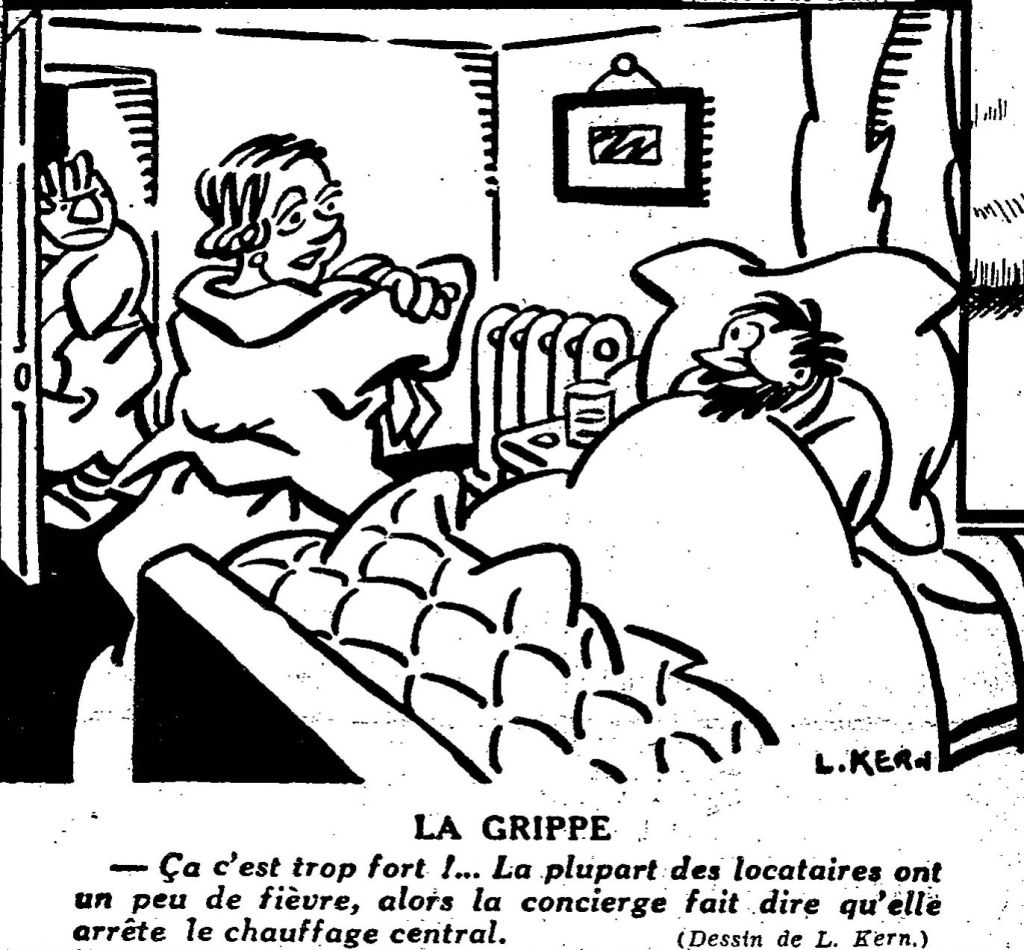
“This is too much! Most of the tenants have a bit of a fever, so the building supervisor says she’s shutting off the central heating.” (Ric et Rac, Paris, 1933)
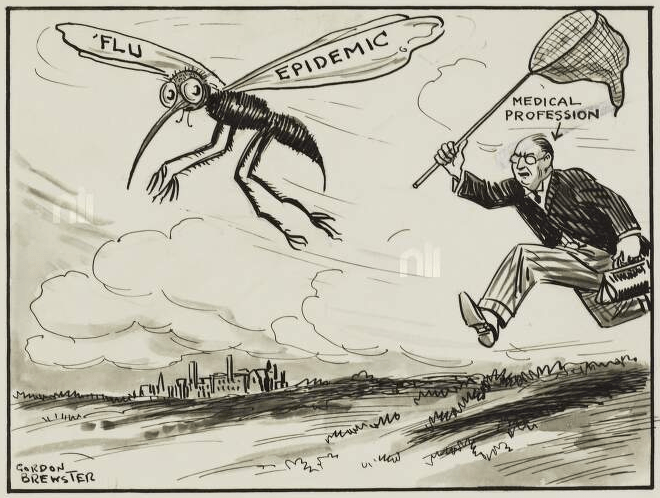
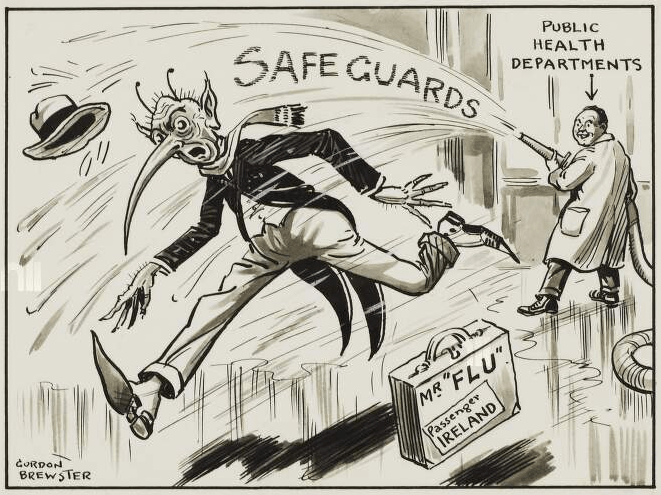
(Note the misplaced use of a vector for influenza.) (Evening Herald, Dublin, 1929; from the Gordon Brewster Cartoon Collection, National Library of Ireland.)
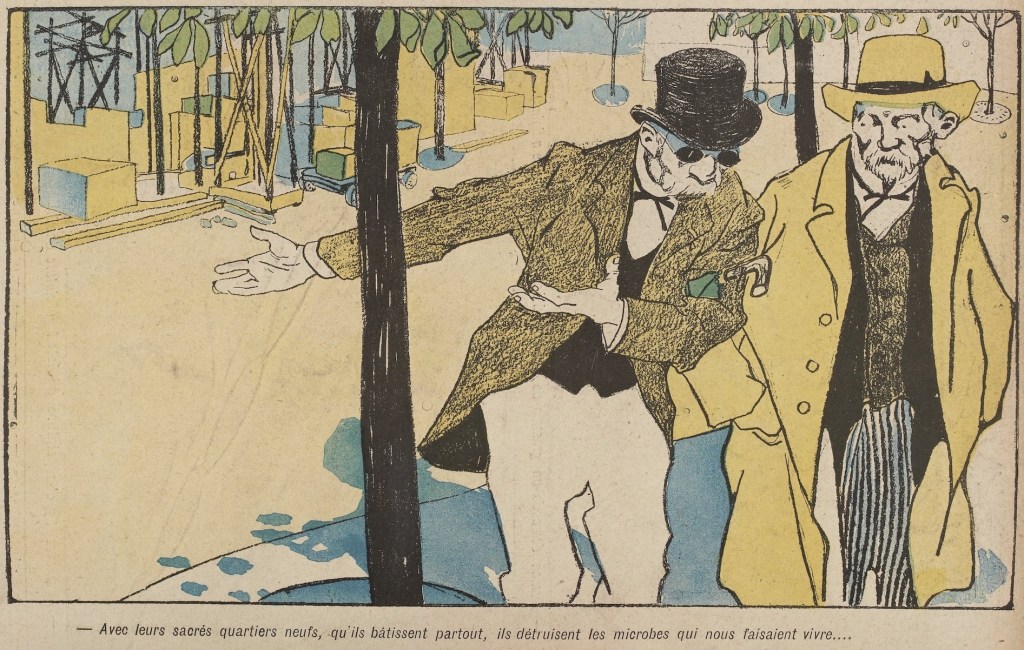
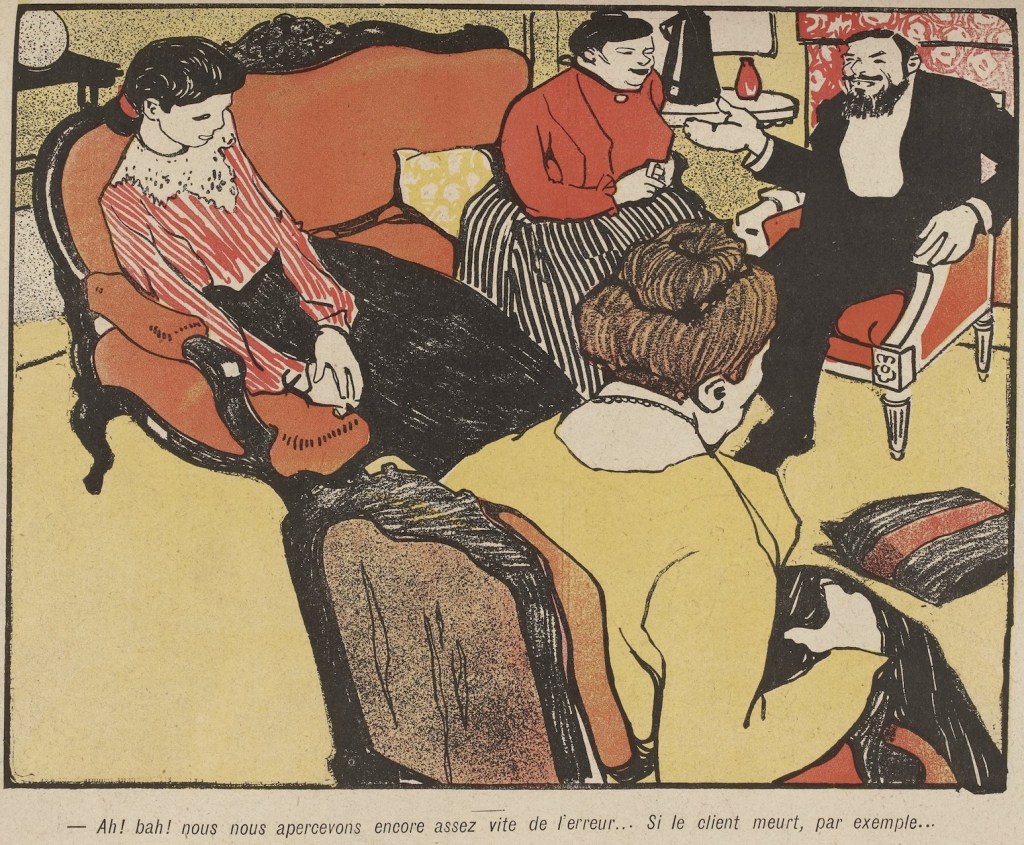
(Pharmacist) “With their bloody new neighborhoods that they’re building everywhere, they are destroying the microbes that make our living…” (L’Assiette au beurre, Paris, 1903)
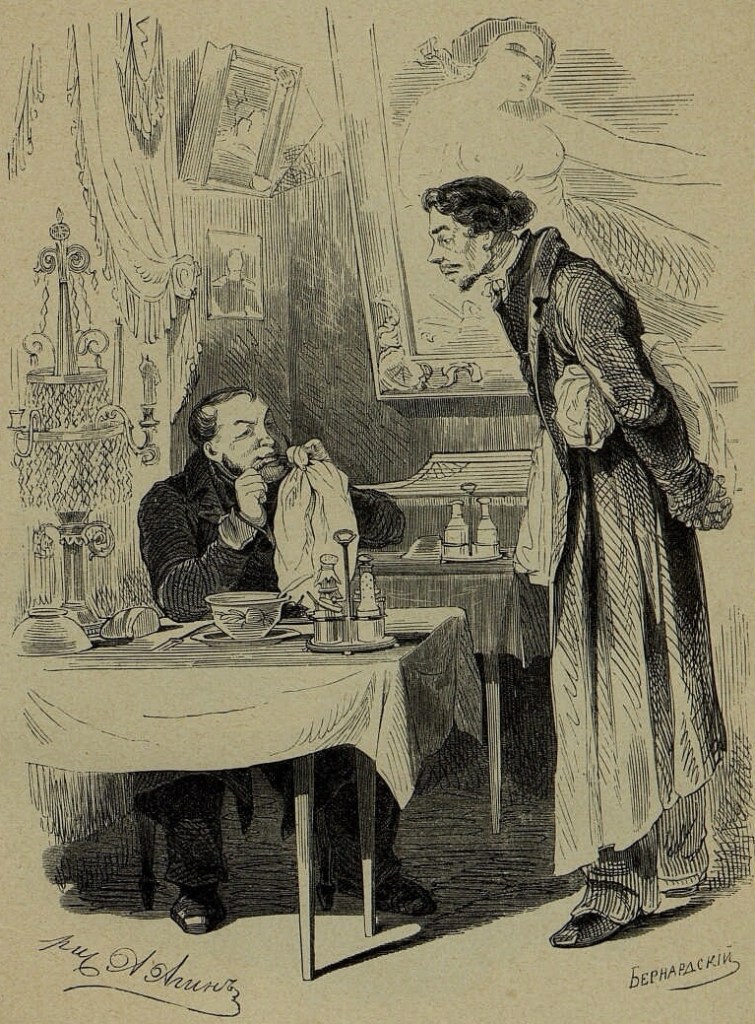
“….I asked around attentively about the state of the region. Were there any diseases in their province, rampant agues, any kind of deadly fevers, smallpox and the like…” (Illiustratsiia, St. Petersburg, 1846; reprinted in A. A. Agin (artist) and E. E. Bernadskii (engraver), 100 Drawings for Gogol’s Dead Souls, 1892)
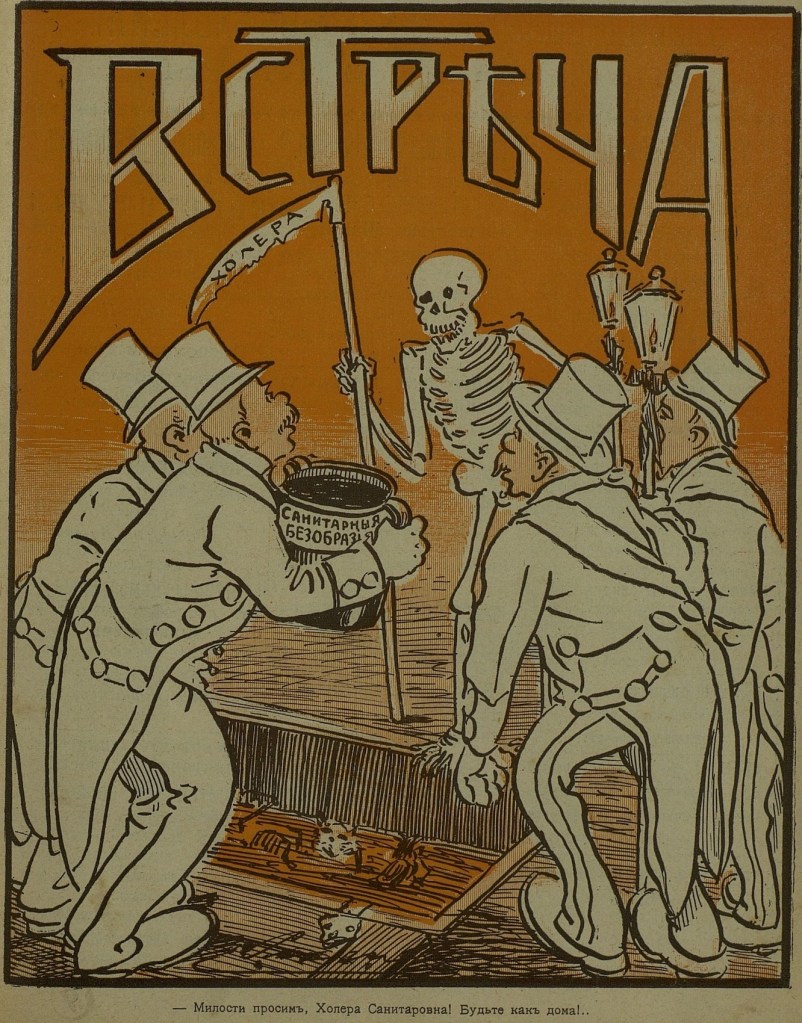
(Pot of “Public health ignorance,” with death bearing scythe marked “cholera.”) “Welcome, Cholera Sanitarovna! Make yourself at home!” (Iumoristicheskii al’manakh, St. Petersburg, 1908)

 Sic Transit Pestilentia