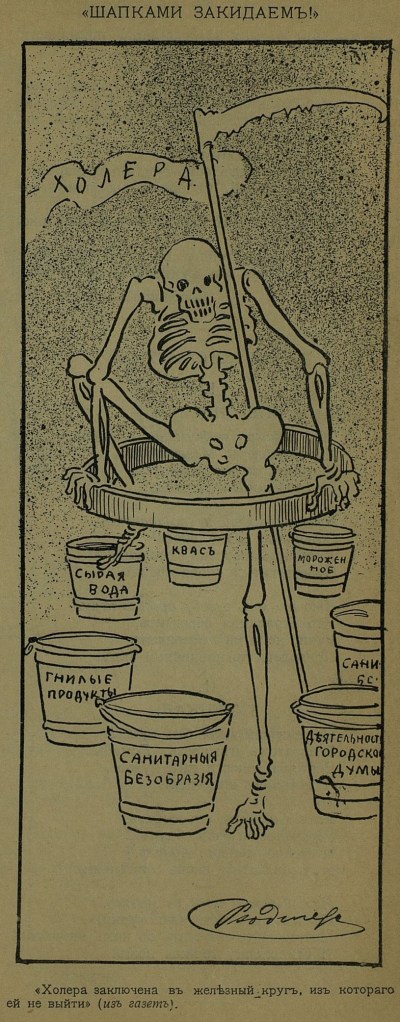
(Cholera miasma in the air… Buckets labeled “Rotten vegetables,” “Public health ignorance,” “Municipal activities,” “Ice cream,” “Kvas,” and “Polluted water.”) “Cholera is contained in an iron circle from which it cannot get out.” (from the newspapers) (Iumoristicheskii al’manakh, St. Petersburg, 1908)
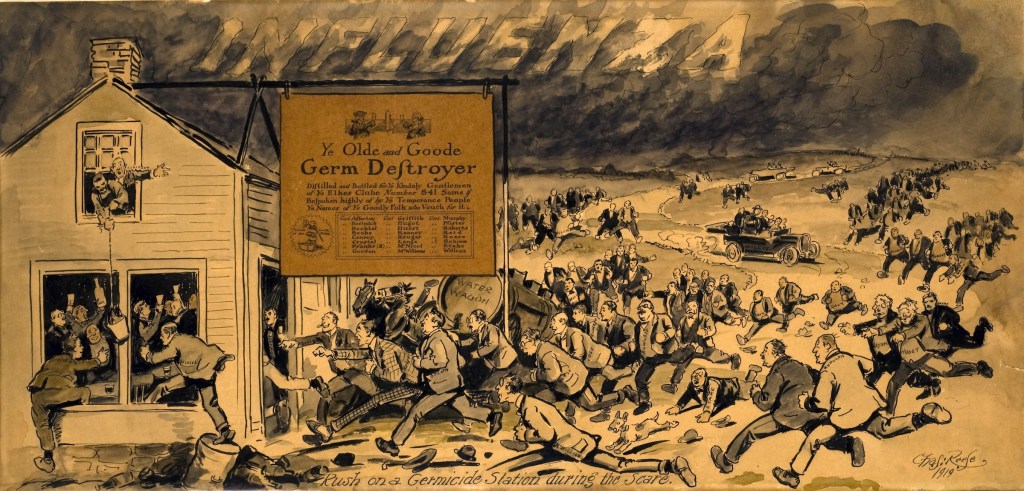
(Miasma of INFLUENZA in the sky above) Distilled and bottled for ye kindely Gentlemen of ye Elkes Clube Number 841. Rush on a Germicide Station during the Scare. (Charles Reese, 1919, via National Library of Medicine)
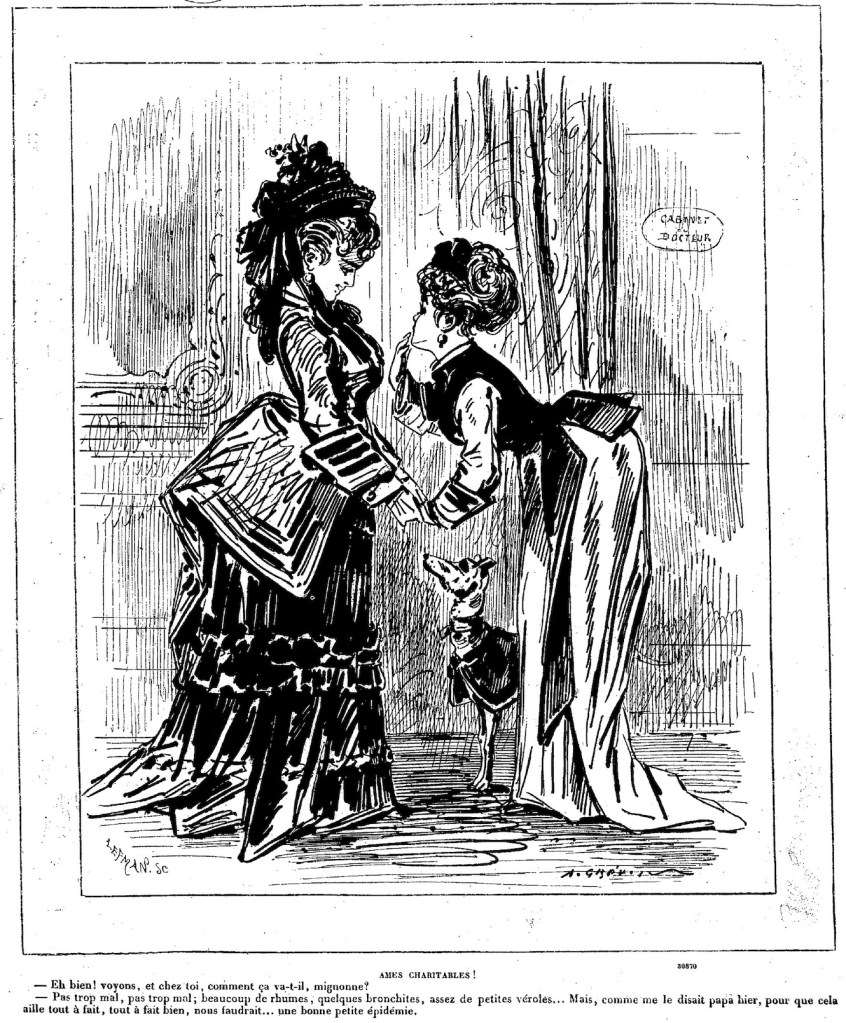
“Well! let’s see, and at your place, how’s it going with you, cutie?” “Not too bad, not too bad; lots of colds; a bit of bronchitis, some smallpox… But, as papa was saying to me yesterday, for everything to go altogether, entirely well, we would need… a good little epidemic.” (Le Journal amusant, Paris, 1872)
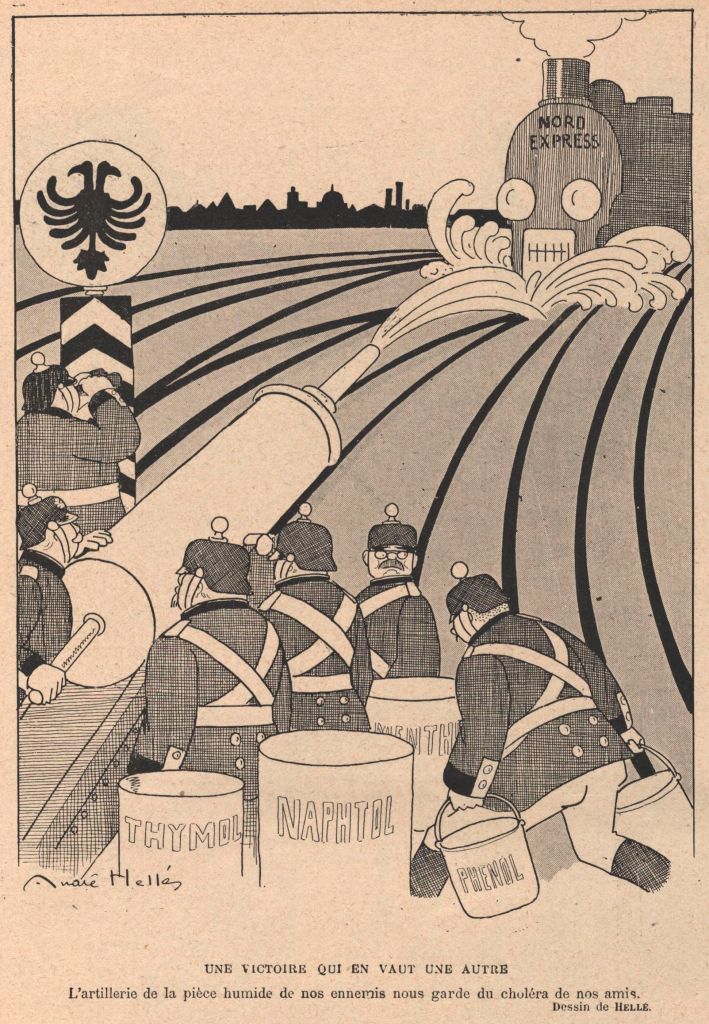
(A large clystère cannon is being loaded with various disinfectants by Prussians.) Our enemies’ damp-room artillery guards us from the cholera of our friends. (Le Rire, Paris, 1908)
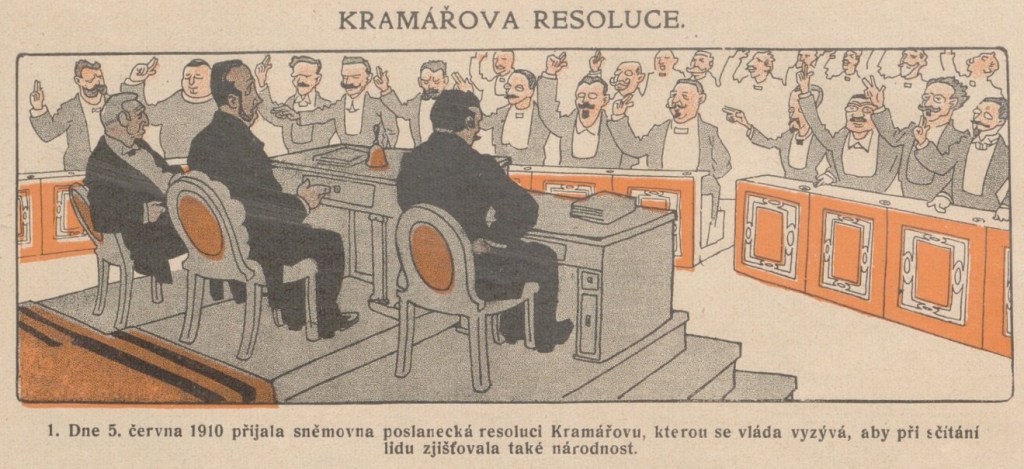
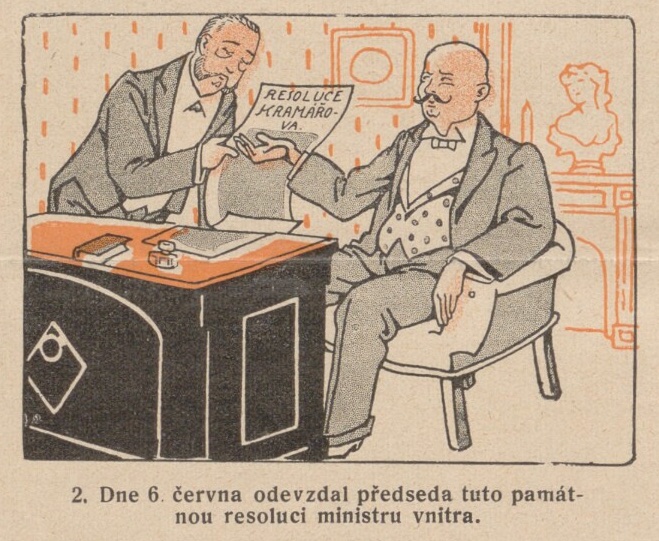
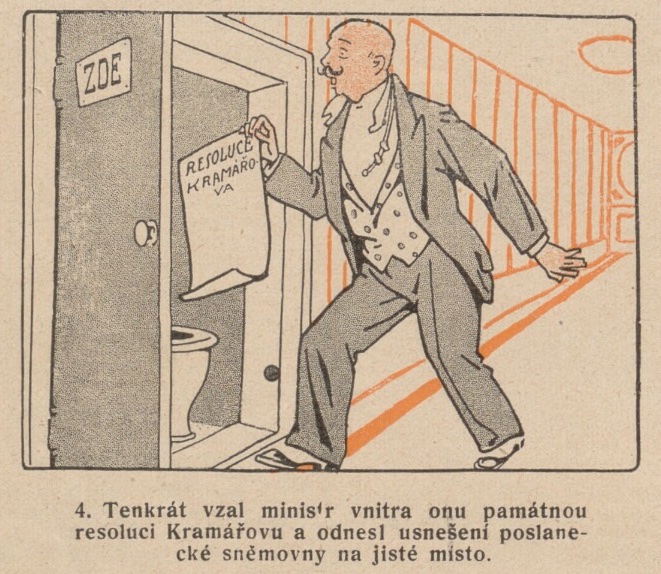
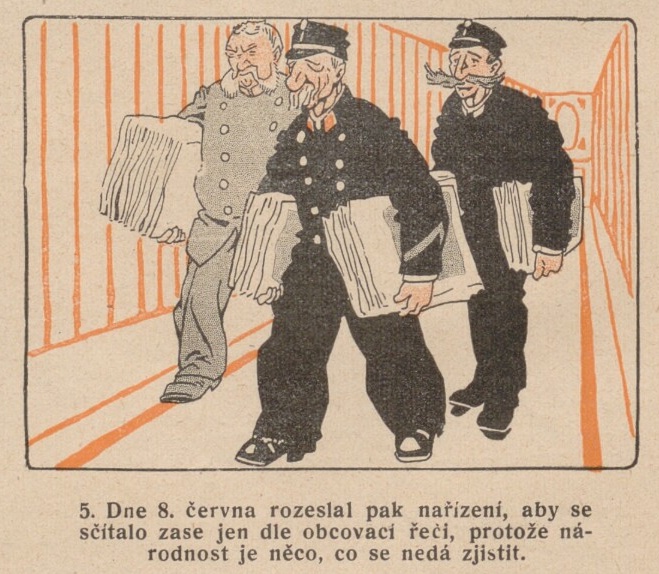
Karl Kramář was the leader of the Young Czech Party in Austria-Hungary. The Austro-Hungarian Minister of the Interior was Guido von Haerdtl, a German nationalist known for his hostility to Czech interests, especially regarding the use of anything but German as the official language in bureaucratic matters. (Kopřivy, Prague, 1910)
On June 5, 1910, the Chamber of Deputies adopted Kramář’s parliamentary resolution, which called on the government to ascertain nationality during the census.
Czech cholera cartoon
On 6 June, the President forwarded this memorable resolution to the Minister of the Interior.
On June 7, the Minister of the Interior felt that he was experiencing symptoms of cholera.
At that time, the Minister of the Interior brought the memorable Kramář resolution and took the decree of the Chamber of Deputies away to a certain locale.
On June 8, he sent out an order to add it again only according to conversational language, because nationality is something that cannot be ascertained.
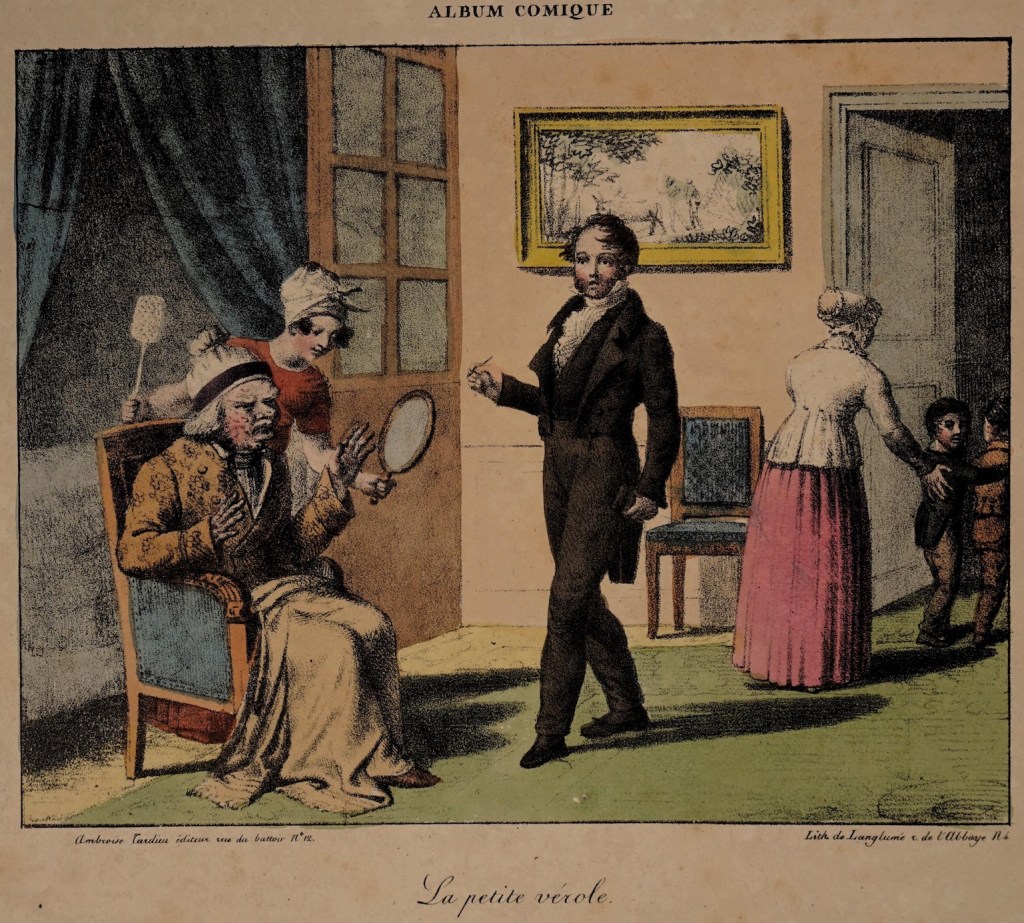
A wealthy but incapacitated old man whose depiction is more edifying than amusing, as impressionable young children are led away from the brutal scarring of smallpox. Note the young lackey poised to lance the pustules. Excerpt from an accompanying text: “Strike the face! is also the battle cry of smallpox: the nose, the mouth, and the eyes are found by it as if cast into a mold, and one hardly cares to run the chance of a revision, the results of which are so clearly planned. It is true that if the smallpox comes to deprive you of an eye, to make you deaf in an ear, it will take care to enlarge your nose, to thicken your lips, to enlarge your mouth, and thus establish a balance between profits and losses.” (Charles Aubry et al., Album comique de pathologie pittoresque, recueil de vingt caricatures médicales, Paris, 1823, via Wellcome Collection)
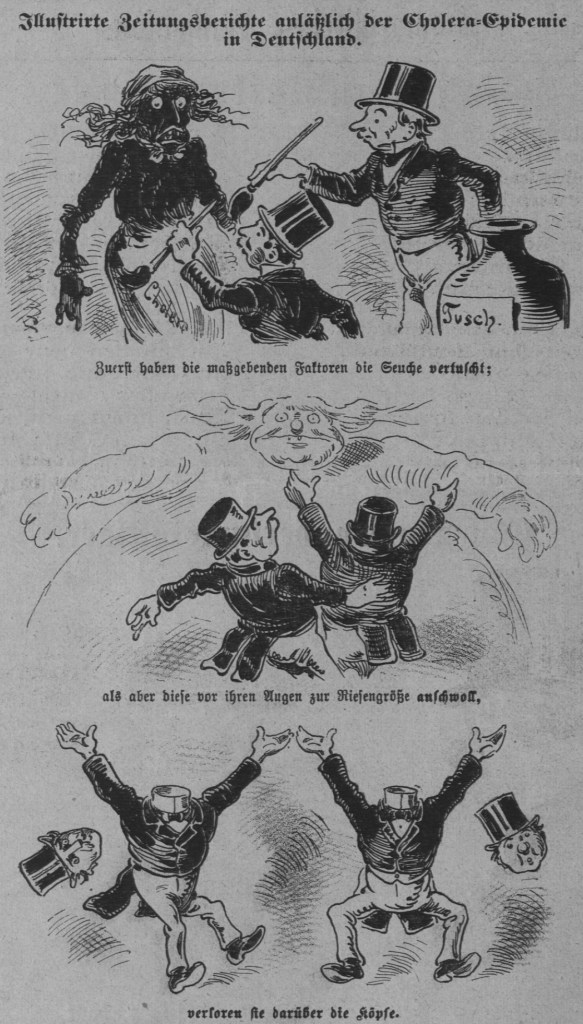
First the decisive factors covered up the contagion; but when it swelled to gigantic proportions before their eyes, they lost their heads over it. (Kikeriki, Vienna, 1892)
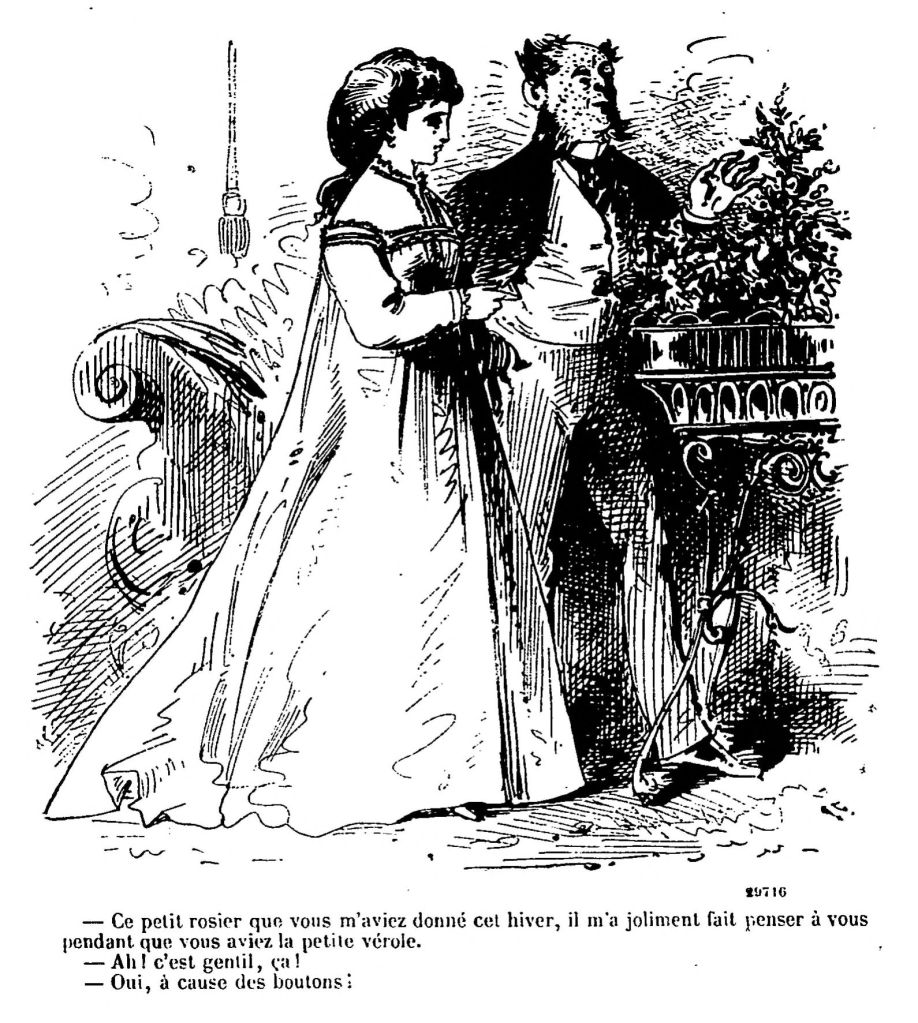
“This little rosebush that you gave me this winter, it nicely reminded me of you when you had smallpox.” “Ah! that’s sweet!” “Yes, because of the buds!” [a synonym for pimples] (Le Journal amusant, Paris, 1871)
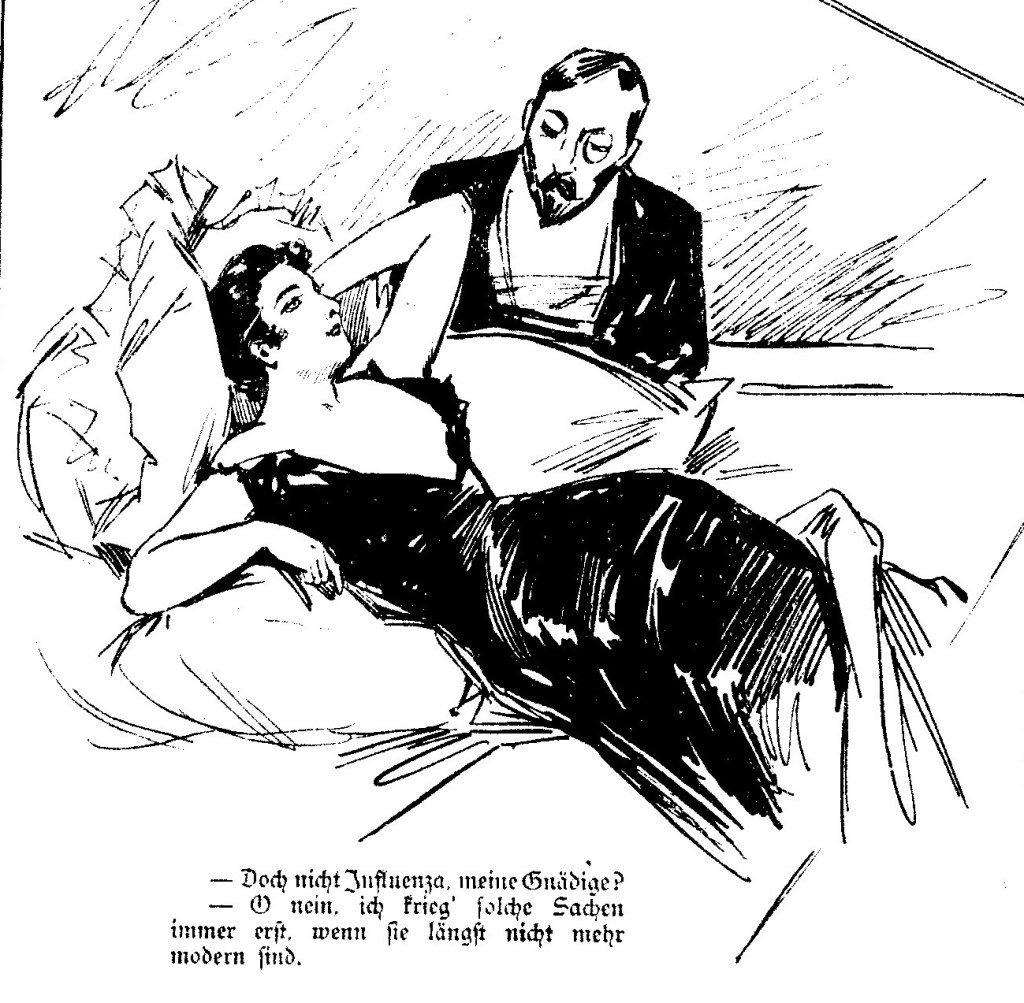
“It isn’t influenza, is it, my lady?” “Oh no, I only get such things when they are no longer modern [i.e., in fashion].” (Wiener Caricaturen, Vienna, 1893) (An inversion of another Austrian cartoon.)
“Ah! what a year! what a year! The foreign invasion, the civil war, the smallpox, the rinderpest!” “And with all that, my spinach which did not want to go to seed!” (Le Journal amusant, Paris, 1871)
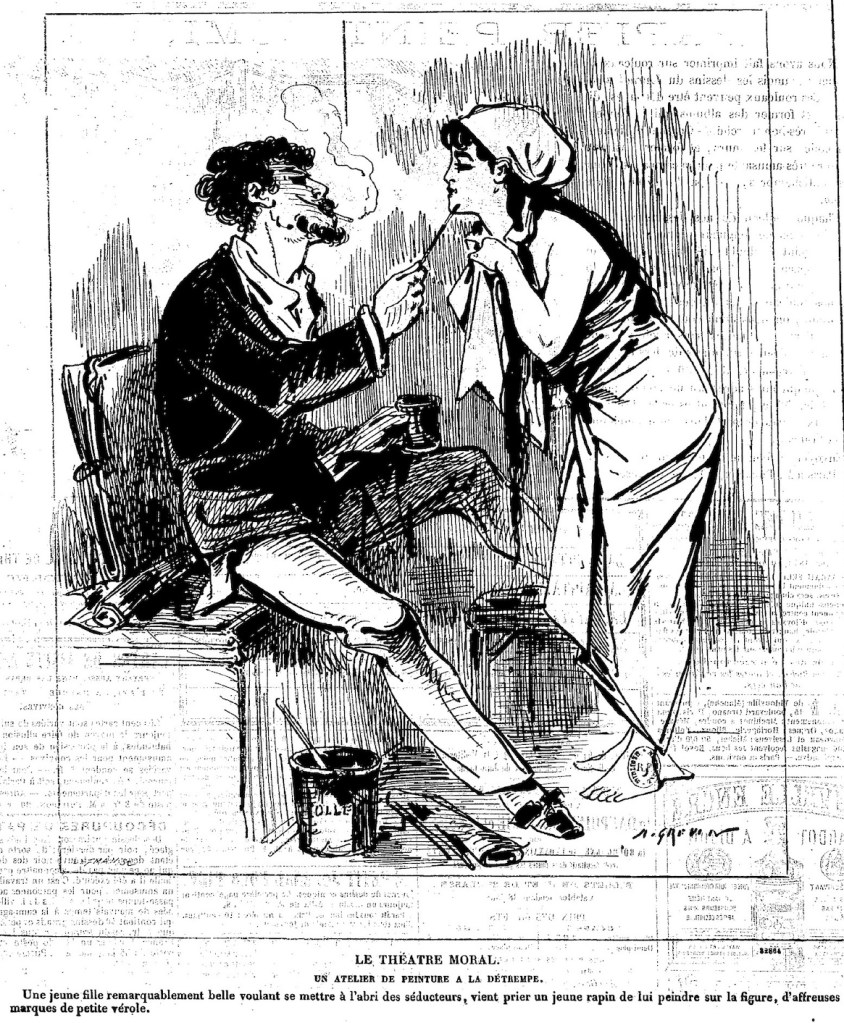
A tempera painting workshop A remarkably beautiful young girl, wishing to take shelter from seducers, comes to beg a young assistant to paint her face with frightful marks of smallpox. [“Rapin” is richer with meaning than “assistant,” and designates a painter without talent, but possessing bohemian allure.] (Le Journal amusant, Paris, 1874)
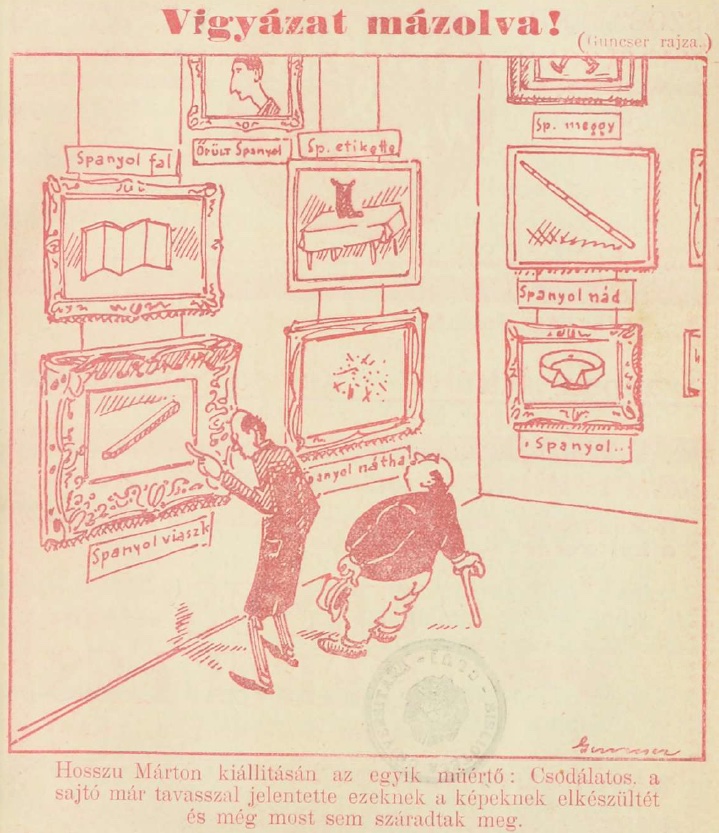
One of the connoisseurs at Márton Hosszu’s exhibition [where various Spanish objects are on display. Hosszu (b. 1894) had recently returned from a pilgrimage to Spain. The picture in front of the rotund man is labeled “Spanish flu.”] “Amazingly, the press already announced the completion of these images in the spring and they still haven’t dried.” (Vágóhíd, Kolozsvár-Cluj, 1926)
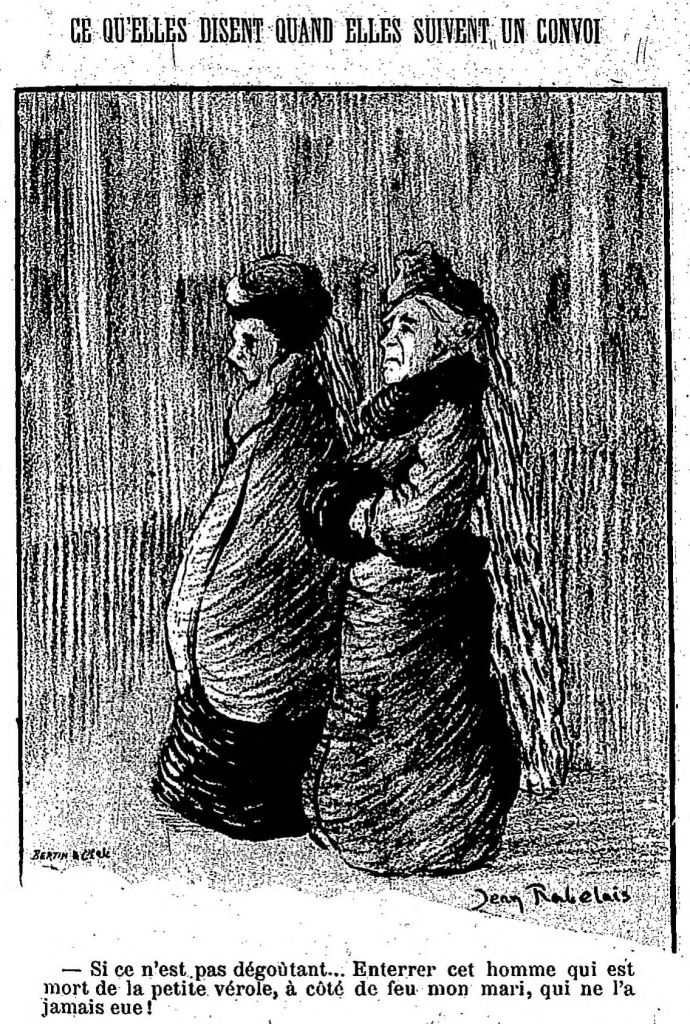
“As if it wasn’t disgusting… Burying this man who died of small pox next to my late husband, who never had it!” (La Caricature, Paris, 1902) (A German cartoon in a similar vein.)


 Sic Transit Pestilentia