
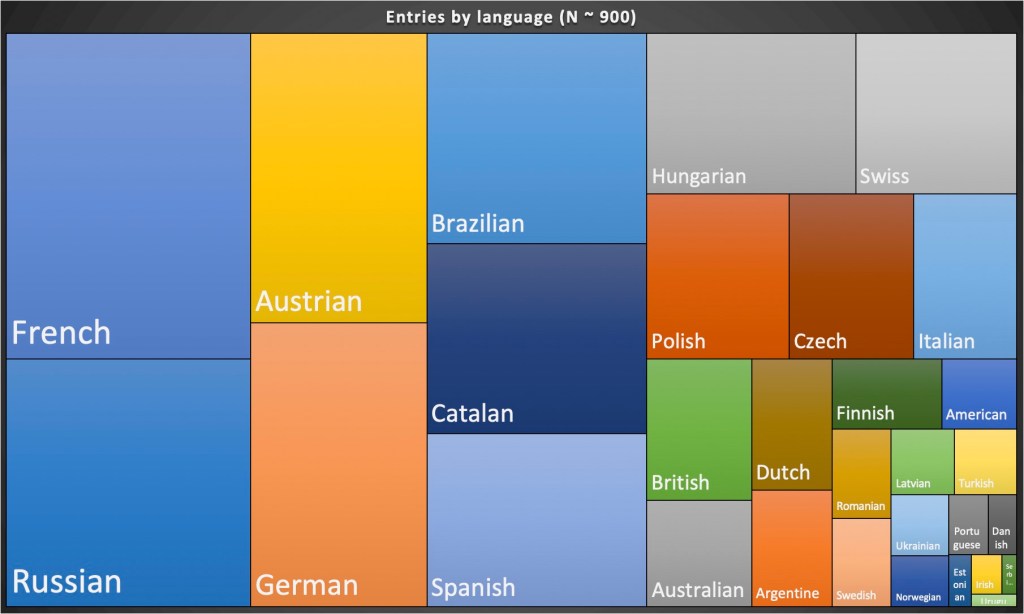
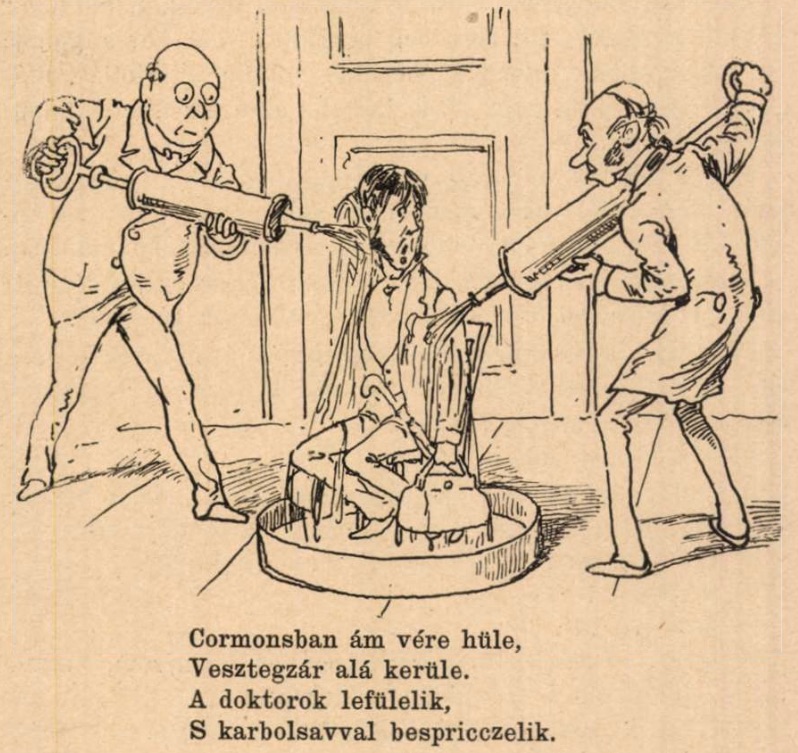
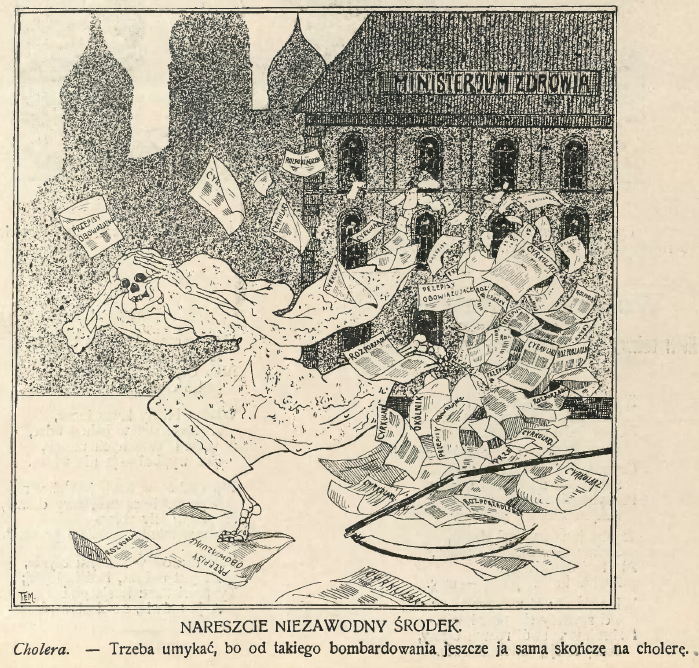
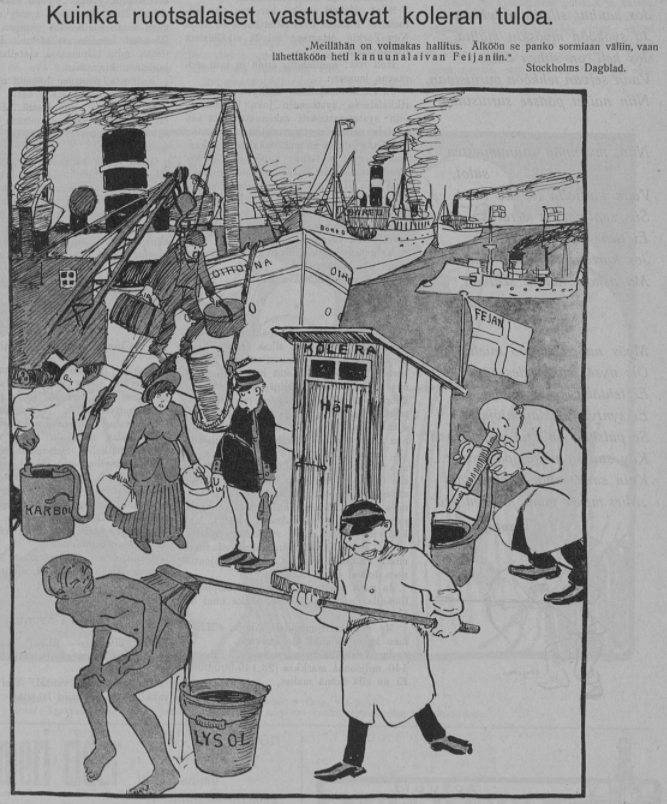
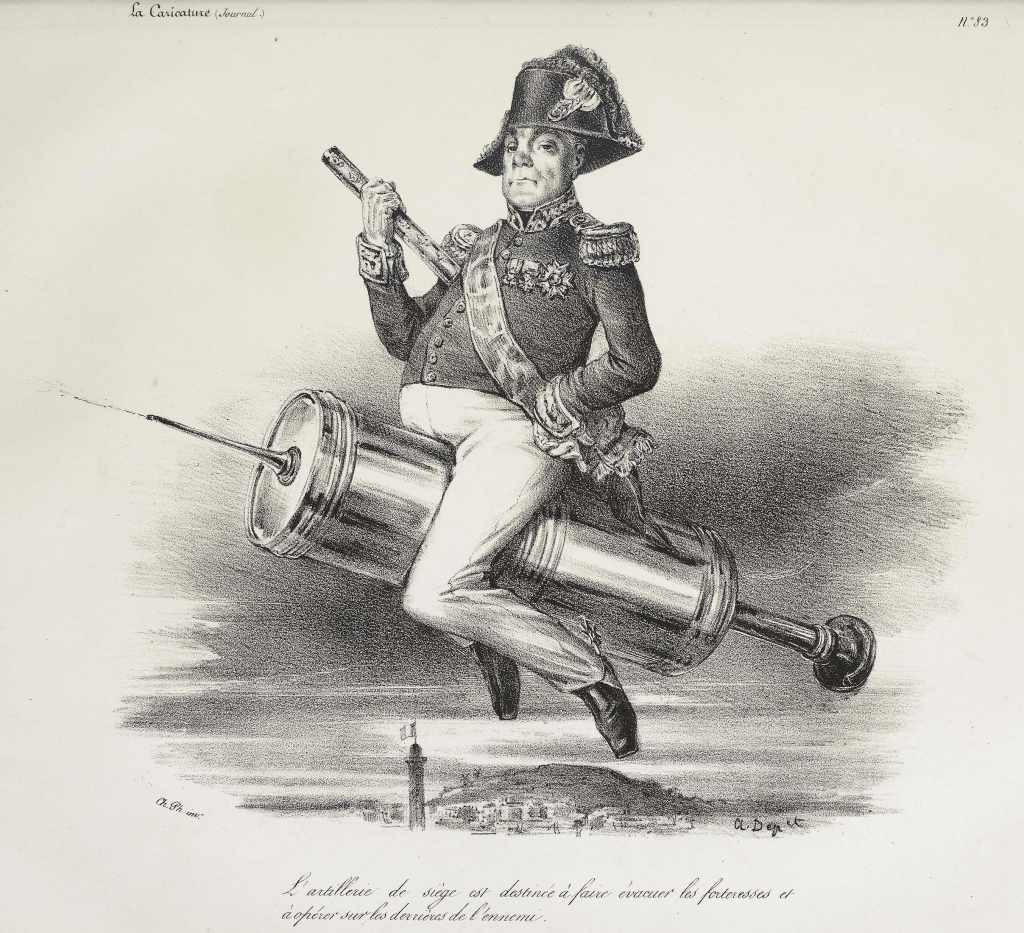
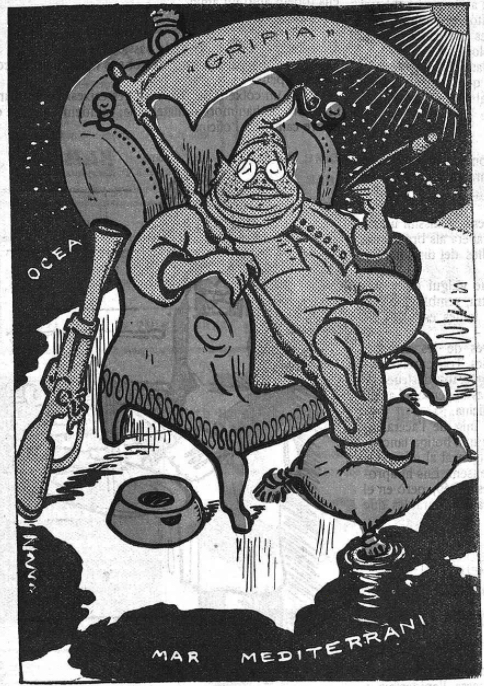
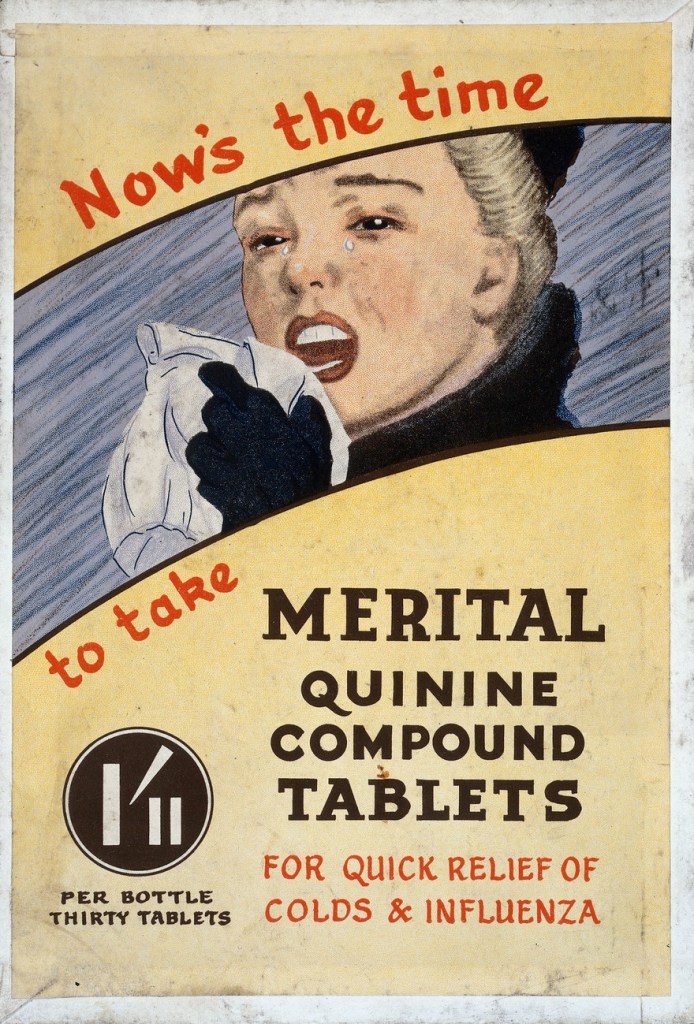
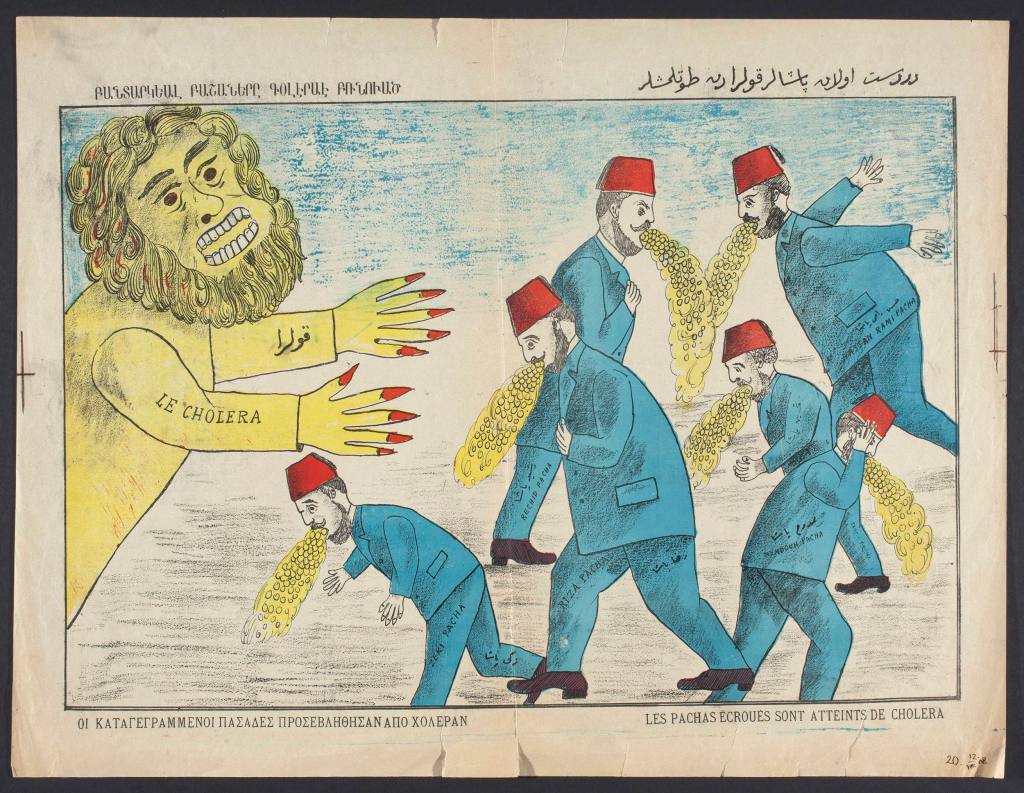
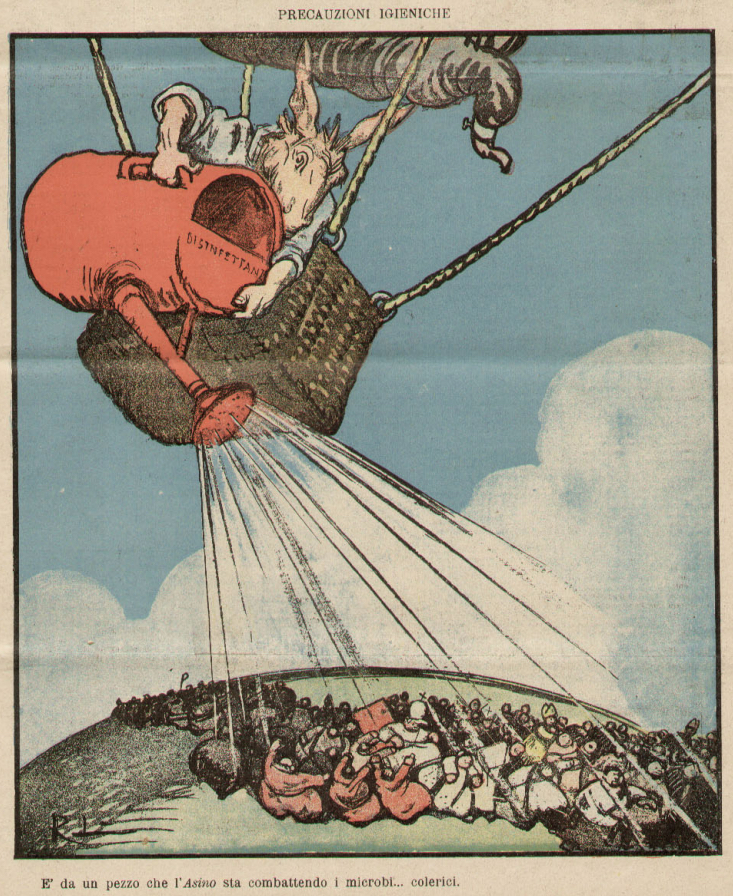
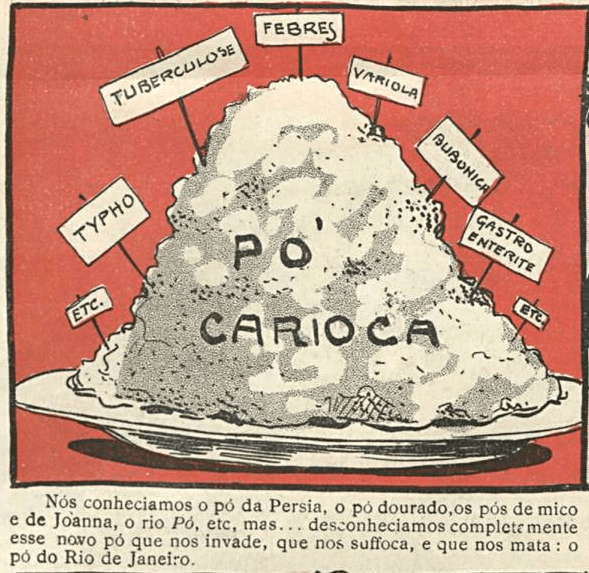
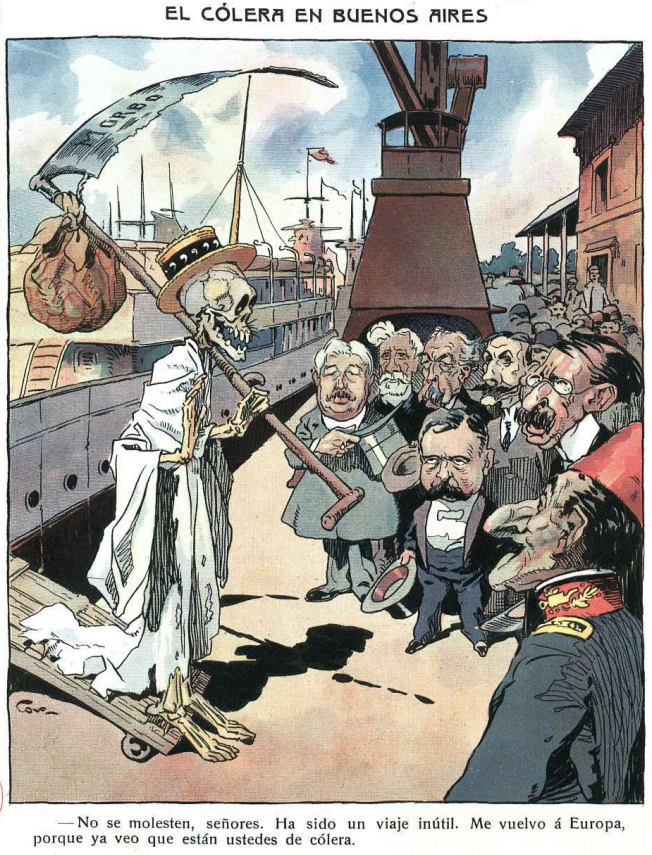
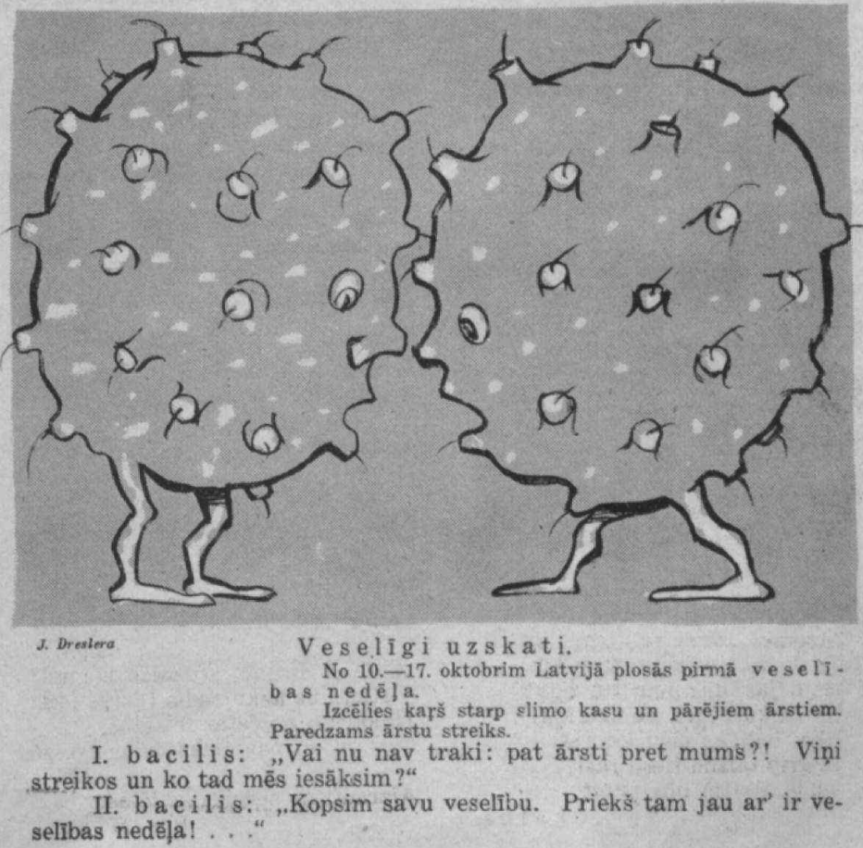
This site offers an extensive collection of publicly available images related to past epidemics in the age of mass print. The vast majority come from the Eurasian space, complemented by lively contributions from South America and Australia. Most of the material comes from satirical magazines, though other humorous didactic moments in the history of public health are also featured. The images are collected in language categories (scroll down this page), as well as in the tag cloud in the right-hand column of all pages. (Or select the language tag for any individual entry to see all related entries, e.g., Russian.) Here is a diagram of the relative distribution:
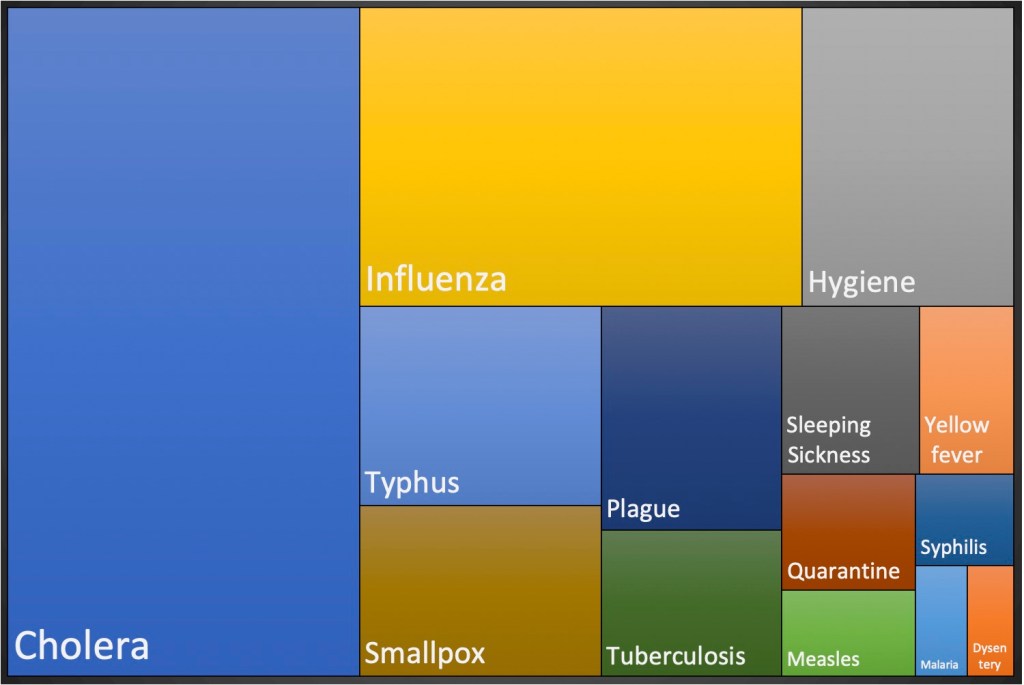
In addition, each entry is categorized by disease, e.g., influenza, cholera, typhus, plague, smallpox, syphilis, tuberculosis, malaria, dysentery, measles, yellow fever, and sleeping sickness along with more general categories like hygiene and quarantine. Click on the relevant category to see all the related entries. Note that I have neglected finer distinctions between epidemic and endemic disease, partly to keep the overlapping satirical responses in view, and partly because contemporary audiences for this humor were seldom attentive to the distinction.
In the case of sleeping sickness, I have also conflated African trypanosomiasis (famously borne by the tsetse fly) and encephalitis lethargica, the mysterious brain inflammation first described by Constantin von Economo in Vienna in 1917. The former was a distant colonial object of European fascination early in the twentieth century, while the latter was associated with an epidemic from roughly 1915 to 1926, one which may have killed well over one million people globally, but whose etiology was so complex that it simply went unrecognized as a single disease or was subsequently mistakenly confused with influenza, despite the fact that contemporaries readily distinguished their different geographical diffusions.
All the entries are tagged by year as well. Unsurprisingly, there are clusters of entries in 1831, 1873, 1884, 1886, 1892, 1908, 1910, 1911, 1918, 1919, and 1920. Use the tag cloud at right to see if any year that interests you is represented. (Be sure your browser window is wide enough to permit the right-hand column to appear.) Here is a diagram of the relative distribution of disease categories:
Beyond the main Categories and Tags used to organize the images in space and time, you may further consult Themes representing other intersections.

About Me
I am not a public health historian, but I do take an interest in adjacent topics from the history of science, especially in Central and Eastern Europe. Let us say I am self-medicating digitally while confined to my quarters.
Get In Touch
- hallk@ceu.edu
 Sic Transit Pestilentia