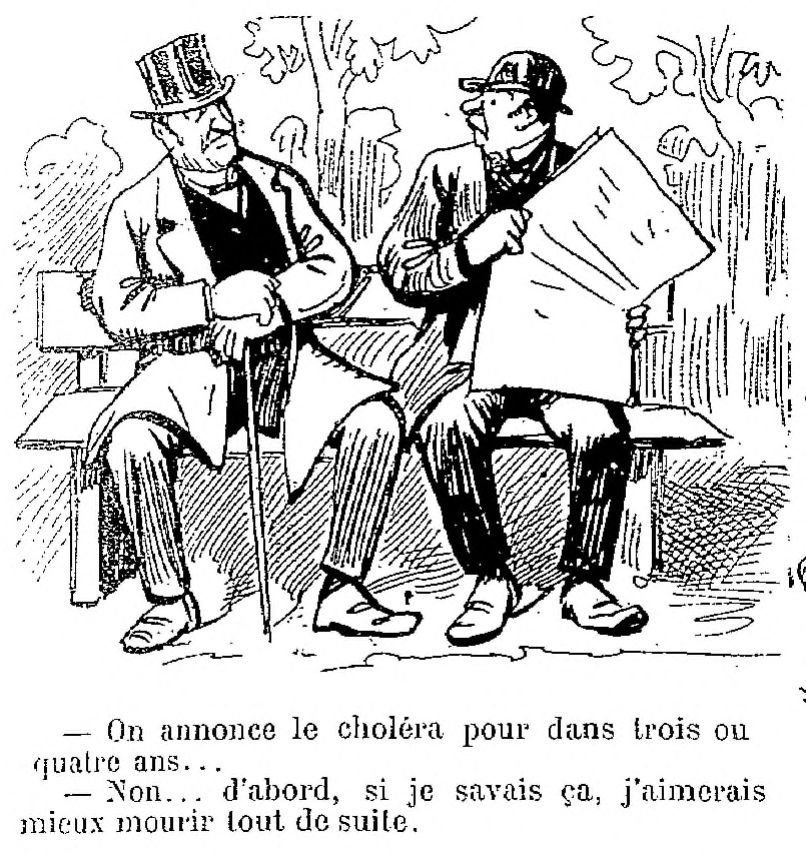
“They’re announcing that cholera will be back within three or four years…”
“No… first of all, if I knew that, I’d rather die right away.”
(Le Journal amusant, Paris, 1905)
“They’re announcing that cholera will be back within three or four years…”
“No… first of all, if I knew that, I’d rather die right away.”
(Le Journal amusant, Paris, 1905)
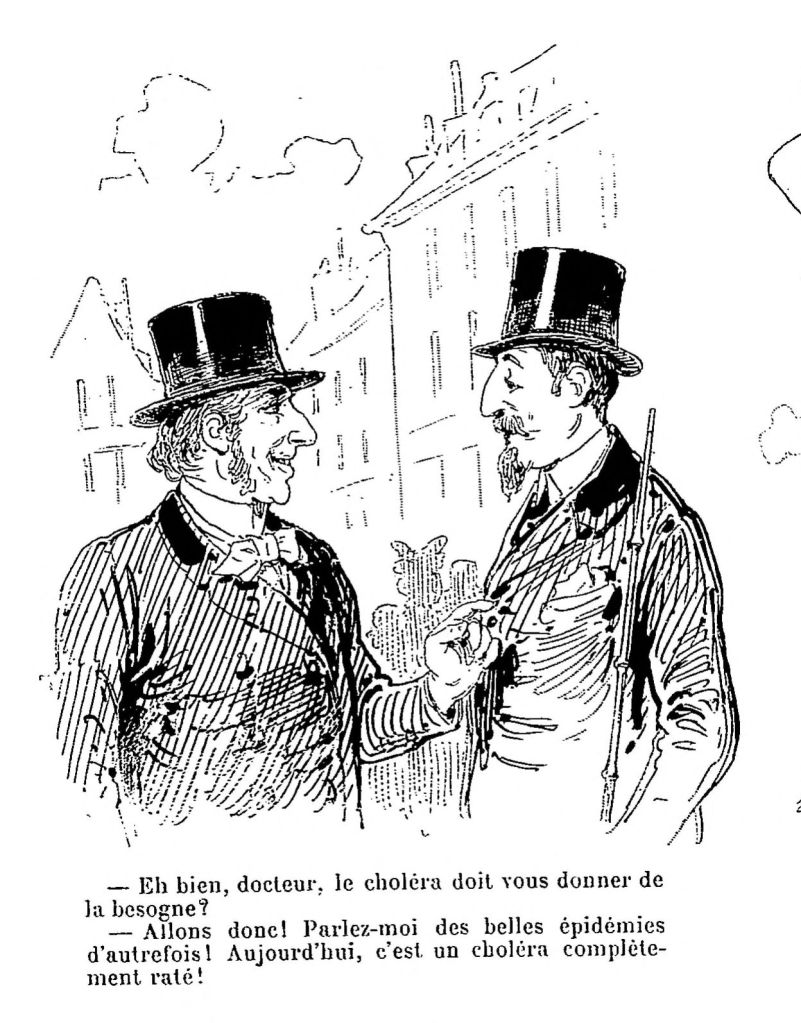
“Well, doctor, the cholera must be making work for you?”
“Come on! Tell me about the beautiful epidemics of yesteryear! Today it’s a completely failed cholera!”
(Le Journal amusant, Paris, 1892)
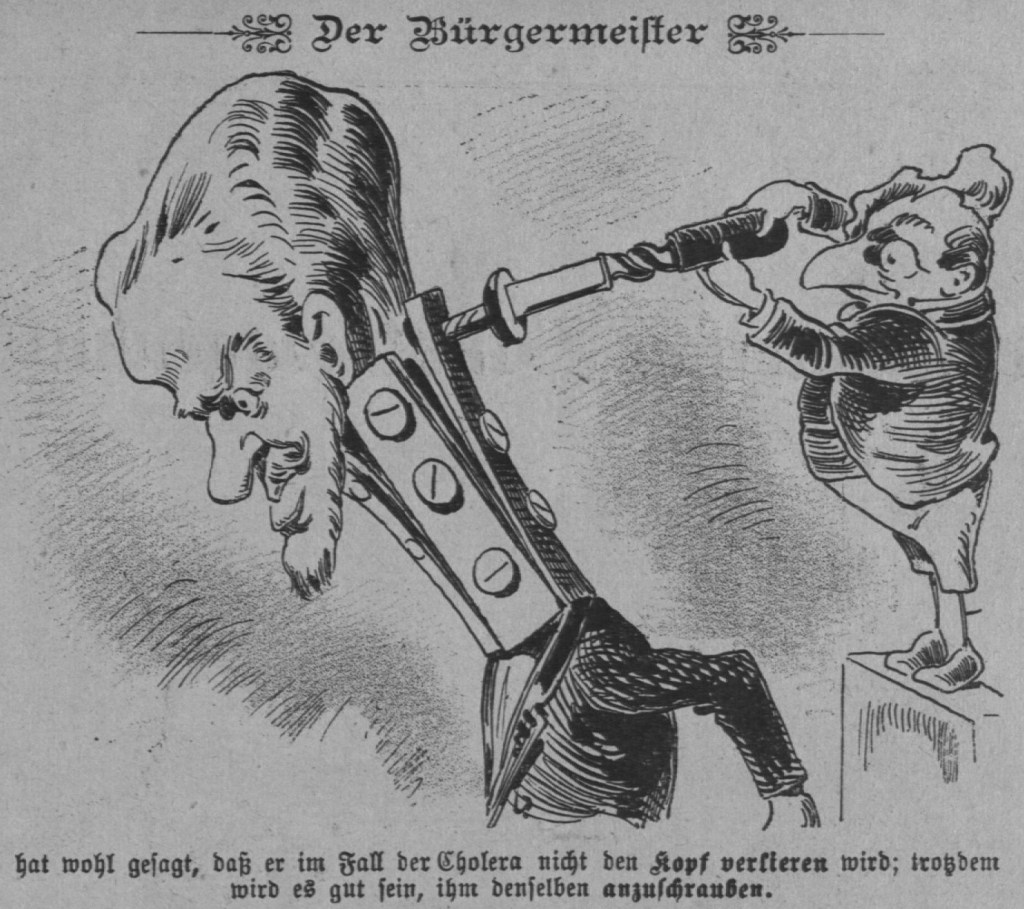
Johann Prix, b. 1836, member of the Progressive Party; presided over the legal expansion of the Vienna municipality. “The major did say that he would not lose his head in case of cholera; it would nonetheless be good to tighten his screws.”
(Kikeriki, Vienna, 1892)
(One of four panels.)
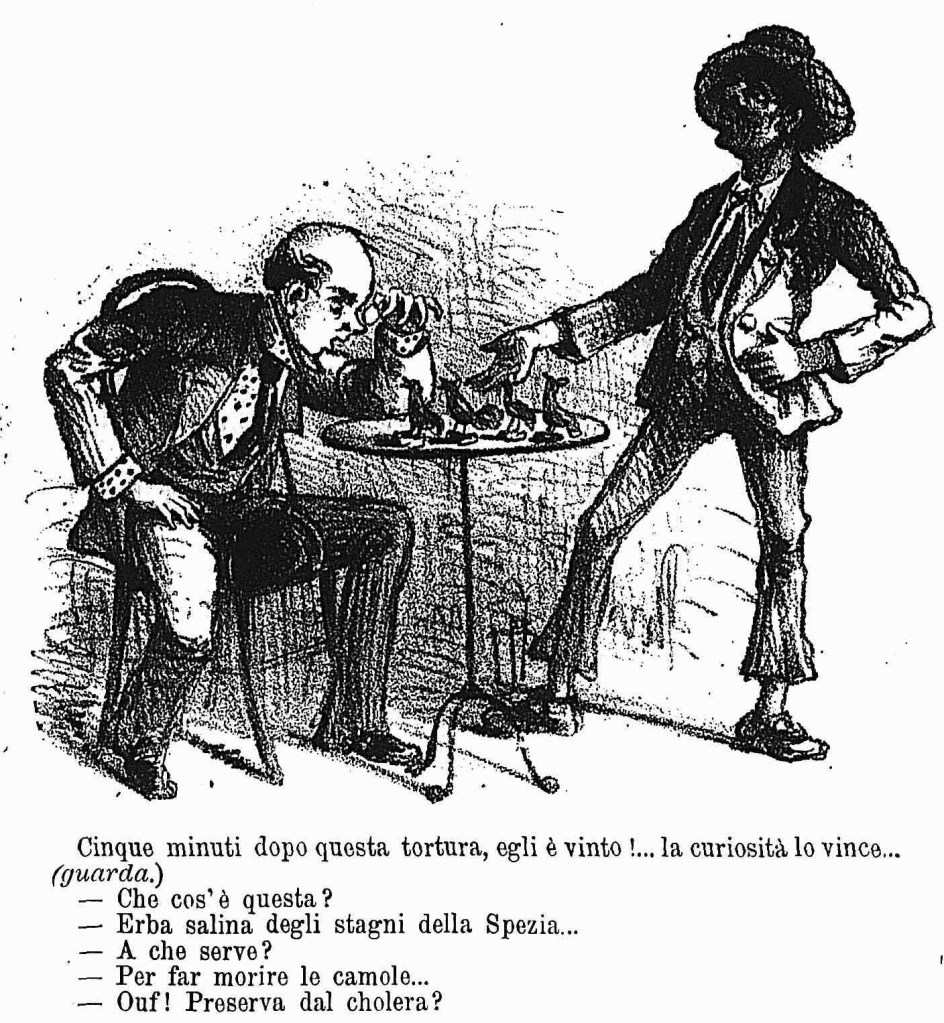
After five minutes of torture, the diner is defeated!… curiosity wins out… (he looks.)
“What is this?”
“Saltwater greens from the ponds of La Spezia…”
“What’s it for?”
“To kill the worms…”
“Ooph! Protection from cholera?”
(Lo Spirito folletto, Milan, 1873)
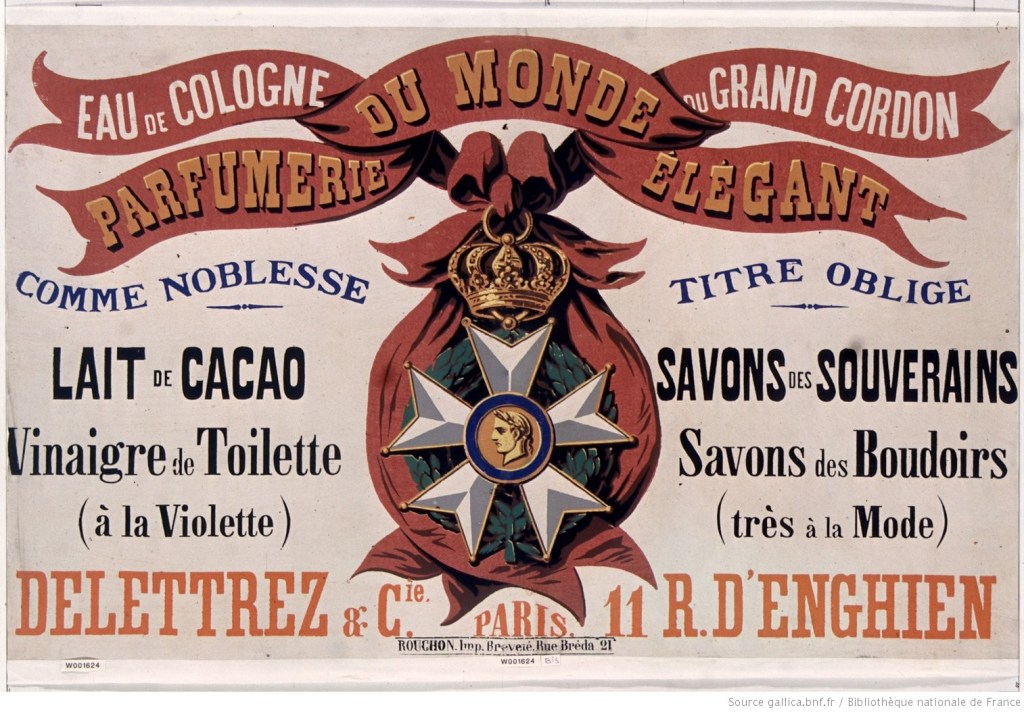
Though we are archiving visual epidemic humor, a brief gesture toward the sense of smell seems appropriate. The Parisian parfumerie Delettrez began selling L’eau de cologne du Grand-Cordon in 1857, and this unisex perfume seems to have established the Delettrez brand. Less expected (at least for me) was its embrace by the Parisian public as one of the many elixirs against cholera. Although Pasteur’s germ theory was beginning to make headway at the time of the 1884 epidemic resurgence, miasmatic theories still predominated in the general public.
Consider this endorsement from Le Voleur illustré: “We could not recommend too much to our readers of both sexes the use of l’eau de cologne du Grand-Cordon, which is not only a first-rate perfume and cosmetic, but also a very effective product against the miasmas and unhealthy fumes so dangerous in times of cholera. It is wise to use l’eau de cologne du Grand-Cordon every morning, to soak your handkerchief and linen with it, and to carry a bottle with you. Such precautions, even if exaggerated, never hurt anyone.”
A different sense of “cordon sanitaire“?
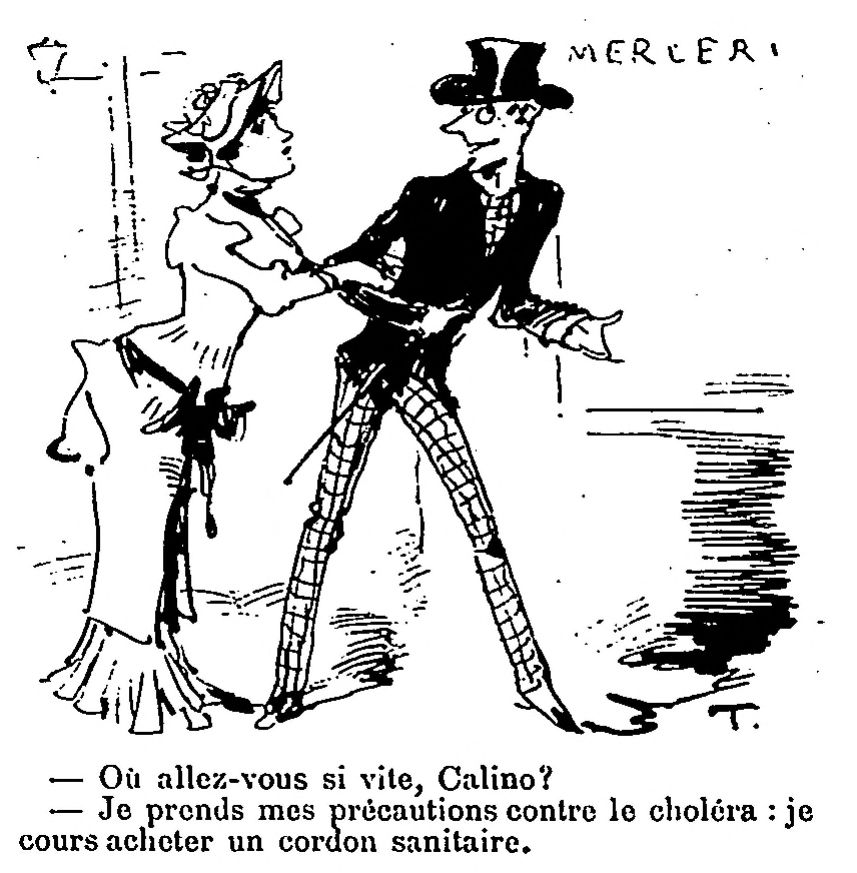
Gabriel Liquier penned cartoons under the aliases Trick and Trock for La Caricature in Paris. Around the time that cholera was peaking again in France in 1884, some of his miscellaneous drawings touched on the epidemic, and we shall collect them together here. (As usual, links to sources are embedded in the images.)
“Where are you going so quickly, Calino?”
“I am taking precautions against cholera: I’m off to buy a cordon sanitaire.”
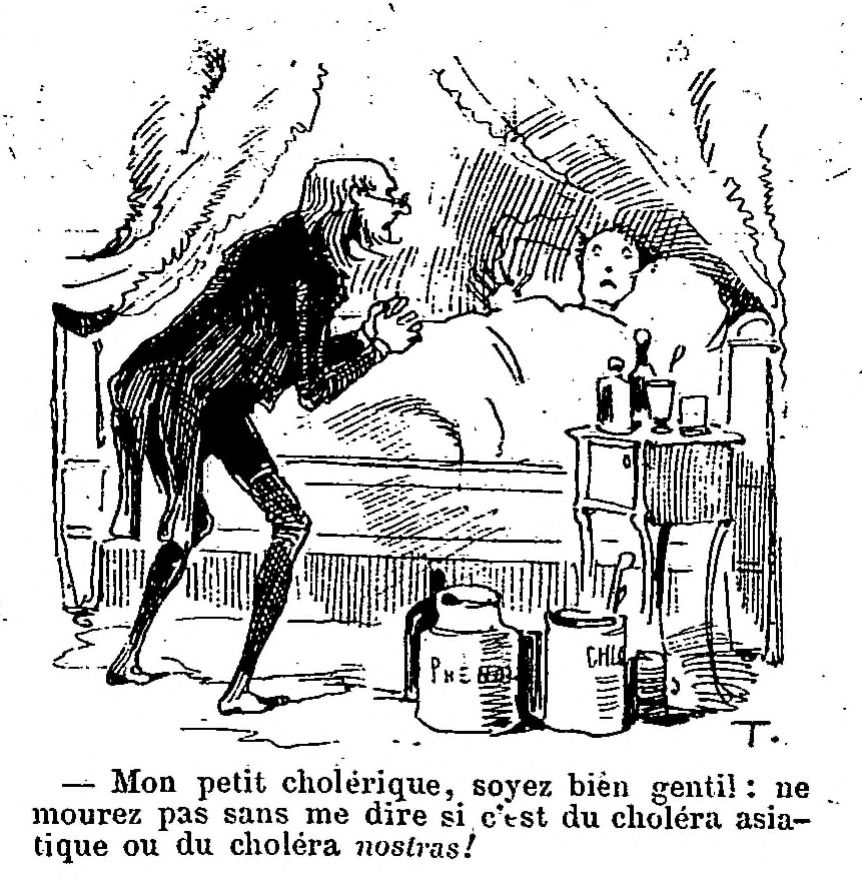
“My little choleric, be very nice: don’t die without telling me if it’s Asian cholera or our cholera!”
“Are you suffering from sciatica? Oh, my poor sir, that is a symptom of cholera…”
“Not possible!”
“It’s a sciatic cholera.” (“Asiatic”)
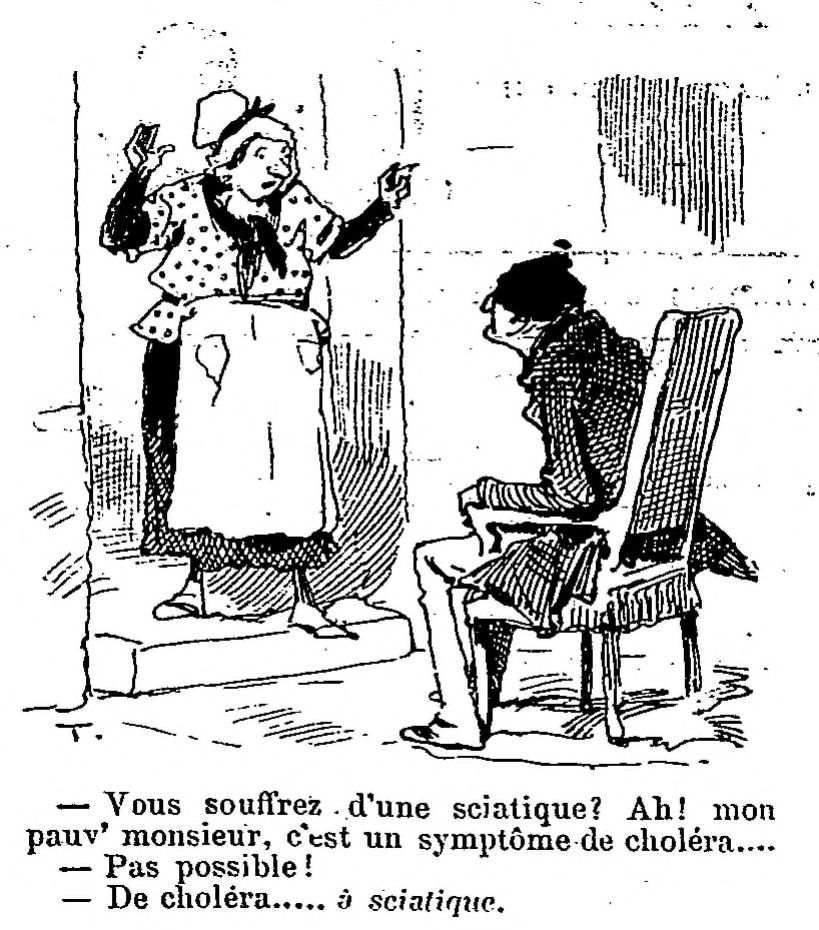
(The same pun was recycled in 1892 in Le Journal amusant.)
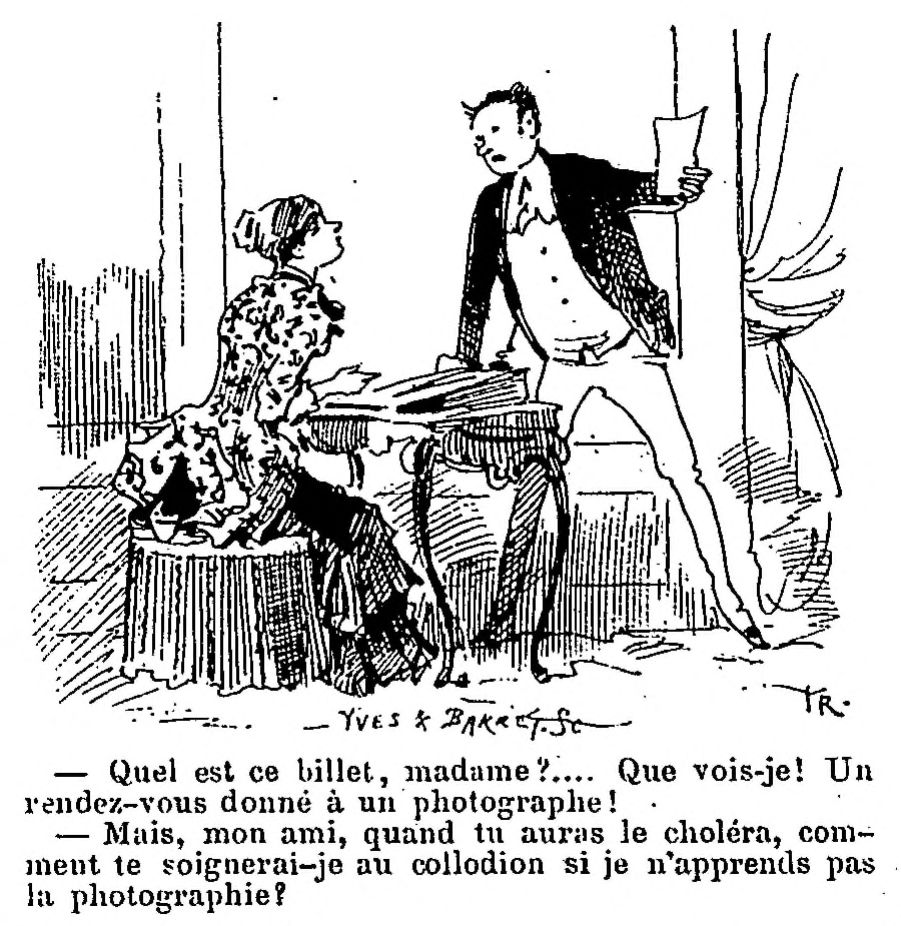
“What is this note, madame?… What am I looking at! An appointment granted to a photographer!”
“But, my love, when you have cholera, how will I cure you with collodion if I don’t learn photography?”
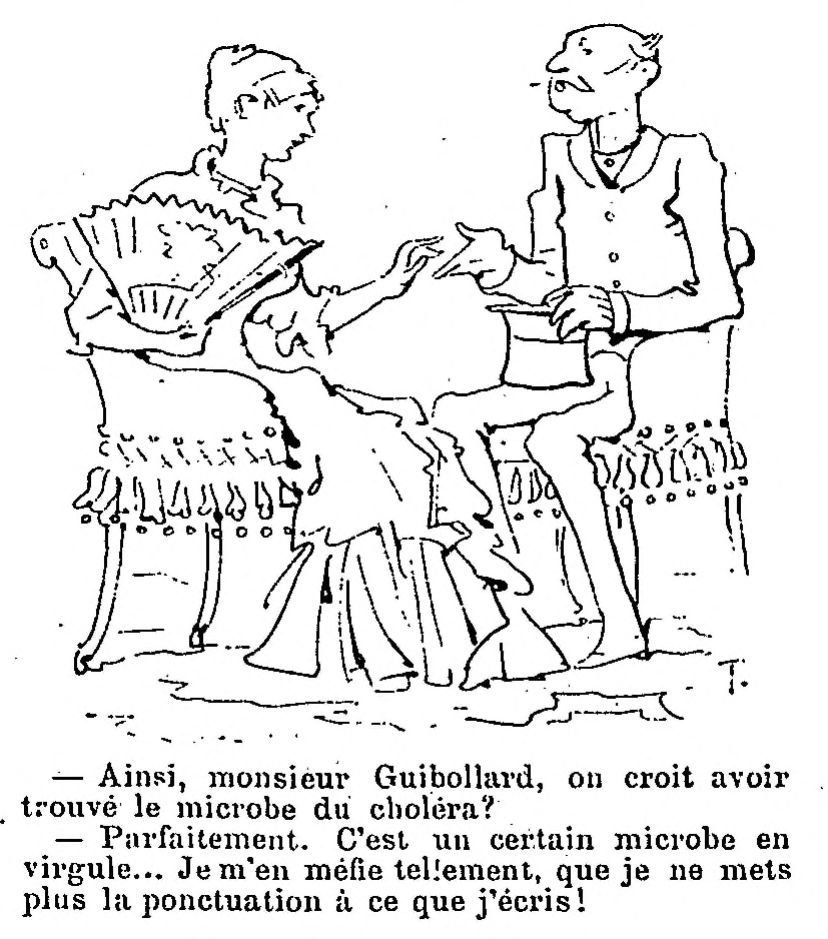
“So, Mr. Guibollard, do they think the cholera microbe has been found?”
“Perfectly. It’s a certain comma microbe… I’m so sure of it that I no longer put punctuation in what I write!”
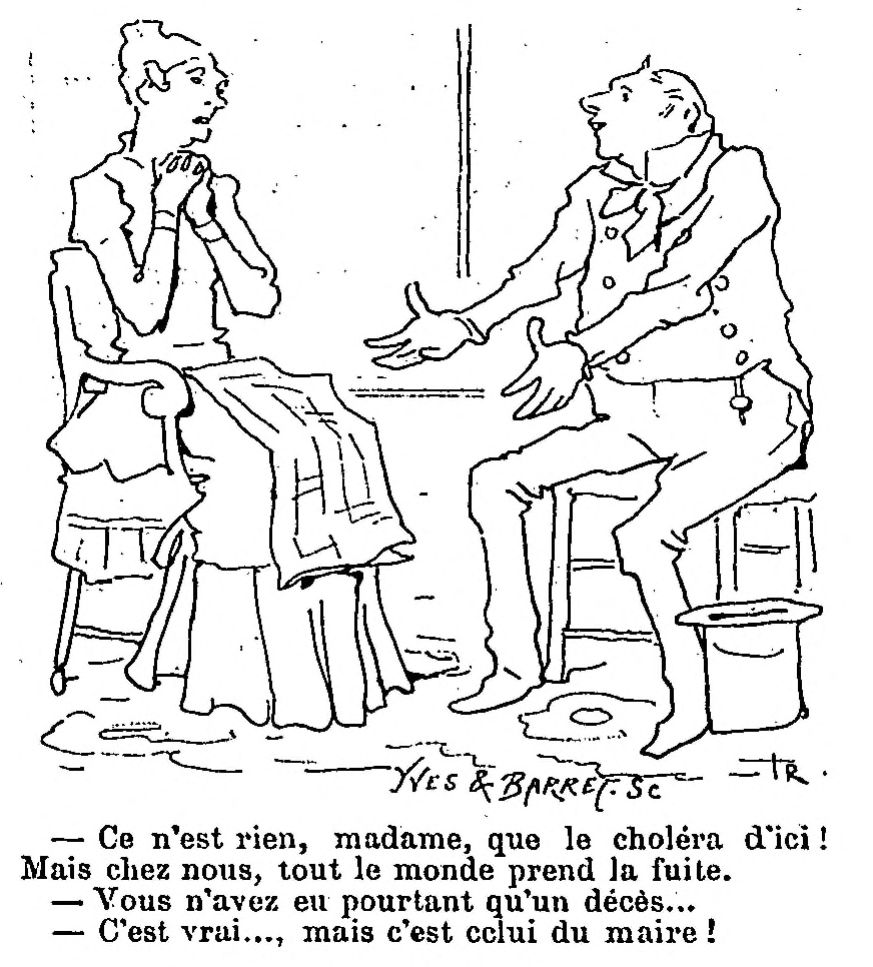
“The cholera from here is nothing, madame! But with us, everyone flees.”
“Yet you have only had one death…”
“That is true…, but it is that of the mayor!”
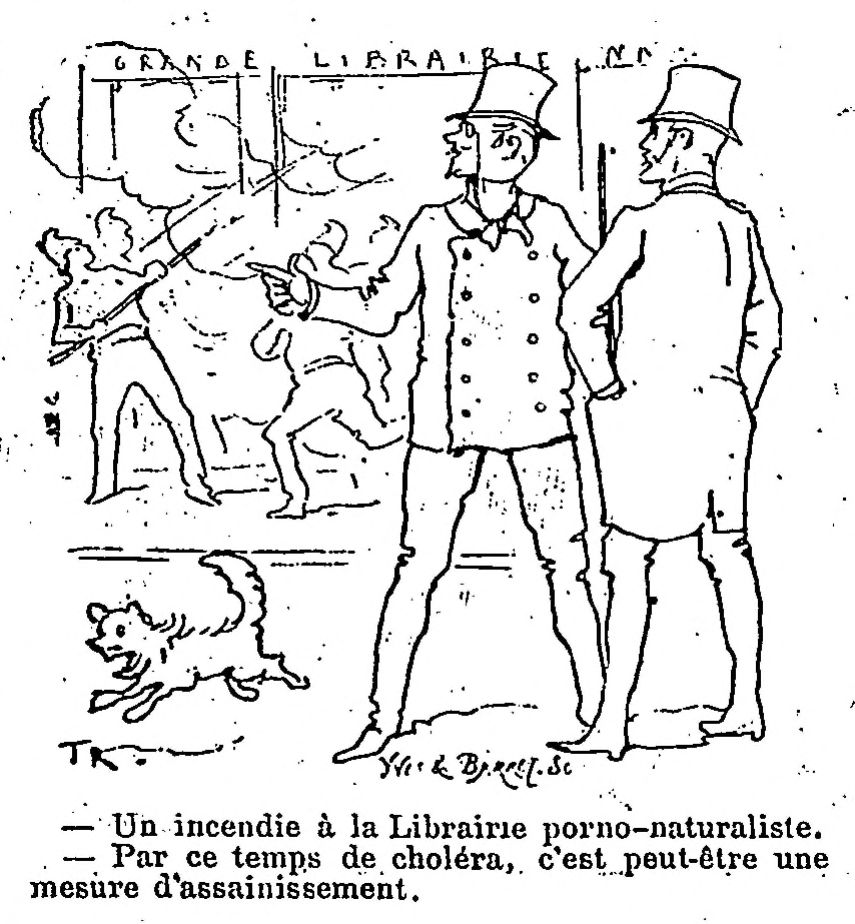
“A fire at the Porno-Naturalist Library.”
“In this time of cholera, it may be a sanitation measure.”
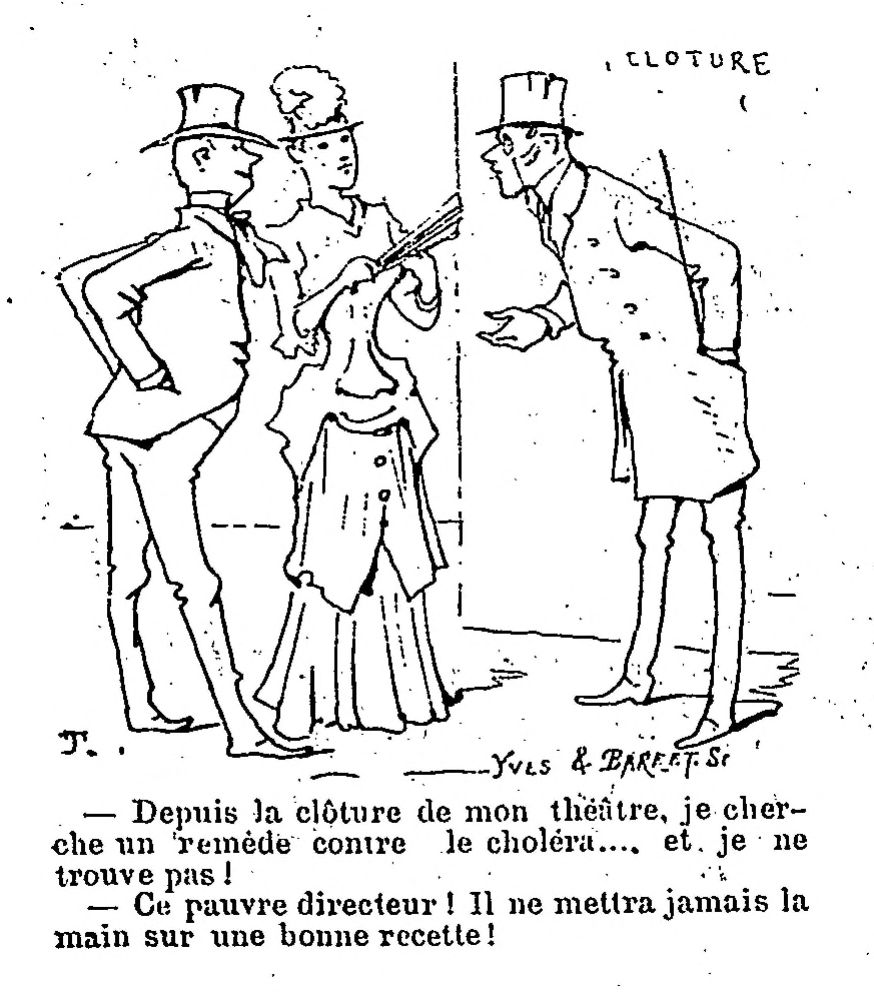
“Since the closing of my theater I have been looking for a remedy against cholera…. and I haven’t found it!”
“This poor director! He will never get his hands on a good formula!”
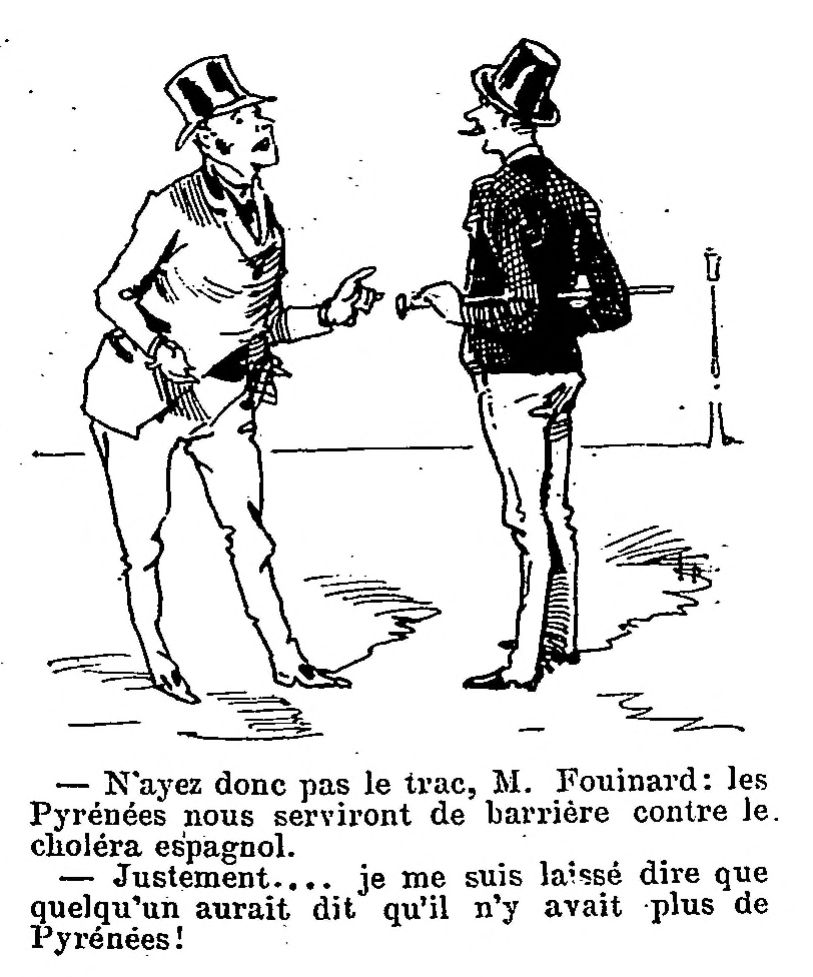
“So don’t be nervous, Mr. Fouinard: the Pyrenees will serve as a barrier against Spanish cholera.”
“Precisely… I let myself be told that someone would have said that there were no more Pyrenees!”
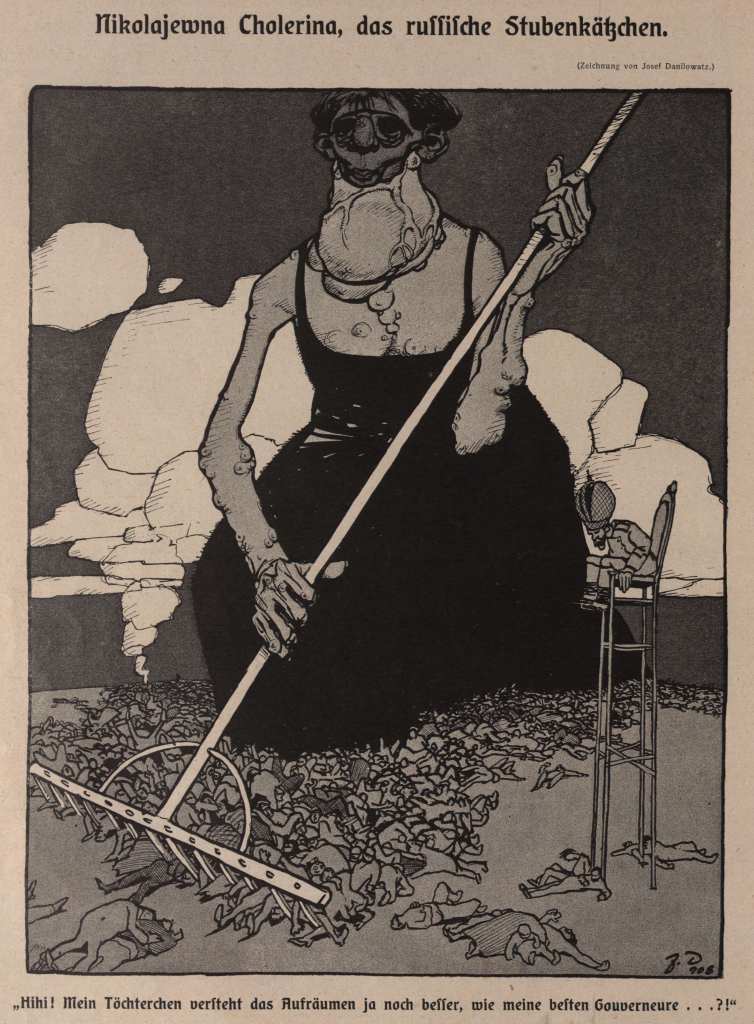
Tsar Nicholas II: “Haha! My little daughter understands sweeping up even better than my best governors…?!”
(Die Muskete, Vienna, 1908)
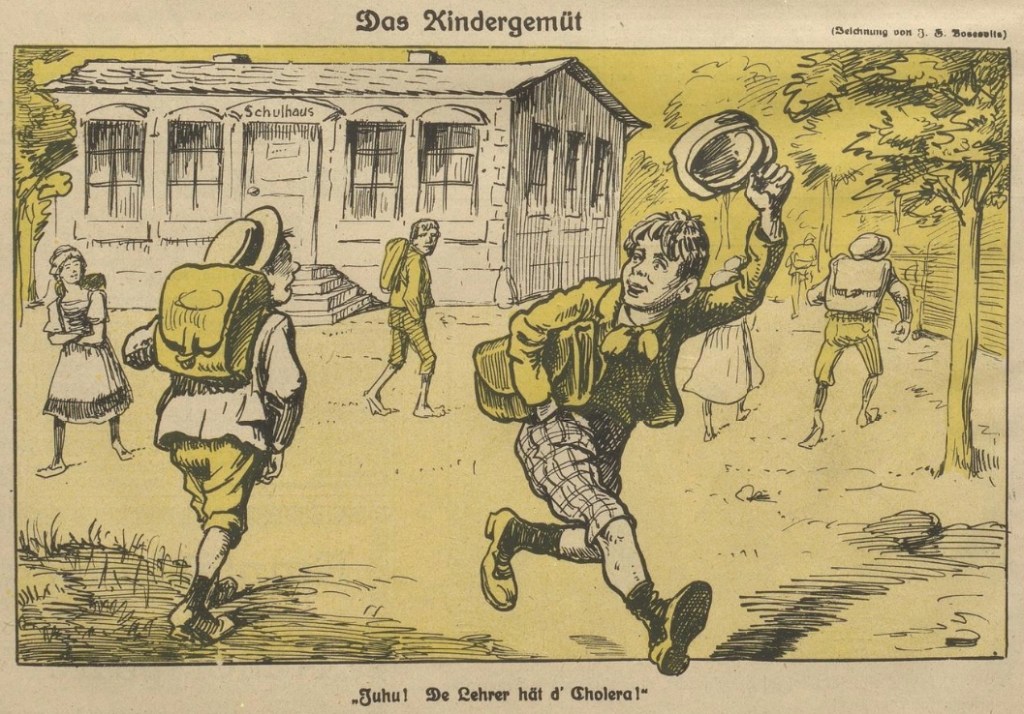
“Woohoo! The teacher has cholera!”
(Nebelspalter, Zurich, 1918)
A similar American cartoon from 1914.
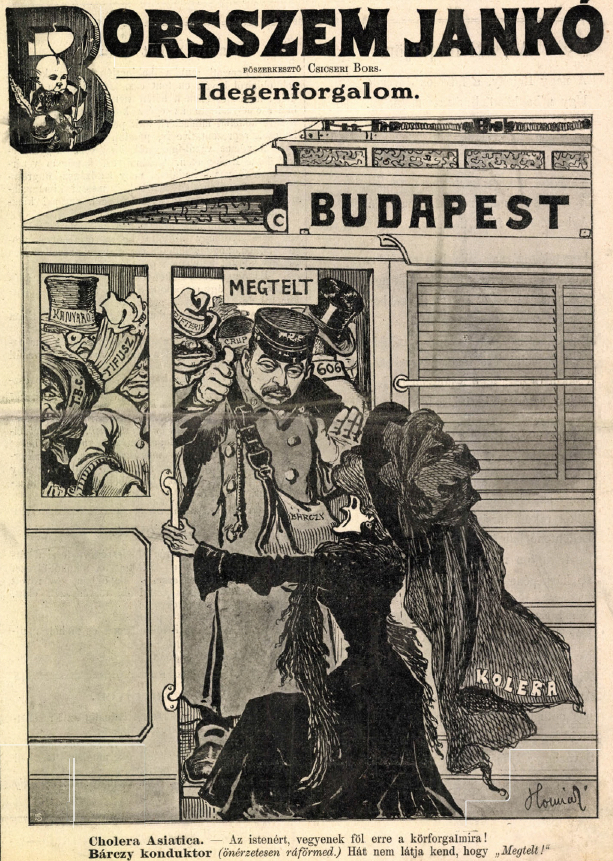
(Riders of the tram include measles, tuberculosis, typhus, diphtheria, croup, and syphilis–the “606” signals Ehrlich’s Salvarsan remedy.)
Cholera Asiatica: “For heaven’s sake, let me onto this route!”
[Budapest mayor István] Bárczy the Conductor (confidently denigrating her): “Well, don’t you see the sign saying it’s ‘Full!’?”
(Borsszem Jankó, Budapest, 1910)
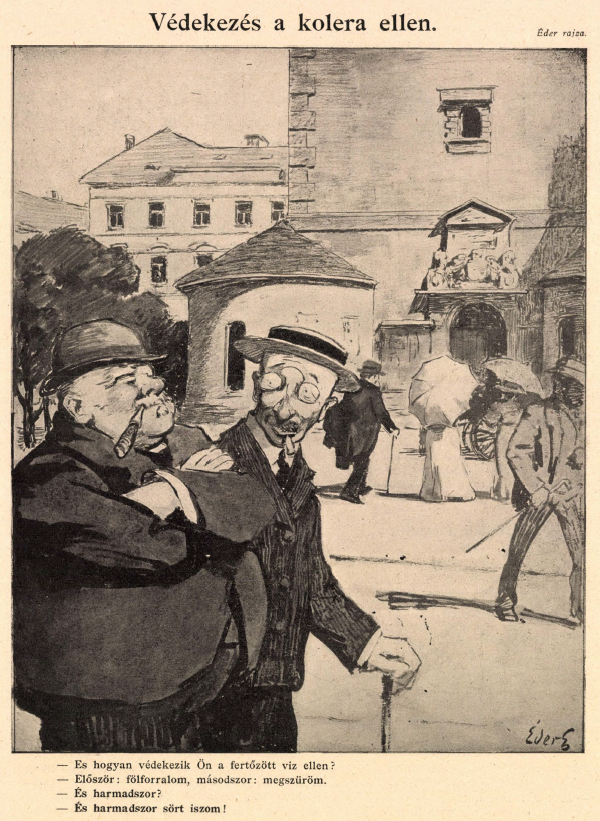
“And how do you protect yourself against contaminated water?”
“First of all: I boil everything, second: I sip it.”
“And third?”
“And third I drink beer!”
(Kakas Márton, Budapest, 1910)
(Kakas Márton, Budapest, 1910)

When there is cholera.
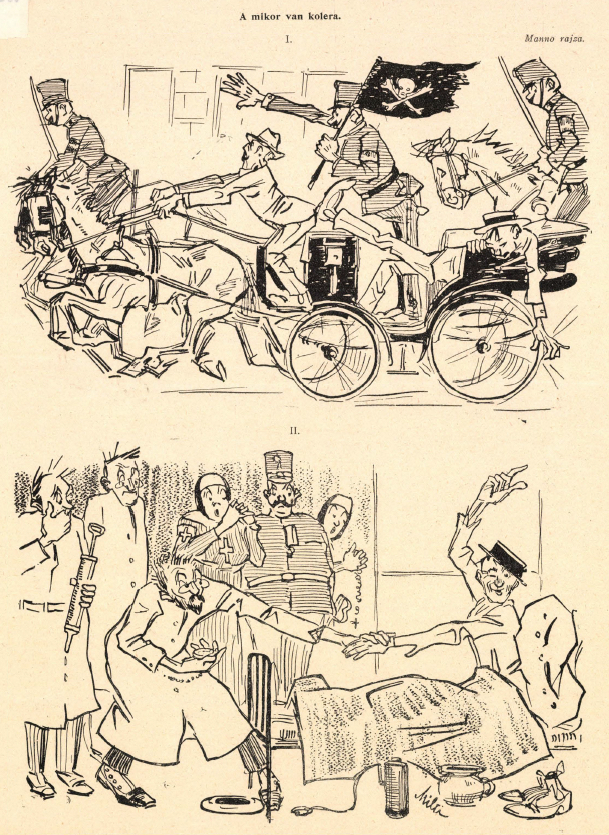
Note the clystère, a recurring theme on this site.
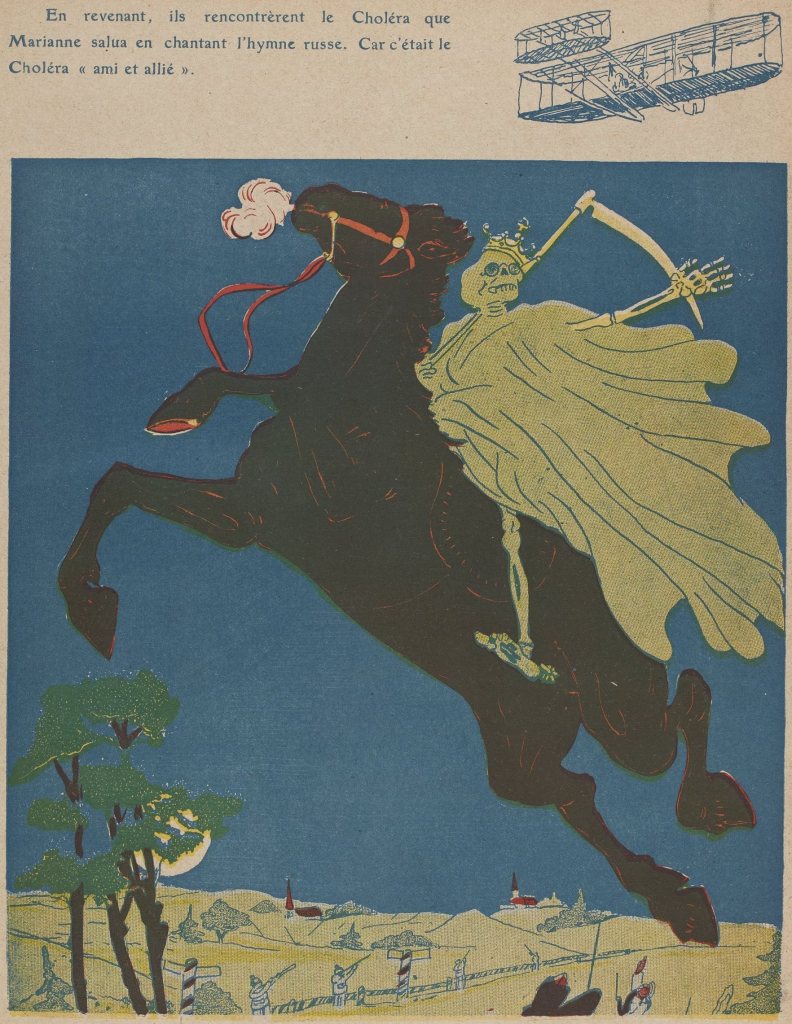
On the way back, they met Cholera whom Marianne [France] greeted by singing the Russian hymn. Because it was the “friend and ally” Cholera.
(L’Assiette au beurre, Paris, 1909) (Drawn at a time of close Franco-Russian diplomatic and military relations, in the midst of the last European cholera pandemic.)
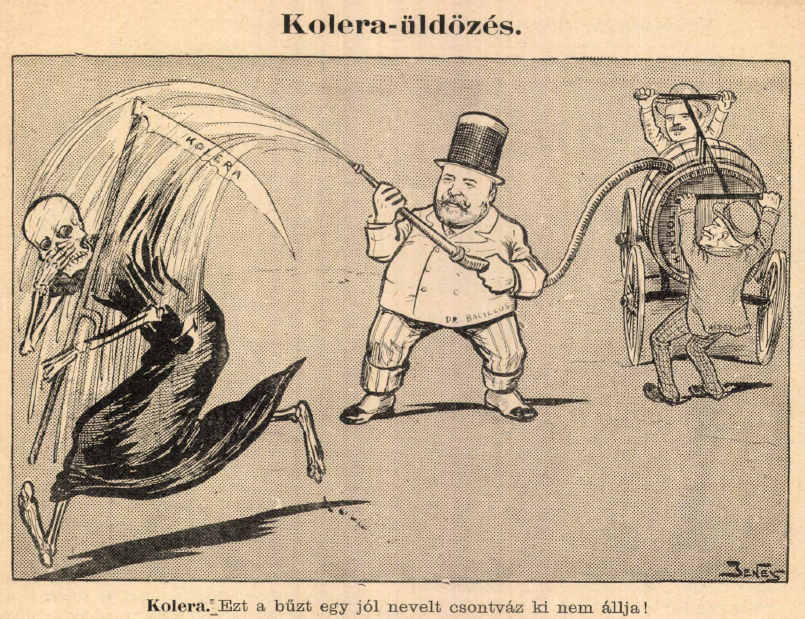
(Dr. Bacillus is spraying carbolic acid solution on the streets of Budapest.)
Cholera: “A well-bred skeleton does not tolerate such a stench!”
(Bolond Istók, Budapest, 1910)
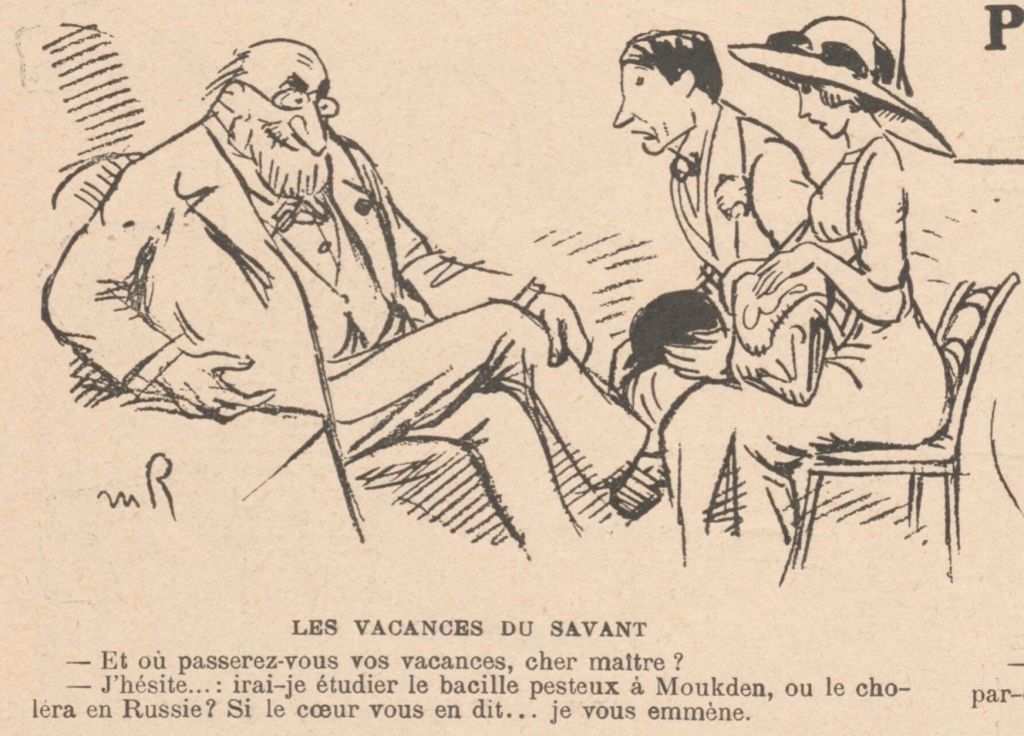
“And where will you spend your holidays, dear master?”
“I hesitate…: will I study the plague bacillus in Moukden, or cholera in Russia? If you feel like it… I’ll bring you along.”
(Le Rire, Paris, 1911)
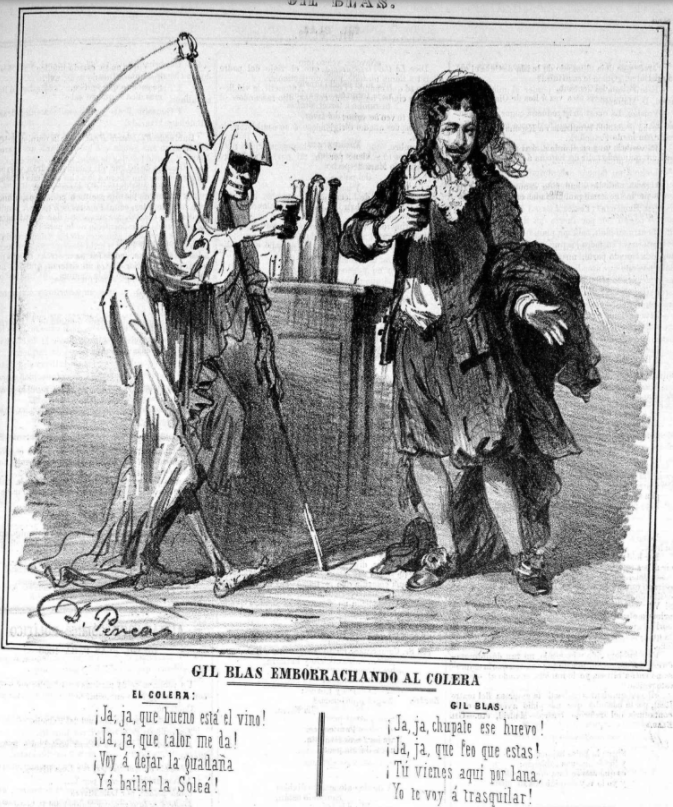
Cholera:
Ha ha, how good is the wine!
Ha ha, how hot it makes me!
I will leave the scythe
And dance the flamenco!
Gil Blas:
Ha ha, suck that egg!
Ha ha, how ugly you are!
You come here for wool,
I’m going to shear you!
(Gil Blas, Madrid, 1865)
 Sic Transit Pestilentia