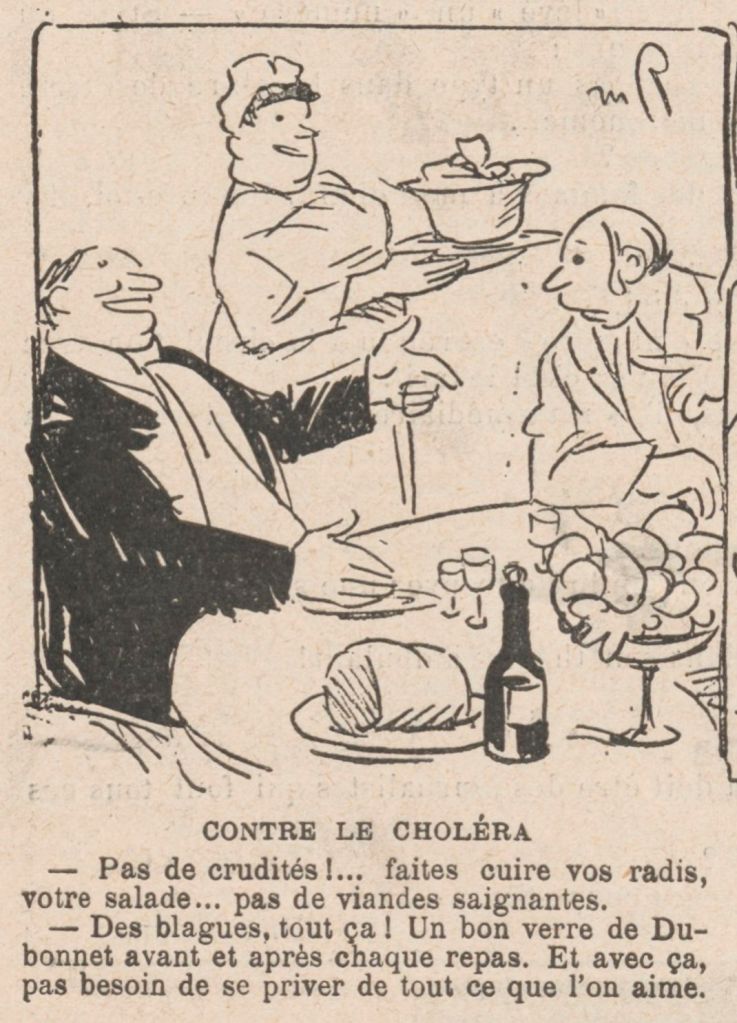
“No raw vegetables!… cook your radishes, your salad… no raw meats.” “It’s all a joke! A good glass of [quinine-fortified] Dubonnet before and after every meal. And with that, no need to deprive yourself of everything you love.” (Le Rire, Paris, 1911)
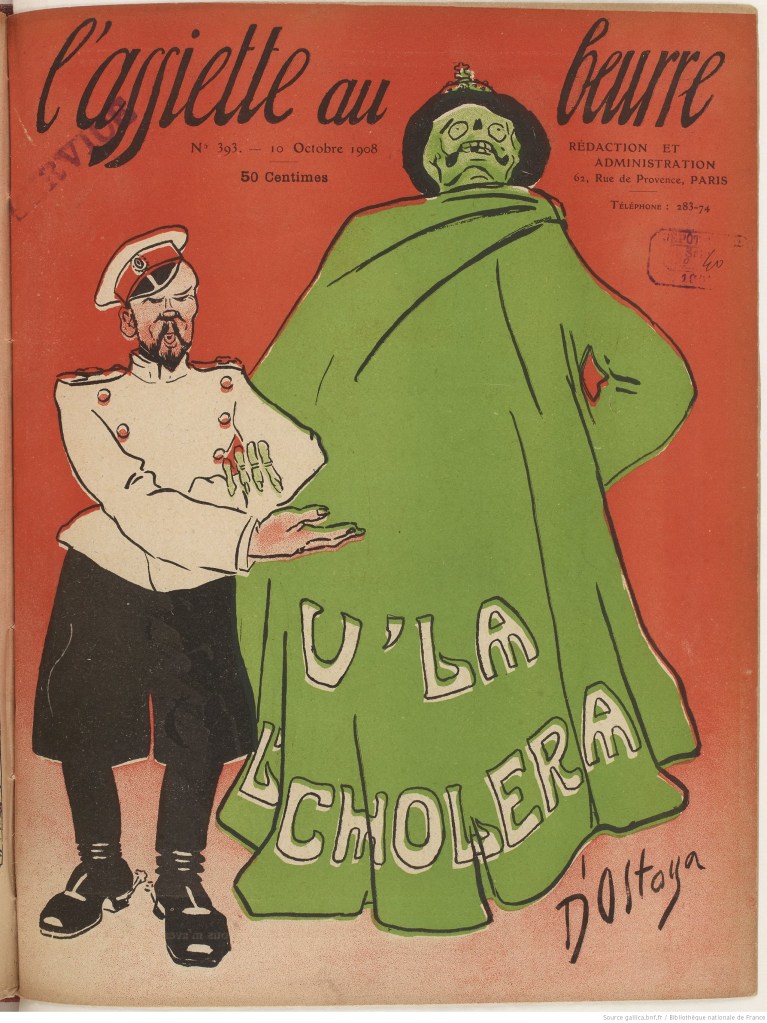
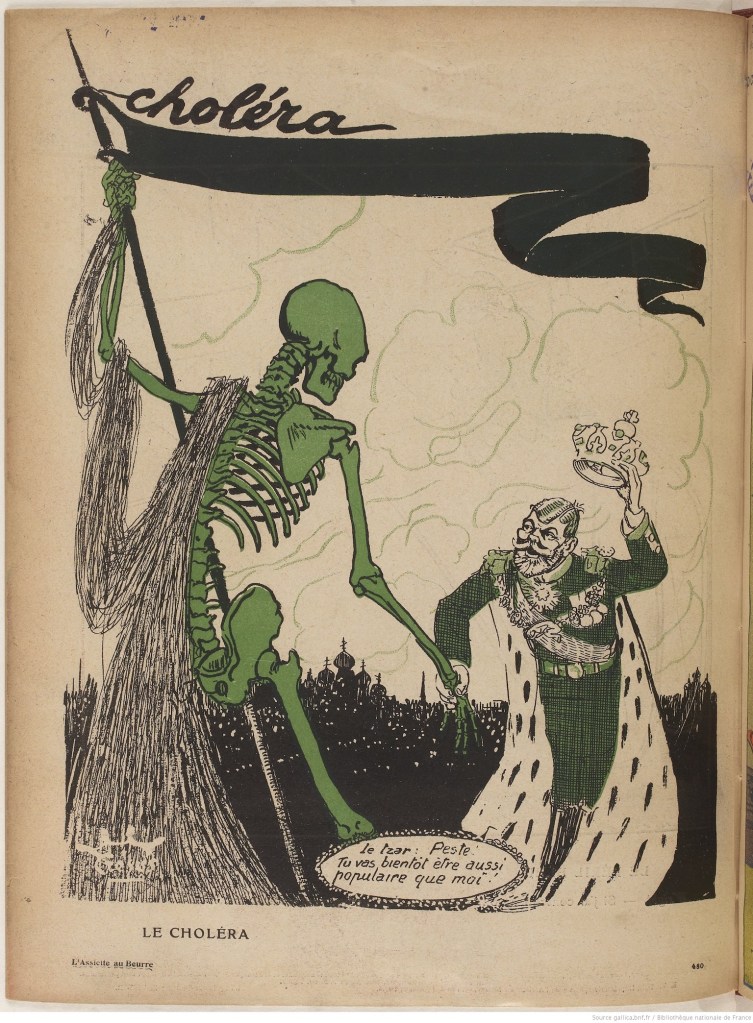
Since cholera spread from the Russian Empire further west in Europe in 1908, casting Tsar Nicholas II as the “host” was a popular gambit. (L’Assiette au beurre, Paris, 1908)
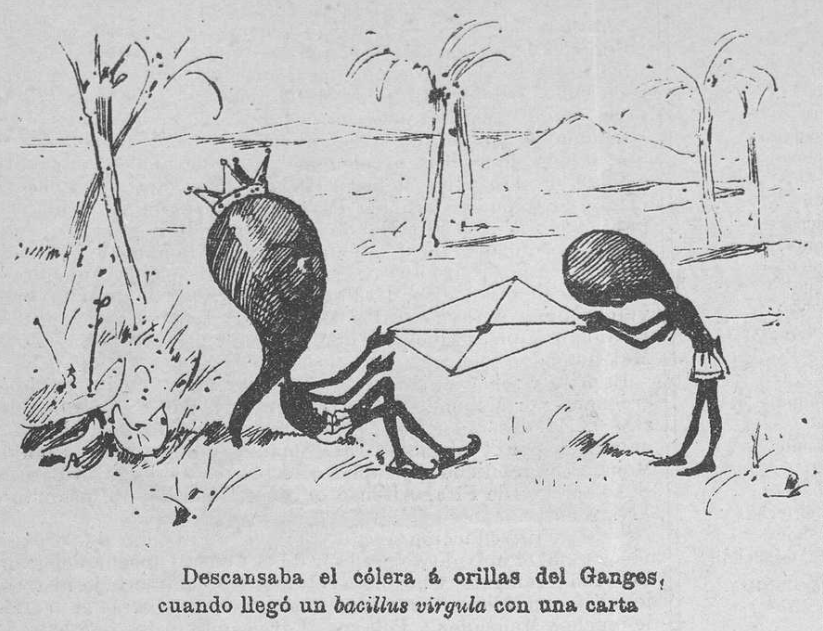
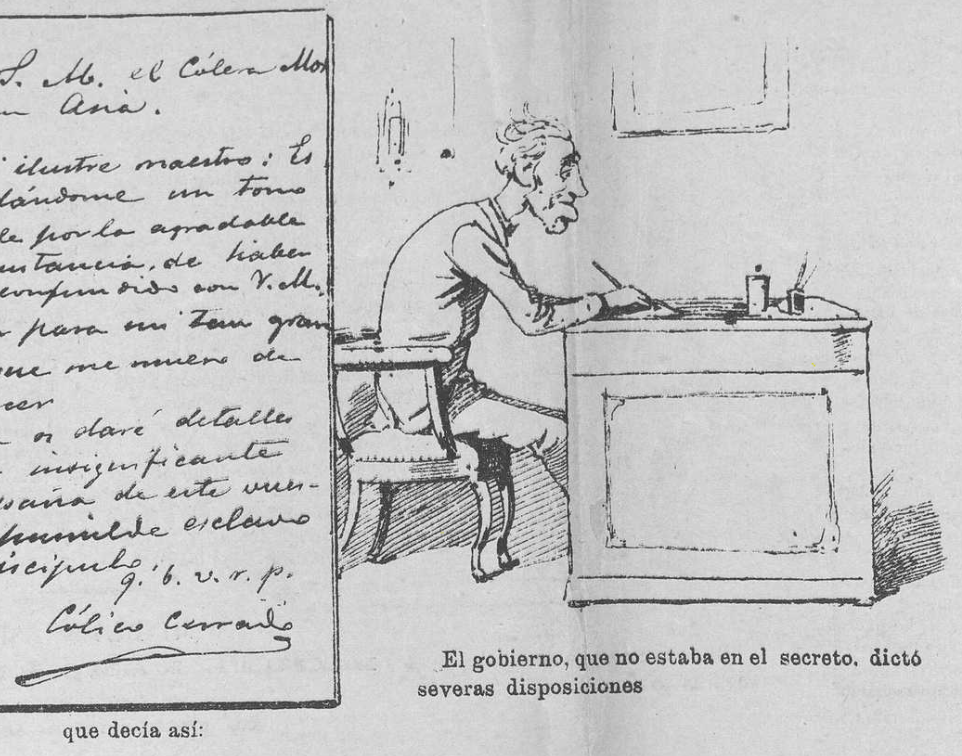
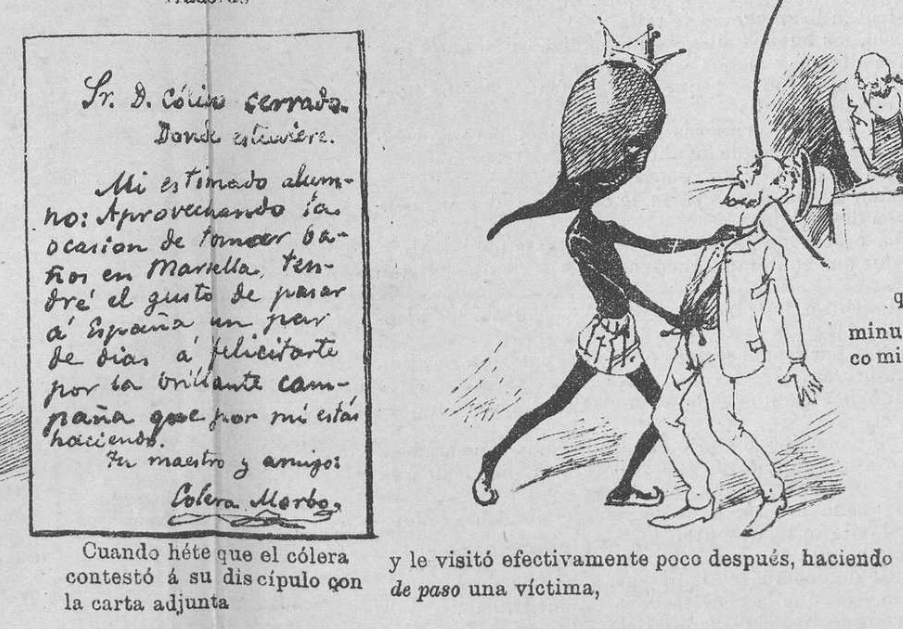
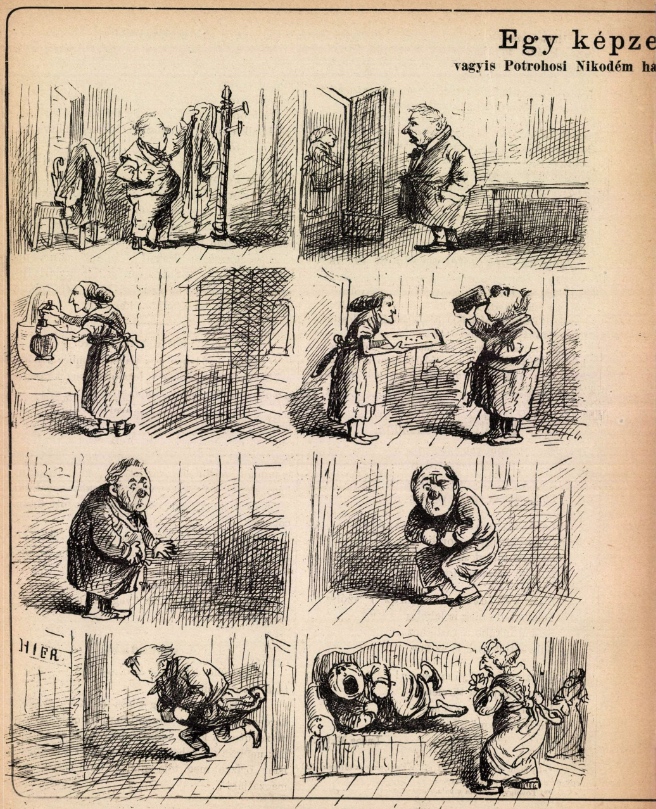
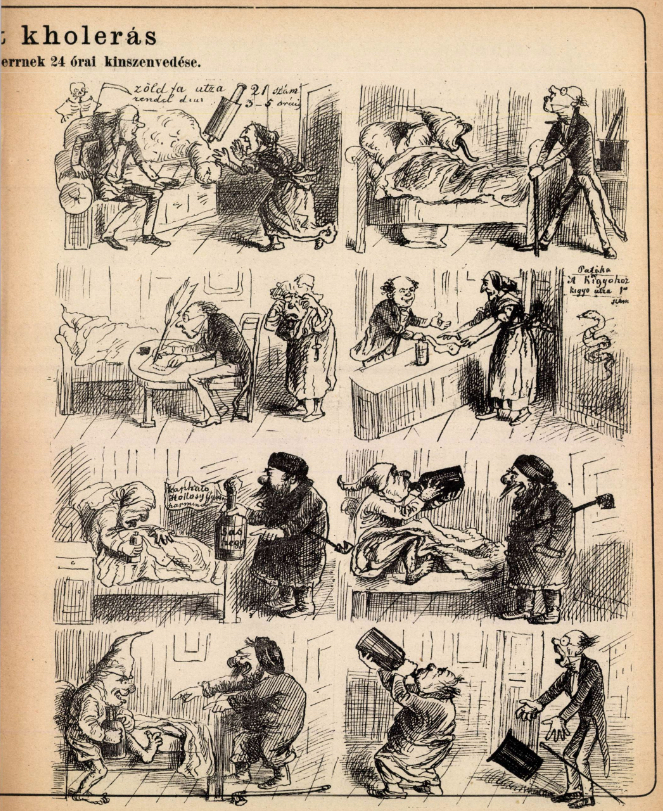
The cholera was resting on the banks of the Ganges when a virgula bacillus arrived with a letter that said the following:
Spanish cholera cartoon
The governor, who was not secreted away, dictated severe provisions
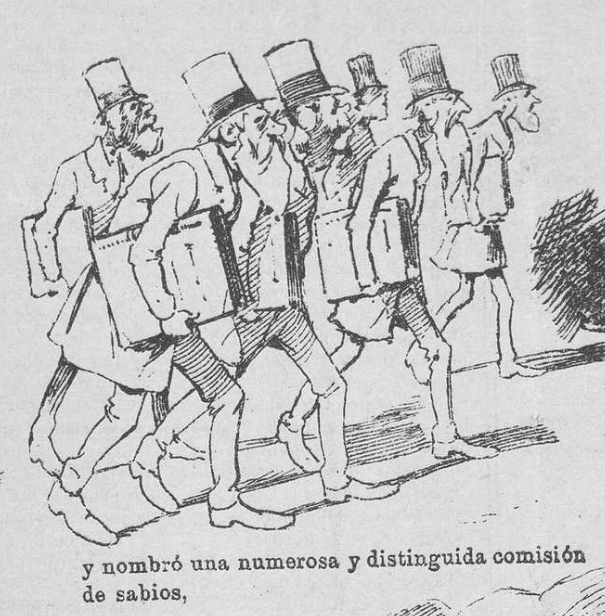
and appointed a numerous and distinguished commission of wise men,
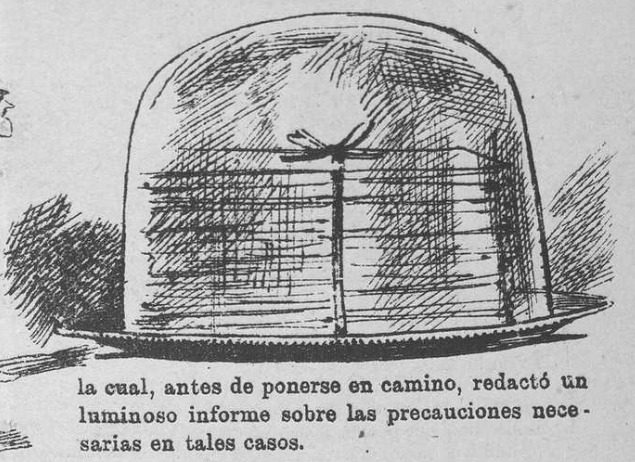
which, before setting off, wrote an enlightening report on the necessary precautions in such cases.
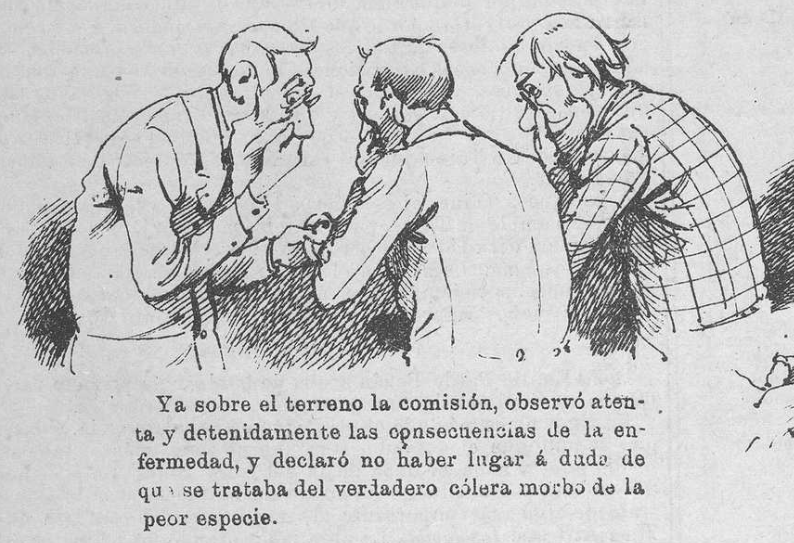
Already within the commission’s domain, the consequences of the disease were attentively and carefully observed, and it was declared that there is no doubt that it was the true morbid cholera of the worst kind.
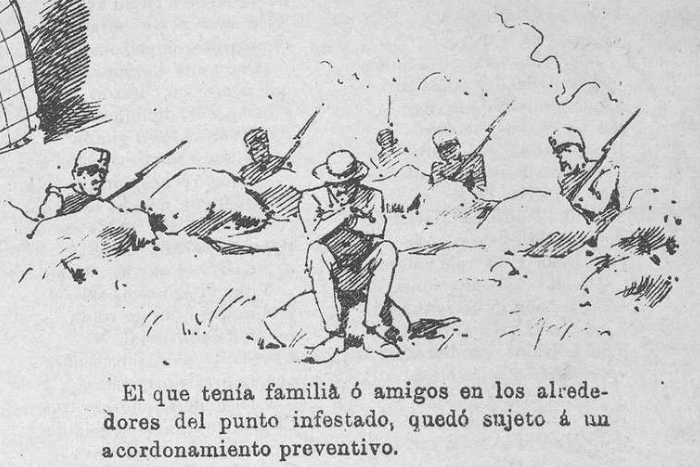
Anyone who had family or friends around the infected site was subject to a preventive cordon.
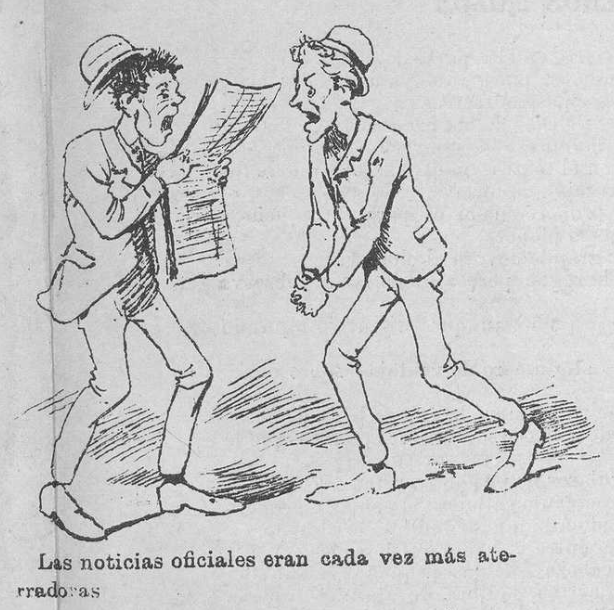
The official news was increasingly terrifying
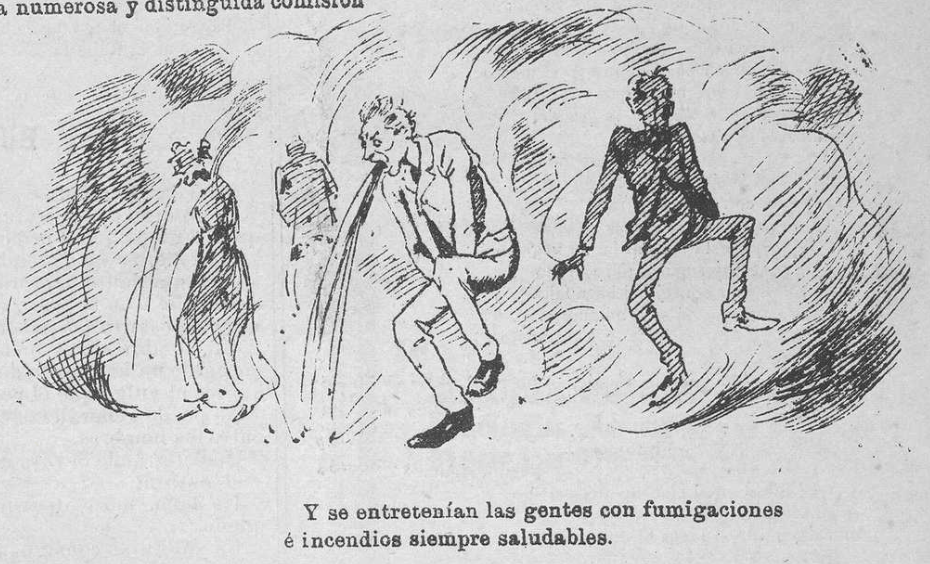
And people were entertained with always healthy fumigations and fires.
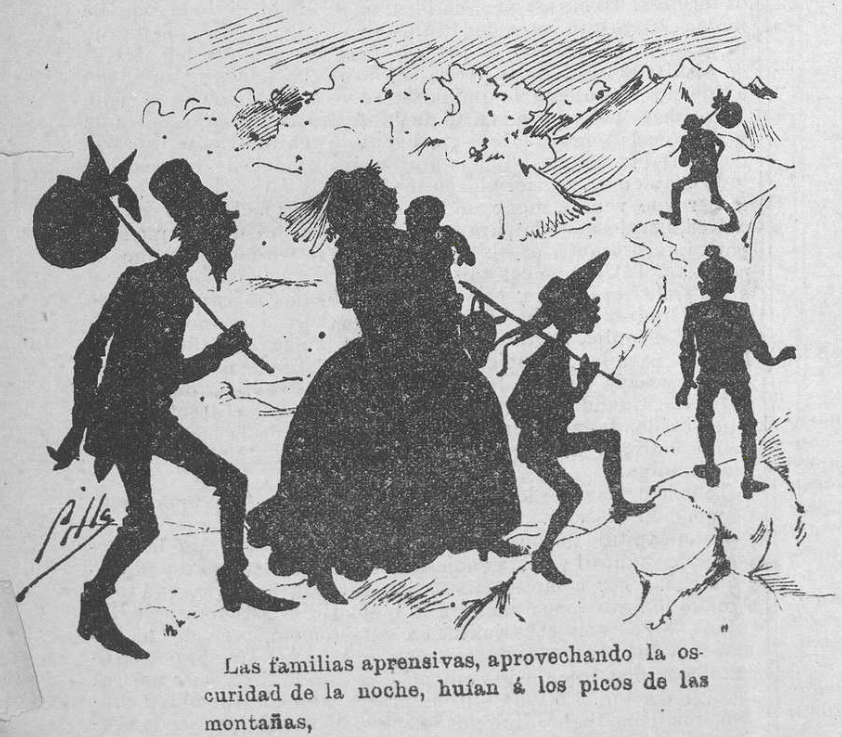
Apprehensive families, taking advantage of the darkness of the night, fled to the mountain peaks,
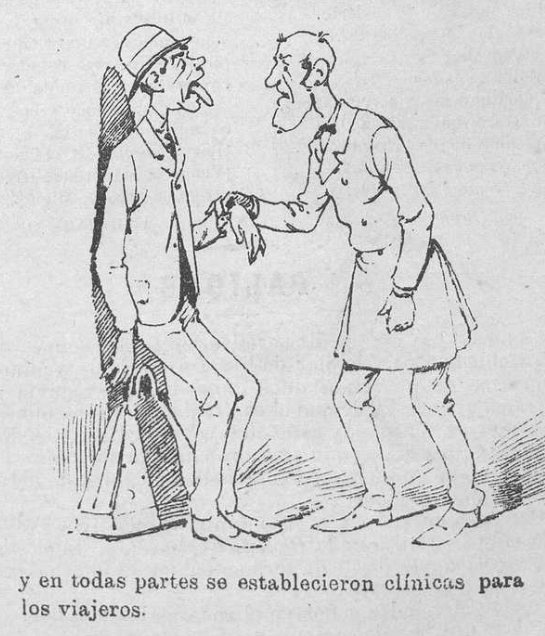
and clinics for travelers were established everywhere.
When the cholera answered his disciple with the attached letter and visited him shortly afterwards, making him a victim in passing,
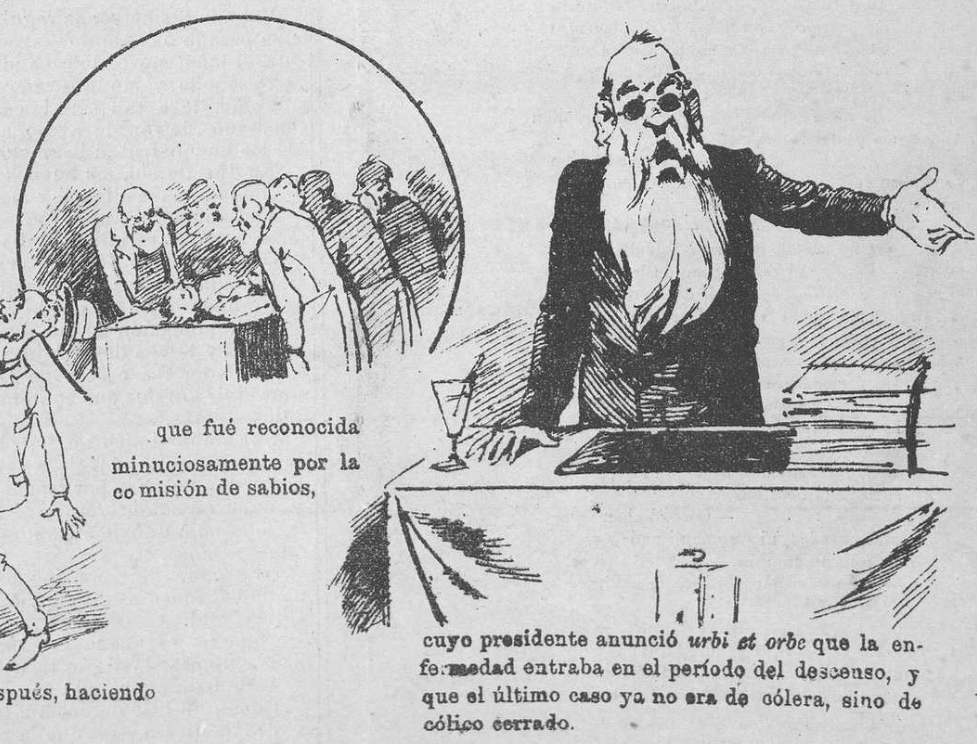
it was meticulously recognized by the commission of wise men, whose president announced urbi et orbi that the disease was entering the period of decline, and that the last case was no longer cholera, but colic.
Professor: “Observe, gentlemen, the magnificent result of my new treatment of cholera.” Students: “But he is dead!” Professor: “He would be many times more dead if he had been treated with the old systems!…” (Lo Spirito folletto, Milan, 1884)
Waiting for cholera, lurking, Day and Night are keen competitors. There’s no cholera and they moan: lo, All the crooning comes to nothing. (Borsszem Jankó, Budapest, 1910) (French operetta composer Charles Lecocq opened Le jour et la nuit in 1881, featuring a somewhat racy farce of concealed nuptial identities. The Hungarian premier, under the title “Sun and Moon,” came in Debrecen in 1884, while a 1899 Budapest production seems to have become a modest staple of the repertoire for a time, enough so that Budapest readers would have appreciated the rhymed couplets here. The return of cholera in 1910 proved not to be as deadly as the experience of 1892.)
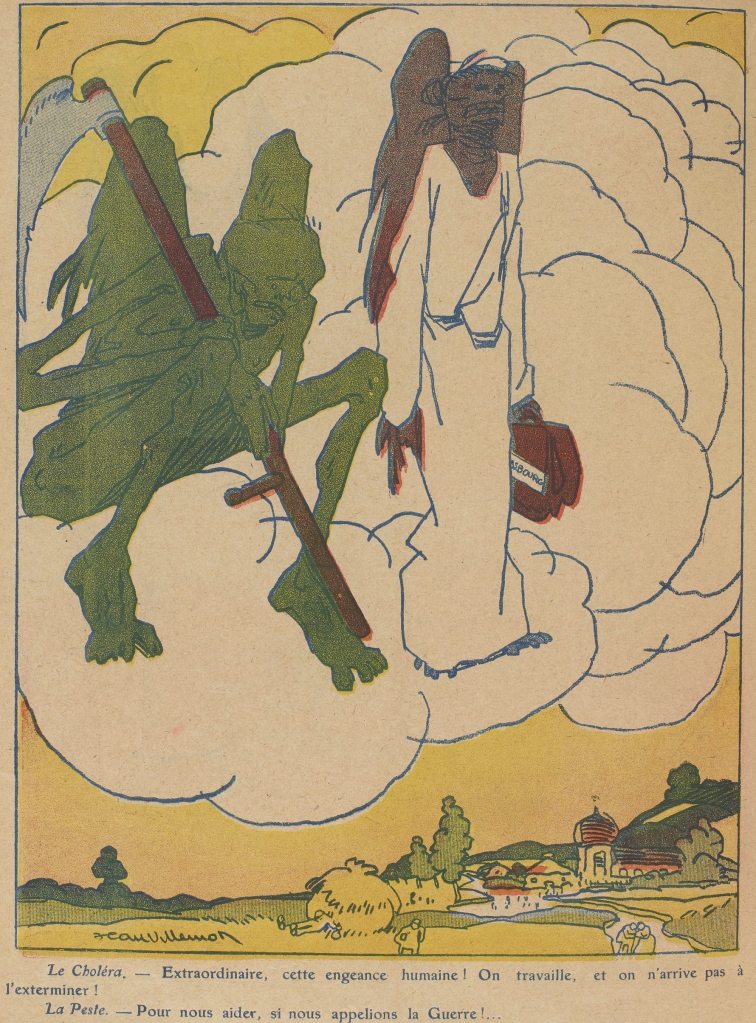
Cholera: “Extraordinary, this human breed! We work, and we can’t exterminate it!” Plague: “Would it help us if we summoned War?” (L’Assiette au beurre, Paris, 1908)
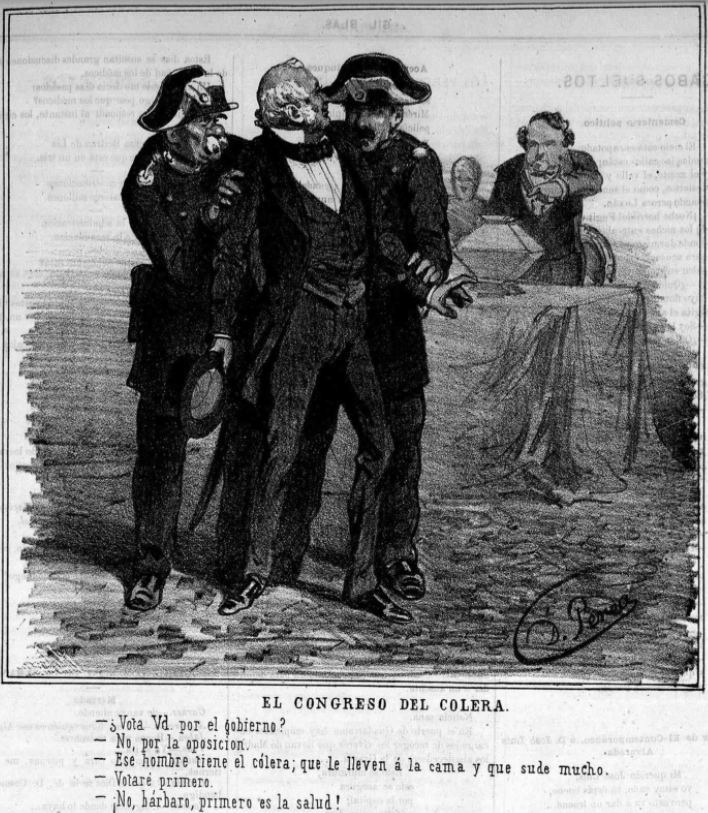
“Are you voting for the government?” “No, for the opposition.” “This man has cholera; put him to bed and make him sweat a lot.” “First I will vote.” “No, barbarian, health comes first!” (Gil Blas, Madrid, 1865)
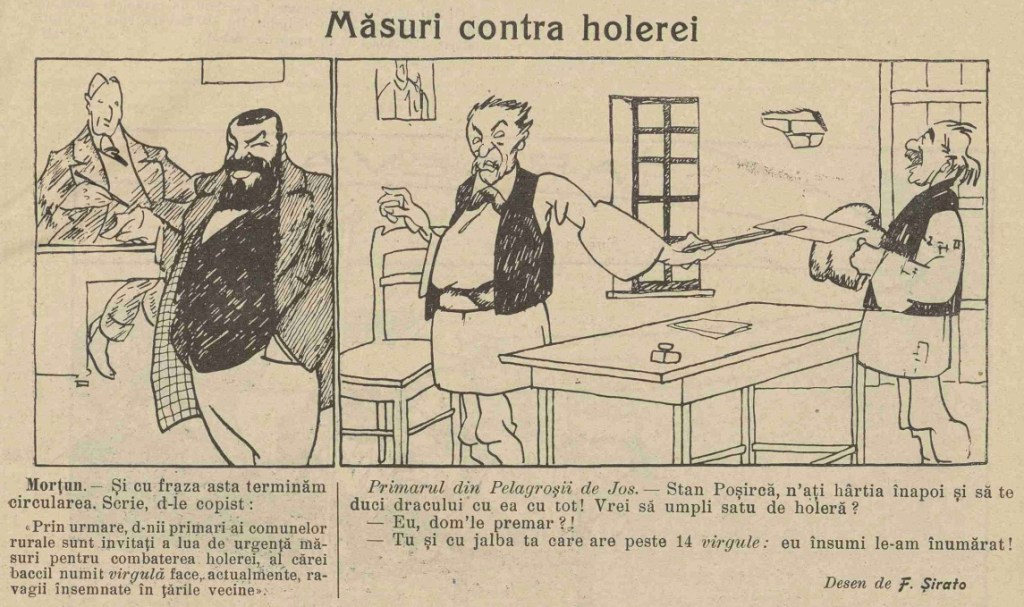
Vasile Morţun [Romanian politician and writer]. And with that phrase we end the circular. Continuing, Mr. Copyist: “Therefore, the mayors of rural communities are invited to take emergency measures to combat cholera, whose so-called comma-bacillus is currently wreaking havoc in neighboring countries.” The mayor of Pelagroșii de Jos. “Stan Poşircă, why don’t you take the paper back and go to hell with it! Do you want to fill the village with cholera?” “Me, Mr. Mayor ?!” “You and your petition that has more than 14 commas: I counted them myself!” (Furnica, Bucharest, 1910)
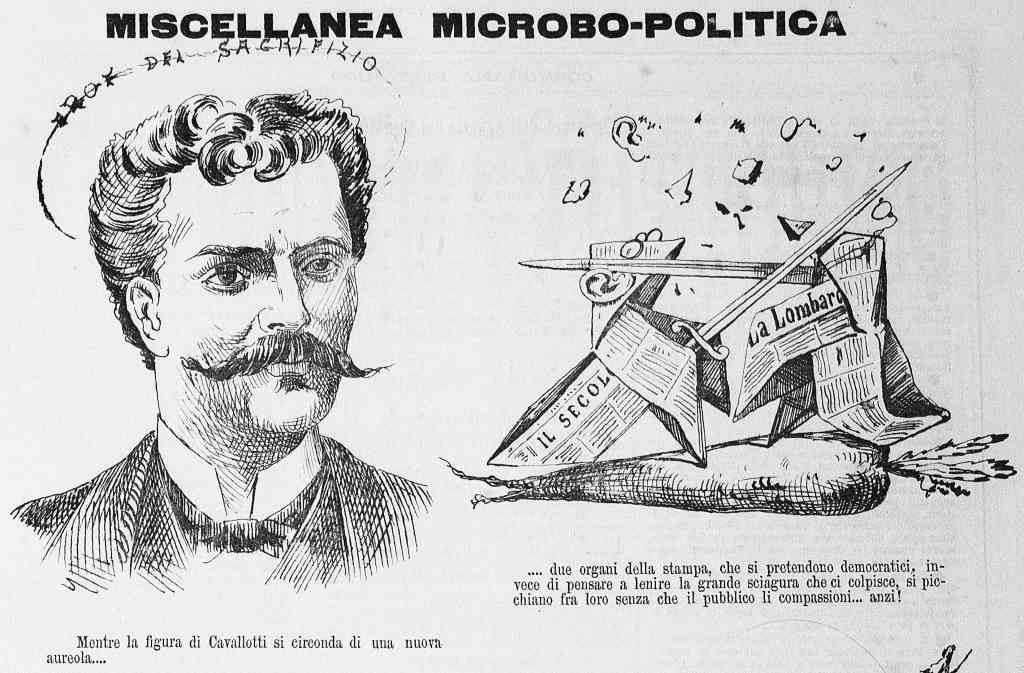
While the figure of Cavallotti surrounds himself with a new halo…. [Here labeled “Professor of Sacrifice,” leftist Italian politician Felice Cavallotti was notoriously combative and, as it happens, known for his gift for satire. It seems he led the fight against the cholera epidemic then underway in the city.]
… two organs of the press that claim to be democratic, instead of thinking of alleviating the great disaster that strikes us, beat each other without the public sympathizing with them… on the contrary!
Italian quarantine cartoon
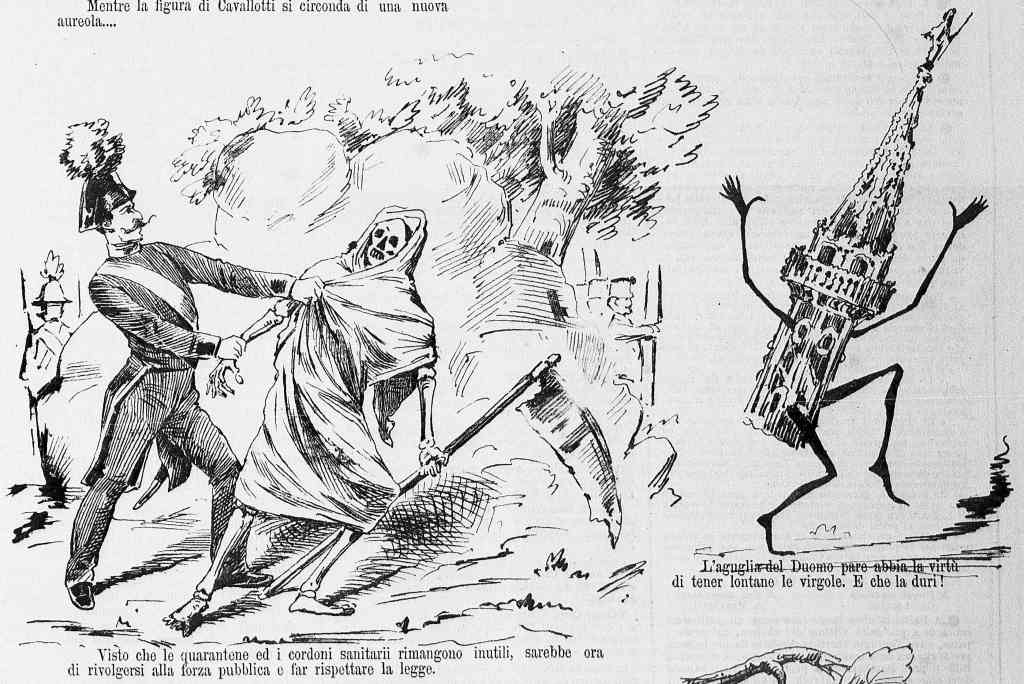
Since quarantine and sanitary cordons remain useless, it is time to turn to the public authorities and enforce the law.
The needlefish of the Duomo seems to have the virtue of keeping commas away. And make it last! [“Comma” meaning the comma-bacillus associated with cholera.]
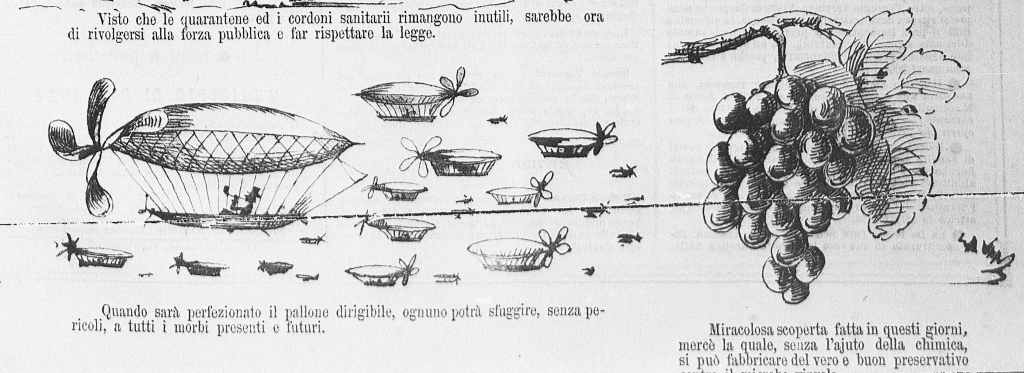
When the flying dirigible is perfected, everyone can safely escape all present and future diseases.
Miraculous discovery made in these days, by which, without the help of chemistry, you can make real and good protections… [last line obscured]
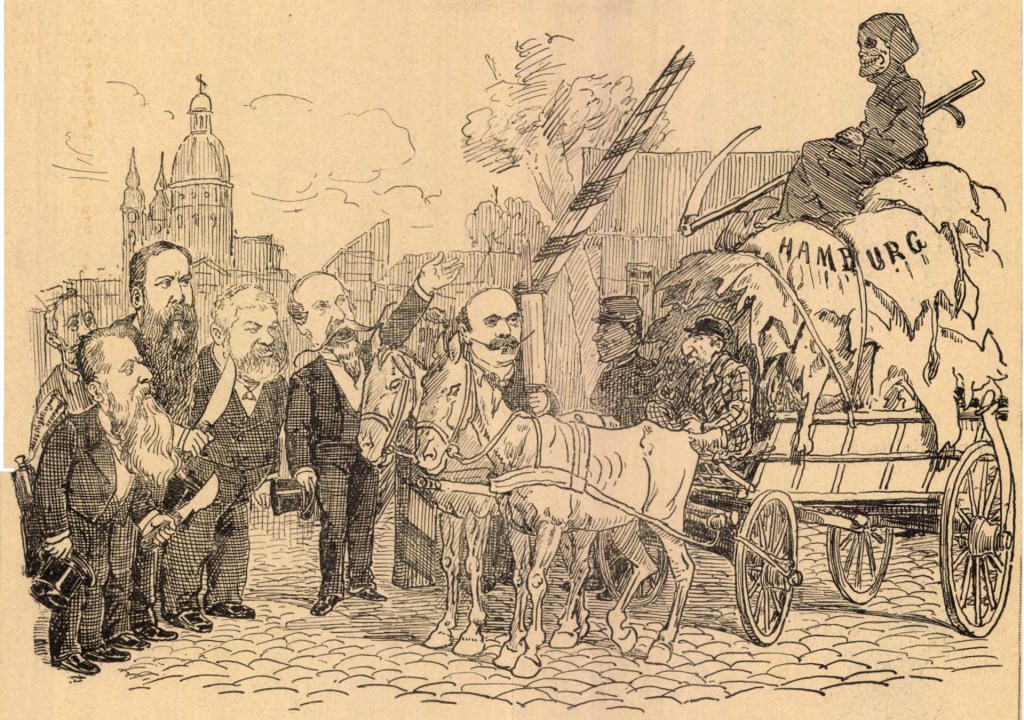
or, Hamburg wines in Budapest, or, the brilliant march of Cholera into the capital city. (This comic exchange is littered with malapropisms that I have doubtless failed to convey properly, but the arrival of cholera from Hamburg in 1892 played into Budapest municipal politics in complex ways. The city was growing extremely rapidly and becoming more Hungarian in the process, but German-speaking burghers still played important mediating roles, and they are the main object of satire here.) Mr. Finances: “Halt! Vere do your horsehides come from, Schlesinger?” Schlesinger [caricatured here as Jewish]: “Vere vould zey come from if not Hamburg?” Mr. Finances: “Then you won’t be held up!… Let him pass!…” Dr. Müller: “St. Roch, in the name of public health! I forbid it!” Dr. Farkas: “They are importing cholera germs. It is forbidden!” Dr. Csatáry: “To battle against cholera! Down with the horsehides! In particular, Dr. Schwimmer will make a declaration next to the horsehides in his capacity as dermatologist!” Dr. Farkas: “Quite so! And Dr. Krebs as the head of the emergency services association will find it desirable to create a situation where he has to save everyone!” Dr. Gebehart: “The question is, is it true that it comes from Asia? Isn’t it just a forged thing, this cholera? It ought to be done here!” District mayor Gerlóczy: “Quite so, it ought to be eaten here! Organize a capital city banquet in honor of cholera!” Monsignor Mayor Ráth: “Deeply respected Madame Cholera! Welcome, we did not expect you! You are most welcome within the visitor-friendly walls of the capital city, you should feel right at home among us, so that you may be our constant good fortune. We also hope that you will be satisfied with the precautionary measures we have taken in receiving your eminence. May the god who is kind feed our high guest to the very limits of the human age!” (Noisy cheering. Harnessing the horses, the eastern guest is solemnly drawn to the town hall.) (Bolond Istók, Budapest, 1892)
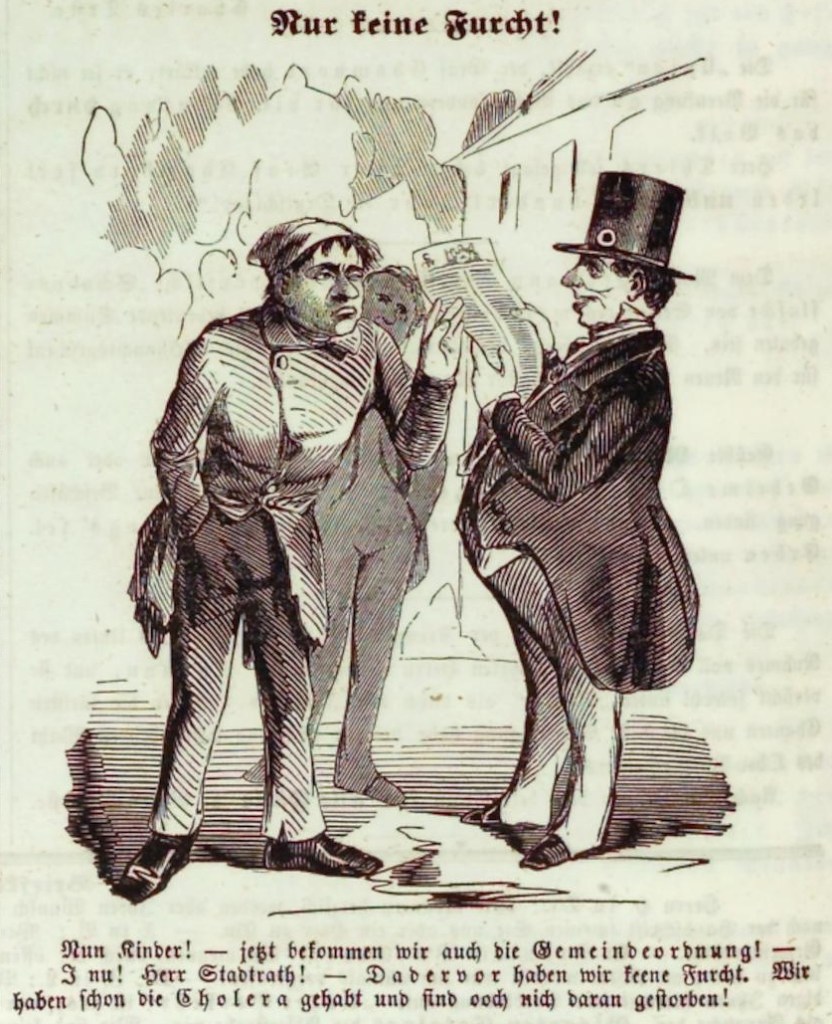
“Now fellahs! We’ve just gotten the municipal code, too!” “Well then, Mr. City Councilman! We’re not afraid of that. We’ve already had cholera and we didn’t die of that, either!” (Kladderadatsch, Germany, 1850)
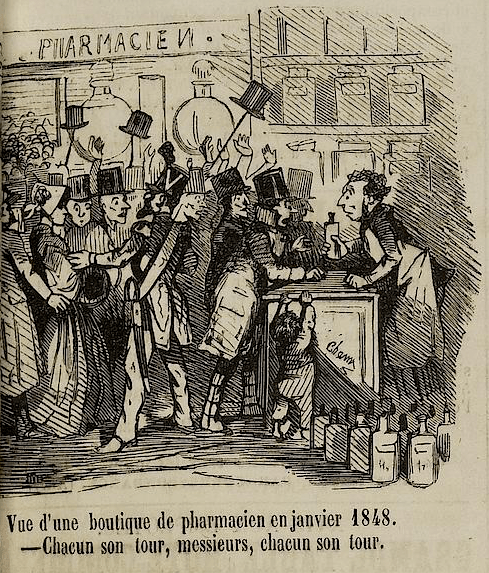
View of a pharmacist shop in January 1848. “Each in turn, gentlemen, each in turn.”
French flu cartoon
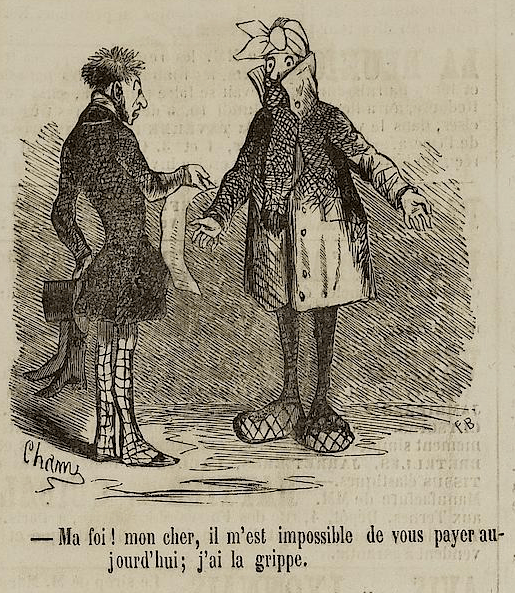
“Well, my dear, it is impossible for me to pay you today; I have the flu.”
French flu cartoon
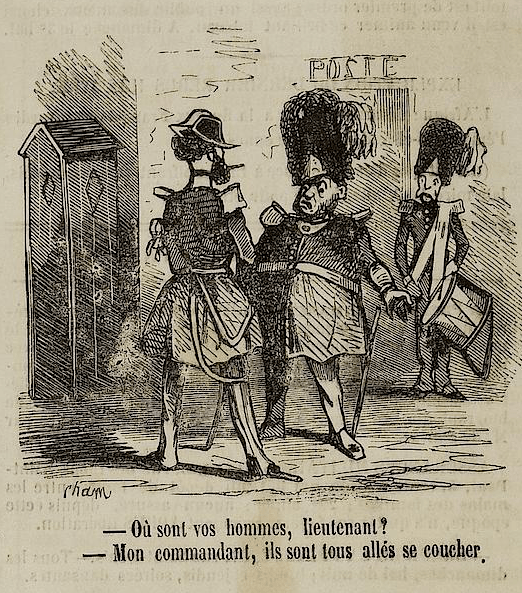
“Where are your men, lieutenant?” “My commander, they’ve all gone to bed.”
French flu cartoon
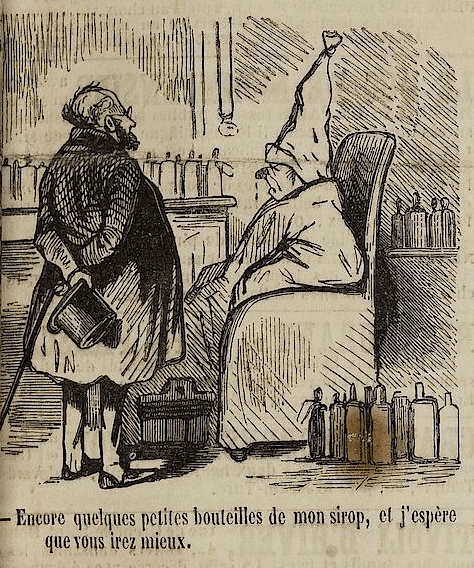
“Just a few more bottles of my syrup, and I hope you’ll get better.”
French flu cartoon
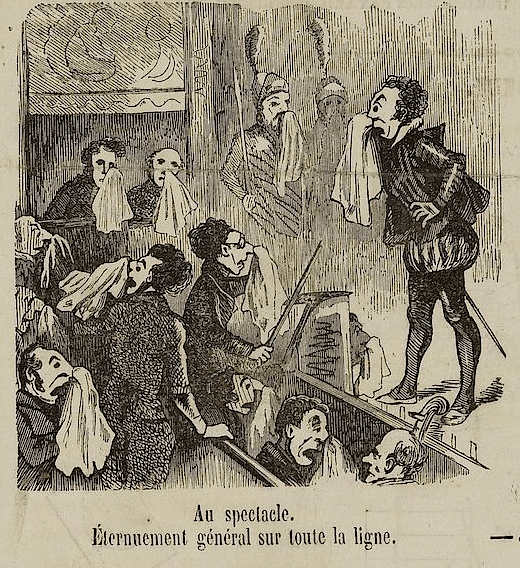
At the show. General sneezing across the board.
French flu cartoon
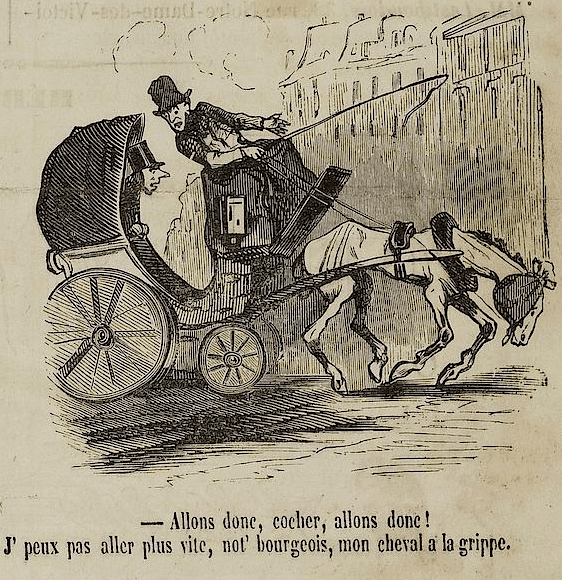
“Come on, coachman, come on!” “I can’t go any faster, sir, my horse has the flu.”
French flu cartoon
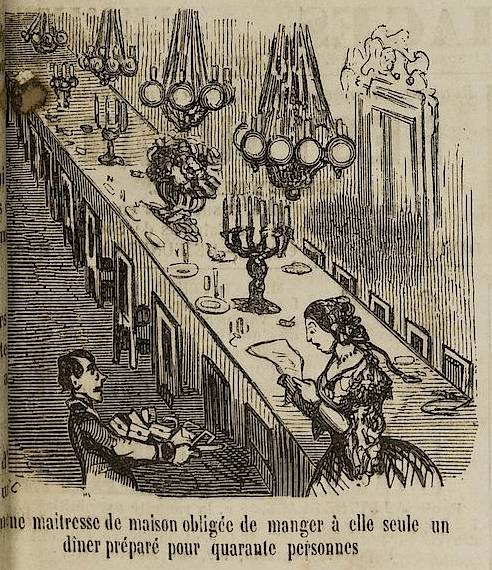
A mistress of the house has to eat alone a dinner prepared for forty people. (No doubt punning on “quarantine.”)
French flu cartoon
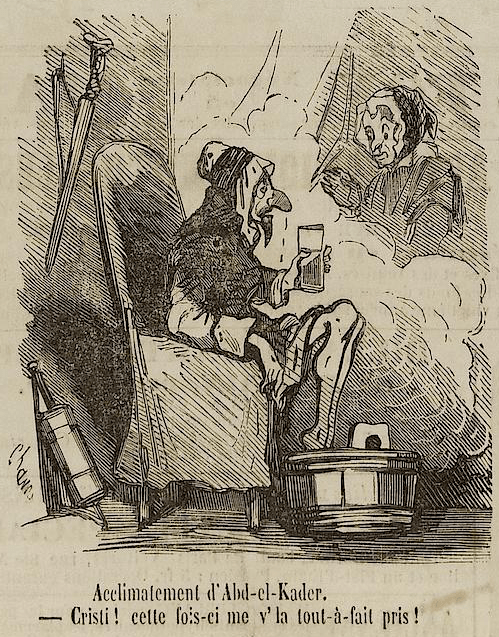
Acclimatization of Abd-el-Kader. (Algerian military leader then held captive by the French. Note the clystère in the background, a familiar French theme.) “Cristi! This time here I am completely taken!”
French flu cartoon
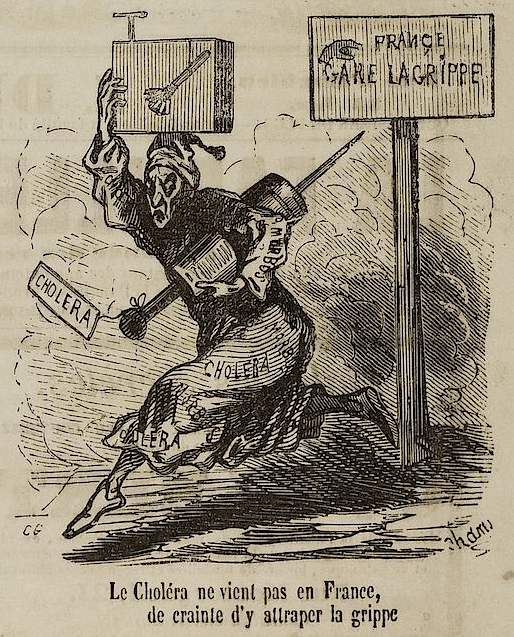
Cholera does not come to France for fear of catching the flu there.
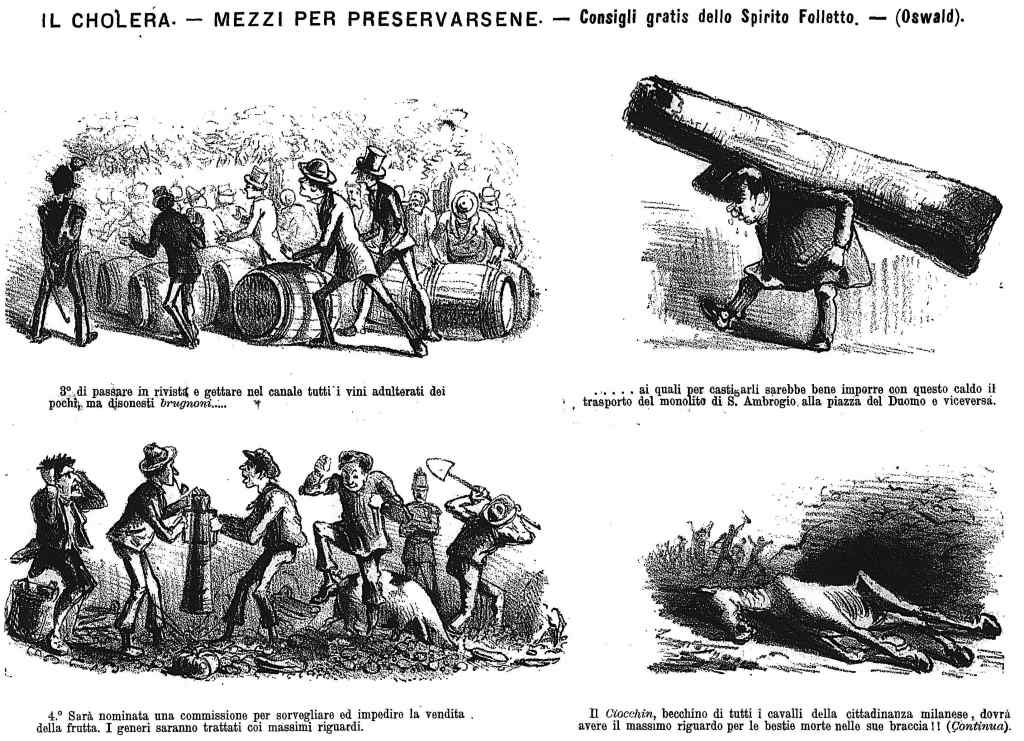
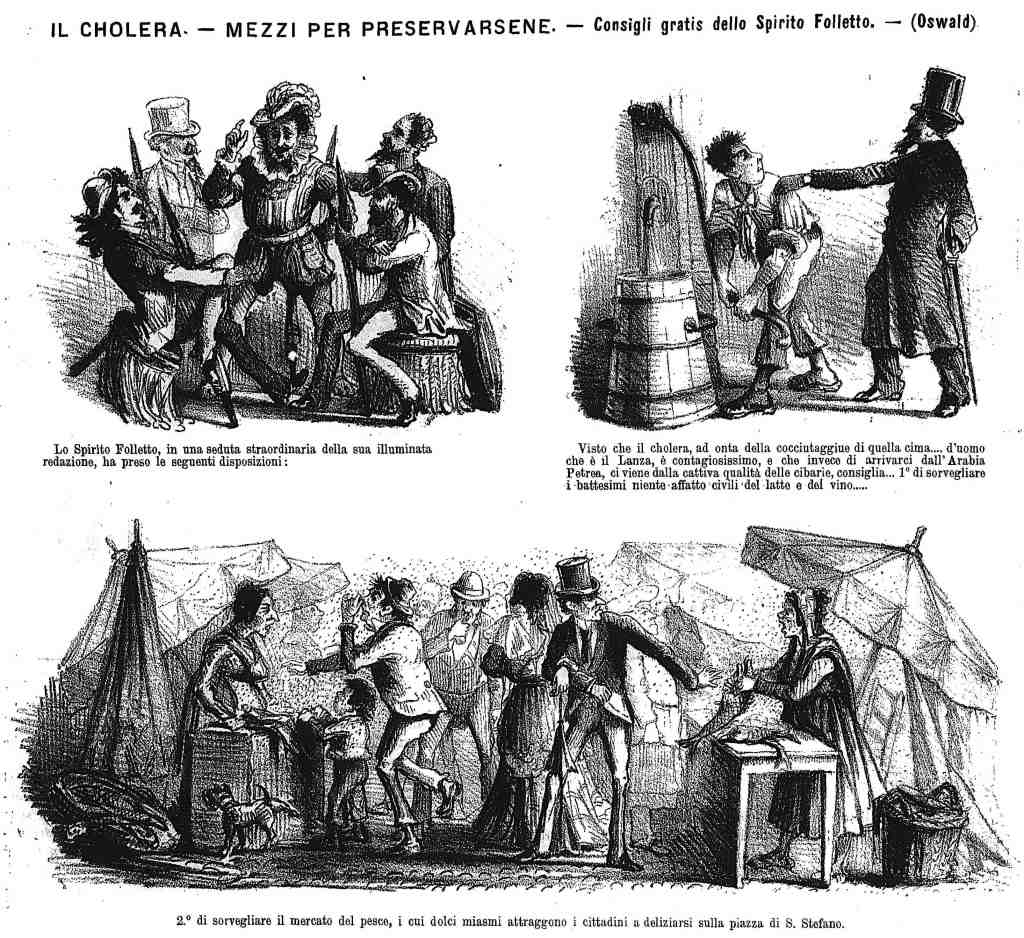
Lo Spirito Folletto, in an extraordinary session of its enlightened editorial staff, made the following provisions:
Since cholera, in spite of the stubbornness of that genius… of man that is [Italian Prime Minister] Lanza, is very contagious, and that instead of getting there from Petrea Arabia, it comes from the bad quality of the food, the staff recommends… 1. to oversee the not-at-all civil baptisms of milk and wine…
to supervise the fish market, whose sweet miasmas attract citizens to the delights in the square of San Stefano.


 Sic Transit Pestilentia