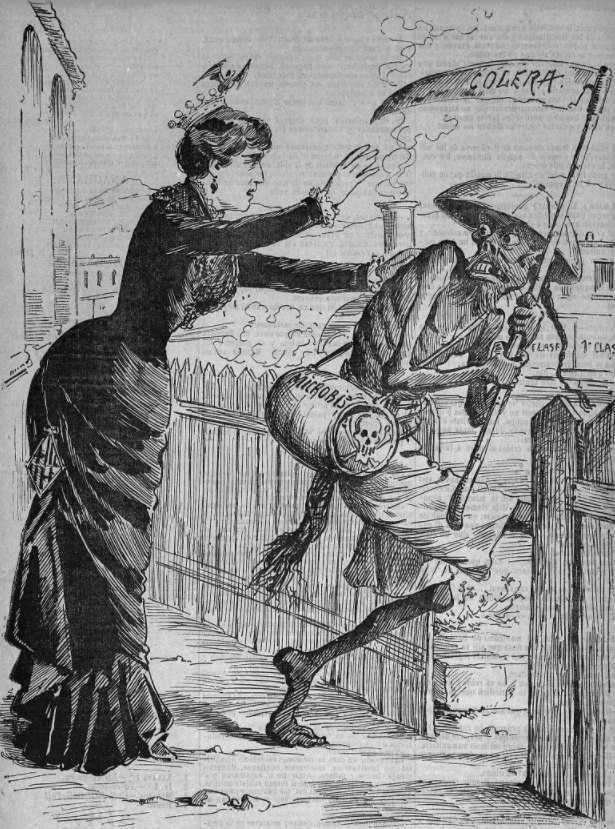
Beware, there is Drought in Mecca!
(La Esquella de la torratxa, Barcelona, 1891)
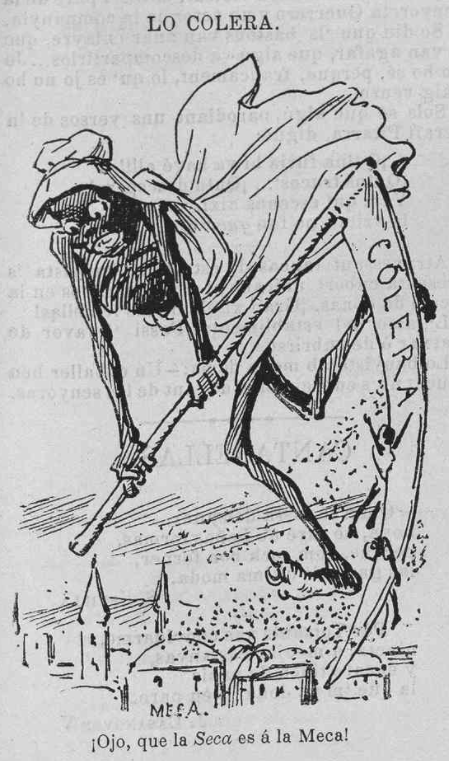
Beware, there is Drought in Mecca!
(La Esquella de la torratxa, Barcelona, 1891)
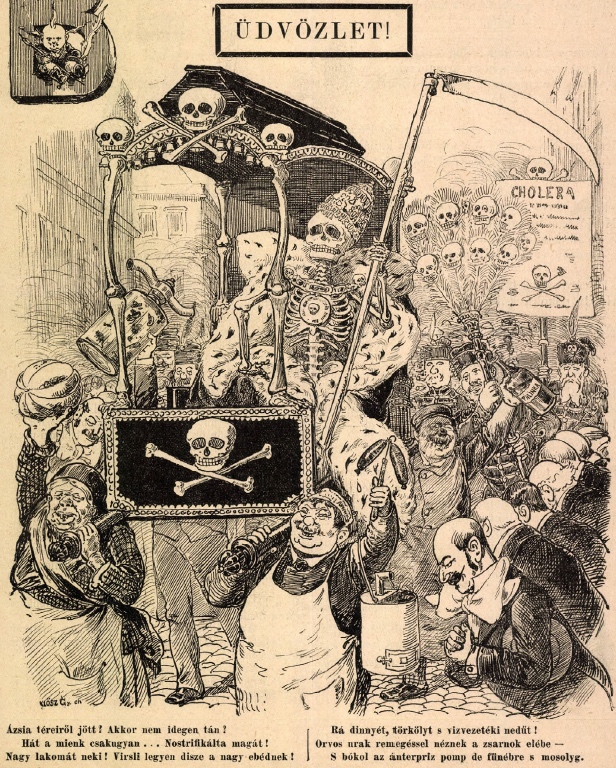
He came from the Asian spaces! Isn’t he a stranger then?
Well, indeed he’s ours… He’s certified!
A great feast for him! Make sausage centerpiece of the great meal!
Put melon and brandy on it, and the nectar of water straight from the tap!
Medical gentlemen look at the tyrant with trembling —
And smiling he compliments the funereal pomp of the enterprise.
(Borsszem Jankó, Budapest, 1884)
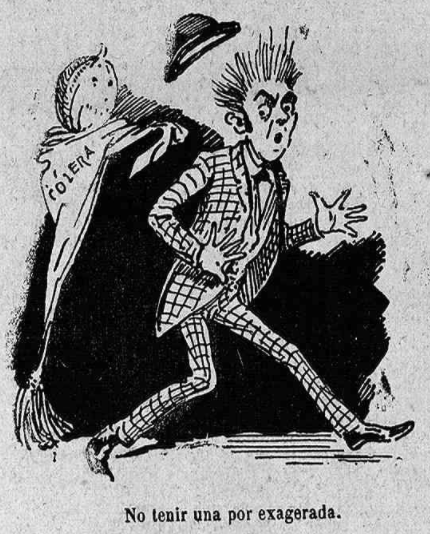
(La Esquella de la torratxa, Barcelona, 1885)
Don’t be overly fearful.
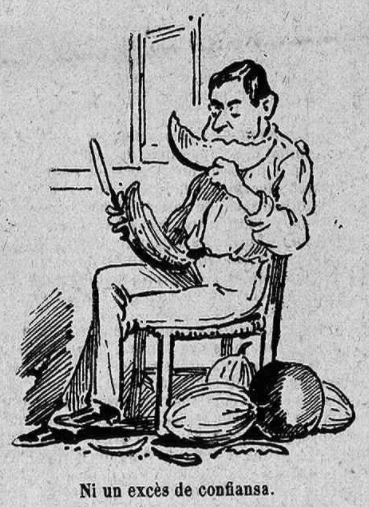
Don’t have excess confidence.
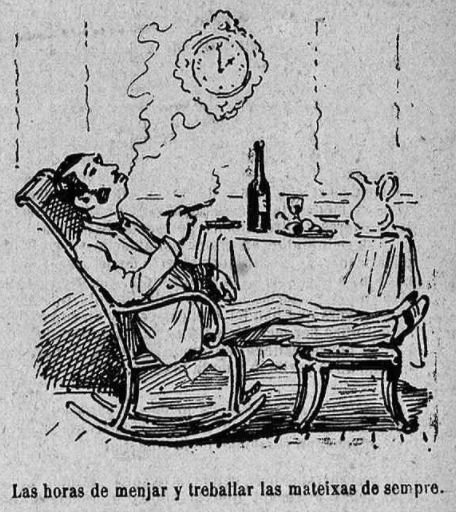
Maintain the same hours of eating and working as always.
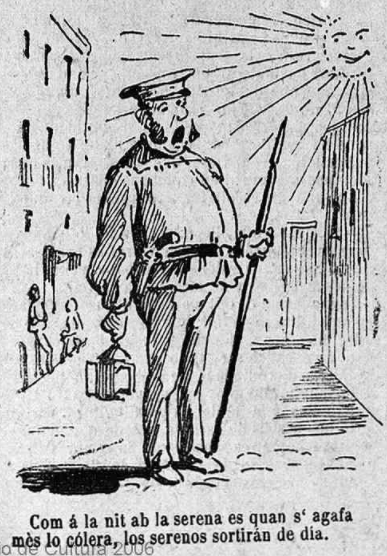
Since you get more cholera when it’s quiet at night, the quiet ones will go out during the day. (?)
Don’t eat much!
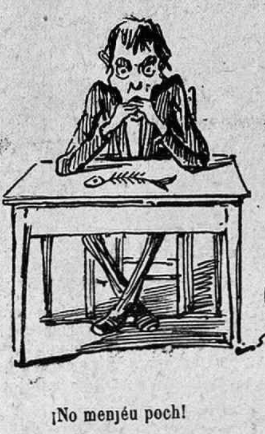
And don’t eat too much.
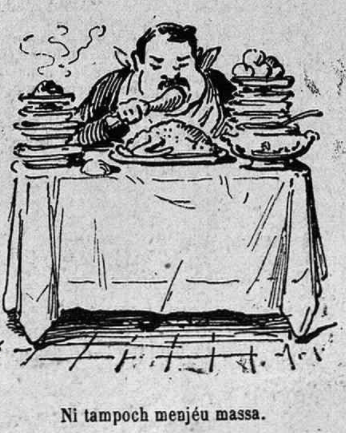
And most importantly, don’t eat melons, watermelons, or tomatoes.
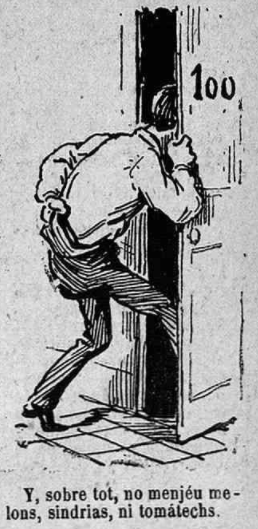
Ala, ala: it’s time to go for the club!… It is enough that we have cholera all year round, in the square, at the fishmongers, in the slaughterhouse, in the taverns, in the bakeries, in the grocery stores, and at the tobacconists. Well, enough, in the name of the God of microbes!
(La Esquella de la torratxa, Barcelona, 1885)
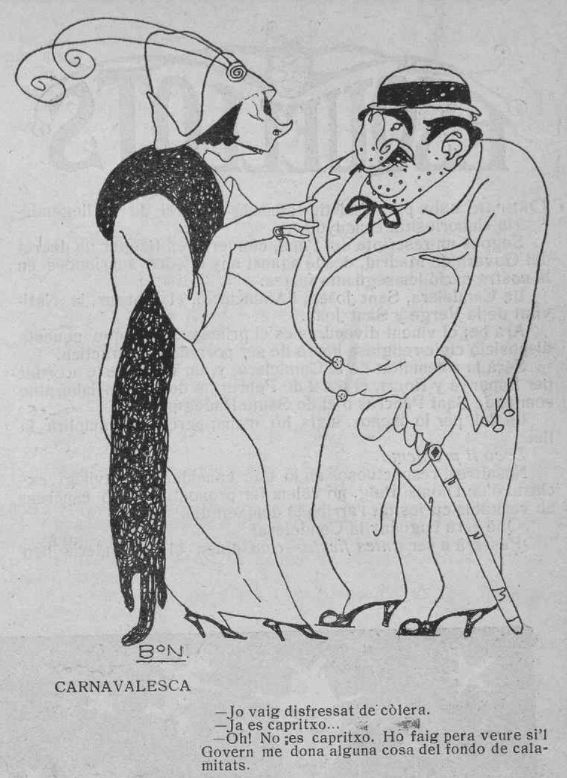
“I disguised myself as cholera.”
“It’s a whim …”
“Oh! not a whim. I do it to see if the government gives me anything from the calamity fund.”
(La Esquella de la torratxa, Barcelona, 1912)
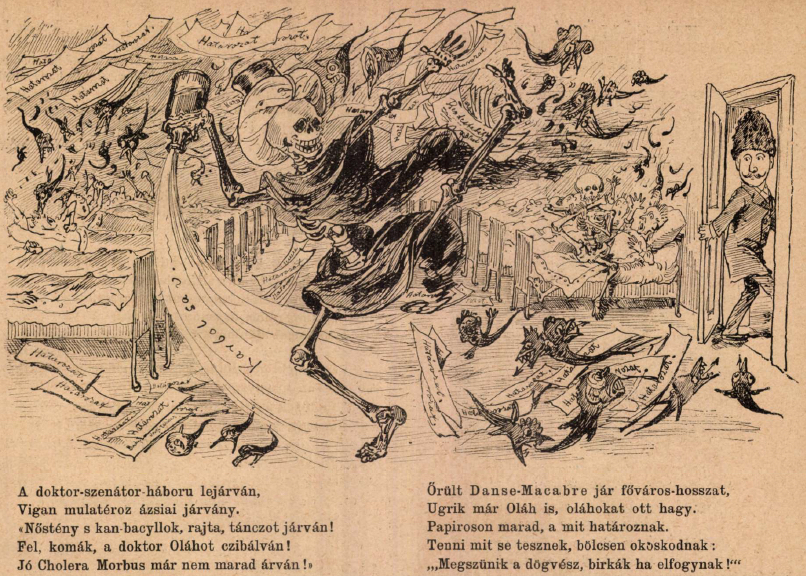
As the Doctor-Senator War comes to an end,
The Asian contagion is carousing merrily.
“Female and male bacilli, let’s get dancing!
Rise up, comma-bacilli, Dr. Oláh* urges them!
Good Cholera Morbus is no longer an orphan!”
Crazy Danse Macabre runs the length of the capital,
Oláh is already skipping out, leaving the Wallachians** there.
What has been decreed remains on paper.
Doing whatever they do, they reason wisely:
“The pest will disappear, they’re sheep if they run out!”
(*Presumably Gyula Oláh, physician, public health figure, and former parliamentarian)
(**Punning on Oláh’s name, which could also mean a derogatory term for Romanians.)
(Bolond Istók, Budapest, 1886)
“I say, hubby, when that wretched cholera came and I got it: weren’t you afraid of me?”
“What a foolish idea! It’s different now that you’re completely healthy.”
(Humoristické listy, Prague, 1893)

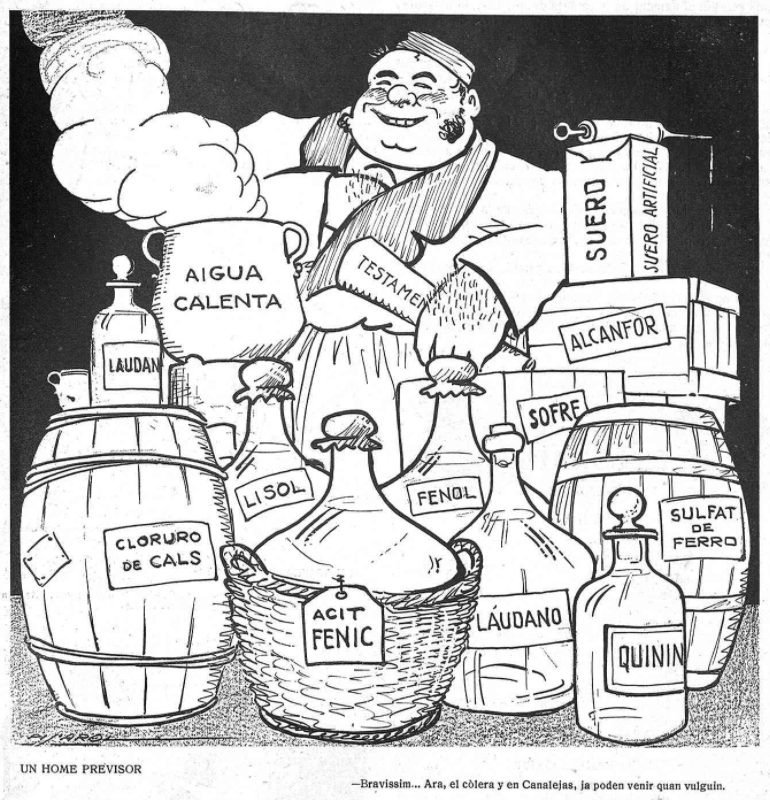
“Bravissimo… Now that the cholera and in [Spanish Prime Minister José] Canalejas, they can already come when they want.”
(La esquella de la torratxa, Barcelona, 1911) (Clearly I’m missing some wordplay here.)
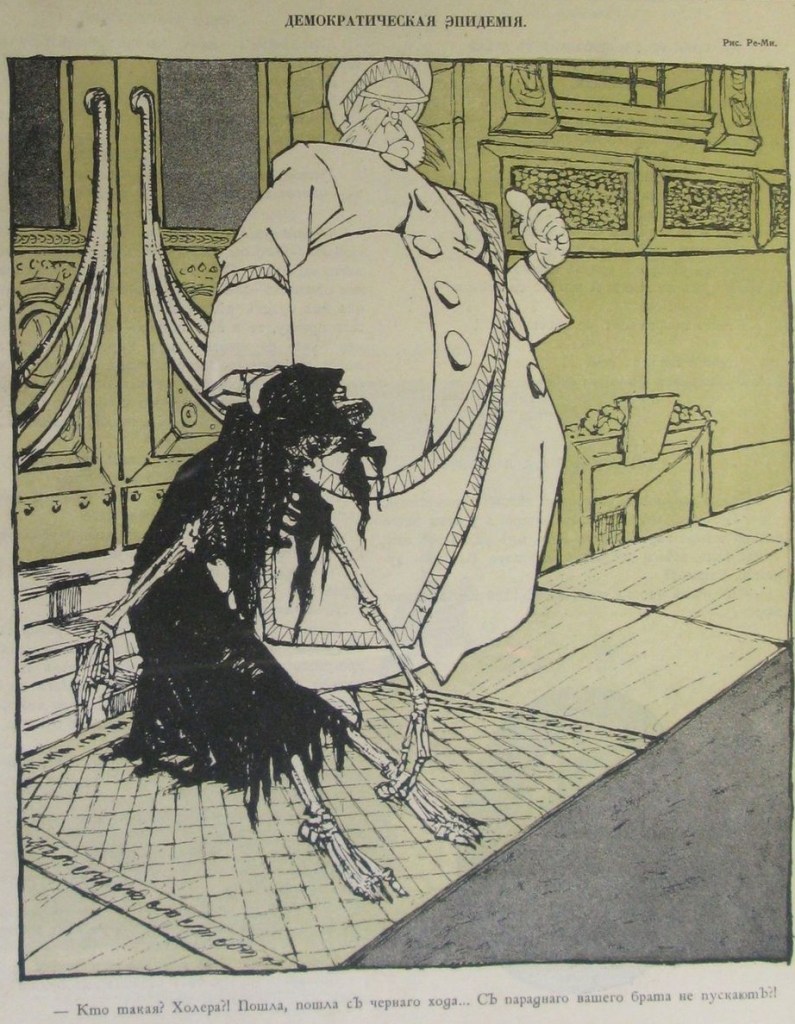
“Who is this? Cholera?! Go around through the back door… You and your ilk are not allowed through the front!”
(Satirikon, St. Petersburg, 1908)
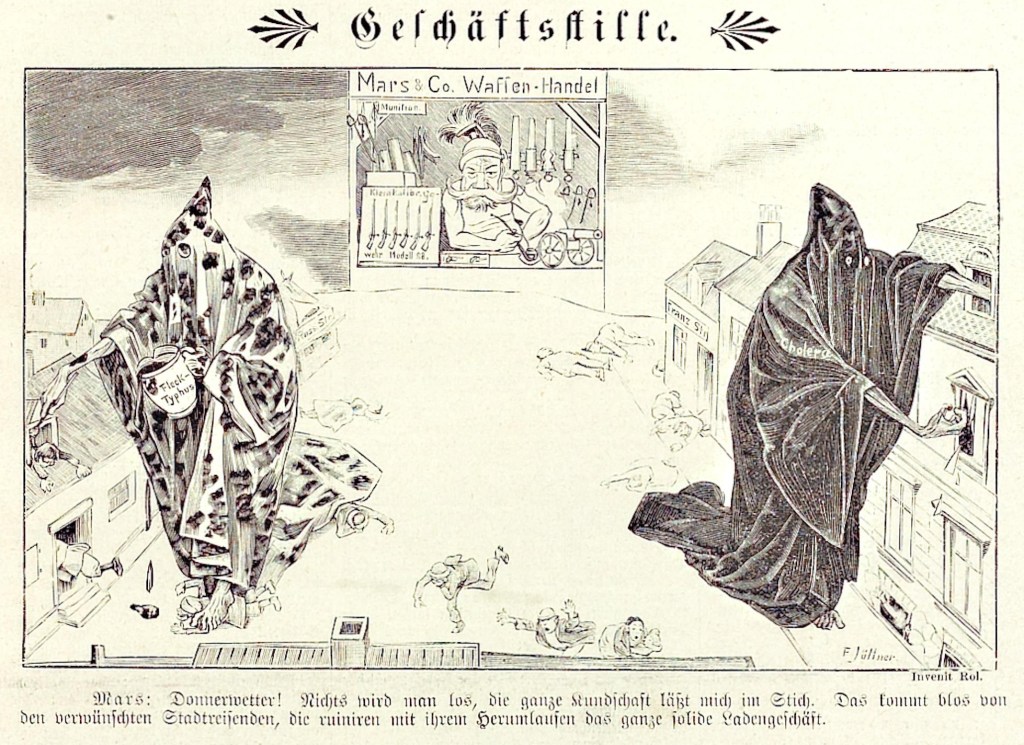
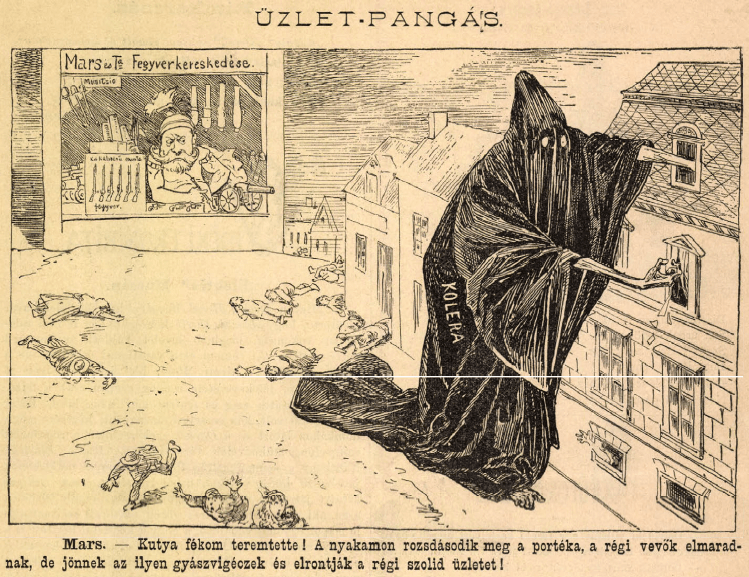
These two cartoons were published in quick succession as the cholera epidemic worsened in 1892, first in May in Germany, then in July in Hungary. Note what the Hungarian version leaves out, though it is nearly a copy of the German original.
Mars & Co. Arms Dealers: “Darn it! Nothing is moving off the shelves, all my customers are leaving me in the lurch. It’s simply because of these accursed city travelers who are ruining a perfectly solid retail enterprise with their running around.”
(Kladderadatsch, Berlin, 1892)
Mars & Co. Arms Dealers: “Well, I declare! My wares are rusting around my neck, old customers are staying away, but these peddlers in mourning clothes come and ruin the old solid business!”
(Borsszem Jankó, Budapest, 1892)
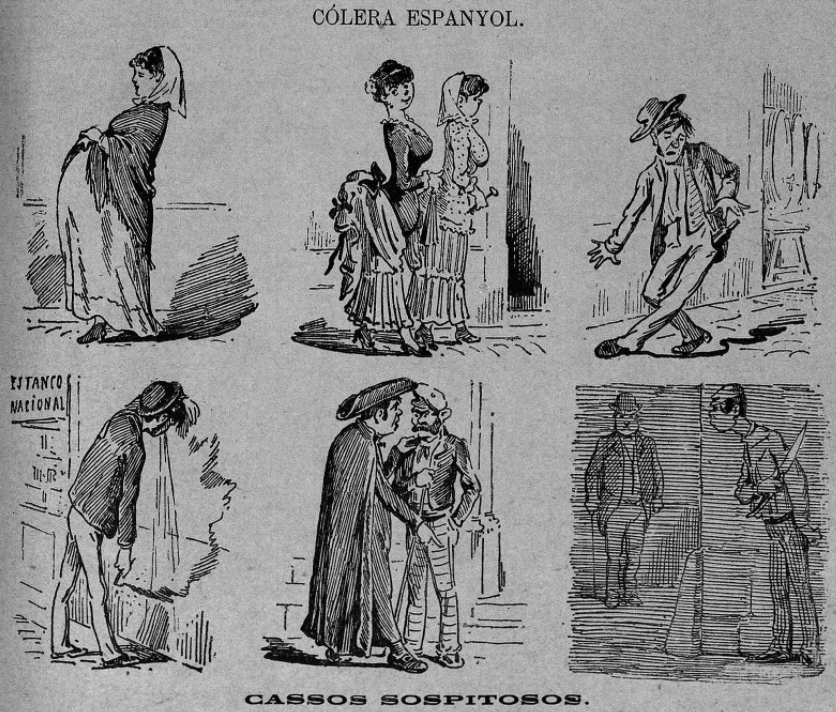
Suspicious cases.
(La Esquella de la torratxa, Barcelona, 1884)
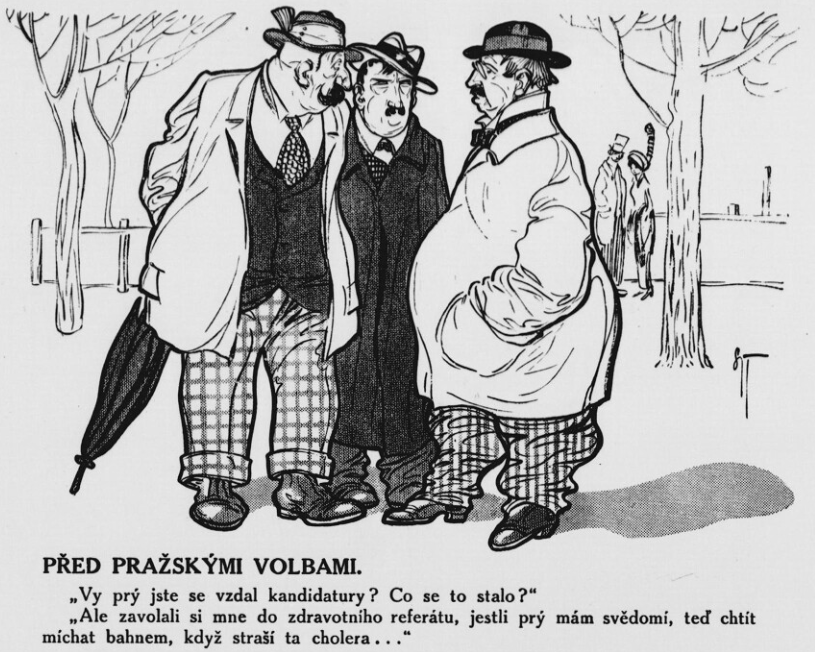
“Are you supposed to give up your candidacy? What happened?”
“But they summoned me to the medical department, if I have any scruples, now they want me to get down in the mud when the cholera is frightening us…” (Meaning, you can get dirty in politics or in fighting an epidemic, but not both at the same time? This wants improvement.)
(Humoristické listy, Prague, 1913)
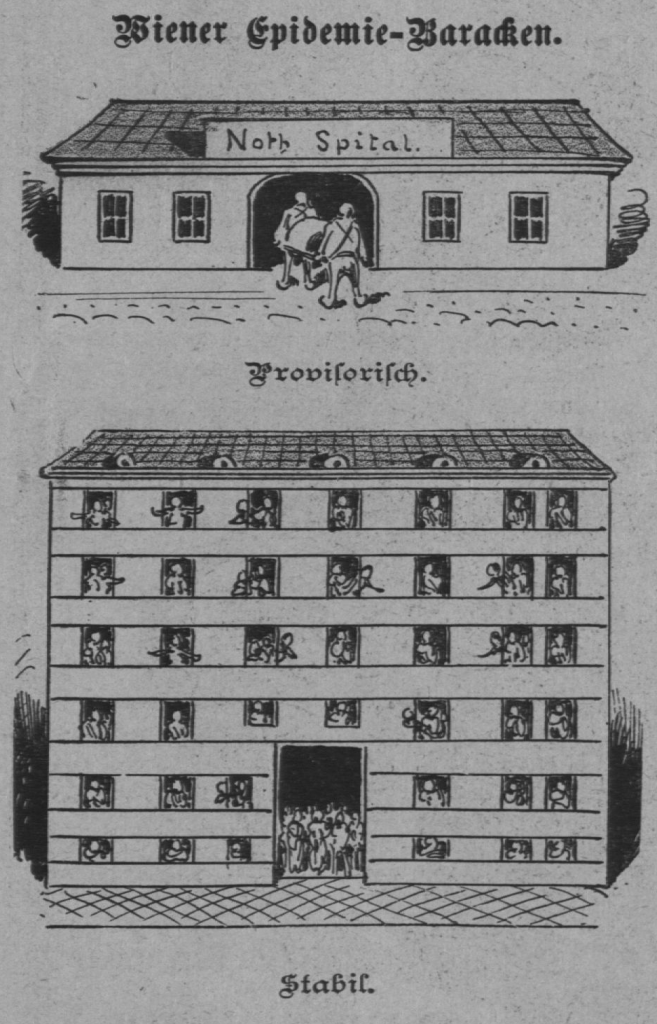
Provisional.
Stable.
(Kikeriki, Vienna, 1892)
An adjacent story lists the epidemic illnesses then prevailing in the city: street-paving-disease; city-theater-Sunday-afternoon-performance-fever; stock-market-congestion with migraine effects and scenery-typhus; general-intestinal-contraction among small business as a consequence of great virulence of intermittent brokeness; prizewinning-Danube-dropsy; robbery-fear in the watchmaker association; acute tram-crowding; catalepsy of the greater Vienna roadworks commission; food-marasmus; cholera-comma-bacillus-mania.
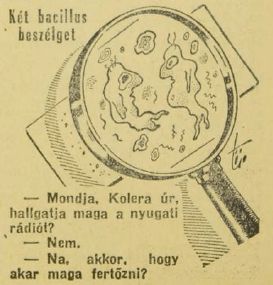
“Say, Mr. Cholera, do you listen to Western radio?”
“No.”
“Well, then, how do you want to infect yourself?”
(Pesti Izé, Budapest, 1948)
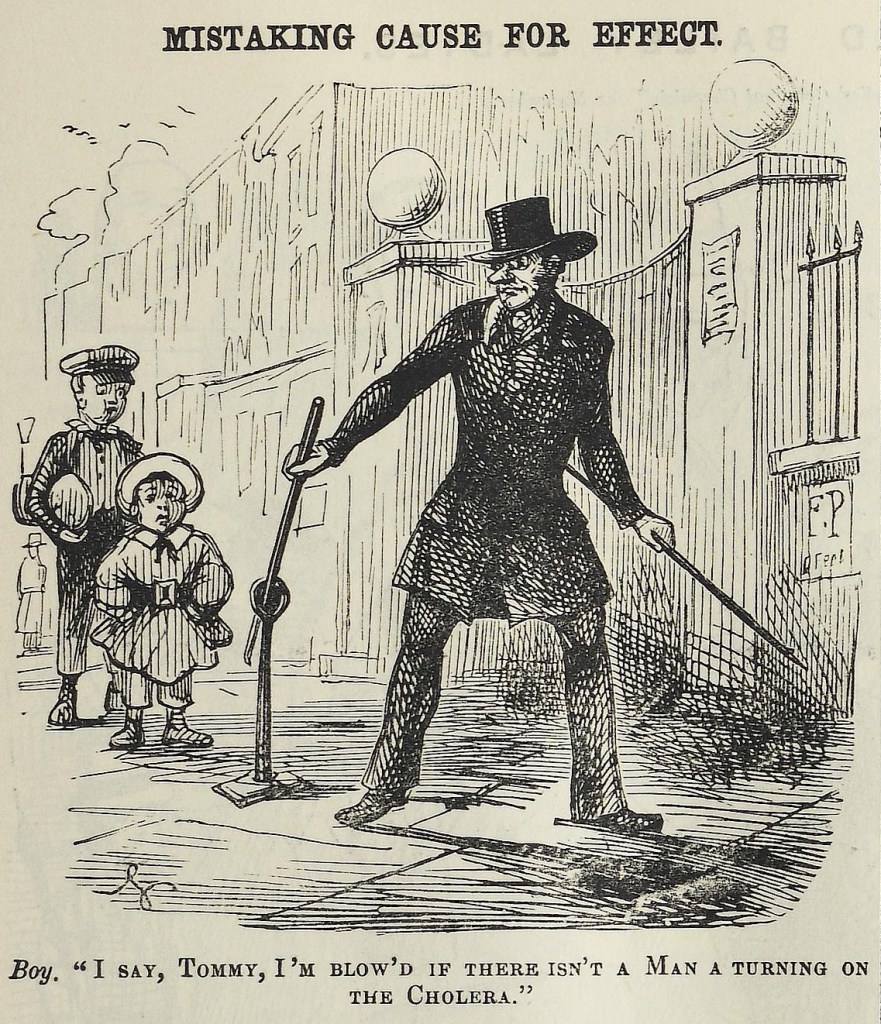
Boy: “I say, Tommy, I’m blow’d if there isn’t a man a turning on the cholera.”
(Punch, London, 1849)
 Sic Transit Pestilentia