France: “I caught the Chinaman, but he didn’t let go.”
(Borsszem Jankó, Budapest, 1884)
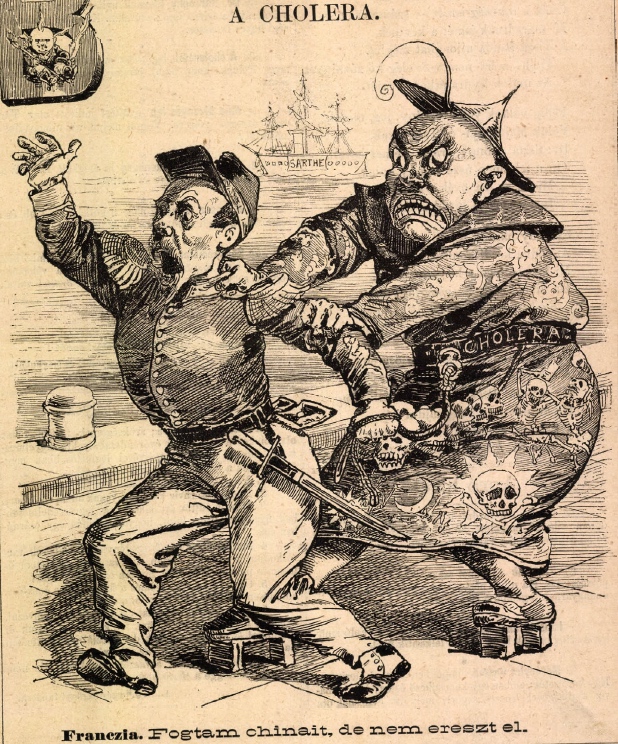
France: “I caught the Chinaman, but he didn’t let go.”
(Borsszem Jankó, Budapest, 1884)
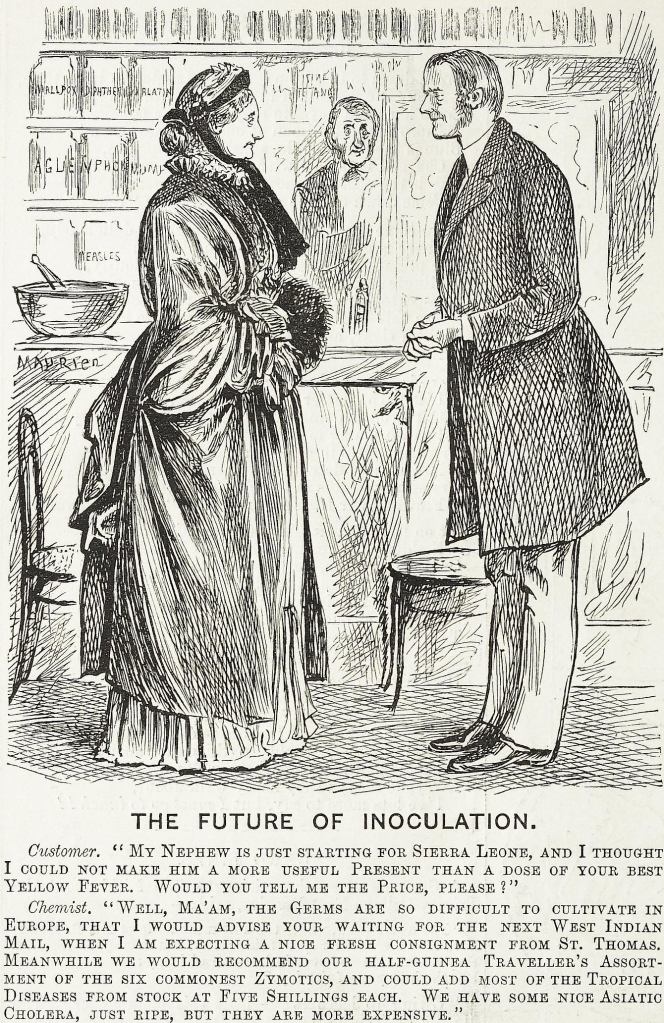
Ah, the spirit of speculation in the vaccination market.
(Punch, London, 1881)
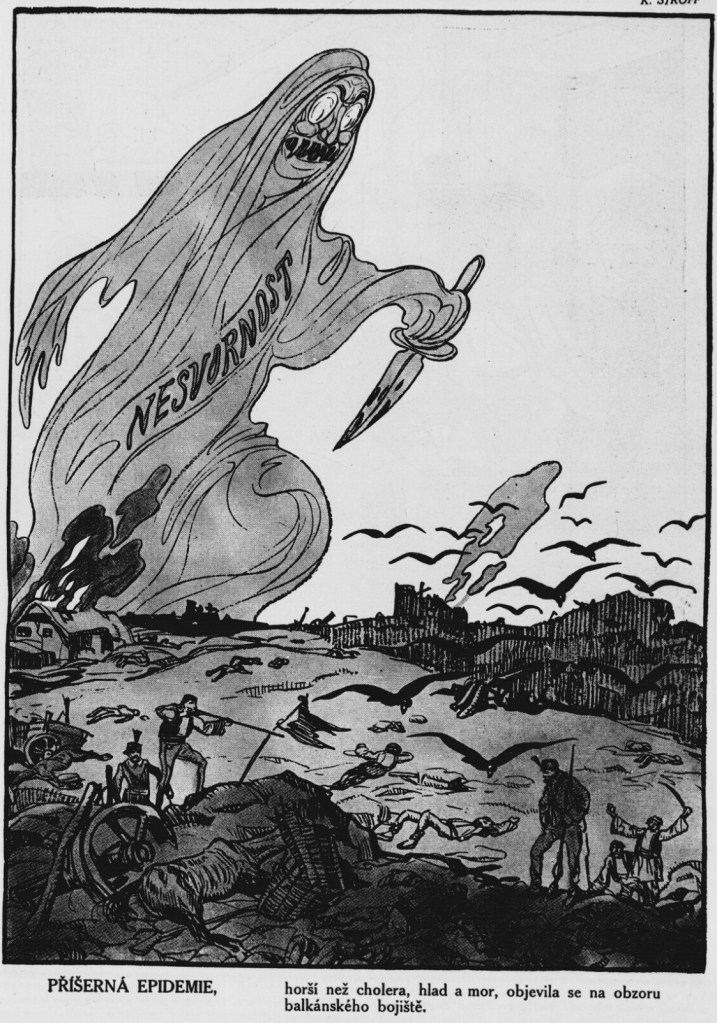
A terrible epidemic, worse than cholera, famine and plague, appeared on the horizon of the Balkan battlefield.
(Humoristické listy, Prague, 1913)
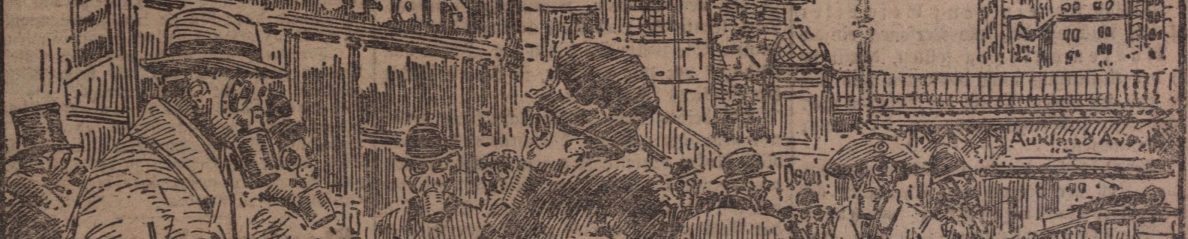
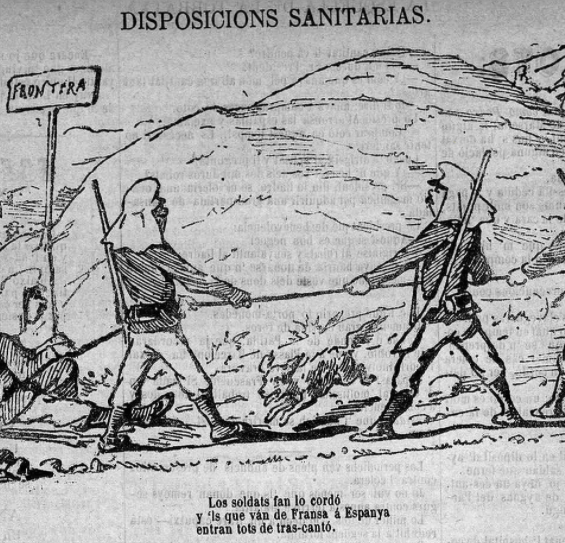
The soldiers make the quarantine cordon, and those who go from France to Spain all enter in improvised fashion.
(La Esquella de la torratxa, Barcelona, 1884)
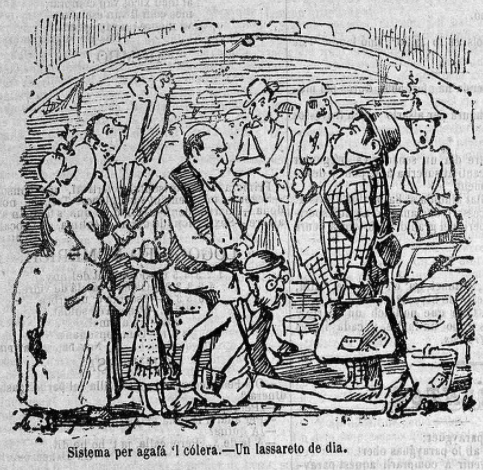
System to catch cholera. A quarantine station by day.
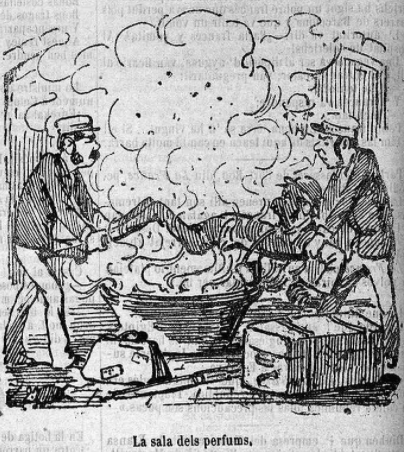
The perfume room.
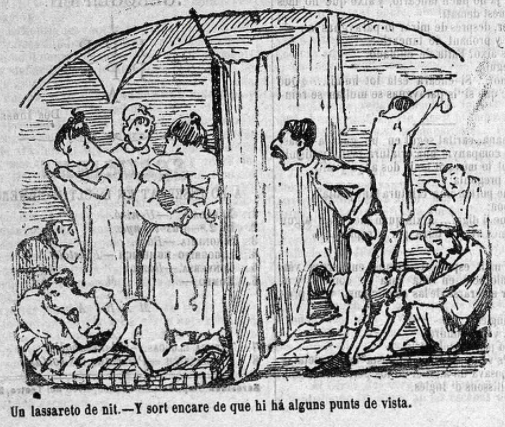
A night-time quarantine station. And luckily there are still some viewing points.
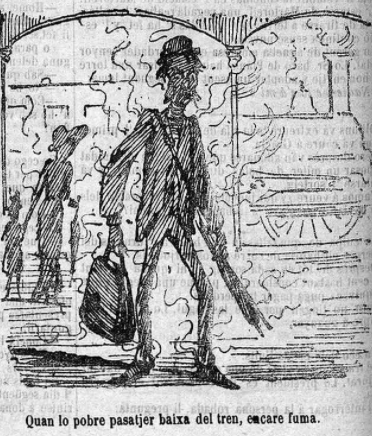
When the poor passenger gets off the train, he is still smoking.
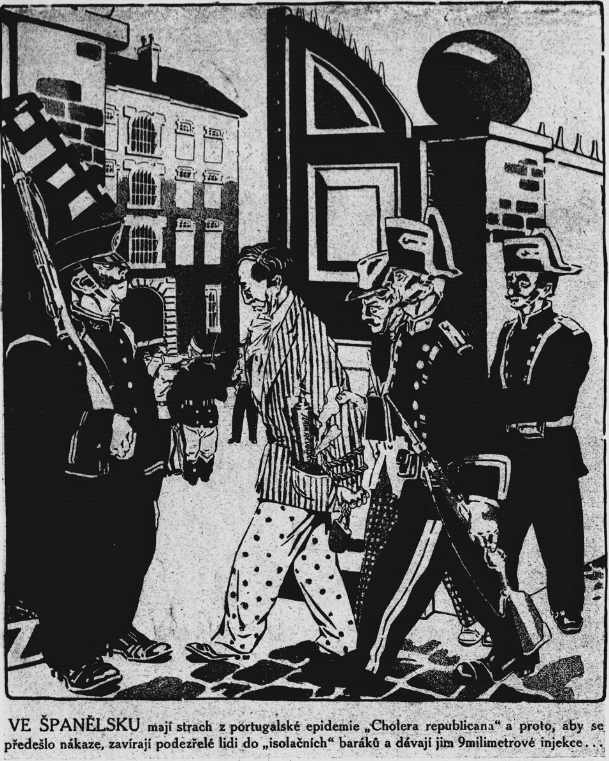
In Spain, they are afraid of the Portuguese epidemic of Cholera republicana, and in order to prevent infection, they lock the suspects in isolation barracks and give them 9-millimeter injections… (Not sure what the object in the prisoner’s pocket is, but it says “Glory to the Republic.”)
(Humoristické listy, Prague, 1910)
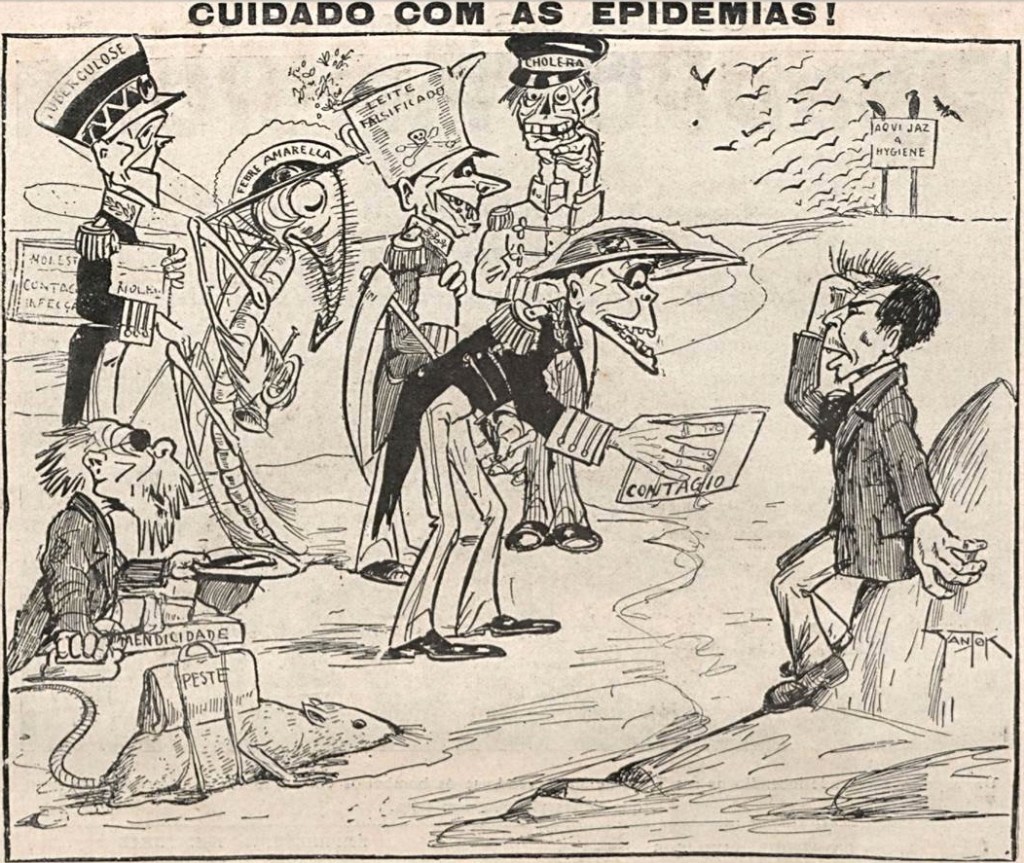
Contagion: “As Minister Plenipotentiary of the Emperor of Infection, I respectfully come forward to present my credentials with the hope that you will want to reestablish the old friendly relations, so unsuccessfully interrupted by the diplomacy of Hygiene. Lady Hygiene having died for lack of care, I do not doubt that our old friendship is now resumed.”
Rio’s poor: “Misericordia! The ambassadors of death are already at the door! [tuberculosis, mendicancy, plague, yellow fever, fake milk, cholera] What kind of diplomacy should I adopt now to drive out such a dangerous band? I will scream and complain at the top of my lungs before tuberculosis destroys us: To arms!”
(O Malho, Rio de Janeiro, 1912)
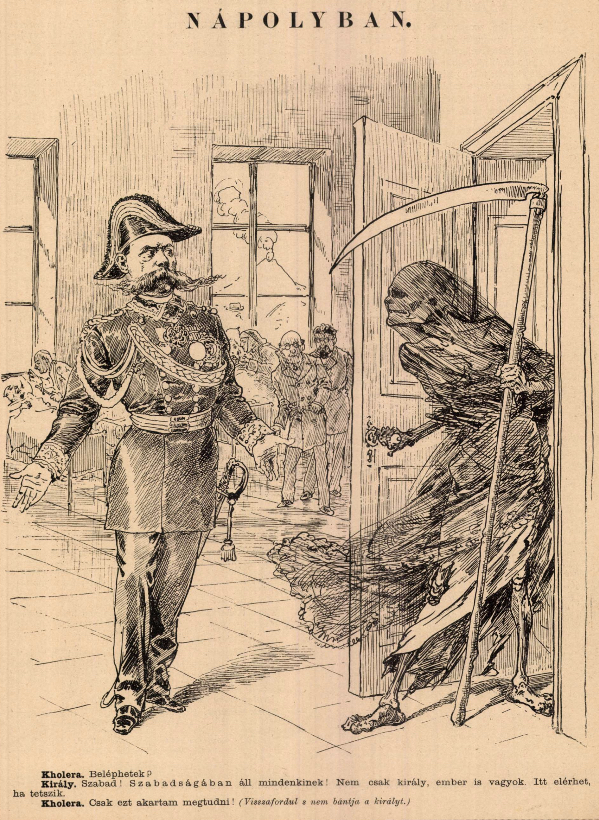
Cholera: “May I come in?”
King: “You may! Everyone is at liberty! I’m not only king, I’m a human. Over here, if you like.”
Cholera: “That’s all I wanted to know! (Turns around and does not bother the king.)
(Bolond Istók, Budapest, 1884)
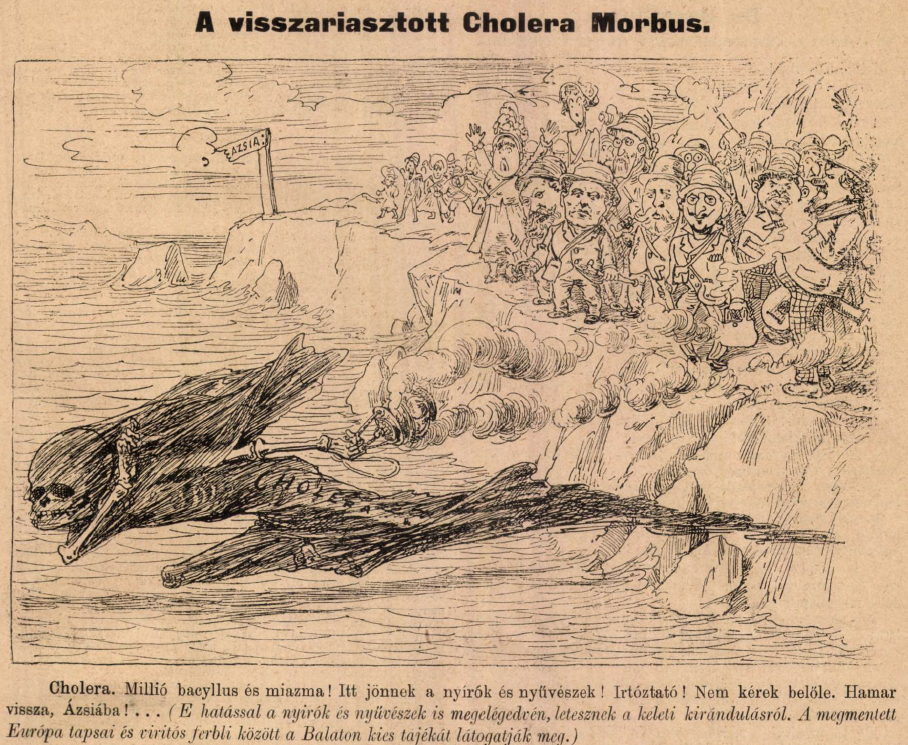
Cholera: Millions of bacteria and miasma! Here come the shearers and wormeaters! Loathsome! I want nothing to do with it. Right back to Asia!…
(Bolond Istók, Budapest, 1886)
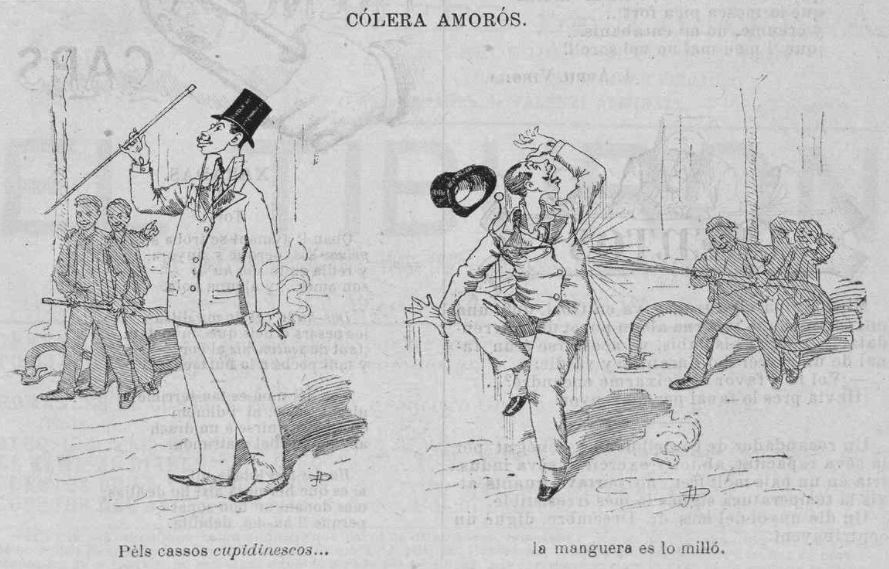
For the lover-boy cases… the hose is the best.
(La Esquella de la torratxa, Barcelona, 1890)
Scene: Mud-salad market. (Cholera lurking in the miasmatic background)
Mr. Punch (Inspector of Nuisances): “Now, then, my noble stick-in-the-mud, I’ve told you to clear up this place long ago, wake up, or it will be too late!”
(Punch, London, 1885)

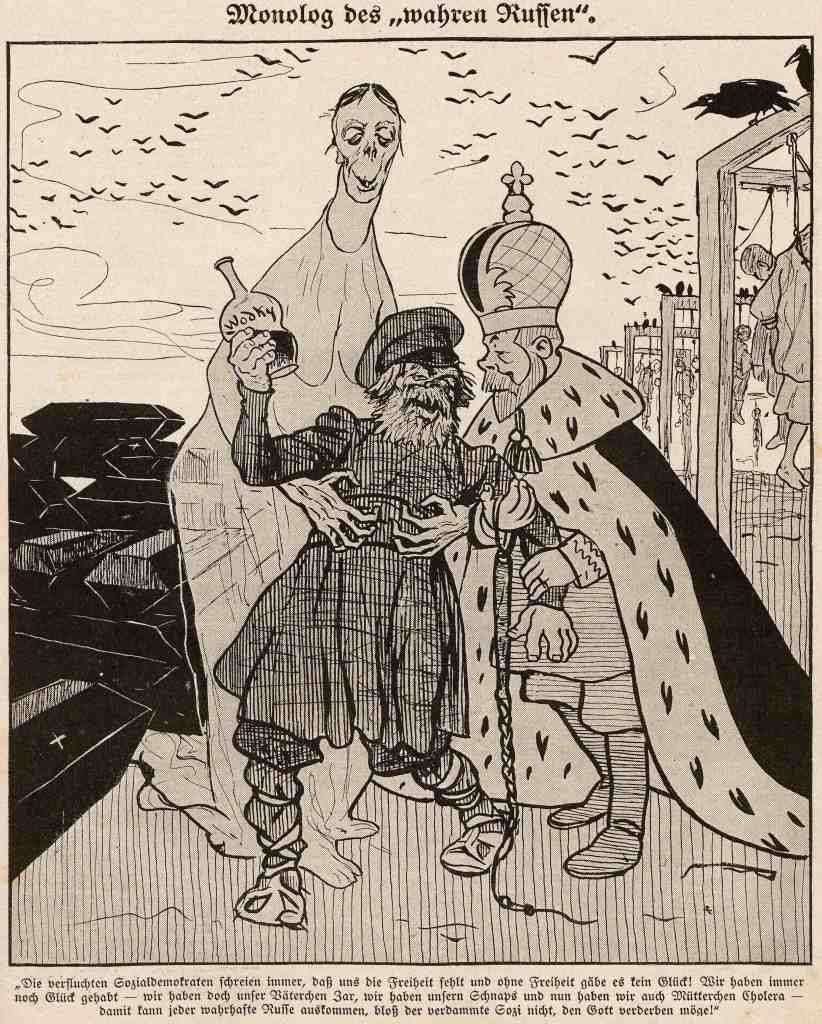
Another bit of Russophobia which I post without additional comment:
“The cursed Social Democrats always shout that we lack freedom and without freedom there would be no happiness! We have always been fortunate, we have our little father Tsar, we have our schnapps, and now we also have mother cholera, so any true Russian can get by, just not the damned socialist, may God ruin him!”
(Der wahre Jacob, Stuttgart, 1908)
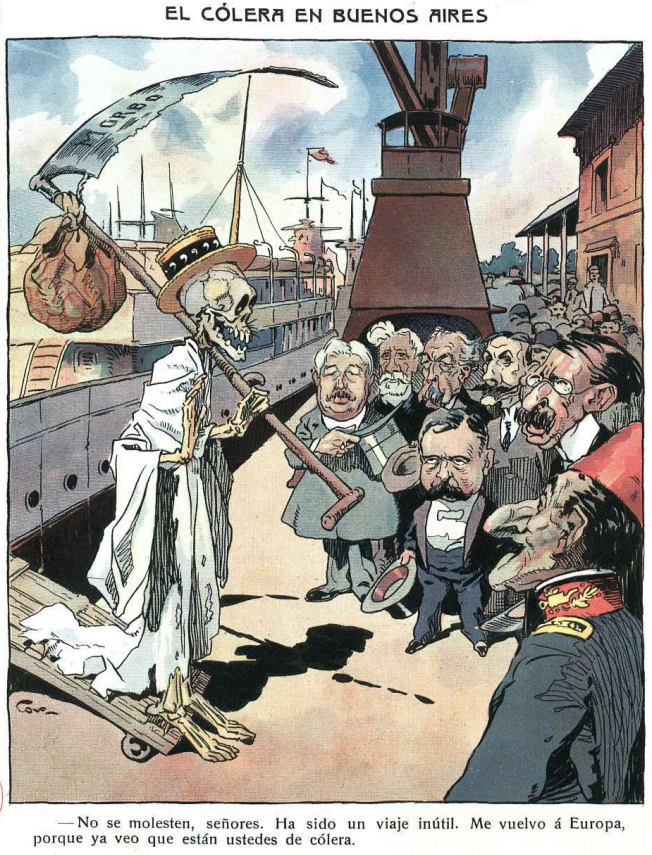
“Don’t bother, gentlemen. It has been a pointless journey. I am returning to Europe, because I see that you are angry.” (Punning again on cholera/choler, I believe.)
(Caras y caretas, Buenos Aires, 1908)
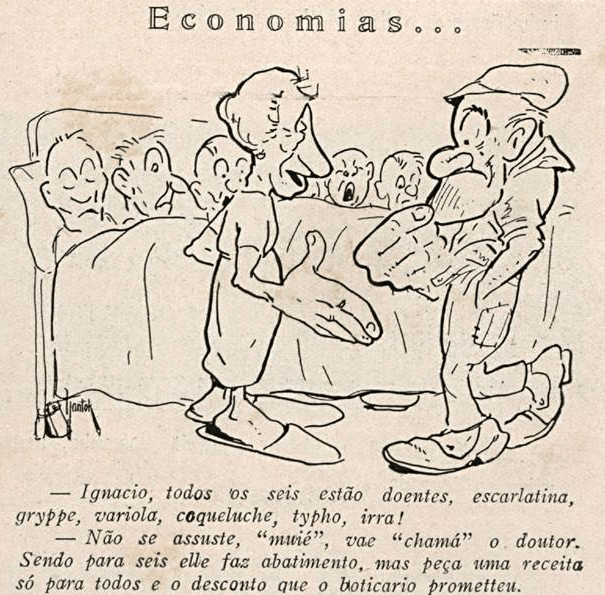
“Ignacio, all six of them are sick with scarlet fever, flu, smallpox, whooping cough, typhus, and choler!”
“Don’t be scared, “girl,” go and “call” the doctor. For six he’ll make a discount, but ask for a prescription just for everyone and the discount that the pharmacist promised.”
(O Malho, Rio de Janeiro, 1927)
(in closing) “So that fine kettle of fish is already here.”
“What? You mean cholera?”
“Something worse! Only a few of us would be taken by cholera, but this is an official [Austro-Hungarian] census. Some Czechs would fall victim to it…”
(Humoristické listy, Prague, 1910)

(This will make sense for those who appreciate grammatical cases in Slavic languages)
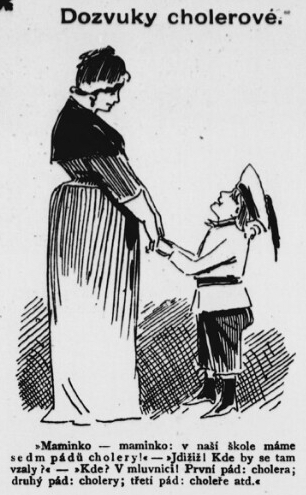
“Mommy, mommy: we have seven cases of cholera in our school!”
“Come now! Where did they all come from?”
“Where? In grammar! First case: cholera [nom.]; second case: cholera [acc.]; third case: cholera [dat.], etc.”
(Humoristické listy, Prague, 1892)
 Sic Transit Pestilentia