“Don’t eat street food, it’s FILTHILY prepared and stored.”
Detail from cholera public health poster, Orel, Russia, c. 1920.
(Full image at Russian State Library)
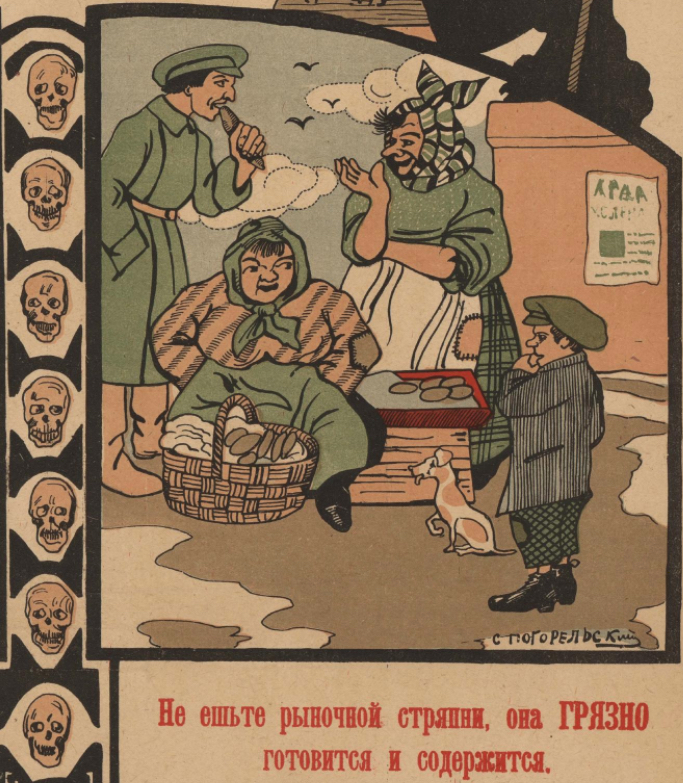
“Don’t eat street food, it’s FILTHILY prepared and stored.”
Detail from cholera public health poster, Orel, Russia, c. 1920.
(Full image at Russian State Library)
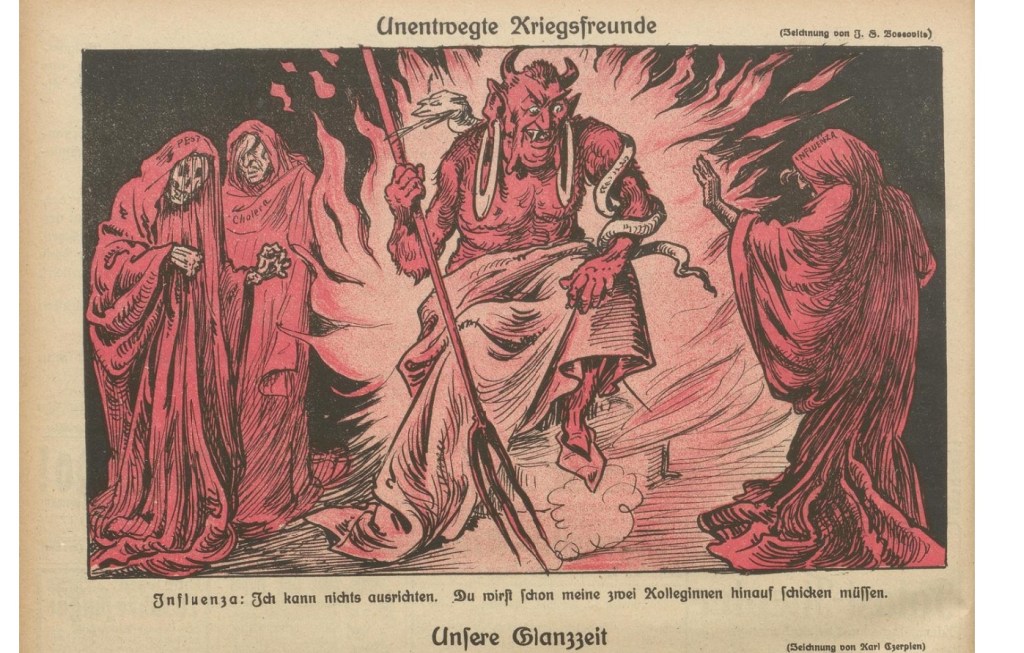
“I can’t arrange anything. You’ll just have to send my two colleagues there.” (Plague and cholera)
(Nebelspalter, 1918)
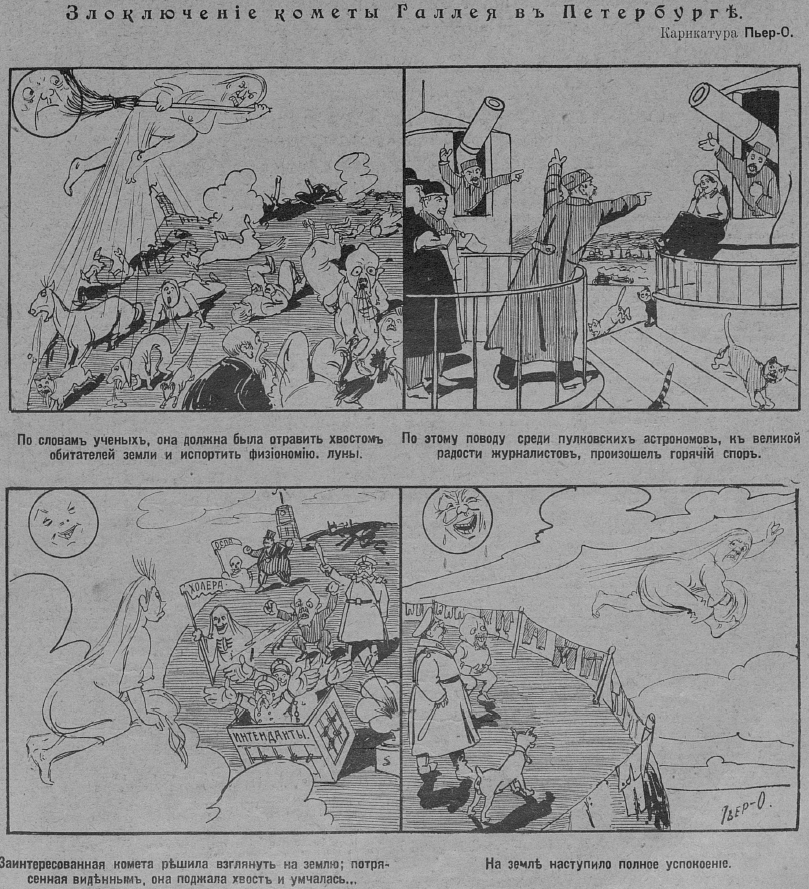
According to scientists, she was supposed to have poisoned the inhabitants of the earth with her tail and ruined the shape of the moon.
In this regard there was a heated debate among the Pulkovo astronomers, to the great joy of journalists.
Her interest piqued, the comet decided to take a look at the earth; shocked by what she saw [cholera, smallpox, quartermasters, gramophones], she pulled in her tail and sped away…
Complete calm settled upon the earth.
(Ogonek no. 20, 1910)
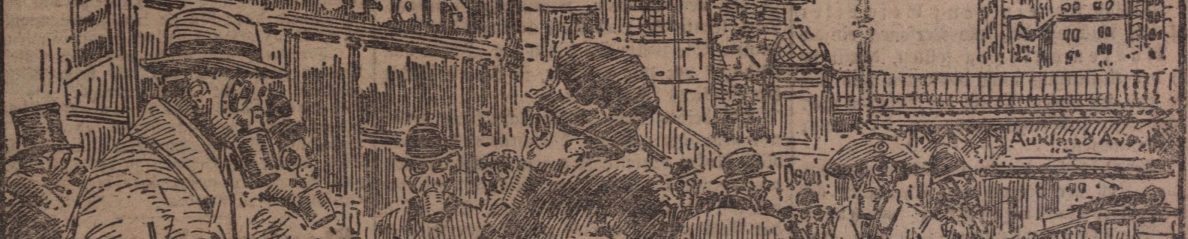
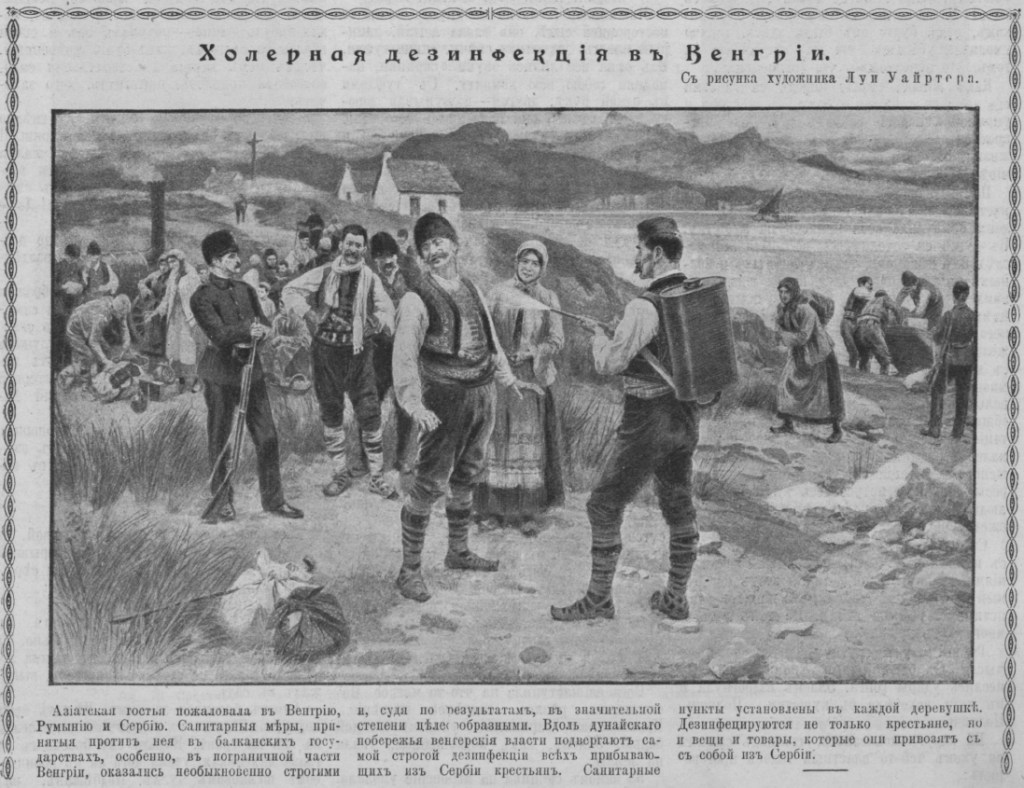
This image by the Scottish illustrator Louis Whirter was reprinted in the Russian magazine Ogonek no. 50 in 1910, but I have not been able to find anything further about its provenance. From the accompanying text: The Asian visitor (i.e., cholera) is welcomed to Hungary, Romania, and Serbia. Public health measures undertaken against it in the Balkan states, especially along Hungarian border areas, have been exceptionally strict, and judging by the results, quite expedient. Along the banks of the Danube the Hungarian authorities subject all arriving peasants from Serbia to strict disinfection.
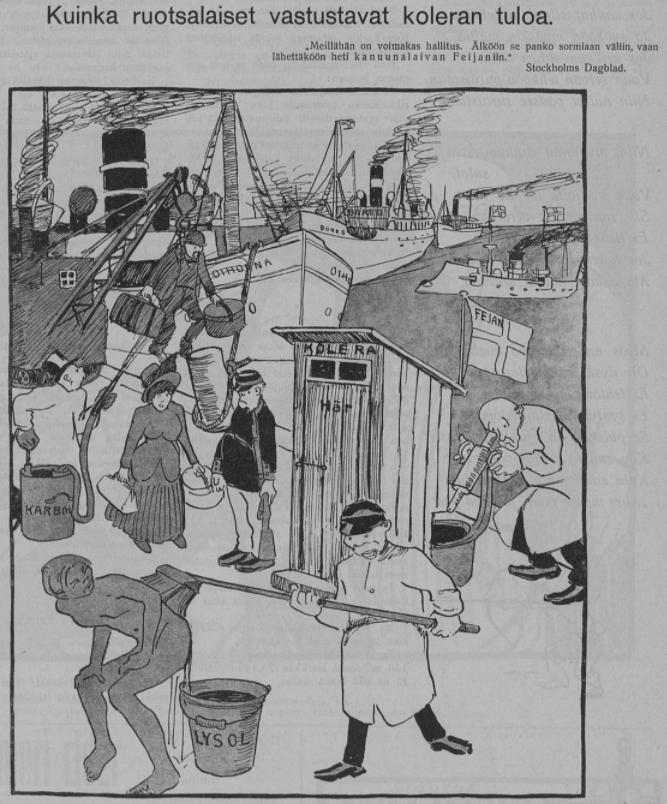
Finnish satirical magazine Tuulispää, 1908. Note the timely fieldwork by the dedicated bacteriologist.
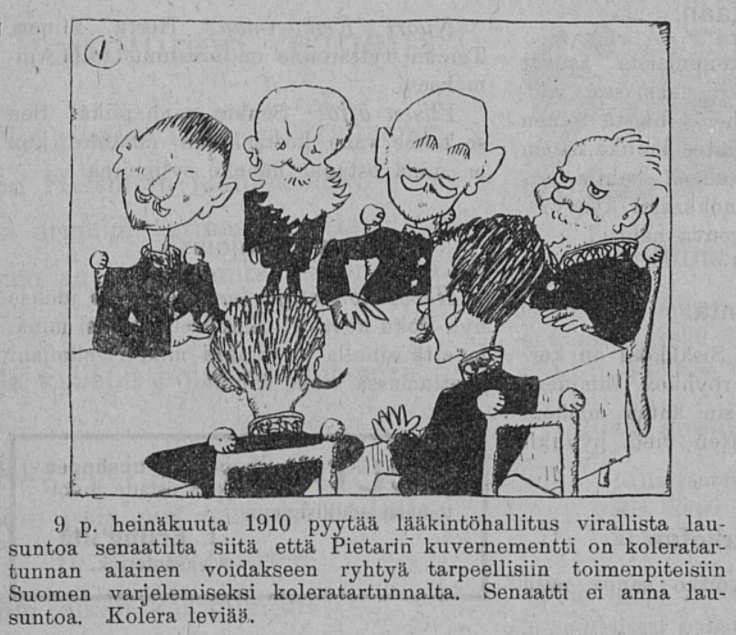
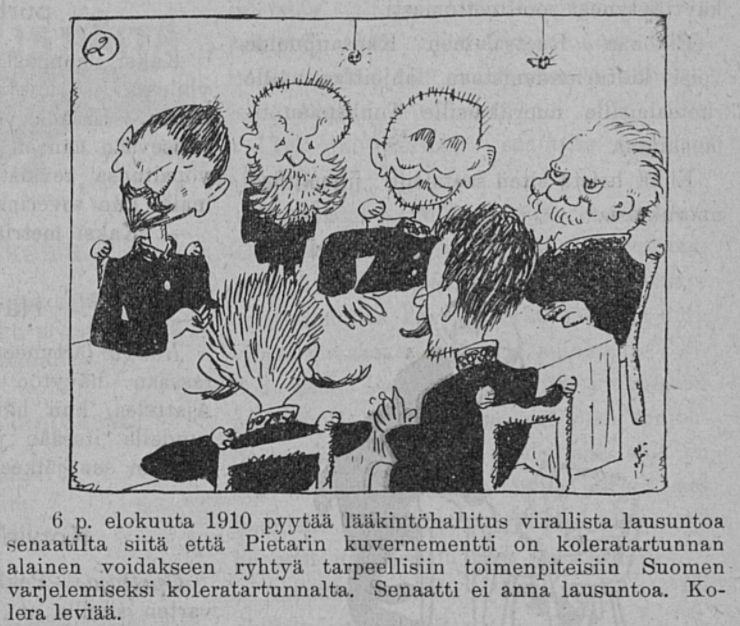
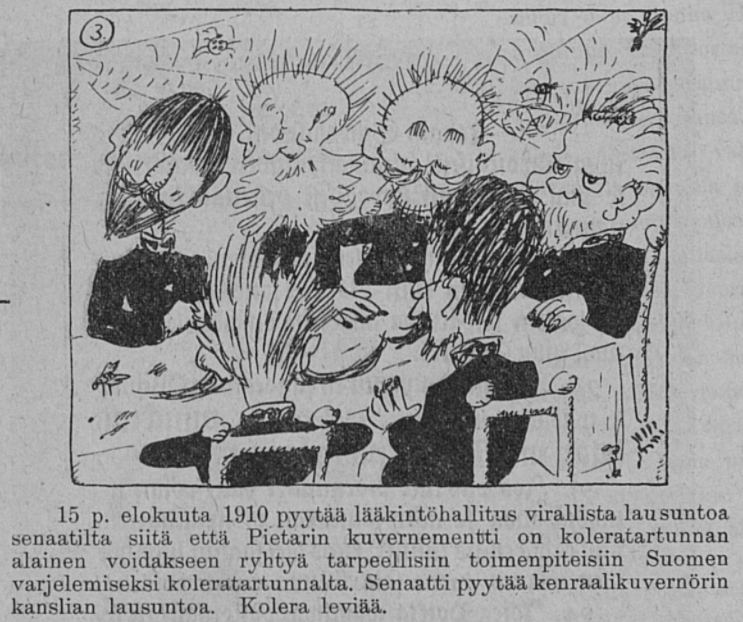
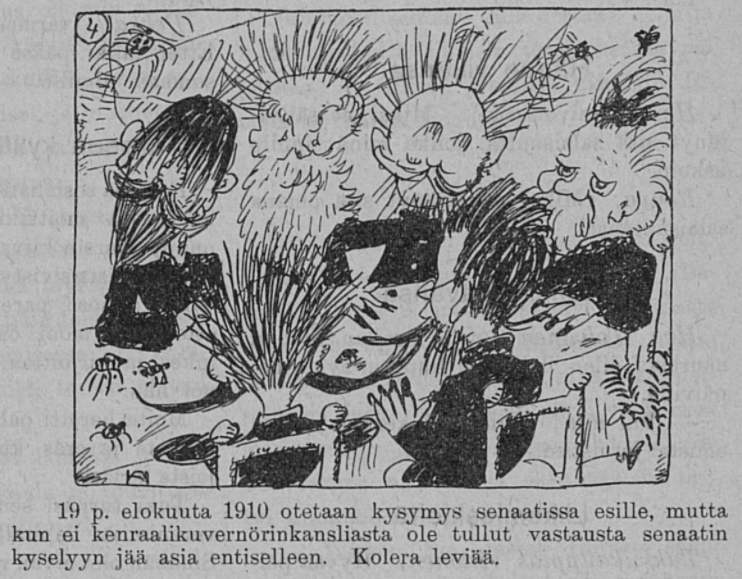
A Finnish cartoon from 1910 mocking the inaction of the Russian Imperial government during a cholera epidemic. (Tuulispää)
First panel: “On July 9, 1910, the Medical Board issued an official statement from the Senate that the St. Petersburg District was under cholera infection, in order to be able to take the necessary measures to protect Finland from cholera infection. The Senate does not issue an opinion. Cholera spreads.”
Fourth panel: “On August 19, 1910, the issue is raised in the Senate, but when the Office of the Governor-General does not receive an answer to the Senate’s inquiry, the matter remains as before. Cholera spreads.”
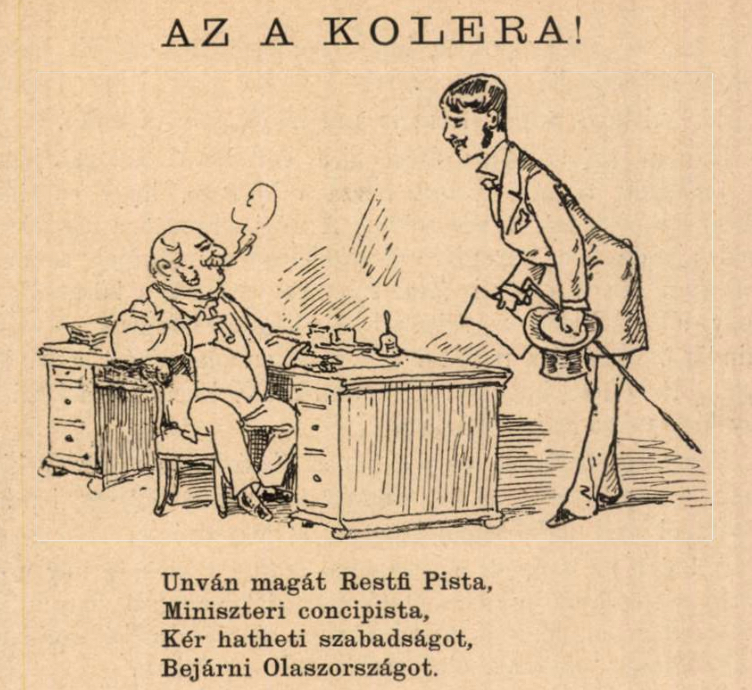
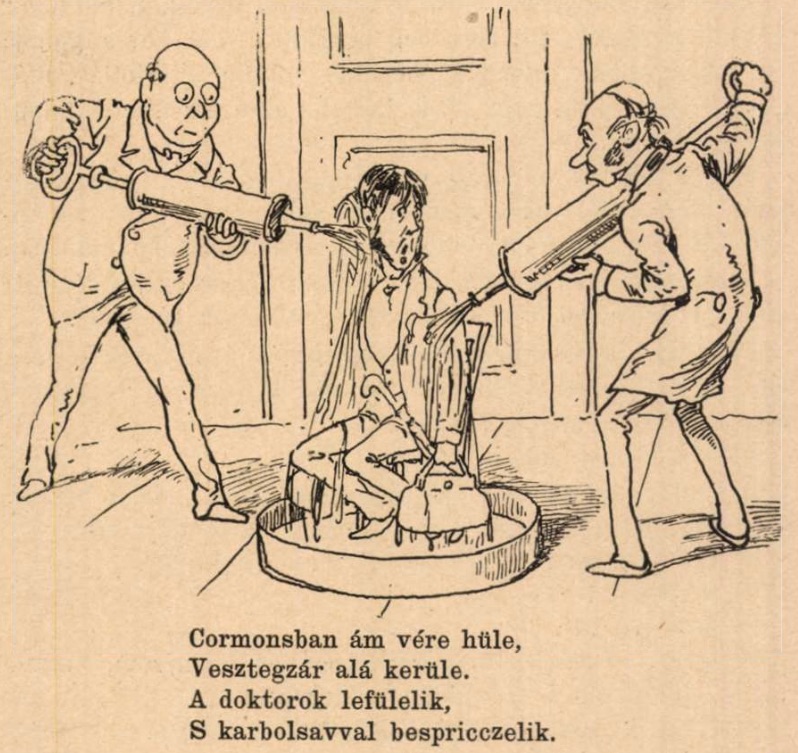
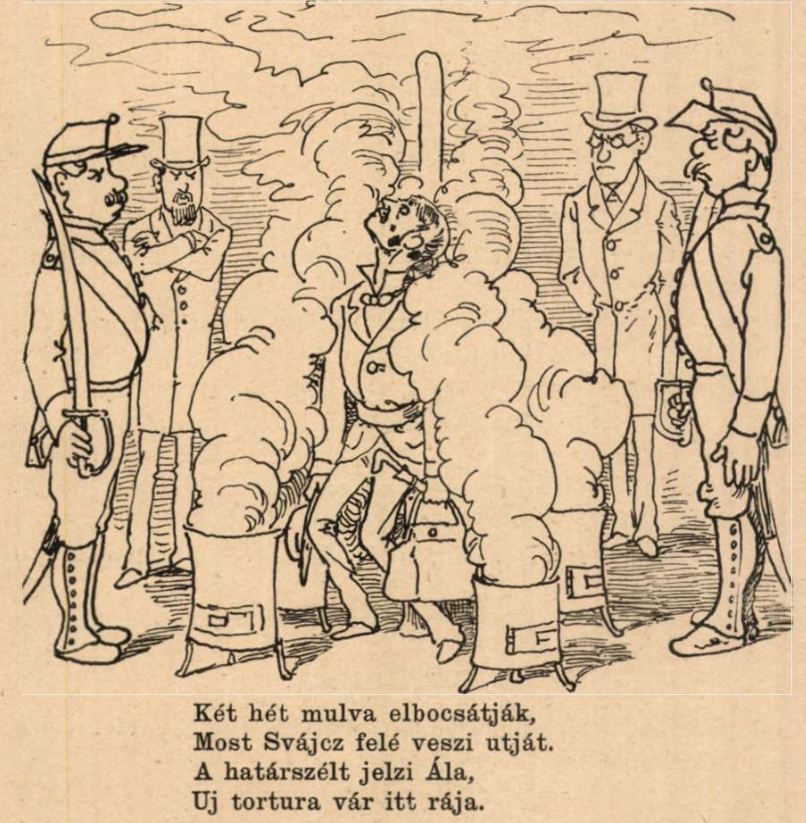
Ballad of the Hungarian ministerial aide who begs leave to visit Italy, suffers the indignities of quarantine and spritzes of carbolic acid, then continues to the Swiss border to experience new tortures.
(Bolond Istók, Budapest, 1884)
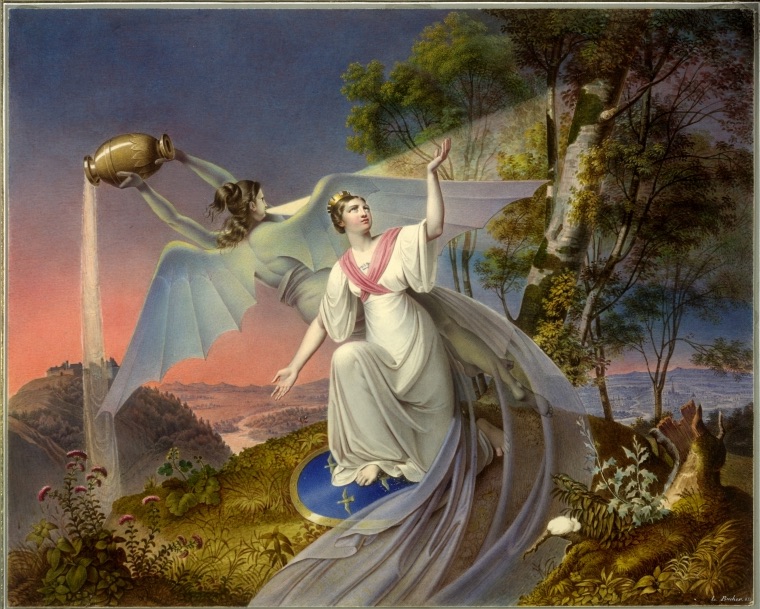
Allegory of the threat to Vienna from the cholera epidemic in 1831/32: The personification of Austria kneels on the coat of arms with five eagles (larks) and looks imploringly to the sky. Hovering behind her is the personification of cholera with bat wings and a vessel that she empties into the Danube. The scene takes place on the Kahlenberg with a view of the Leopoldsberg and the Danube valley, with the city of Vienna at dawn on the right in the background. Leopold Bucher, 1832.
(Austrian National Library)
 Sic Transit Pestilentia