First the decisive factors covered up the contagion;
but when it swelled to gigantic proportions before their eyes,
they lost their heads over it.
(Kikeriki, Vienna, 1892)
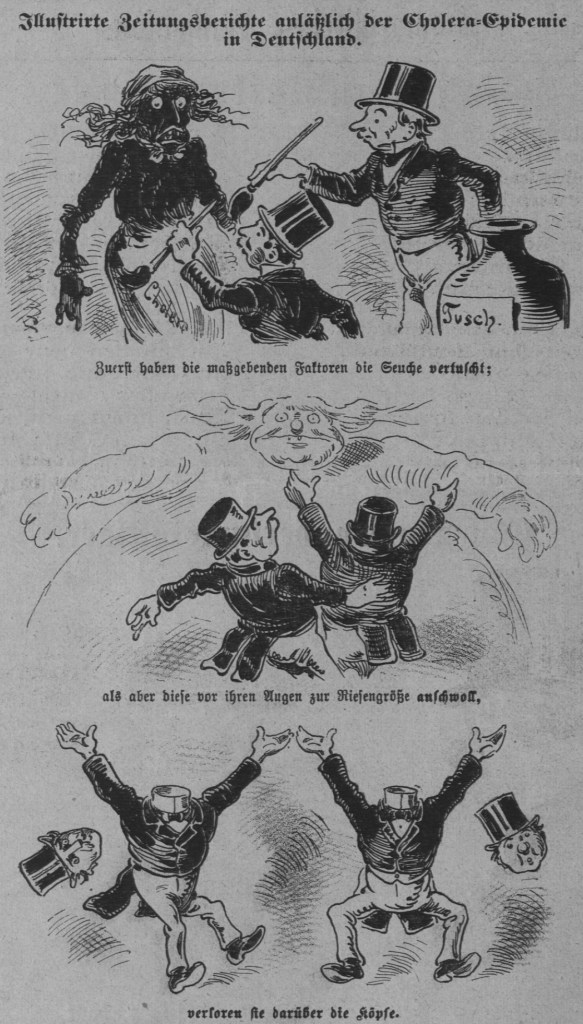
First the decisive factors covered up the contagion;
but when it swelled to gigantic proportions before their eyes,
they lost their heads over it.
(Kikeriki, Vienna, 1892)
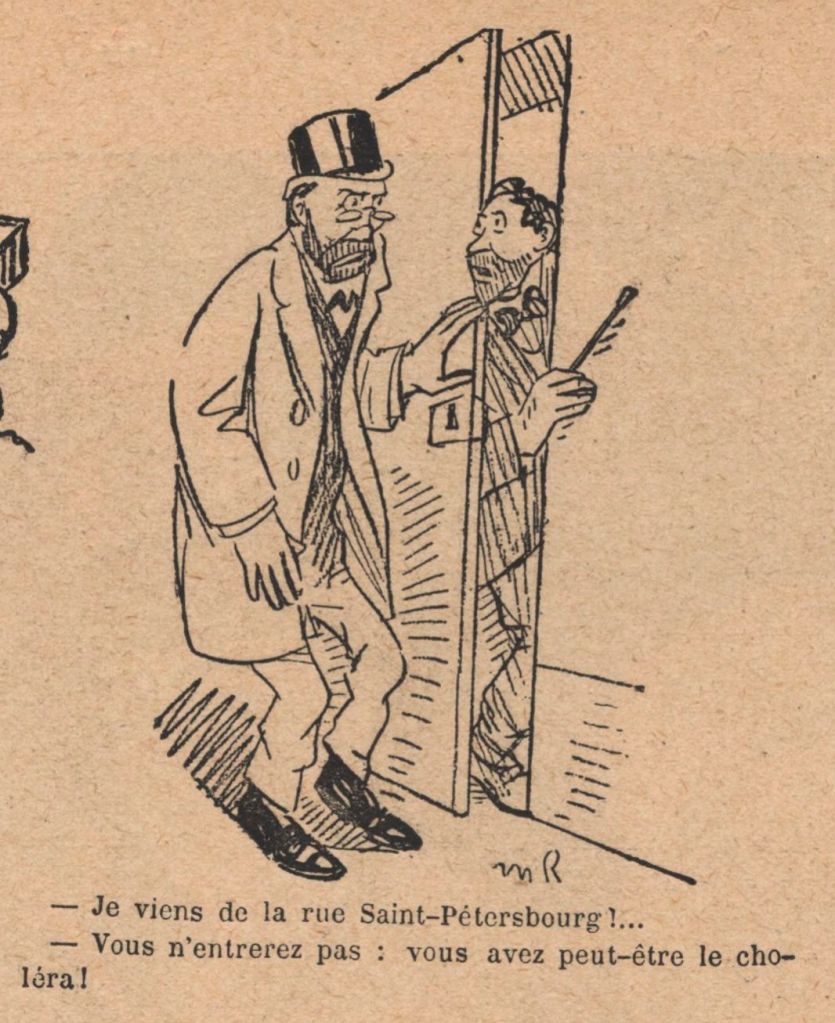
“I’m coming from St. Petersburg Street [in Paris]!…”
“You will not enter: you might have cholera!”
(Le Rire, Paris, 1908)
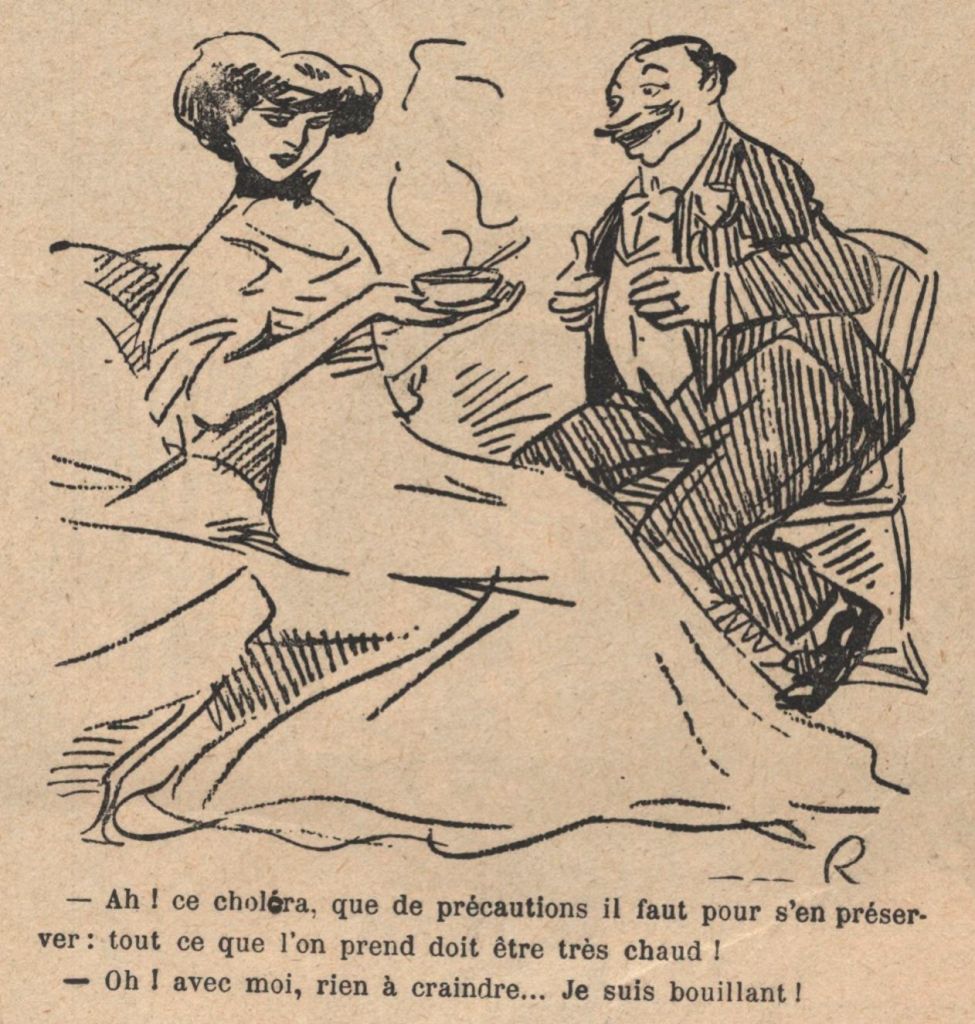
“Ah! this cholera, how many precautions must be taken to protect yourself from it: everything you take must be very hot!”
“Oh! with me, nothing to fear… I’m smoking hot!”
(Le Rire, Paris, 1908)
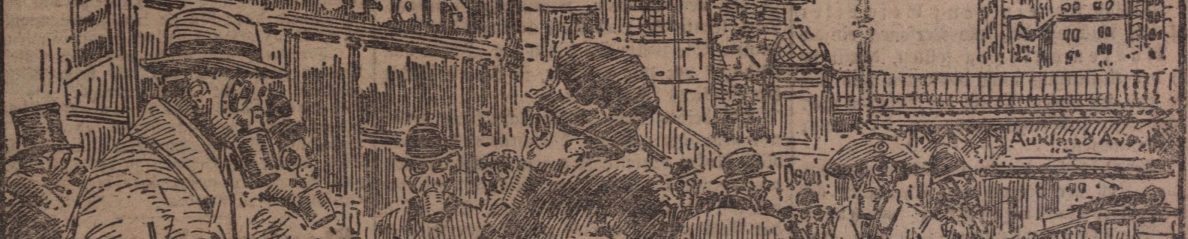
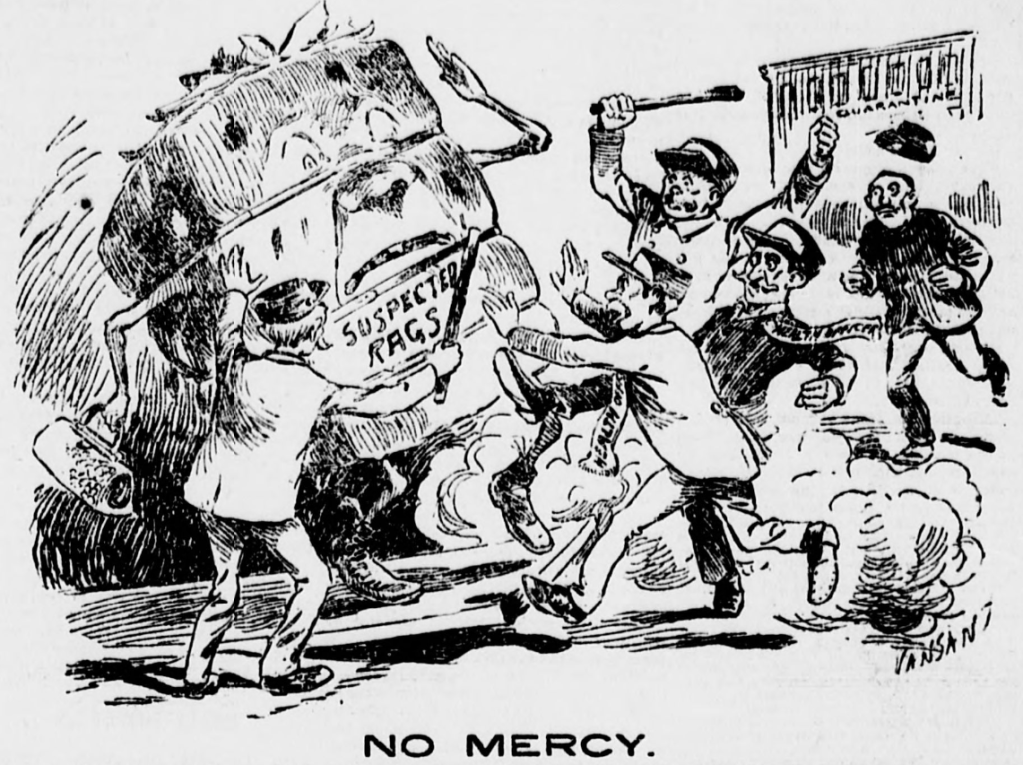
Public health officers are depicted beating away at rags suspected of bearing contagion. This issue contained extensive coverage of the advance of cholera in Europe and the preparations of New York public health authorities for its possible arrival on American shores.
(The Evening World, New York, 1892)
(From newspapers.) People’s Welfare Minister Rudevics has raised the issue of disinfecting incoming items in order to protect officials.
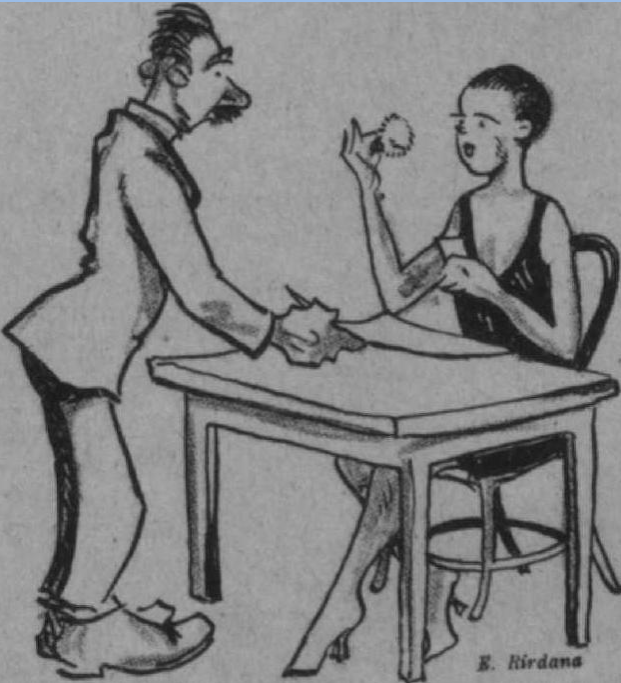
Woman: “If you don’t mind: from the countryside with a petition?! First of all, present a certificate that you’ve had a bath; then a certificate that you have been vaccinated against smallpox, typhus, cholera, tuberculosis, or rhinitis, then a document that your family is not insane; then a covering letter disinfecting the petition; then …”
Petitioner: “Then I better wait and bring a certificate that I am dead and buried!…”
(Svari, Riga, 1927)
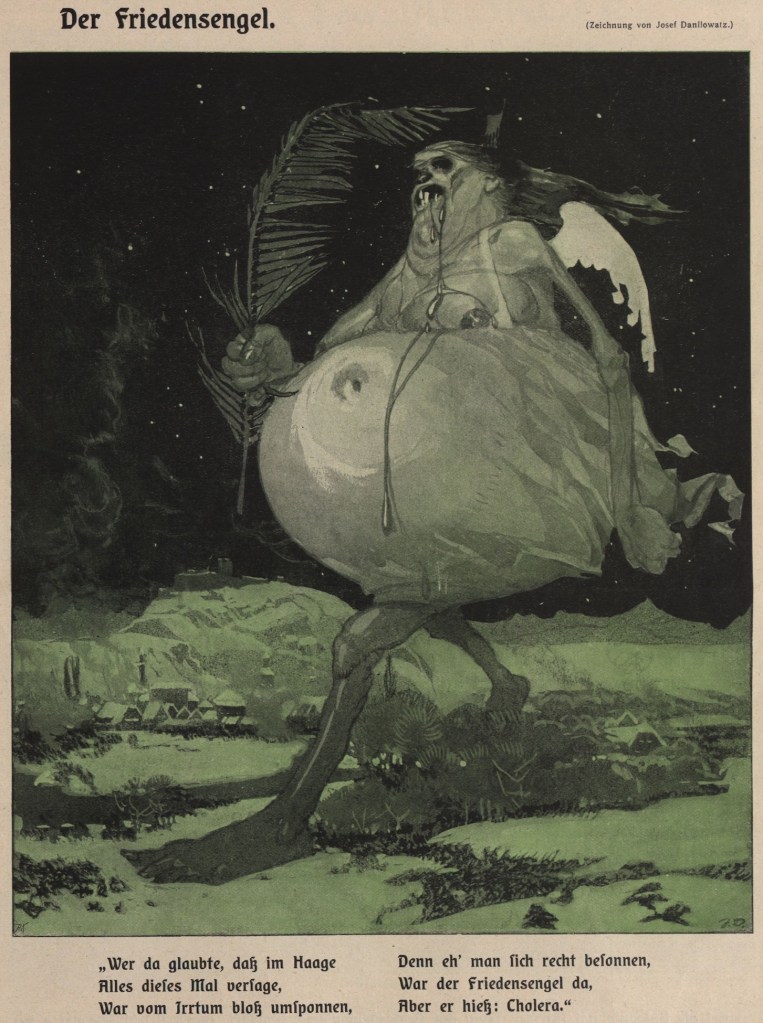
Whoever thought that in the Hague
Everything would fail this time,
Was simply wreathed in error,
Because before you thought things over,
The Angel of Peace was there,
But he was called: cholera.
(Die Muskete, Vienna, 1912) (The First Balkan War was drawing to a close, and for the first time the Hague Conventions were to play a role in the negotiations. Complicating the proceedings was the outbreak of cholera on both sides of the Bulgarian-Turkish lines.)
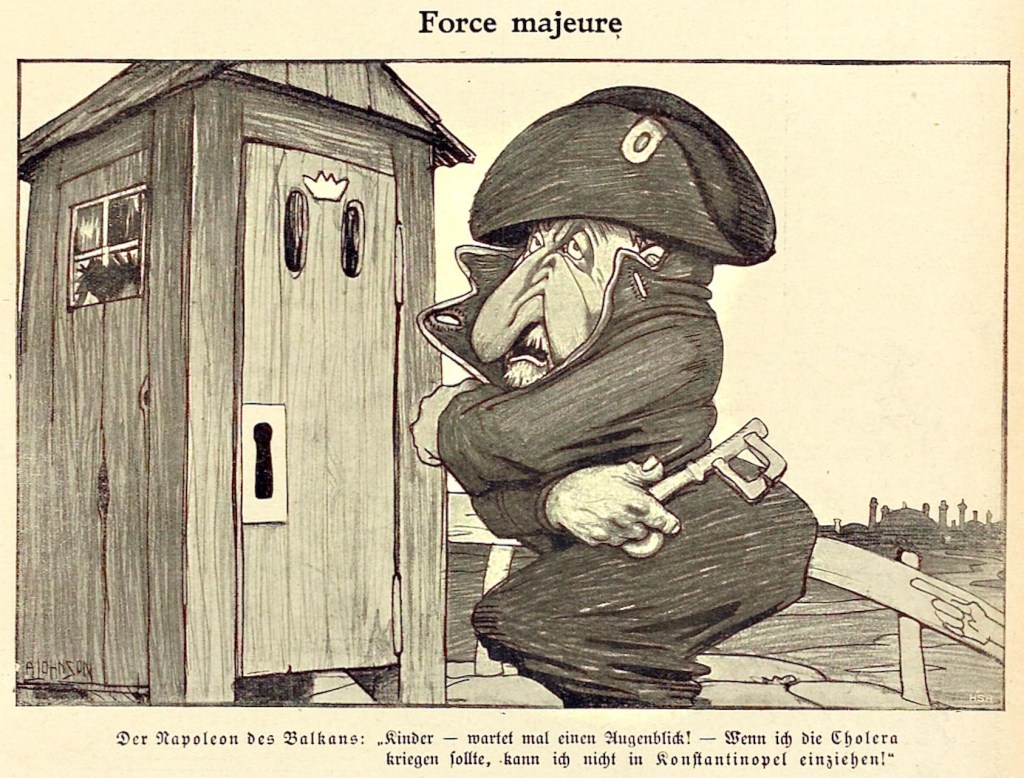
The Napoleon of the Balkans: “Guys, wait just a minute! If I’ve got cholera, I can’t march into Constantinople!”
(Kladderadatsch, Berlin, 1912) (The figure lampooned here was Radko Dimitriev, the Bulgarian general during the First Balkan War who directed the failed assault on the Chataldzha lines outside of Constantinople just weeks before this cartoon was published.)
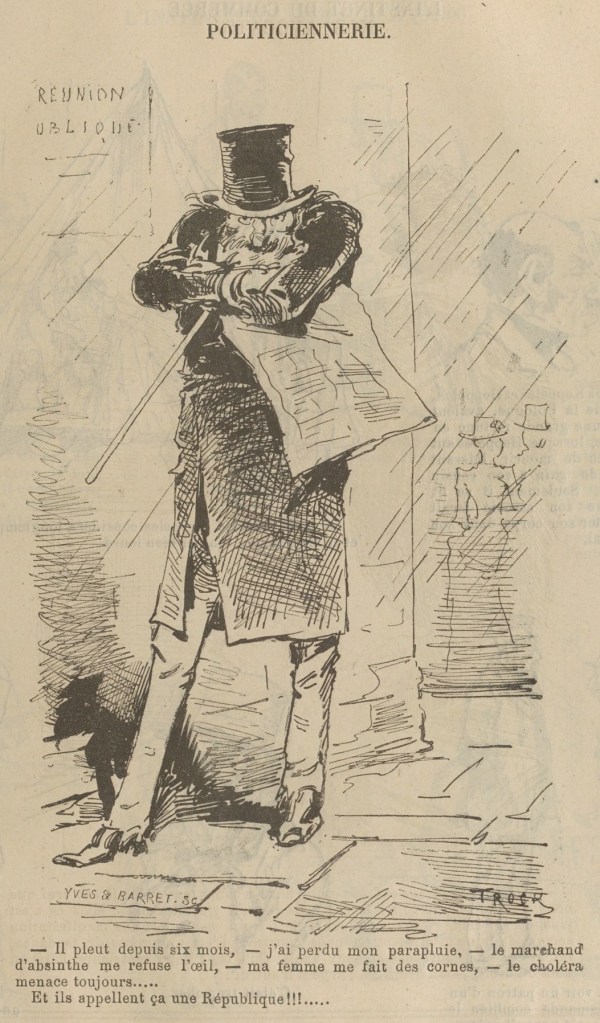
It has been raining for six months, I lost my umbrella, the absinthe merchant refuses to look me in the eye, my wife is stepping out on me, cholera is still threatening…
And they call this a Republic!!!
(Le Monde comique, Paris, 1884)
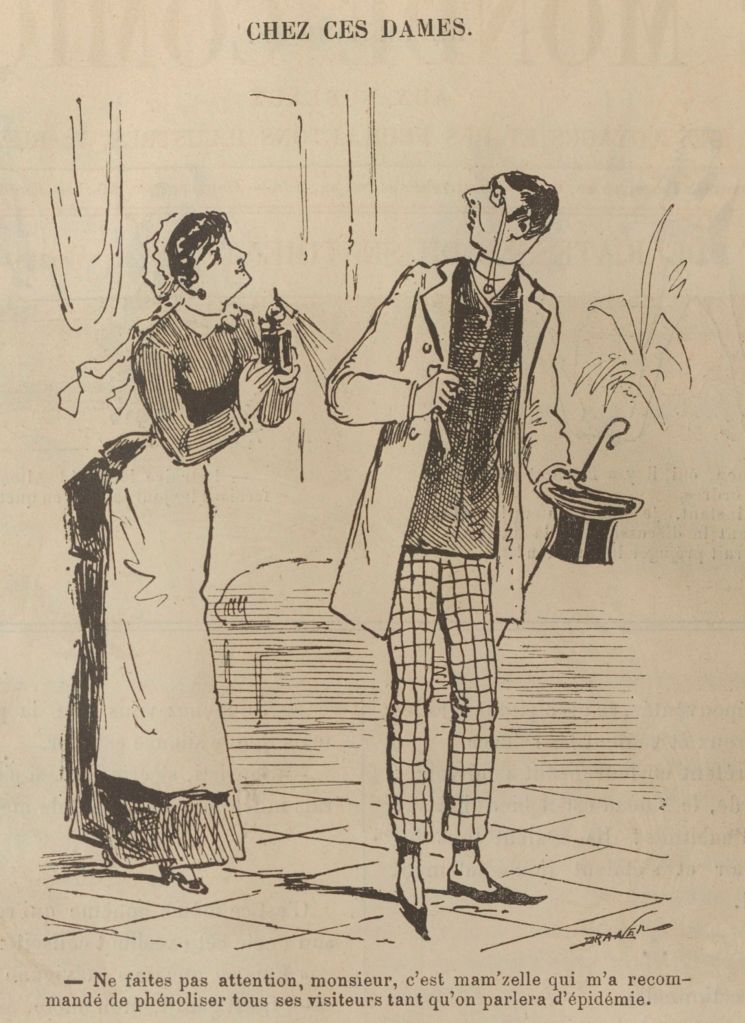
“Pay it no mind, sir, it’s the missy who recommended that I phenolize all her visitors as long as there’s talk of an epidemic.”
(Le Monde comique, Paris, 1884)
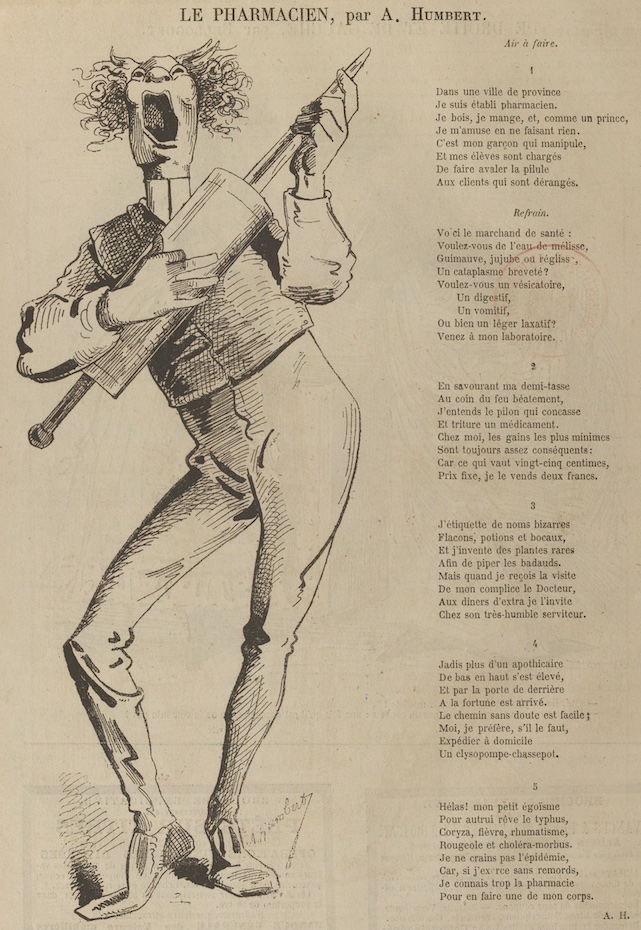
Continuing our clystère theme, a few verses from Le Monde comique (Paris, 1869).
In a provincial town
I am an established pharmacist.
I drink, I eat, and, like a prince,
I have fun doing nothing.
It’s my boy who manipulates [the clystère],
And my students are charged
With getting the pill swallowed
In customers who are upset.
Alas! my little selfishness
For others dreams of typhus,
Coryza, fever, rheumatism,
Measles and cholera morbus.
I am not afraid of the epidemic,
Because, if I carry on without remorse,
I know the pharmacy too well
To make one [an epidemic?] of my body.
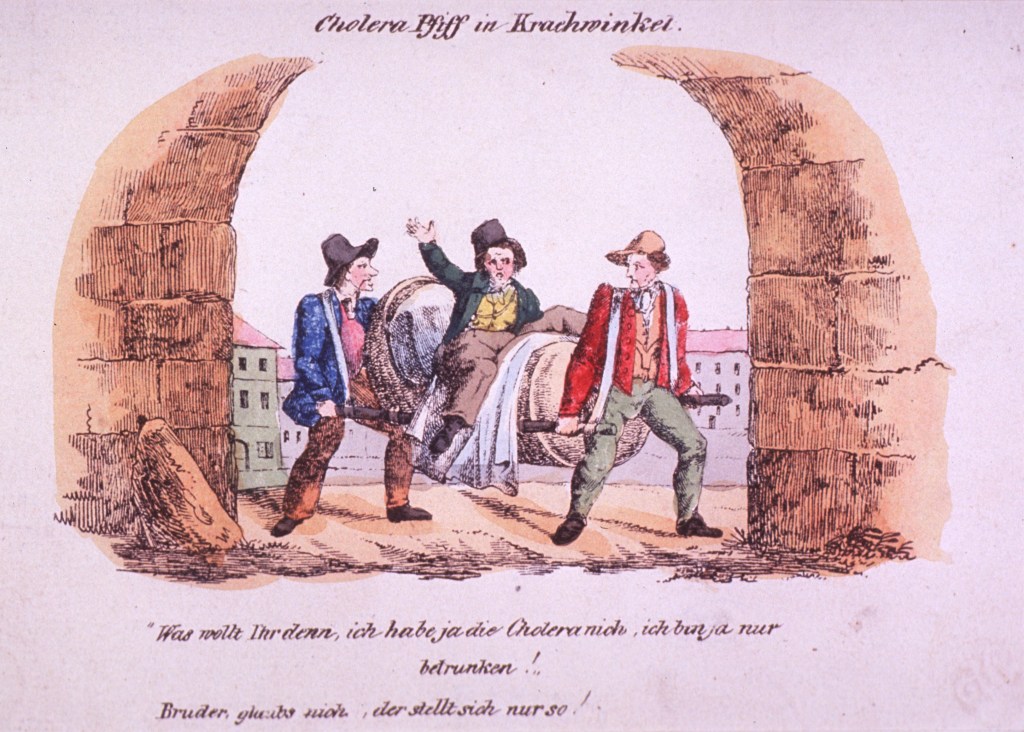
“What do you want, I don’t have cholera, I’m just drunk!”
“Brother, believe me, he’s just pretending!”
(print from the 1830s, via National Library of Medicine)
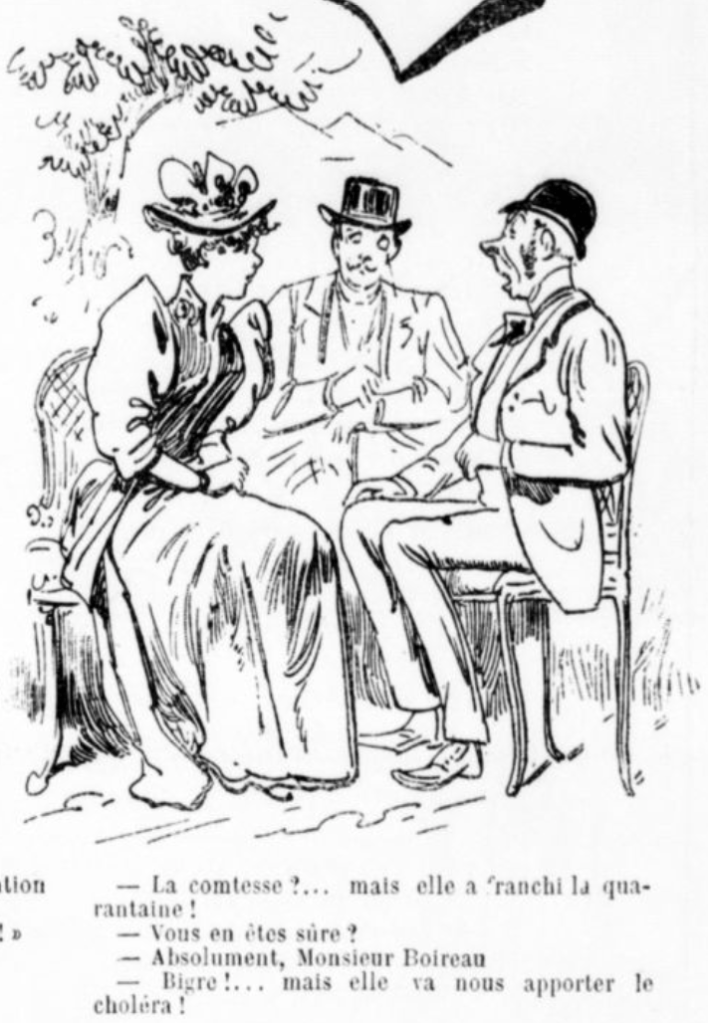
“The countess?… but she was put in quarantine!”
“Are you sure?”
“Absolutely, Mr. Drinker.”
“Damn!… but she will bring us cholera!”
(Le Triboulet, Paris, 1892)
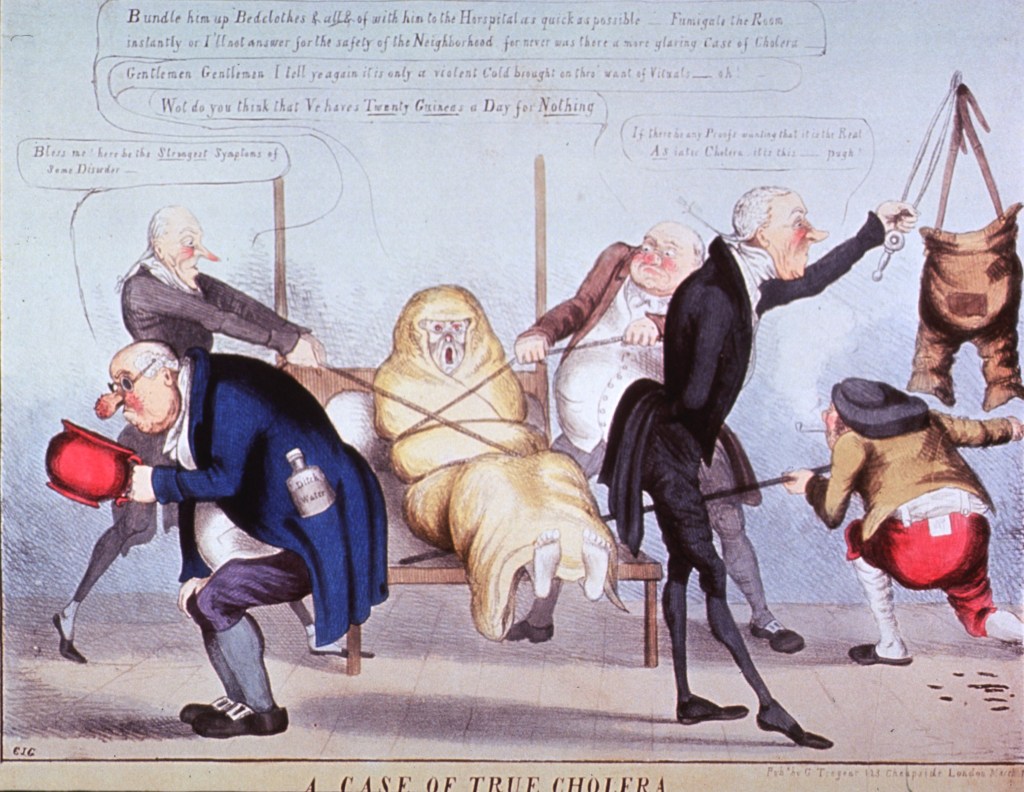
“Bundle him up Bedclothes & all & off with him to the Hospital as quickly as possible. Fumigate the Room instantly or I’ll not answer for the safety of the Neighborhood for never was there a more glaring Case of Cholera.”
(inspecting chamber pot) “Bless me! here be the Strongest Symptoms of Some Disorder…”
(G. Tregear, London, 1832, via National Library of Medicine)
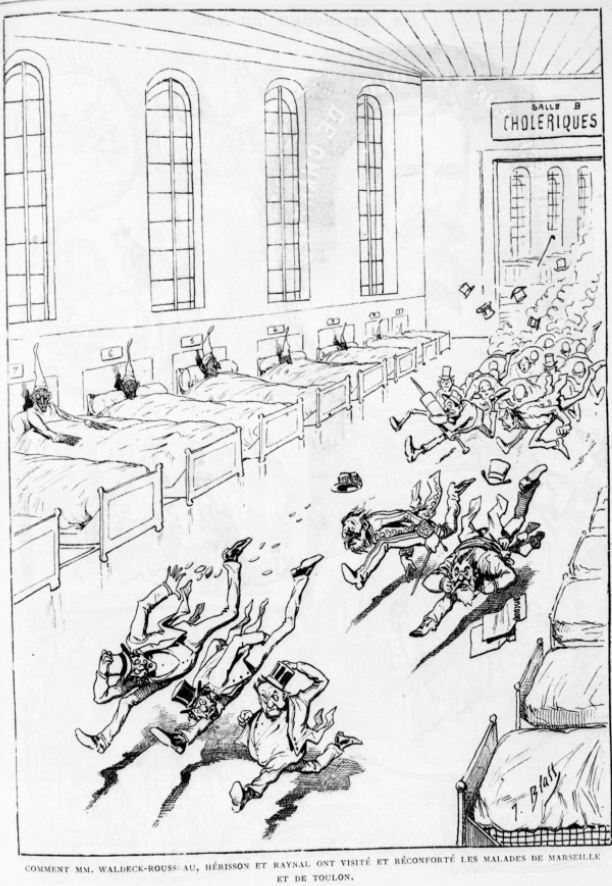
How Mr. Waldeck-Rousseau, Mr. Hérisson, and Mr. Raynal visited and comforted the sick in Marseille and Toulon.
(Le Triboulet, Paris, 1884) (Waldeck-Rousseau was minister of the interior, Hérisson was minister of commerce, and Raynal was minister of public works in the government of Jules Ferry.)
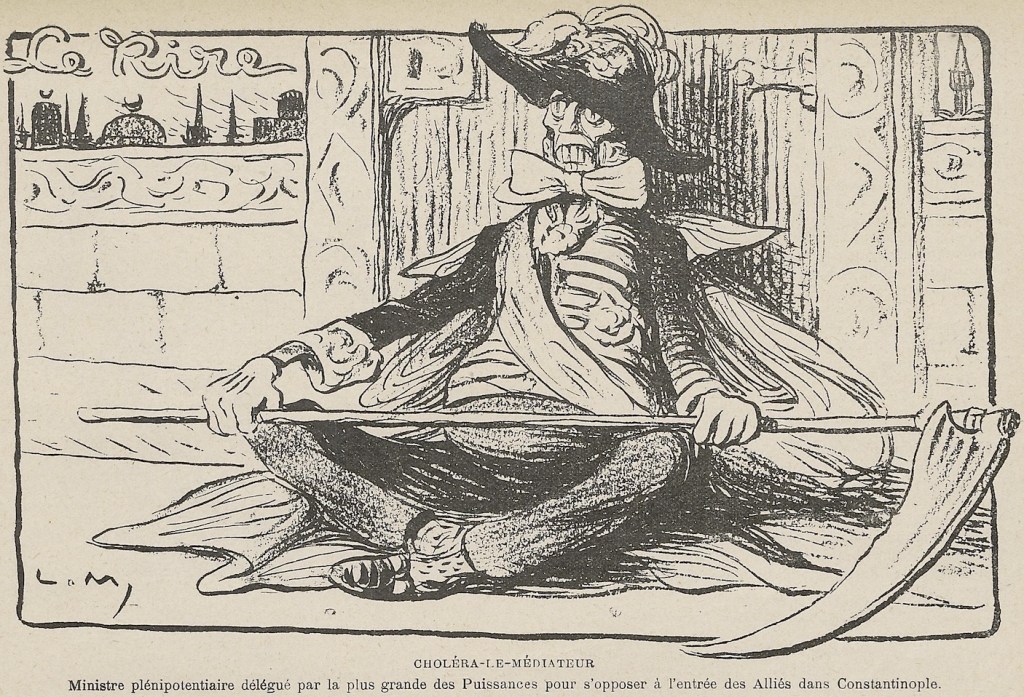
 Sic Transit Pestilentia