Canisters labeled “measles vaccine,” “yellow fever vaccine,” “dysentery vaccine,” “cholera vaccine.”
“When I’m having myself vaccinated against all diseases now, it’s a matter of life and death!”
(Kikeriki, Vienna, 1885)
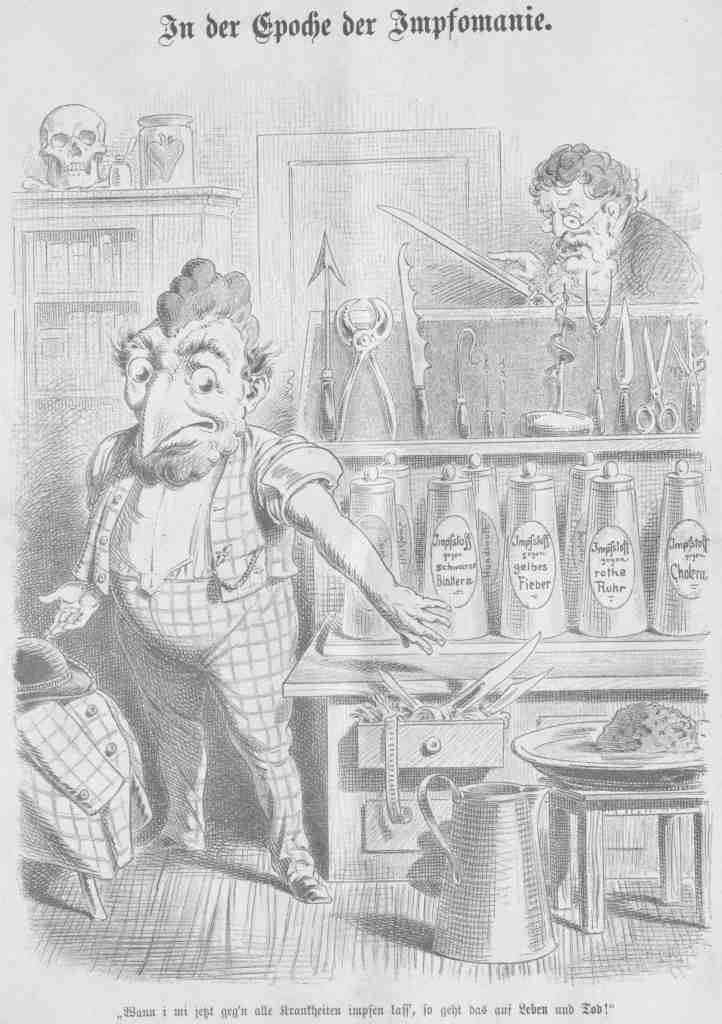
Canisters labeled “measles vaccine,” “yellow fever vaccine,” “dysentery vaccine,” “cholera vaccine.”
“When I’m having myself vaccinated against all diseases now, it’s a matter of life and death!”
(Kikeriki, Vienna, 1885)
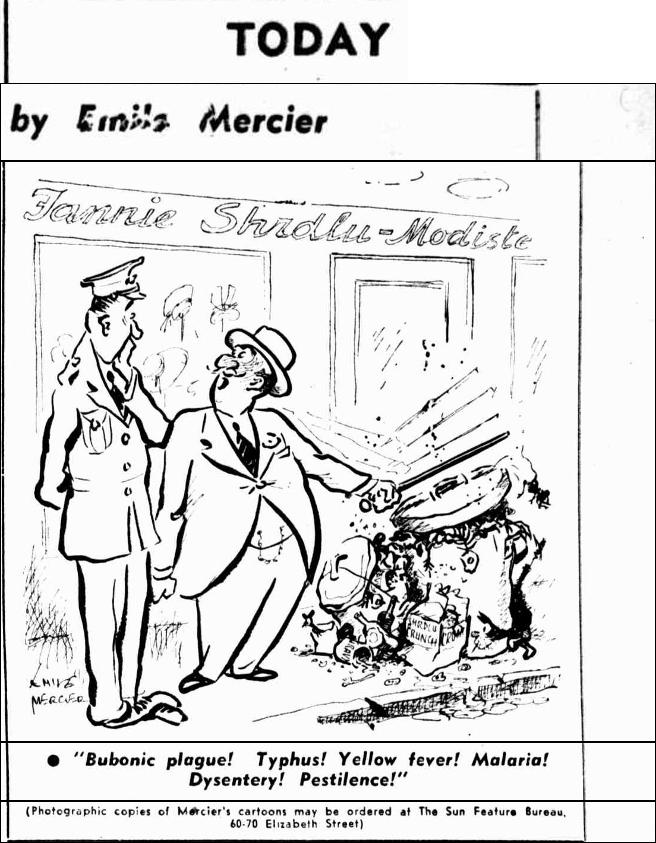
Smith’s Weekly, Sydney, 1949
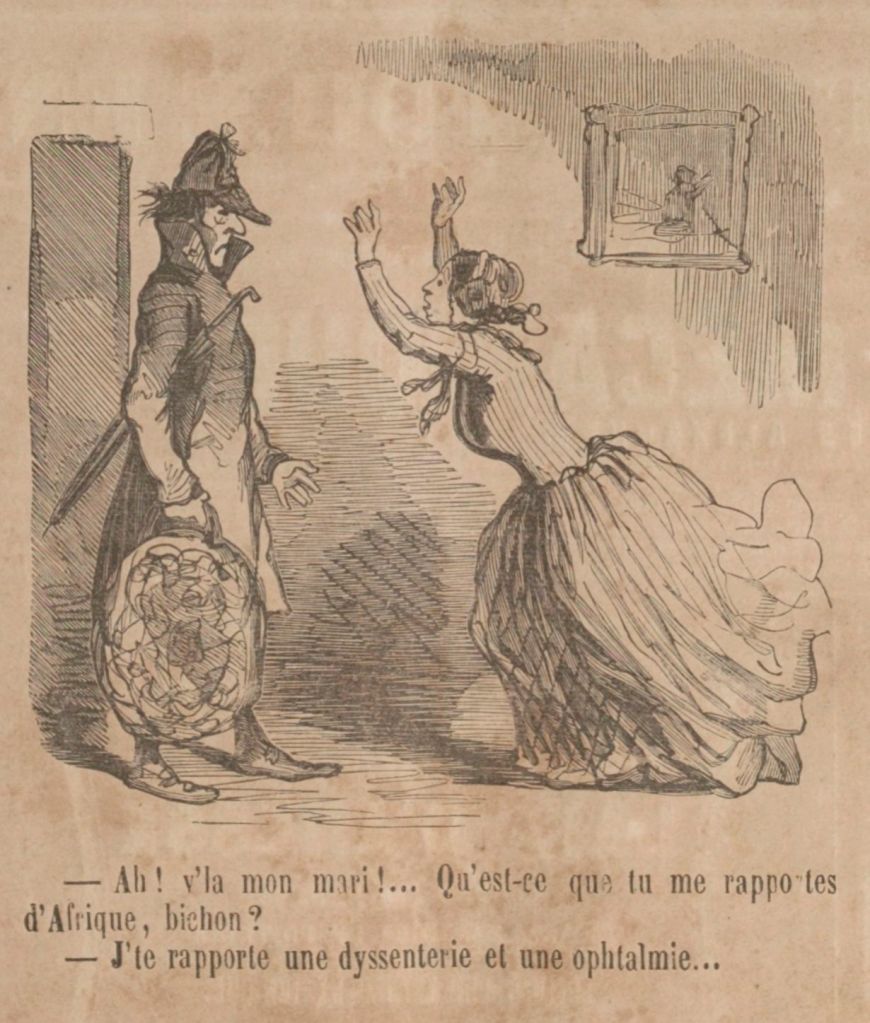
“Ah! There you are, my husband!… What do you bring me from Africa, my darling?”
“I’m bringing you a dysentery and an ophthalmia…”
(Le Charivari, Paris, 1849)
The cause of the epidemic was found to be in poor food. The specter of evil lives there at the point of sale, where the customer is only a question of money and not the belly.
(O Malho, Rio de Janeiro, 1912)

How’s this for aggressive drug advertising: Though it is labeled as combating all liver diseases, Pariquyna is portrayed as vanquishing a serpent-squid representing many other diseases, and the surrounding endorsements list hepatitis, dysentery, dyspepsia, neurasthenia, and syphilis as targets for its effects. Even bacteriologist Oswaldo Cruz was appropriated.
(O Malho, Rio de Janeiro, 1905)

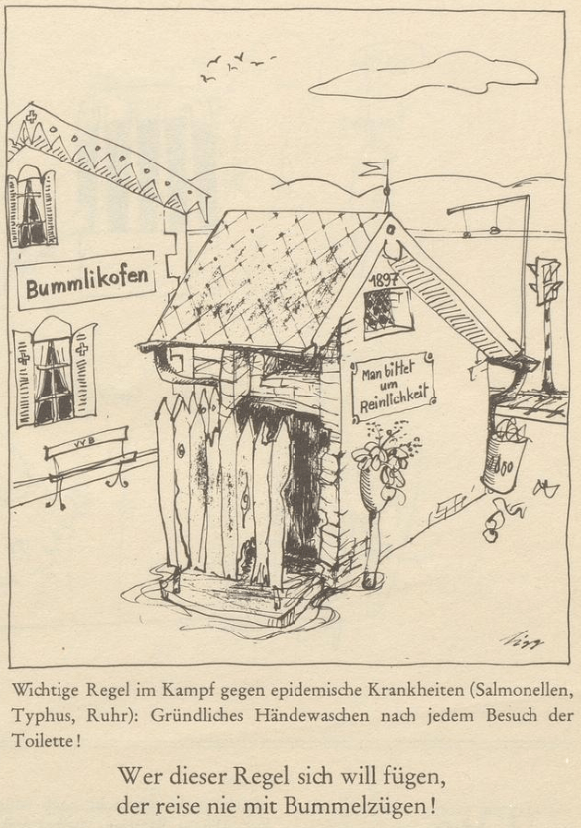
Such a marvelous idiom: Bummelzug, “boomelzoog,” the slow train that stops at every last station along the way. Here a pitiful little provincial station with terrible facilities posts a sign, “Please keep clean.” The caption then reads: “Important rule in the battle against epidemic diseases (salmonella, typhus, dysentery): Thorough hand-washing after every visit to the restroom!” Which prompts the rhyme (in German):
Whoever wants to comply with this rule,
He’ll never be traveling on slow trains!
Draw appropriate hygienic conclusions.
(Nebelspalter, Zurich, 1966)
Kikeriki mocking the imperial royal newspaper of Vienna, Wiener Zeitung (supplied with “iron vitriol” and carbolic acid): “In a recent issue the official newspaper included the following literal notice: ‘In the past week seventeen cases of dysentery have come to official attention in all of Vienna, of which four pertained to a newly constructed residence.’
We can vividly imagine the pain of the poor building.”
(Kikeriki, Vienna, 1873)

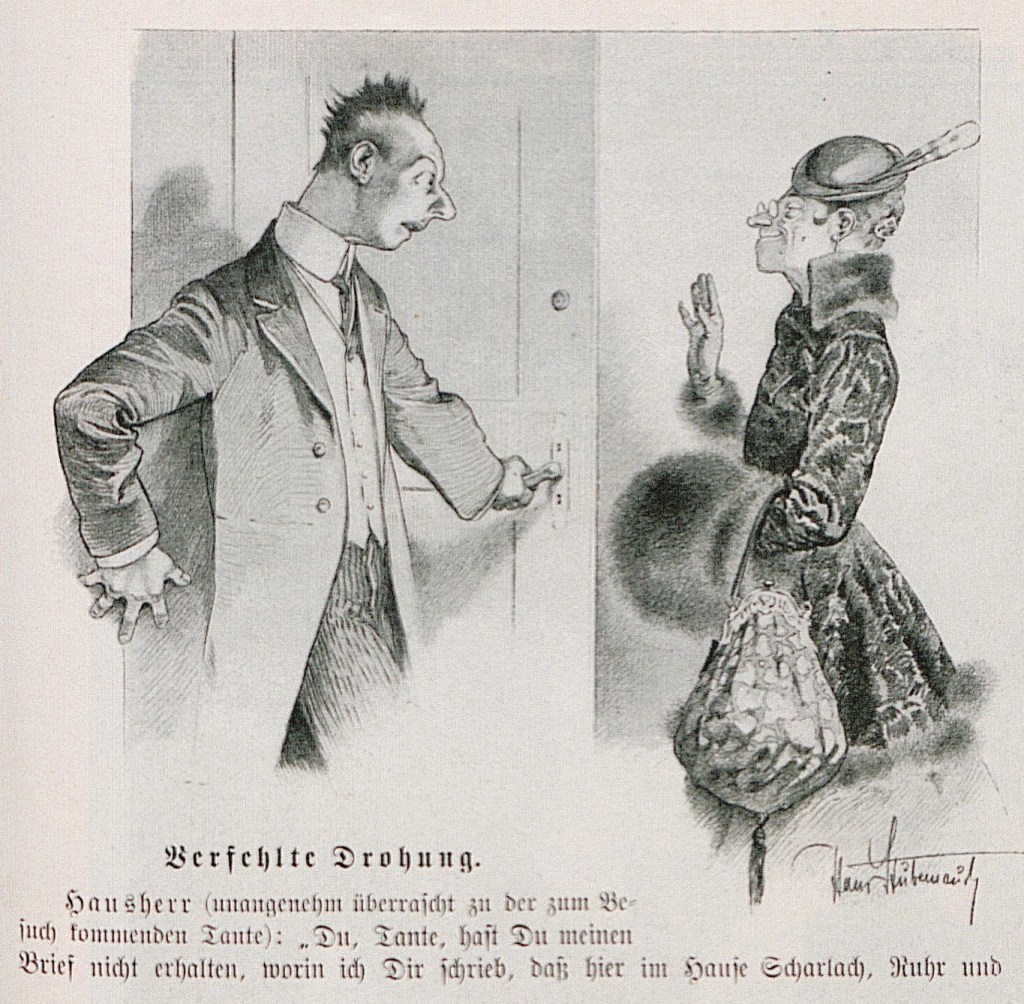
Landlord (unpleasantly surprised by visiting aunt): “Aunt, didn’t you get my letter where I wrote to you that scarlet fever, dysentery, and smallpox are prevalent in the building?”
Aunt: “It’s nothing, dear young man… I had myself vaccinated against all three diseases!”
(Fliegende Blätter, Munich, 1916)
 Sic Transit Pestilentia