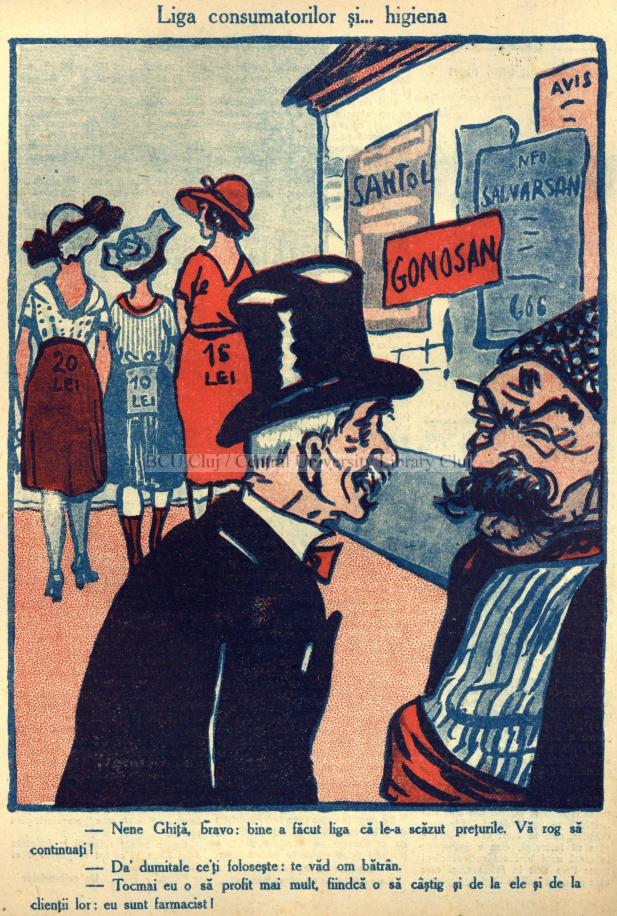
(Various anti-venereal medications like Salvarsan are advertised on the wall. It appears that the prices of young women offering their services are printed on their dresses.) “Uncle Ghiță, bravo: the League did well because their prices dropped. Please continue!” “But what do you use: I see you, old man.” “I will profit more, because I will gain from them and their customers: I am a pharmacist!” (Furnica, Bucharest, 1919)
(Although the war is over, bloody battles are taking place in Russia every day.) St. Peter: “Woman, where do you want to come like that?… Wipe your feet well: don’t you see what prints you leave?” (Furnica, Bucharest, 1919)
(from life in the provinces) “What sloppiness! What a mess here, what terrible air! Are you the chairman of the public health commission? What in the world are you looking at?!” “Please pay it no mind, measures have been taken. Now I will sprinkle some pine water and everything will be fine.” (Krokodil, Moscow, 1927)
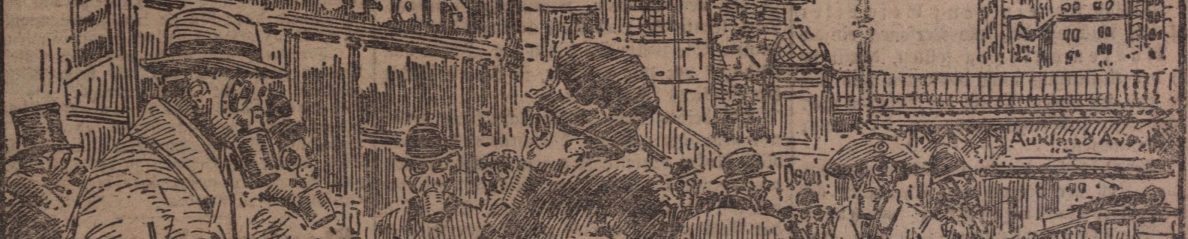
(In the wake of the Spanish flu epidemic.) Child (terrified): Mama, mama, a monster! Mother: Take it easy, it is your father who has tried in vain to come back from a little shopping at the greengrocer!!! (Patapon, Bari, 1921)
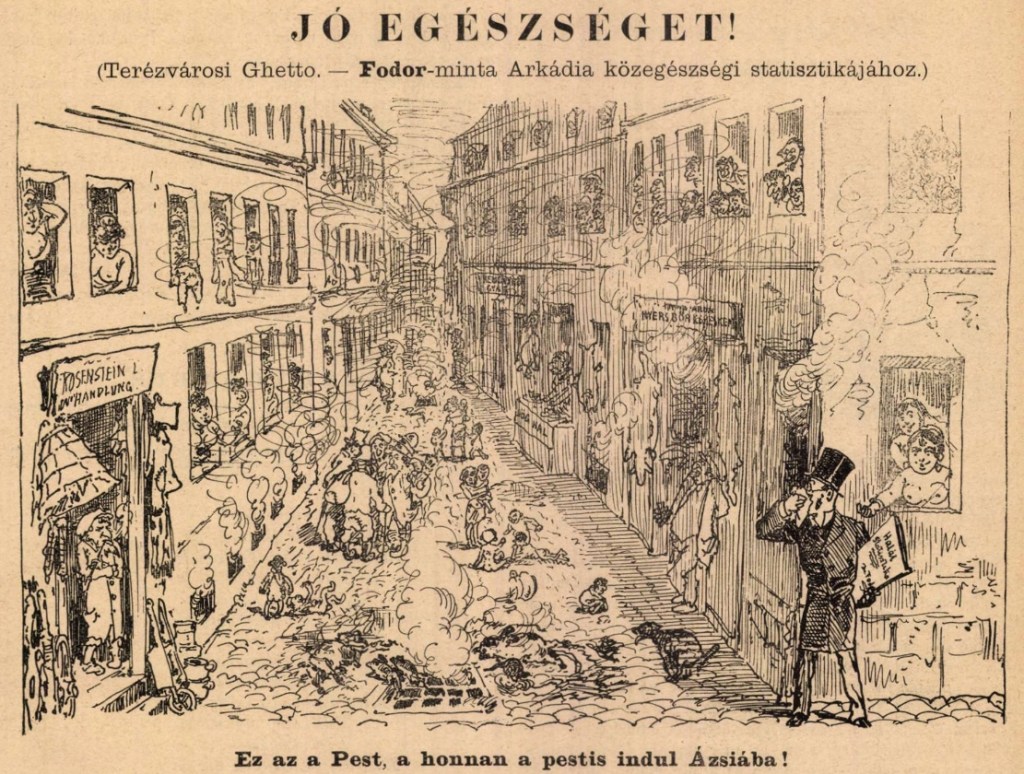
(The Theresatown Ghetto. Toward the public health statistics of Fodor-style Arcadia.) “This is the Pest from which the plague (pestis) heads for Asia!” (Bolond Istók, Budapest, 1882)
Chief of prevention: “Let’s put a lid on this thing! This, with the addition of rainwater, becomes a site for larvae that, after their biological evolution, become yellow-fever-bearing mosquitos transmitting jaundice-related typhus.” Municipal worker: “So this lady of yours is very much mistaken. This here is a hole.” (O Malho, Rio de Janeiro, 1929)
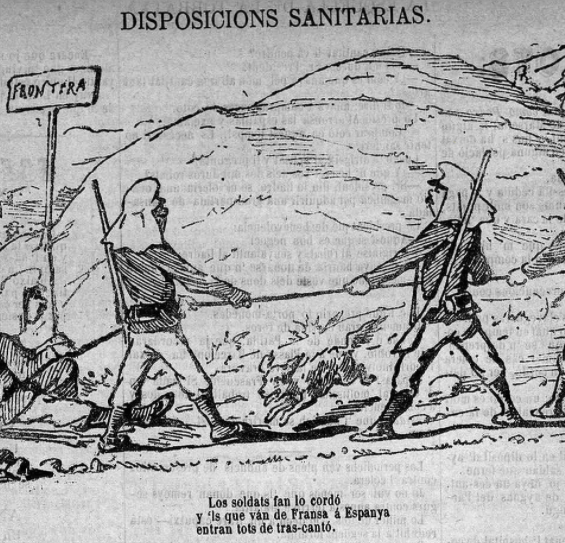
The soldiers make the quarantine cordon, and those who go from France to Spain all enter in improvised fashion. (La Esquella de la torratxa, Barcelona, 1884)
Catalan hygiene cartoon
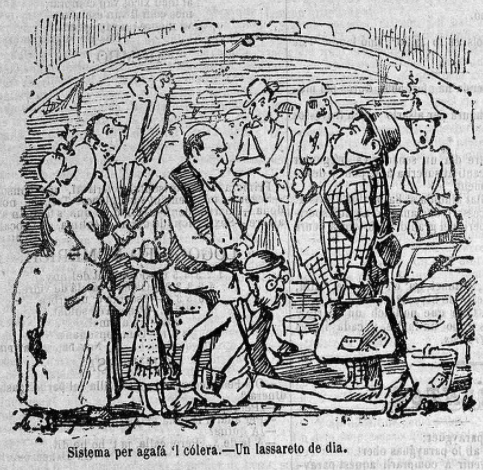
System to catch cholera. A quarantine station by day.
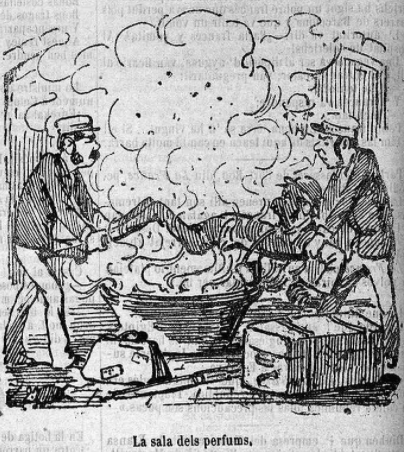
The perfume room.
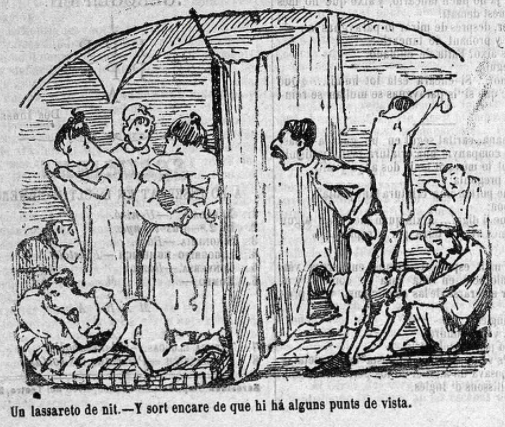
A night-time quarantine station. And luckily there are still some viewing points.
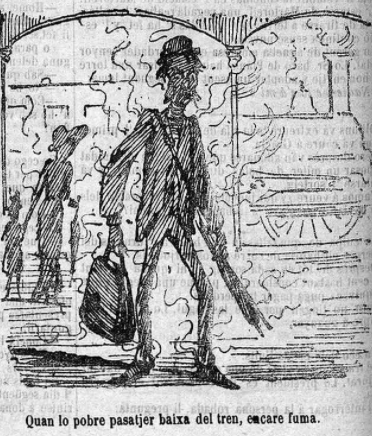
When the poor passenger gets off the train, he is still smoking.
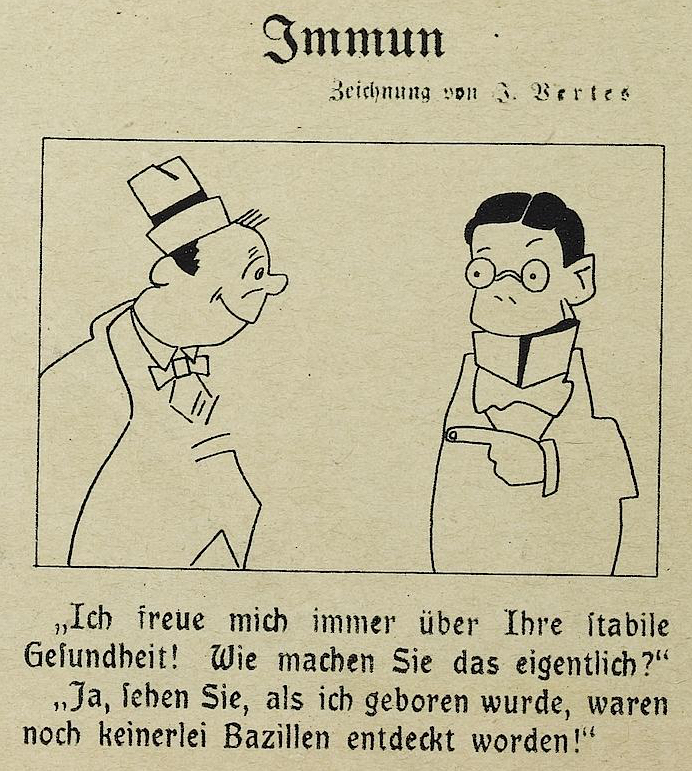
(For devotees of Bruno Latour) “I’m continually pleased by your stable health! How do you actually do it?” “Yes, you see, when I was born, no bacteria at all had been discovered yet!” (Der wahre Jacob, Stuttgart, 1929)
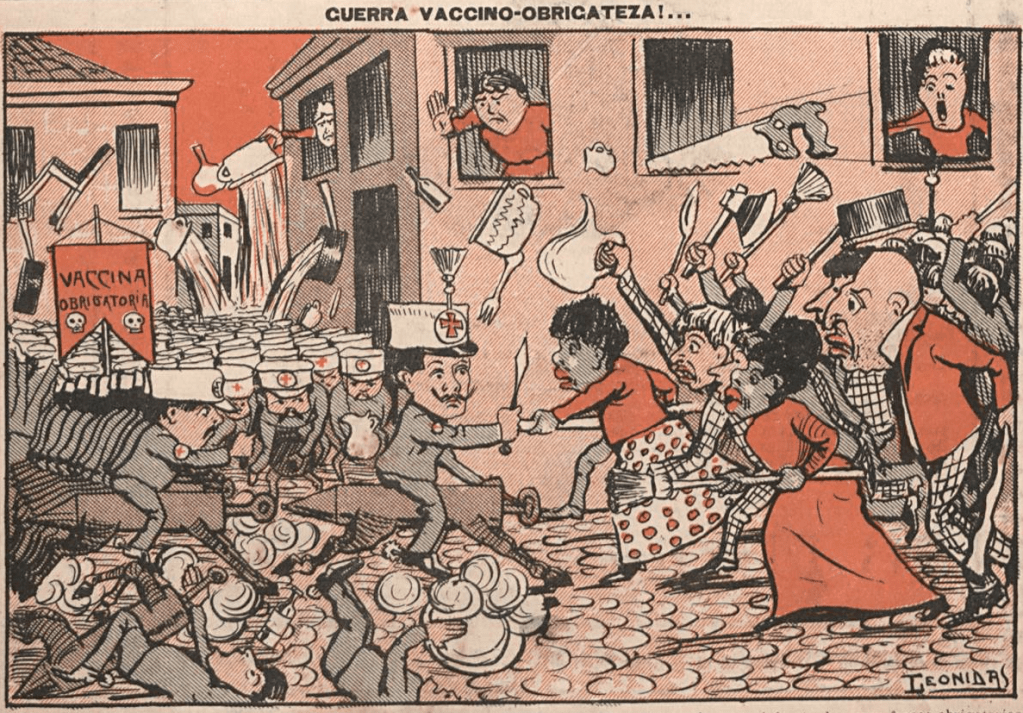
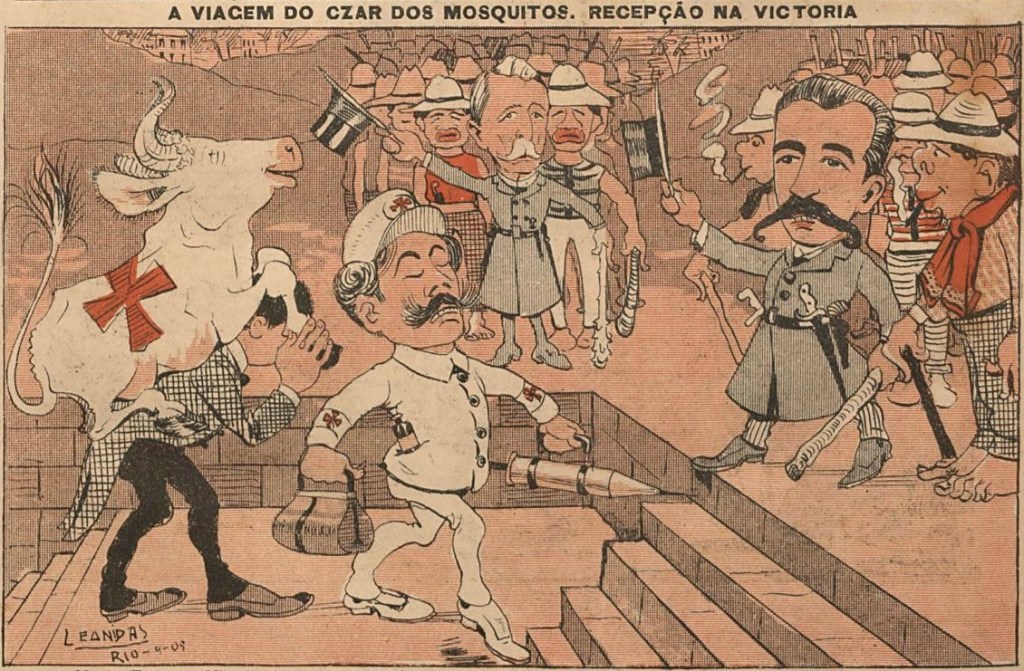
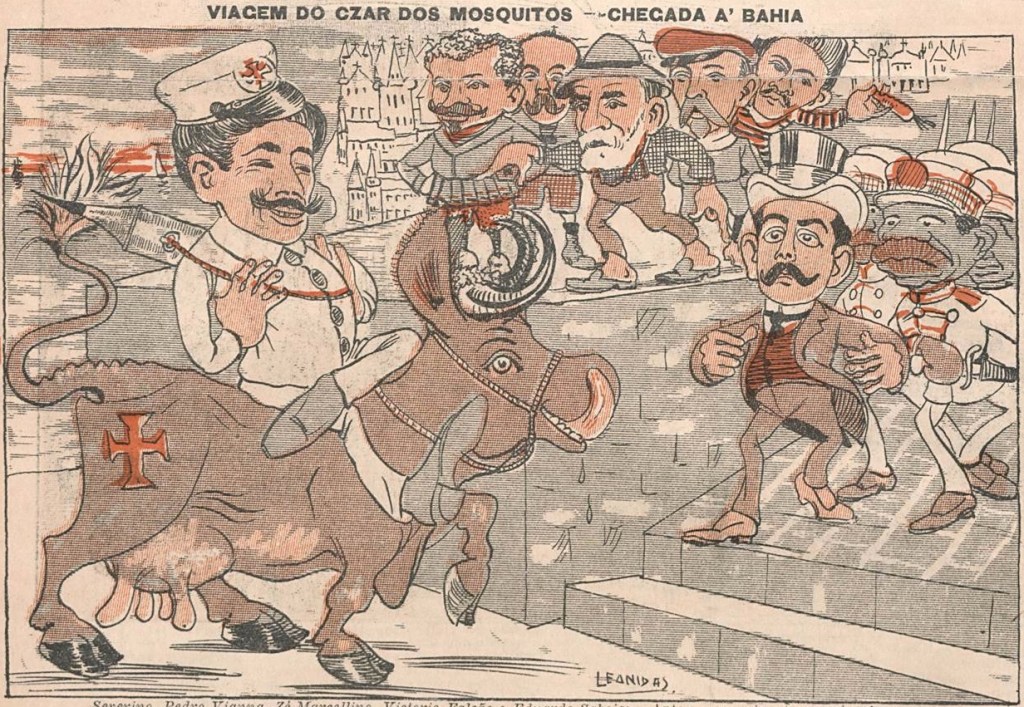
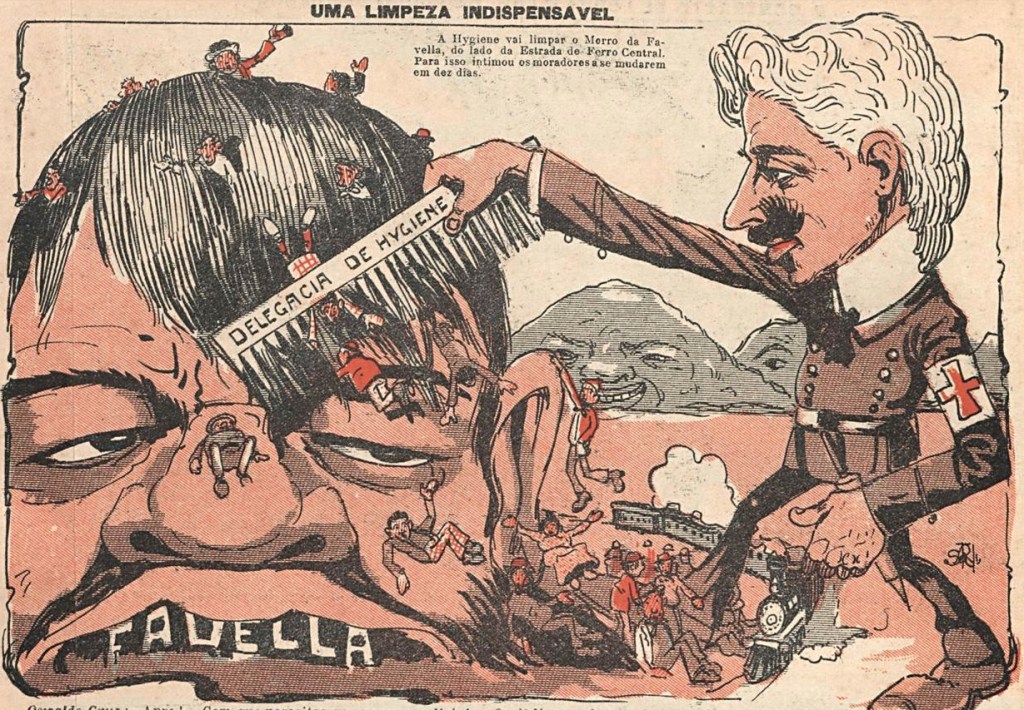
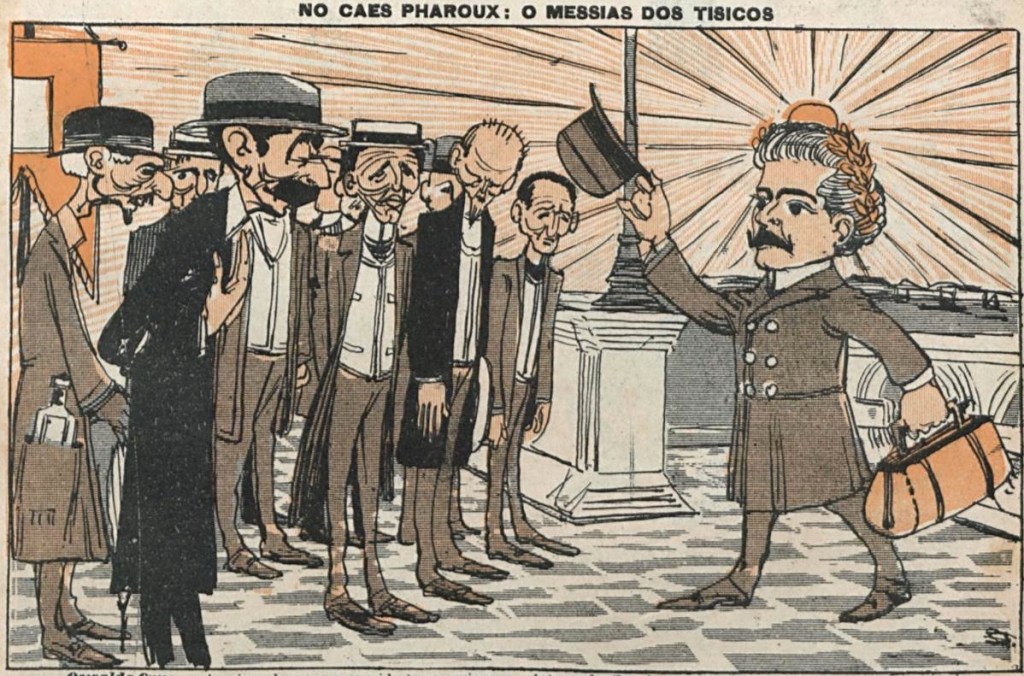
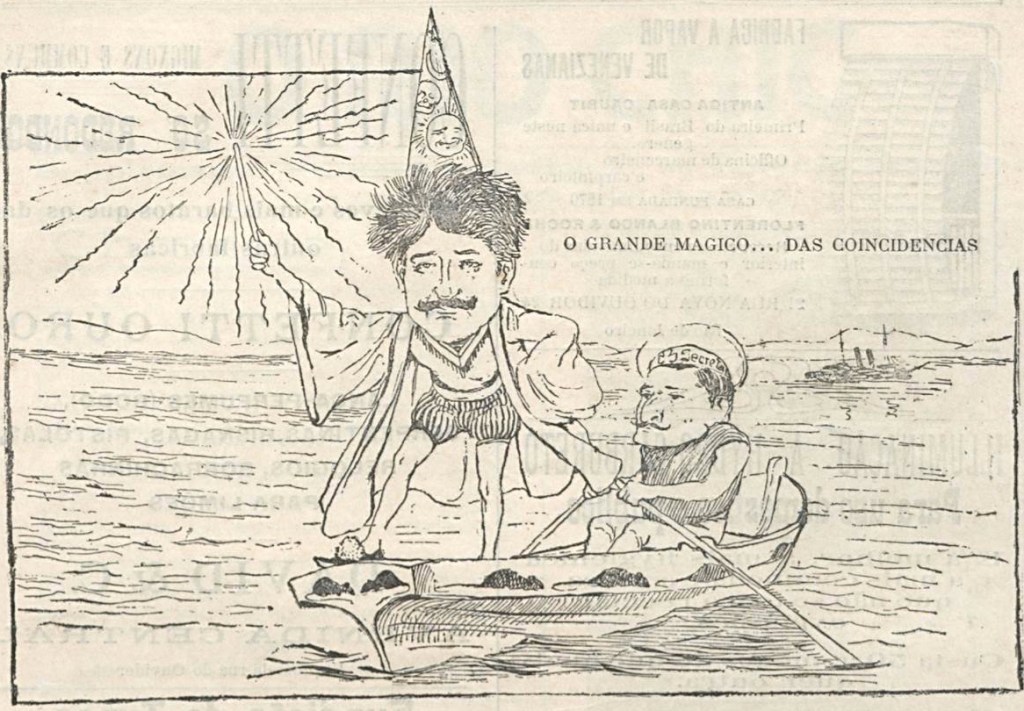
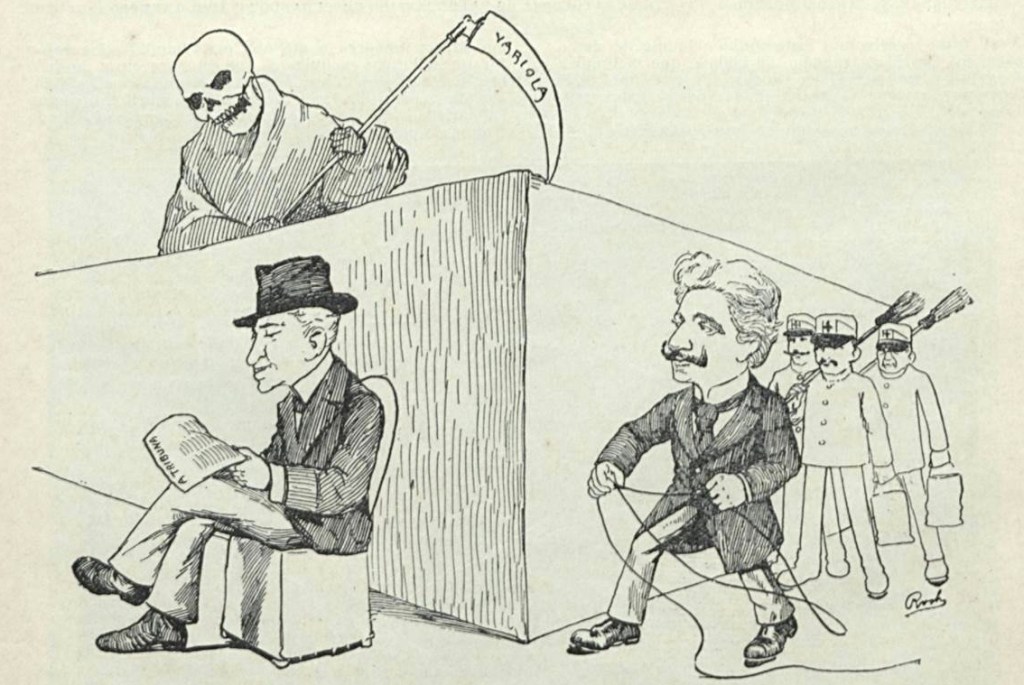
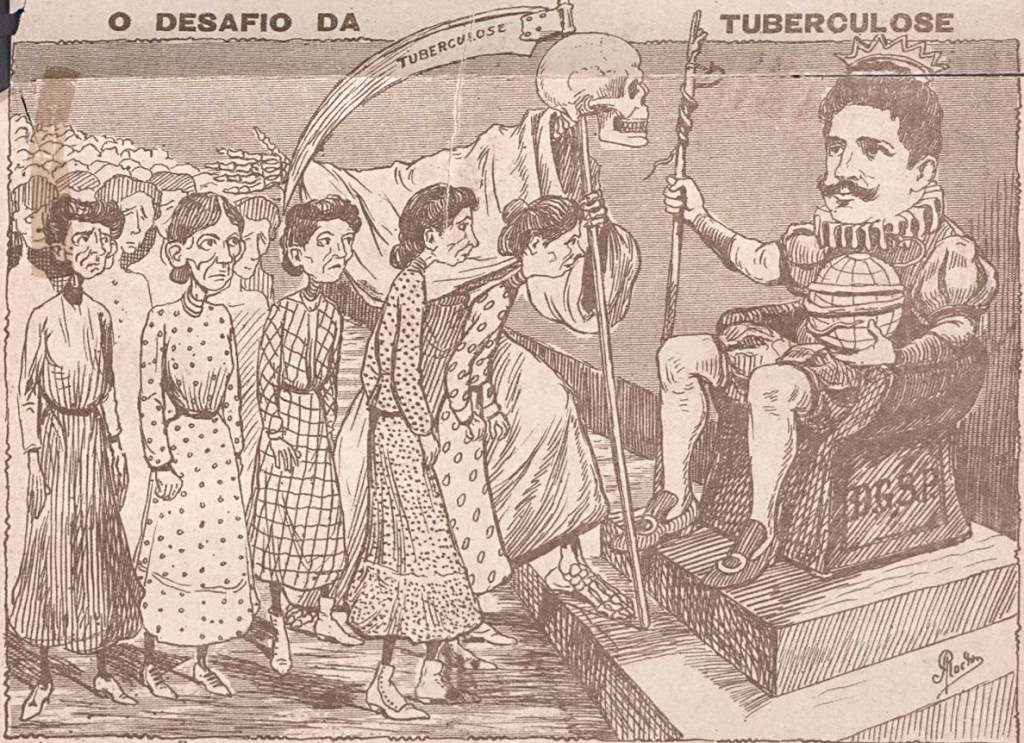
I lack the Portuguese knowledge to translate all these cartoons in full, but in this post I just want to highlight the iconic status of bacteriologist and public health leader Oswaldo Cruz (1872-1917). For an avowedly secular publication like O Malho, Cruz as the standard-bearer of modern medicine clearly exerted tremendous appeal, though of course its satire often drew attention to the many obstacles in the way of achieving his aims. (Each image links to the appropriate issue.)
Vaccine-mandate war!… (1904)
Brazilian public health cartoon
The journey of the mosquito czar. Reception in Victoria (1905)
Brazilian public health cartoon
Journey of the mosquito czar — arrival in Bahia (1905)
Brazilian public health cartoon
Essential cleaning (1907)
Brazilian public health cartoon
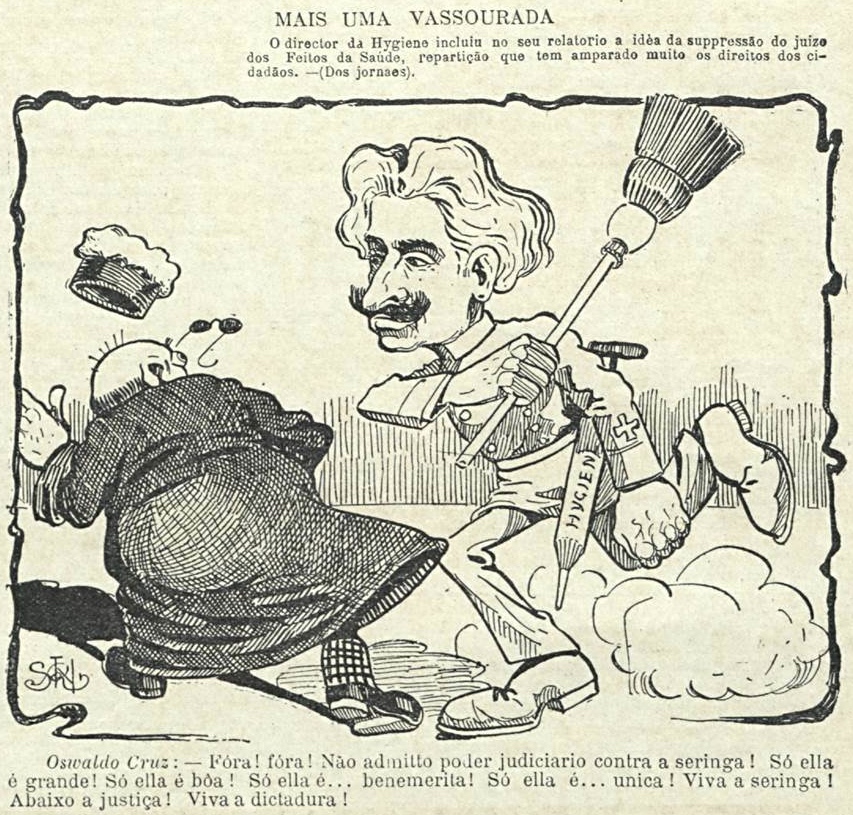
One more broom… (1907)
Brazilian public health cartoon
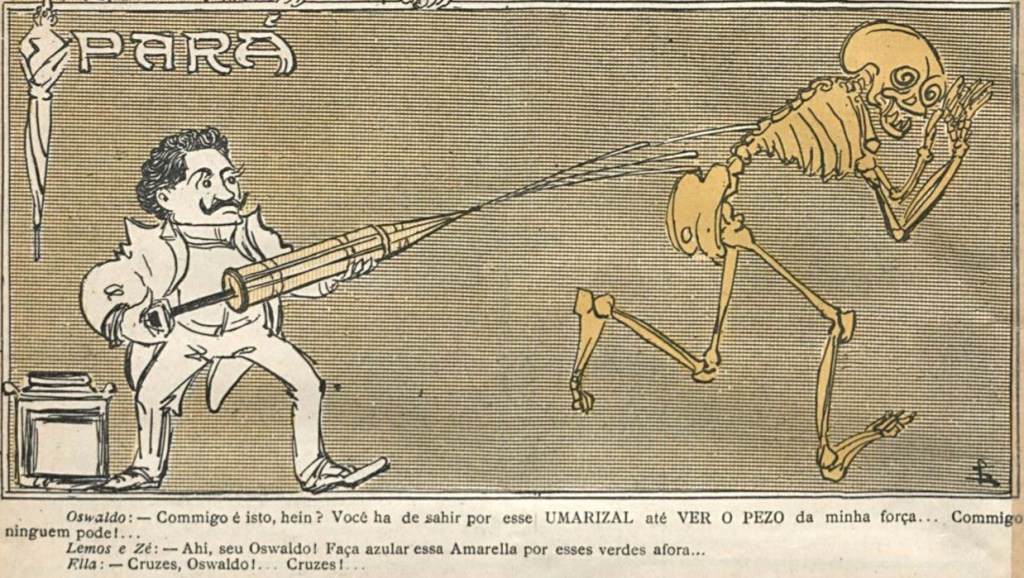
Cruz in provincial Pará (1910)
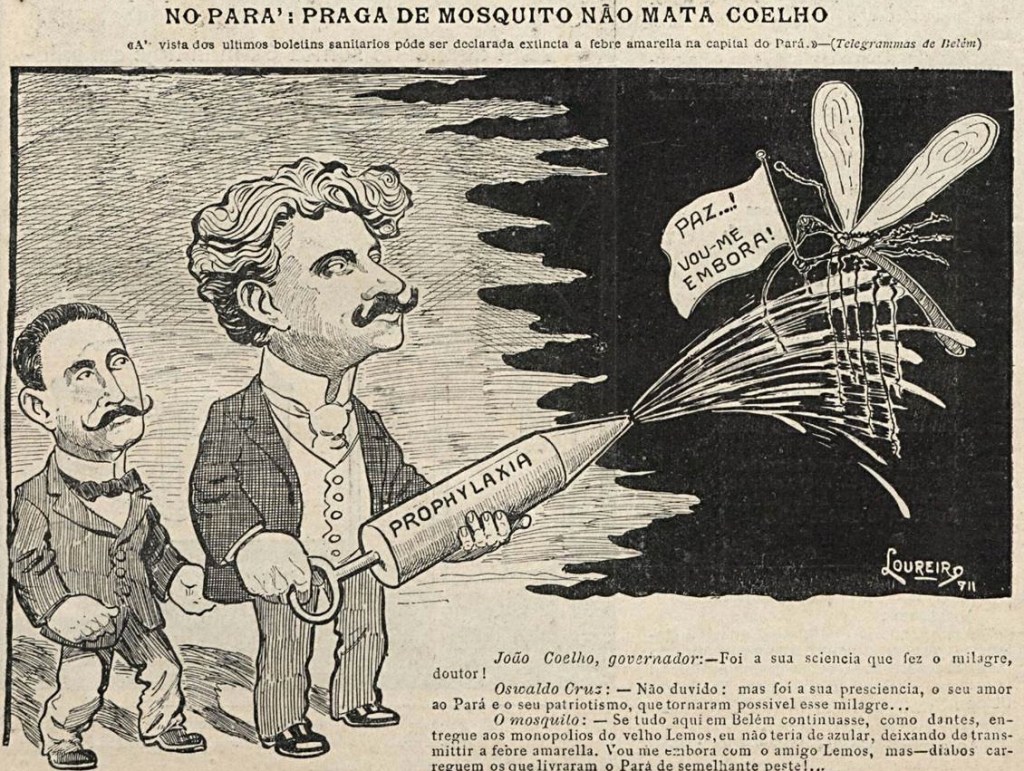
In Pará: Mosquito plague does not kill Governor Coelho (1911)
Brazilian public health cartoon
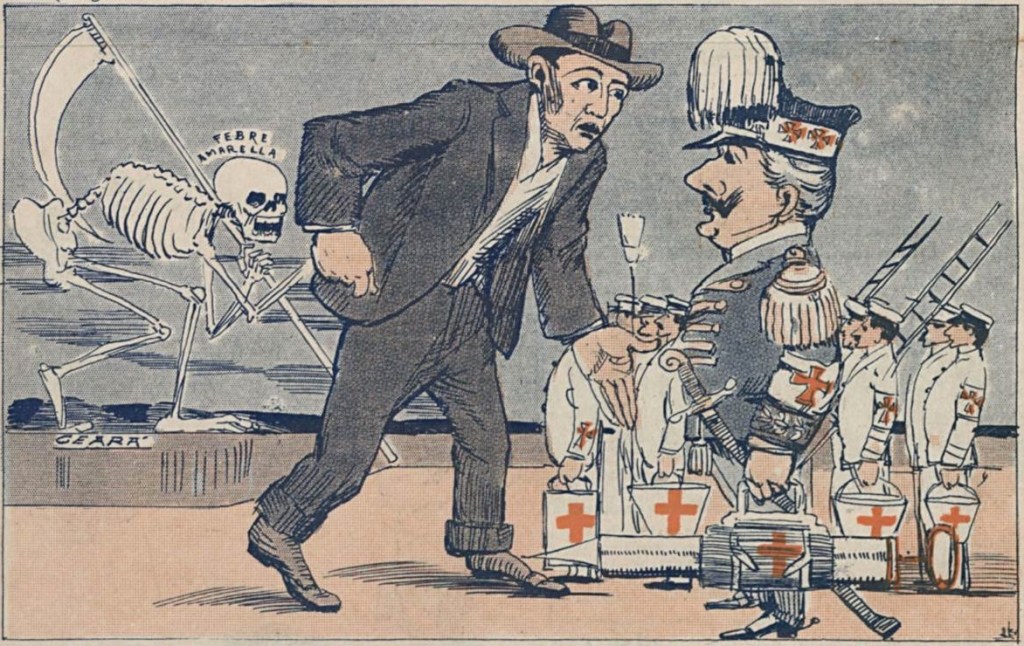
Federal intervention in Ceara (1914)
Brazilian public health cartoon
At the Pharoux Quay: The messiah of consumption (1908)
Brazilian public health cartoon
The great magician… of coincidences
Brazilian public health cartoon
Roping it in time (1908)
Brazilian smallpox cartoon
The challenge of tuberculosis (1906)
Brazilian tuberculosis cartoon
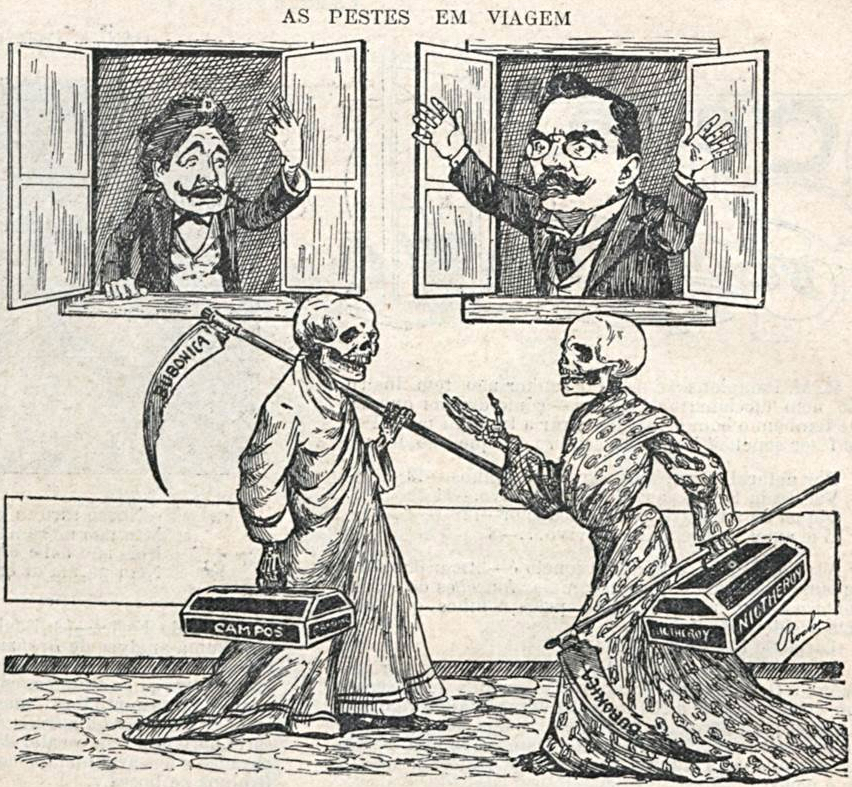
Plagues on the go (1907)
Brazilian plague cartoon
See also this multi-panel cartoon from 1905. And another from 1908. And a marvelous color cartoon from 1907. And this vaccination cartoon from 1904. Ditto.
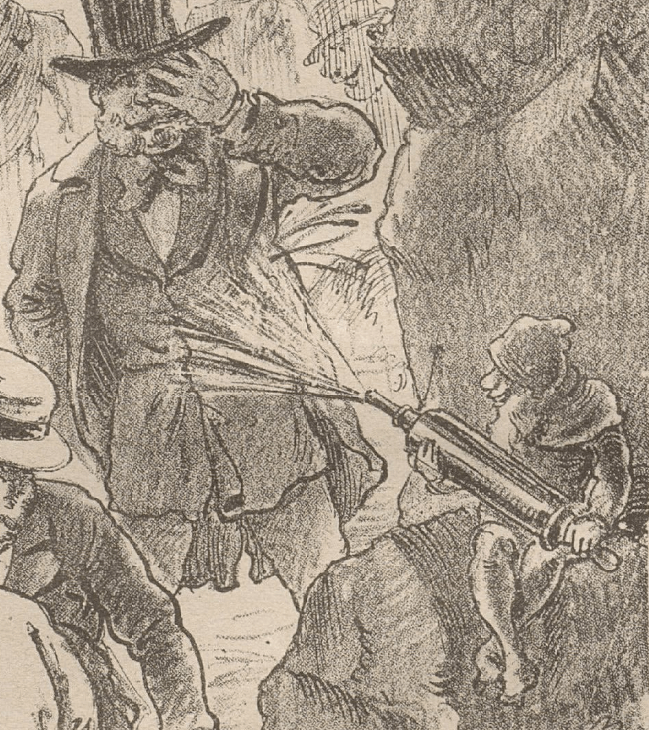
This cartoon depicts Swiss naturalists on a field trip to nearby caves during their annual congress in 1875. The caption pretends to report from the proceedings: “Even in Gotthard we were received extremely courteously; the bones found, tools of all kinds, etc. obviously belong to the Bronze Age.” The iconic Darwin, shown holding a bone, surely did not attend, but the man behind him strongly resembles Arnold Dodel (albeit unduly gray), the botanist who was his strongest ally in Switzerland. The source of amusement for present purposes would be the gnome on the right spritzing the naturalists with disinfectant. (Scroll down for detail.) Switzerland had not been spared during the upsurge of cholera less than two years earlier… (Nebelspalter, Zurich, 1875)
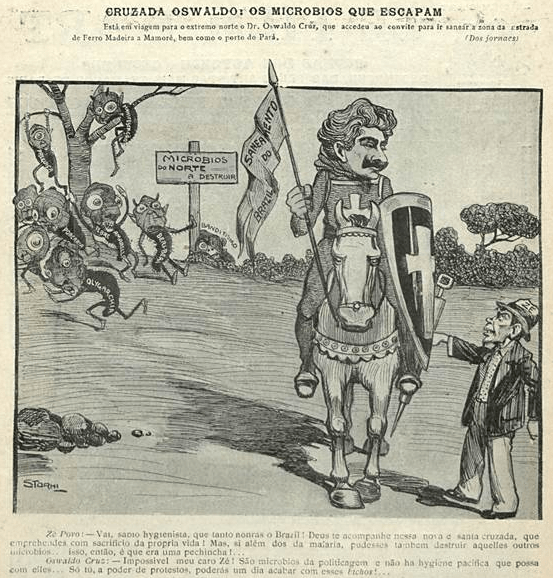
(Brazil’s great public health crusader Oswaldo Cruz intends to spread his measures to the distant provinces.) Joe Public: “Go, wise hygienist […]! God be with you in this new and holy crusade, which you undertake with the sacrifice of your own life! But, in addition to malaria, you could also destroy those other microbes… [depicted are idleness, filth, oligarchy, yellow fever, demonstrations, beri-beri, and banditry] then that would be a bargain!…” Oswaldo Cruz: “Impossible, my dear Joe! They are microbes of politics and there is no peaceful hygiene that I can use with them… Only you, with the power of protests, can one day put an end to these beasts!…” (O Malho, Rio de Janeiro, 1910)
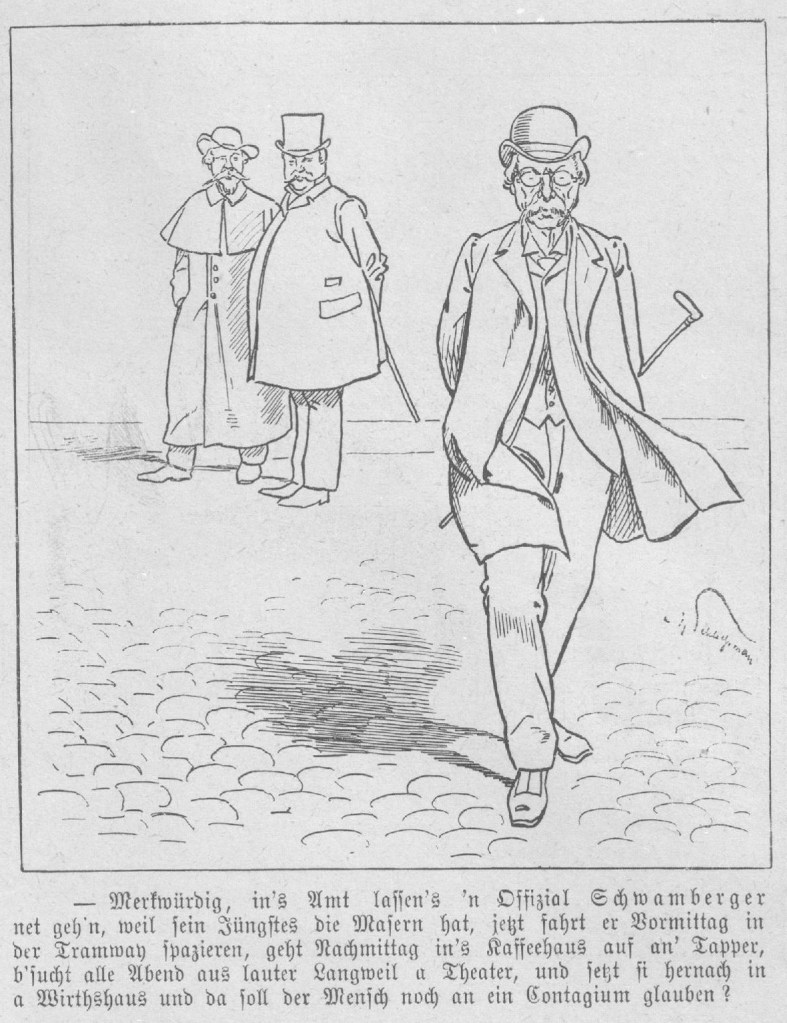
“Remarkable, Schwamberger the official is not allowed to go to the office, because his youngest child has measles, now he’s taking the tram in the morning to breeze about, he goes to the coffee house in the afternoon for a round of cards, he visits the theater every evening out of sheer boredom, and he takes a seat afterwards in a pub and a person is still supposed to believe in a contagion?” (Figaro, Vienna, 1888)




 Sic Transit Pestilentia