“… And now, mademoiselle, before you grant me your heart for life, one other question: Have you been successfully vaccinated?”
(Fliegende Blätter, Munich, 1905)
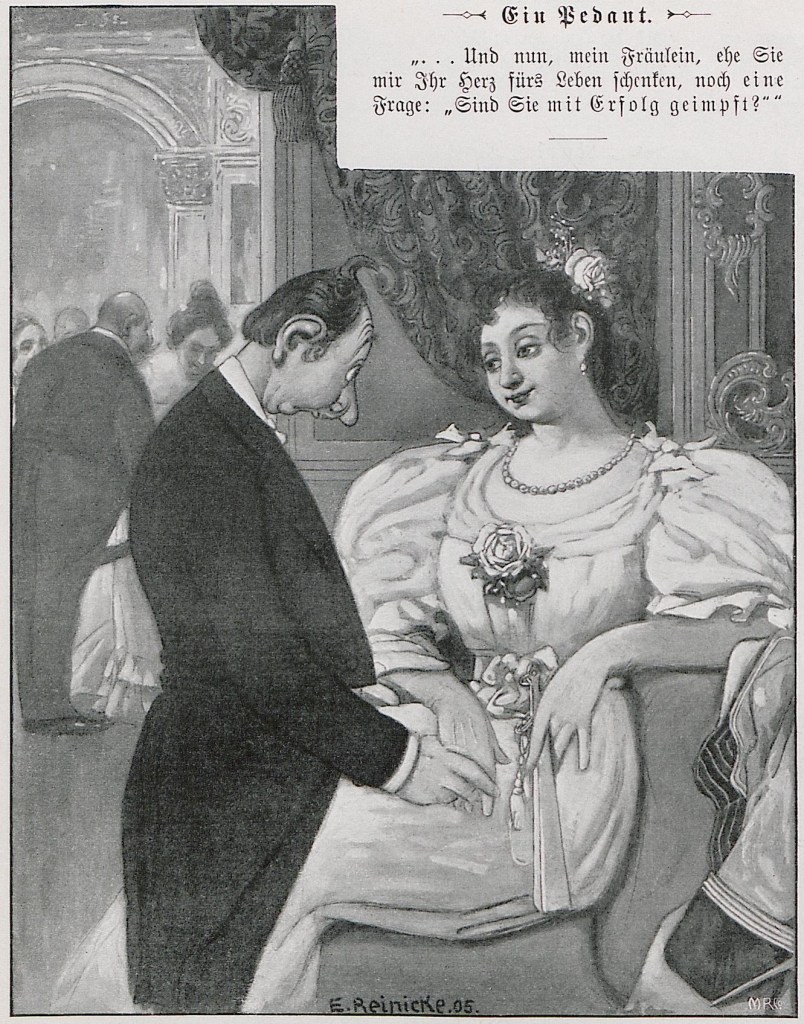
“… And now, mademoiselle, before you grant me your heart for life, one other question: Have you been successfully vaccinated?”
(Fliegende Blätter, Munich, 1905)
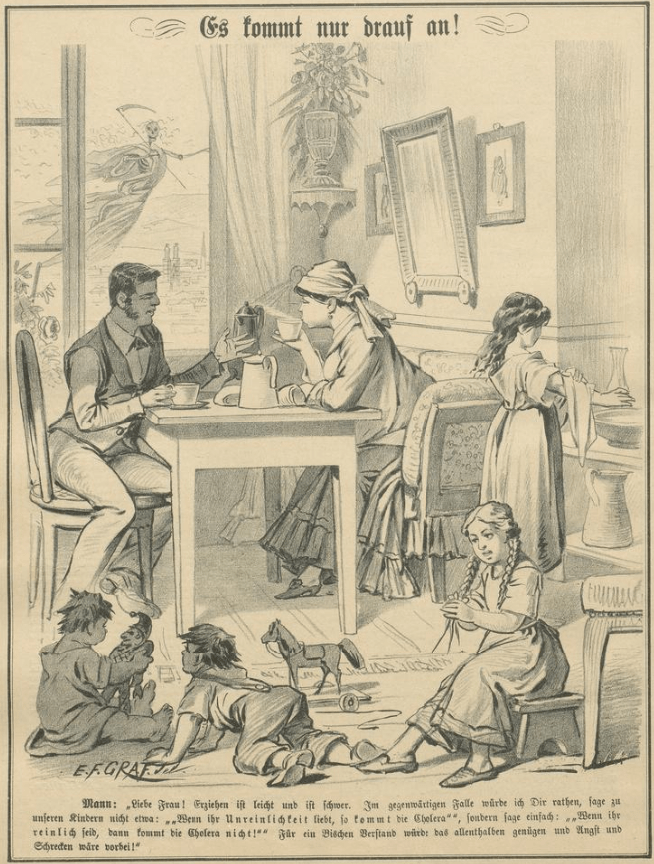
Husband: “Dear wife! Education is easy and it is difficult. In the present case I would advise you not to tell the children “If you love uncleanliness, that’s how cholera comes,” but rather just to say: “If you are clean, then cholera doesn’t come!” That would suffice everywhere for a bit of sense, and fear and terror would be over.”
(Nebelspalter, Zurich, 1883)
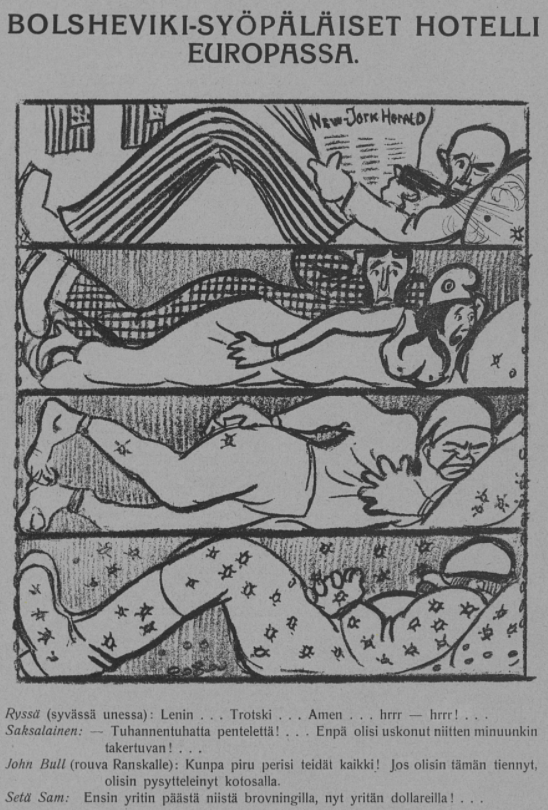
Politics-as-contagion is low-hanging fruit, to be sure, but this Finnish cartoon still warrants preservation.
Russian (fast asleep): “Lenin… Trotsky… Amen… hrrr — hrrr! …”
German: “A million spawn! … I wouldn’t have thought they would cling to me either! …”
John Bull (to Mrs. France): “The devil take you all! If I had known about this, I would have stayed at home.”
Uncle Sam: “First I tried to get rid of them with a Browning, now I’ll try with dollars! …”
(Tuulispää, Helsinki, 1919)
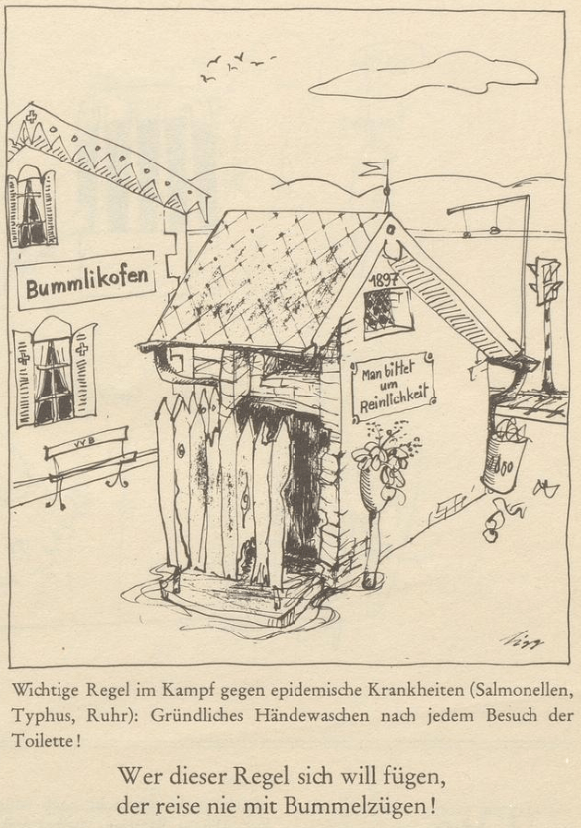
Such a marvelous idiom: Bummelzug, “boomelzoog,” the slow train that stops at every last station along the way. Here a pitiful little provincial station with terrible facilities posts a sign, “Please keep clean.” The caption then reads: “Important rule in the battle against epidemic diseases (salmonella, typhus, dysentery): Thorough hand-washing after every visit to the restroom!” Which prompts the rhyme (in German):
Whoever wants to comply with this rule,
He’ll never be traveling on slow trains!
Draw appropriate hygienic conclusions.
(Nebelspalter, Zurich, 1966)
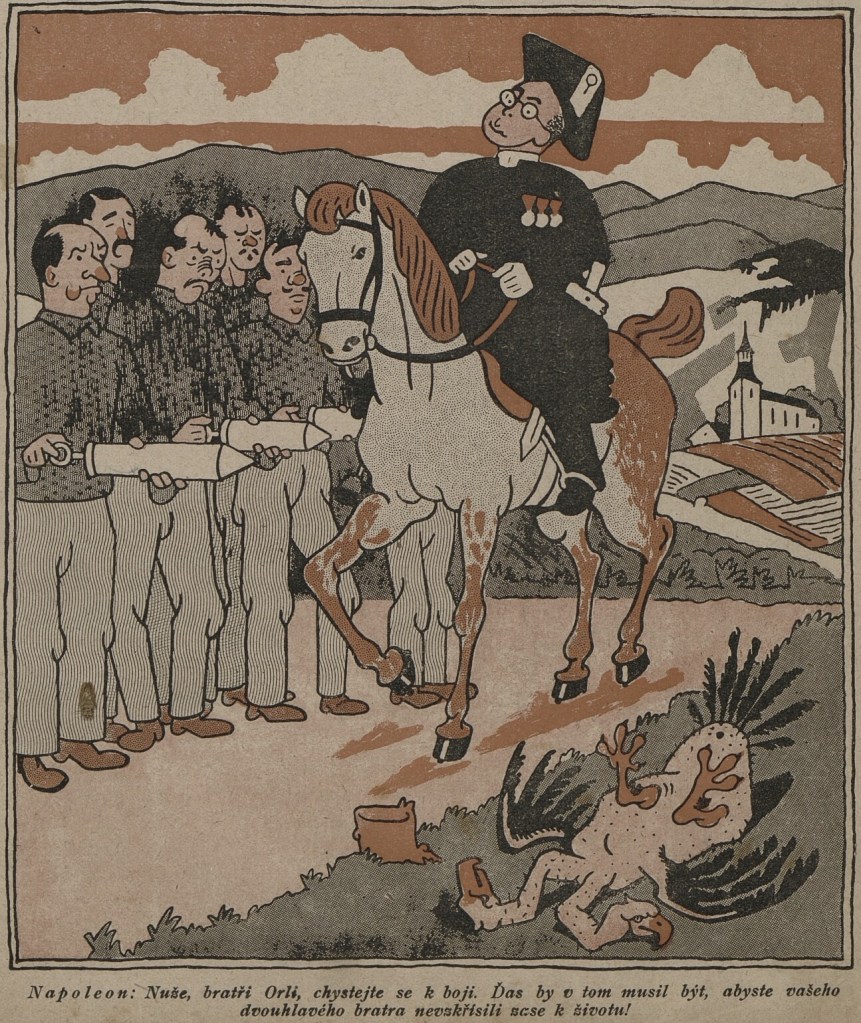
This image is taken a bit out of context. It is mocking the supposedly Napoleonic ambitions of a Moravian nationalist and Catholic literary figure named Karel Dostál-Lustinov, who was the driving figure behind a fraternal gymnastics movement known as the Eagles (think of parallels with the YMCA). What is striking for present purposes is that the Eagles are being called to prepare for battle (against the Republic?), and they are doing so with disinfection spritzers. (In Czech the verb seems to hint at an adjacent meaning of “cleansing.”)
(Rašple, Brno, 1920)
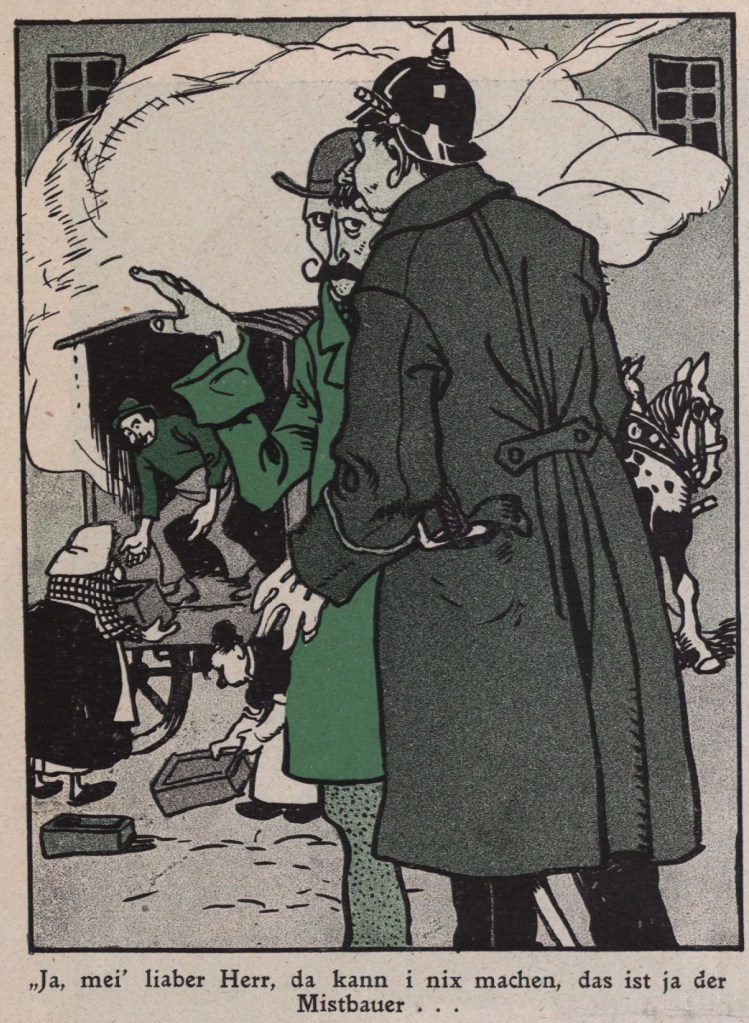
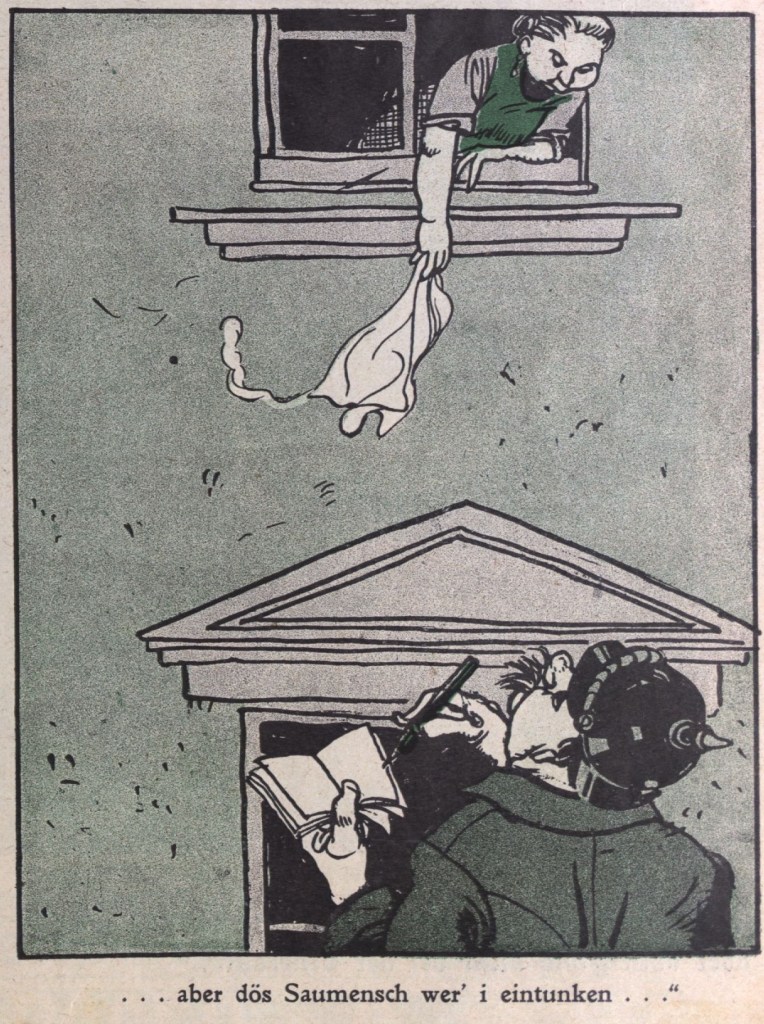
“Yes, my dear man, I can’t do anything here, that is the rubbish hauler…”
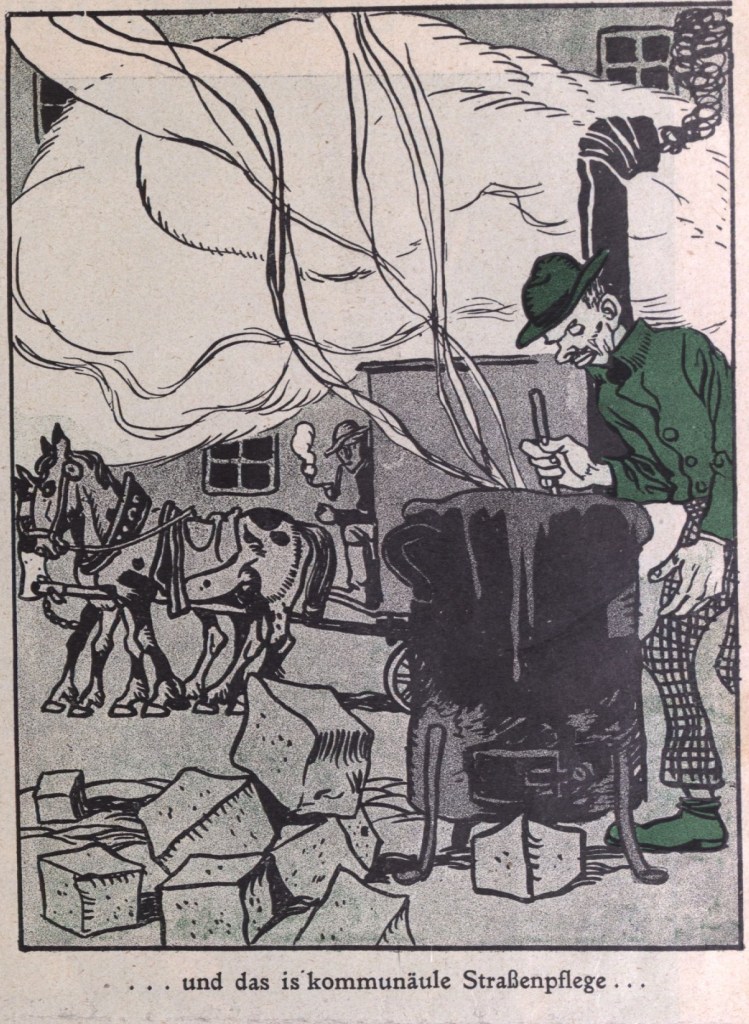
“… and that is the communal street maintenance…”
“… and that is an officially licensed vehicle…”

“… but I would slap a fine on this slob…”
(Die Muskete, Vienna, 1909)
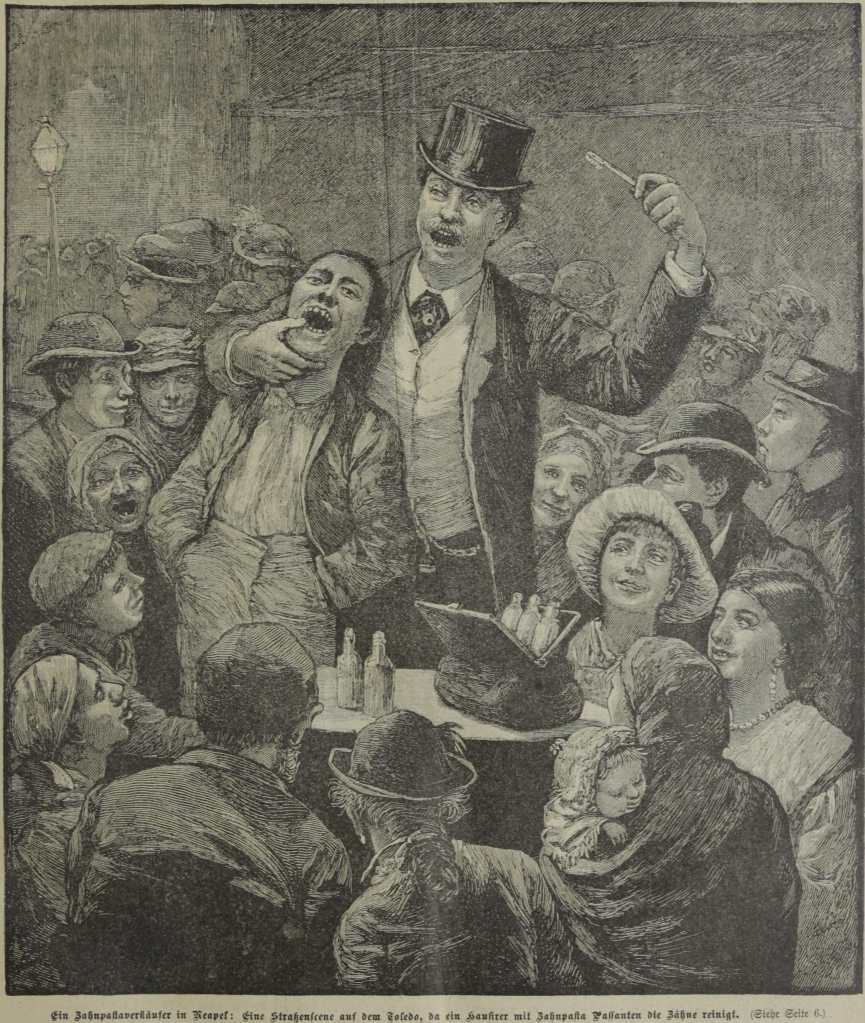
A street scene from the Toledo, where a toothpaste pedlar cleans the teeth of passers-by. That same year, Naples was hit by the fifth global cholera epidemic.
(Das interessante Blatt, Vienna, 1884)
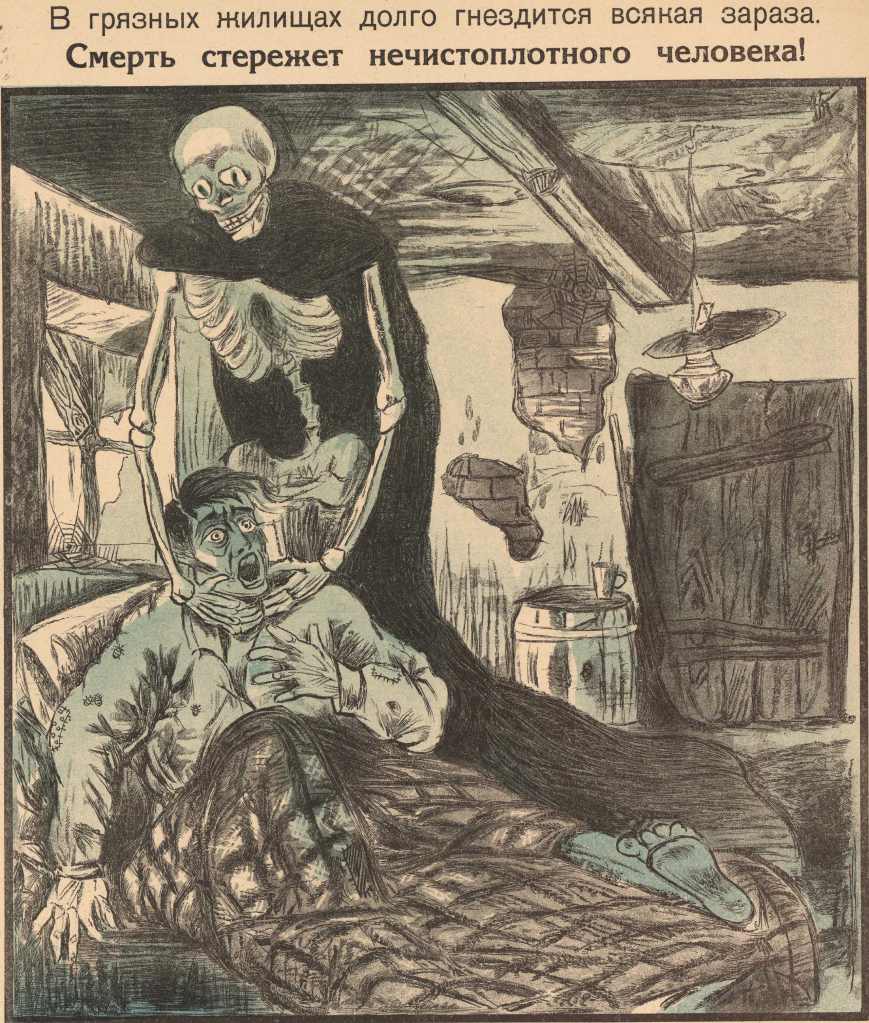
“In filthy residences any contagion can take root for a long time.” “Filth and uncleanliness are one of most important causes of our illnesses.” Detail from an educational poster by the Ukrainian People’s Commissariat of Health, 1920. (Russian State Library)
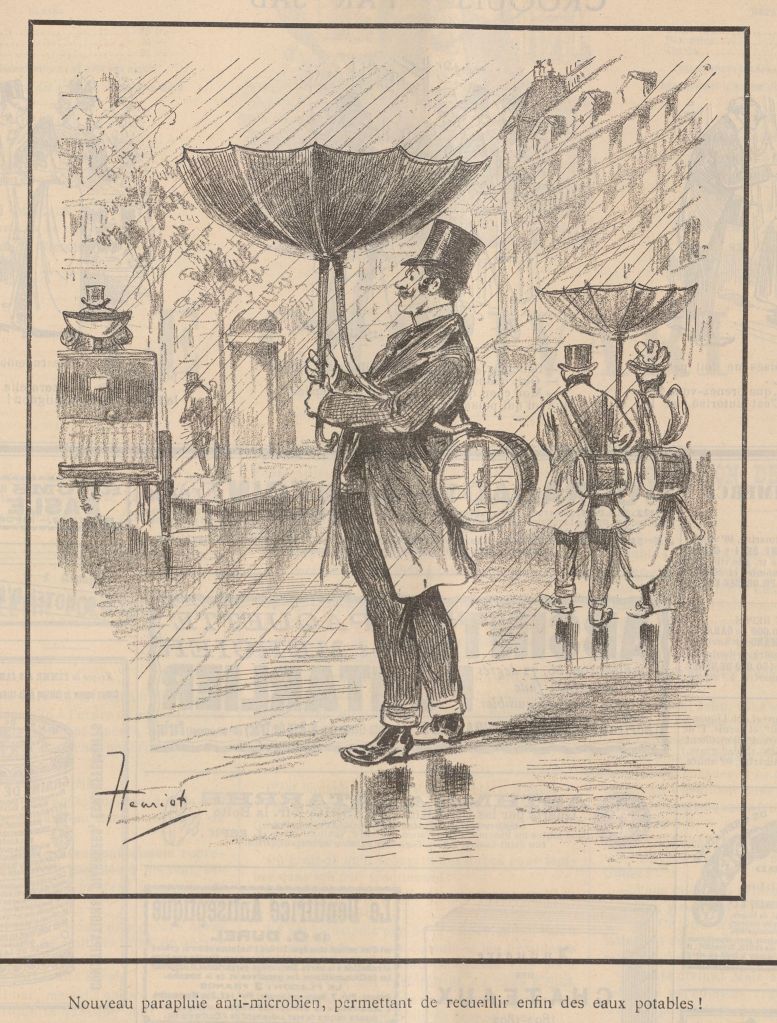
New antimicrobial umbrella that finally lets you collect potable water!
(Le Charivari, Paris, 1892)
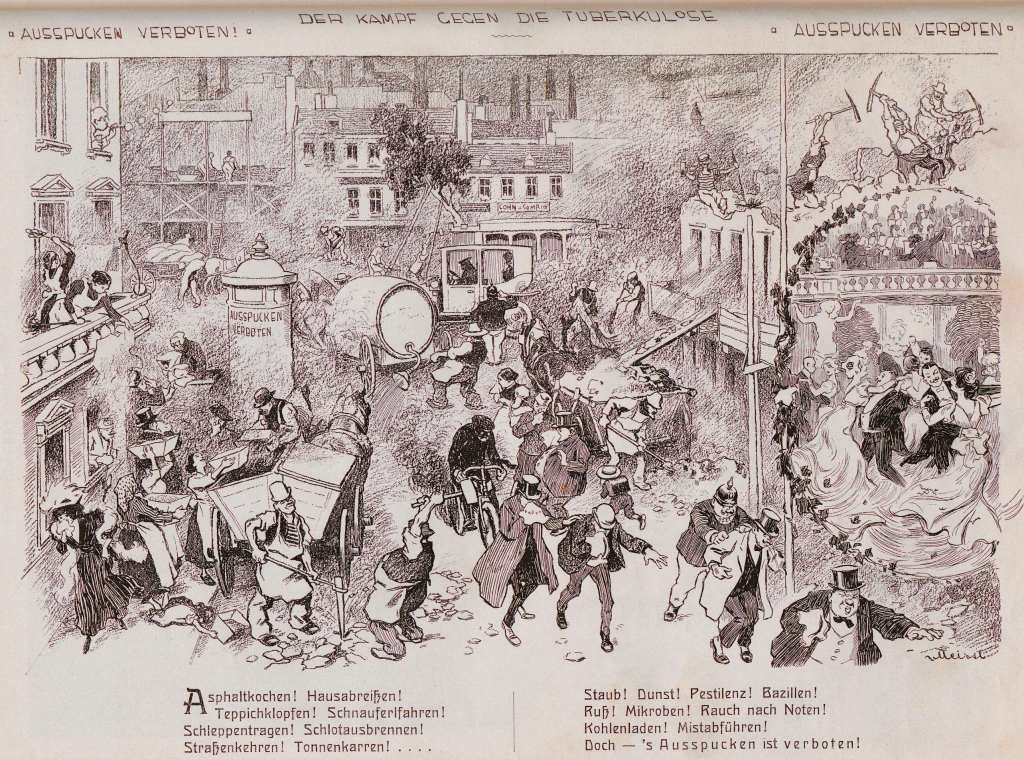
Spitting is not permitted!
Cooking asphalt! Demolishing houses!
Beating carpets! Driving a car!
Dragging a train! Chimney cleaning!
Street sweeping! Barrel carting!
Dust! Fumes! Pestilence! Bacteria!
Rust! Microbes! Smoking at the break!
Loading coal! Carting away manure!
But — spitting is not permitted!
(Fliegende Blätter, Munich, 1908)
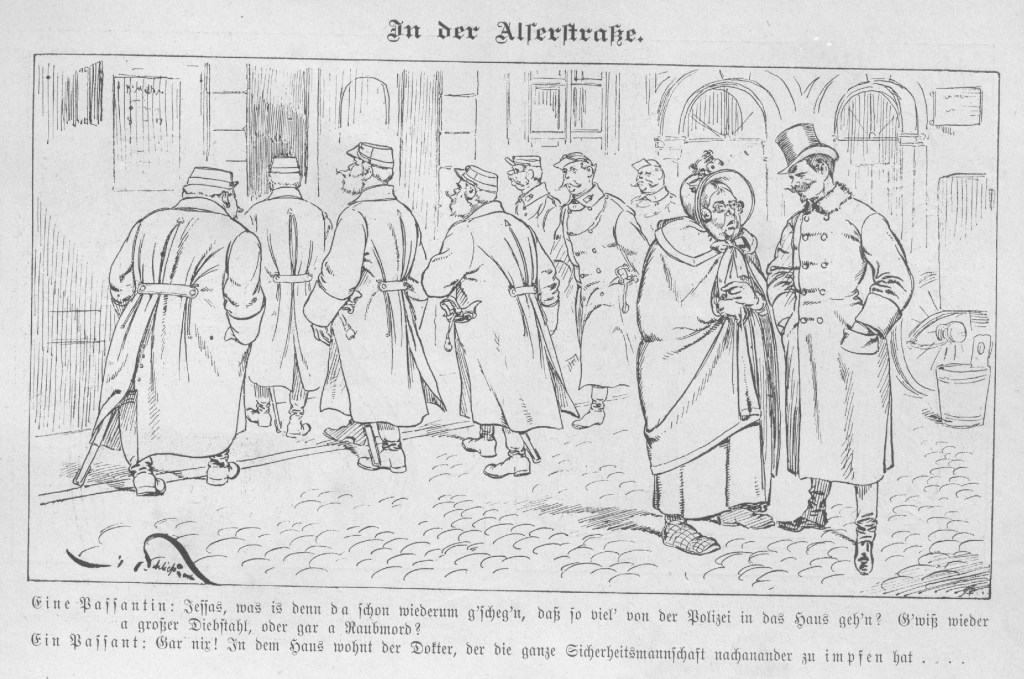
Lady passing by: “Goodness, what’s happening around there again, that so many police are going into that house? It’s got to be another big burglary, or even a robbery?”
Man passing by: “Not at all! In that house lives the doctor who has to vaccinate the entire security team…”
(Figaro, Vienna 1886)
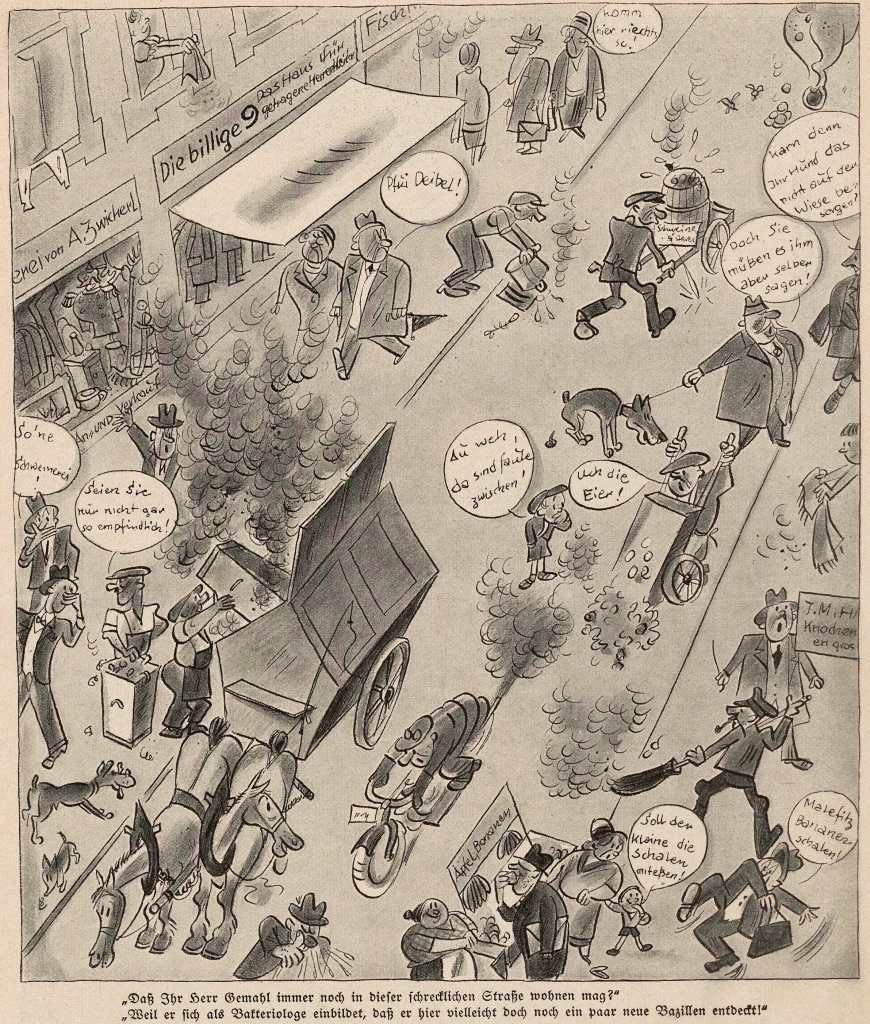
“How can your husband stand to live on this awful street?”
“Because he fancies himself to be a bacteriologist who might be able to discover a few more new bacteria still!”
(Fliegende Blätter, Munich, 1934)
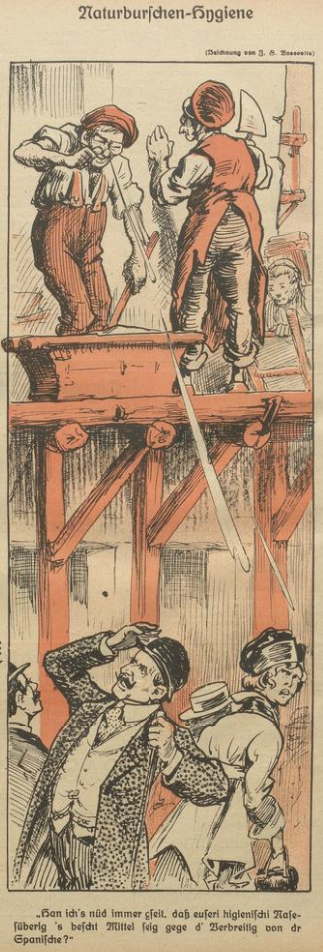
As always in matters of hygiene, delicate questions of class are lurking in the foreground. I can’t pretend to translate Schweizerdeutsch properly, but the basic sentiment of the fellow clearing his nose seems to be that he’s always said that their hygienic nose-clearing is the best means against the spread of Spanish flu. Clearly the good bourgeois passers-by feel differently.
(Nebelspalter, Zurich, 1918)
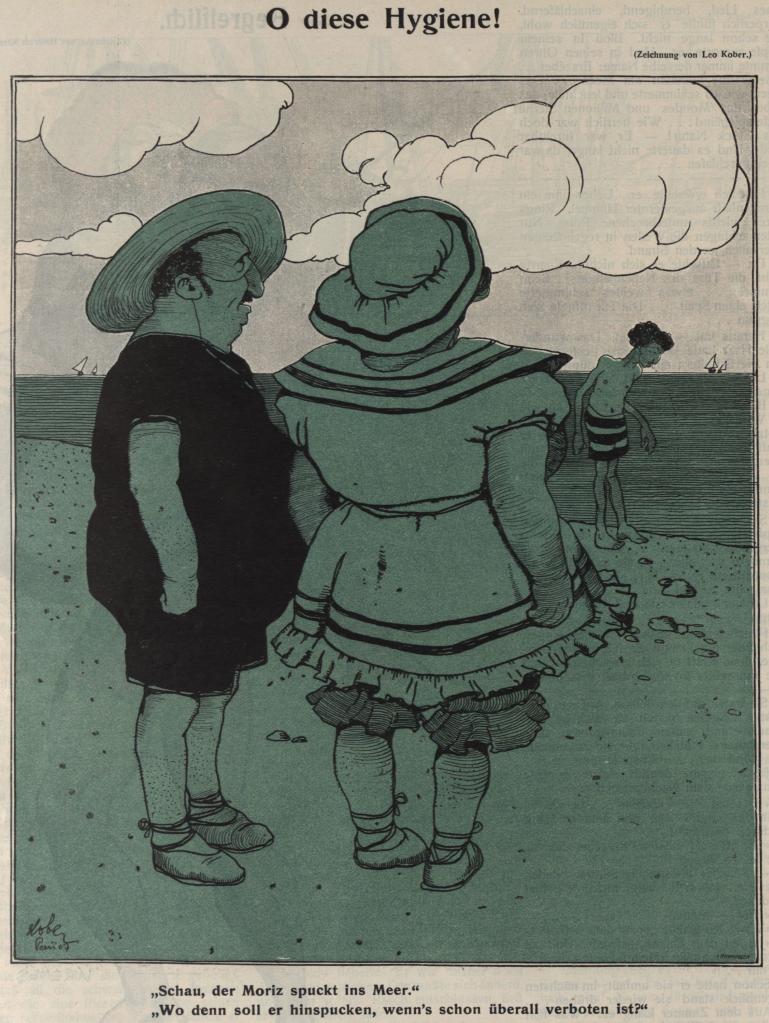
“Look, Moritz is spitting in the sea.”
“So where is he supposed to spit if it’s forbidden everywhere?”
(Die Muskete, Vienna, 1907)
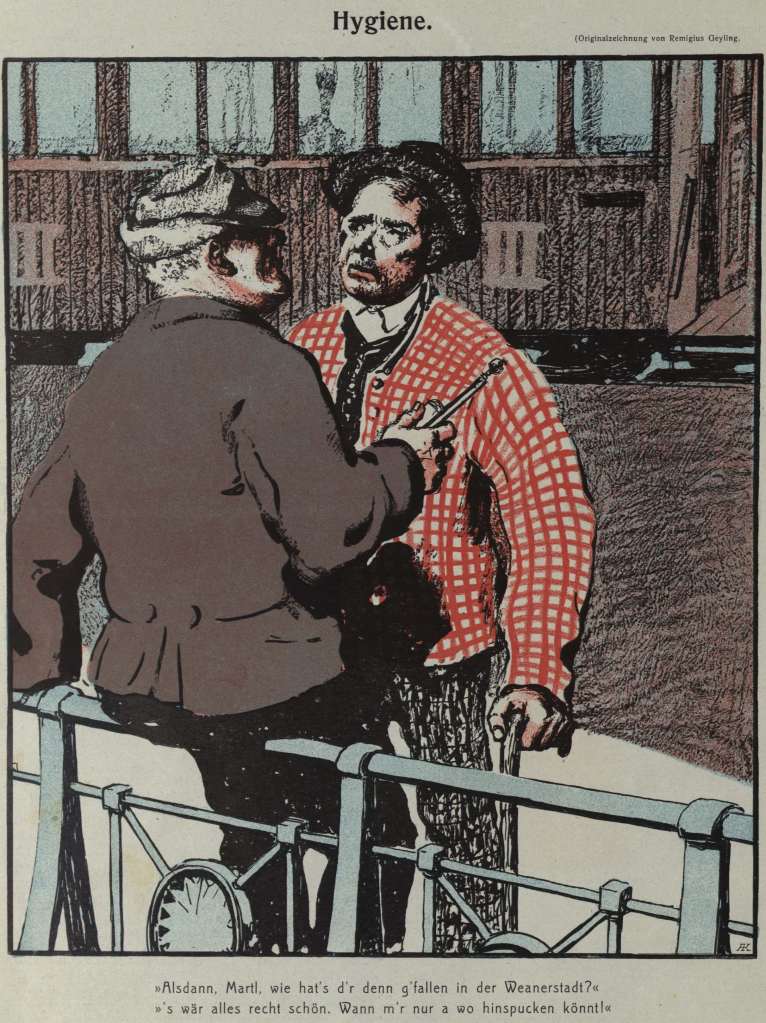
“Alright then, Marty, so how did you like big city Vienna?”
“It was all pretty nice. If only I had someplace to spit!”
(Die Muskete, 1905)
 Sic Transit Pestilentia