“Disinfection shells, fire!”
(Der Floh, 1906)
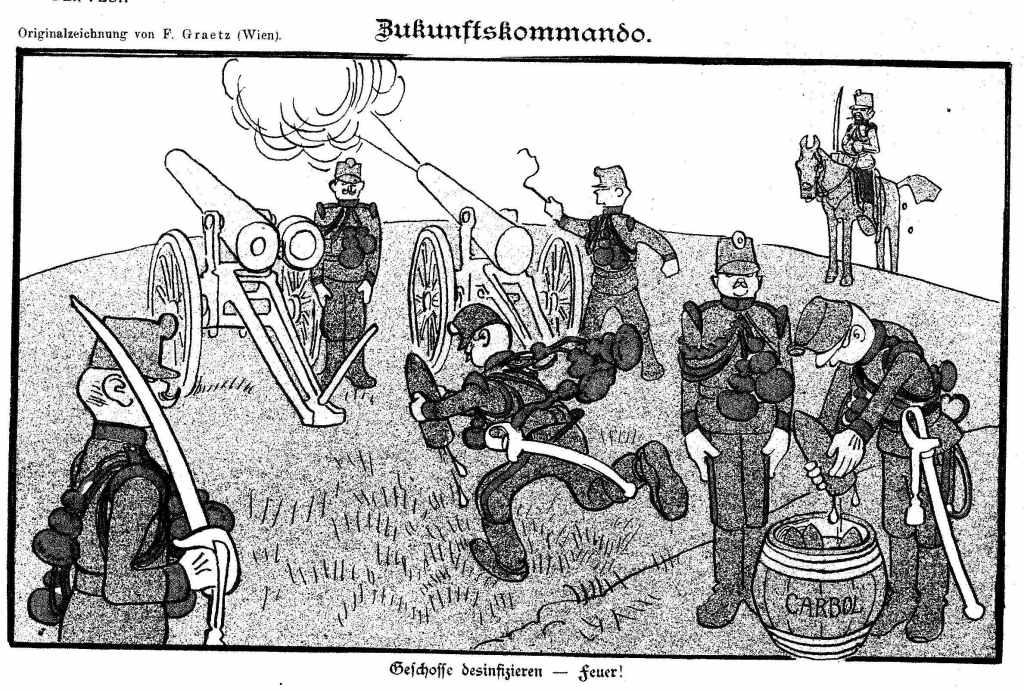
“Disinfection shells, fire!”
(Der Floh, 1906)
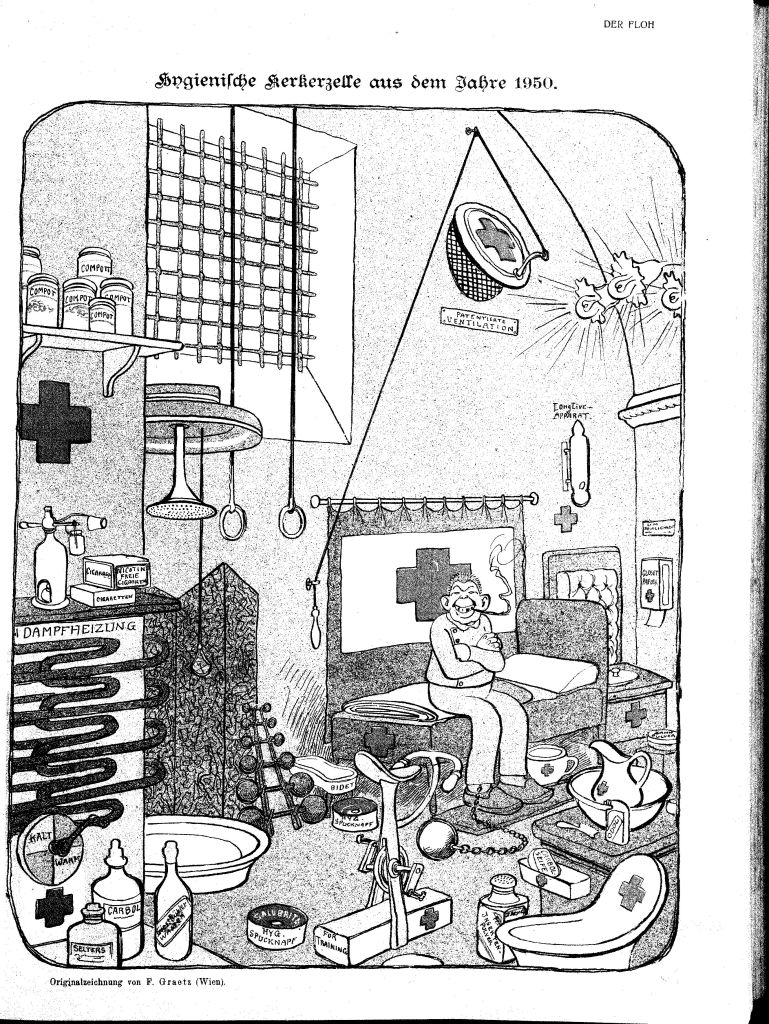
In May 1906 Archduke Franz Salvator opened a large international hygiene exhibition in Vienna. In early July the first major revision to the Hague Convention was adopted in Geneva, among other things strengthening the protections for prisoners of war. The International Committee of the Red Cross was especially prominent in pressing for these provisions, surely strengthening the modern conviction that enforced confinement should be sanitary. In this image we see a “hygienic dungeon cell from the year 1950,” as imagined in Viennese satirical magazine Der Floh in June 1906. Note how all the accoutrements come with the Red Cross symbol.
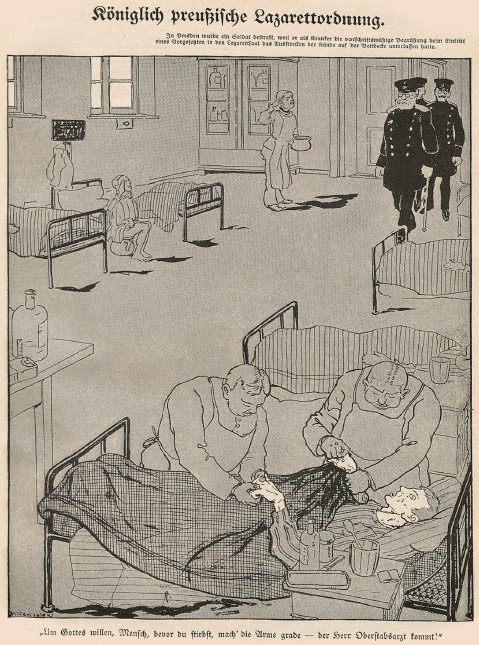
“In Dresden a soldier was fined because while a patient he had failed to salute in the regulated fashion at the entrance of a superior officer in the hospital ward and left his hands on the bedcovers.”
(Der wahre Jacob no. 616, Stuttgart, 1910)
“For God’s sake, man, before you die, straighten your arm — the senior staff physician is coming!”
“Battling disease germs,” reads the headline, including disinfecting books (center and right photos). (Volksfreund, Austria, 1928) Can we have our library books back now?

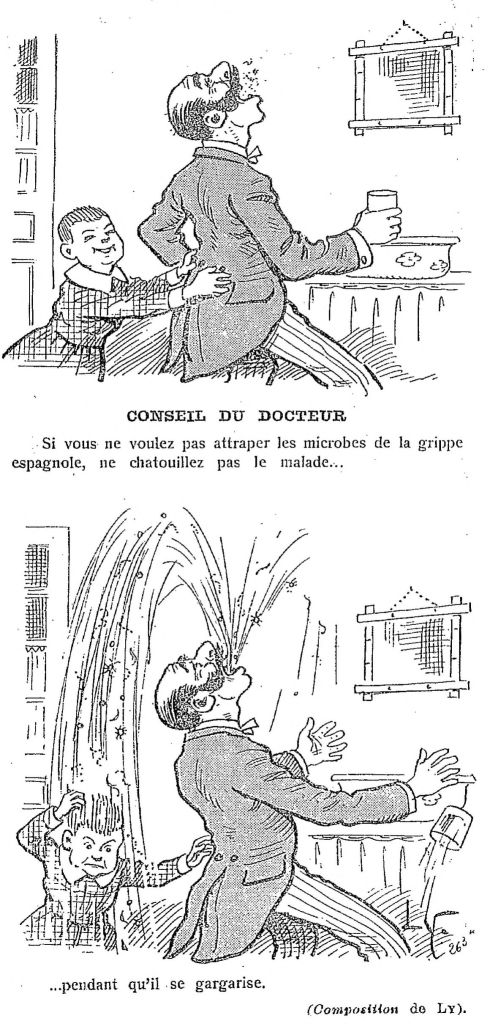
“If you don’t want to catch Spanish flu microbes, don’t tickle the patient… while he is gargling.”
(Le Pêle-mêle, Paris, 1919)
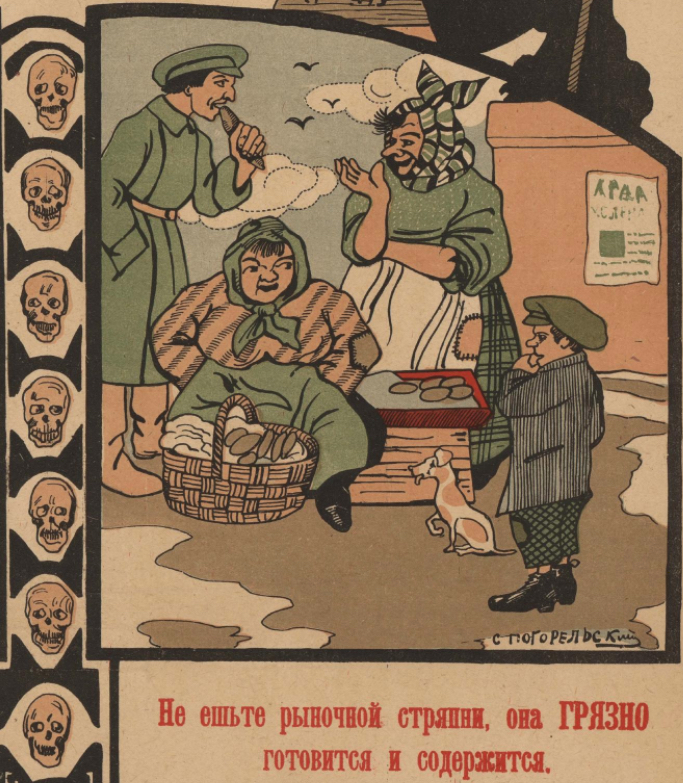
“Don’t eat street food, it’s FILTHILY prepared and stored.”
Detail from cholera public health poster, Orel, Russia, c. 1920.
(Full image at Russian State Library)
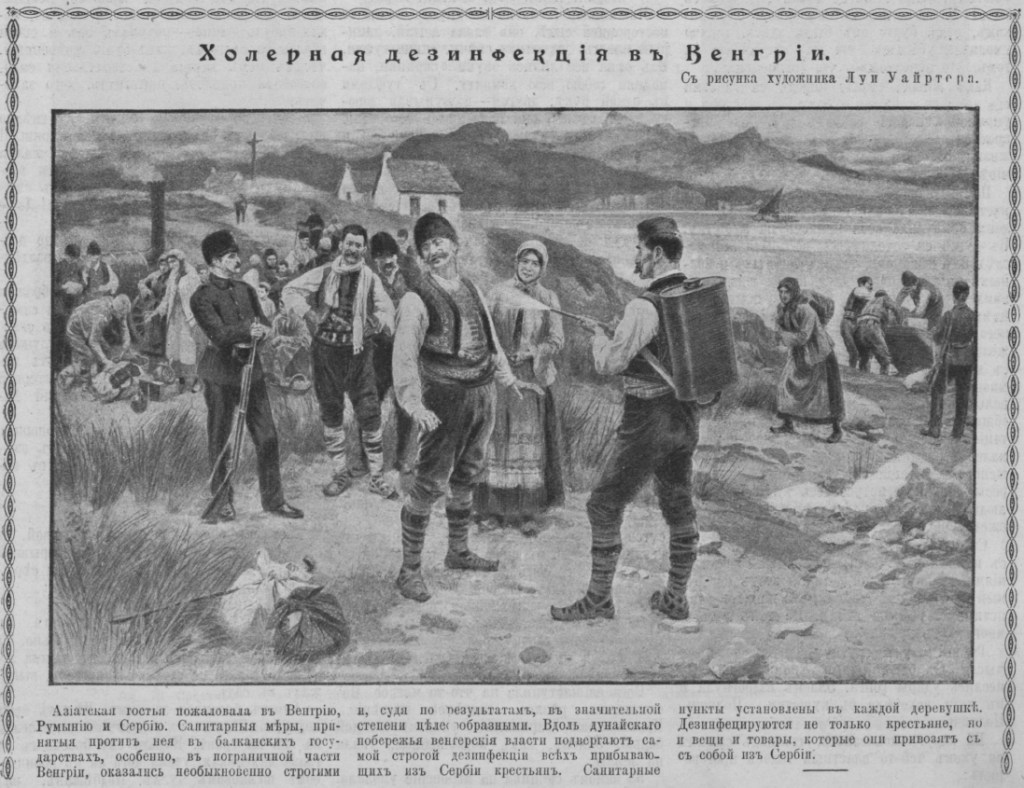
This image by the Scottish illustrator Louis Whirter was reprinted in the Russian magazine Ogonek no. 50 in 1910, but I have not been able to find anything further about its provenance. From the accompanying text: The Asian visitor (i.e., cholera) is welcomed to Hungary, Romania, and Serbia. Public health measures undertaken against it in the Balkan states, especially along Hungarian border areas, have been exceptionally strict, and judging by the results, quite expedient. Along the banks of the Danube the Hungarian authorities subject all arriving peasants from Serbia to strict disinfection.
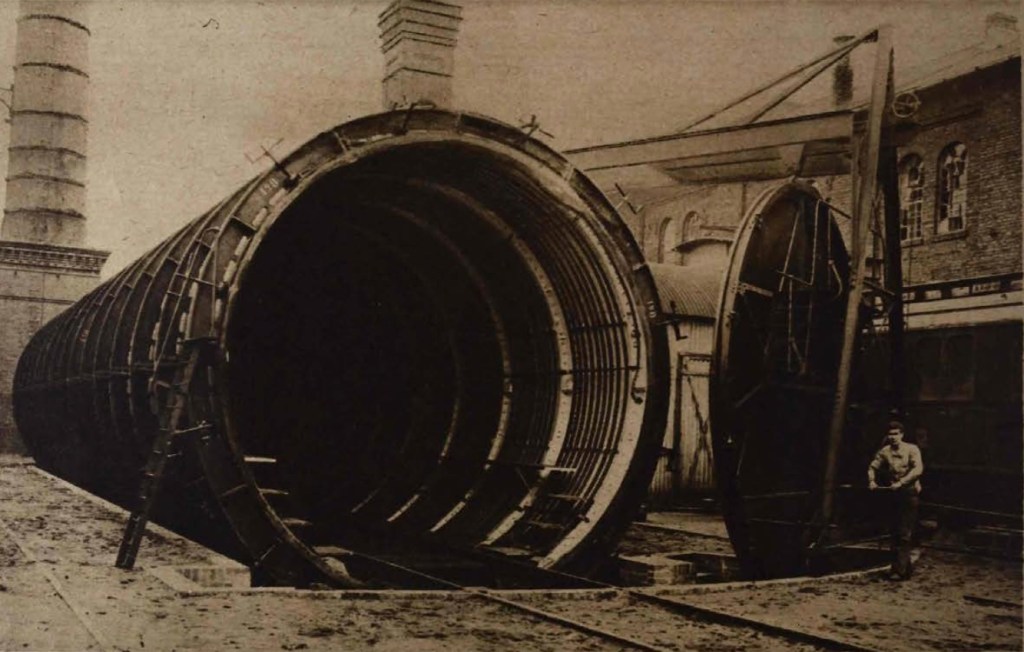
With typhus endemic on the eastern front during World War I, trains returning from the front had to be fumigated.
(Tolnai Világlapja, Budapest, 1916)
 Sic Transit Pestilentia