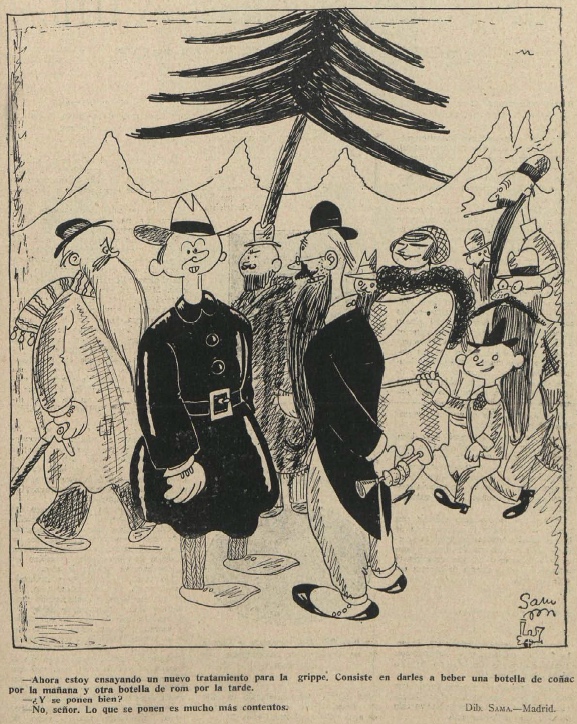
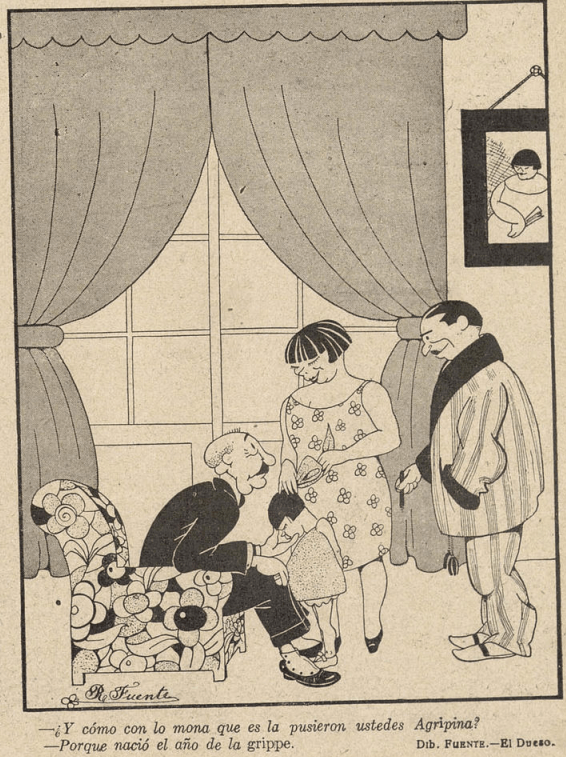
“Now I am trying a new treatment for the flu. It consists of giving them a bottle of cognac to drink in the morning and another bottle of rum in the afternoon.” “And they get better?” “No, sir. What they get is much happier.” (Buen Humor, Madrid, 1931) (Compare this Finnish version.)
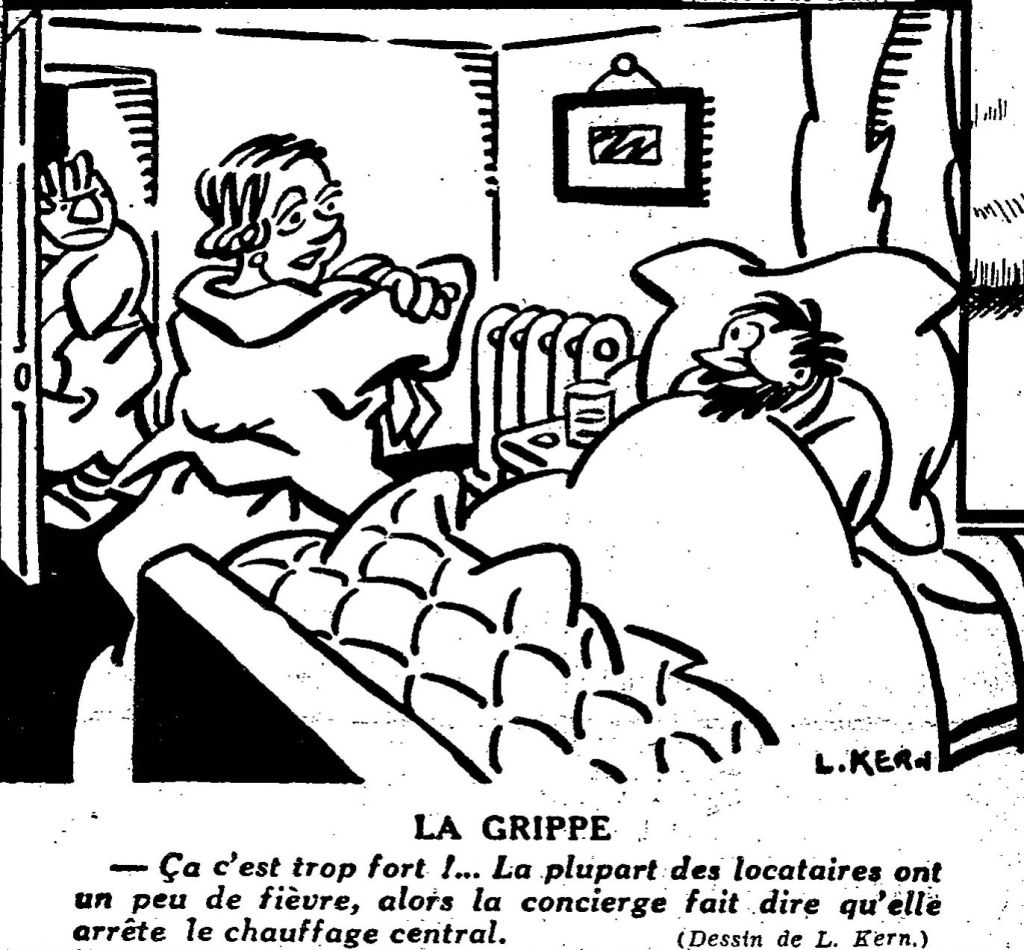
“This is too much! Most of the tenants have a bit of a fever, so the building supervisor says she’s shutting off the central heating.” (Ric et Rac, Paris, 1933)
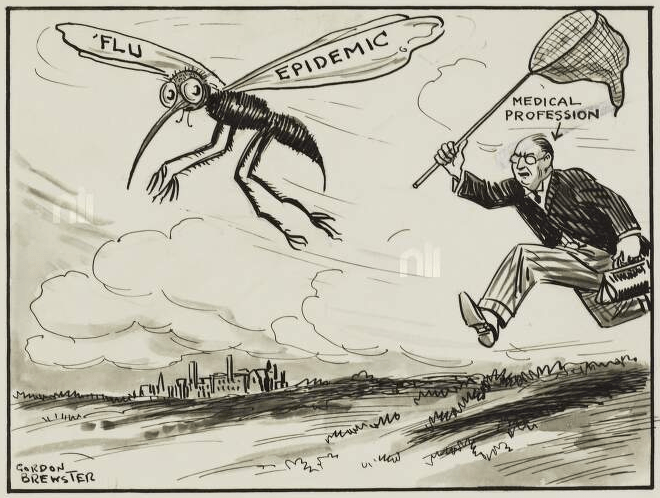
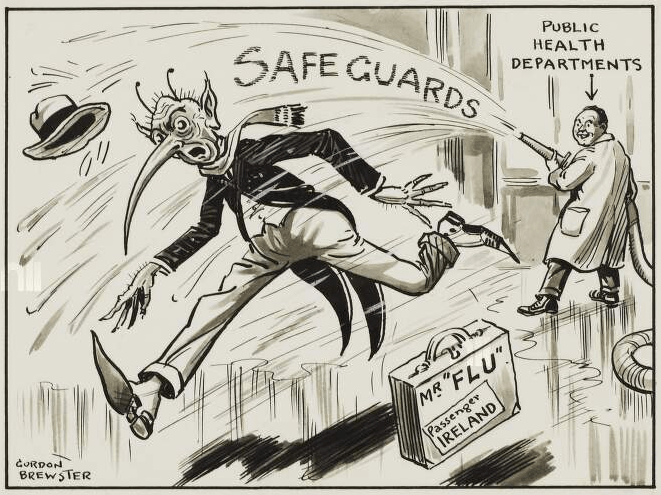
(Note the misplaced use of a vector for influenza.) (Evening Herald, Dublin, 1929; from the Gordon Brewster Cartoon Collection, National Library of Ireland.)
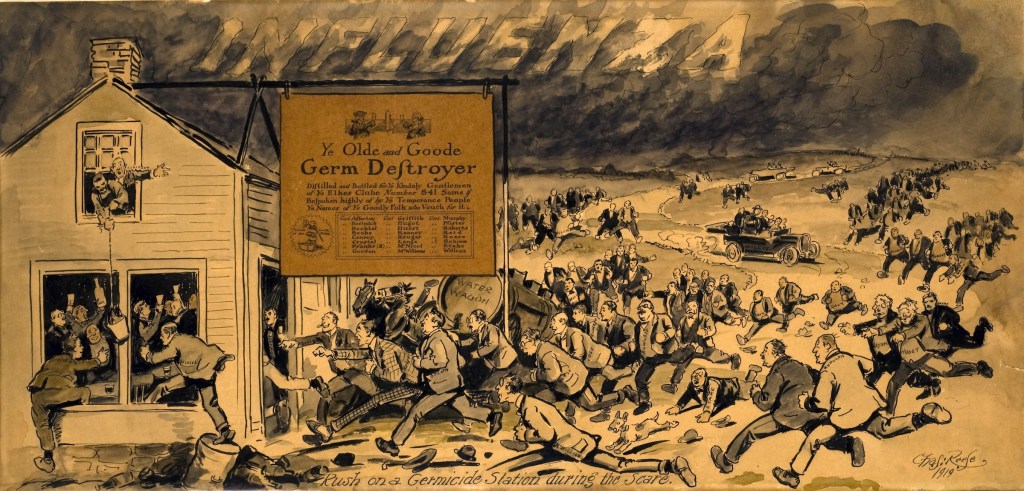
(Miasma of INFLUENZA in the sky above) Distilled and bottled for ye kindely Gentlemen of ye Elkes Clube Number 841. Rush on a Germicide Station during the Scare. (Charles Reese, 1919, via National Library of Medicine)
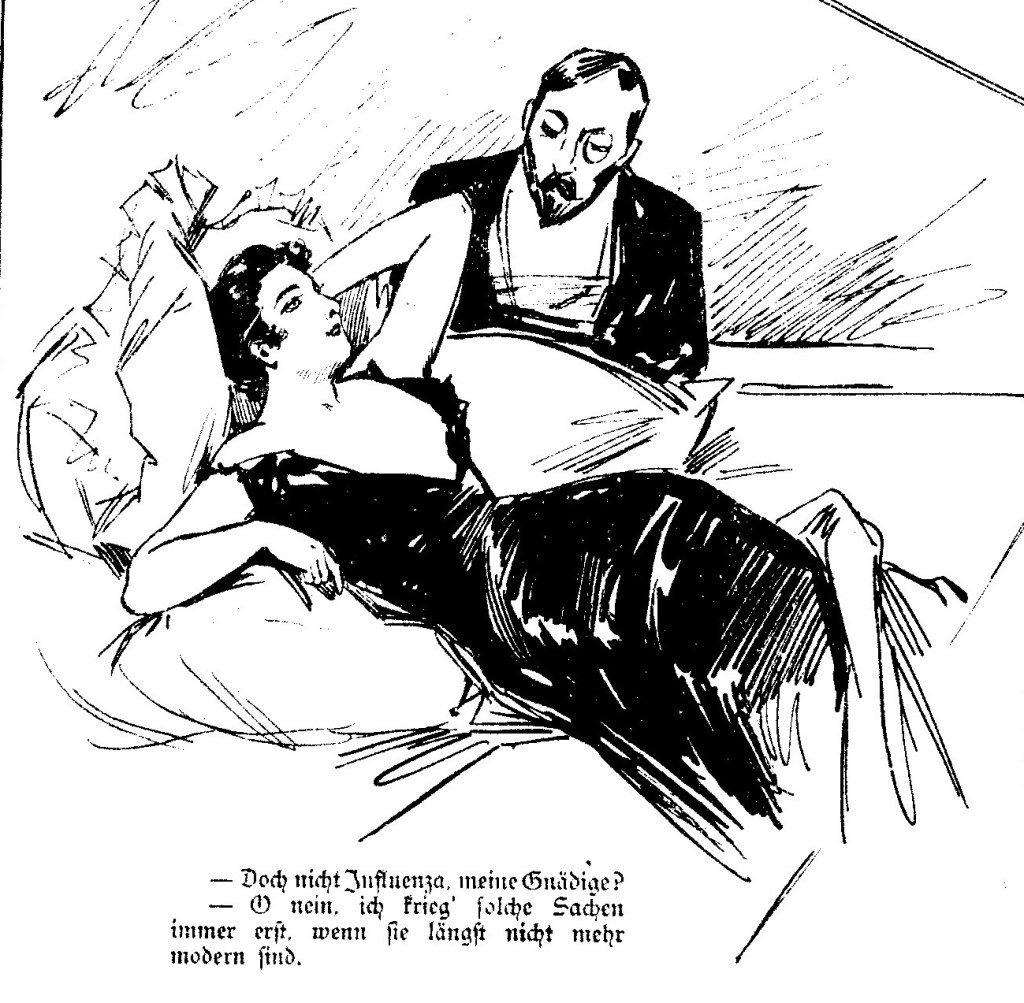
“It isn’t influenza, is it, my lady?” “Oh no, I only get such things when they are no longer modern [i.e., in fashion].” (Wiener Caricaturen, Vienna, 1893) (An inversion of another Austrian cartoon.)
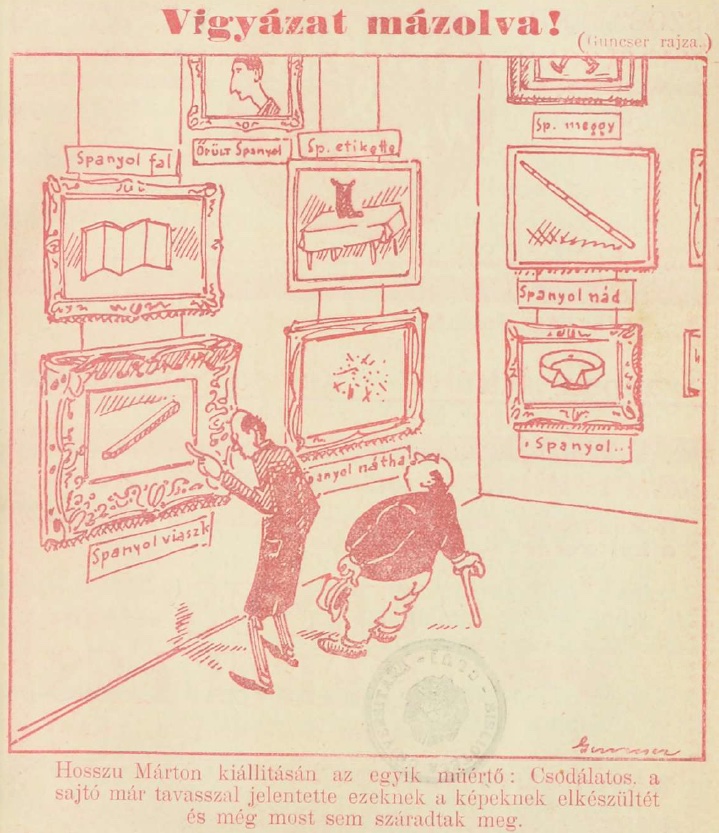
One of the connoisseurs at Márton Hosszu’s exhibition [where various Spanish objects are on display. Hosszu (b. 1894) had recently returned from a pilgrimage to Spain. The picture in front of the rotund man is labeled “Spanish flu.”] “Amazingly, the press already announced the completion of these images in the spring and they still haven’t dried.” (Vágóhíd, Kolozsvár-Cluj, 1926)
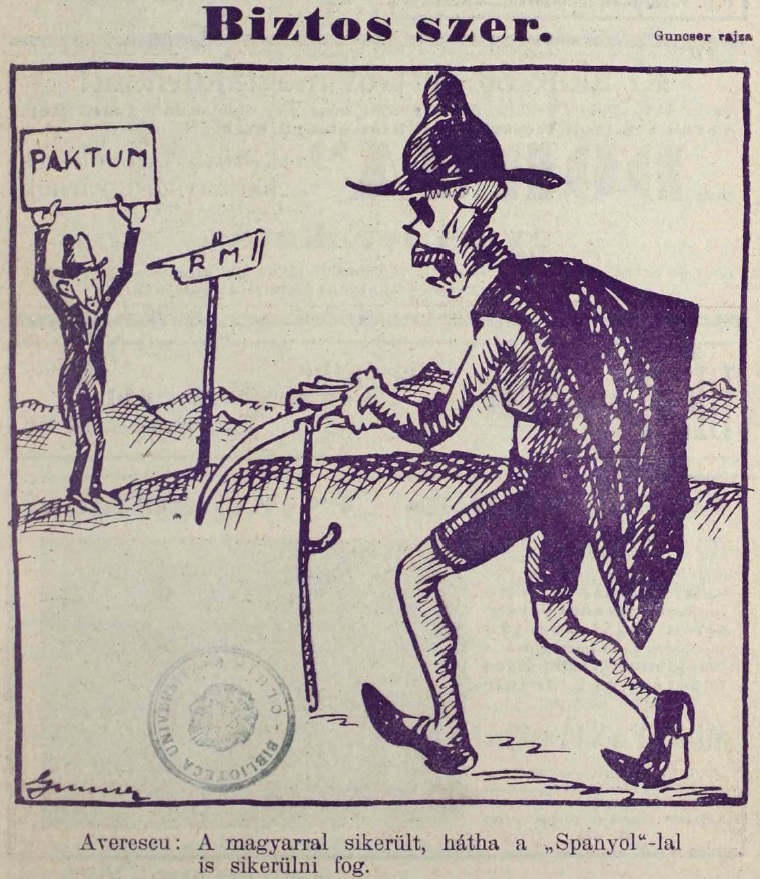
Early in 1927 influenza was resurgent in the Danube region. A young Otto von Habsburg, the nominal king of Hungary then in Spanish exile, contracted pneumonia after a bout of the flu, which was still frequently referred to as the “Spanish epidemic” in Hungarian. King Ferdinand of Romania caught the flu as well, unsettling domestic politics. The previous year, Ferdinand has been instrumental in returning General Alexandru Averescu to the premiership as head of the People’s Party. Averescu proceeded to cozy up with Mussolini’s Fascist Italy. Several months after the appearance of this cartoon, Ferdinand would die from what turned out to be cancer, but not before helping unseat Averescu.
Averescu: “It worked with the Hungarian, maybe it will work with the “Spanish” as well.” (Vágóhid, Kolozsvár-Cluj, 1927)
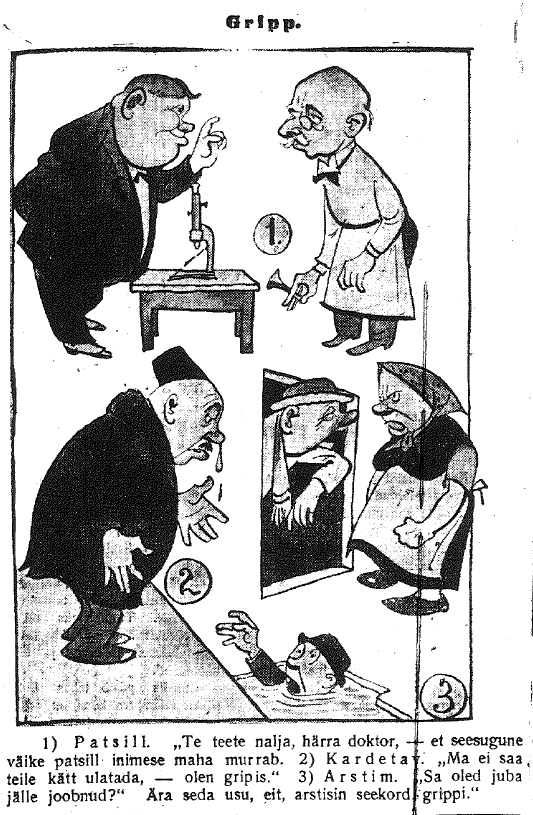
1) Bacillus. “You’re kidding, Doctor, that such a little bacillus breaks down a person.” 2) Fear. “I can’t reach out to you, I’ve got the flu.” 3) Remedy. “Are you drunk again?” “Don’t believe it, woman, I was treating the flu this time.” (Sädemed, Tartu, 1933)

 Sic Transit Pestilentia