“I dare to hope for a small reduction in your fee, doctor: it was my husband who brought the flu to this neighborhood!”
(Le Petit écho de la mode, Paris, 1927)
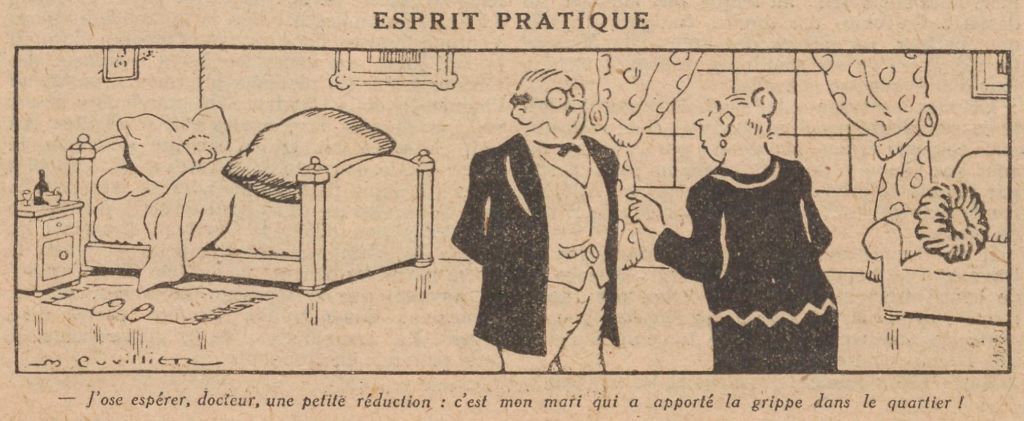
“I dare to hope for a small reduction in your fee, doctor: it was my husband who brought the flu to this neighborhood!”
(Le Petit écho de la mode, Paris, 1927)
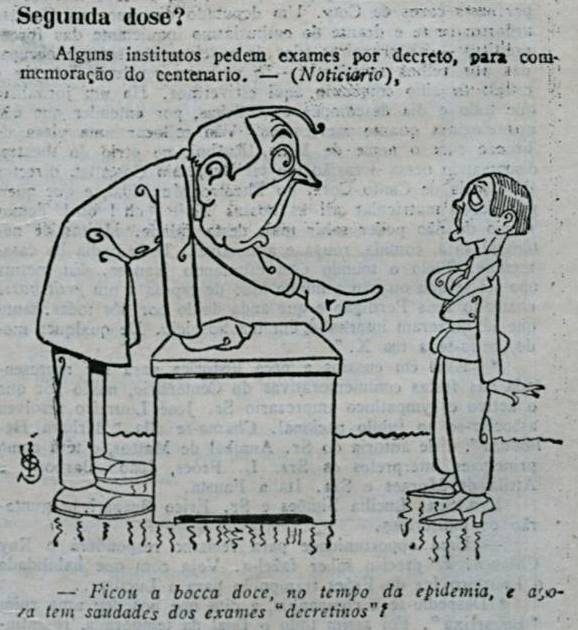
(Some institutes are requesting examinations by decree, to commemorate the centenary of the Brazilian War of Independence)
“I became a sweet talker during the epidemic, and now I miss the little decree exams!”
(O Malho, Rio de Janeiro, 1922)
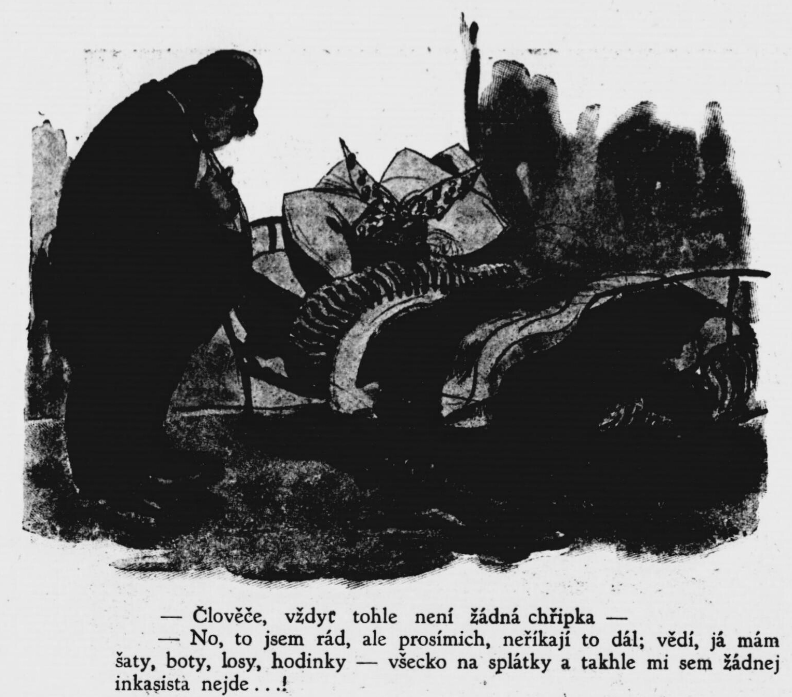
“Man, this is not the flu after all.”
“Well, I’m glad, but please, don’t tell anyone else; they know I have clothes, shoes, lottery tickets, watches, everything in installments, and no collector can come here while I’m like this…”
(Humoristické listy, Prague, 1927)
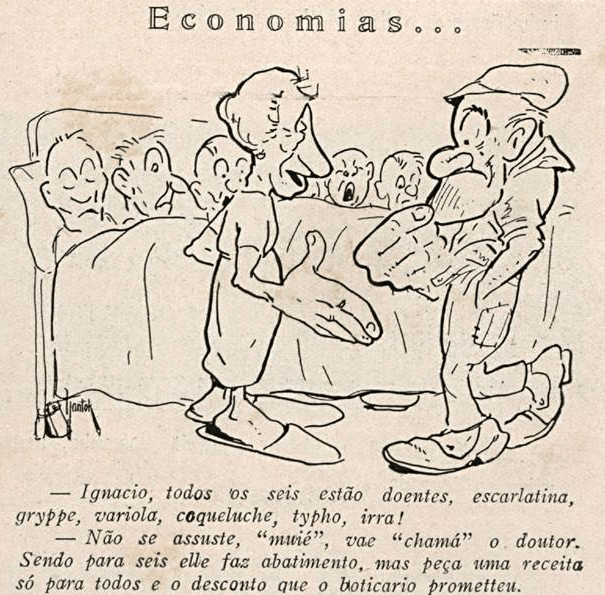
“Ignacio, all six of them are sick with scarlet fever, flu, smallpox, whooping cough, typhus, and choler!”
“Don’t be scared, “girl,” go and “call” the doctor. For six he’ll make a discount, but ask for a prescription just for everyone and the discount that the pharmacist promised.”
(O Malho, Rio de Janeiro, 1927)
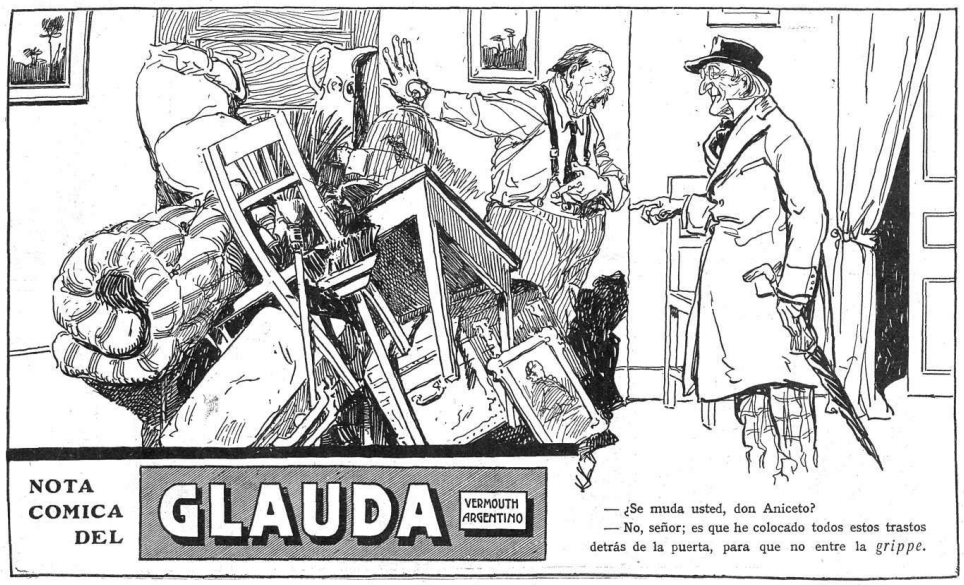
Comic notes sponsored by Glauda Vermouth in Argentina during the flu pandemic of 1918.
“And in this room, which is twice the size, are they also from the flu?”
“No, sir; those are from the group.” (Sorry, I don’t know how to convey the pun.)
(Caras y Caretas, Buenos Aires, 1918)

“Are you moving, Don Aniceto?”
“No, sir; it’s just that I’ve put all this junk behind the door, so the flu doesn’t get in.”
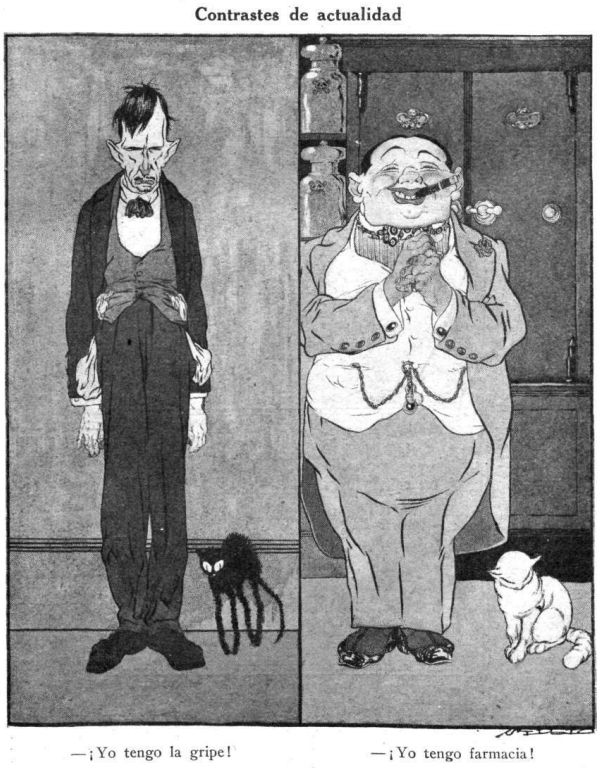
“I have the flu!”
“I have a pharmacy!”
(Caras y caretas, Buenos Aires, 1918)
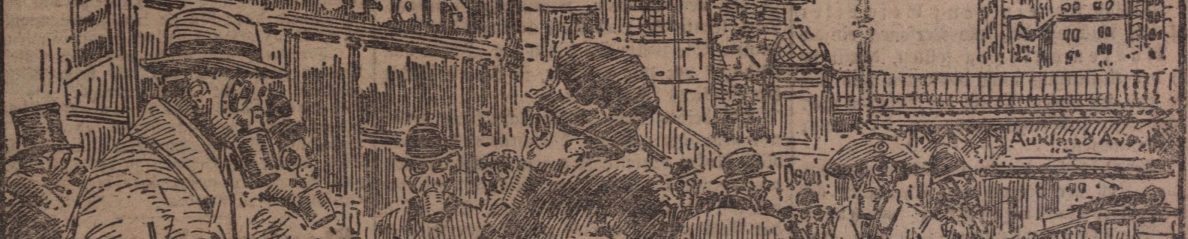
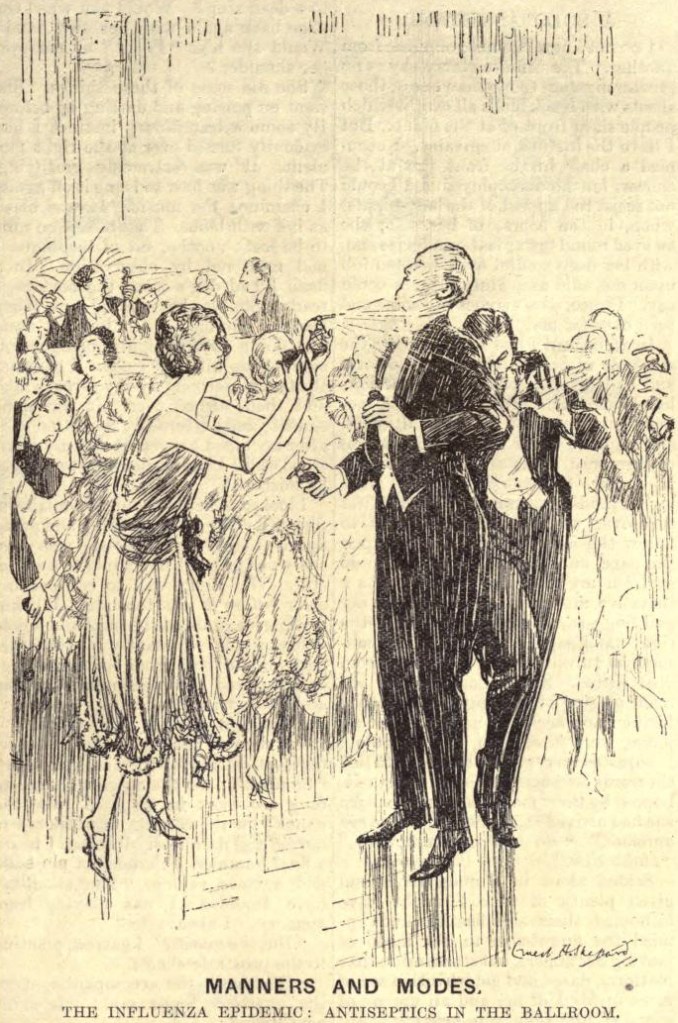
The influenza epidemic: Antiseptics in the ballroom.
(Punch, London, 1922)
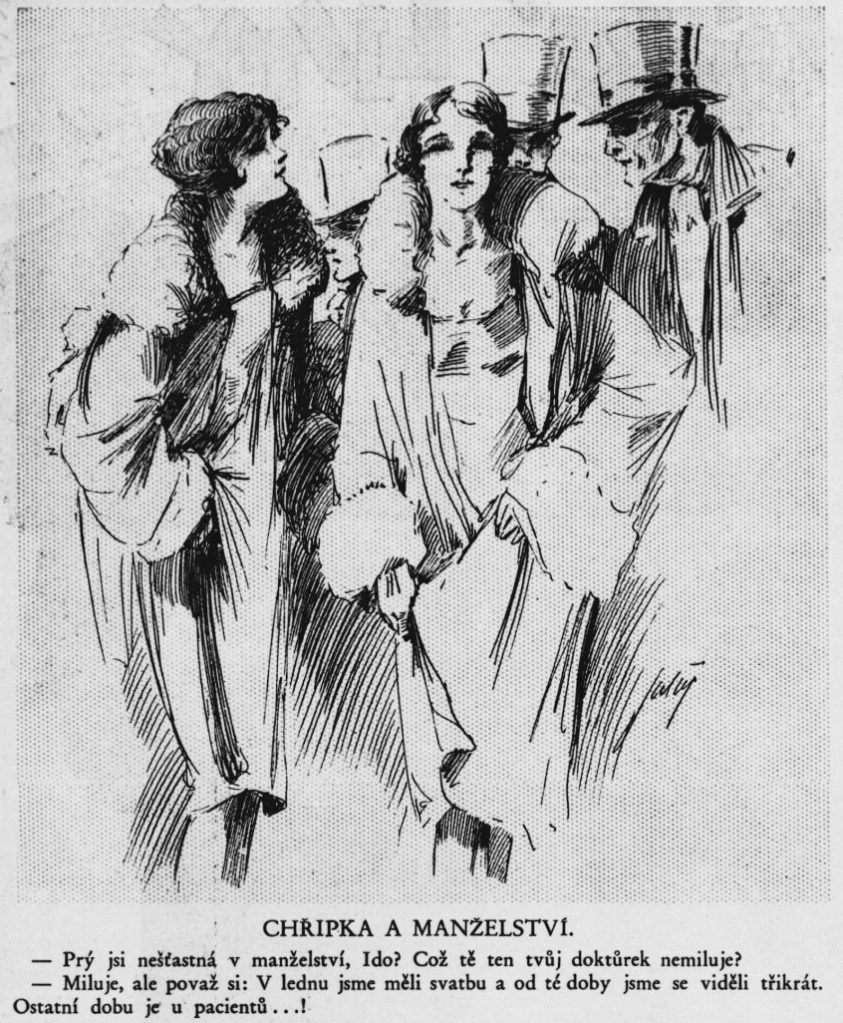
“Are you unhappy in your marriage, Ido? Doesn’t your doctor husband love you?”
“He loves me, but consider: Our wedding was in January, and we’ve seen each other three times since then. The rest of the time he’s with his patients…!”
(Humoristické listy, Prague, 1929)
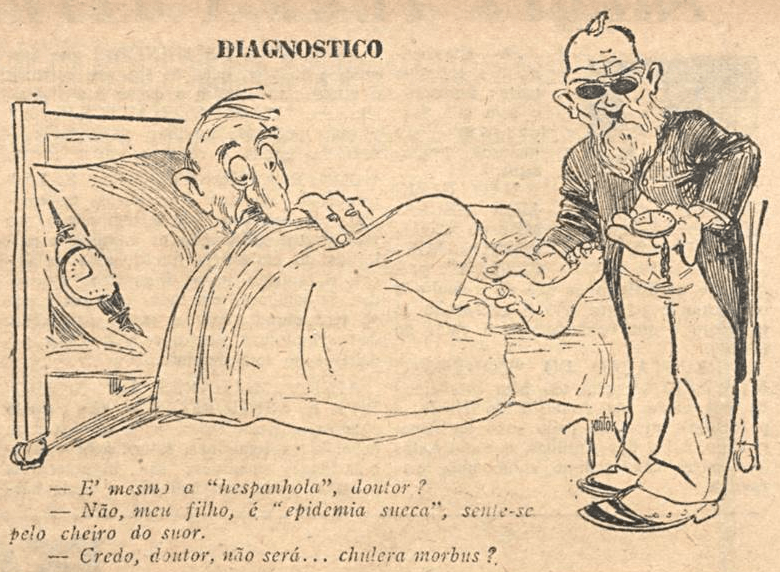
“Is it really the “Spanish,” doctor?”
“No, my son, it’s the “juice epidemic,” you’re sensing the smell of sweat.”
“Good heavens, doctor, won’t it be … cholera morbus?”
(O Malho, Rio de Janeiro, 1918) (Definitely missed some wordplay here…something about “vulgar death”?)
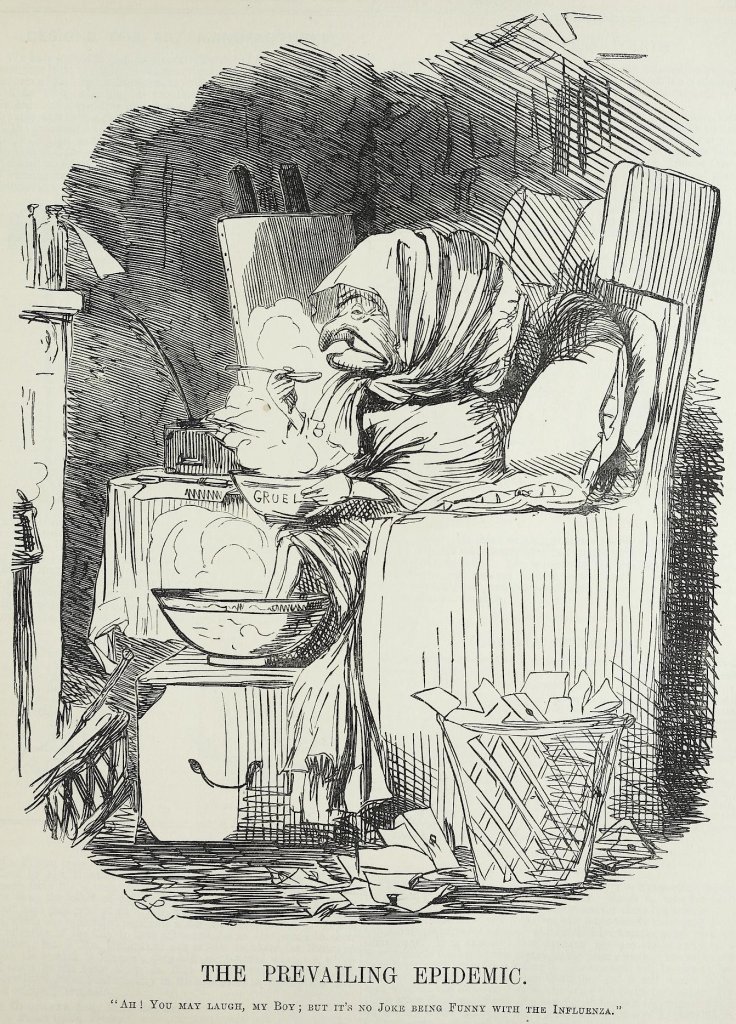
Old woman eating gruel: “Ah! You may laugh, my boy; but it’s no joke being funny with the influenza.”
(Punch, London, 1847)
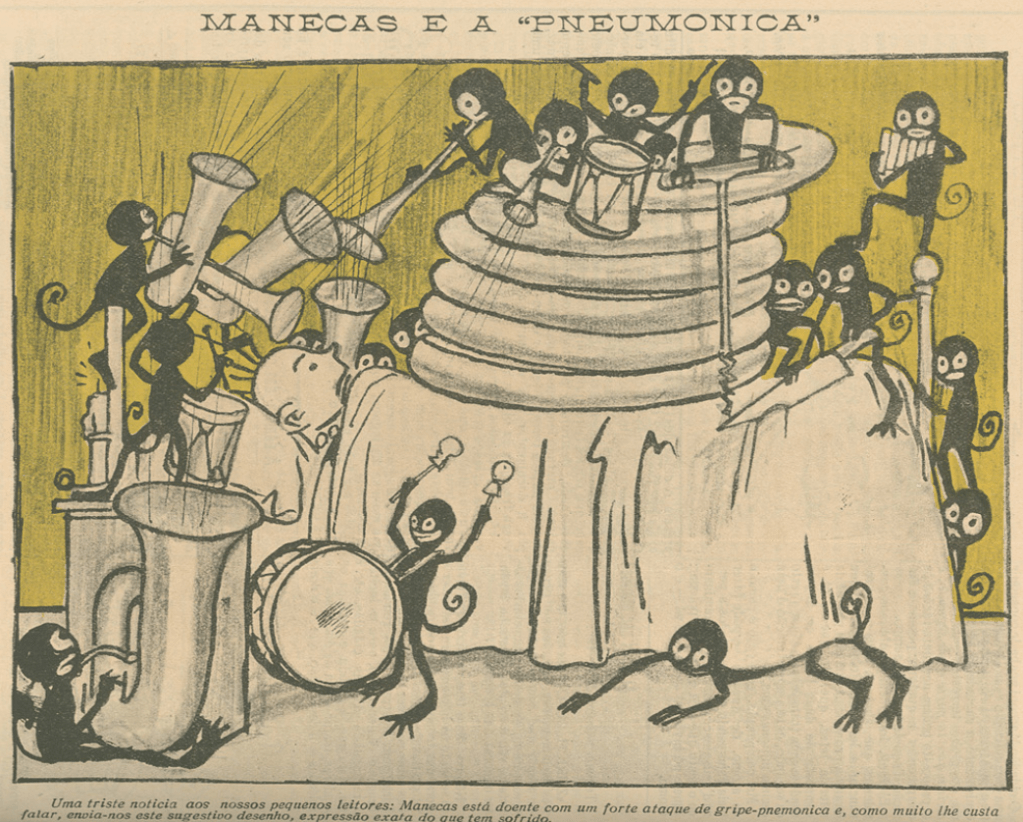
Some sad news for our little readers: Manecas is sick with a severe attack of pneumonia-flu and, since it is very difficult to speak, sends us this suggestive drawing, an exact expression of what he has suffered.
(Manecas was a mascot of this satirical supplement.)
(O Século Cómico / Ilustração Portuguesa, Lisbon, 1918)
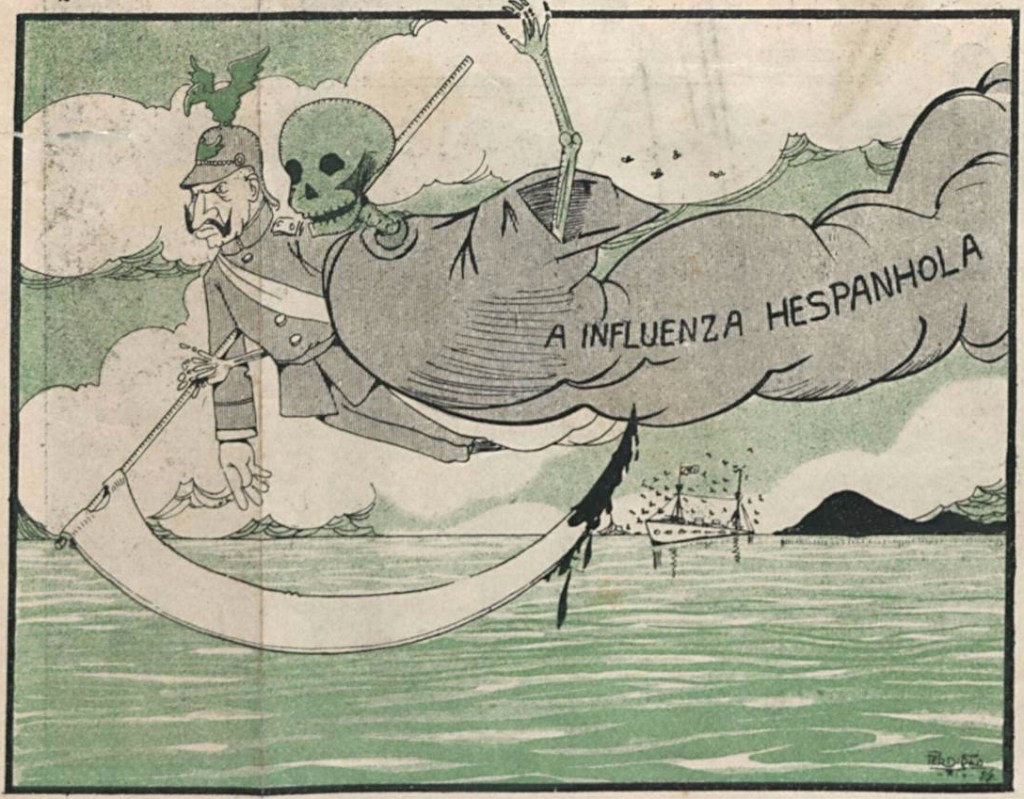
The Spanish flu, the new ally of the Kaiser.
(O Malho, Rio de Janeiro, 1918)
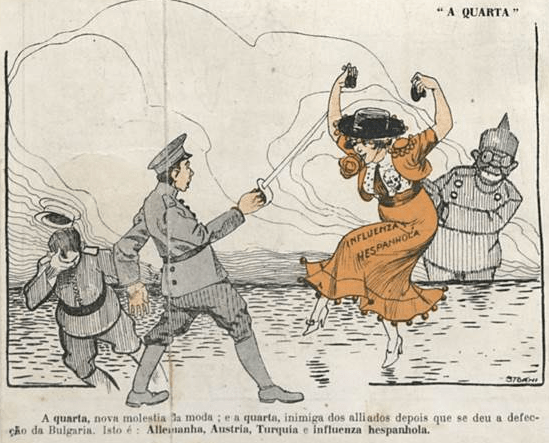
“The Quartet” is the new fashionable disease; and the Quartet is enemy of the Allies since Bulgaria’s defection. This is: Germany, Austria, Turkey, and Spanish flu.”
(O Malho, Rio de Janeiro, 1918)
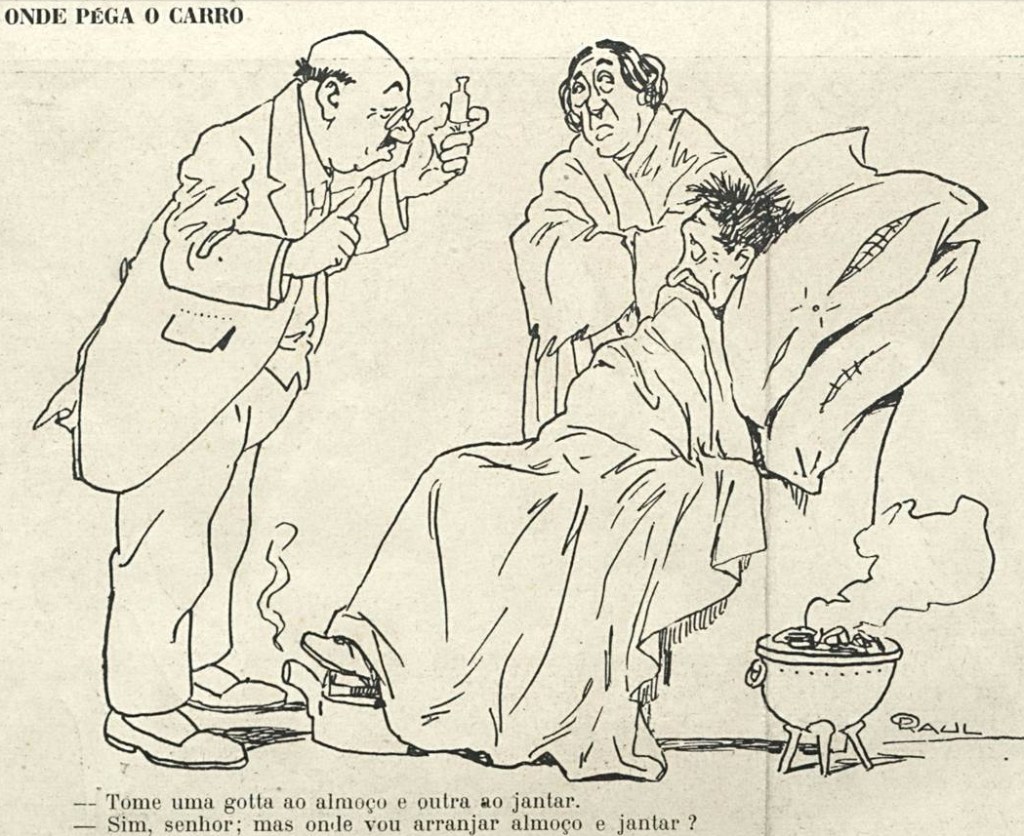
“Take one drop at lunch and another at dinner.”
“Yes, sir, but where am I going to get lunch and dinner?”
(O Malho, Rio de Janeiro, 1918) (I might have missed the idiom in the title.) (A later German cartoon with a similar motif.)
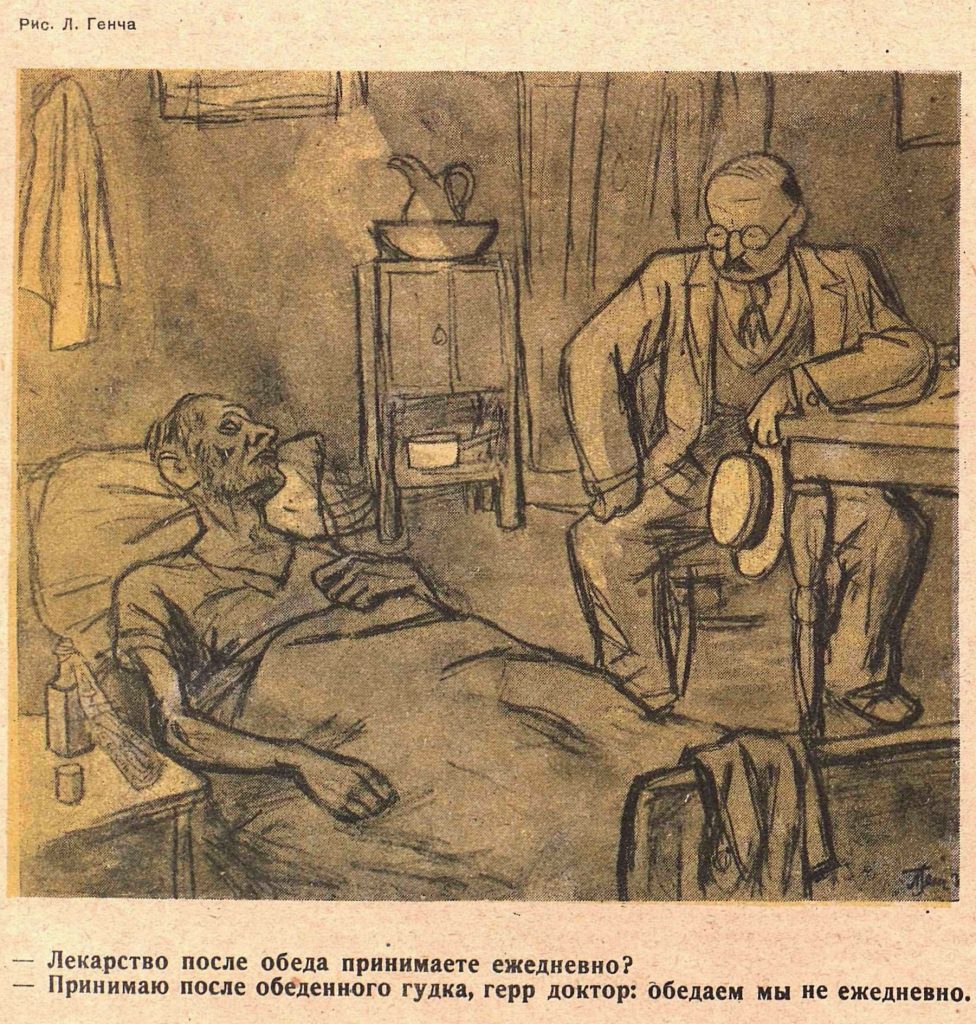
A nearly identical Soviet cartoon aimed at contemporary Germany:
“Are you taking the medicine daily after lunch?”
“I take it after the lunch bell, Herr Doctor: we don’t have lunch every day.”
(Krokokil, Moscow, 1936)
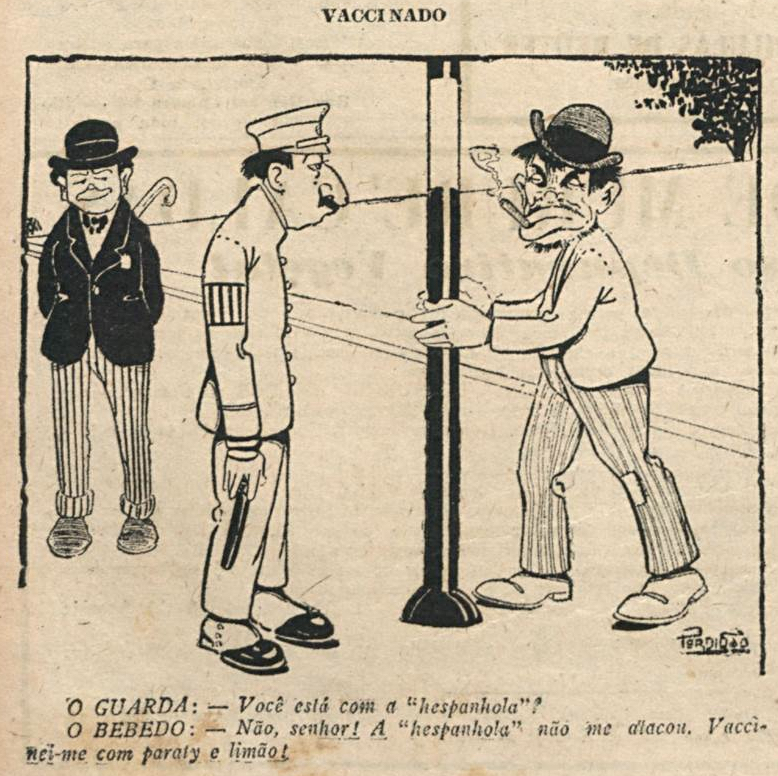
Guard: “Have you had the “Spanish” thing?”
Drunk: “No, sir! The “Spanish” thing does not attack me. Vaccinate me with rum and lemon!”
(O Malho, Rio de Janeiro, 1918)
 Sic Transit Pestilentia