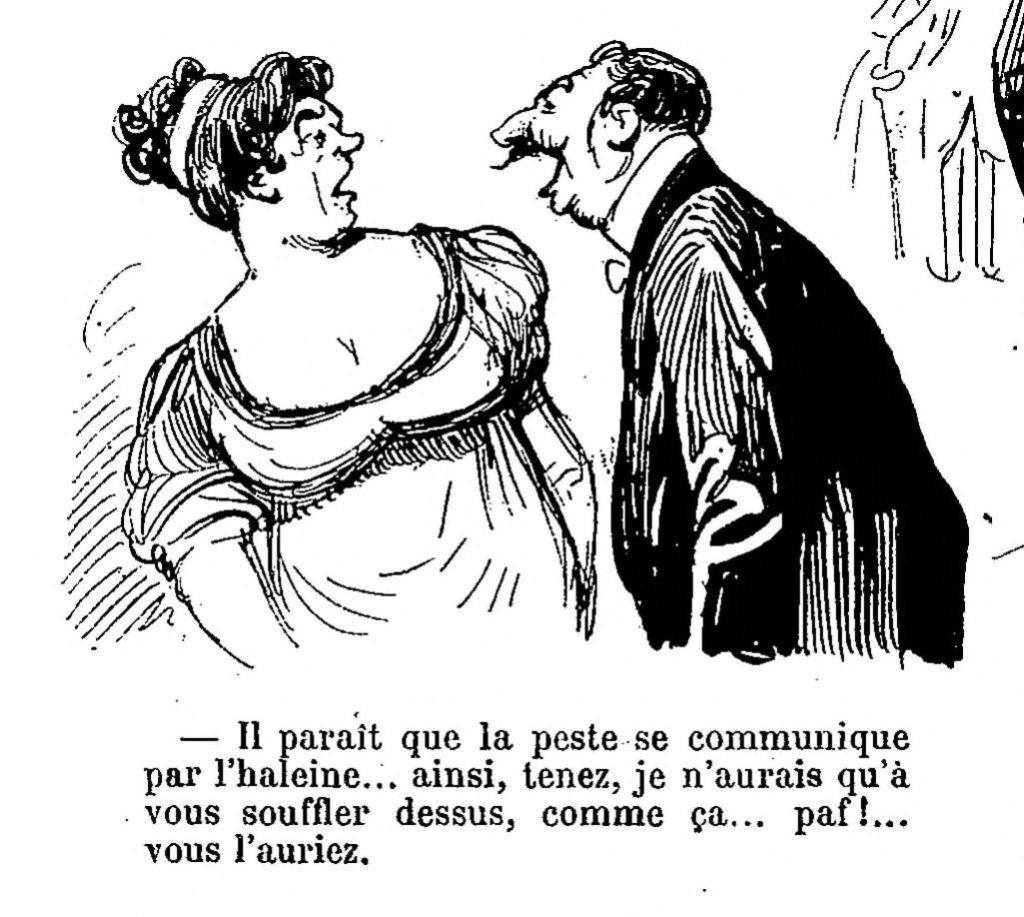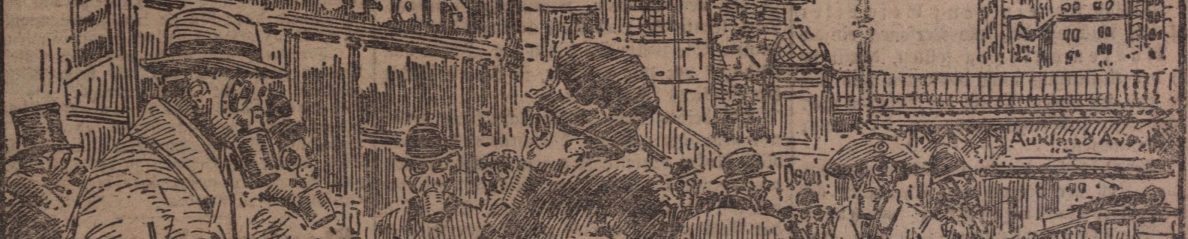
Sarrasqueta in quarantine

A tale from Caras y caretas, Buenos Aires, 1920.

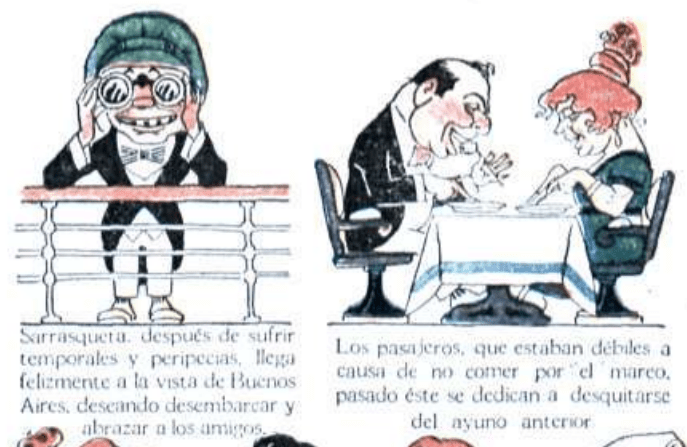
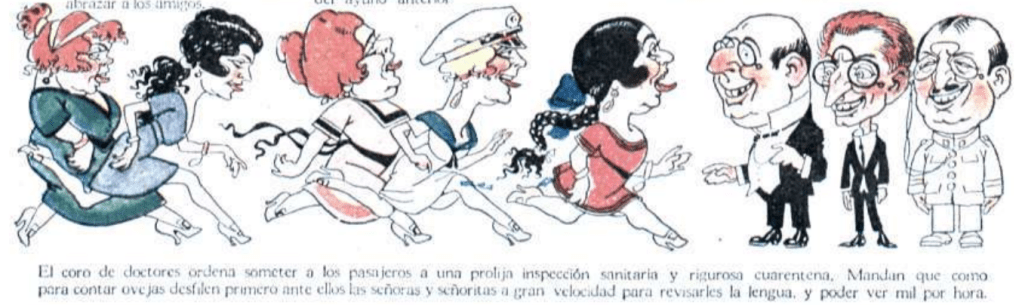
Sarrasqueta, after suffering storms and tribulations, arrives happily at the sight of Buenos Aires, eager to disembark and embrace his friends.

The passengers, who were weak from not eating on schedule, now dedicate themselves to making up for the previous fasting.
Argentine quarantine cartoon

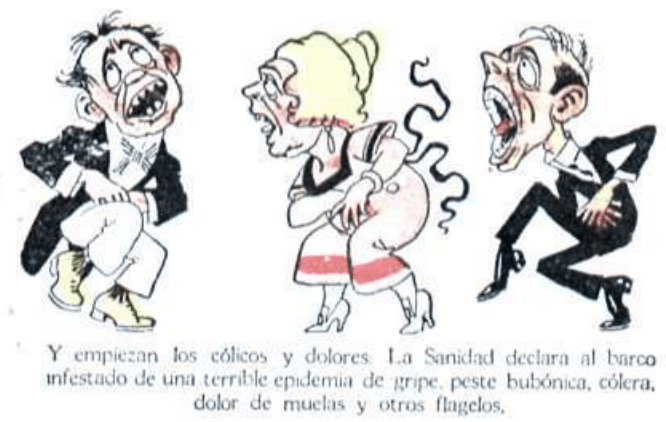
And the cramps and pains begin. The Health Department declares the ship infected with a terrible epidemic of influenza, bubonic plague, cholera, toothache, and other scourges..
The choir of doctors orders the passengers to undergo a thorough health inspection and rigorous quarantine. As if counting sheep, they first order the ladies to parade before them at great speed to check their tongues, and to be able to see a thousand an hour.
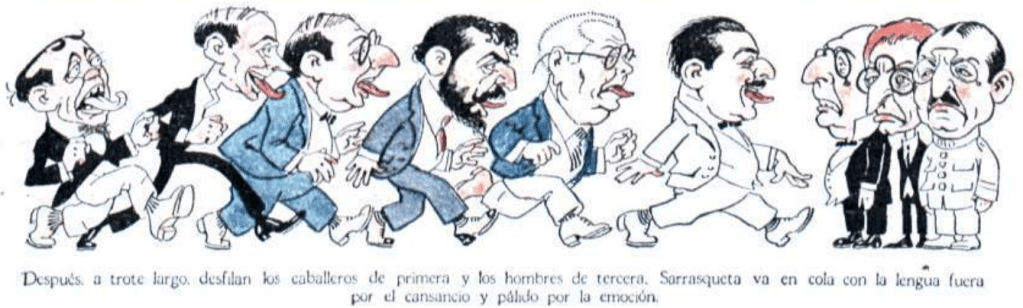
Then, at a slow trot, the first-class gentlemen and third-class men parade by the doctors. Sarrasqueta is in line with his tongue sticking out from exhaustion and pale with emotion.
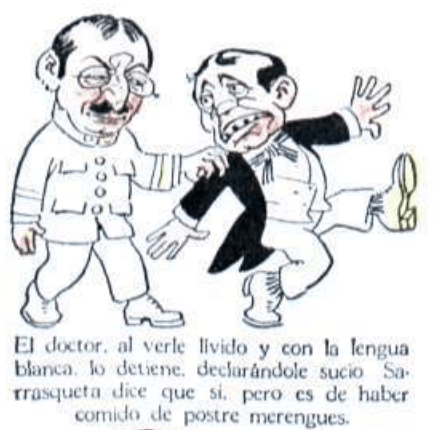
The doctor, seeing him pale and with a white tongue, stops him, declaring him unclean. Sarrasqueta accedes, but claims it is from having eaten meringues for dessert.
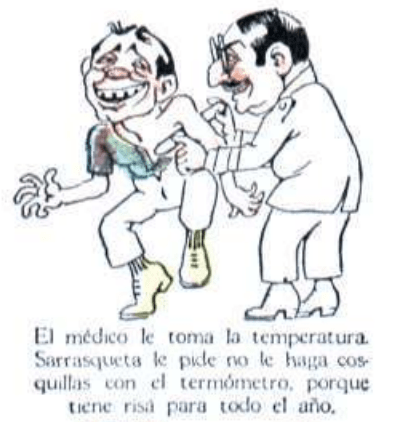
The doctor takes his temperature. Sarrasqueta asks him not to tickle him with the thermometer, because he’ll be laughing for the whole year.
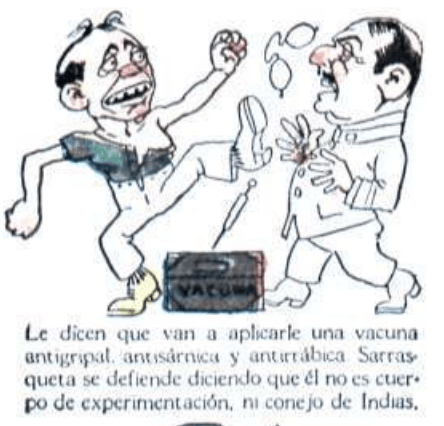
They tell him that they are going to give him a vaccine against flu, scabies, and rabies. Sarrasqueta defends himself by saying that he is neither a test body, nor a guinea pig.
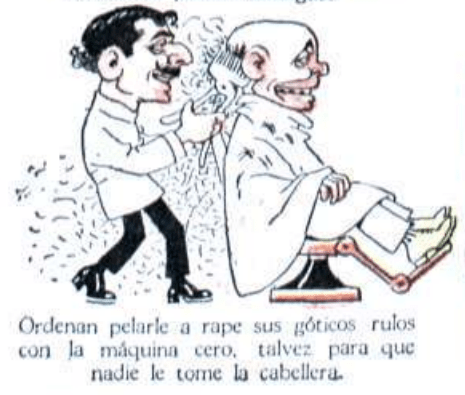
They order his gothic curls to be shaved off with the clipper, perhaps so that no one takes his hair.
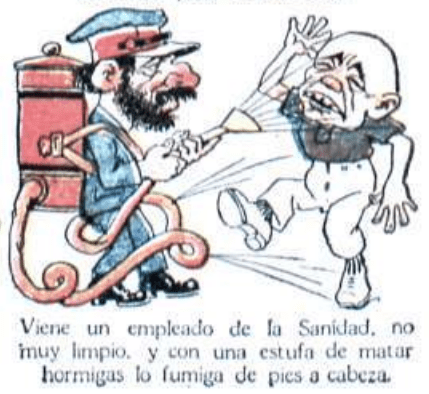
A public health employee arrives, not very clean, and with a fogger for killing ants he fumigates Sarrasqueta from head to toe.
They put the luggage in the disinfection oven, and they return it to him burnt to a crisp. And then they condemn him to undergo days of quarantine until they see the result of the vaccine.

The patriotic seesaw

An early cartoon condemning the atheism and hostility to the aristocracy manifest in the French Revolution. “If all this is so, as we unfortunately could not call into doubt, plague, war, and famine are much less formidable than the plague known today in all of Europe under the name of French disease. Those attack only the current generation, this one [i.e., Revolution] tends to rot its way down to our last heirs. The author of the cartoon is therefore right to say in this sense that it is clear that the new regime is tipping the balance.”
(Jacque-Marie Boyer-Brun, Histoire des caricatures de la révolte des Français, Paris, 1792)

French plague cartoon

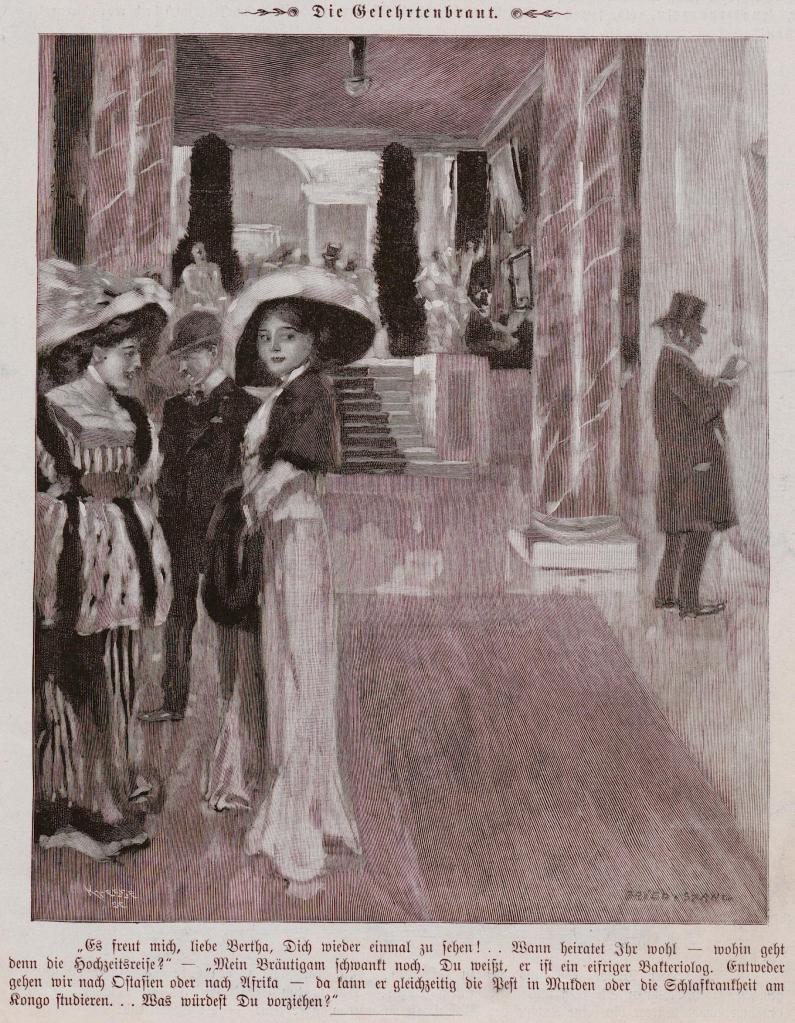
The scholar’s bride

“I am so glad to see you again, dear Bertha!… When will you get married, where are you going for your honeymoon?”
“My bridegroom is still wavering. You know he’s an avid bacteriologist. We are going either to East Asia or to Africa. He can just as well study plague in Mukden or sleeping sickness in the Congo… Which would you prefer?”
(Fliegende Blätter, Munich, 1911) (See also this French version.)

German plague cartoon

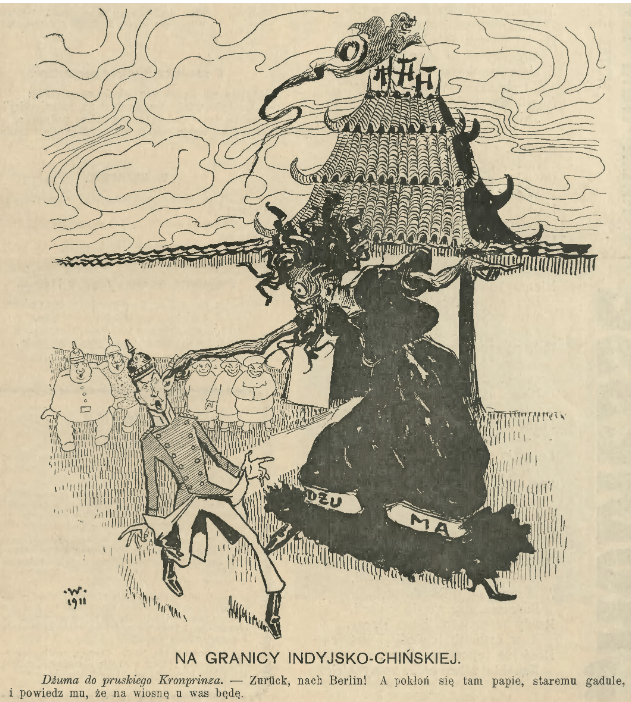
At the Indo-Chinese border

Plague, to the Prussian crown prince: “Back to Berlin! And bow to your papa, the old chatterbox, and tell him that I will be there in the spring.”
(Mucha, Warsaw, 1911)
(Crown prince Wilhelm, though lacking in foreign diplomatic experience, won approval to embark on a lengthy journey to Asia in November 1910, ostensibly to learn more about German interests in the far east. After much wining and dining with British colonial officials in India, Wilhelm cut short his trip late in February 1911. Originally slated to include Siam, Dutch Indonesia, China, and Japan, it was interrupted by news of an outbreak of plague in Calcutta, as well as reports of bouts in China that were already crossing the Russian border.)

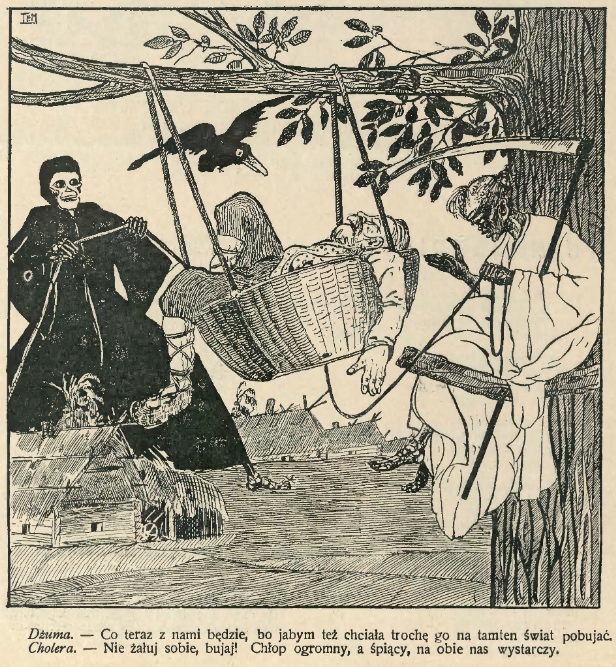
Polish plague cartoon

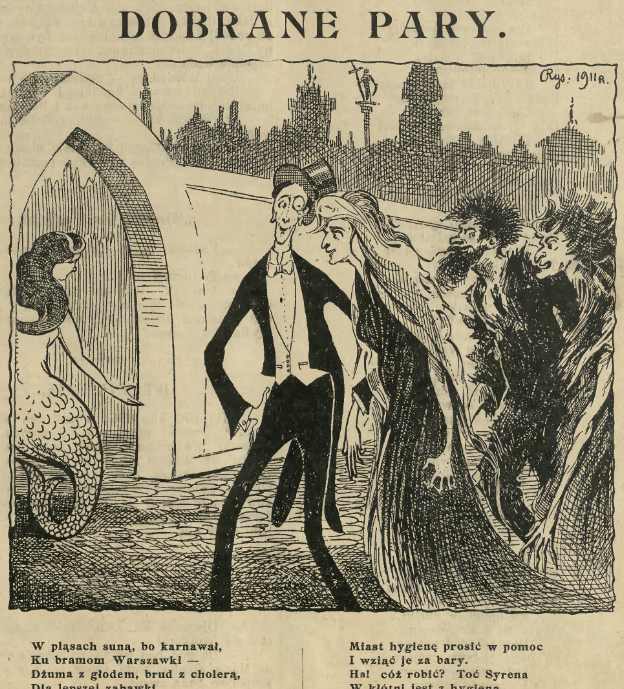
Matched pairs

They glide in festive dance, for it is carnival,
Towards the gates of Warsaw
Plague with hunger, dirt with cholera,
For better entertainment.
And out of hospitality the Siren
Is inviting these couples
To ask cities for help with hygiene
And take them for bars.
Ha! what to do? This Siren
Is in a quarrel with hygiene,
No wonder she wants to show off
Luck as hospitality.
(Kogut, Warsaw, 1911) (translation wants improvement)

Polish cholera cartoon

The seven plagues of Egypt

Two panels of six. The other plagues listed are the asphalt inferno of cars in Rio, water shortages, food prices, and the endless riots of republicans and monarchists.

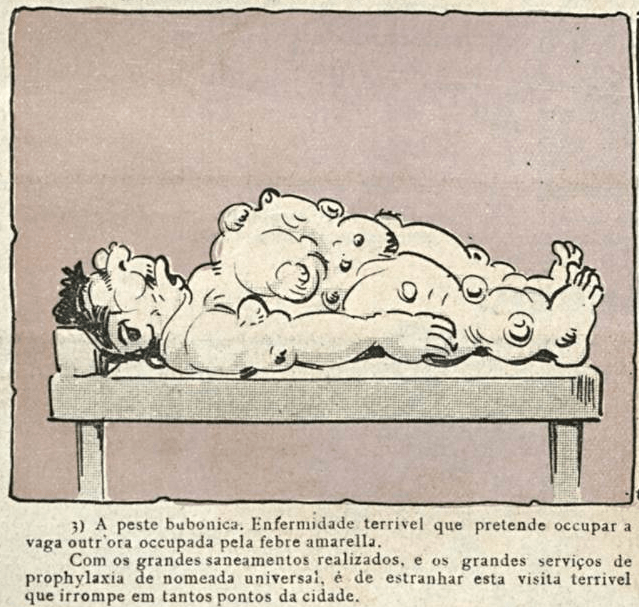
The bubonic plague. Terrible illness that intends to occupy the space formerly occupied by yellow fever.
With the great public health surveys that have been carried out, and the great preventive efforts that have gained universal fame, this terrible visitation that is breaking out in so many points of the city is surprising.

Brazilian plague cartoon

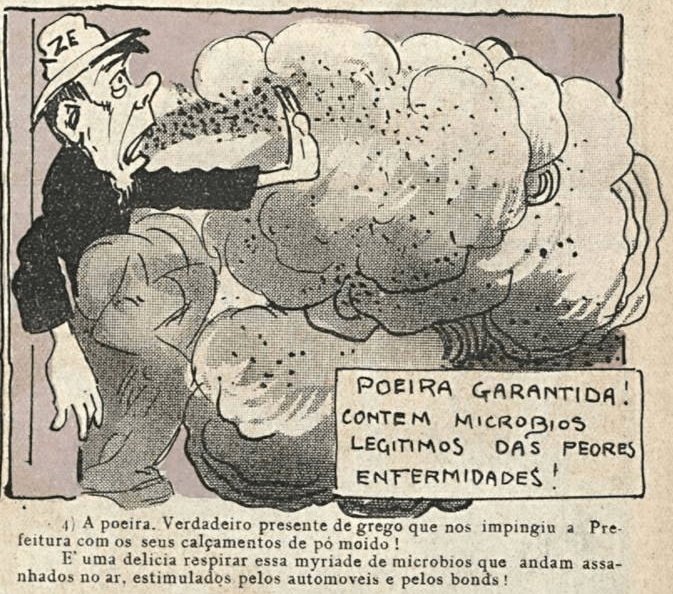
The dust. A true gift from the Greek who forced us into the City Hall with its ground-sand paving!
It is a delight to breathe this myriad of microbes that roam in the air, stimulated by automobiles and trams!

Brazilian hygiene cartoon