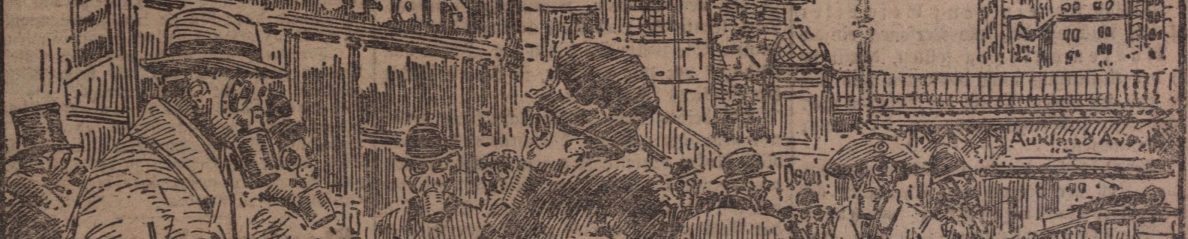
First two panels: (Image of a plate of Carioca dust [flour] with typhus, tuberculosis, yellow fever, smallpox, plague, gastroenteritis, etc. “Carioca” is a way of referring to the inhabitants of Rio de Janeiro.) “We knew the dust of Persia, we knew gold dust, monkey dust and Joanna dust, the river Po [“pó” meaning dust], etc., but… we are completely unaware of this new dust that invades us, suffocates us, and that kills us: the dust from Rio de Janeiro.”
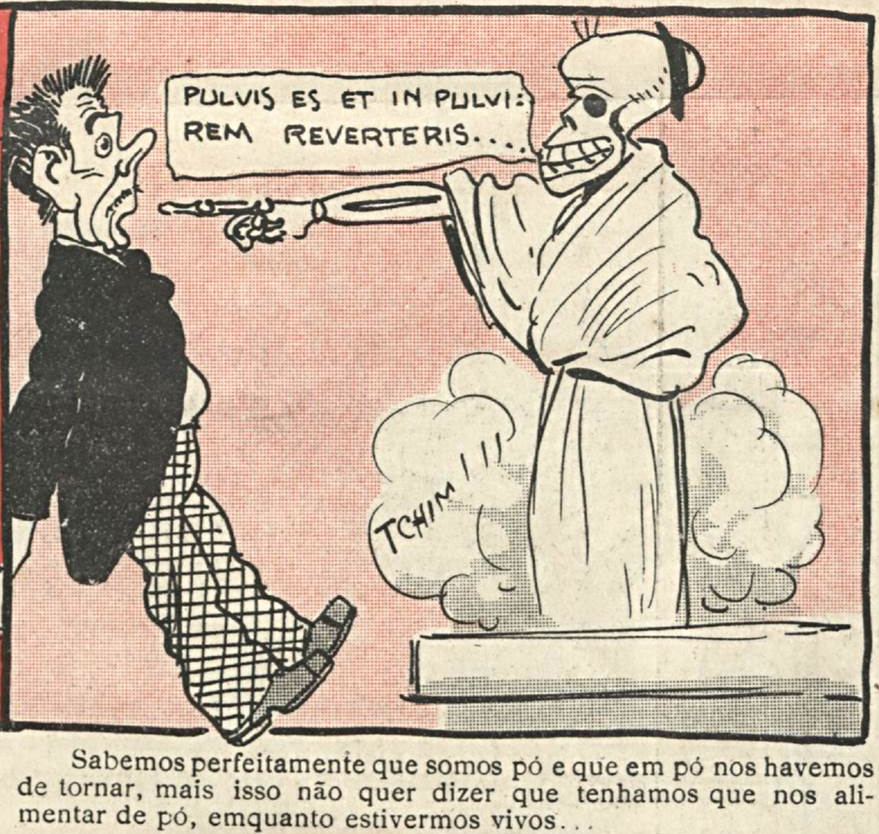
Deathly figure: “Dust thou art, and to dust thou shalt return…” “We know perfectly well that we are dust and that we shall become dust, but that does not mean that we have to feed on dust while we are alive…” (and four more panels of quirky municipal politics…) (O Malho, Rio de Janeiro, 1911)
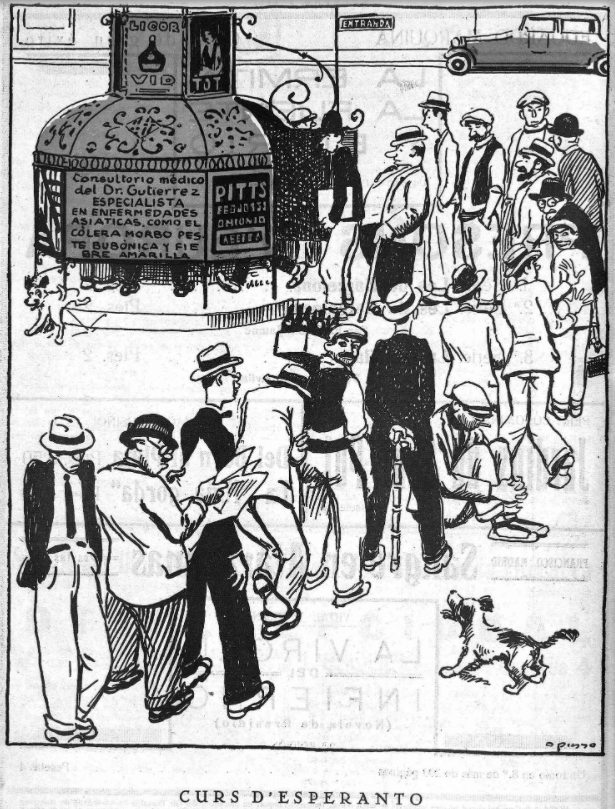
The all-purpose kiosk includes medical consultation with Dr. Gutierrez, specialist in Asiatic diseases like cholera, bubonic plagues, and yellow fever. (La Esquella de torratxa, Barcelona, 1927)
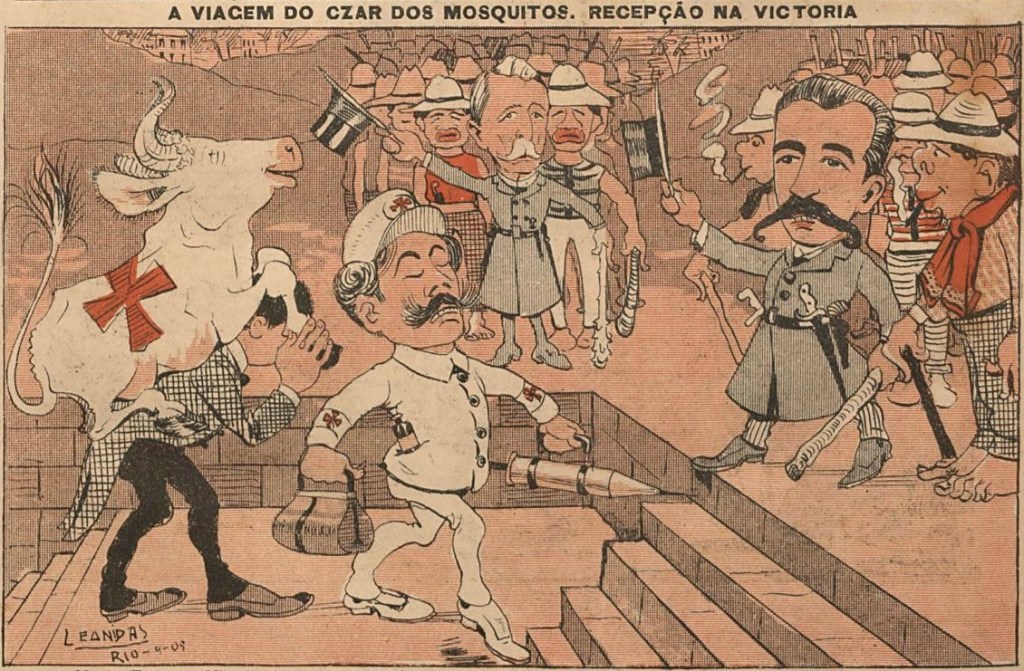
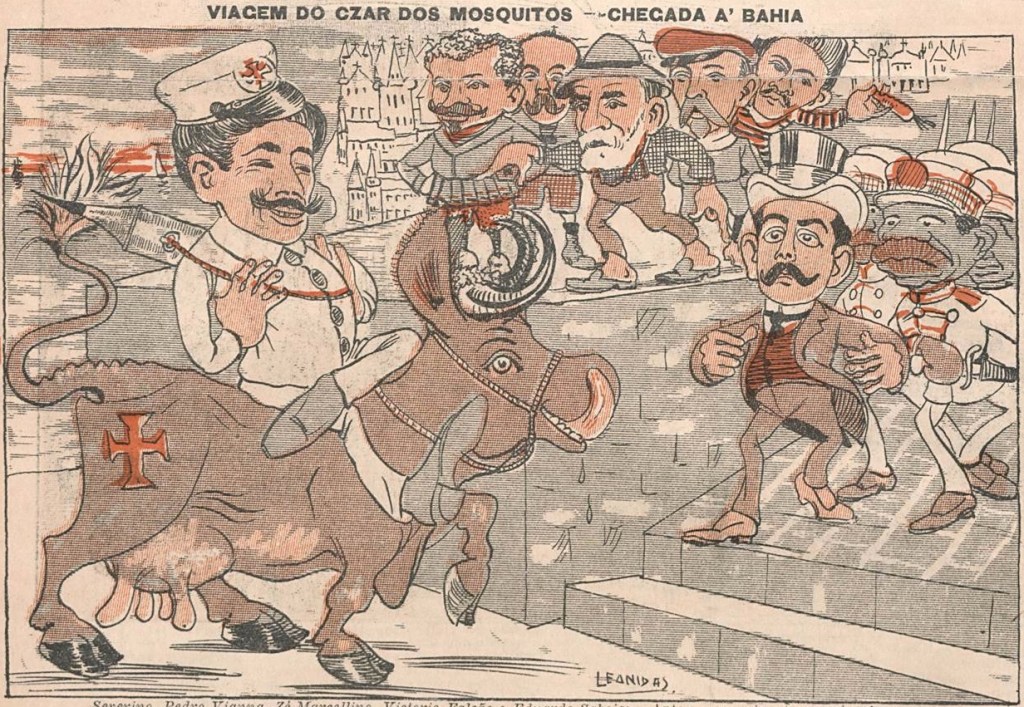
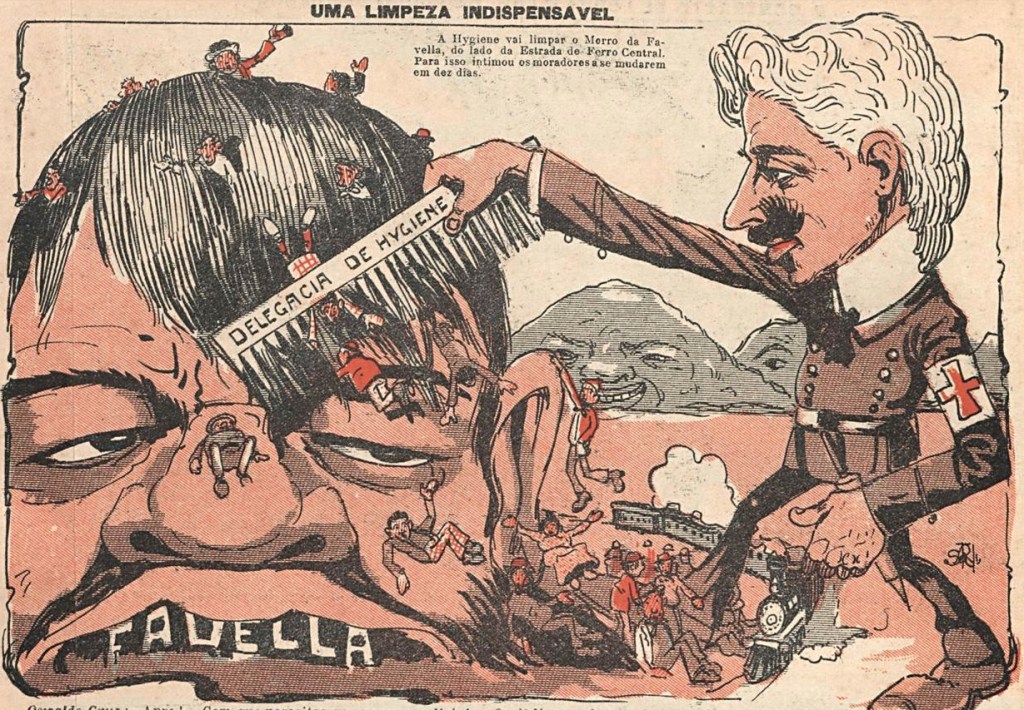
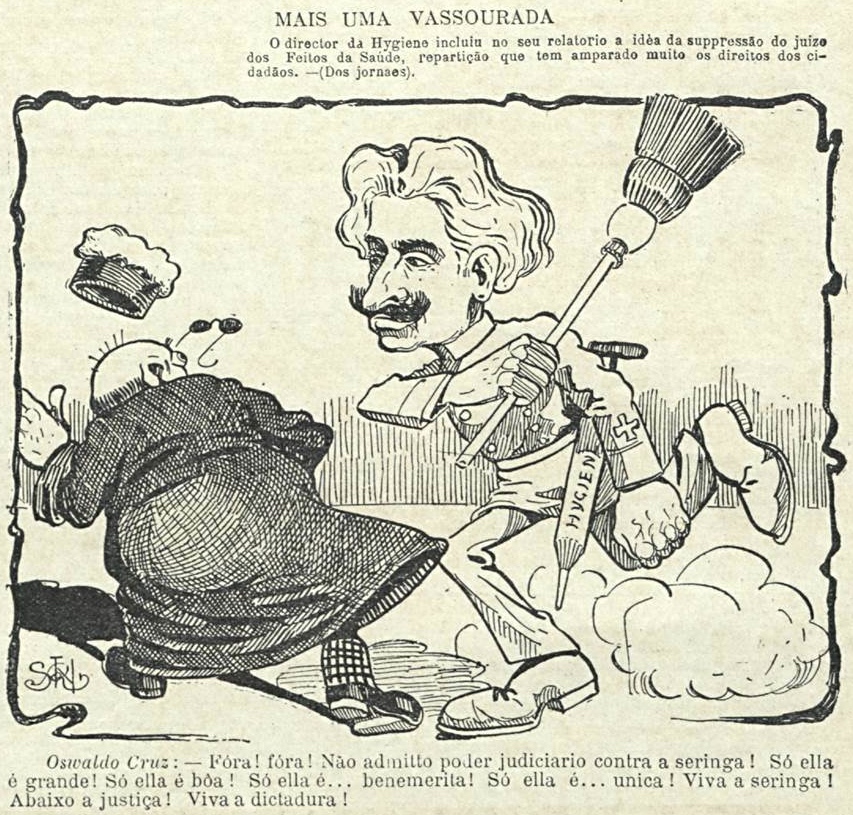
I lack the Portuguese knowledge to translate all these cartoons in full, but in this post I just want to highlight the iconic status of bacteriologist and public health leader Oswaldo Cruz (1872-1917). For an avowedly secular publication like O Malho, Cruz as the standard-bearer of modern medicine clearly exerted tremendous appeal, though of course its satire often drew attention to the many obstacles in the way of achieving his aims. (Each image links to the appropriate issue.)
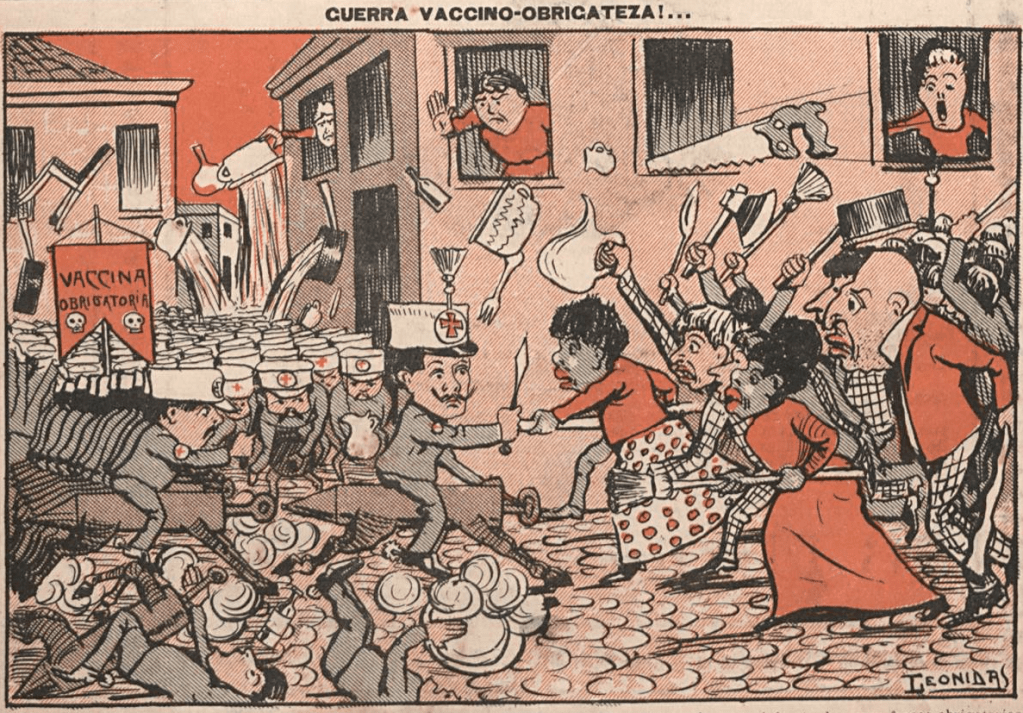
Vaccine-mandate war!… (1904)
Brazilian public health cartoon
The journey of the mosquito czar. Reception in Victoria (1905)
Brazilian public health cartoon
Journey of the mosquito czar — arrival in Bahia (1905)
Brazilian public health cartoon
Essential cleaning (1907)
Brazilian public health cartoon
One more broom… (1907)
Brazilian public health cartoon
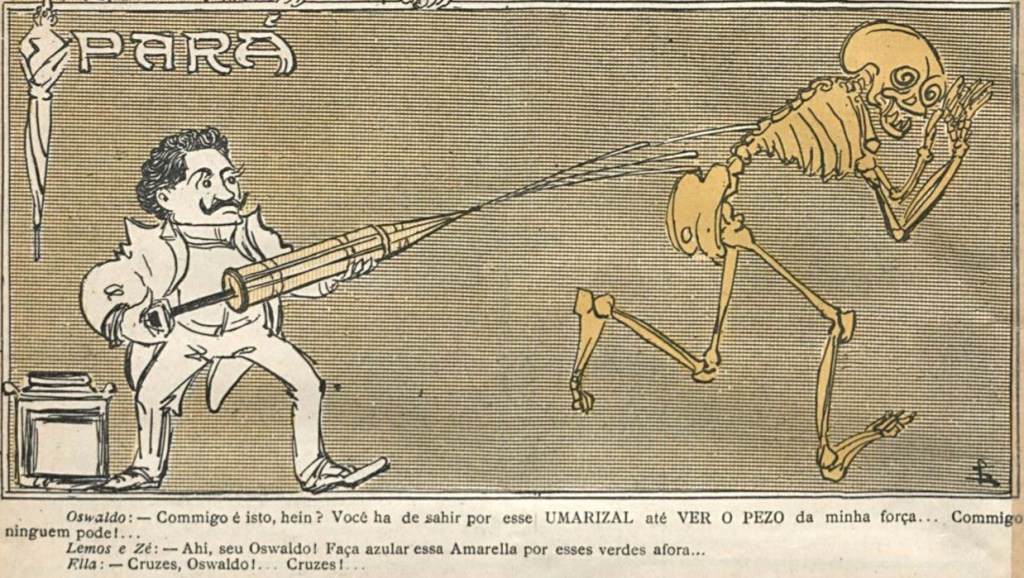
Cruz in provincial Pará (1910)
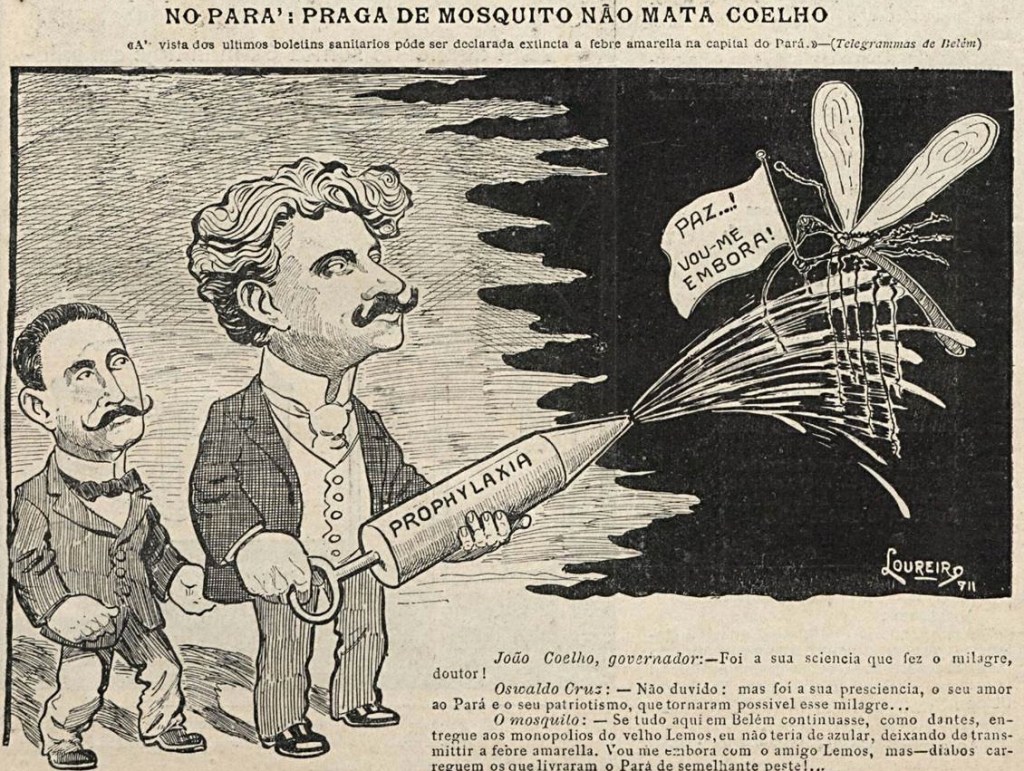
In Pará: Mosquito plague does not kill Governor Coelho (1911)
Brazilian public health cartoon
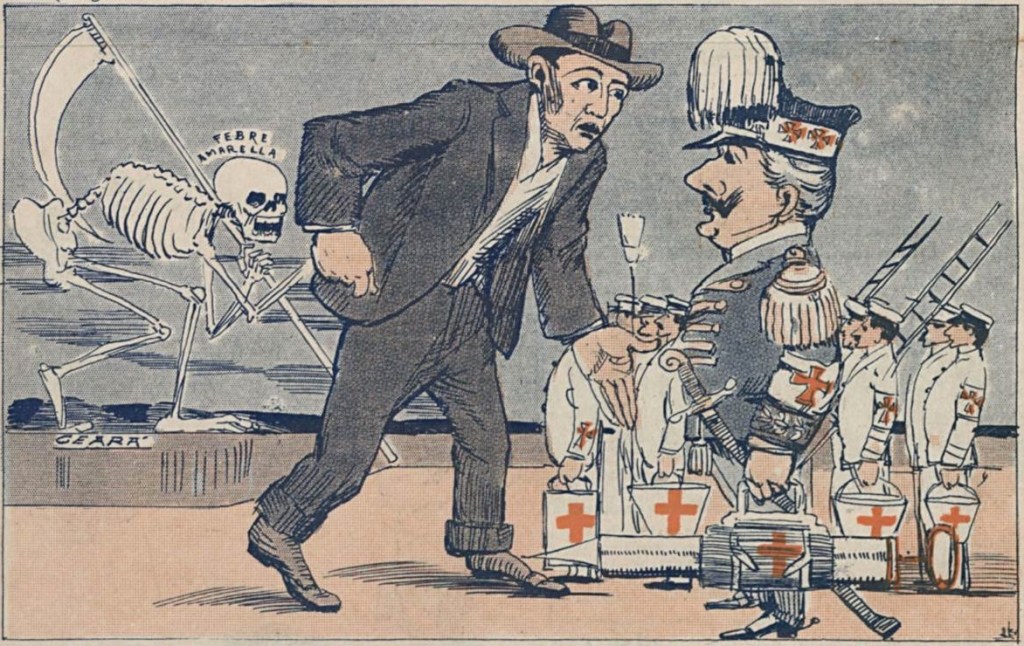
Federal intervention in Ceara (1914)
Brazilian public health cartoon
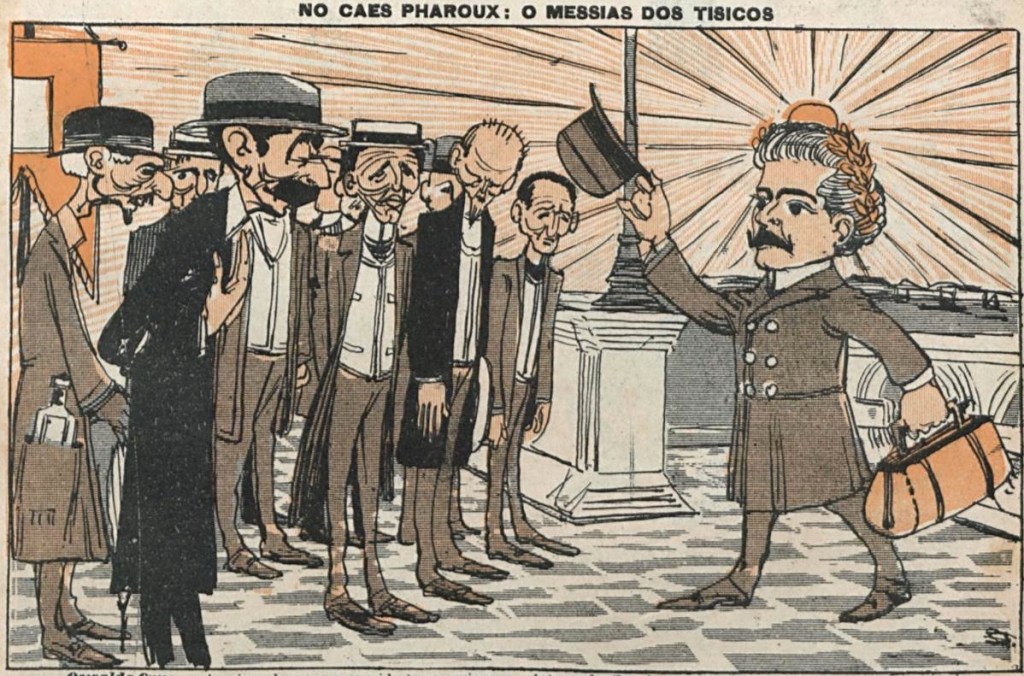
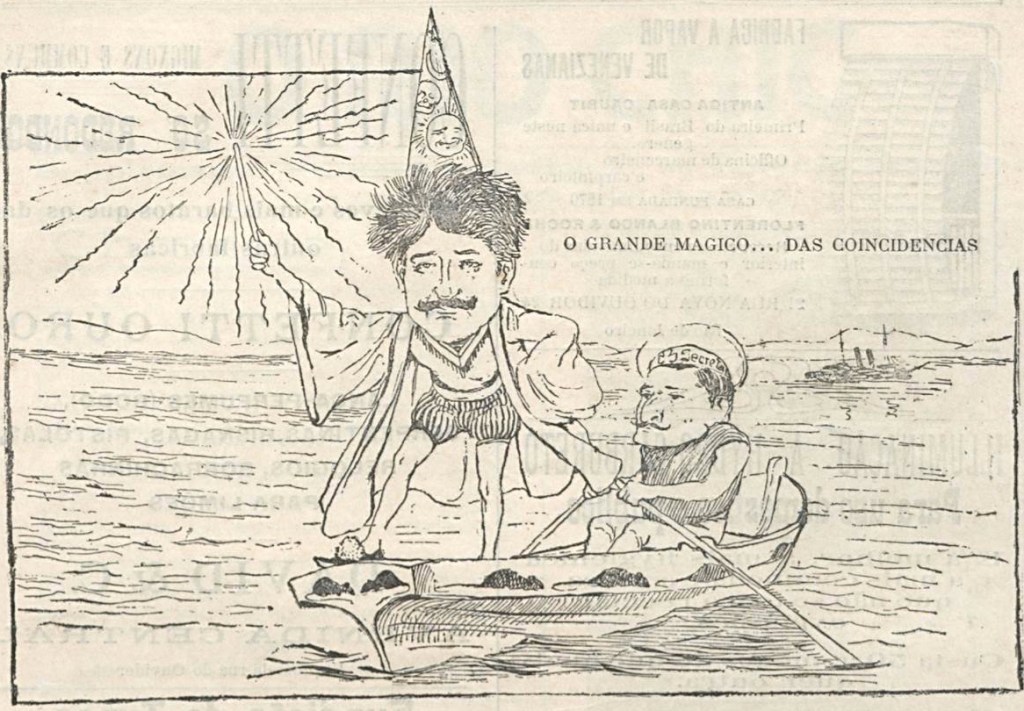
At the Pharoux Quay: The messiah of consumption (1908)
Brazilian public health cartoon
The great magician… of coincidences
Brazilian public health cartoon
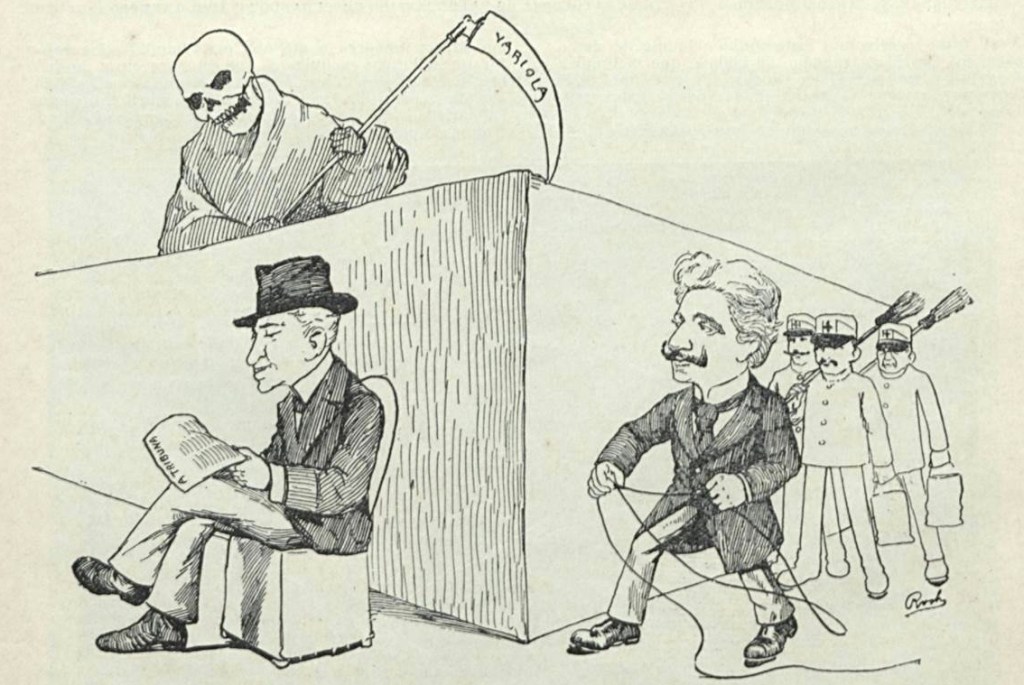
Roping it in time (1908)
Brazilian smallpox cartoon
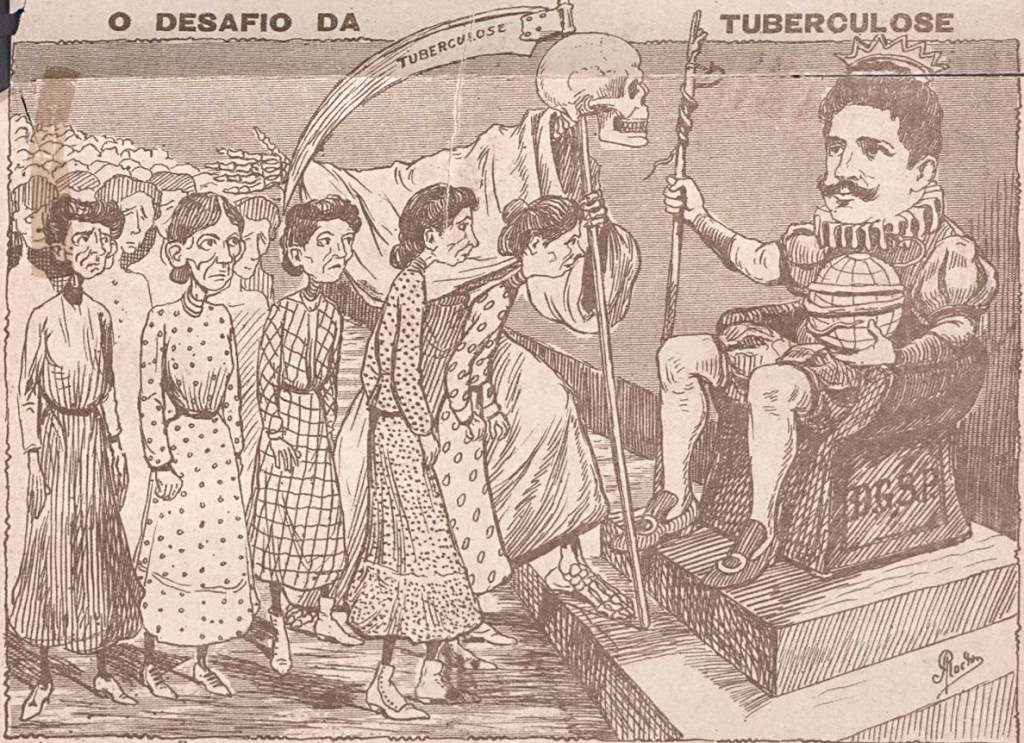
The challenge of tuberculosis (1906)
Brazilian tuberculosis cartoon
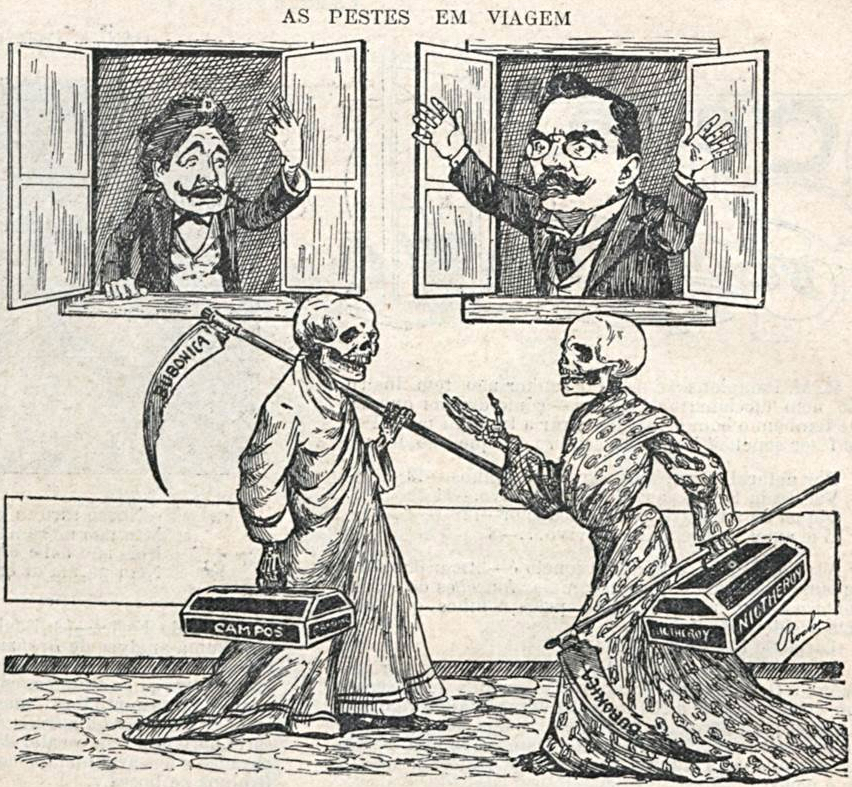
Plagues on the go (1907)
Brazilian plague cartoon
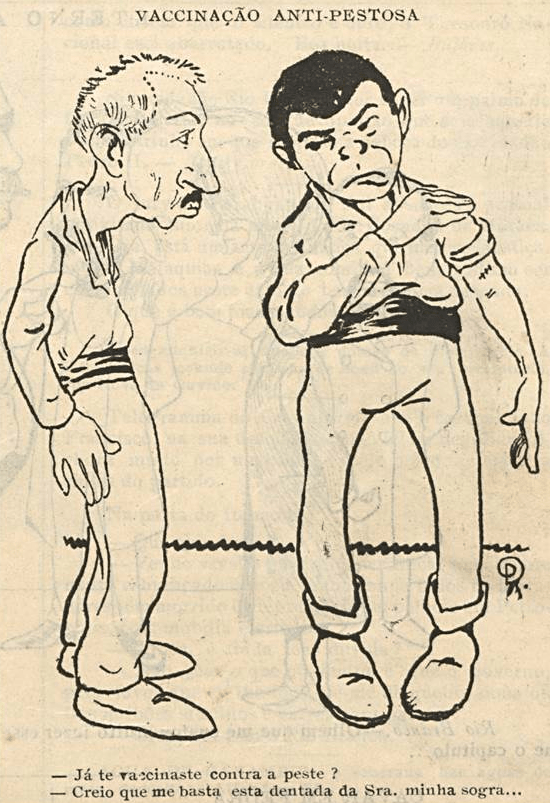
See also this multi-panel cartoon from 1905. And another from 1908. And a marvelous color cartoon from 1907. And this vaccination cartoon from 1904. Ditto.
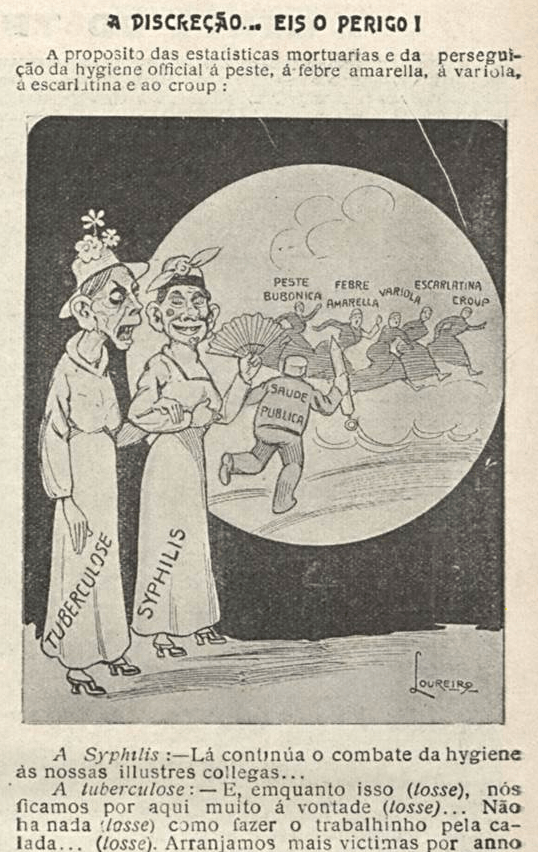
Regarding mortuary statistics and the pursuit of official hygiene toward plague, yellow fever, smallpox, scarlet fever and croup: Syphilis: “The public health fight against our illustrious colleagues continues over there…” Tuberculosis: “And in the meantime (coughing), we are very comfortable here (coughing)… There is nothing (coughing) like doing the job by the sidewalk… (coughing). We arrange more casualties annually (coughing) than all boisterous ailments together (coughing) and we are not uncomfortable…” (O Malho, Rio de Janeiro, 1914)
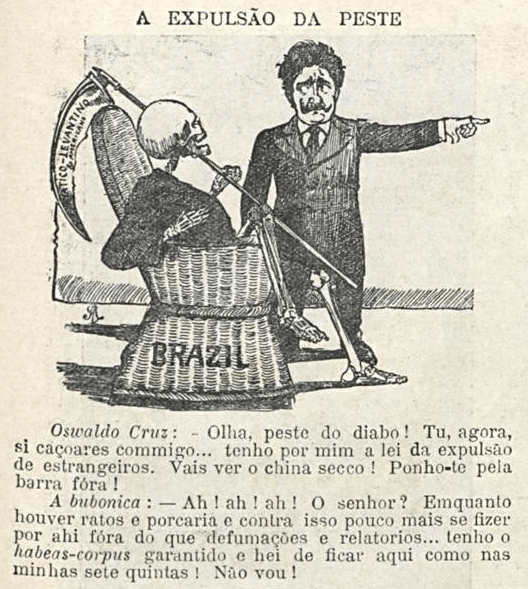
Oswaldo Cruz [Brazilian public health figure]: “Look here, plague of the devil! You are now making fun with me… I have the law for the expulsion of foreigners. It’s empty plates for you! I’ll throw you out of the bar!” The Plague: “Sir? As long as there are mice and crap, and as long as little more is done out there against them than fumigation and reports… I have the habeas corpus guaranteed and I will stay here as well as in my seven country houses! I will not go!” (Note how the scythe is no longer only Asiatic, but now also Levantine and American.) (O Malho, Rio de Janeiro, 1907)
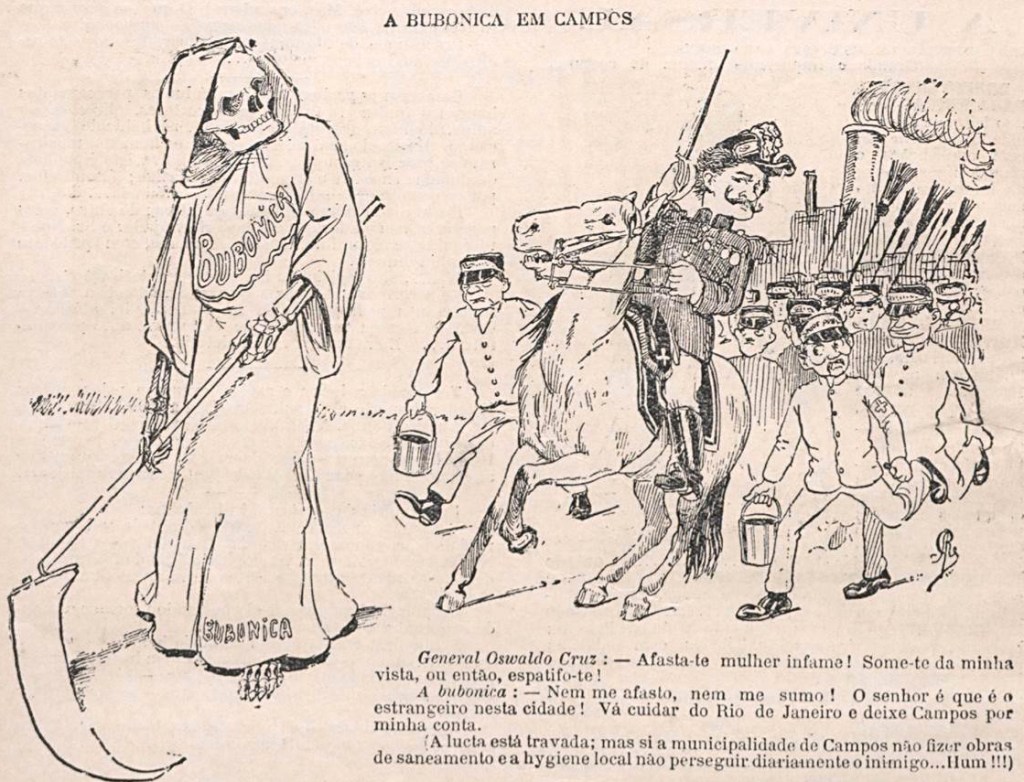
General Oswaldo Cruz [Brazilian public health champion]: “Withdraw, you infamous woman! Get out of my sight, or else I will smash you!” The Plague: “I will neither withdraw nor vanish! You are the foreigner in this city! Go take care of Rio de Janeiro and leave Campos to me.” (The fight is blocked; but if the municipality of Campos does not carry out sanitation projects and the local public health authorities do not pursue the enemy daily… Hmm!!!) (O Malho, Rio de Janeiro, 1906)
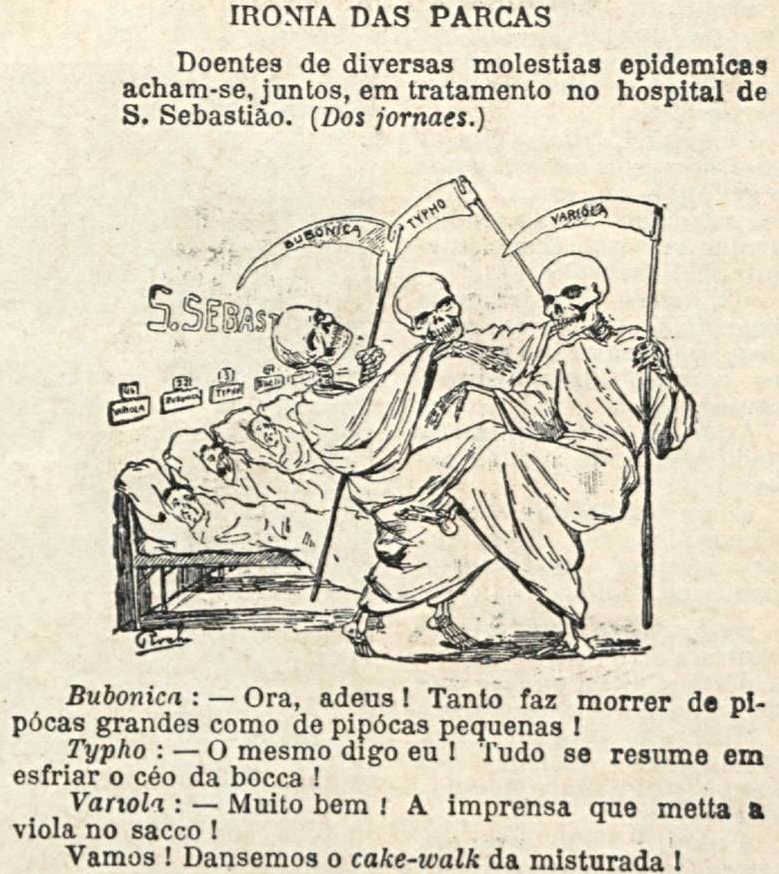
(Patients with different epidemic diseases are being treated together at the St. Sebastian hospital.) Plague: “Well, goodbye! It doesn’t matter if you die from large pox or small ones! Typhus: “The same, I say! It all comes down to cooling the roof of the mouth!” Smallpox: “Very well! It’s the press that got their berries back in the basket!” (Better idiom needed!) “Let’s go! Let’s dance the cake-walk of mixing!” (O Malho, Rio de Janeiro, 1908)
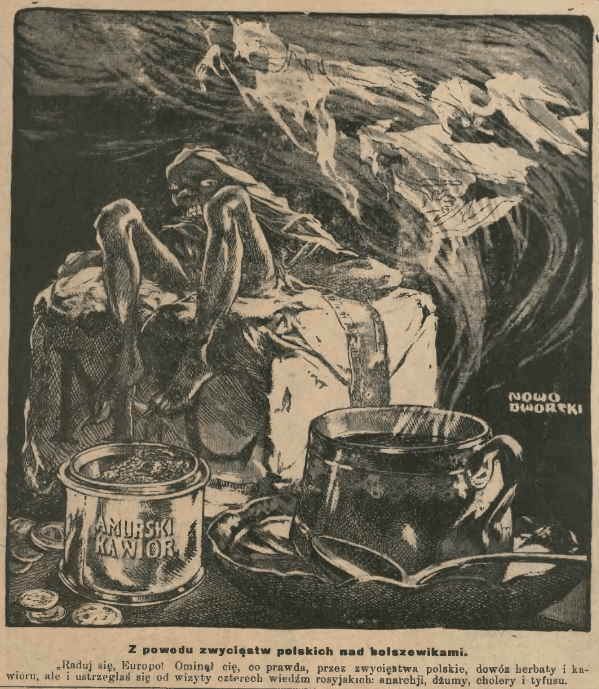
More propaganda than cartoon, this image was published during the Polish-Soviet war of 1920: “Rejoice, Europe! It’s true that because of the Polish victories you have missed the deliveries of tea and caviar, but you have also avoided the visitation of the four Russian witches: anarchy, plague, cholera, and typhus.” (Mucha, Warsaw, 1920)
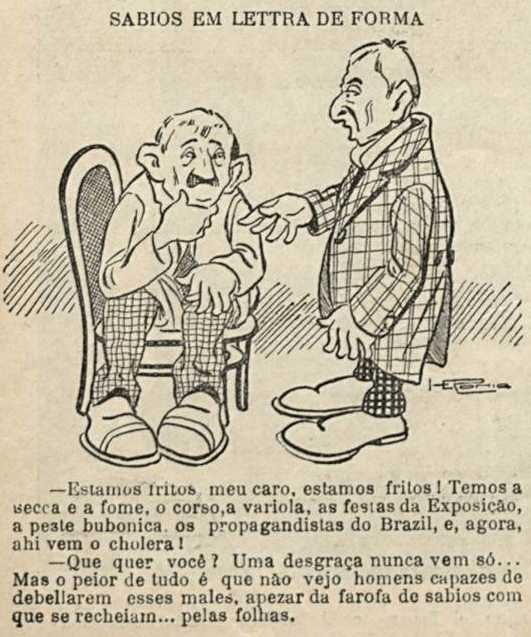
A cartoon set in the year of the Brazilian National Exposition in 1908: “We’re toast, my dear, we are toast! We have drought and famine, parade floats, smallpox, Exposition parties, bubonic plague, propagandists of Brazil, and now here comes cholera!” “What do you want? Disasters always come in multiples… But the worst of it all is that I don’t see men capable of curbing these ills, despite the [manioc] flour of erudition with which they are stuffed… because of the leaves.” (Meaning that appearance prevailed over substance?) (O Malho, Rio de Janeiro, 1908)
From an advertisement for a potion produced by Guyot: “Everyone knows that bad microbes are the cause of almost all of our major diseases: tuberculosis, influenza, diphtheria, typhoid fever, meningitis, cholera, plague, tetanus, etc.” (Am I the only one who sees some Miró here?) (O Malho, Rio de Janeiro, 1919)
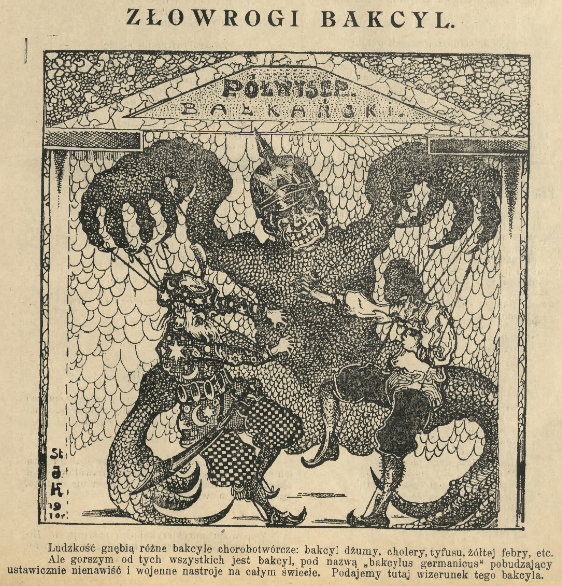
Balkan peninsula. “Humanity is oppressed by various infectious bacteria: plague, cholera, typhus, yellow fever, etc. But worse than all these is the bacillus called bacillus germanicus, which constantly provokes hatred and militant sentiments around the world. Here we provide an image of this bacillus.” (Kogut, Warsaw, 1910)
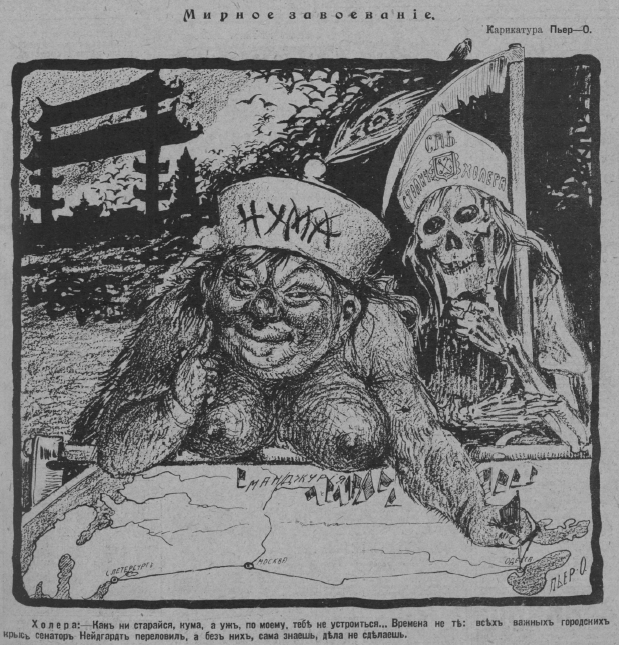
St. Petersburg cholera (to Mother Plague reaching over site markers in Manchuria and points east in the Empire toward Odessa on the Black Sea): “However hard you try, Mother, I think you can no longer get settled there… The times have changed: Senator Neidgardt [Dmitrii Borisovich, who had once served as mayor of Odessa] caught all the important municipal rats, and without them, as you know, you won’t get anywhere in these matters.” (Ogonek, Russia, 1911)



 Sic Transit Pestilentia