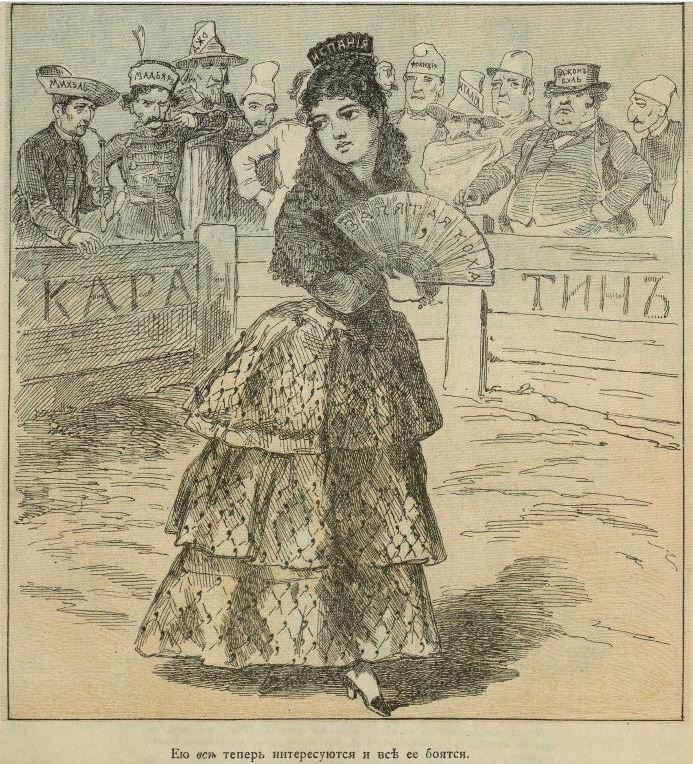
(Young woman outfitted as Spain, carrying fan labeled “Koch’s comma,” a reference to the cholera vibrio. She stands in an enclosure marked “quarantine,” with onlookers Hungary, Italy, John Bull, et al.) Everyone is interested in her now, and everyone is afraid of her. (Razvlechenie, Moscow, 1885)
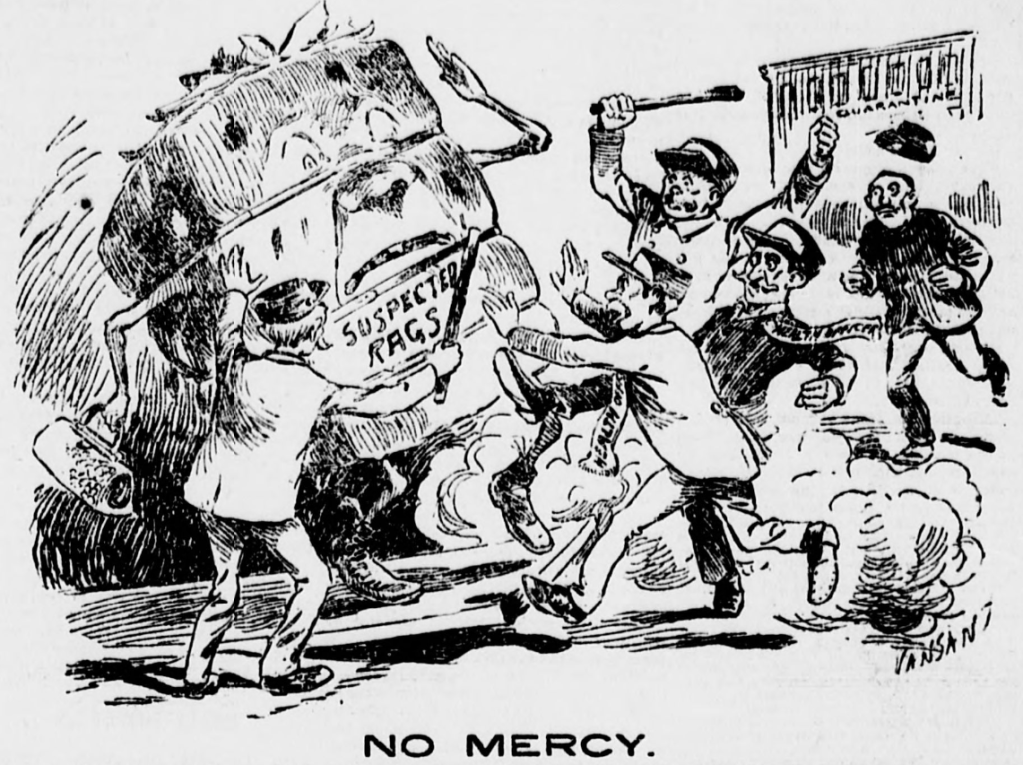
Public health officers are depicted beating away at rags suspected of bearing contagion. This issue contained extensive coverage of the advance of cholera in Europe and the preparations of New York public health authorities for its possible arrival on American shores. (The Evening World, New York, 1892)
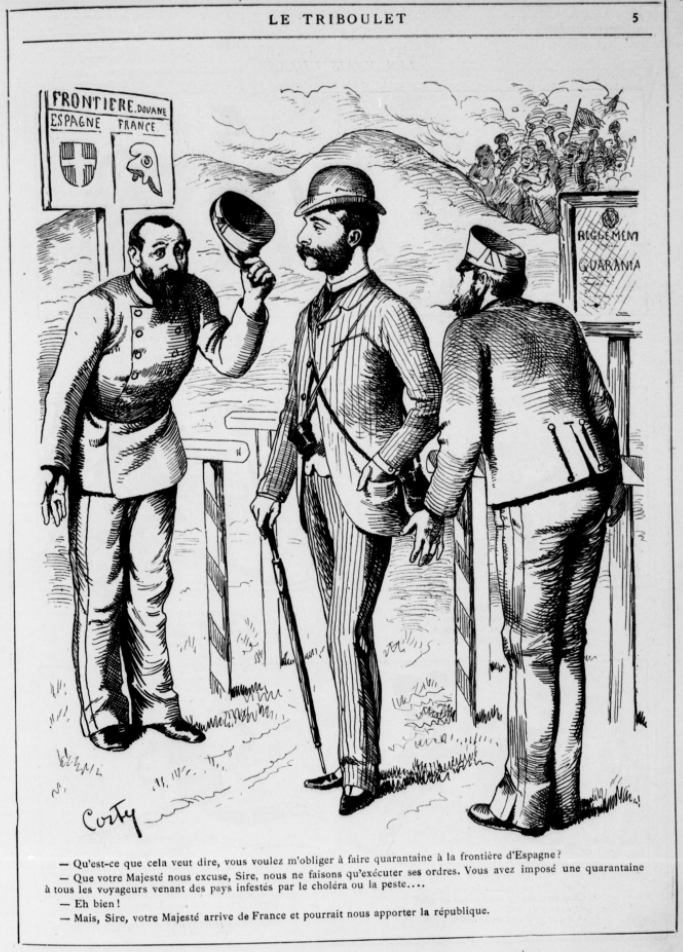
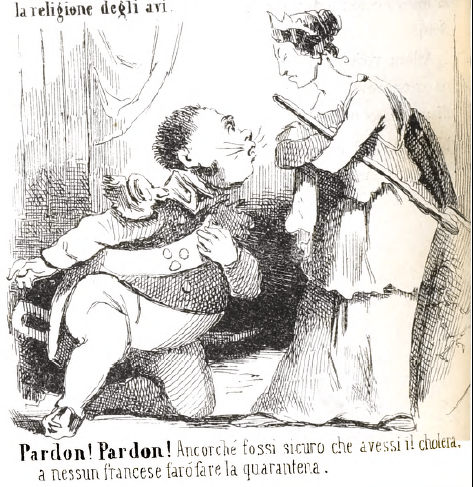
“What do you mean, you want to force me to quarantine at the Spanish border?” “Your majesty will pardon us, Sire, we are only carrying out your orders. You have imposed a quarantine on all travelers coming from countries infested by cholera or plague…” “Well!” “But, Sire, your Majesty is coming from France and could bring us the republic.” (Le Triboulet, Paris, 1883)
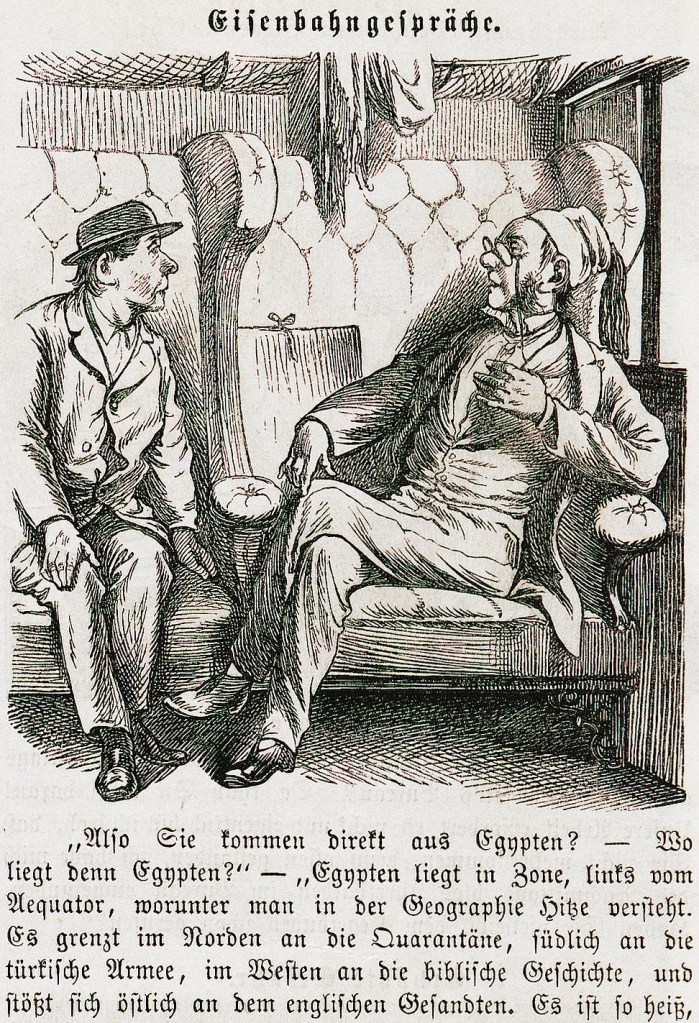
“So you’re coming directly from Egypt? Where is Egypt again?” “Egypt lies in the zone left of the equator which is called heat in geography. It borders in the north on the quarantine, in the south on the Turkish army, in the west on biblical history, and runs into the English ambassador in the east.” (Remaining text continues in this vain, mocking the traveller’s false erudition.) (Fliegende Blätter, Munich, 1869)
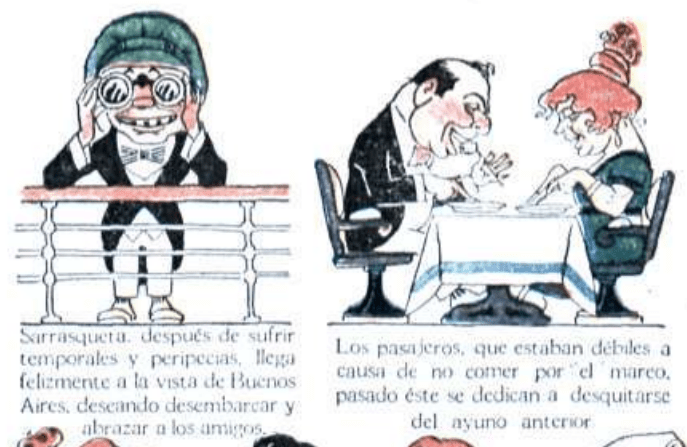
Sarrasqueta, after suffering storms and tribulations, arrives happily at the sight of Buenos Aires, eager to disembark and embrace his friends.
The passengers, who were weak from not eating on schedule, now dedicate themselves to making up for the previous fasting.
Argentine quarantine cartoon
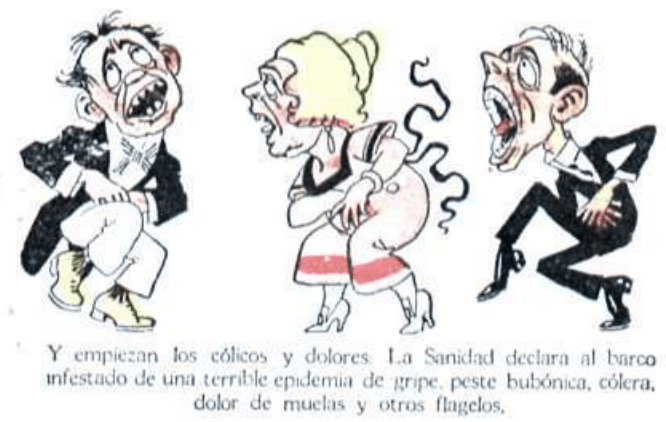
And the cramps and pains begin. The Health Department declares the ship infected with a terrible epidemic of influenza, bubonic plague, cholera, toothache, and other scourges..
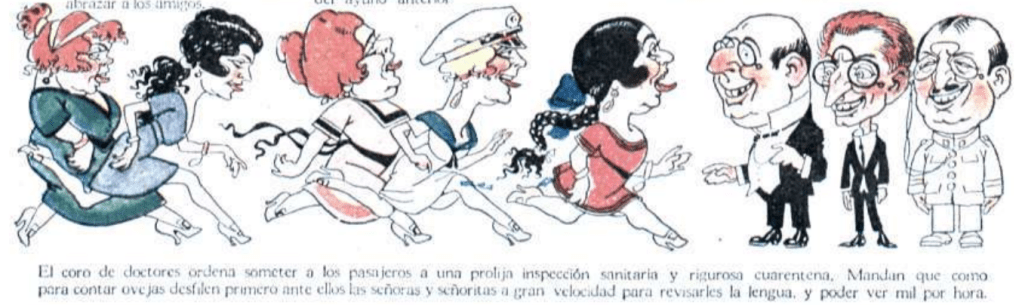
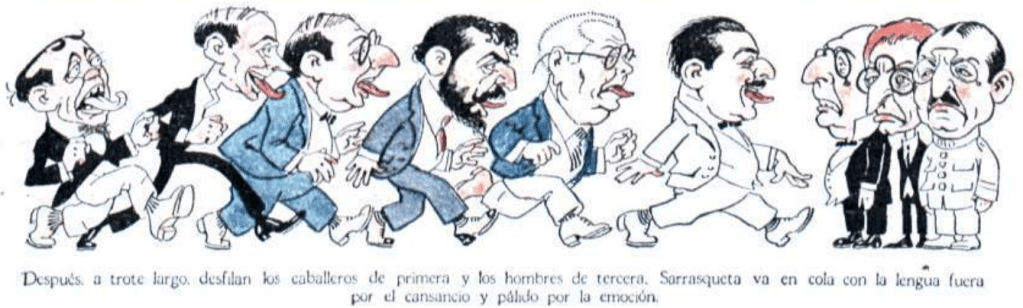
The choir of doctors orders the passengers to undergo a thorough health inspection and rigorous quarantine. As if counting sheep, they first order the ladies to parade before them at great speed to check their tongues, and to be able to see a thousand an hour.
Then, at a slow trot, the first-class gentlemen and third-class men parade by the doctors. Sarrasqueta is in line with his tongue sticking out from exhaustion and pale with emotion.
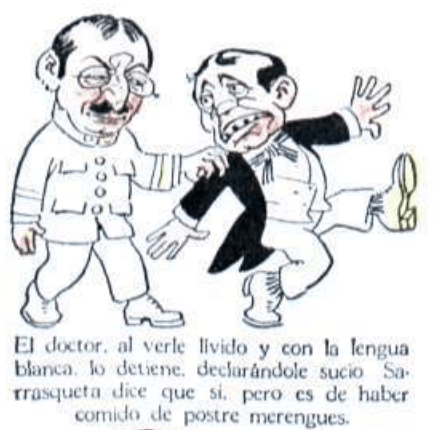
The doctor, seeing him pale and with a white tongue, stops him, declaring him unclean. Sarrasqueta accedes, but claims it is from having eaten meringues for dessert.
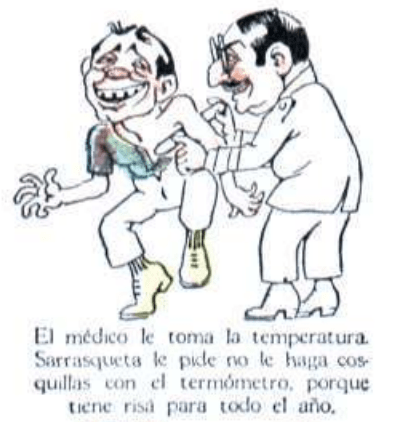
The doctor takes his temperature. Sarrasqueta asks him not to tickle him with the thermometer, because he’ll be laughing for the whole year.
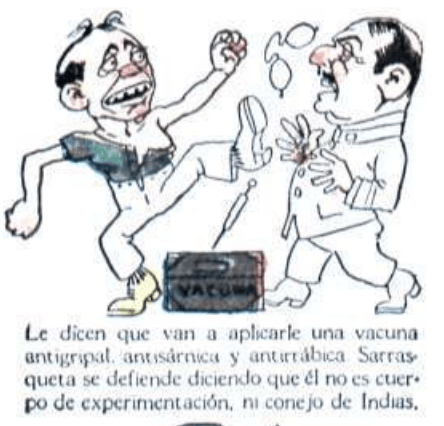
They tell him that they are going to give him a vaccine against flu, scabies, and rabies. Sarrasqueta defends himself by saying that he is neither a test body, nor a guinea pig.
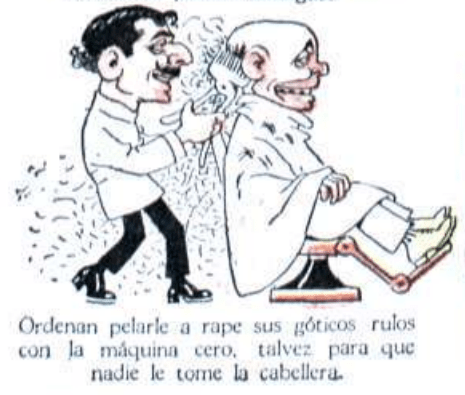
They order his gothic curls to be shaved off with the clipper, perhaps so that no one takes his hair.
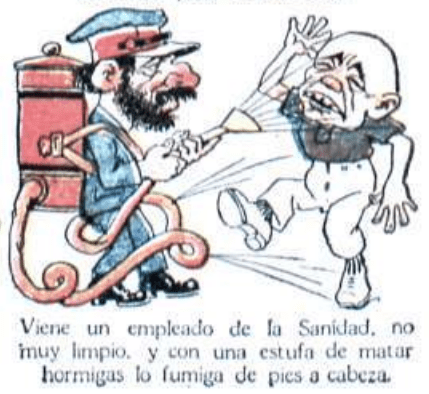
A public health employee arrives, not very clean, and with a fogger for killing ants he fumigates Sarrasqueta from head to toe.
They put the luggage in the disinfection oven, and they return it to him burnt to a crisp. And then they condemn him to undergo days of quarantine until they see the result of the vaccine.
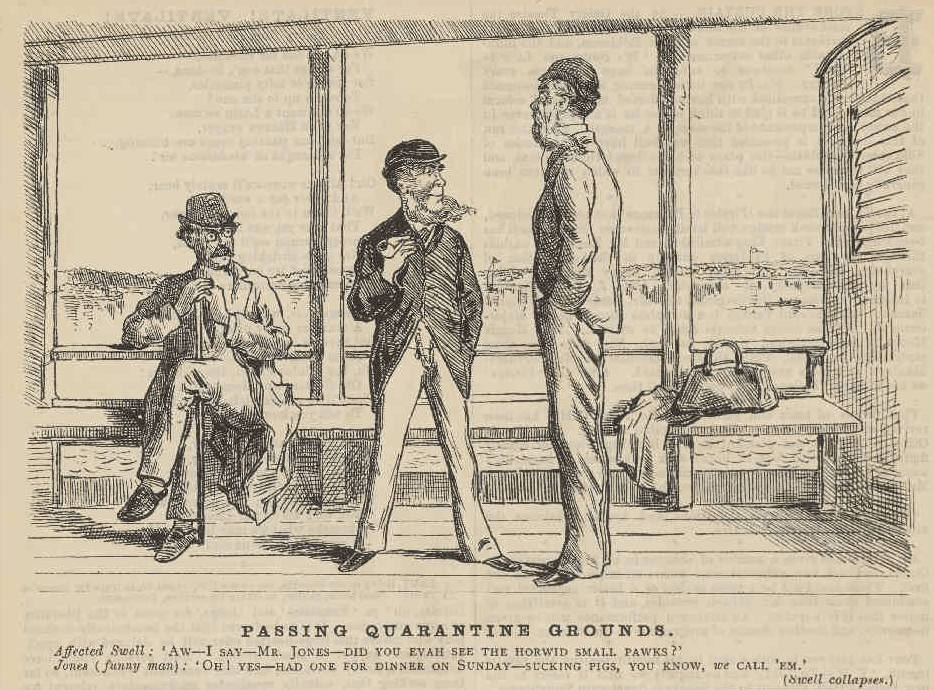
Affected Swell: “Aw–I say–Mr. Jones–did you evah see the horwid small pawks?” Jones (funny man): “Oh! Yes–had one for dinner on Sunday–sucking pigs, you know, we call’ em.” (Swell collapses) (Sydney Punch, 1881)
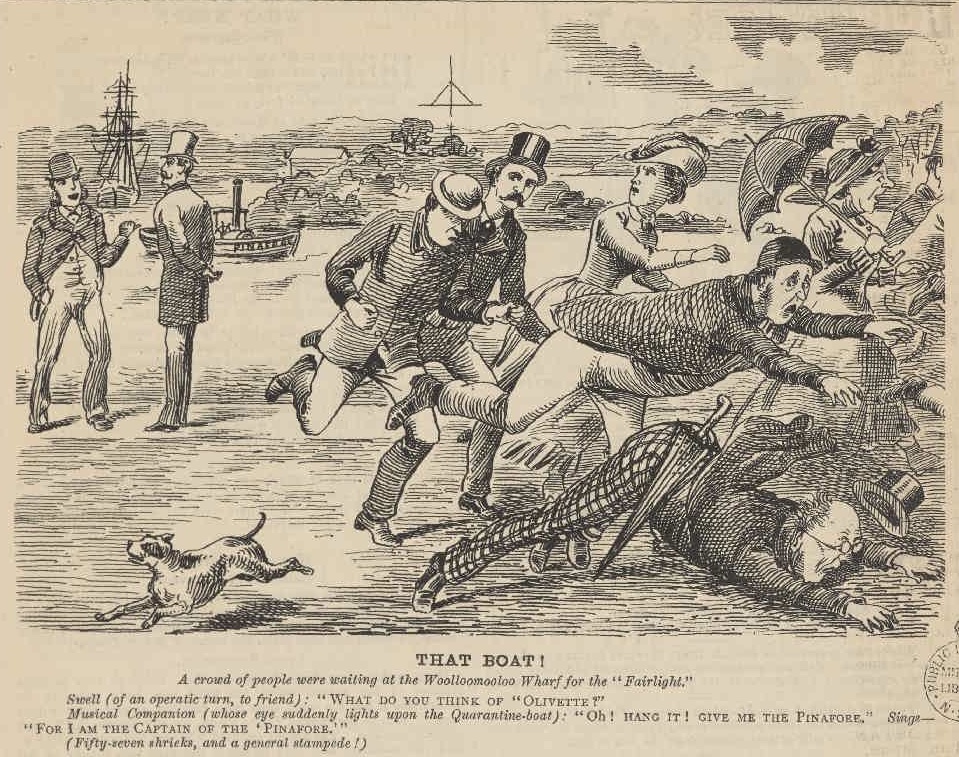
In 1881 Sydney, Australia, suffered a smallpox epidemic whose earliest infections likely stemmed from China, with the authorities once again resorting to strict quarantine. In this cartoon the nervousness about harbor connections to ships quarantined offshore invited a play on a Gilbert & Sullivan ditty. (Sydney Punch, 1881)
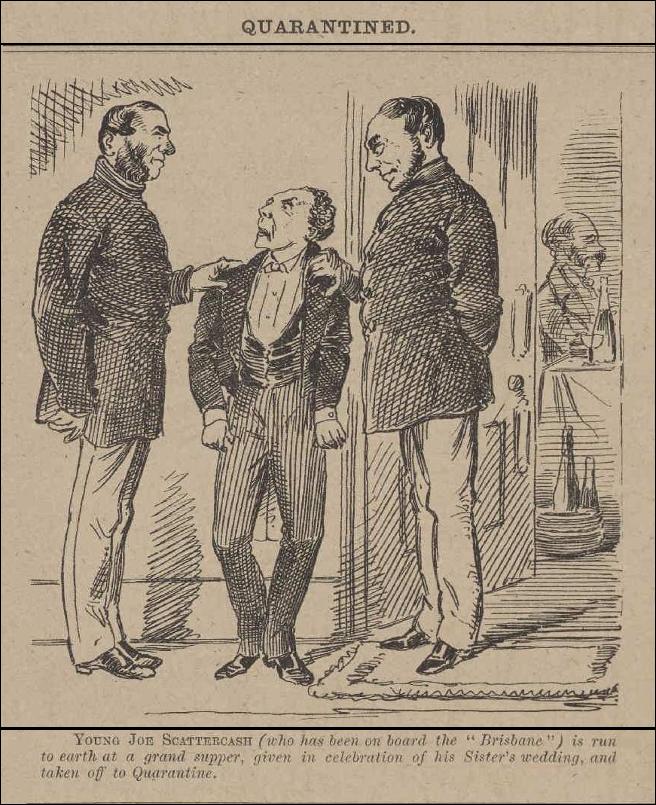
Young John Scattercash (who has been on board the “Brisbane”) is run to earth at a grand supper, given in celebration of his sister’s wedding, and taken off to quarantine. (Sydney Punch, 1877) (When Sir Arthur Kennedy, newly appointed as governor of Queensland, arrived on the steamer Brisbane from Hong Kong in March 1877, a “Chinaman” on board was found to be infected with smallpox. The ship and its hundreds of Chinese passengers were held in quarantine in Moreton Bay, but the political authorities dithered about whether Kennedy and his entourage should be exempted. A special medical commission was created to adjudicate, but this was widely dismissed as merely buying time to downplay a potentially unpopular decision that would be, at root, political. “The people of Australia are looked upon in England as being a trifle too democratic, as inclined to pay too little respect to high rank or exalted dignity,” proclaimed The Brisbane Courier. “It is reserved for the Imperial authorities to lower the state which has always been accorded to the Governor of Queensland, by sending us one, traveling to assume his Government, as a passenger on a merchant steamer crowded with hundreds of Chinese coolies… We have, however, a decided right to object to any relaxation of the precautions usually deemed necessary to prevent the landing of smallpox on our shores.” According to Krista Maglen, Australia favored quarantine as a tool of disease prevention well after Britain had abandoned this tactic, and not only for reasons of geographical isolation. This image makes clear the strong resonances with questions of class which quarantine also excited.)
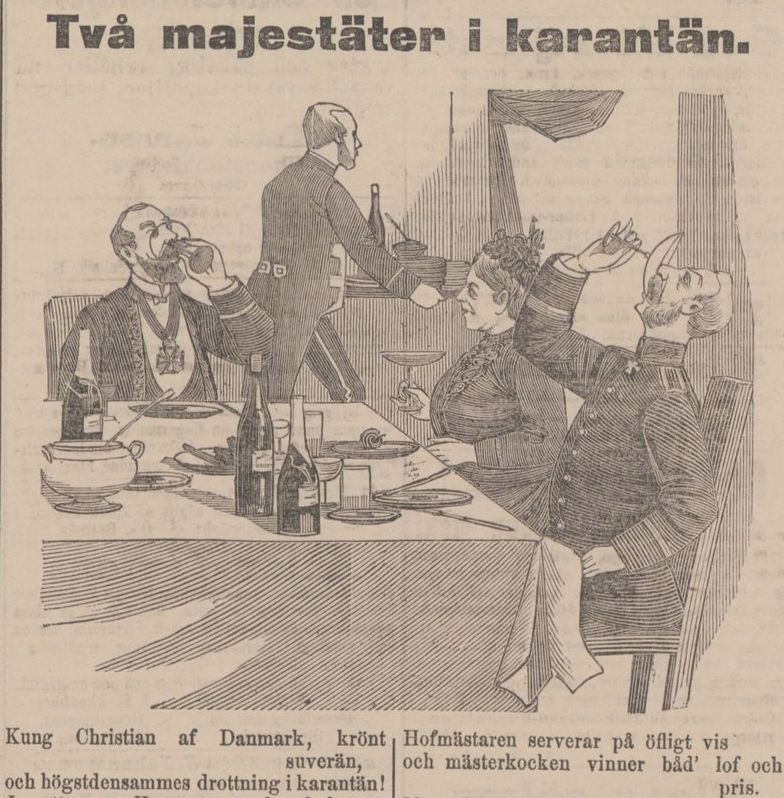
King Christian of Denmark, crowned sovereign, and equally exalted queen in quarantine! Yea, that the “Lord’s anointed” be placed there, is not a breach of majesty the same? It is believed that the purple itself, which the couple wears, is now loaded with cholera bacteria, and shall it be sulphurized, smoked, shall the king and his consort be soaked with carbolic acid?! Oh, their majesties feel pretty good, though it’s not as fun as in a castle. Delicious dishes and sparkling wine are common here, but not a single sign of cholera. The court master serves in the usual way and the master chef wins both praise and award. But of Mr. Koch’s bacteria, at the king’s throne, not even a portion is served here. There sits the adjutant with champagne glasses, which must always be in good company. And now you sound most gracious. Good year, yes, cheers! You eat and you drink everything you can tolerate. You can probably be quarantined, then so you can enjoy there, oh sovereign! With glass in hand, a roast fowl on fork, it is, on the whole, like a game.
(Fäderneslandet, Stockholm, 1892) (with apologies for the sloppy translation)
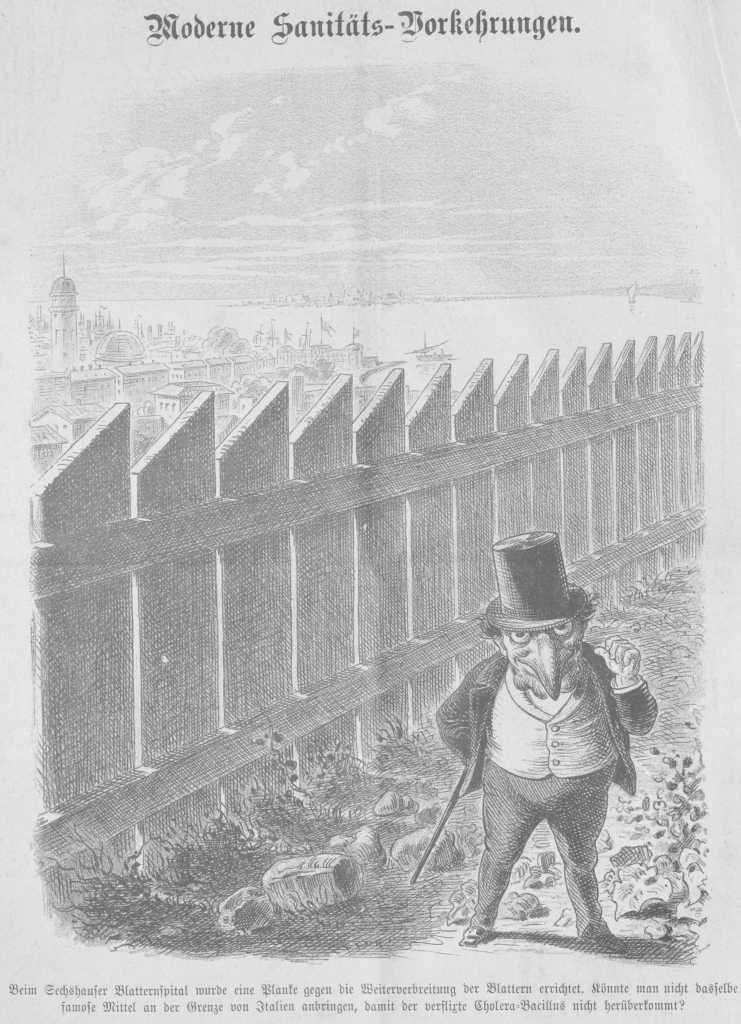
At the Sechshaufer Smallpox Hospital a barrier was erected against the spread of smallpox. Couldn’t one install the same splendid means along the border with Italy, so that the confounded cholera bacillus does not come over here? (Kikeriki, Vienna, 1886) (And in a similar vein.)
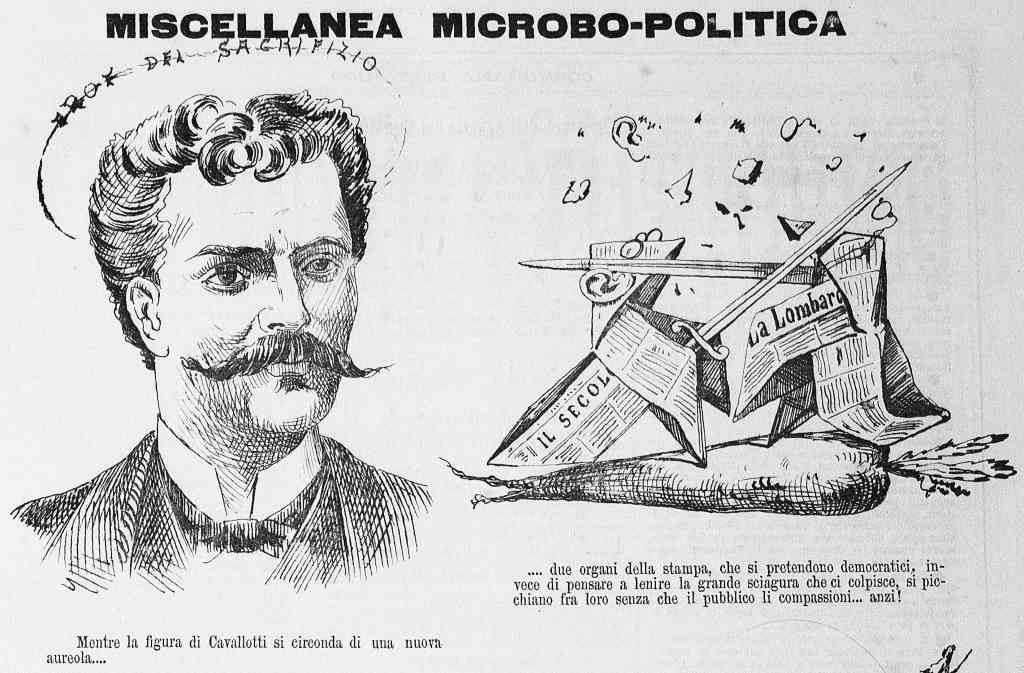
While the figure of Cavallotti surrounds himself with a new halo…. [Here labeled “Professor of Sacrifice,” leftist Italian politician Felice Cavallotti was notoriously combative and, as it happens, known for his gift for satire. It seems he led the fight against the cholera epidemic then underway in the city.]
… two organs of the press that claim to be democratic, instead of thinking of alleviating the great disaster that strikes us, beat each other without the public sympathizing with them… on the contrary!
Italian quarantine cartoon
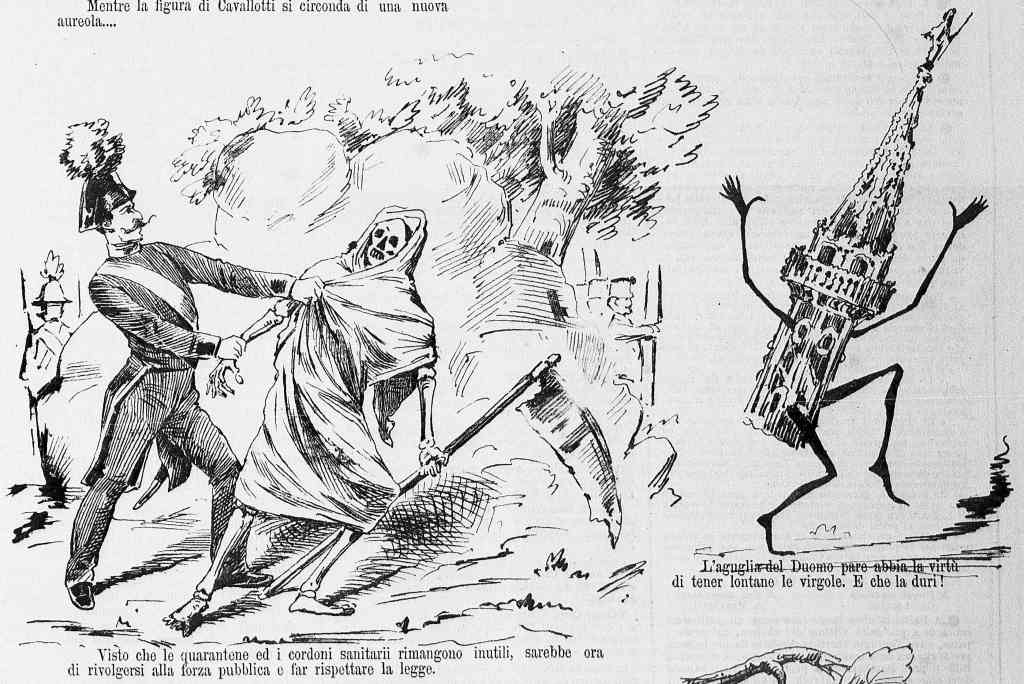
Since quarantine and sanitary cordons remain useless, it is time to turn to the public authorities and enforce the law.
The needlefish of the Duomo seems to have the virtue of keeping commas away. And make it last! [“Comma” meaning the comma-bacillus associated with cholera.]
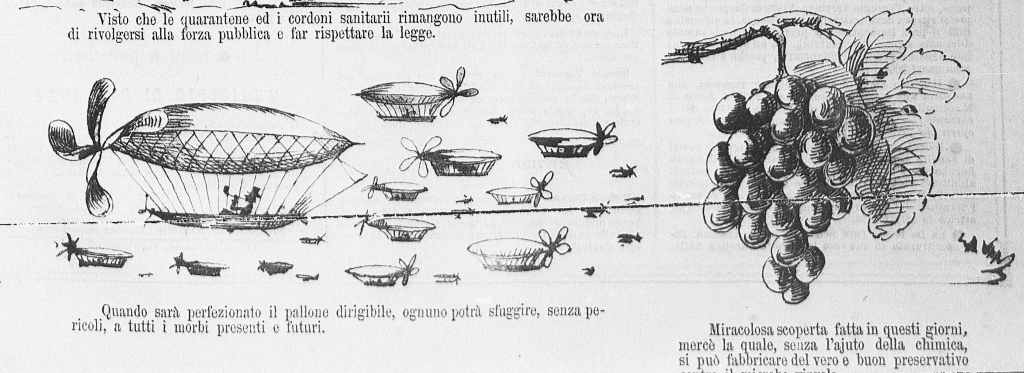
When the flying dirigible is perfected, everyone can safely escape all present and future diseases.
Miraculous discovery made in these days, by which, without the help of chemistry, you can make real and good protections… [last line obscured]
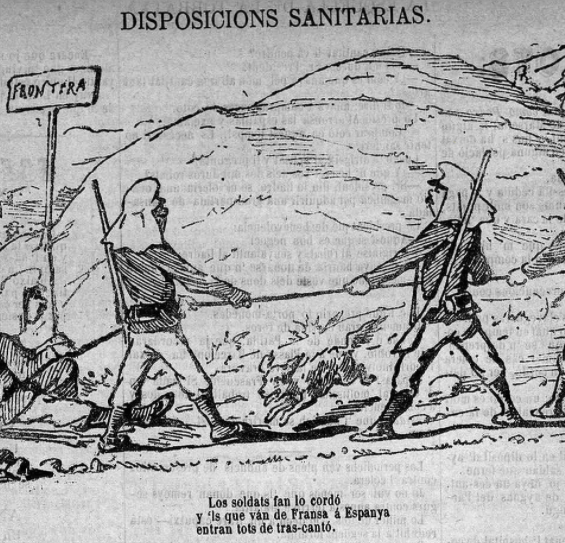
The soldiers make the quarantine cordon, and those who go from France to Spain all enter in improvised fashion. (La Esquella de la torratxa, Barcelona, 1884)
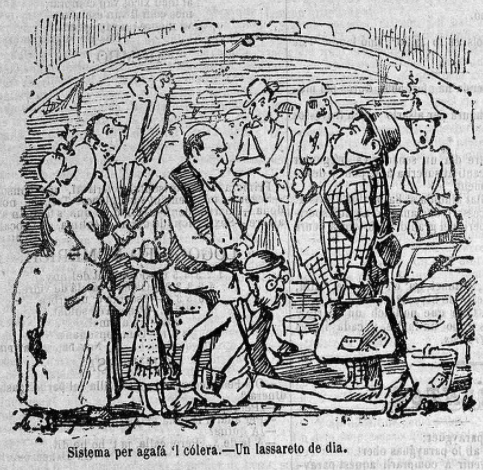
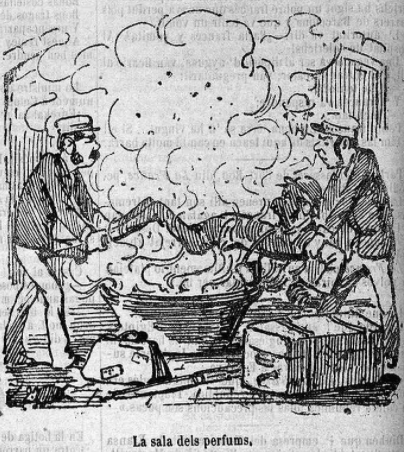
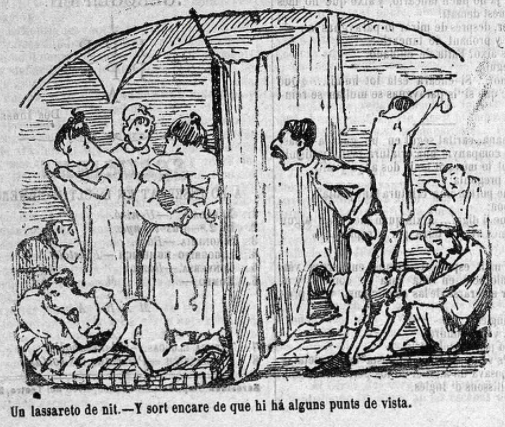
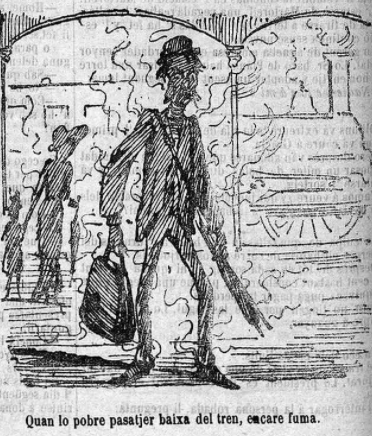
Catalan hygiene cartoon
System to catch cholera. A quarantine station by day.
The perfume room.
A night-time quarantine station. And luckily there are still some viewing points.
When the poor passenger gets off the train, he is still smoking.
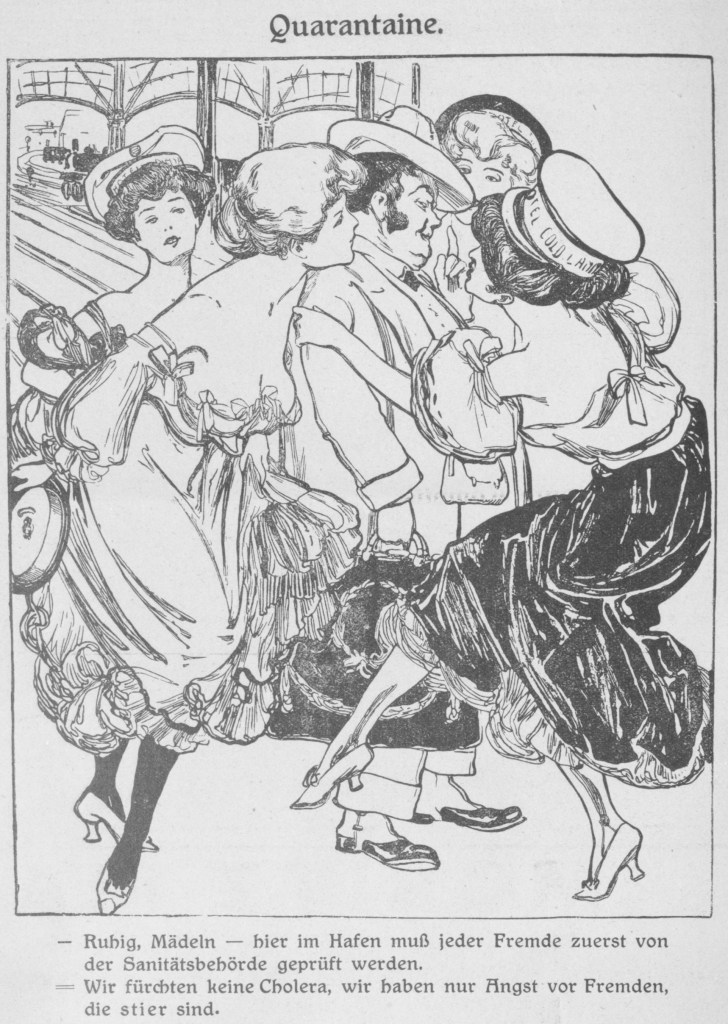
“Calm down, girls, every foreigner here in port must first be examined by the public health authorities.” “We’re not afraid of cholera, we’re only afraid of foreigners who are broke.” (Wiener Caricaturen, Vienna, 1911)


 Sic Transit Pestilentia