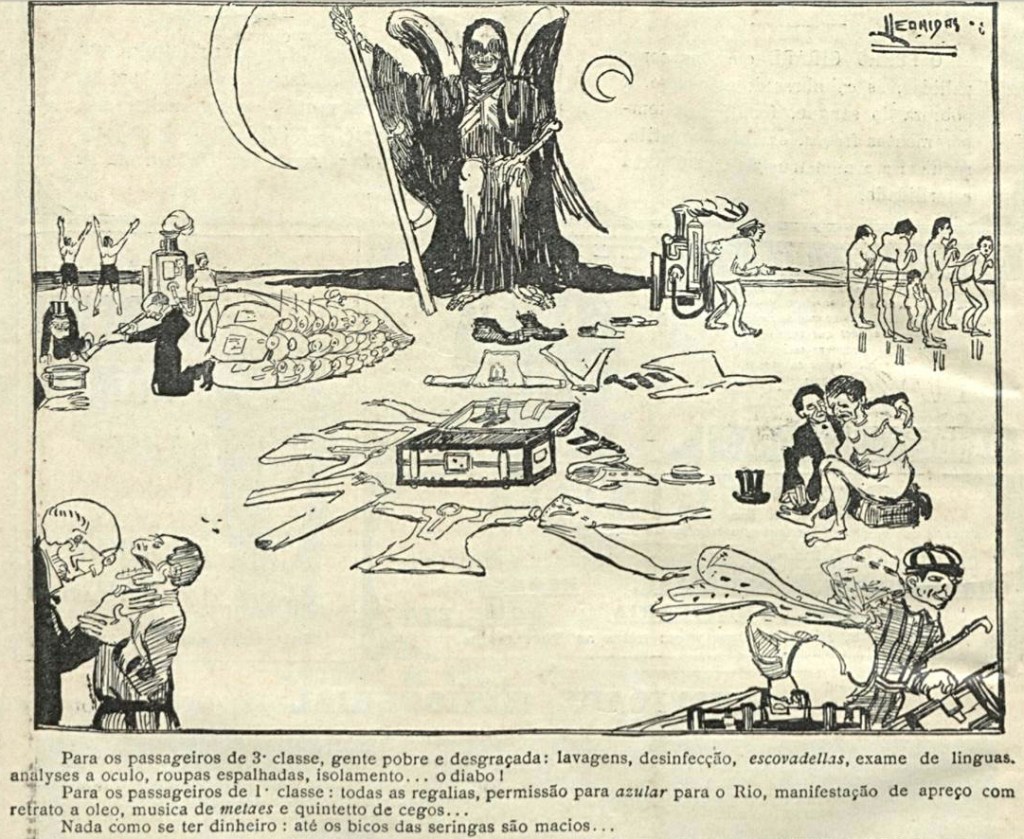
The passengers of the Araguaya and the quarantine on Grand Island. For third-class passengers, poor and unhappy people: washing, disinfection, grooming, tongue examination, eye testing, clothes spread out to dry, isolation… hell! For first-class passengers: all the perks, permission to “escape” to Rio, gestures of appreciation with oil portrait, steel-drum music and quintets for the blind… Nothing like having money: even the tips of the syringes are soft… (O Malho, Rio de Janeiro, 1910)
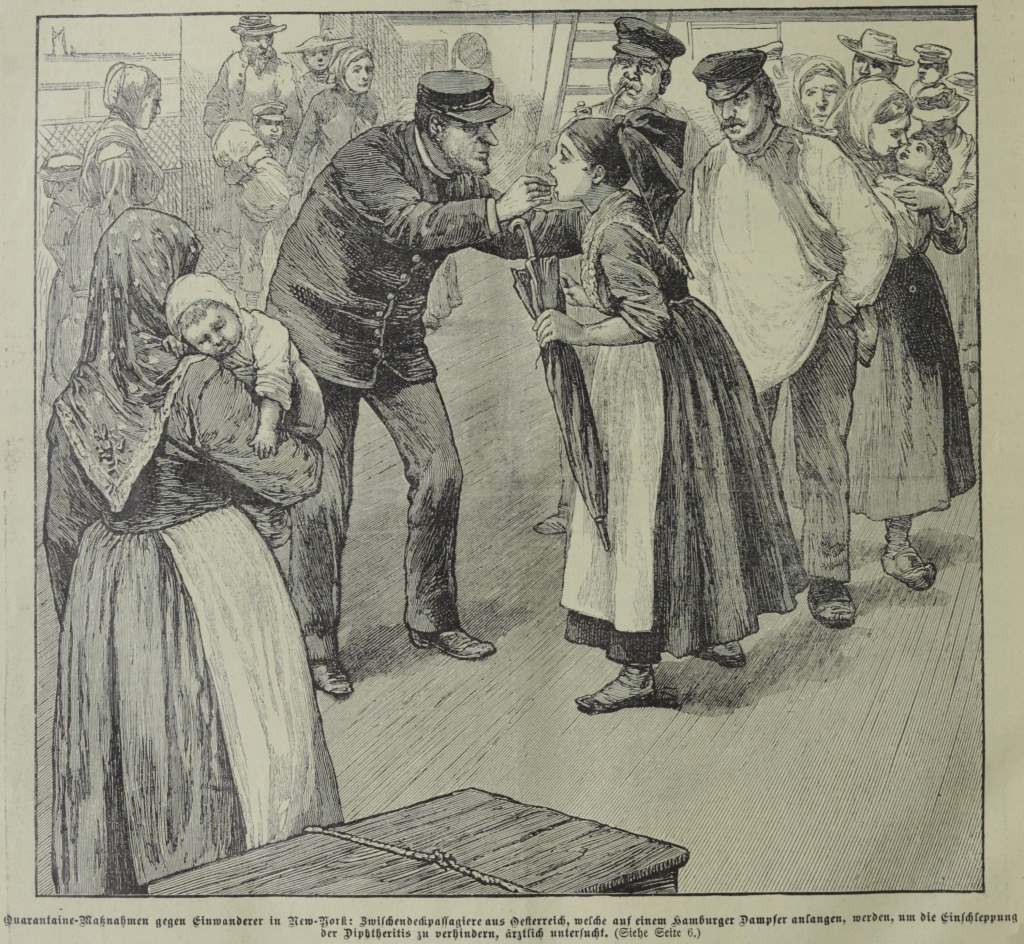
Lower-deck passengers from Austria [the Habsburg Empire] who embarked from a Hamburg steamer are medically examined to prevent the introduction of diphtheria. (Das interessante Blatt, Vienna, 1883)
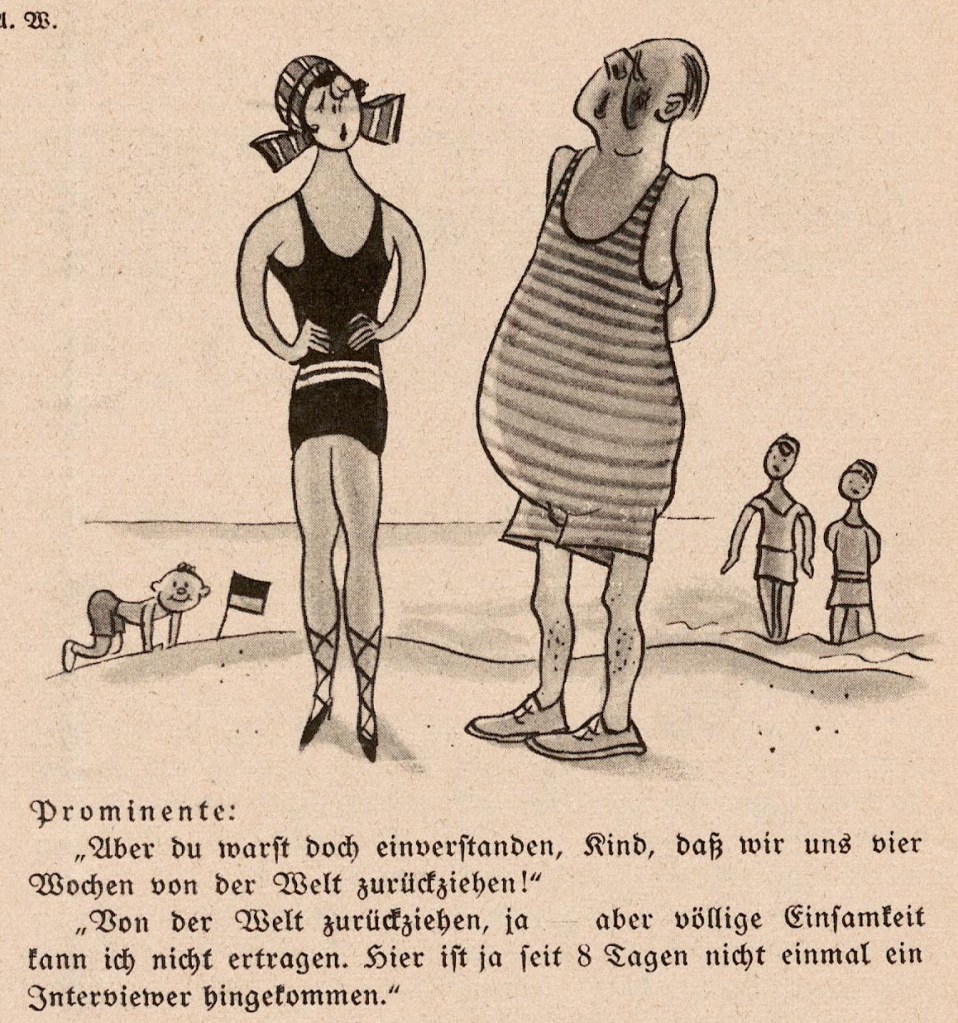
On a lighter note in our time of quarantine: Man: “But you agreed, my child, that we would retreat from the world for four weeks!” Woman: “Retreat from the world, sure, but I cannot bear complete solitude. Not a single interviewer has come here for eight days.” (Fliegende Blätter, Munich, 1931)
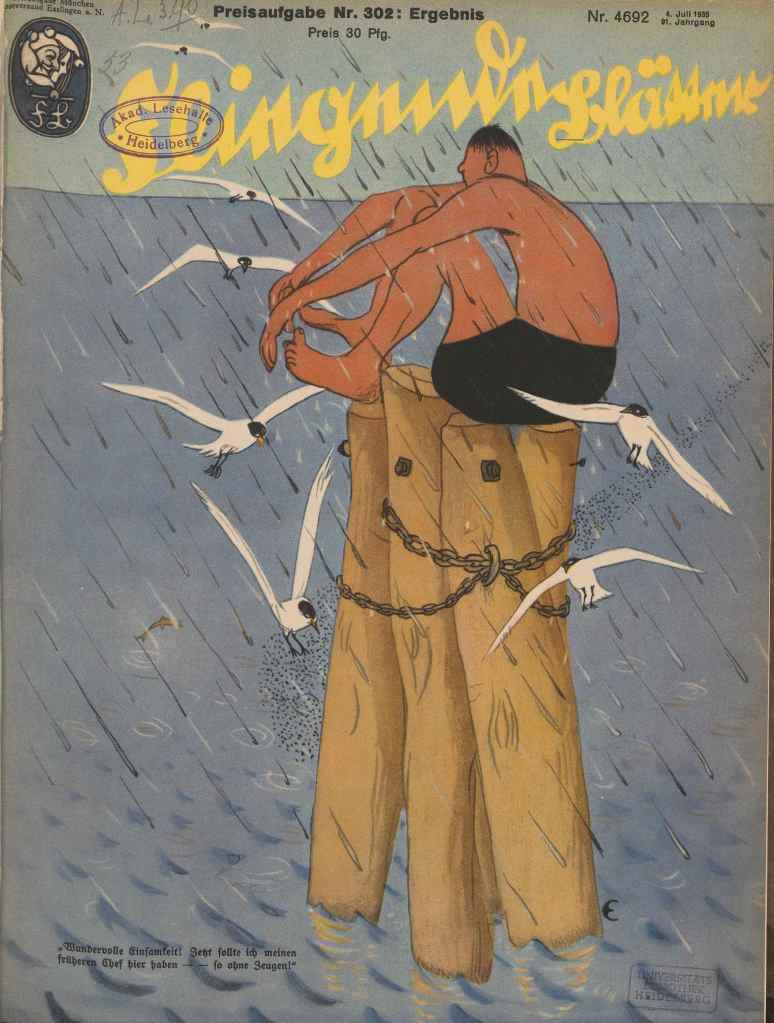
“Wonderful solitude! Now if I just had my old boss here — without witnesses!” (Fliegende Blätter, Munich, 1935) OK, it’s off topic, but I dare say physical distancing fosters many off-kilter fantasies.
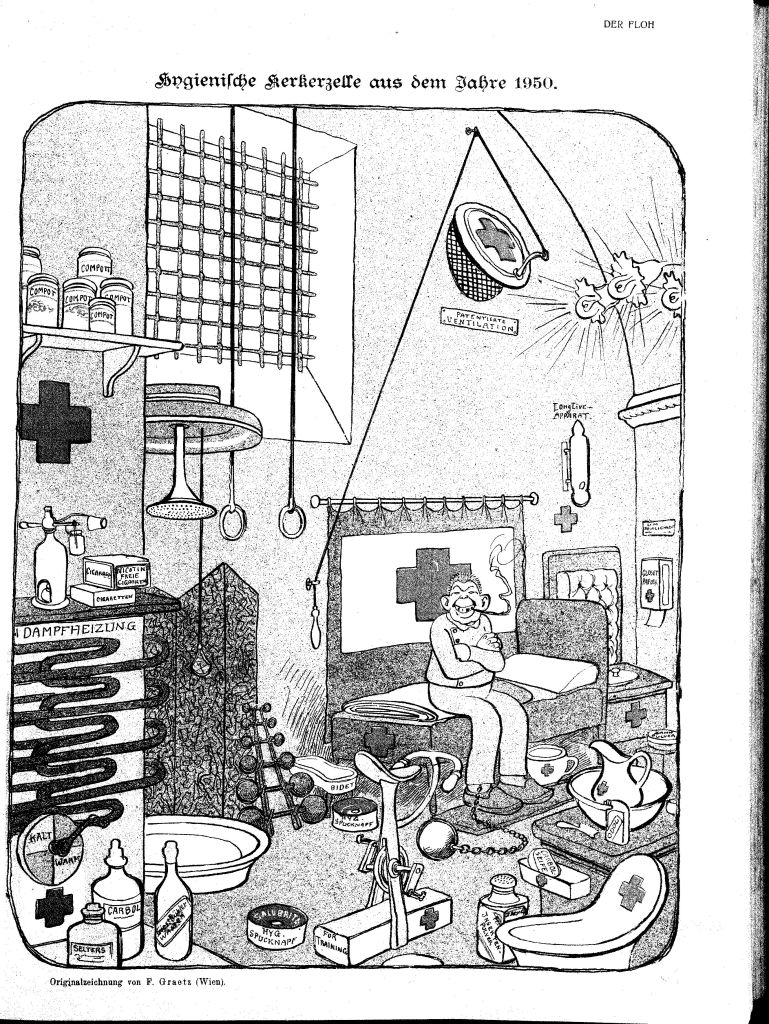
In May 1906 Archduke Franz Salvator opened a large international hygiene exhibition in Vienna. In early July the first major revision to the Hague Convention was adopted in Geneva, among other things strengthening the protections for prisoners of war. The International Committee of the Red Cross was especially prominent in pressing for these provisions, surely strengthening the modern conviction that enforced confinement should be sanitary. In this image we see a “hygienic dungeon cell from the year 1950,” as imagined in Viennese satirical magazine Der Floh in June 1906. Note how all the accoutrements come with the Red Cross symbol.
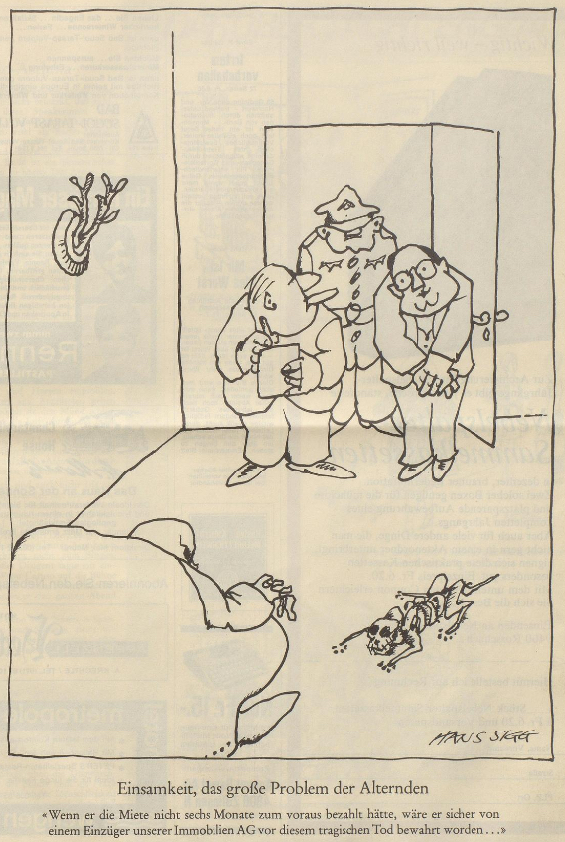
“If he hadn’t paid rent six months in advance, he would surely have been kept from this tragic death by one of our real estate companies…” (Nebelspalter, Zurich, 1972)
And now for something completely different. This playful poem on the solemn subject of cholera quarantine was published in the Polish humor magazine Mucha in 1886. Once again we see contagion metaphors giving expression to economic anxieties, in this case related to the persistently tepid European economic growth in the years following the Vienna stock exchange crash of 1873, all amid the fourth great cholera pandemic. Although the agrarian Polish economy was much less vulnerable to speculative bubbles, the author seizes upon quarantine as a way to make isolation from “the West” into a virtue.
The rhyme scheme is ABBA ABAB AABB and so forth, but I have only translated as literally as my limited Polish skills permit. Editorial suggestions welcome. (Mucha, 1886)
Rejoice, elders, lads and ladies, No longer do all evils come from abroad! Matters have come to a head: We are going to have quarantine here. In this place I can say boldly, sincerely, That such thoughts have long troubled me: If cholera can easily be remedied, Wouldn’t it be possible to subject other “goods,” From what is constantly flowing from abroad, To strict and lengthy quarantine? And namely stagnation is fashionable in the west, May it be stopped at the border; Then bankruptcies will no longer be in vogue, Bailiffs will also fall out of use. May the hoarse old sirens of stagnation Dry out like cinnamon on quarantine, May they stop plaguing us on the guitar And collecting bundles of money from us. Because we have enough beggars. May the ever hungry and ragged Italians Not besiege almost every gate, That is what this author asks for. May stagnation also be a vain, foreign sham, Let it be subject to quarantine, (In Poland it is indeed still increasing, Day and night we have it in excess). If all this happens, dear brothers, We will be able to call out: tralala! Stagnation will escape to the woods And all poverty will disappear in an instant. So rejoice: elders, lads and ladies, No longer do all evils come from abroad, Matters have come to a head: Here we will have quarantine!


 Sic Transit Pestilentia