“I wish I were a gold coin, I’d’ve bought the Ehrlich-Hata beforehand!”
(Lustige Blätter, Berlin, 1910)
(See this cartoon for more context on this syphilis cure.)
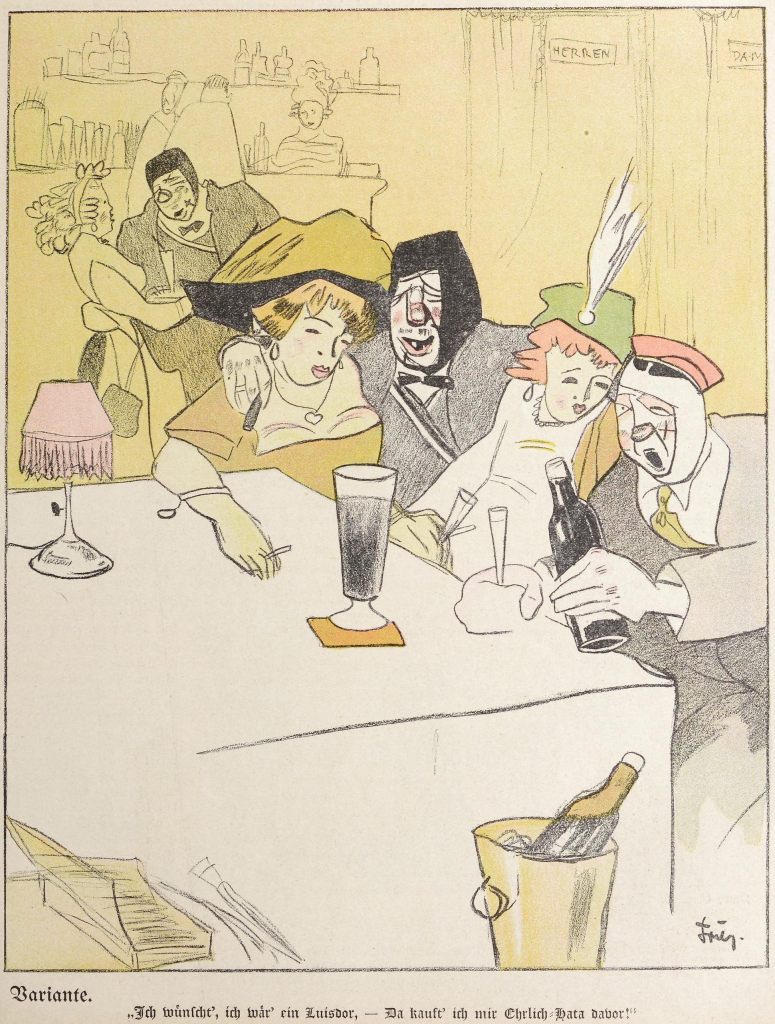
“I wish I were a gold coin, I’d’ve bought the Ehrlich-Hata beforehand!”
(Lustige Blätter, Berlin, 1910)
(See this cartoon for more context on this syphilis cure.)
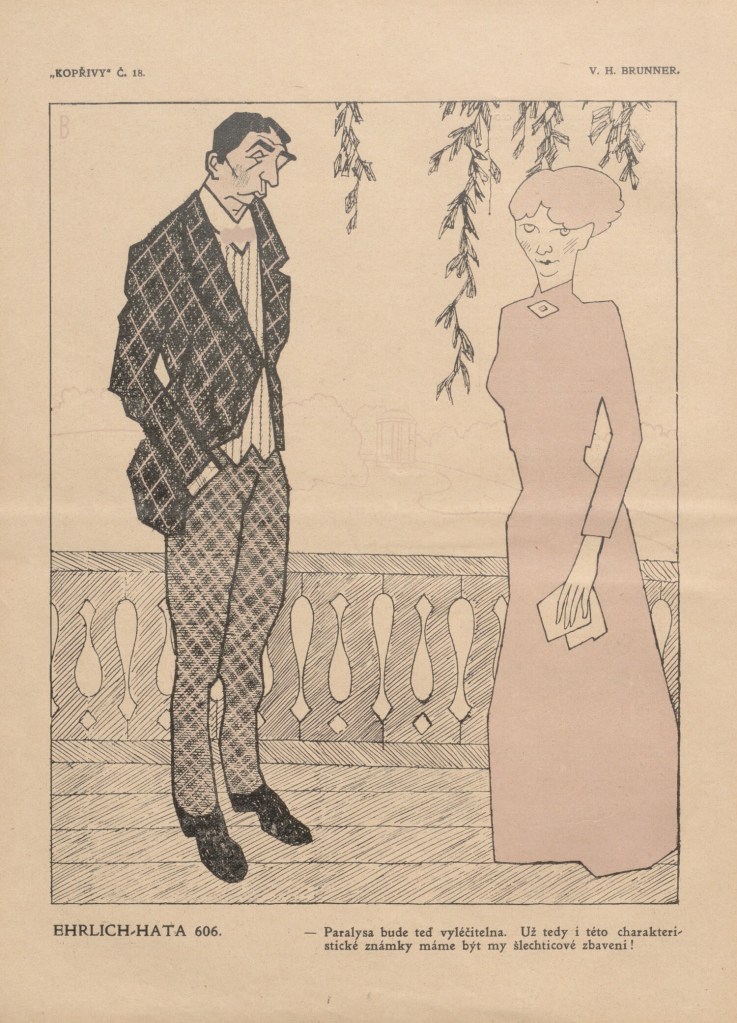
“The paralysis will now be curable. This way we nobles will be deprived even of this characteristic mark.”
(Kopřivy, Prague, 1910) (See also this cartoon for the reference to a syphilis cure.)
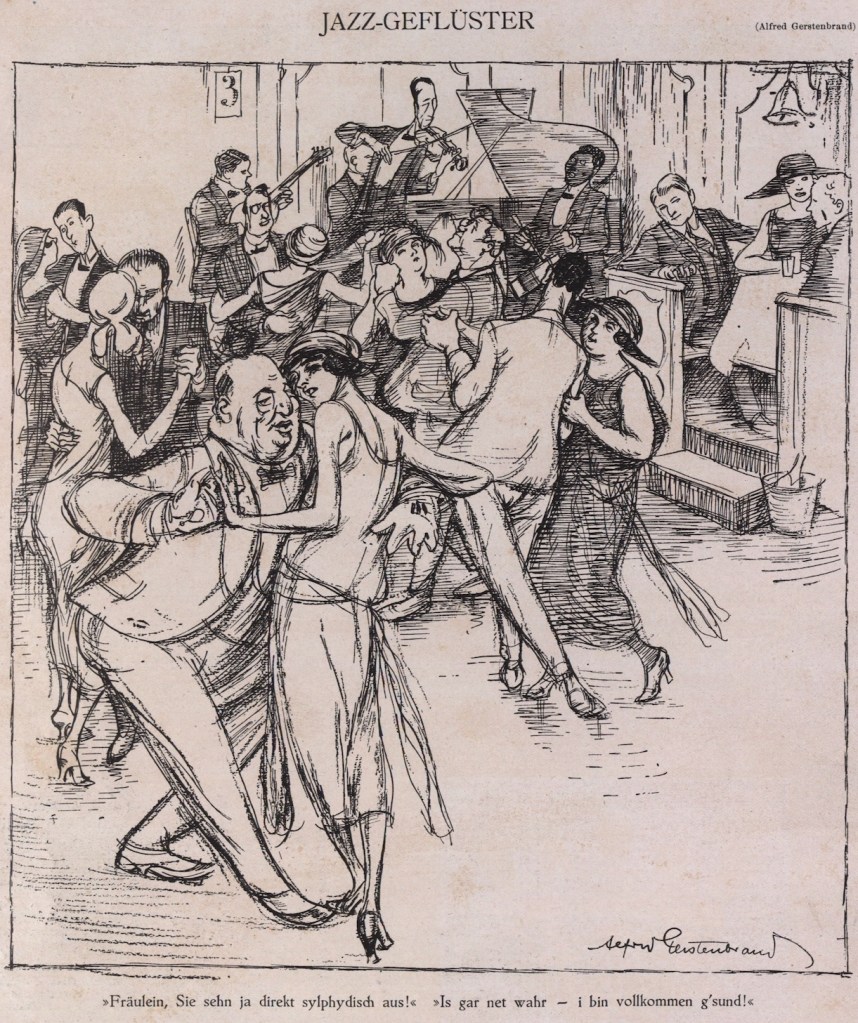
“Young lady, you look straight out of Sylphides!”
“Dat ain’t true, I’m totally healthy!”
(Die Muskete, Vienna, 1923) (Les Sylphides was an early Romantic ballet most famously revived by Michel Fokine in 1909.)
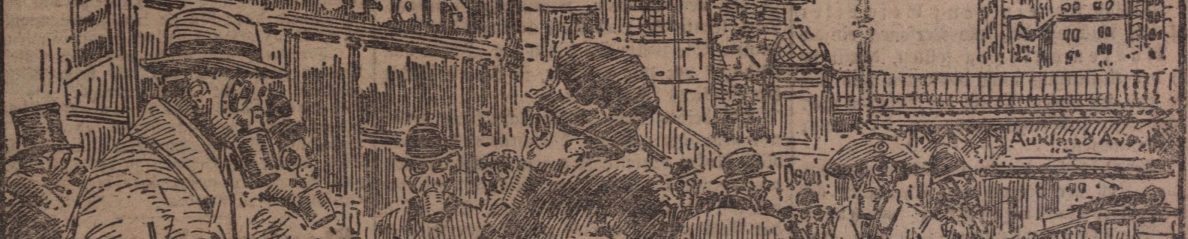
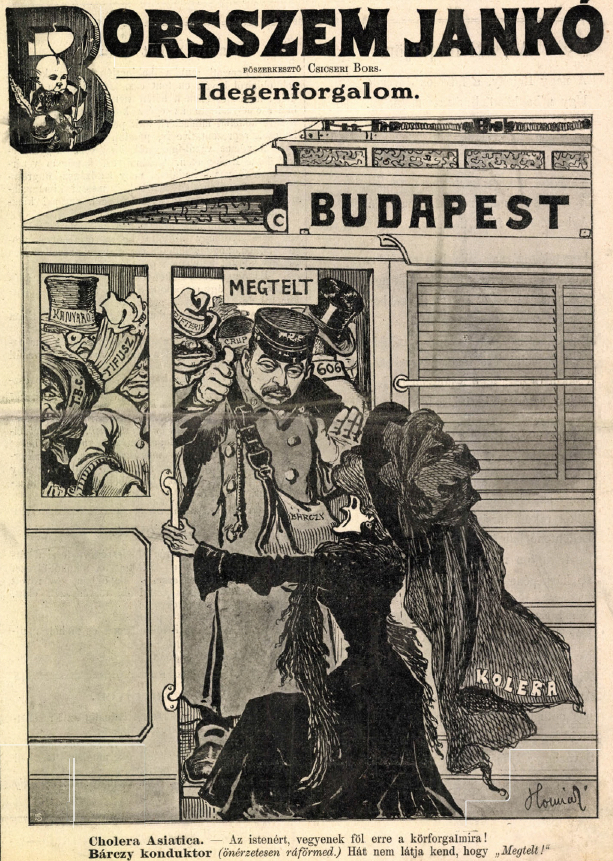
(Riders of the tram include measles, tuberculosis, typhus, diphtheria, croup, and syphilis–the “606” signals Ehrlich’s Salvarsan remedy.)
Cholera Asiatica: “For heaven’s sake, let me onto this route!”
[Budapest mayor István] Bárczy the Conductor (confidently denigrating her): “Well, don’t you see the sign saying it’s ‘Full!’?”
(Borsszem Jankó, Budapest, 1910)
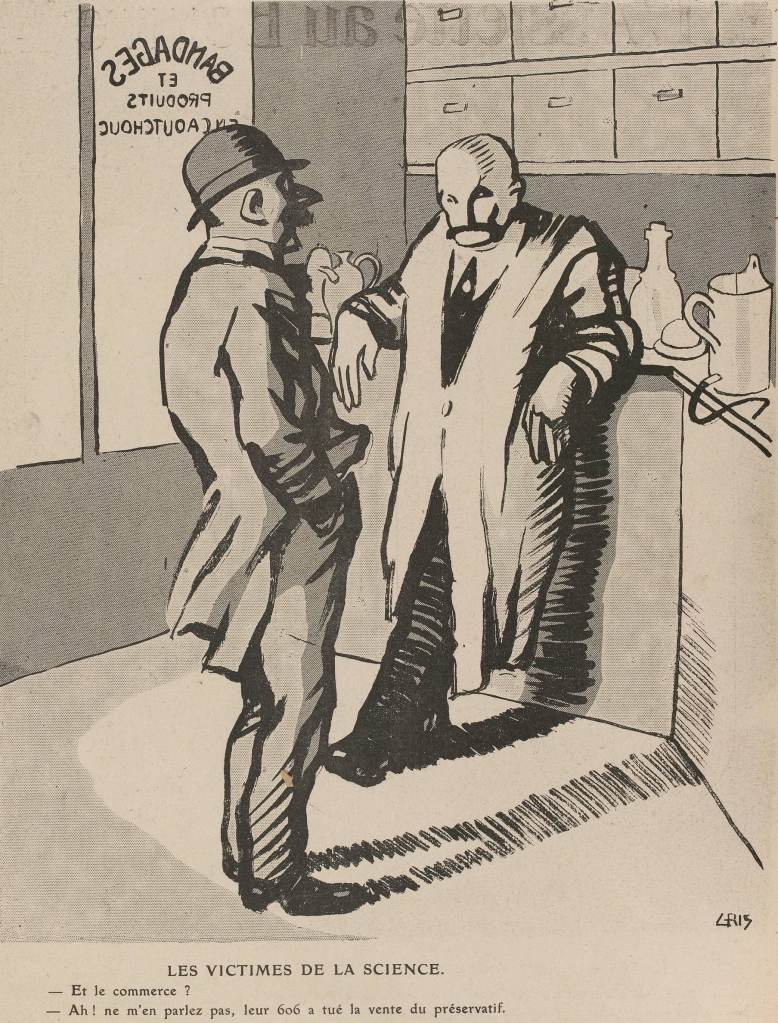
“And how’s business?”
“Ah! Don’t talk to me about it, their “606” has killed condom sales.”
(L’Assiette au beurre, Paris, 1910)
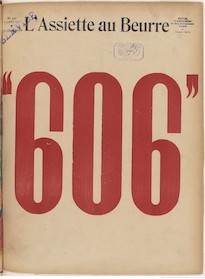
Remarkably, the entire issue is devoted to Paul Ehrlich’s “606” miracle cure for syphilis.
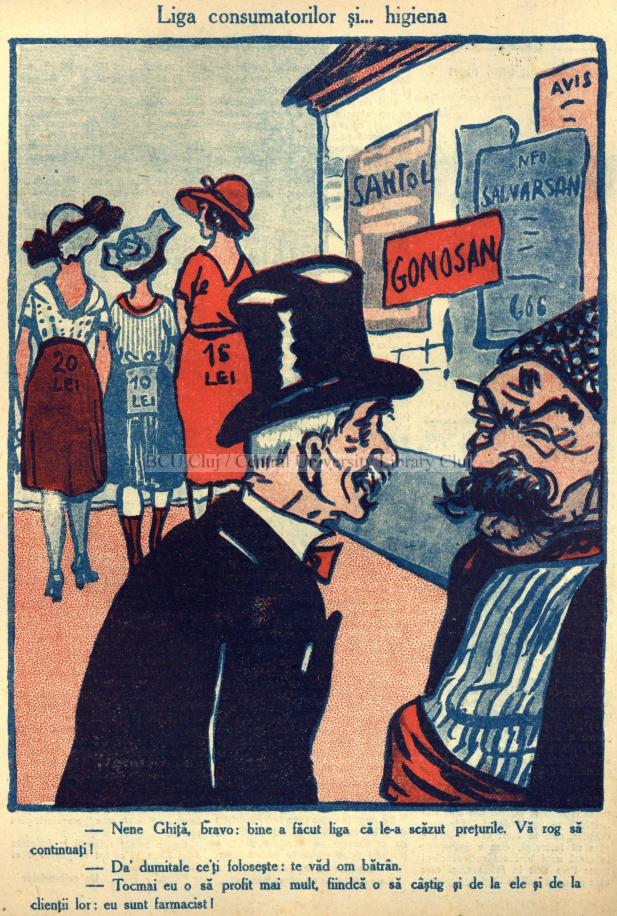
(Various anti-venereal medications like Salvarsan are advertised on the wall. It appears that the prices of young women offering their services are printed on their dresses.)
“Uncle Ghiță, bravo: the League did well because their prices dropped. Please continue!”
“But what do you use: I see you, old man.”
“I will profit more, because I will gain from them and their customers: I am a pharmacist!”
(Furnica, Bucharest, 1919)
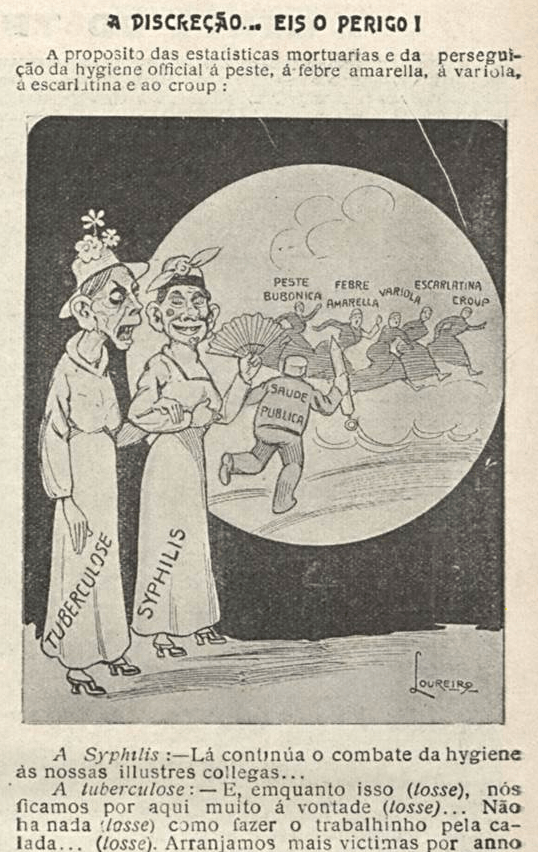
Regarding mortuary statistics and the pursuit of official hygiene toward plague, yellow fever, smallpox, scarlet fever and croup:
Syphilis: “The public health fight against our illustrious colleagues continues over there…”
Tuberculosis: “And in the meantime (coughing), we are very comfortable here (coughing)… There is nothing (coughing) like doing the job by the sidewalk… (coughing). We arrange more casualties annually (coughing) than all boisterous ailments together (coughing) and we are not uncomfortable…”
(O Malho, Rio de Janeiro, 1914)
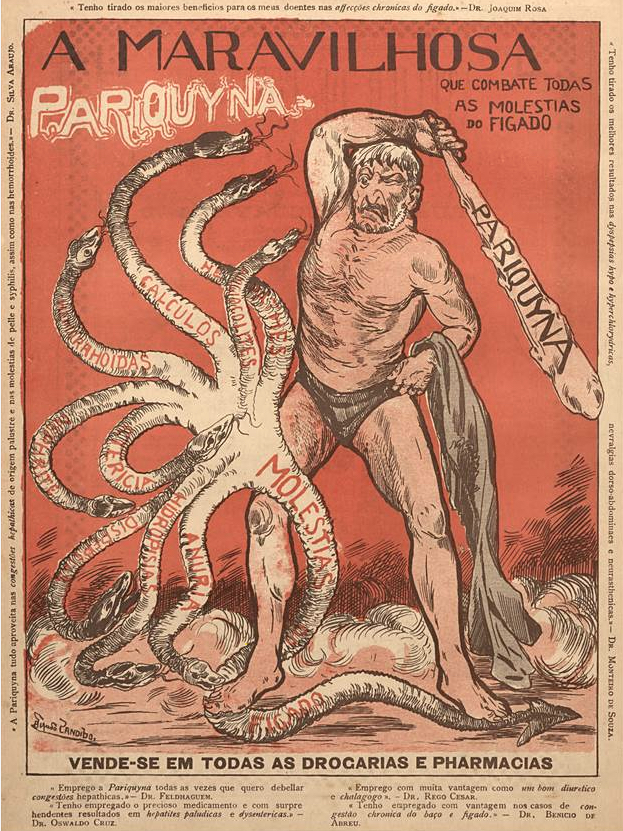
How’s this for aggressive drug advertising: Though it is labeled as combating all liver diseases, Pariquyna is portrayed as vanquishing a serpent-squid representing many other diseases, and the surrounding endorsements list hepatitis, dysentery, dyspepsia, neurasthenia, and syphilis as targets for its effects. Even bacteriologist Oswaldo Cruz was appropriated.
(O Malho, Rio de Janeiro, 1905)
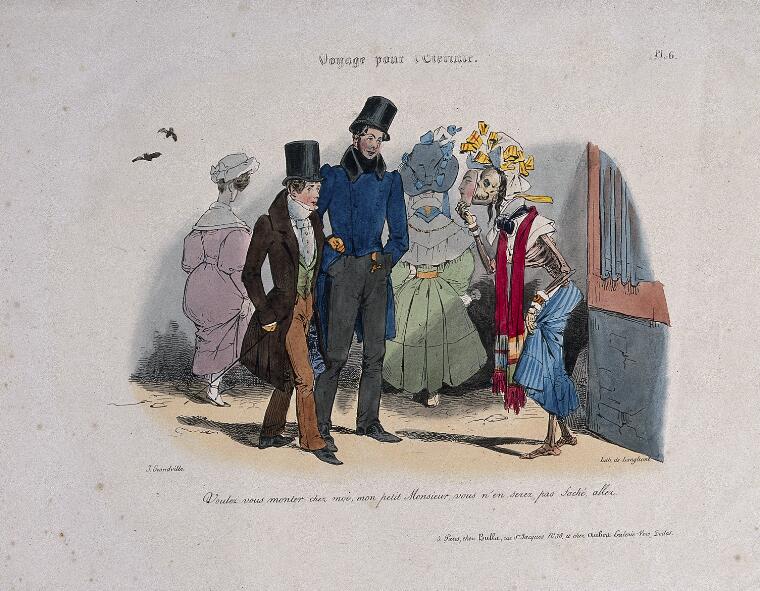
Two young men are approached by a prostitute: she is a clothed skeleton holding a made-up mask in front of her face, representing syphilis. Lithograph by J.J. Grandville, 1830.
(Wellcome Collection)
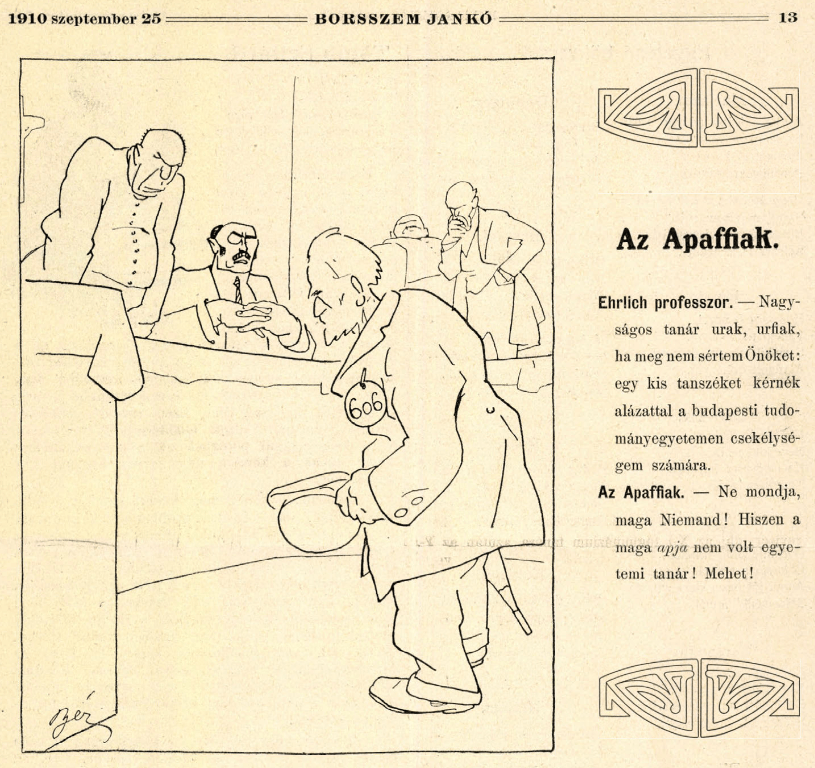
This is a bit obscure, but it was published at the height of bacteriologist Paul Ehrlich’s fame in 1910, when he was offering a cure for syphilis (“606”), and it seems to poke fun at the insularity of the academic appointment process. (It cannot have been coincidental that Ehrlich was Jewish. Though a disproportionately high percentage of physicians in Hungary were Jewish, access to university teaching positions remained limited.)
Professor Ehrlich: “Honorable colleagues & sons, if I do not offend you: I would respectfully like to request a small academic chair at the University of Budapest for your humble servant.”
Sons: “You don’t say, Mr. Nobody! After all, your father was not a university professor! You may go!”
(Borsszem Jankó, Budapest, 1910)
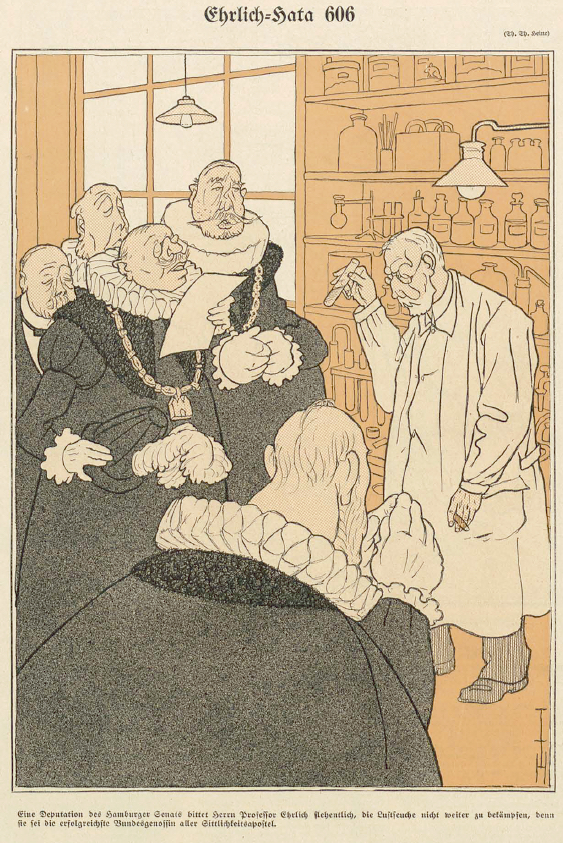
German satirical magazine Simplicissimus, 1910. A deputation of the Hamburg Senate implores Professor Ehrlich not to do battle with venereal disease any longer, for it is the most successful ally of all apostles of morality.
This image appeared in the Russian weekly magazine Ogonek (no. 45) on the eve of Leo Tolstoy’s death in 1910. Russia’s most famous anti-modernist is depicted turning away from the benefits and blandishments of the modern world. What is the connection between this image and our ongoing epidemic theme? (Hint: not the waiter with the tray labeled “Nobel Prize.” See this post for the answer.)
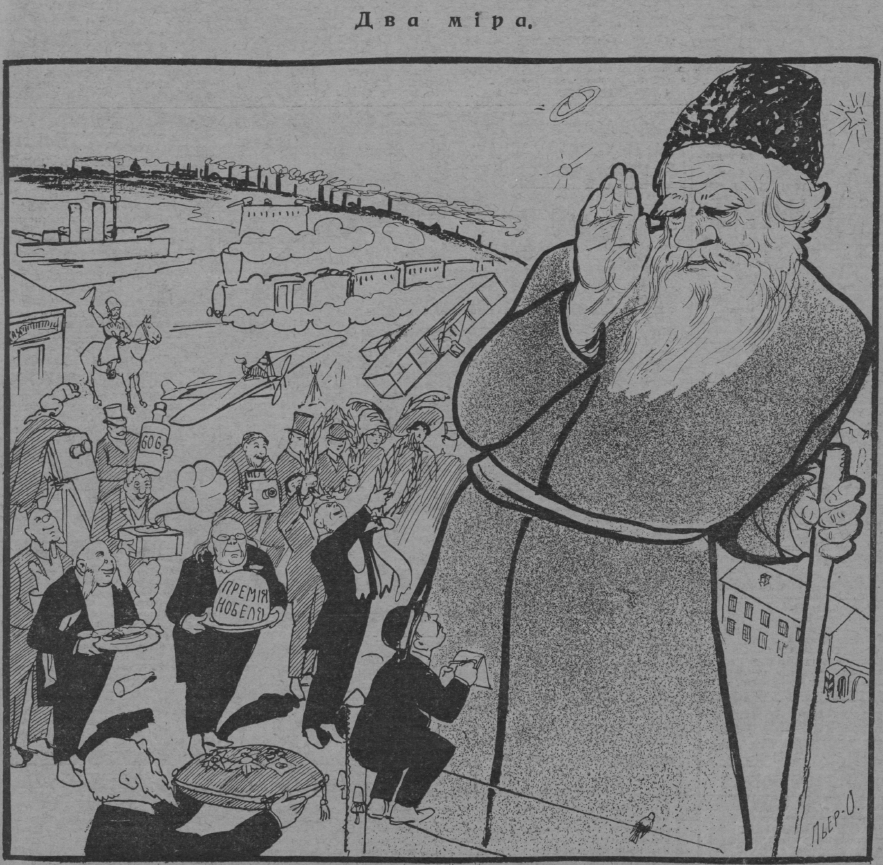
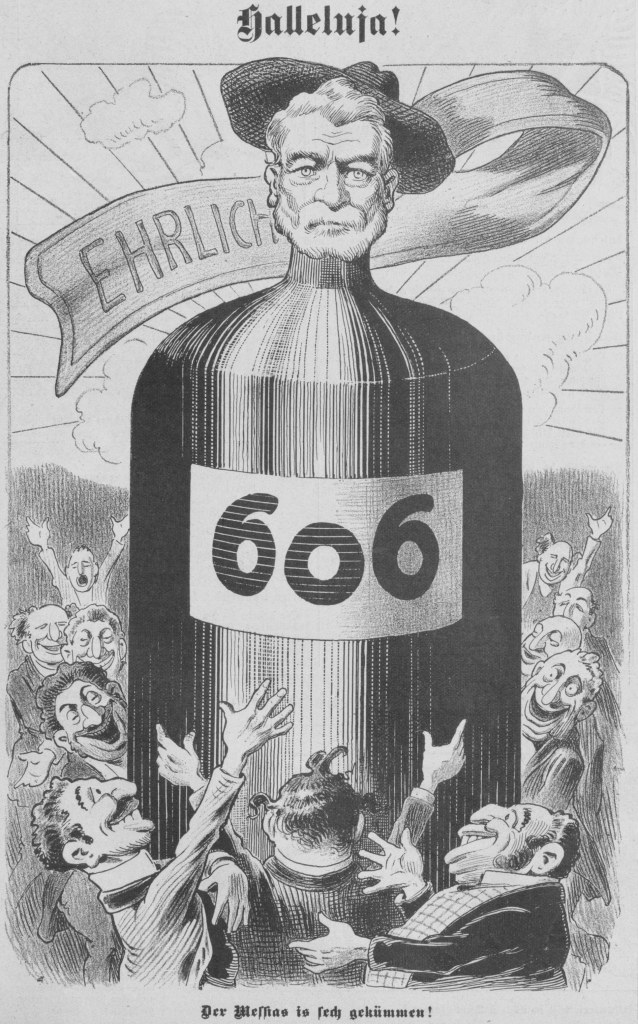
In 1910 German bacteriologist Paul Ehrlich became world famous when Hoechst AG began marketing Salvarsan, or “compound 606,” the first organic anti-syphilitic drug. Ehrlich’s laboratory colleague Sahachiro Hata first noted its toxicity to the syphilis spirochete, but Ehrlich’s “magic bullet” strategy for fighting epidemic diseases was what captured public attention. (Kikeriki, 1910) If you look carefully at this Tolstoy image from another post, you will see that Salvarsan is the connection.
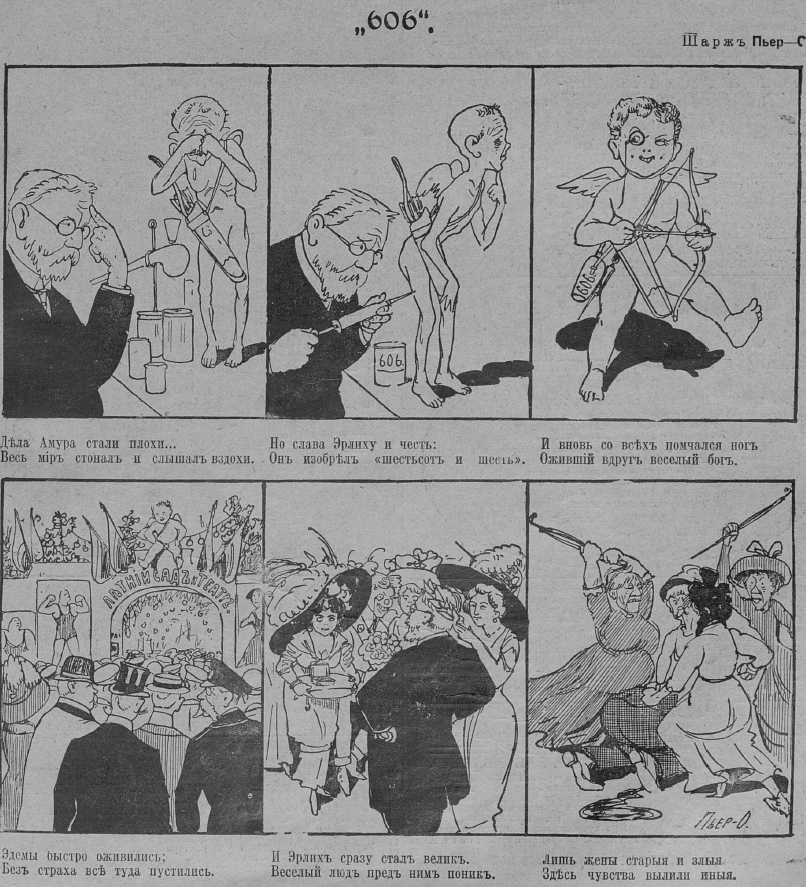
Ode to Paul Ehrlich’s “compound 606,” the magic bullet against syphilis.
Cupid’s affairs were in decline…
The whole world groaned and heard his sighs.
But glory and honor to Ehrlich:
He invented “six hundred and six.”
And suddenly back on his feet again
The merry deity was revived.
Pleasure spots quickly revived;
Everyone headed there without fear.
And Ehrlich immediately became great.
People gaily bowed before him.
Only old and malicious wives
Unleashed other feelings here.
(Ogonek no. 31, 1910)
 Sic Transit Pestilentia