According to all the symptoms—that I could detect,—oysters bring the typhus—and, maybe something else. Which is why we made mistakes so many times!
(Gedeón, Madrid, 1912)
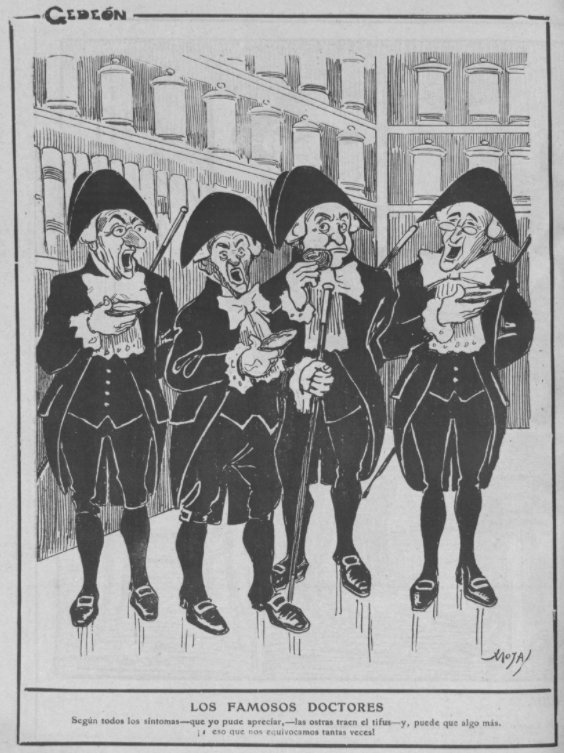
According to all the symptoms—that I could detect,—oysters bring the typhus—and, maybe something else. Which is why we made mistakes so many times!
(Gedeón, Madrid, 1912)
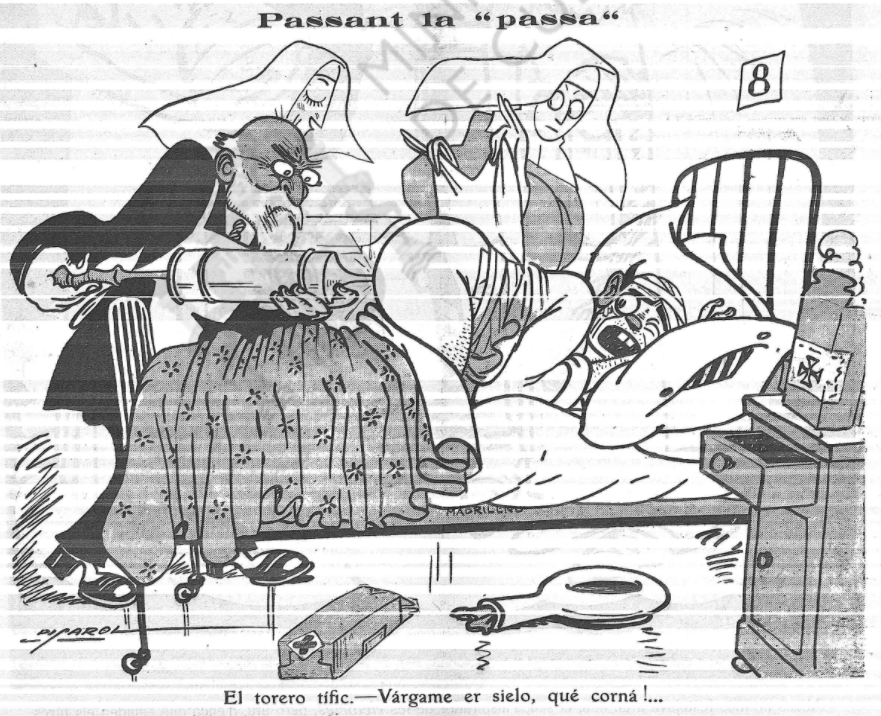
The typhus bullfighter. “Heaven forbid, what a horn!…”
(This has to be the most explicit in the ongoing clystère theme.)
(La Campana de Gracia, Barcelona, 1914)
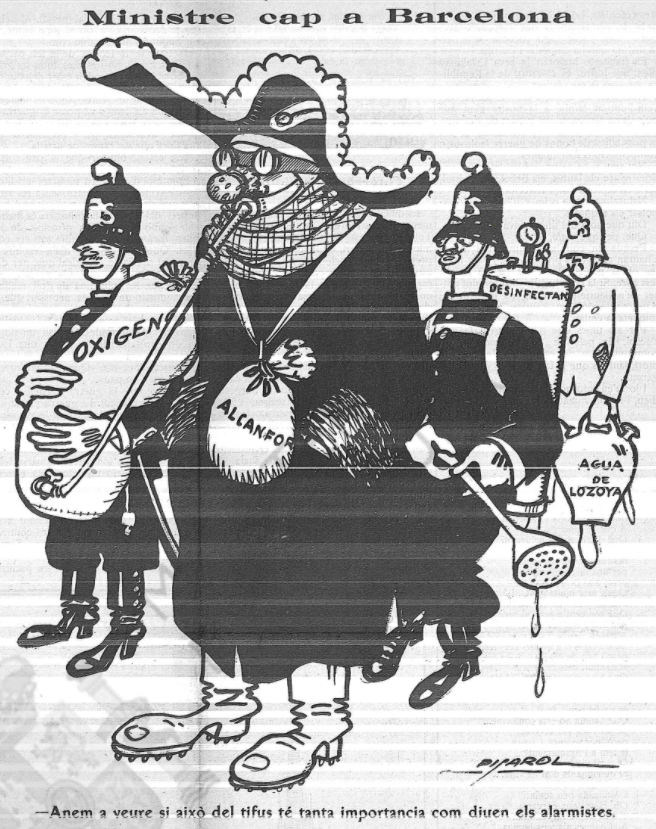
Let’s see if this typhus is as important as the alarmists say.
(La Campana de Gracia, Barcelona, 1914)
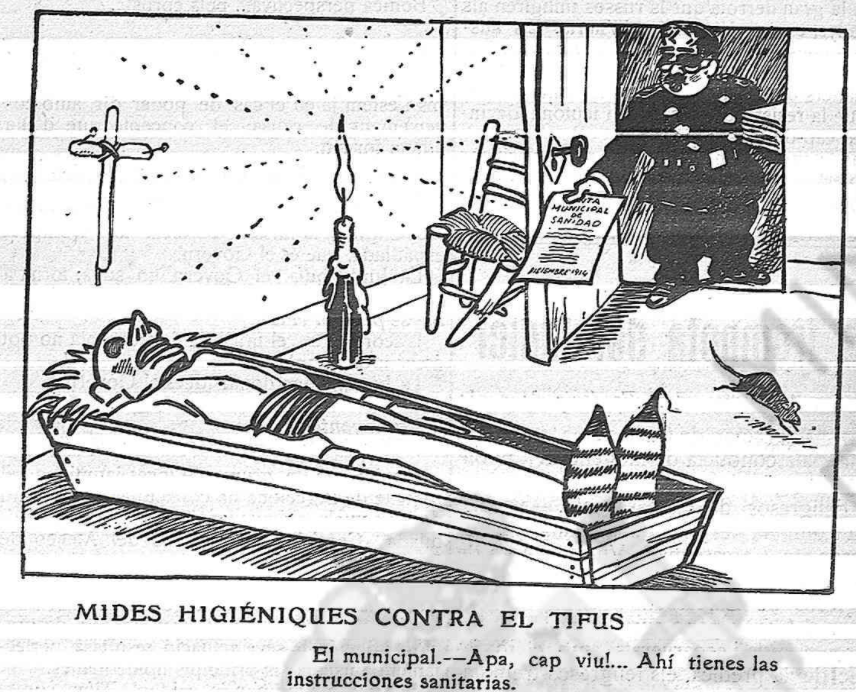
City official: “Come on, look lively!… Here are the sanitary instructions.”
(La Campana de Gracia, Barcelona, 1914)
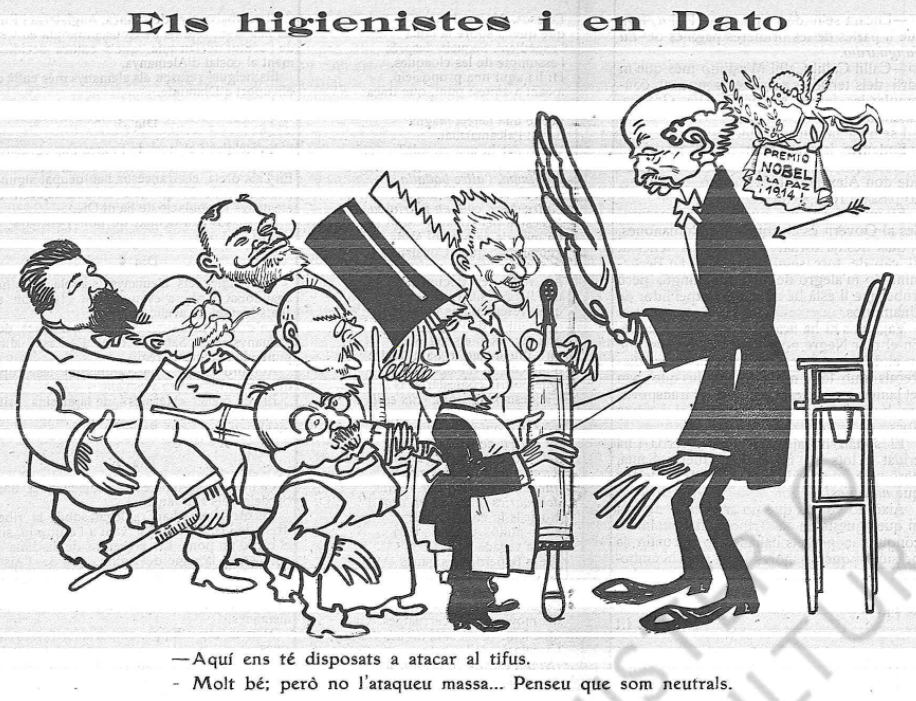
Eduardo Dato Iradier was a Spanish Conservative politician and prime minister at the time of this cartoon.
Hygienists: “We are ready to attack typhus here in Spain.”
Dato: “That’s really good; but don’t attack it too much… Think about our neutrality.”
(La Campana de Gracia, Barcelona, 1914)
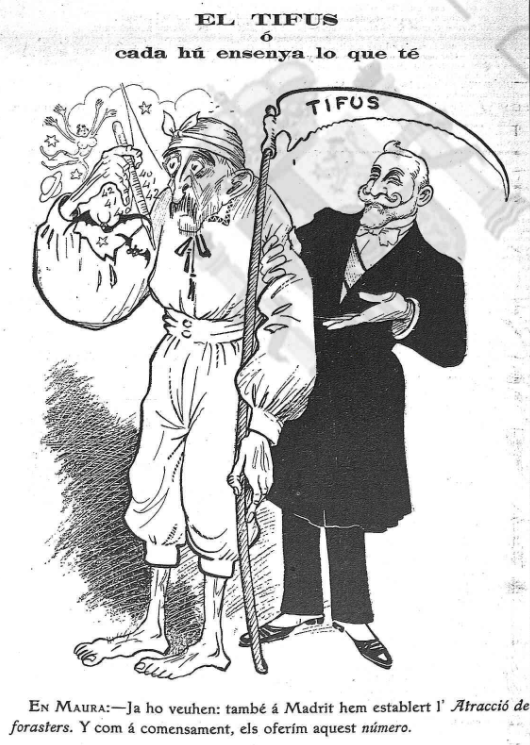
Conservative Spanish politician Antonio Maura: “You see, we have also established the Attraction of Foreigners in Madrid. And as a start, we offer you this number.”
(La Campana de Gracia, Barcelona, 1909) (Idiom and context need improvement here.)
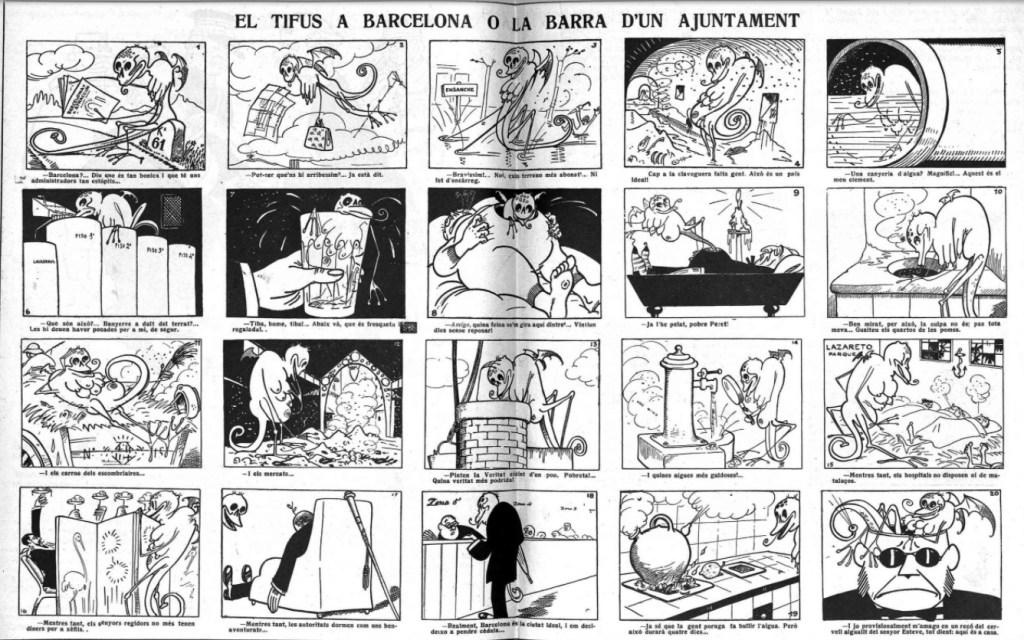
…or the bar in a city hall.
(La Esquella de la torratxa, Barcelona, 1914)
Here there is no other trinity than God, Me, and Typhus.
(La Esquella de la torratxa, Barcelona, 1914)

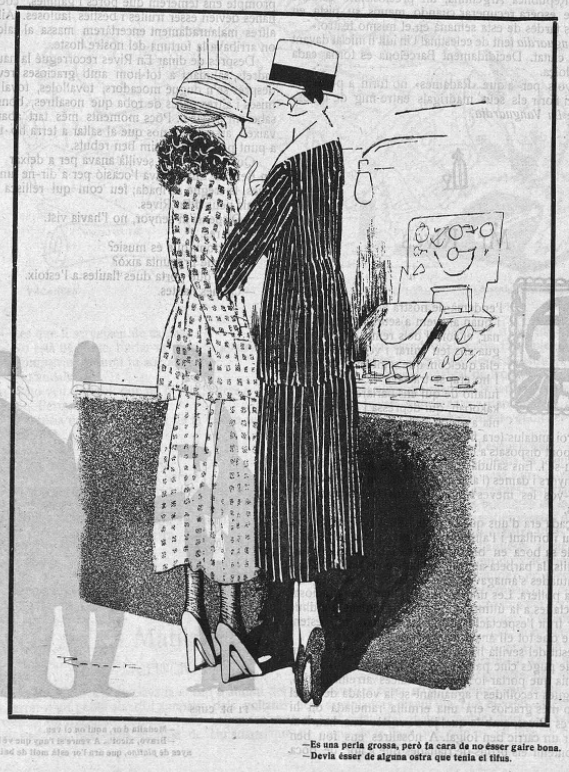
“It’s a big pearl, but it doesn’t look very good.”
“It must have been from some oyster that had typhus.”
(La Esquella da la torratxa, Barcelona, 1918)
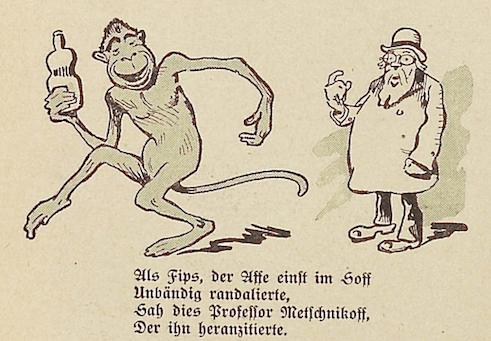
I can’t pass up a multi-panel cartoon about Ilya Mechnikov, the Russian émigré zoologist working in Paris who was awarded the Nobel Prize in 1908 for his research on immunology. (Kladderadatsch, 1910)
(The motive invoked by the cartoonist: news reports that Professor Ilya Mechnikov has vaccinated monkeys with typhoid serum.)
Once while Fips the monkey was in his cups
Wildly rampaging around,
Professor Metchnikoff caught sight of him,
And lured him toward himself.
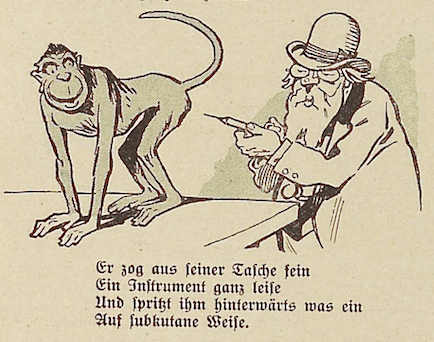
He smoothly pulled out of his pocket
An instrument, ever so quietly,
And injected something in his rear
In a subcutaneous way.
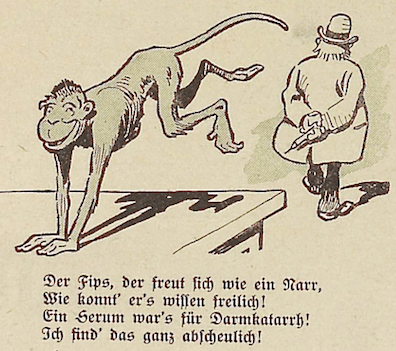
Fips rejoiced like a fool,
How could he really know?
It was a serum for catarrh!
I find that very hideous!
Very soon, however – his breath short! –
He got it good from the lure
To which he had been cunningly drawn.
He headed straight up the trees!

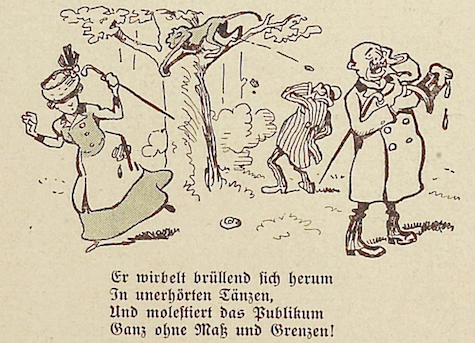
He whirls around shrieking
In outrageous dances,
And harasses the public
Without moderation and bounds!
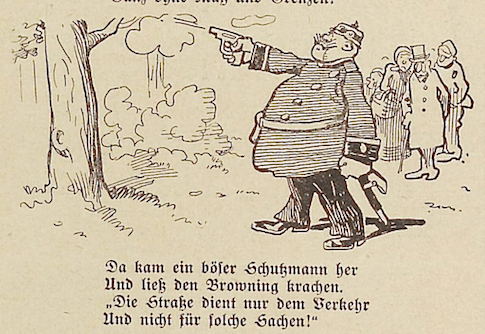
An angry constable came up
And let his revolver crack.
“The street is only for traffic
And not for things like that! “
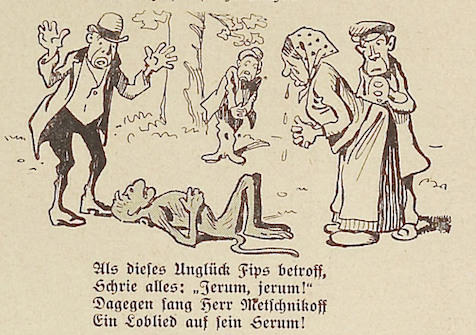
As Flips met this misfortune,
Everyone cried: “Jerum, jerum!”*
In contrast, Mr. Mechnikov sang
A song of praise for his serum!
*(invoking the Latinate refrain of a student song)
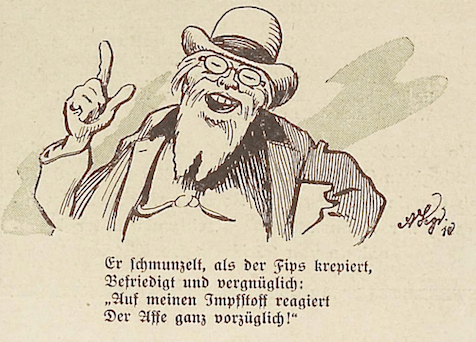
He grins when Fips croaks,
Satisfied and amused:
“The monkey’s response
to my vaccine is excellent!”
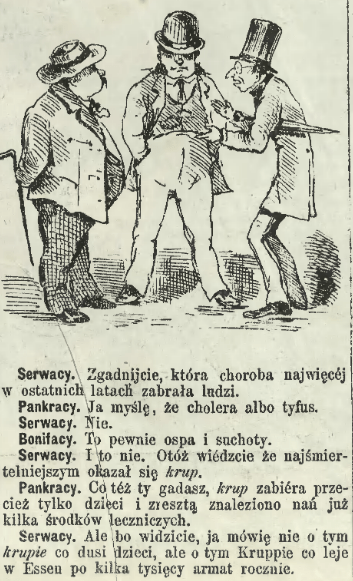
Servatius: Guess which disease has taken the most people in recent years.
Pancras. I think it’s cholera or typhus.
Servatius. No.
Boniface. It’s probably smallpox and consumption.
Servatius. Also no. So you should know that the croup was the most lethal.
Pancras. What are you talking about, the croup only takes children, and anyway, several medications have already been found.
Servatius. But because you see, I’m talking not about this croup that strangles children, but about this Krupp which pours several thousand cannons a year in Essen.
(Mucha, Warsaw, 1875)
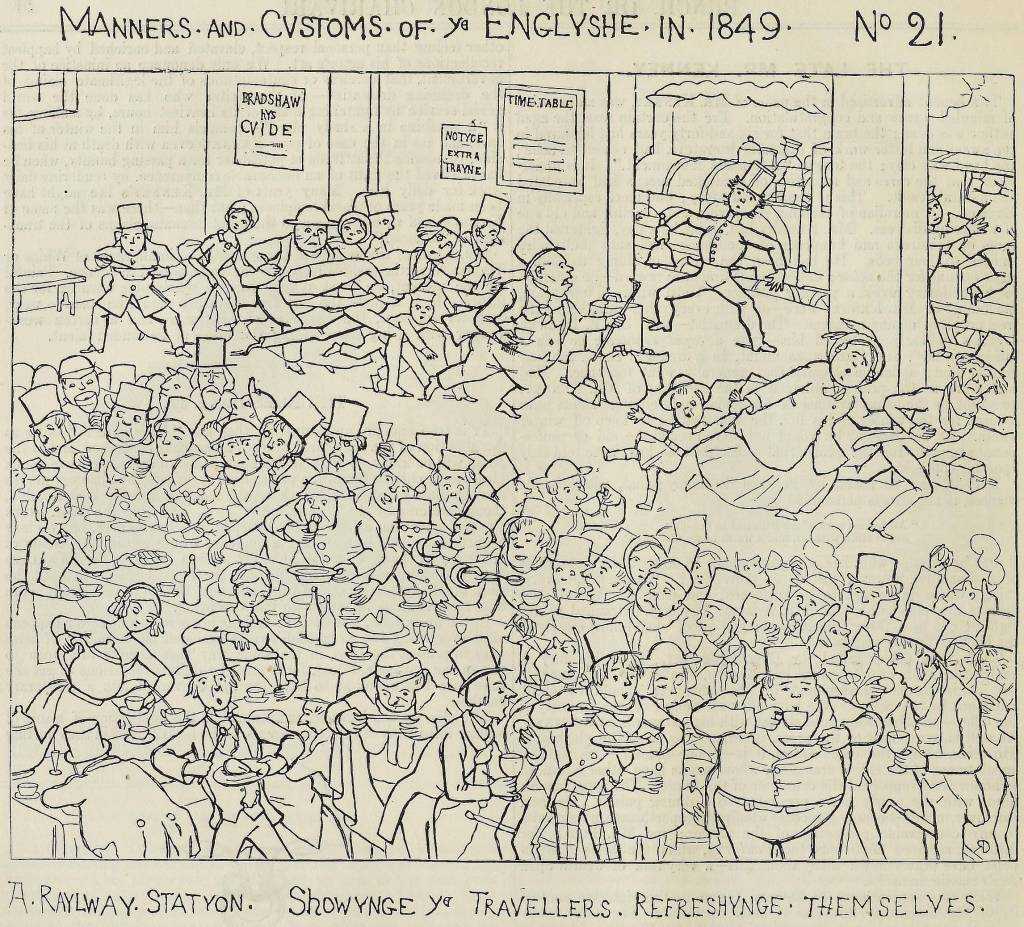
An amusing illustration in light of our present concerns about physical distancing. But the more so in view of its intentional juxtaposition on the same page with an entry in “Mr. Pips his Diary.” Punch‘s Pepys relates a conversation with a physician on a crowded train in which said physician complains of “the Foulness of London for Want of fit Drainage, and how it do breed Cholera and Typhus, as sure as rotten Cheese do Mites, and of the horrid Folly of making a great Gutter of the River.” Truly, “the Bustle of Railways do destroy all the Dignity of Travelling.”
(Punch, London, 1849)
There are some similarities in this German cartoon from Kladderadatsch (1889).
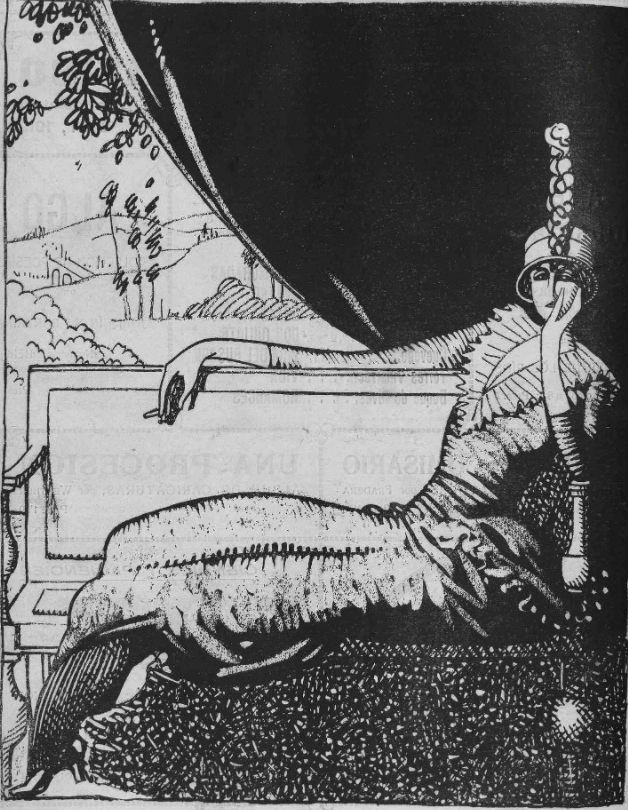
It’s said that many typhus attacks are the result of a mosquito bite… Alas, who can be attacked by a mosquito that I know!
(La Esquella de la torratxa, Barcelona, 1912)
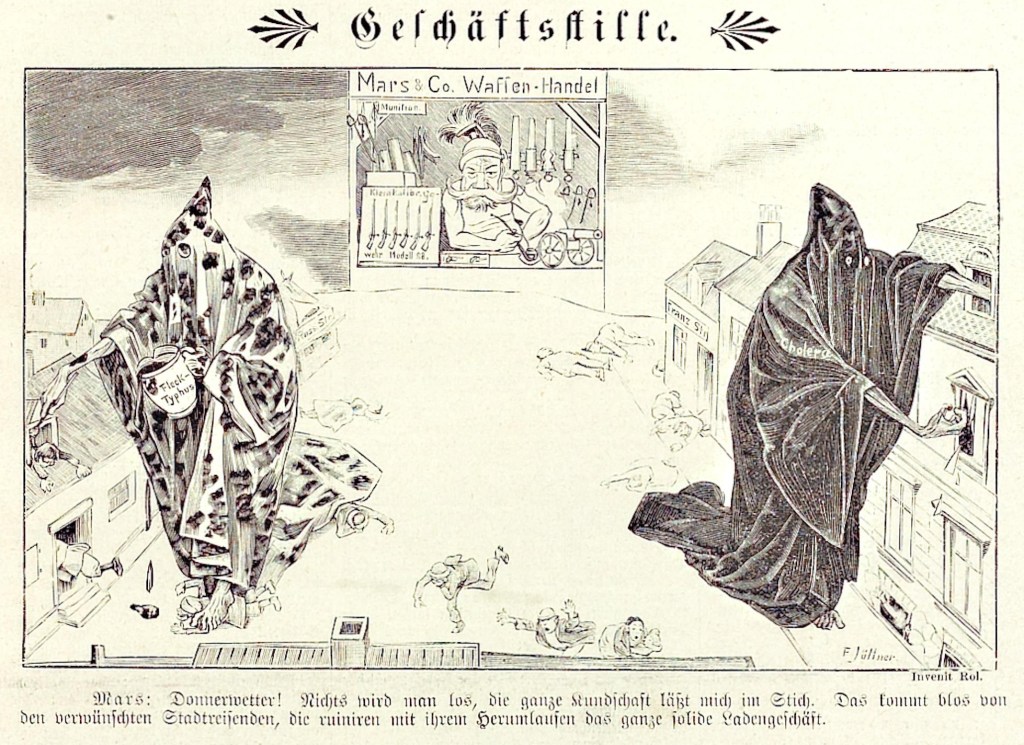
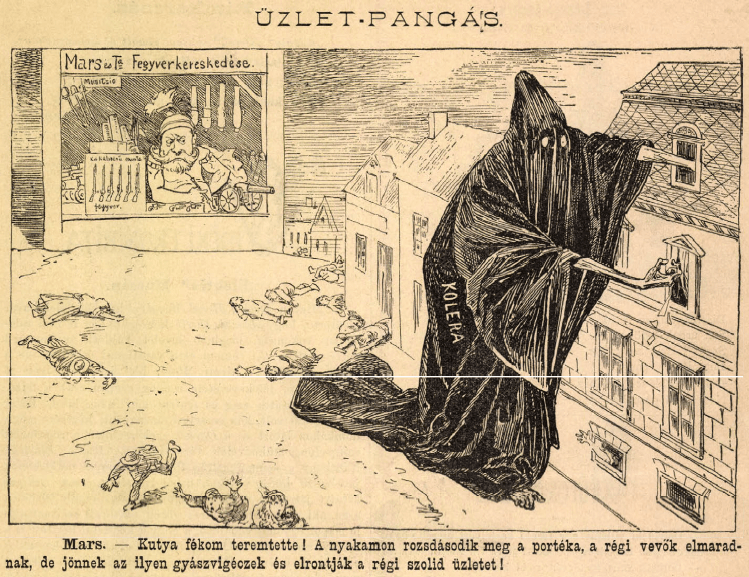
These two cartoons were published in quick succession as the cholera epidemic worsened in 1892, first in May in Germany, then in July in Hungary. Note what the Hungarian version leaves out, though it is nearly a copy of the German original.
Mars & Co. Arms Dealers: “Darn it! Nothing is moving off the shelves, all my customers are leaving me in the lurch. It’s simply because of these accursed city travelers who are ruining a perfectly solid retail enterprise with their running around.”
(Kladderadatsch, Berlin, 1892)
Mars & Co. Arms Dealers: “Well, I declare! My wares are rusting around my neck, old customers are staying away, but these peddlers in mourning clothes come and ruin the old solid business!”
(Borsszem Jankó, Budapest, 1892)
Chief of prevention: “Let’s put a lid on this thing! This, with the addition of rainwater, becomes a site for larvae that, after their biological evolution, become yellow-fever-bearing mosquitos transmitting jaundice-related typhus.”
Municipal worker: “So this lady of yours is very much mistaken. This here is a hole.”
(O Malho, Rio de Janeiro, 1929)

 Sic Transit Pestilentia