Doctor: “Your ailment isn’t really all that dangerous — but three out of every ten people still die from it!”
Patient: “Pardon, Doctor, are the three already dead?”
(Fliegende Blätter, 1904)
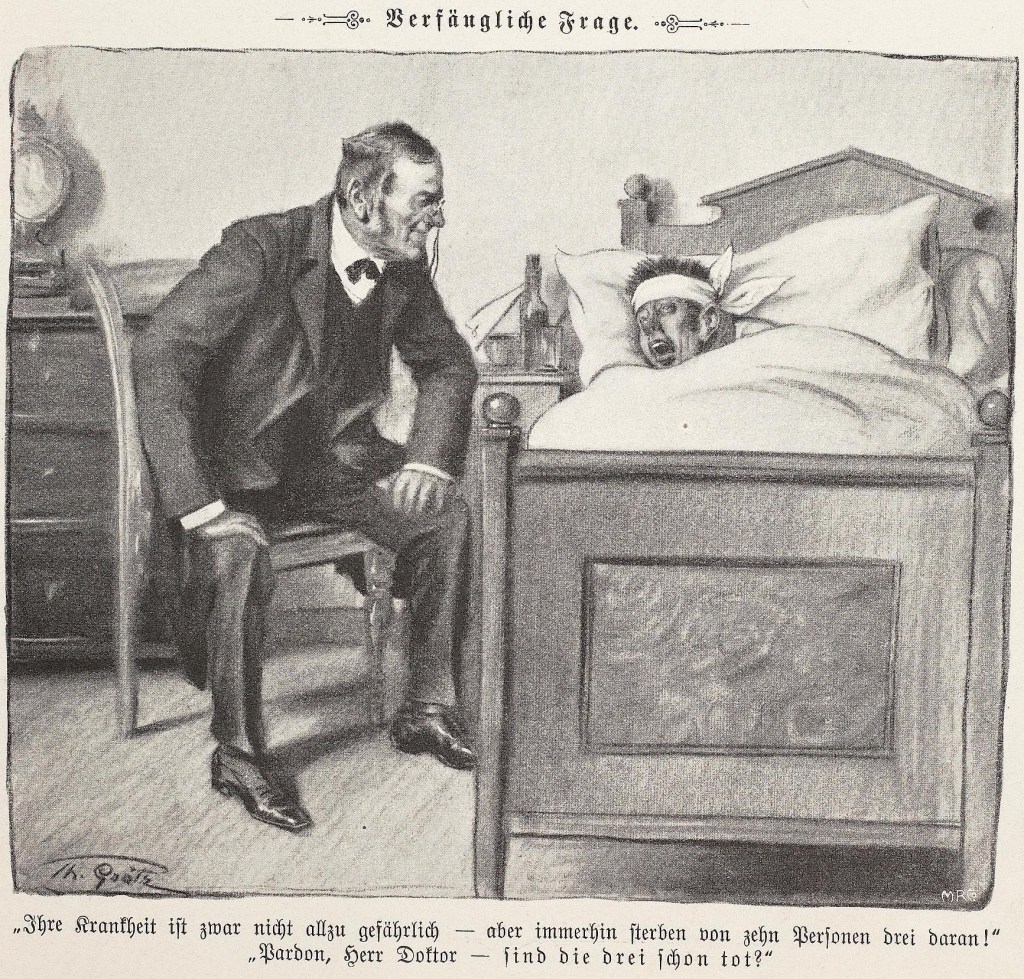
Doctor: “Your ailment isn’t really all that dangerous — but three out of every ten people still die from it!”
Patient: “Pardon, Doctor, are the three already dead?”
(Fliegende Blätter, 1904)
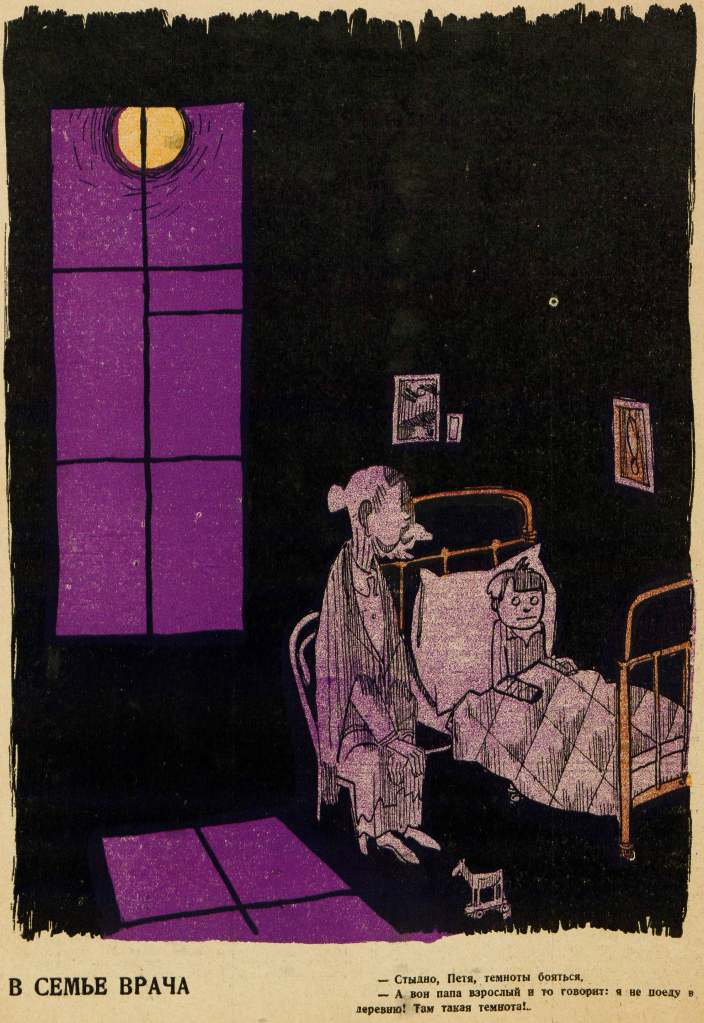
“You should be ashamed to be afraid of the dark, Pete!”
“But papa’s a grownup and he says he won’t go to the countryside! There’s such darkness there!”
(Chudak, Moscow, 1929)
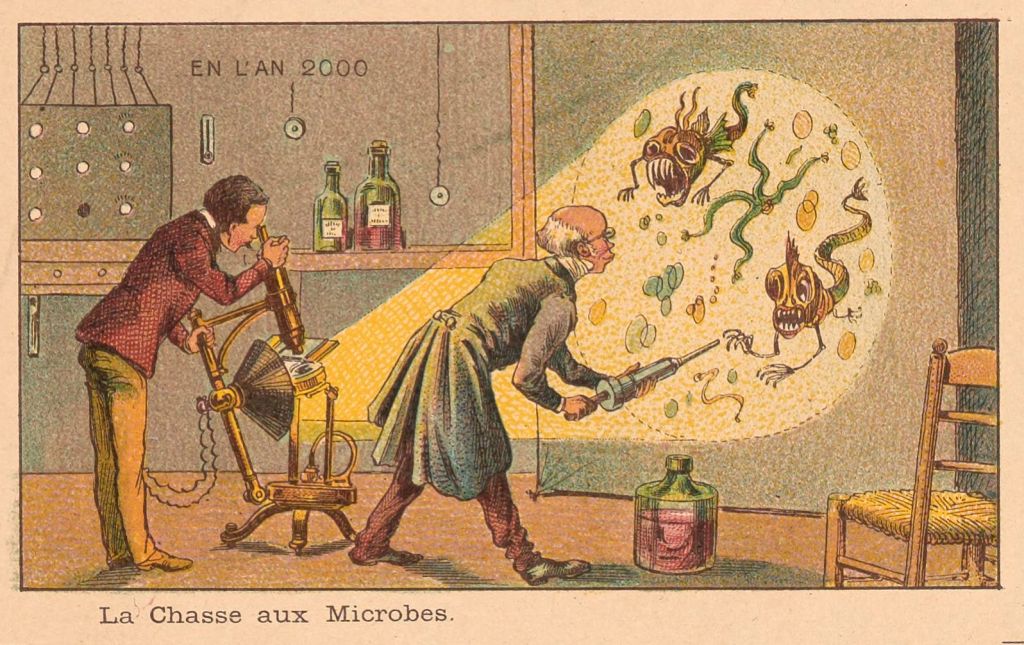
From Jean-Marc Côté, In the Year 2000 (Paris, 1910). (Note the familiar clystère seen in many other settings. Thanks to Theresa Levitt for directing me to this image.)
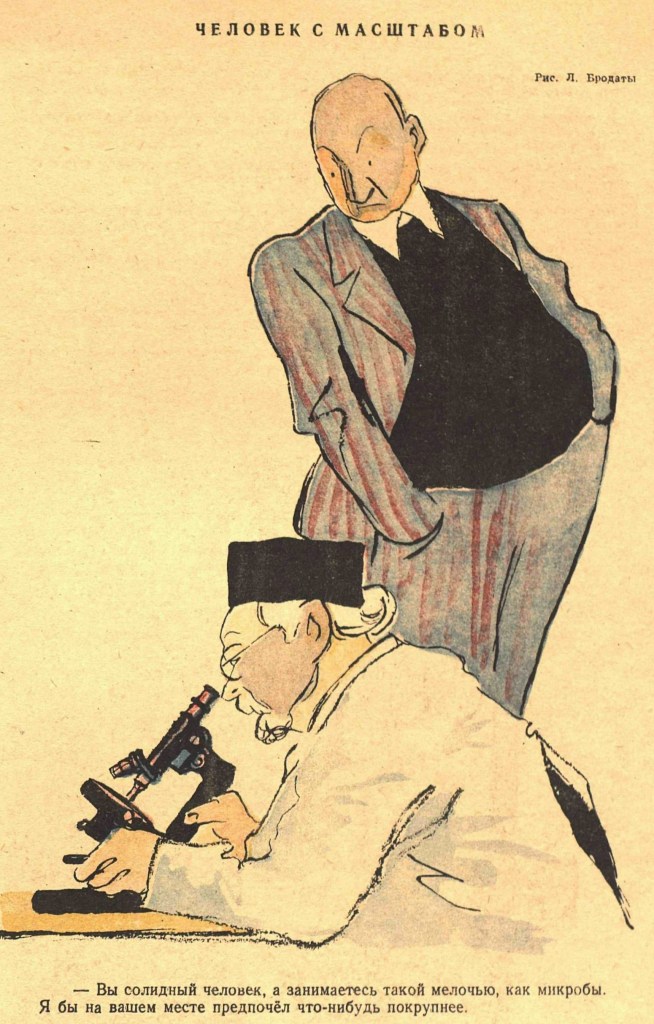
“You’re a respectable fellow, but you study trifles like microbes. In your place I would prefer something bigger.”
(Krokodil, Moscow, 1946)
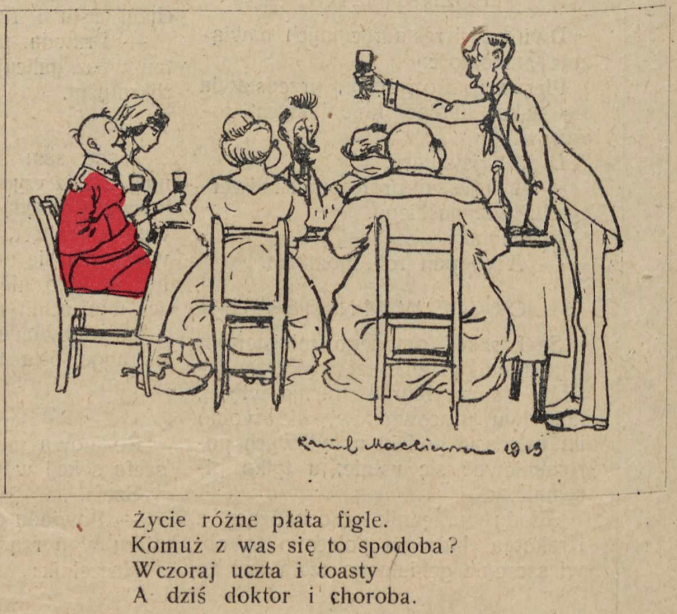
Life diverse is playing tricks.
Does any one of you like it?
Yesterday it was a feast and toasts
And today the doctor and disease.
(Szczutek, Lwów, 1919)
In this period soon after the restoration of the Polish Republic, Kamil Mackiewicz produced several dozen multi-panel cartoons under the title “Fire and sword, or the adventures of crazy Greg — a contemporary story.” As one might guess from the title, there is a picaresque quality to Greg’s adventures, but I don’t know enough yet to make any hasty characterizations of the series. What is striking is that influenza and typhus do not figure in the narrative, despite their prevalence at the time. There is only this indirect gesture in the final panel of episode 27, at Greg’s wedding dinner, following their search for a vicar to marry them.
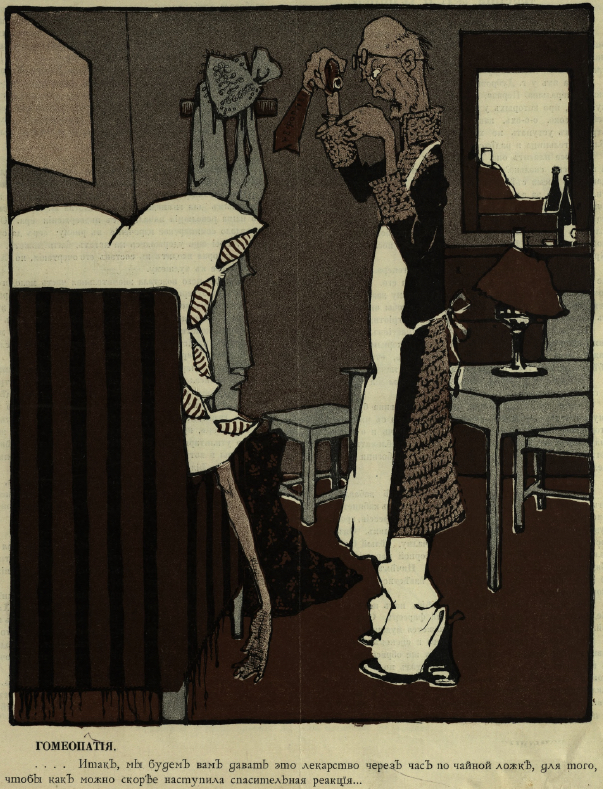
… So, we’ll give you this medicine by teaspoon in an hour, so that a salutary reaction sets in as soon as possible…
(Strekoza, St. Petersburg, 1908) (This cartoon appeared before the cholera outbreak in Russia that same year.)
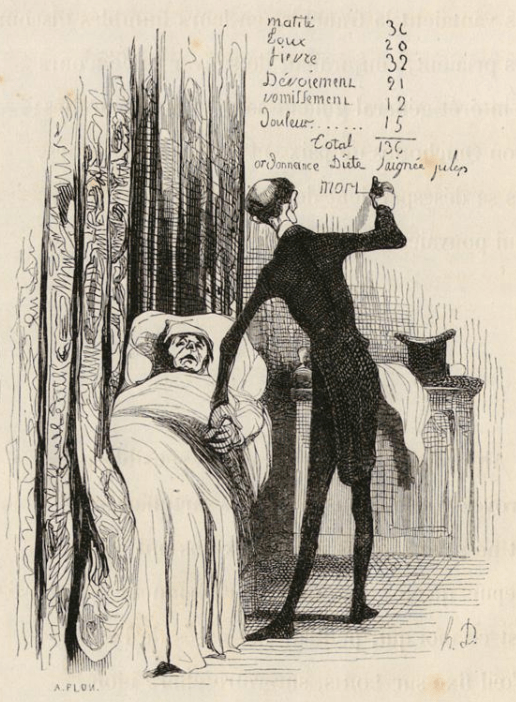
Mocking the quantifying pretensions of the scientific man of medicine, at a time when his clinical interventions were inadequate. François Fabre, Némésis médicale illustrée (1840), with illustrations by Daumier.
(ETH Bibliothek)
(In 1976 the global population is set to surpass four billion.)
A consecration hour of joy
For prophets and bards of progress
Dear people, there are ever more people
Currently it is four billion
Who amuse themselves there
In a planned energetic quest
To consume the planet
On which they so happily live
(Original text at Nebelspalter, Zurich, 1976)
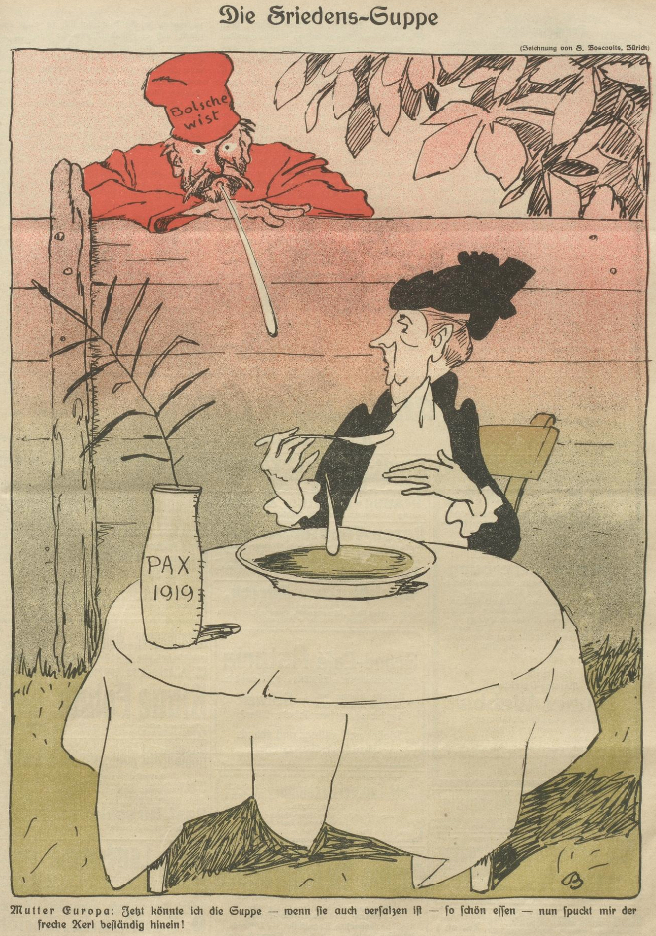
Mother Europe: “I could be eating the soup—even if it’s also over-salted—just fine, and now this impudent fellow is constantly spitting in it!”
(Nebelspalter, Zurich, 1919) (It turns out this is not a new theme. Compare this version of “peace soup” from 1905 and this one from 1907.)
Although this site is largely devoted to archiving obscure historical humor, this amusing illustration by the marvelous Hungarian cartoonist Marabu (aka László Róbert Szabó) accompanies a recent article on hostility to science as a pandemic threat.
(Népszava, Budapest, 2020)

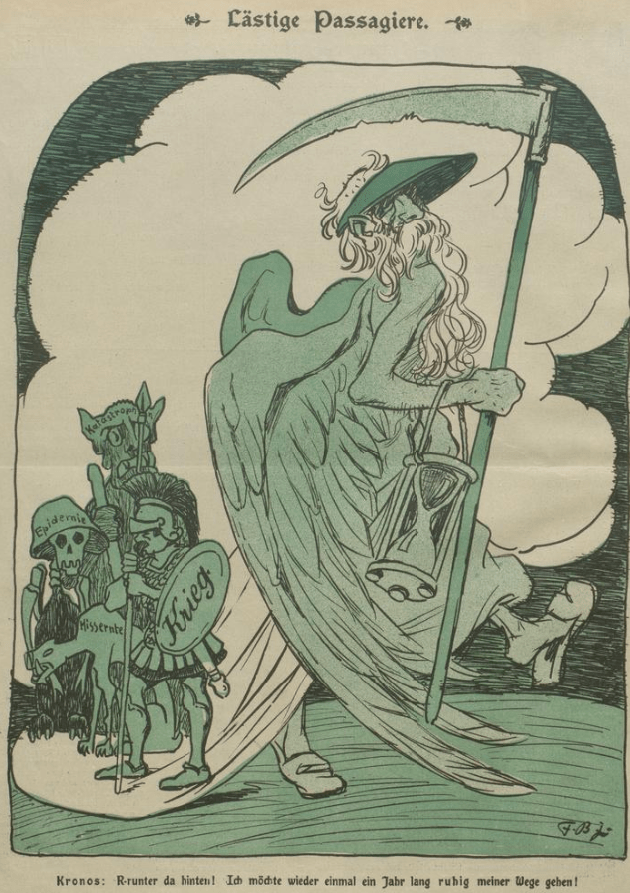
Kronos: “Down in back! For once I’d like to go my way quietly for a year!” (Passengers: epidemics, bad harvests, catastrophes, war)
(Nebelspalter, Zurich, 1911)
(O Malho, Rio de Janeiro, 1928)
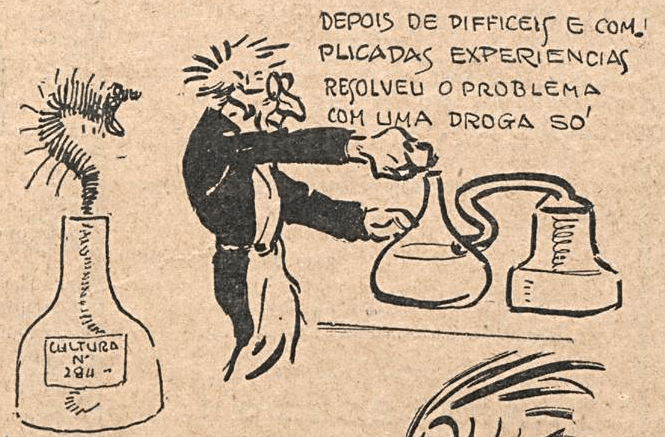
Dr. Karrapatoff discovered the way to breed microbes in order to study them.
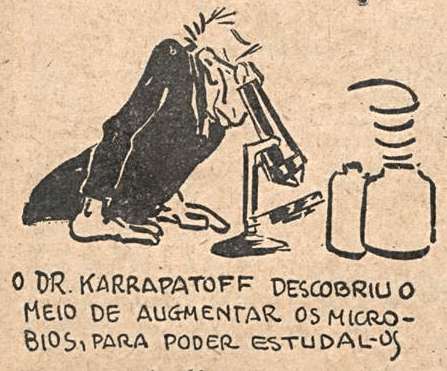
After difficult and complicated experiments, he solved the problem with just one drug.
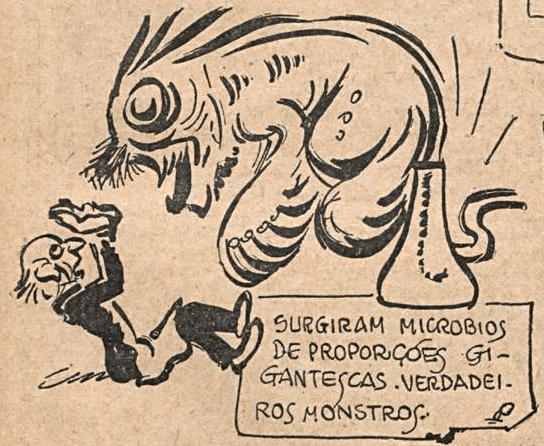
Microbes of gigantic proportions emerged, true monsters.
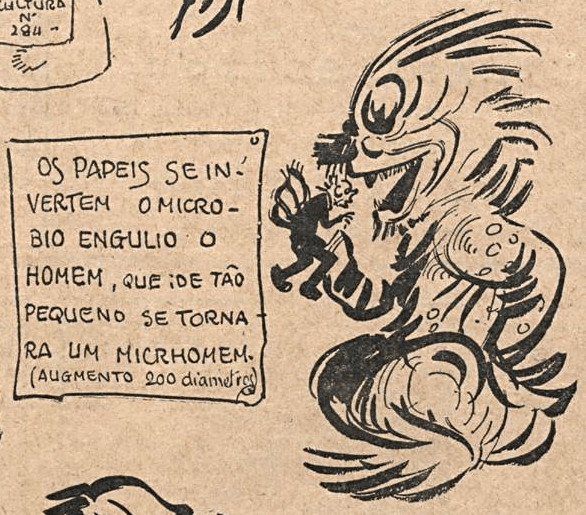
The roles are reversed, the microbe swallows the man, who gets so small that he becomes a microman. (magnified 200 diameters)
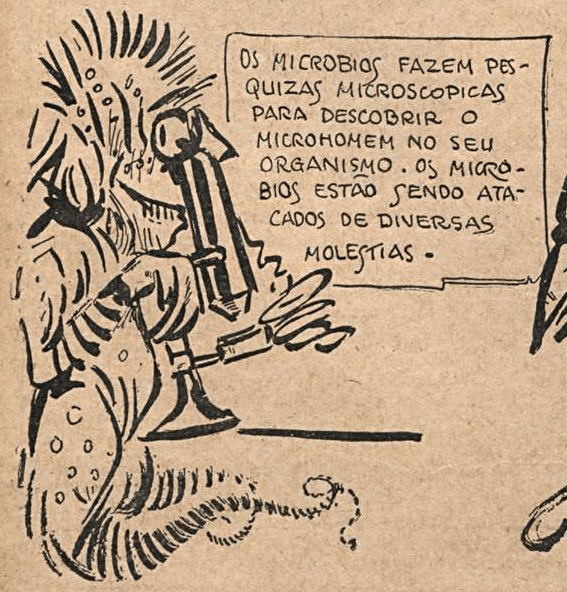
The microbes do microscopic research to discover the microman in their organism. The microbes are being attacked by various diseases.
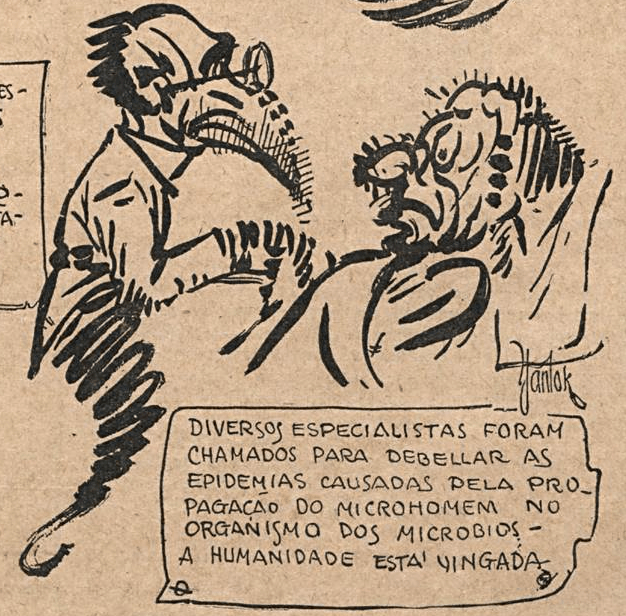
Several specialists are called in to tackle the epidemics caused by the spread of the microman in the organism of the microbes – humanity is avenged.
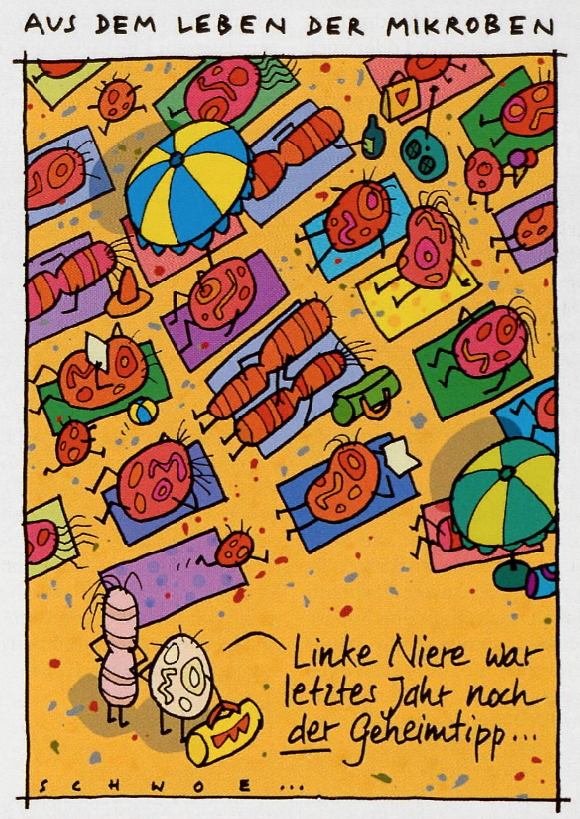
Last year the left kidney was still the insider travel tip…
(Matthias Schwoerer, Nebelspalter, Zurich, 2010)
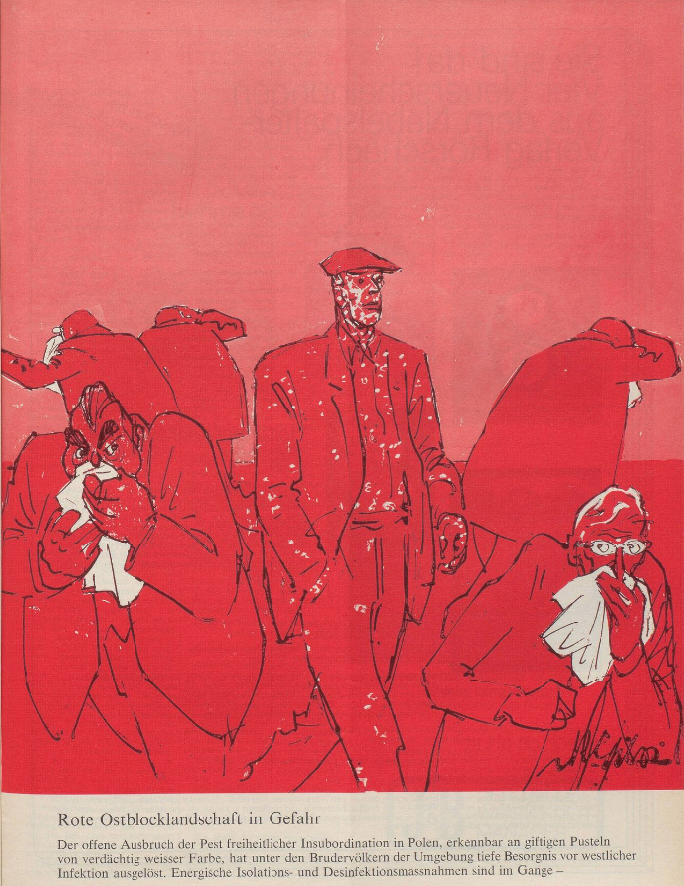
It’s an easy political metaphor unconnected to an actual epidemic, but let’s catalogue it anyway. “The open outbreak of the contagion of insubordination in Poland, recognizable by the poisonous pustules of suspiciously white color, has unleashed deep concern about Western infection among the surrounding fraternal nations. Energetic isolation and disinfection measures are underway.”
(Nebelspalter, Zurich, 1980)
 Sic Transit Pestilentia