Continuing the clystère theme from other posts.
(Parodia, Lisbon, 1906) (reprinted from L’Assiette au beurre, 1902)
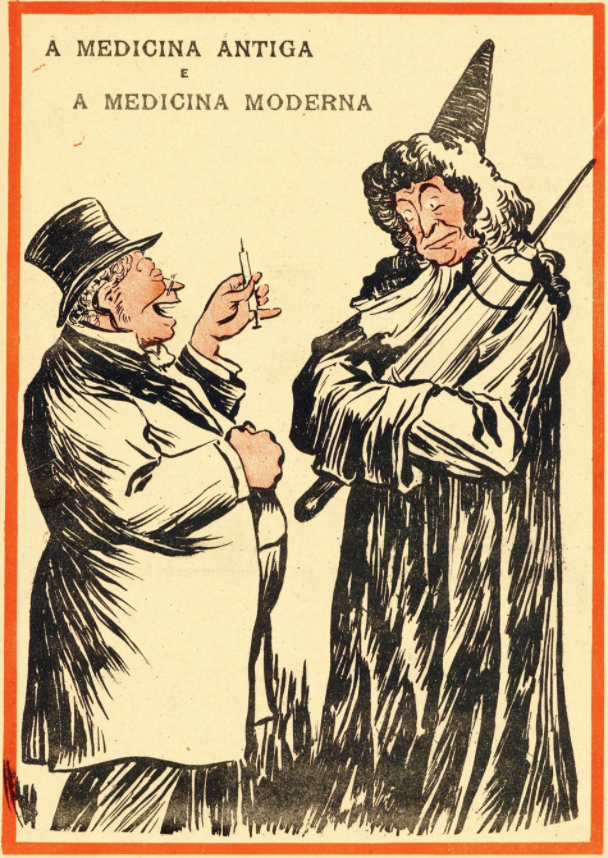
Continuing the clystère theme from other posts.
(Parodia, Lisbon, 1906) (reprinted from L’Assiette au beurre, 1902)
Subtitled “On the vaccination debate.” Three quacks: “Listen, boy, there’s no other way! You have to get inoculated either against the black or the blue or the red pox.” It would be an interesting comparative exercise to study when vaccination is sufficiently widespread that it can be appropriated as a readily understood political metaphor (black conservative, blue centrist, and red social democratic, respectively).
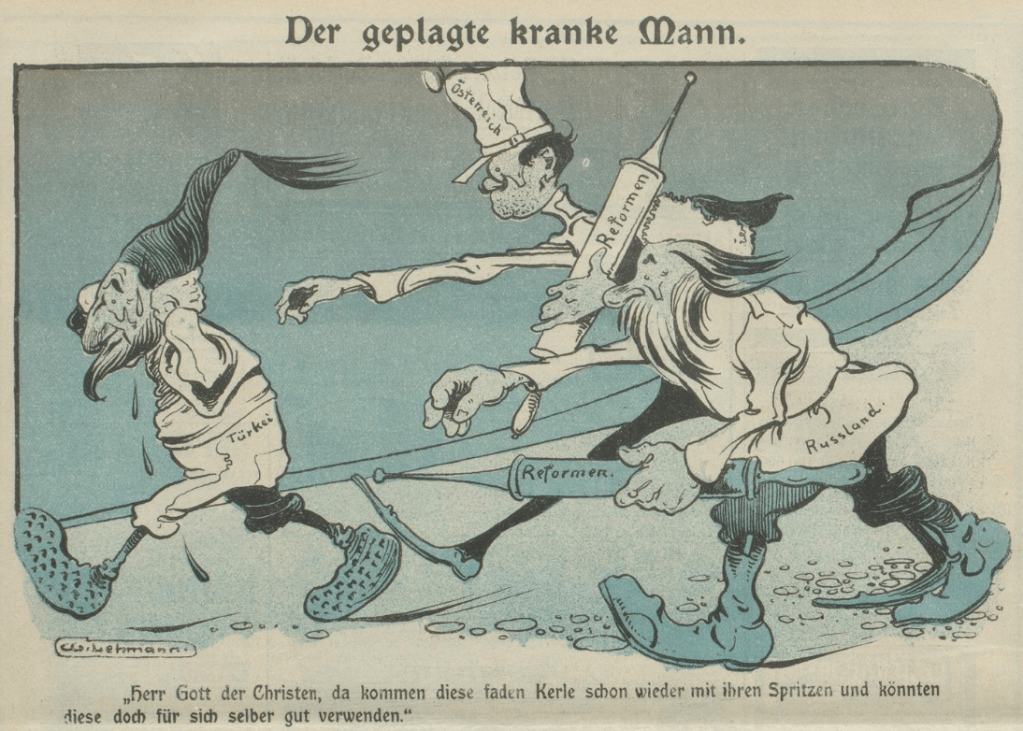
(Kladderadatsch, Germany, 1914)

Turkey pursued by Austria and Russia with syringes full of reforms. “Lord God of the Christians, here come these stupid guys again with their syringes and yet they could put them to use for themselves.” (Included mainly for the use of the clystère theme.)
(Nebelspalter, Zurich, 1907)
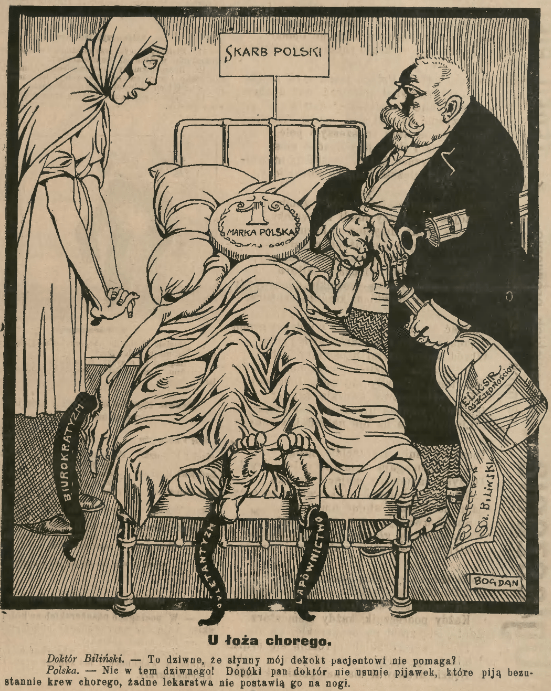
Hospital ward: Polish treasury. Patient: The Polish mark.
Doctor Biliński [the Polish finance minister with his austerity elixir]: “Isn’t it strange that my famous decoction is not helping the patient?”
Polish woman: “No wonder! Until the doctor removes the leeches [bureaucratism, dilettantism, bribery] that constantly drink the patient’s blood, no medicine will put him on his feet.”
(Mucha, Warsaw, 1919)
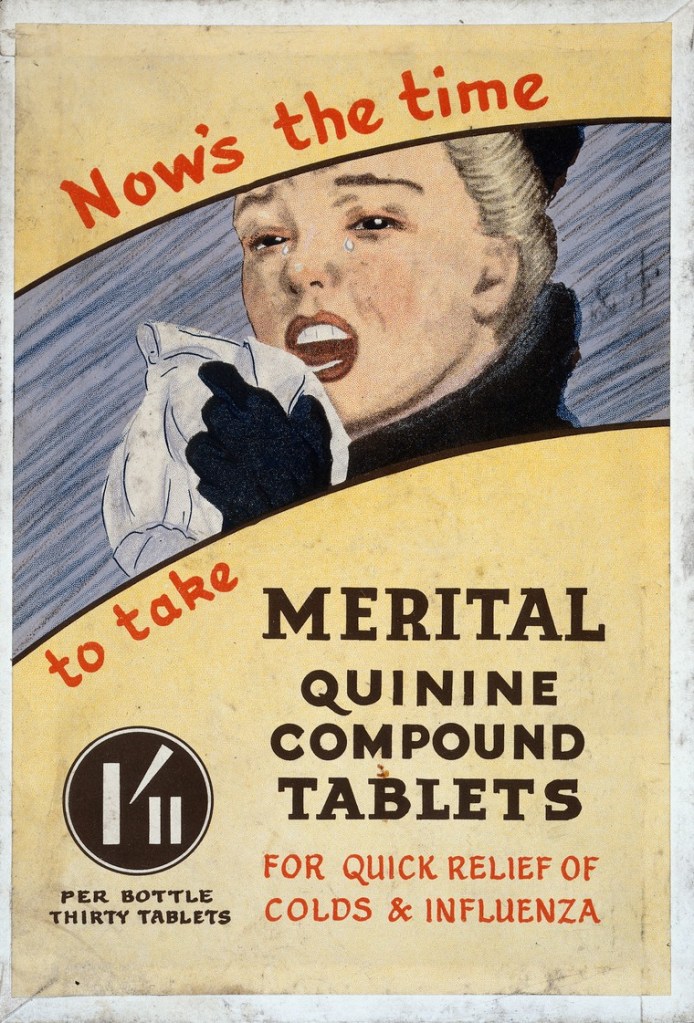
“The metric’s right here,” insists the American President regarding criteria for exiting our physical distancing regimen. A friendly public service reminder not to take medical advice from a TV huckster. (Wellcome Collection) (And see the inimitable Tom Toles’ superior rendering.)
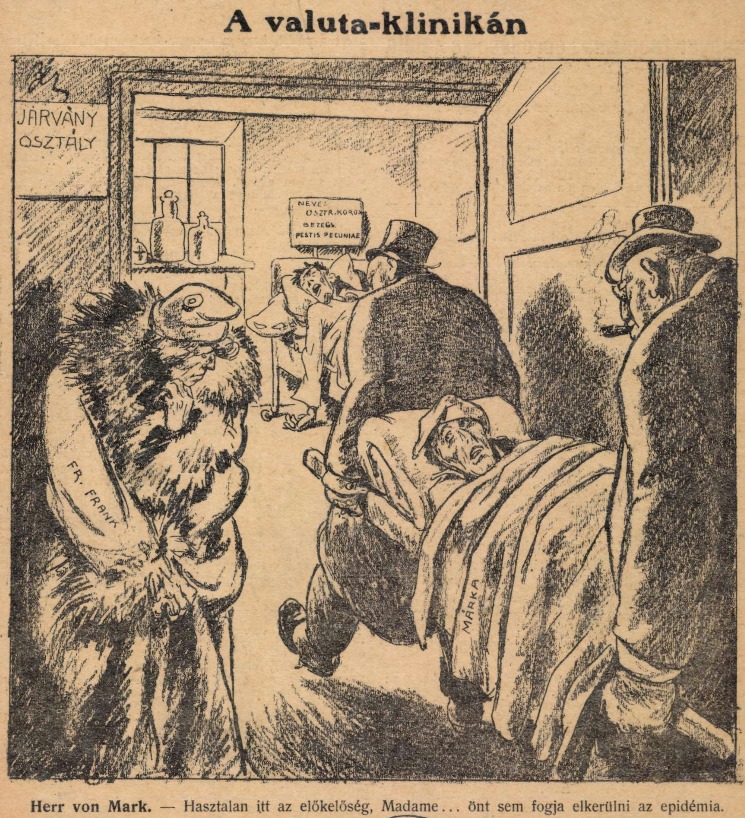
When contagion metaphor and economic analogy join forces to manifest our anxieties at a time of high inflation: “At the currency clinic” (epidemic department). Patient name: Austrian crown. Disease: Pestis pecuniae. Fur-swathed French franc in the waiting room. German Herr von Mark: “Your prominence is useless here, Madame… The epidemic will not avoid you.” (Borsszem Jankó, Budapest, 1922)
 Sic Transit Pestilentia