Kronos: “Down in back! For once I’d like to go my way quietly for a year!” (Passengers: epidemics, bad harvests, catastrophes, war)
(Nebelspalter, Zurich, 1911)
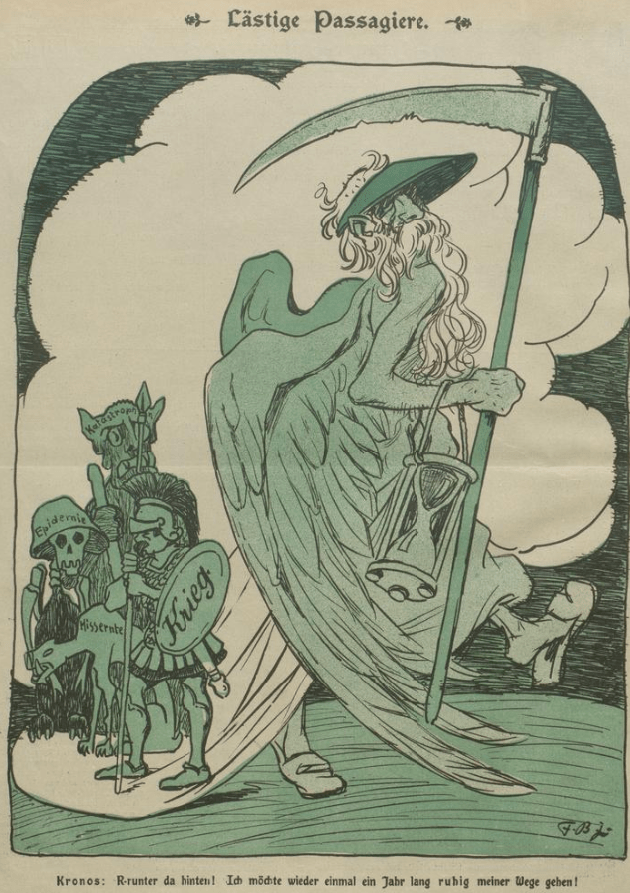
Kronos: “Down in back! For once I’d like to go my way quietly for a year!” (Passengers: epidemics, bad harvests, catastrophes, war)
(Nebelspalter, Zurich, 1911)
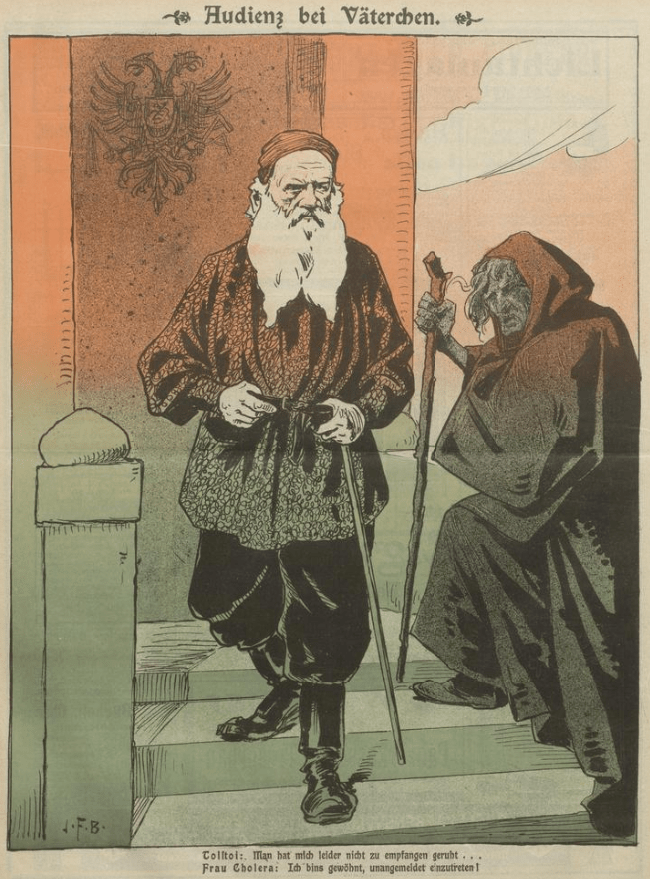
Leo Tolstoy: “Unfortunately I was not reposed to receive guests…”
Madame Cholera: “I’m use to entering without notice.”
(Nebelspalter, Zurich, 1908)
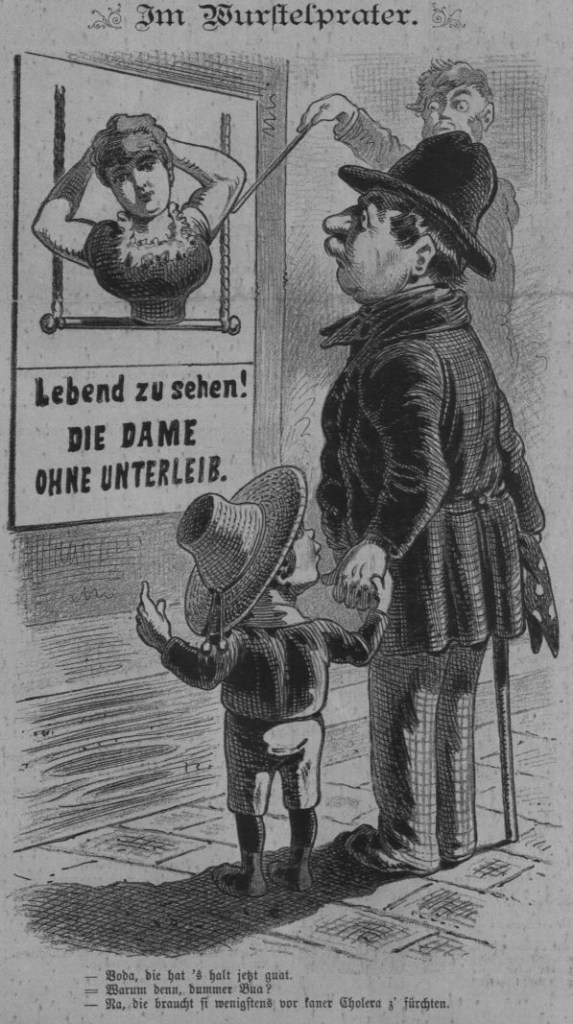
This may be the weirdest cartoon in the entire collection, yet once you know about the intestinal agonies experienced by cholera victims, the child’s observation somehow seems very relatable.
Carnival poster: See her live! The lady with no lower abdomen.
Little boy: “Boda, she must have it good now.”
“Why, foolish boy?”
“Well, at least she doesn’t have to be afraid of any cholera.”
(Kikeriki, Vienna, 1892)
…or the bar in a city hall.
(La Esquella de la torratxa, Barcelona, 1914)
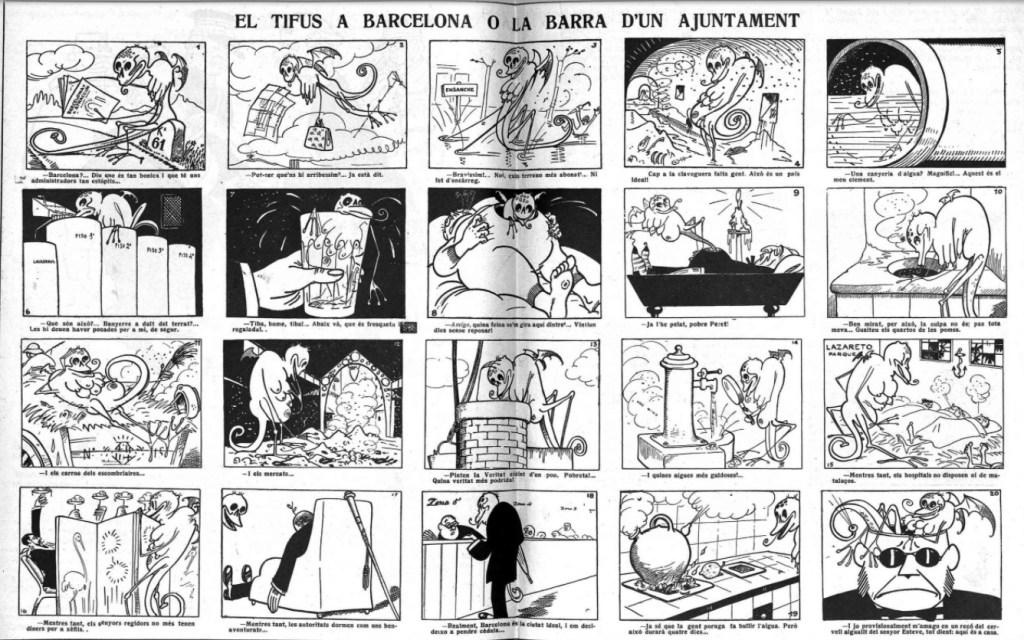
Here there is no other trinity than God, Me, and Typhus.
(La Esquella de la torratxa, Barcelona, 1914)

There is no cholera, there is no revolution, but in the meantime, the people who go out do not return, and there is no need to.
(La Esquella de la torratxa, Barcelona, 1911) (The idiom wants improvement.)

From La Esquella de la torratxa, Barcelona, 1912.
Before binging on tomatoes and vegetables, think about how much better prawns are.

Try not to leaf through the Barcelona newspapers.
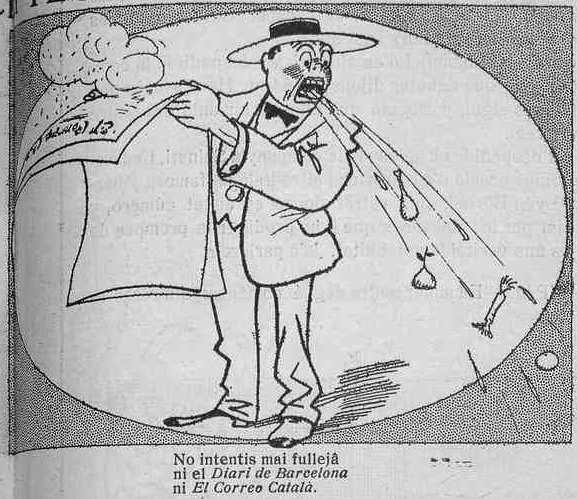
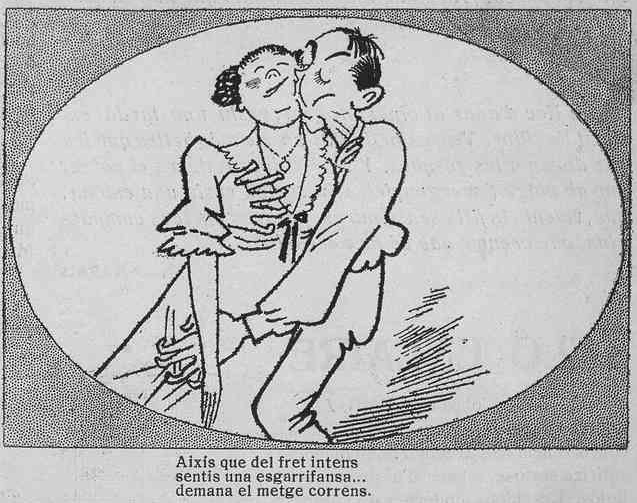
If you feel a shiver like this from the intense cold… run to the doctor tomorrow!
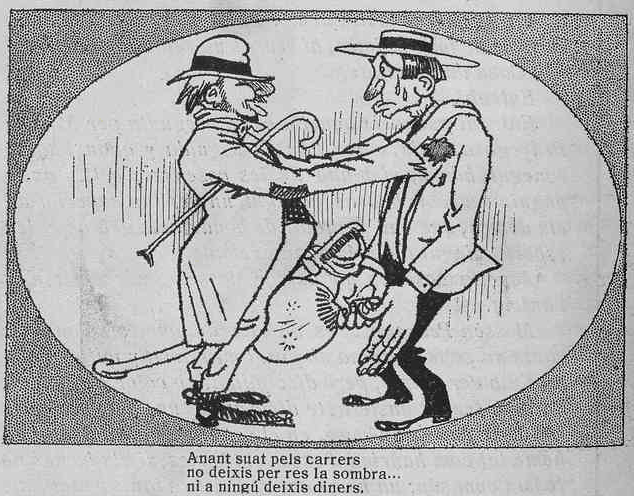
As you go sweating through the streets, do not leave the shade for nothing… or leave money to anyone.
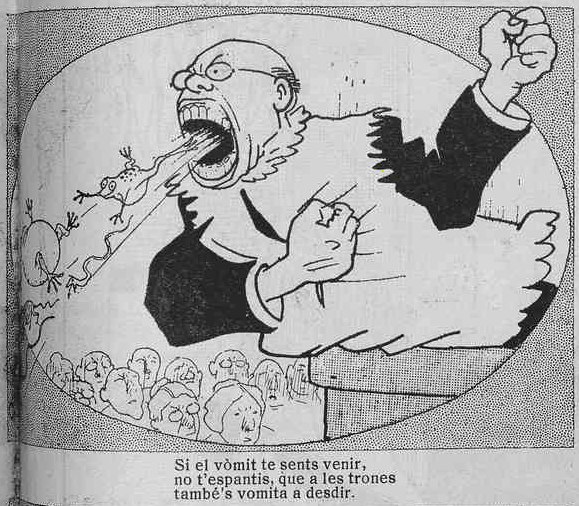
If you feel the vomit coming, don’t be frightened, for in the pulpits they also vomit to renounce.
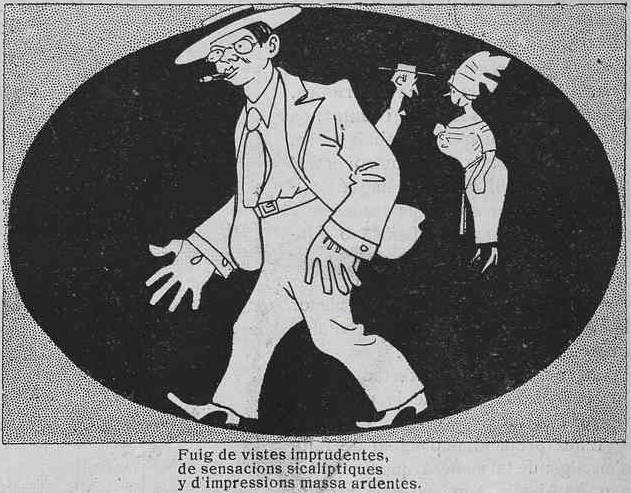
Flee from reckless views, suggestive sensations, and overly ardent impressions.
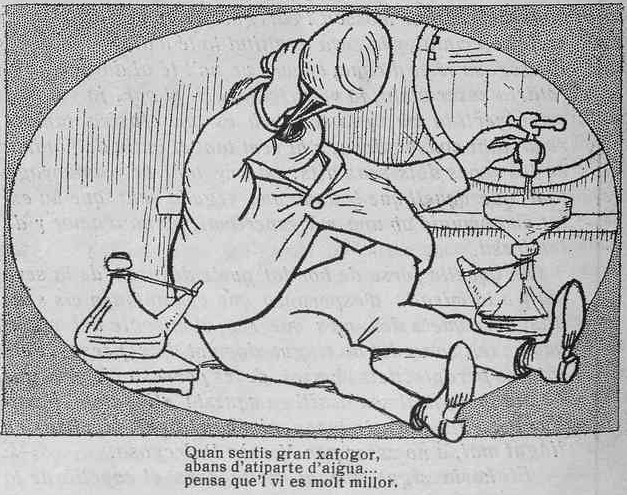
When you feel very hot, before you drink water… think about how much better wine is.
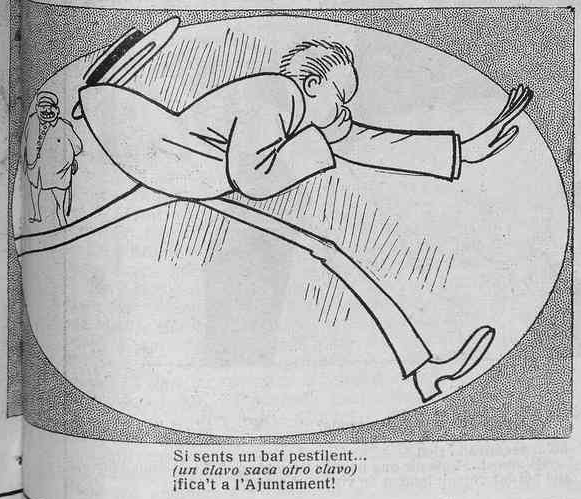
If you feel a pestilent breath… (a nail pulls out another nail) go to the City Hall!
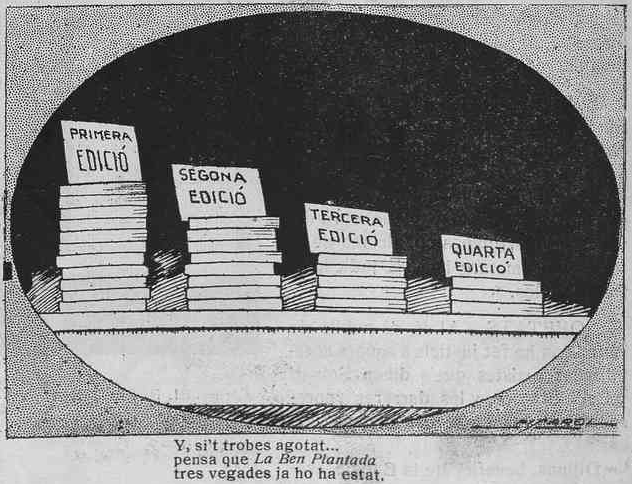
And, if you find yourself exhausted… remember that Firmly Rooted (Catalan novel) has been there three times already.
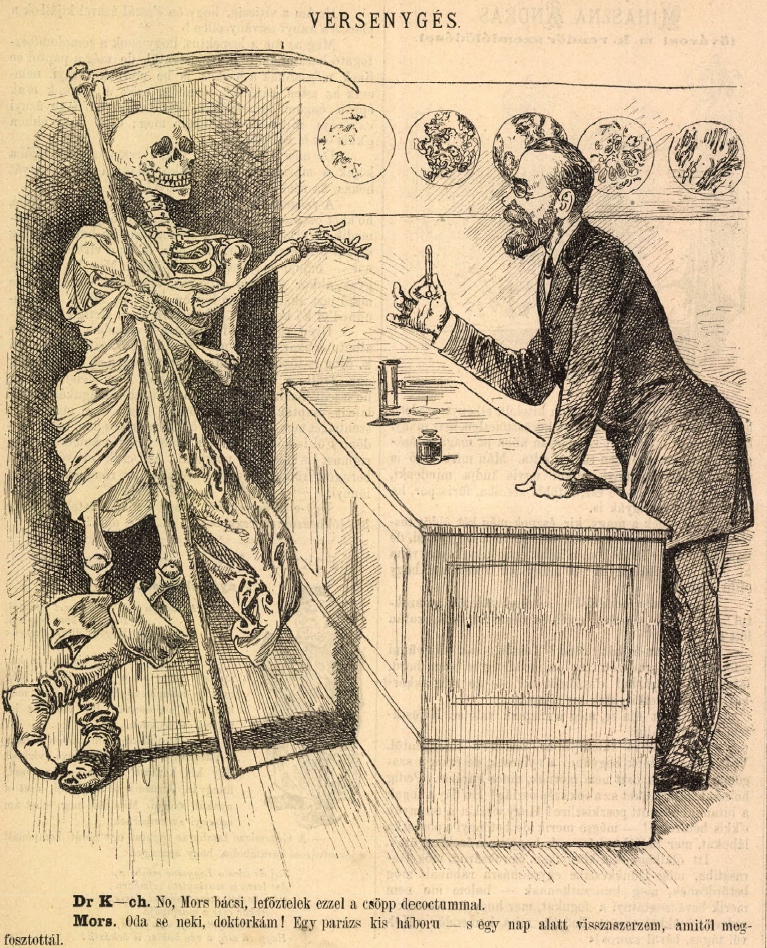
Dr. Koch: “Well, Uncle Morbus, I’ve cooked it down with this little decoction.”
Cholera Morbus: “Nothing to it, Doc! It’s a heated little war — and within a day I’ll get back what you deprived me of.”
(Borsszem Jankó, Budapest, 1890)
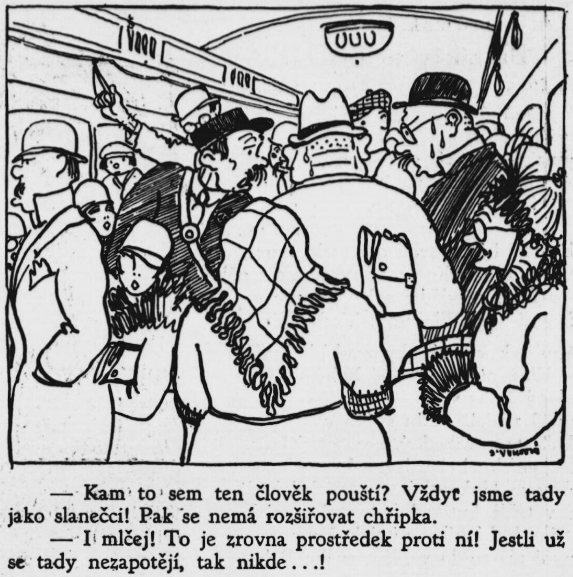
Ticket-taker on tram: “Where do you let this man go? After all, we’re packed like herrings in here. That way the flu does not spread.”
“And be quiet! This is exactly the remedy against it. If you don’t sweat here anymore, then you won’t anywhere…”
(Humoristické listy, Prague, 1927)
Wow, Sr. Manuel! I would also relax in my rocking chair if I was in France, giving grand advice about cholera!
(La Esquella de la torratxa, Barcelona, 1885)

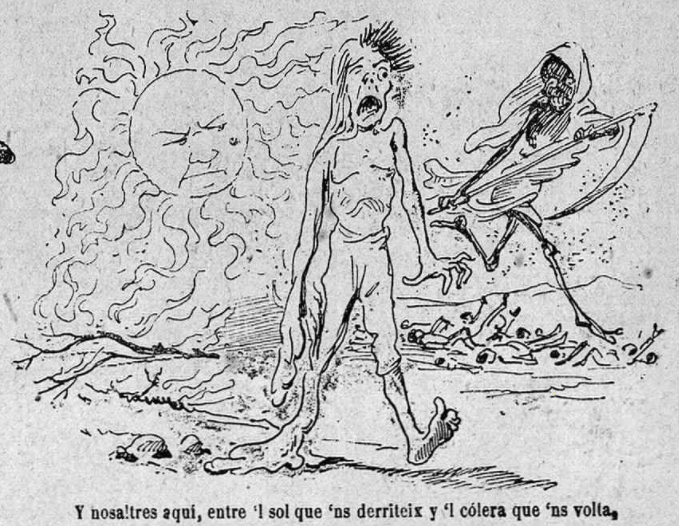
And us here, between the sun that melts us and the cholera that surrounds us.
…between France and Spain: “Master, if you do not have a certificate, you will not enter.”
(La Esquella de la torratxa, Barcelona, 1893)

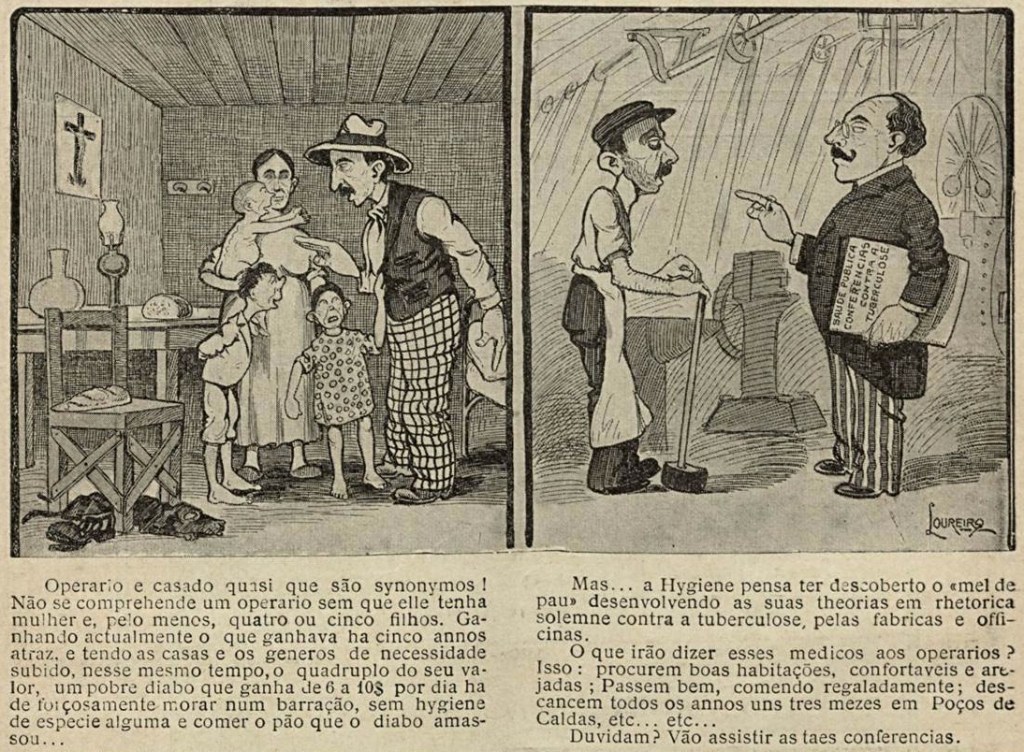
(The Brazilian Public Health Service resolves to send its delegates to hold conferences among workers in factories and offices as a means of combating tuberculosis.)
To be a worker and married are practically synonymous! A worker cannot be understood without having a wife and at least four or five children. Currently earning what he earned five years ago, while at the same time the cost of housing and goods is of necessity going up, quadrupling in value, a poor devil who earns $6-10 a day has to live in a shed without hygiene of any kind and eat bread kneaded by the devil…
But… Hygiene thinks it has discovered “bread honey” by developing its theories for factories and offices in solemn rhetoric against tuberculosis.
What will these doctors say to the workers? This: look for good, comfortable and airy rooms; Have a good time, eating well; rest three months a year in Poços de Caldas [spa city north of São Paulo], etc… etc…
Doubt it? Go attend these conferences.
(O Malho, Rio de Janeiro, 1913)
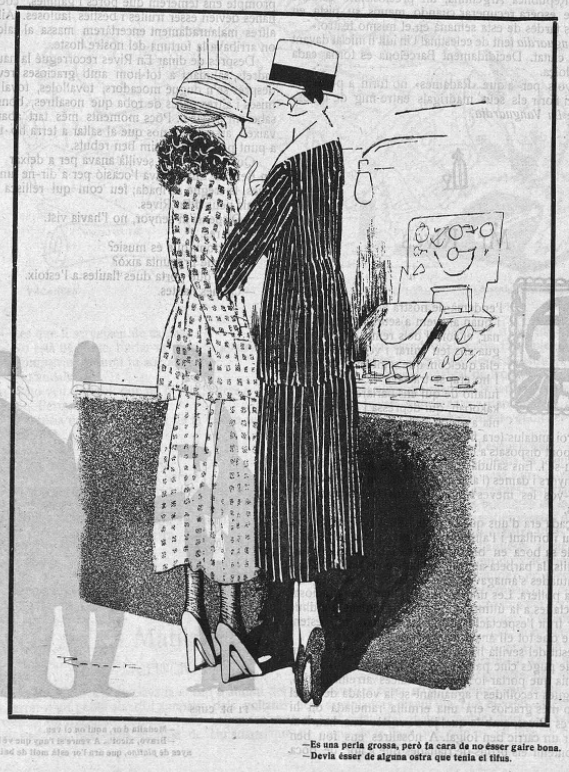
“It’s a big pearl, but it doesn’t look very good.”
“It must have been from some oyster that had typhus.”
(La Esquella da la torratxa, Barcelona, 1918)
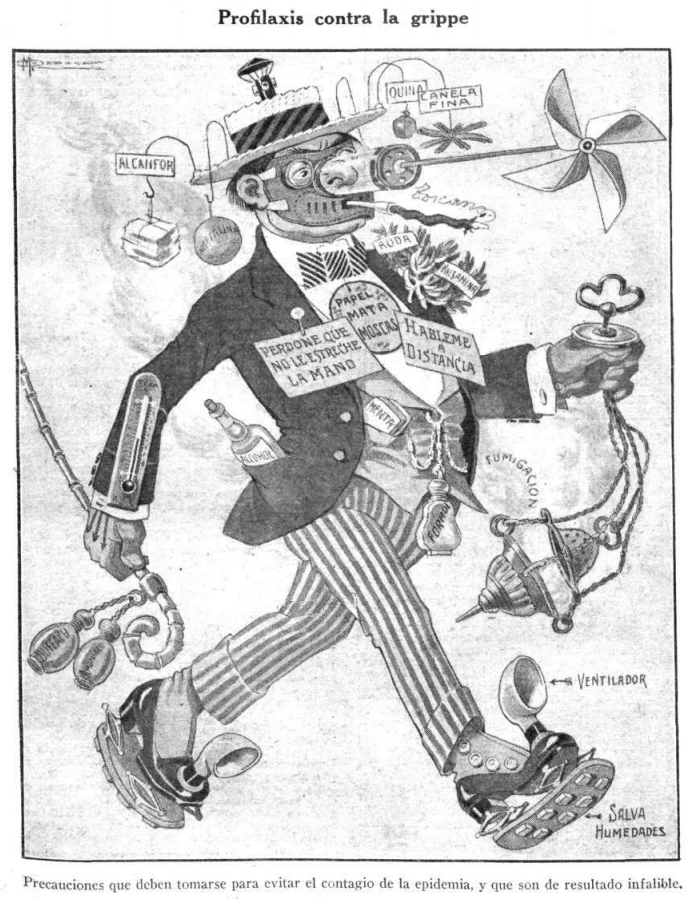
Precautions that must be taken to avoid the spread of the epidemic, and which offer a flawless result.
(Among the items affixed to him: camphor, naphthalene, quinine, cinnamon, “Sorry for not shaking your hand,” flypaper, “Please speak to me at a distance,” alcohol, mint, fumigation by censor, a ventilation device, and what I take to be pads for absorbing humidity. Having a thermometer always at the ready is a crowning touch.)
(Caras y Caretas, Buenos Aires, 1918) (Note the similarity to Jeremiah Fastidious from 1892)
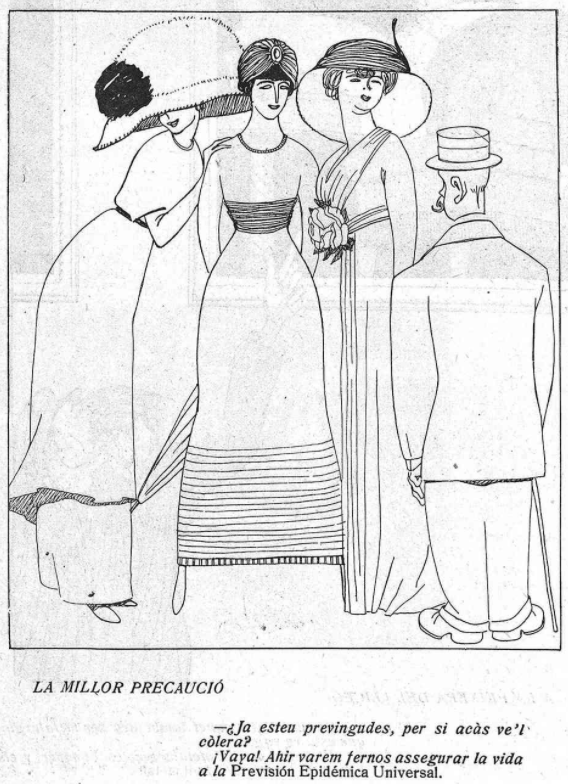
“Are you already taking precautions in case the cholera is coming?”
“Vaya! Yesterday we went to get life insurance at Universal Epidemic Prevention.”
(La Esquella de la torratxa, Barcelona, 1910)
 Sic Transit Pestilentia