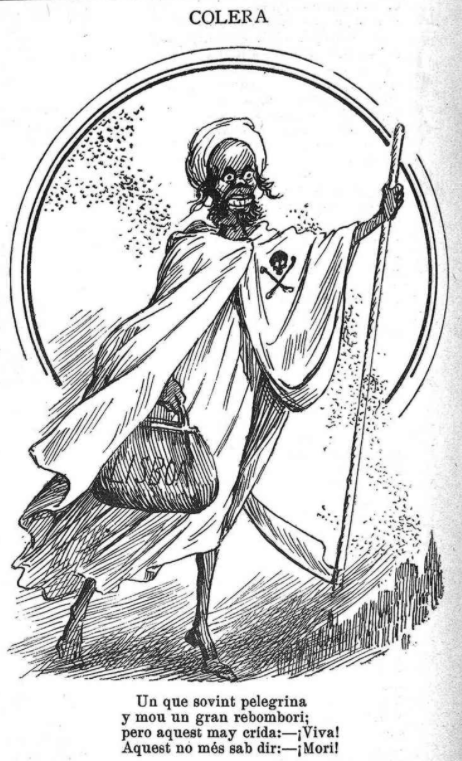
One who often makes a pilgrimage
and instigates a great tumult;
but this one may shout: Long live!
This one no longer knows how to say: Die!
(La Esquella de la torratxa, Barcelona, 1894)
One who often makes a pilgrimage
and instigates a great tumult;
but this one may shout: Long live!
This one no longer knows how to say: Die!
(La Esquella de la torratxa, Barcelona, 1894)
(La Esquella de la torratxa, Barcelona, 1884)
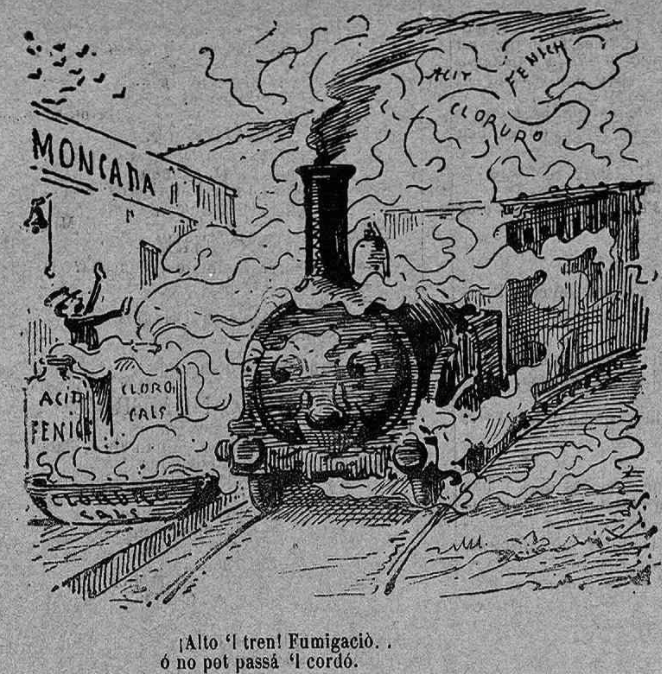
Stop the train! Fumigation… or no fart shall pass through the cordon.
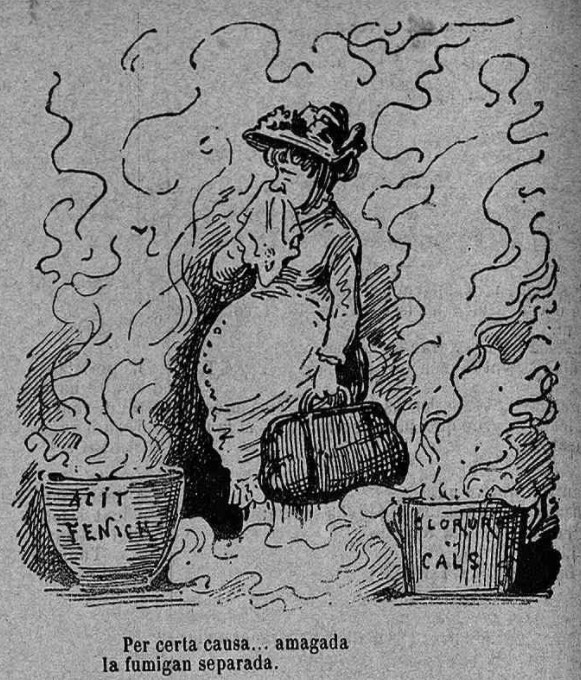
For some reason… the separate fumigant is hidden.
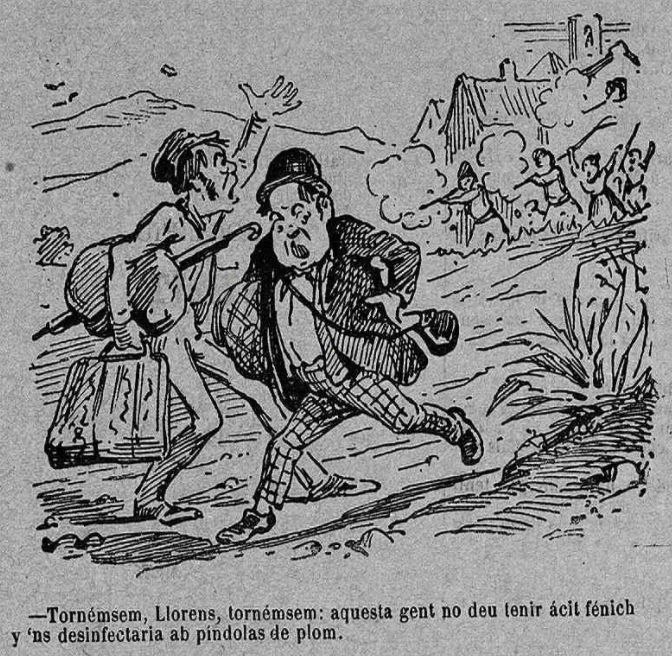
“Let’s go back, Laurence, let’s go back: these people must not have phoenix acid and they would like to disinfect us with lead pills.”
“Give me a piece of cord.”
“Young lady, I don’t have any, nor is it easy for me to find it anywhere: they have spent everything to cordon off the province.”

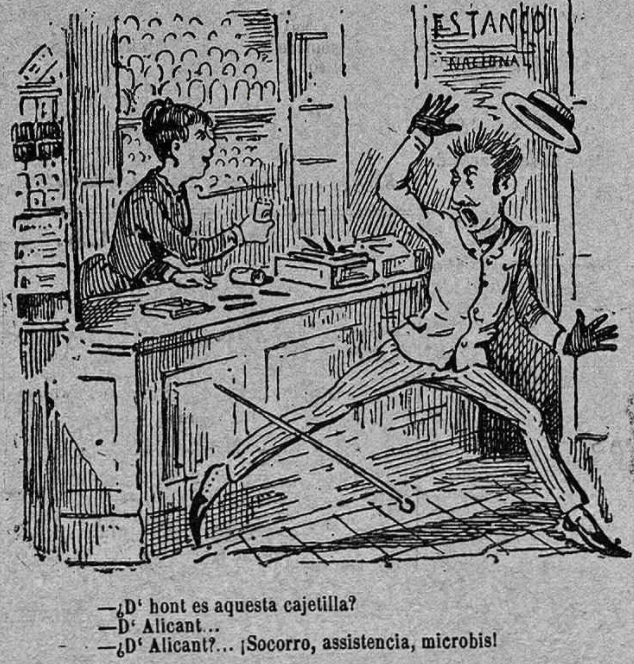
“Where is this box from?”
“From Alicante…”
“From Alicante?… Help, assistance, microbes!”
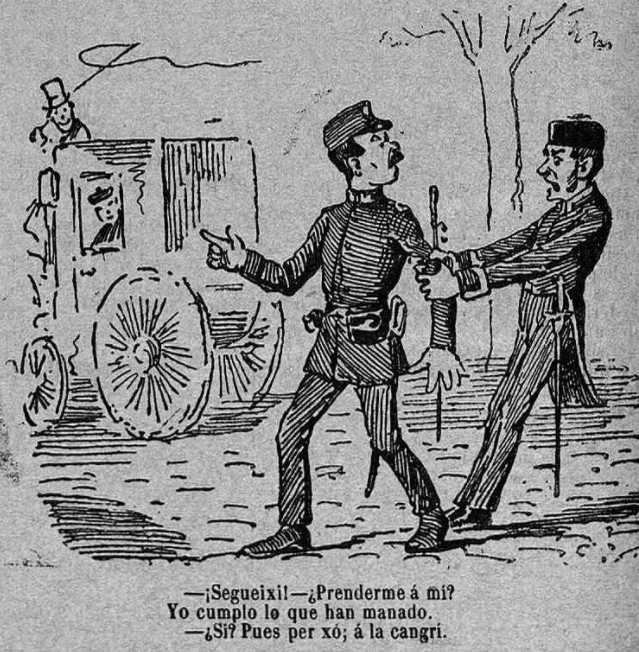
“Carry on!”
“Take me? I do what they have commanded.”
“Yes? Well, that’s how; like a kangaroo.” (??)
(Borsszem Jankó, Budapest, 1892)
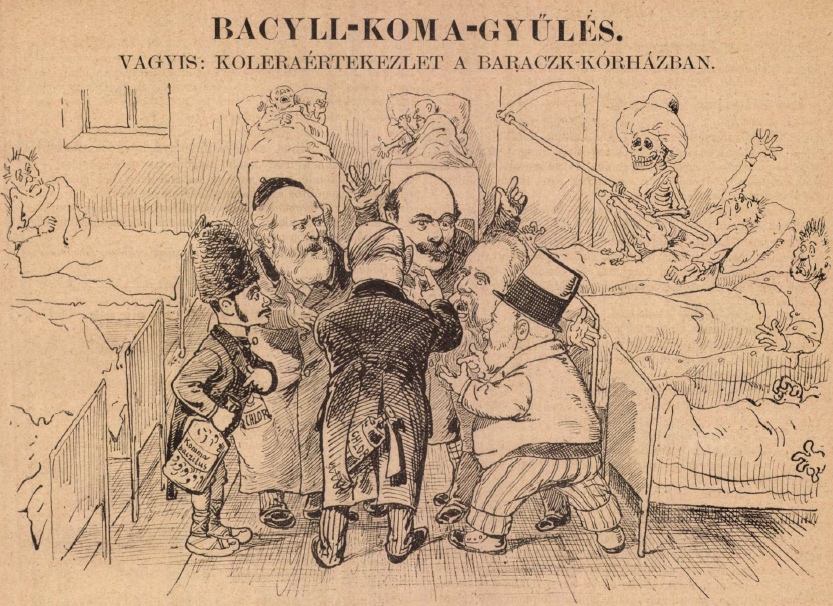
Or: Cholera meeting at the Peach Hospital
The image is accompanied by statements from Dr. Cheeseslicer, Dr. Bacillus Bacterius, Dr. Bablesi-Bibasiu (the Hungarian Pasteur), Dr. Striker! (Louis the Great, Cholera King), Dr. Veterinarius Bacterius, and Dr. Lacyllus Lupus. A note at the end indicates, “While the doctors strew about the seeds of the theory, Cholera Asiatica reaps happily, and Dr. Cheeseslicer notes with consolation: Yet this is cholera nostras and not Asian, because they are dying for us!”
(Bolond Istók, Budapest, 1886) (Yes, this wants further parsing in the context of domestic politics.) (See also this Dutch variant of cholera nostras.)
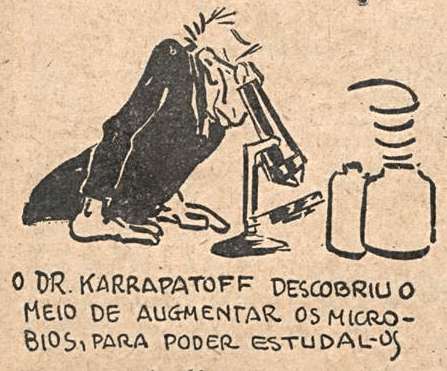
(O Malho, Rio de Janeiro, 1928)
Dr. Karrapatoff discovered the way to breed microbes in order to study them.
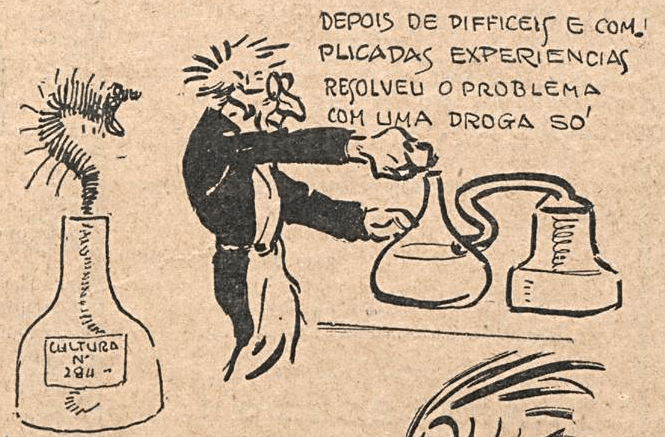
After difficult and complicated experiments, he solved the problem with just one drug.
Microbes of gigantic proportions emerged, true monsters.
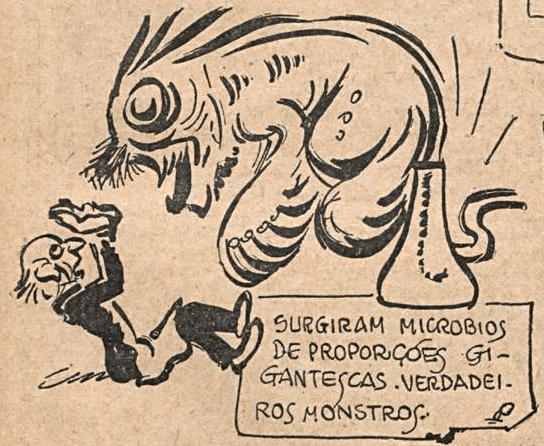
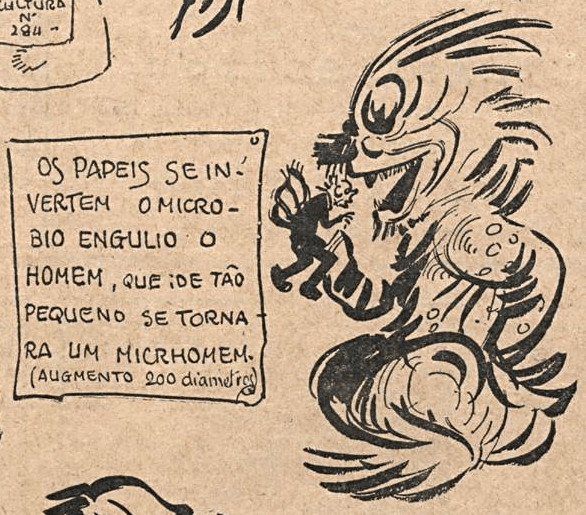
The roles are reversed, the microbe swallows the man, who gets so small that he becomes a microman. (magnified 200 diameters)
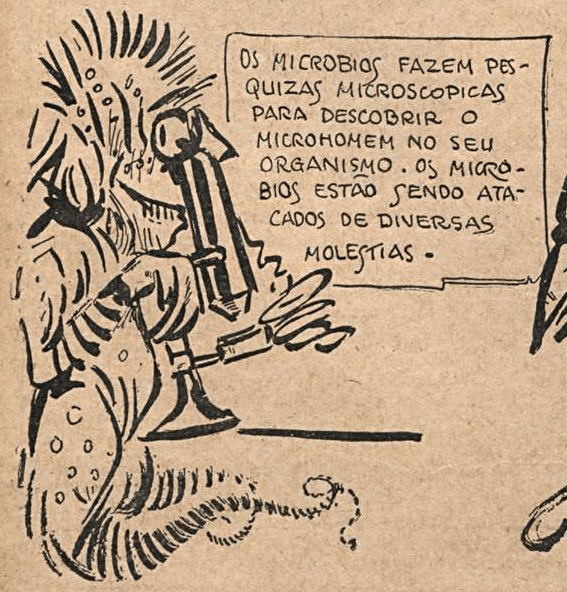
The microbes do microscopic research to discover the microman in their organism. The microbes are being attacked by various diseases.
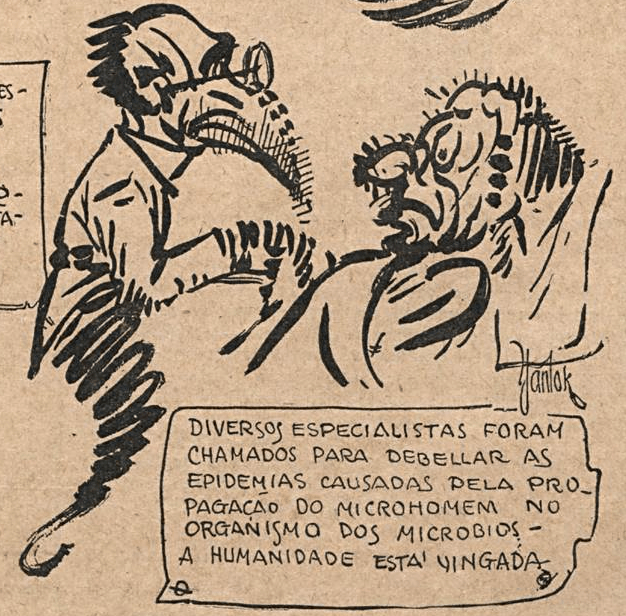
Several specialists are called in to tackle the epidemics caused by the spread of the microman in the organism of the microbes – humanity is avenged.
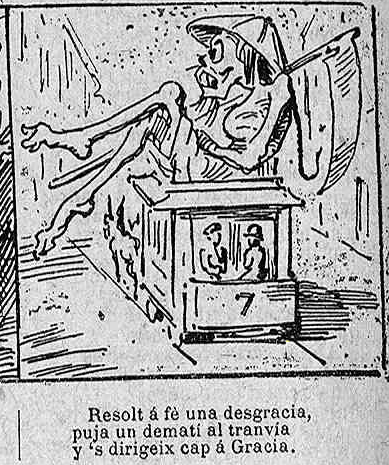
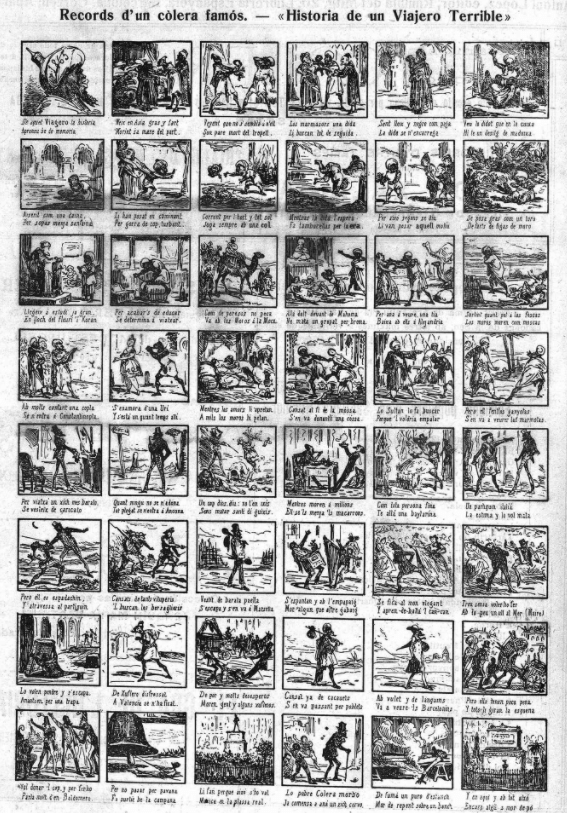
Mr. Cholera Morbus travels about Barcelona determined to work mischief. Detail from a multi-panel cartoon.
(La Esquella de la torratxa, Barcelona, 1885)
I certainly lack the expertise to annotate it properly, but this storyboard from the Catalan satirical magazine La Esquella de la torratxa (1910) seems worth archiving.
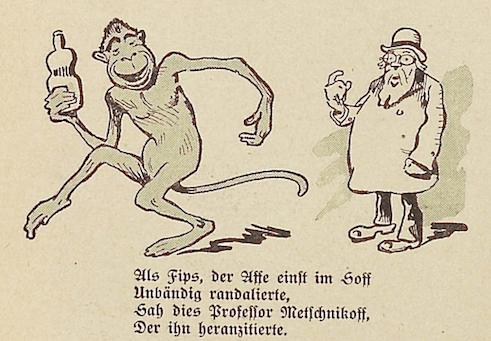
I can’t pass up a multi-panel cartoon about Ilya Mechnikov, the Russian émigré zoologist working in Paris who was awarded the Nobel Prize in 1908 for his research on immunology. (Kladderadatsch, 1910)
(The motive invoked by the cartoonist: news reports that Professor Ilya Mechnikov has vaccinated monkeys with typhoid serum.)
Once while Fips the monkey was in his cups
Wildly rampaging around,
Professor Metchnikoff caught sight of him,
And lured him toward himself.
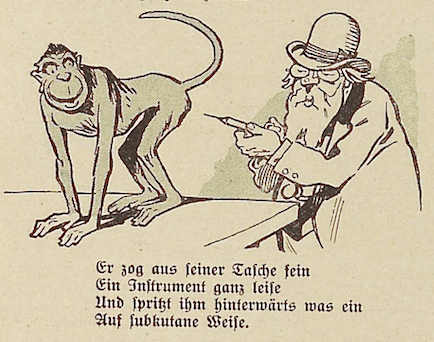
He smoothly pulled out of his pocket
An instrument, ever so quietly,
And injected something in his rear
In a subcutaneous way.
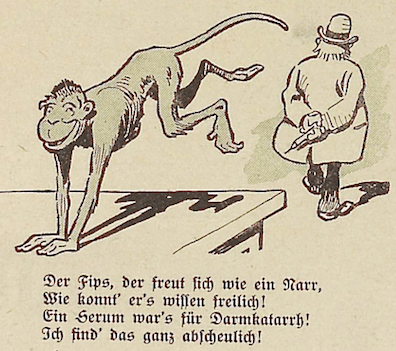
Fips rejoiced like a fool,
How could he really know?
It was a serum for catarrh!
I find that very hideous!
Very soon, however – his breath short! –
He got it good from the lure
To which he had been cunningly drawn.
He headed straight up the trees!

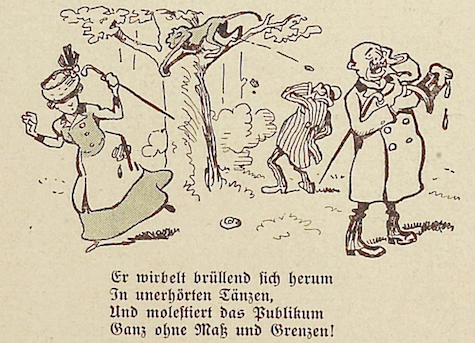
He whirls around shrieking
In outrageous dances,
And harasses the public
Without moderation and bounds!
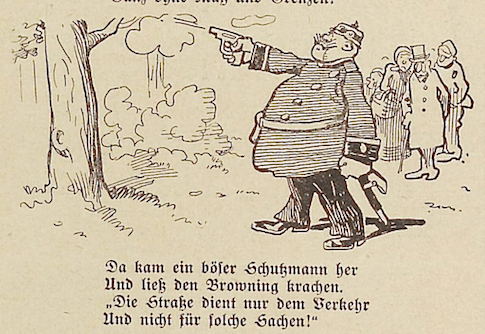
An angry constable came up
And let his revolver crack.
“The street is only for traffic
And not for things like that! “
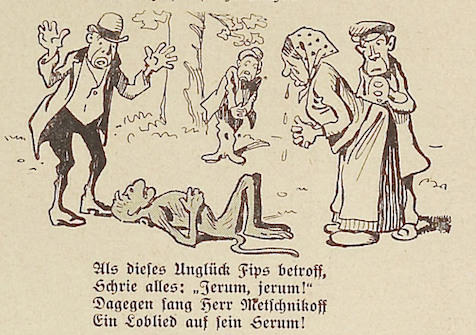
As Flips met this misfortune,
Everyone cried: “Jerum, jerum!”*
In contrast, Mr. Mechnikov sang
A song of praise for his serum!
*(invoking the Latinate refrain of a student song)
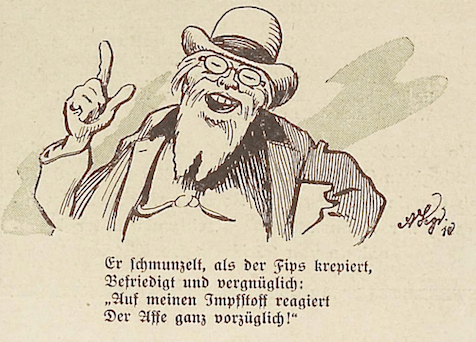
He grins when Fips croaks,
Satisfied and amused:
“The monkey’s response
to my vaccine is excellent!”
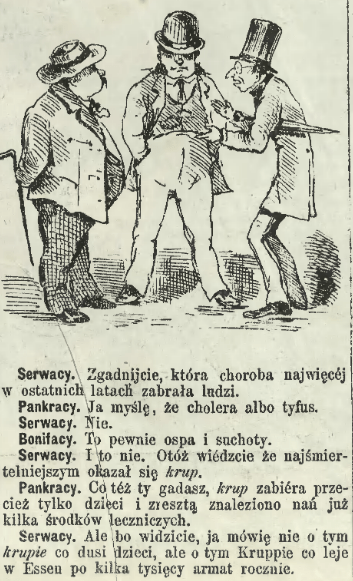
Servatius: Guess which disease has taken the most people in recent years.
Pancras. I think it’s cholera or typhus.
Servatius. No.
Boniface. It’s probably smallpox and consumption.
Servatius. Also no. So you should know that the croup was the most lethal.
Pancras. What are you talking about, the croup only takes children, and anyway, several medications have already been found.
Servatius. But because you see, I’m talking not about this croup that strangles children, but about this Krupp which pours several thousand cannons a year in Essen.
(Mucha, Warsaw, 1875)
Last year the left kidney was still the insider travel tip…
(Matthias Schwoerer, Nebelspalter, Zurich, 2010)

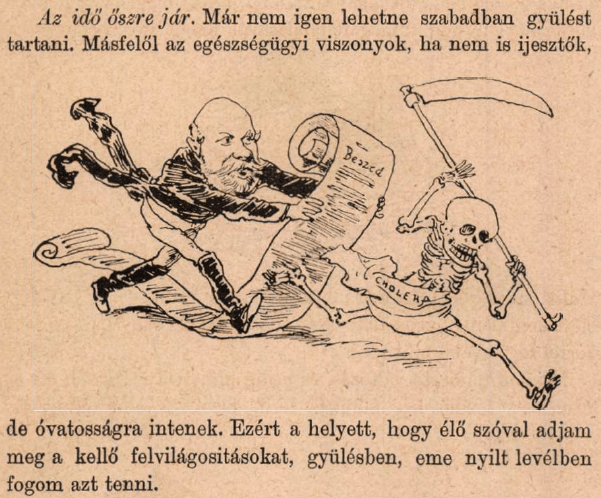
This image is singled out from a series mocking the Hungarian minister of public works and transport, Baron Gábor Kemény. Known as an advocate of Hungarian economic modernization, Kemény seems to be faulted here for raising long-winded written objections to convening the next session of parliament, at a time when cholera was recurring in Hungary. “It is getting on toward autumn,” writes the satirist in his voice. “It would no longer be possible to hold an outdoor session. On the other hand, health conditions, if not frightening, do call for caution. Therefore, instead of giving the appropriate clarifications in person at the session, I will do so in this open letter.” Here even cholera is put off by his stentorian prose.
(Bolond Istók, Budapest, 1886)
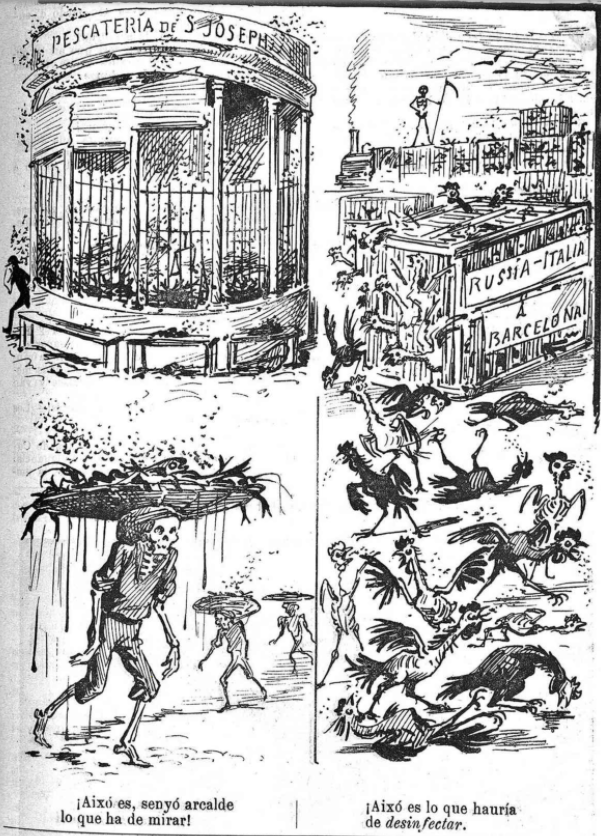
That’s what you have to look at, Mr. Mayor!
That’s what you should disinfect.
(La Esquella de la torratxa, Barcelona, 1894)
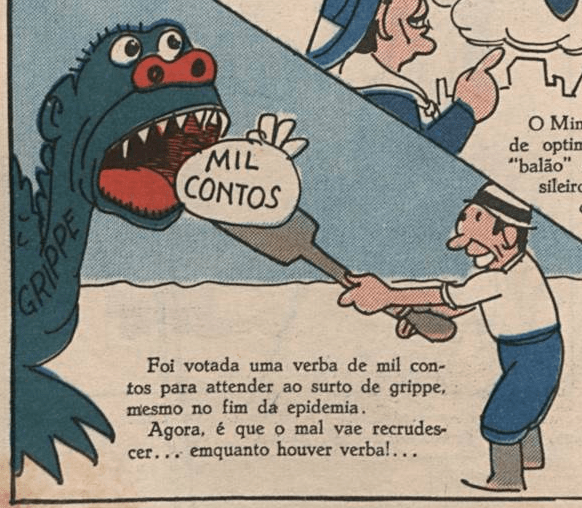
Detail from Storni’s “Believe it or not” feature, where a creature labeled “Flu” is being fed a sack of money. “A sum of one thousand contos was voted to meet the outbreak of influenza, even at the end of the epidemic.
Now the evil will increase… so long as there is money!…”
(O Malho, Rio de Janeiro, 1935)
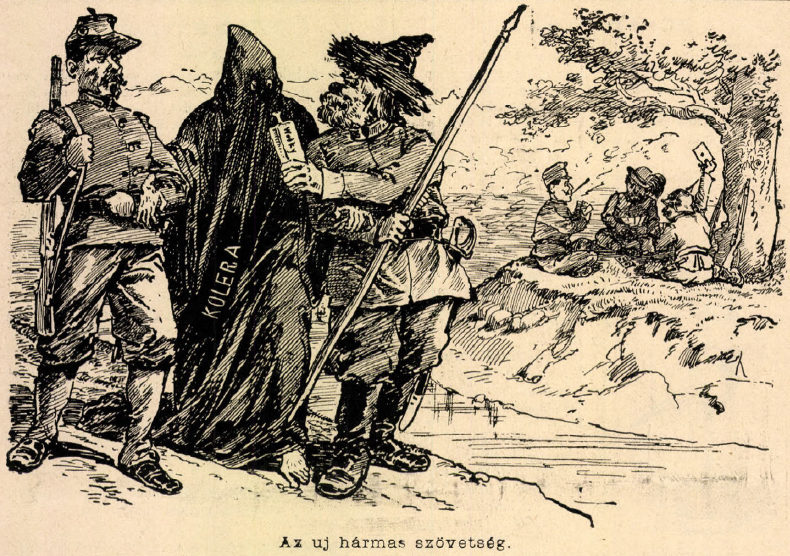
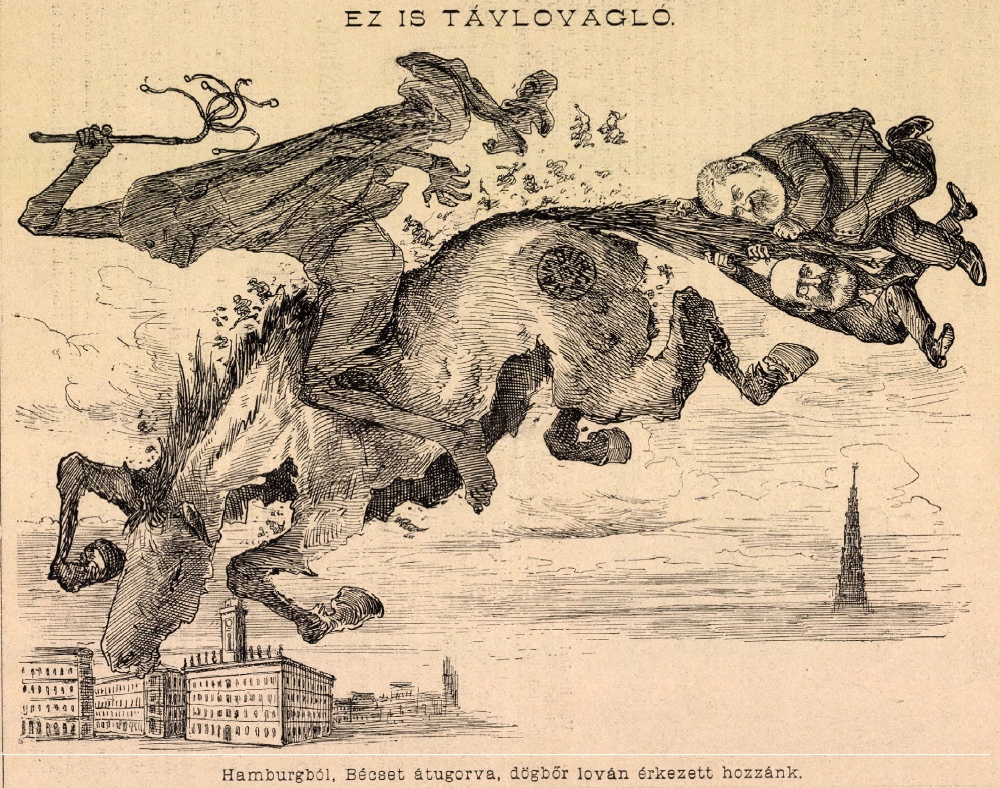
He came to us from Hamburg on a horse, bypassing Vienna.
(Borsszem Jankó, Budapest, 1892)
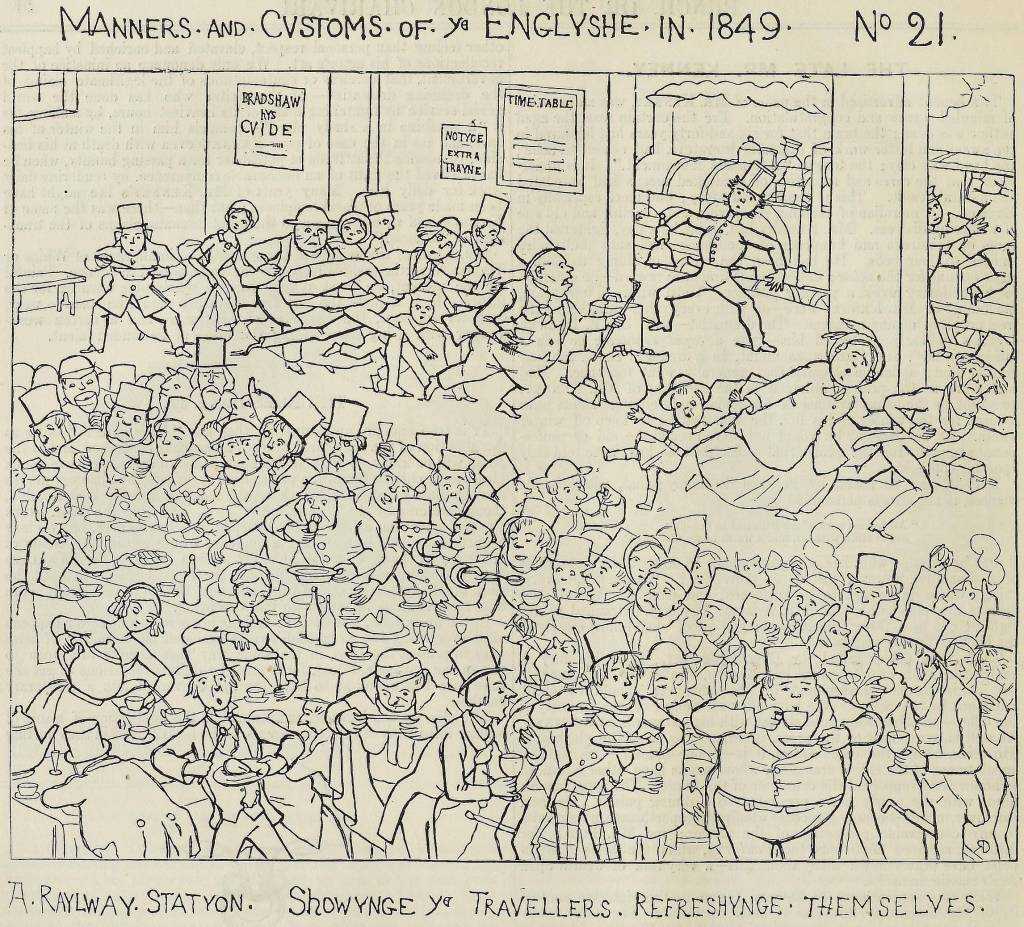
An amusing illustration in light of our present concerns about physical distancing. But the more so in view of its intentional juxtaposition on the same page with an entry in “Mr. Pips his Diary.” Punch‘s Pepys relates a conversation with a physician on a crowded train in which said physician complains of “the Foulness of London for Want of fit Drainage, and how it do breed Cholera and Typhus, as sure as rotten Cheese do Mites, and of the horrid Folly of making a great Gutter of the River.” Truly, “the Bustle of Railways do destroy all the Dignity of Travelling.”
(Punch, London, 1849)
There are some similarities in this German cartoon from Kladderadatsch (1889).
 Sic Transit Pestilentia