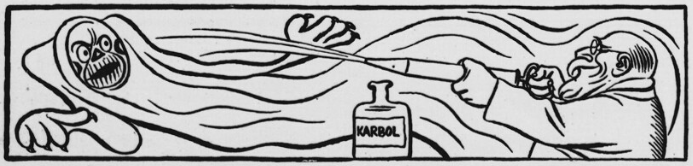
Illustration by Stauber, accompanying a short story by Peter Heisch.
(Nebelspalter, Zurich 1979)
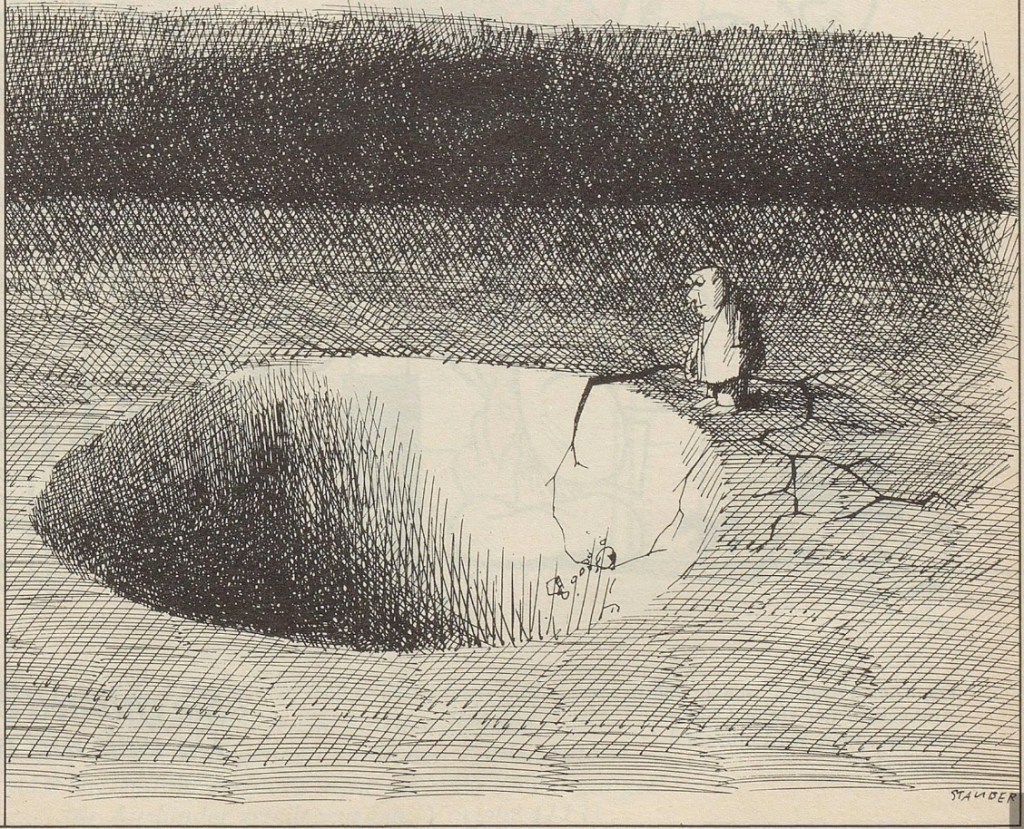
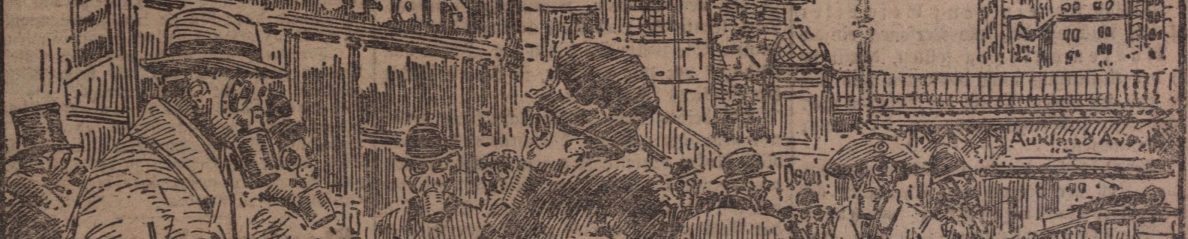
Illustration by Stauber, accompanying a short story by Peter Heisch.
(Nebelspalter, Zurich 1979)
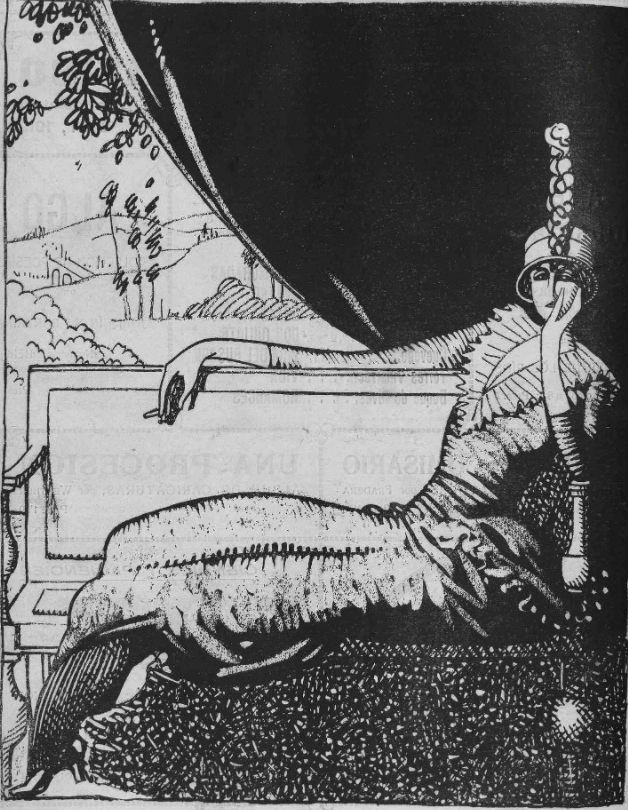
From Caras y Caretas, Buenos Aires, 1918.
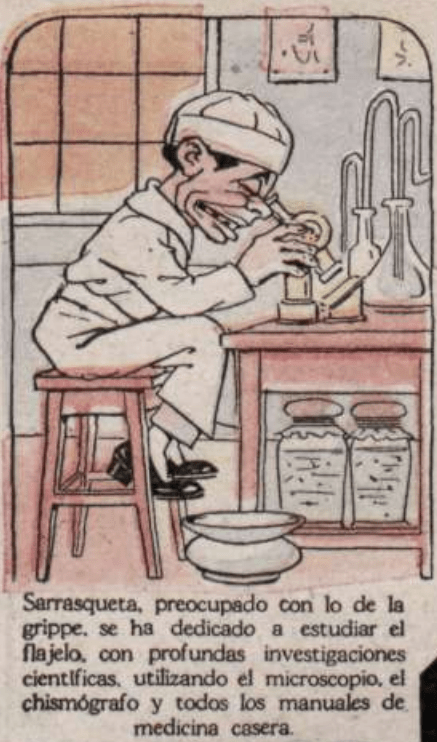
Sarrasqueta, concerned about the flu, has devoted himself to studying flagella, with deep scientific research, using the microscope, the gossip machine and all the manuals on home medicine.
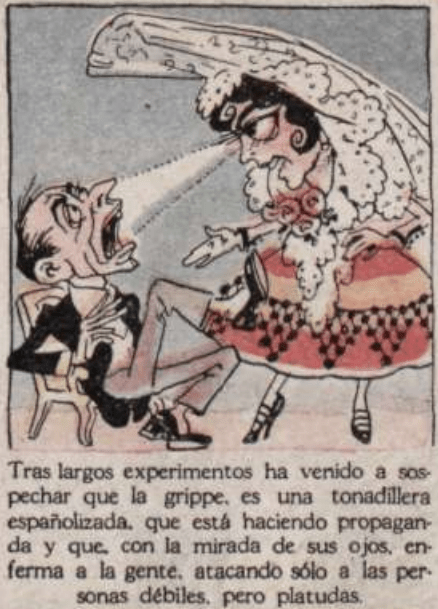
After long experiments he has come to suspect that the flu is a Spanish pop singer, that she is making propaganda, and that she makes people sick with a glance from her eyes, attacking only weak, but well-heeled people.
He has slowly studied the case of a patient who turned out not to have the flu, because he was poor, but suffered a sudden attack of chronic flamenco.
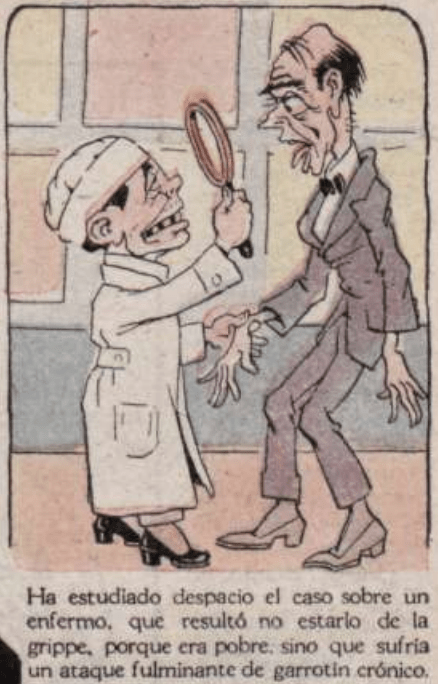
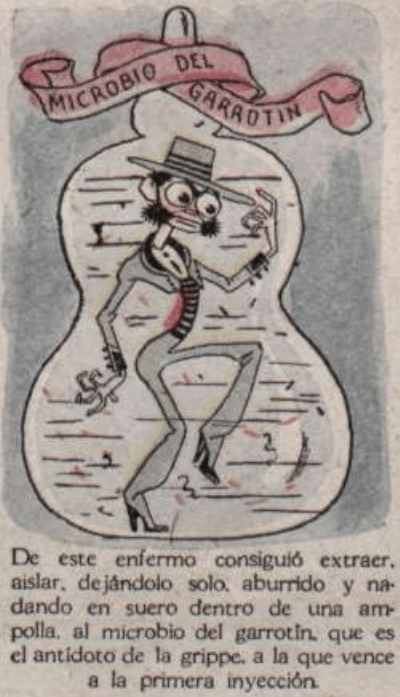
From this patient he managed to extract and isolate the flamenco microbe by leaving him alone, bored and swimming in serum in an ampoule, which is the antidote to the flu, defeating it with a single injection.
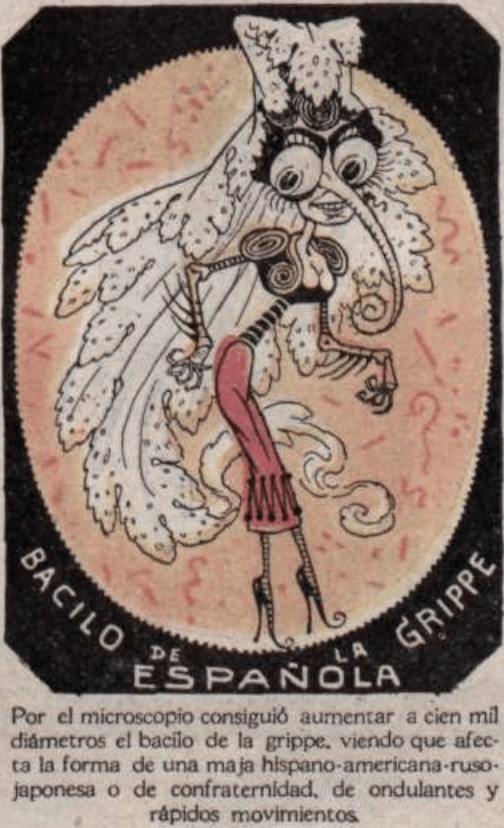
Using the microscope, he managed to magnify the flu bacillus to a hundred thousand diameters, seeing that it affects the shape of a pretty Spanish-American-Russian-Japanese or of confraternity, with undulating and rapid movements.
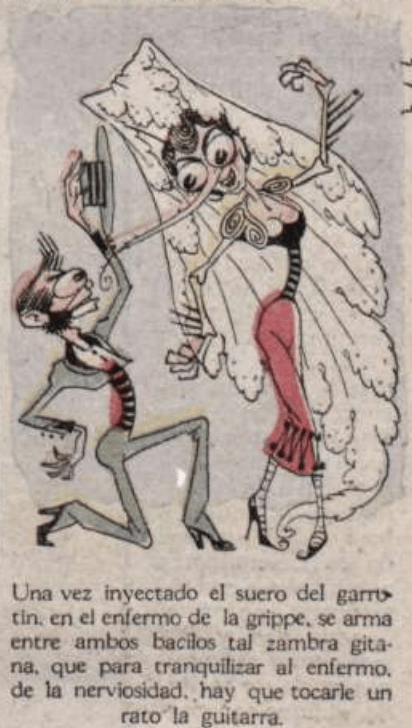
Once the flamenco serum is injected in the patient with the flu, such a gypsy dance is mounted between both bacilli that to calm the patient from his nervousness, one has to play the guitar for a while.
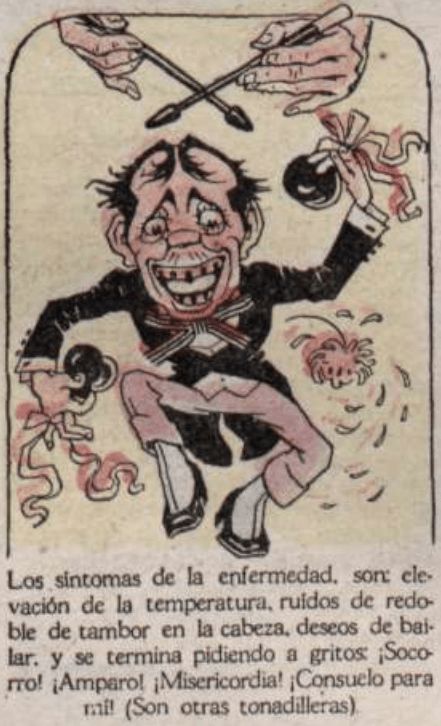
The symptoms of the disease are an increase in temperature, drum roll noises in the head, desire to dance, ending in the cries: Help! Protection! Mercy! Console me! (They are other pop singers)
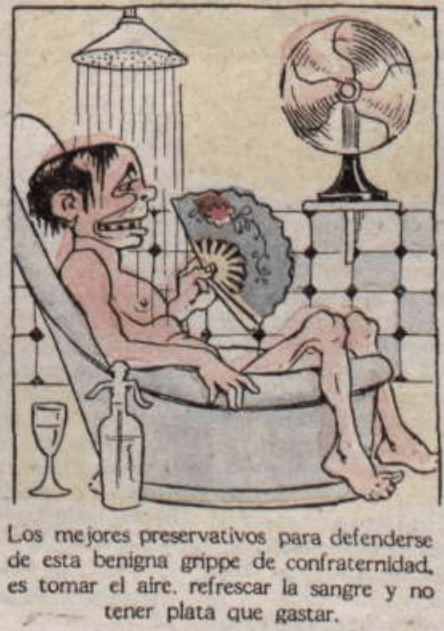
The best protections to defend against this benign flu confraternity is to take the air, refresh the blood, and have no money to spend.
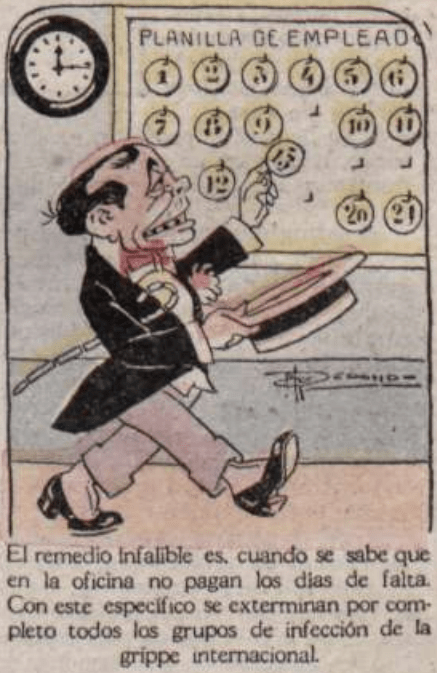
The infallible remedy is when it becomes known that they do not pay for the days lost at the office. With this detail, all the infection groups of the international flu will be completely exterminated.
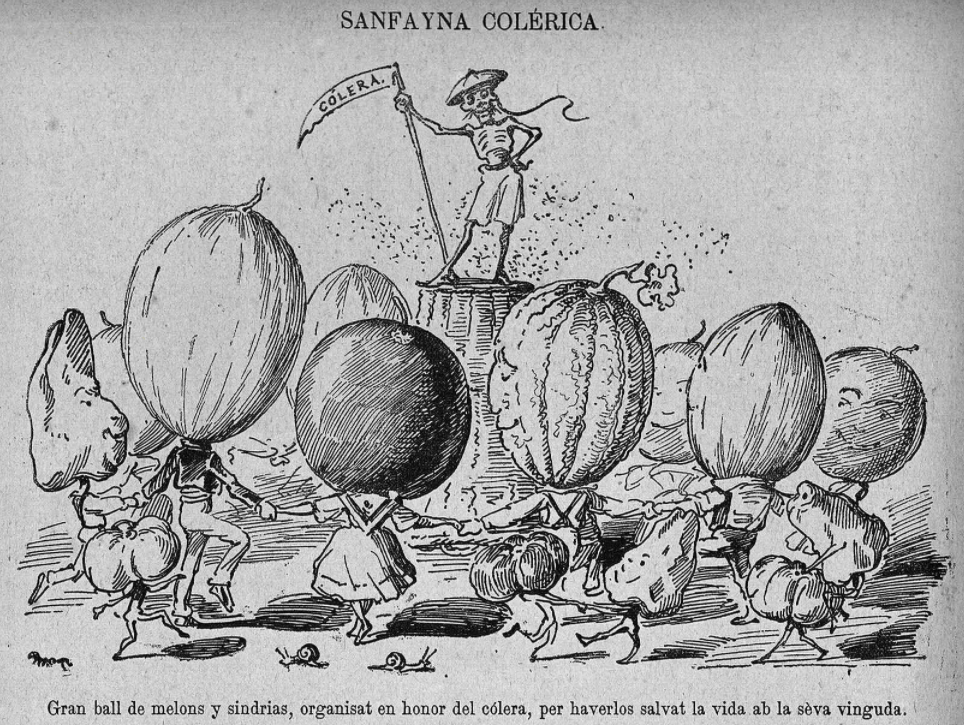
Grand ball of melons and watermelons, organized in honor of cholera, for having saved their lives with his coming.
(La Esquella de la torratxa, Barcelona, 1885)
The title of a six-stanza humorous poem which I won’t pretend to translate, but it is accompanied by this graphic.
(Humoristické listy, Prague, 1913)
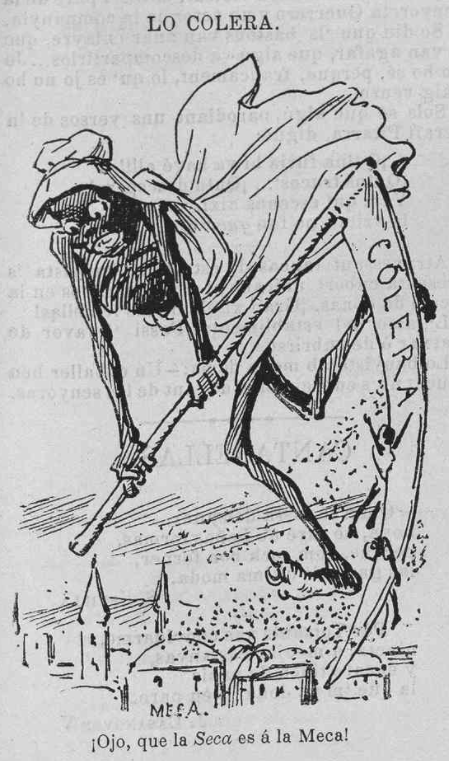
Beware, there is Drought in Mecca!
(La Esquella de la torratxa, Barcelona, 1891)
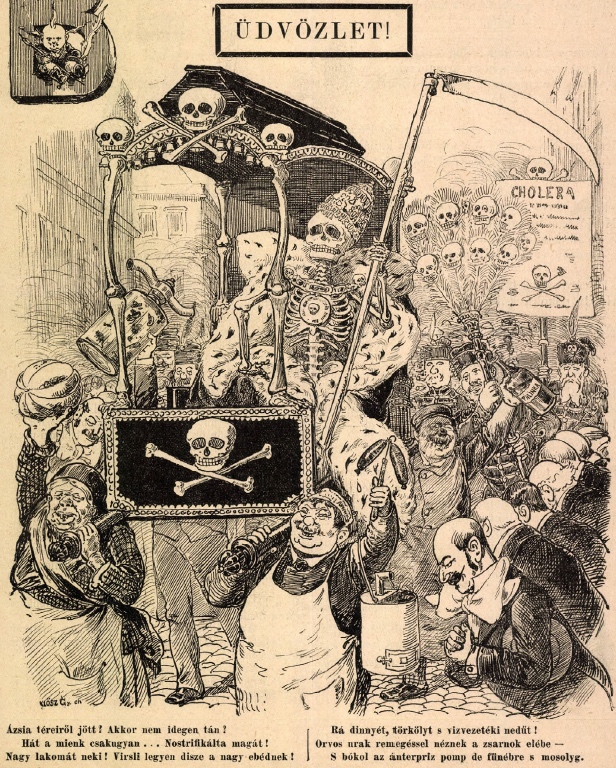
He came from the Asian spaces! Isn’t he a stranger then?
Well, indeed he’s ours… He’s certified!
A great feast for him! Make sausage centerpiece of the great meal!
Put melon and brandy on it, and the nectar of water straight from the tap!
Medical gentlemen look at the tyrant with trembling —
And smiling he compliments the funereal pomp of the enterprise.
(Borsszem Jankó, Budapest, 1884)
(La Esquella de la torratxa, Barcelona, 1885)
Don’t be overly fearful.
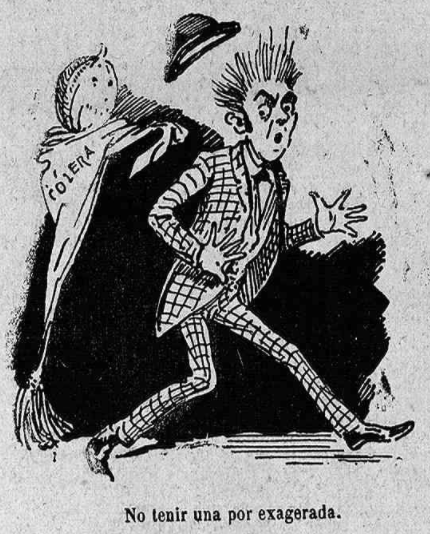
Don’t have excess confidence.
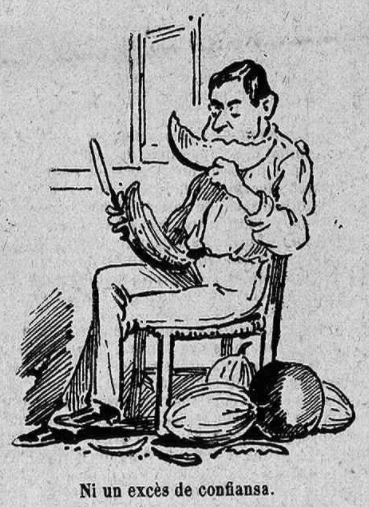
Maintain the same hours of eating and working as always.
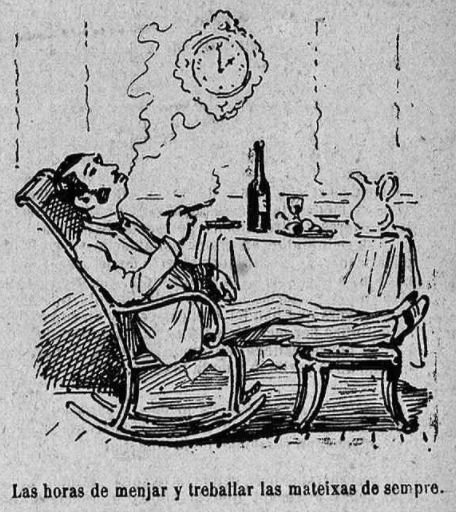
Since you get more cholera when it’s quiet at night, the quiet ones will go out during the day. (?)
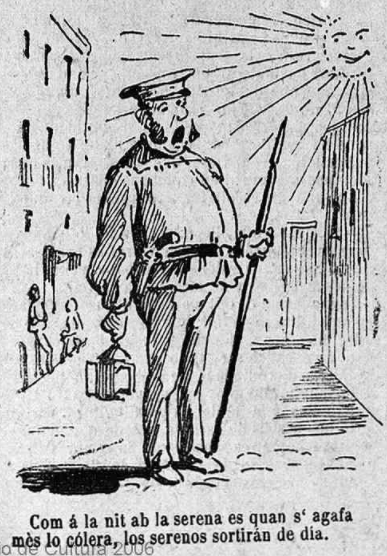
Don’t eat much!
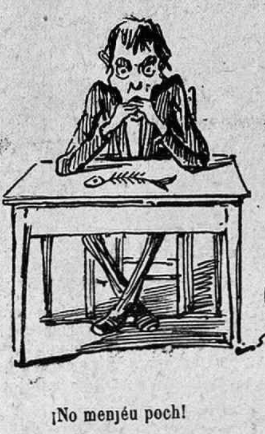
And don’t eat too much.
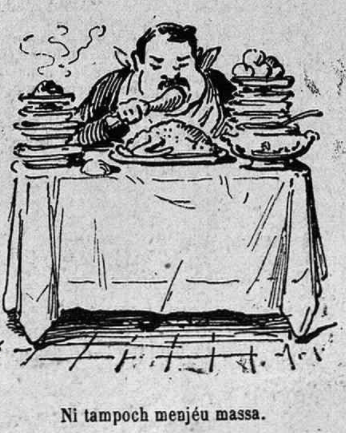
And most importantly, don’t eat melons, watermelons, or tomatoes.
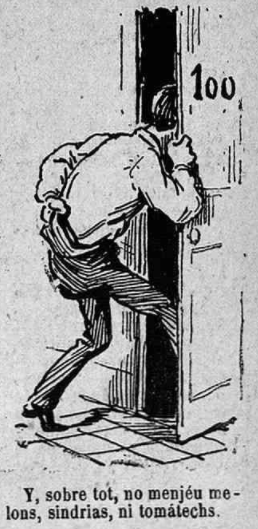
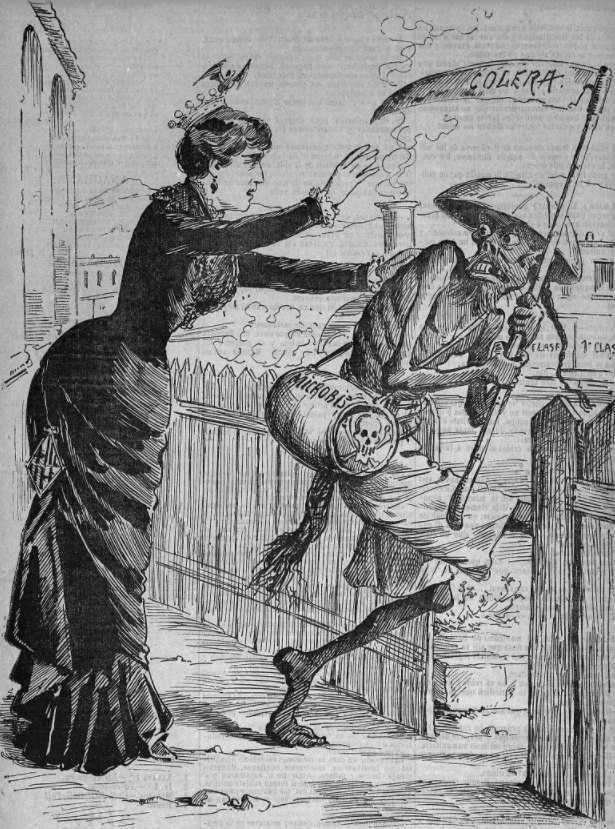
Ala, ala: it’s time to go for the club!… It is enough that we have cholera all year round, in the square, at the fishmongers, in the slaughterhouse, in the taverns, in the bakeries, in the grocery stores, and at the tobacconists. Well, enough, in the name of the God of microbes!
(La Esquella de la torratxa, Barcelona, 1885)
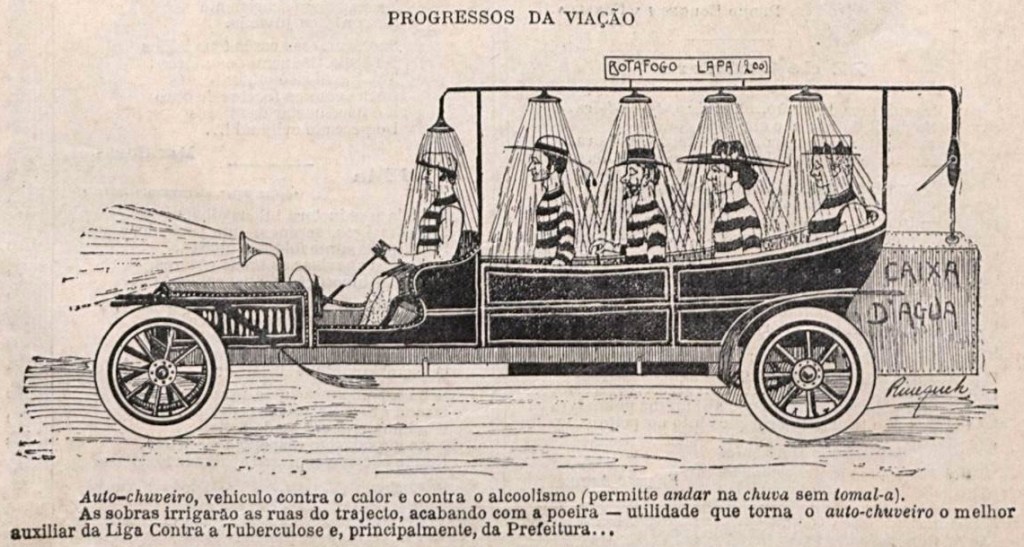
Car-shower, vehicle against heat and against alcoholism (it allows riding in the rain without drinking). The runoff will irrigate the streets along the way, stopping the dust, a use that makes the car-shower the best auxiliary of the Anti-Tuberculosis League and, mainly, of City Hall…
(O Malho, Rio de Janeiro, 1907)
Synthesis of weekly public health newsletters…
A thrill of horror passes through Joe Public’s spine, seeing every week this danse macabre, touched by the inexorable Cape!…
And the one who also senses the consumption in his pockets, seems to exclaim:
“Good God, how long will I have to wait for these so-called Hygiene measures against this terrible specter that also makes me dance on the tightrope?!…”
(O Malho, Rio de Janeiro, 1914)

It’s said that many typhus attacks are the result of a mosquito bite… Alas, who can be attacked by a mosquito that I know!
(La Esquella de la torratxa, Barcelona, 1912)
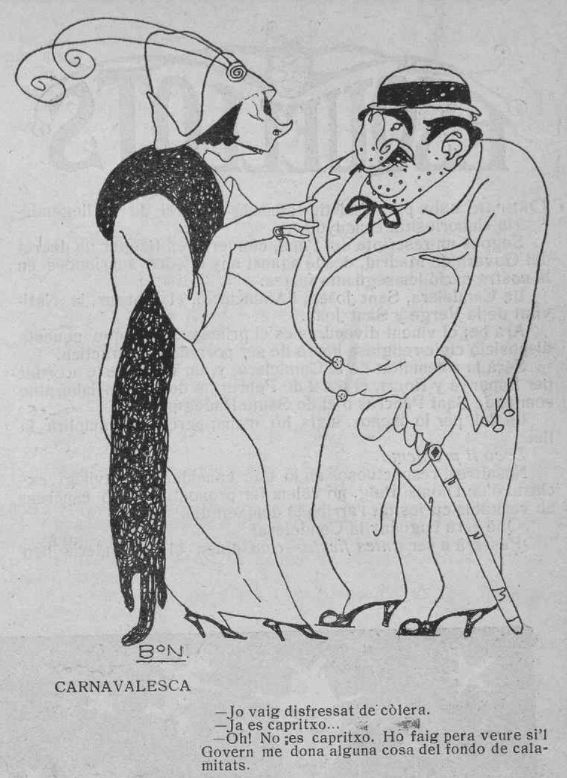
“I disguised myself as cholera.”
“It’s a whim …”
“Oh! not a whim. I do it to see if the government gives me anything from the calamity fund.”
(La Esquella de la torratxa, Barcelona, 1912)
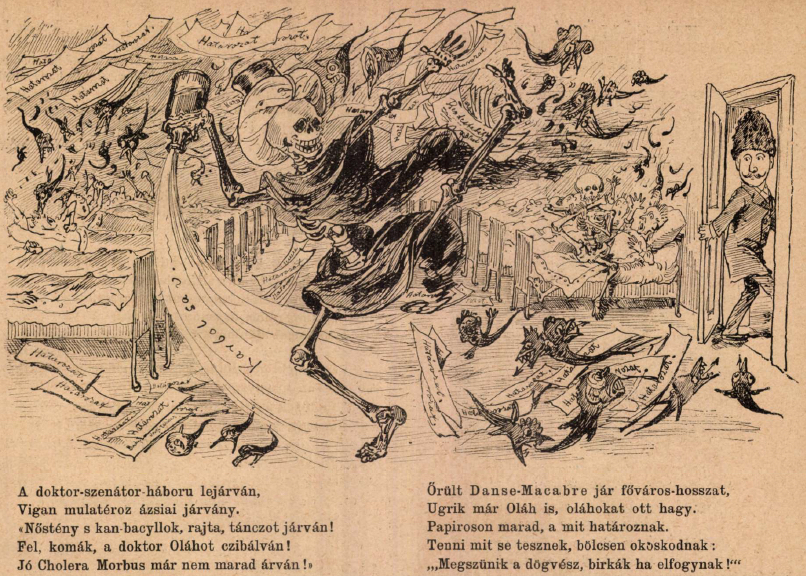
As the Doctor-Senator War comes to an end,
The Asian contagion is carousing merrily.
“Female and male bacilli, let’s get dancing!
Rise up, comma-bacilli, Dr. Oláh* urges them!
Good Cholera Morbus is no longer an orphan!”
Crazy Danse Macabre runs the length of the capital,
Oláh is already skipping out, leaving the Wallachians** there.
What has been decreed remains on paper.
Doing whatever they do, they reason wisely:
“The pest will disappear, they’re sheep if they run out!”
(*Presumably Gyula Oláh, physician, public health figure, and former parliamentarian)
(**Punning on Oláh’s name, which could also mean a derogatory term for Romanians.)
(Bolond Istók, Budapest, 1886)
“I say, hubby, when that wretched cholera came and I got it: weren’t you afraid of me?”
“What a foolish idea! It’s different now that you’re completely healthy.”
(Humoristické listy, Prague, 1893)

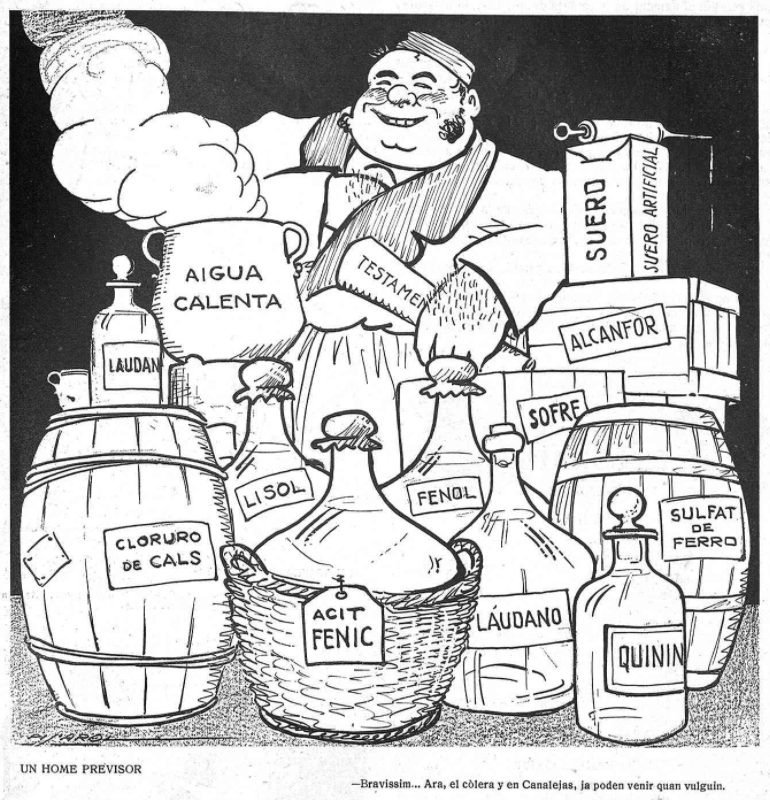
“Bravissimo… Now that the cholera and in [Spanish Prime Minister José] Canalejas, they can already come when they want.”
(La esquella de la torratxa, Barcelona, 1911) (Clearly I’m missing some wordplay here.)
 Sic Transit Pestilentia