At the epidemic butcher: “I’ll take half a portion of smallpox microbes.”
At the drugstore: “You would like typhus microbes? We don’t have fresh ones in the afternoon.”
(La Esquelle de la torratxa, Barcelona, 1894)

At the epidemic butcher: “I’ll take half a portion of smallpox microbes.”
At the drugstore: “You would like typhus microbes? We don’t have fresh ones in the afternoon.”
(La Esquelle de la torratxa, Barcelona, 1894)
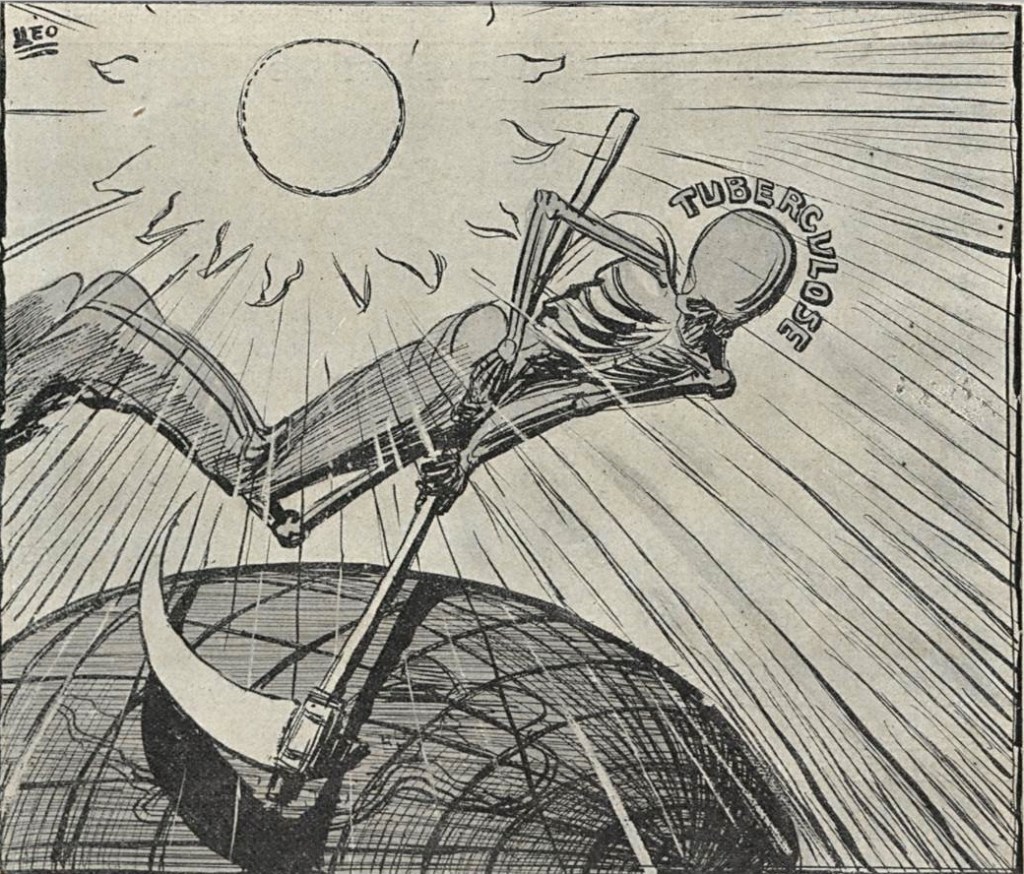
In the winter with humidity, in summer with the oppressive sun, here it is always making its terrible harvest!
(O Malho, Rio de Janeiro, 1911)
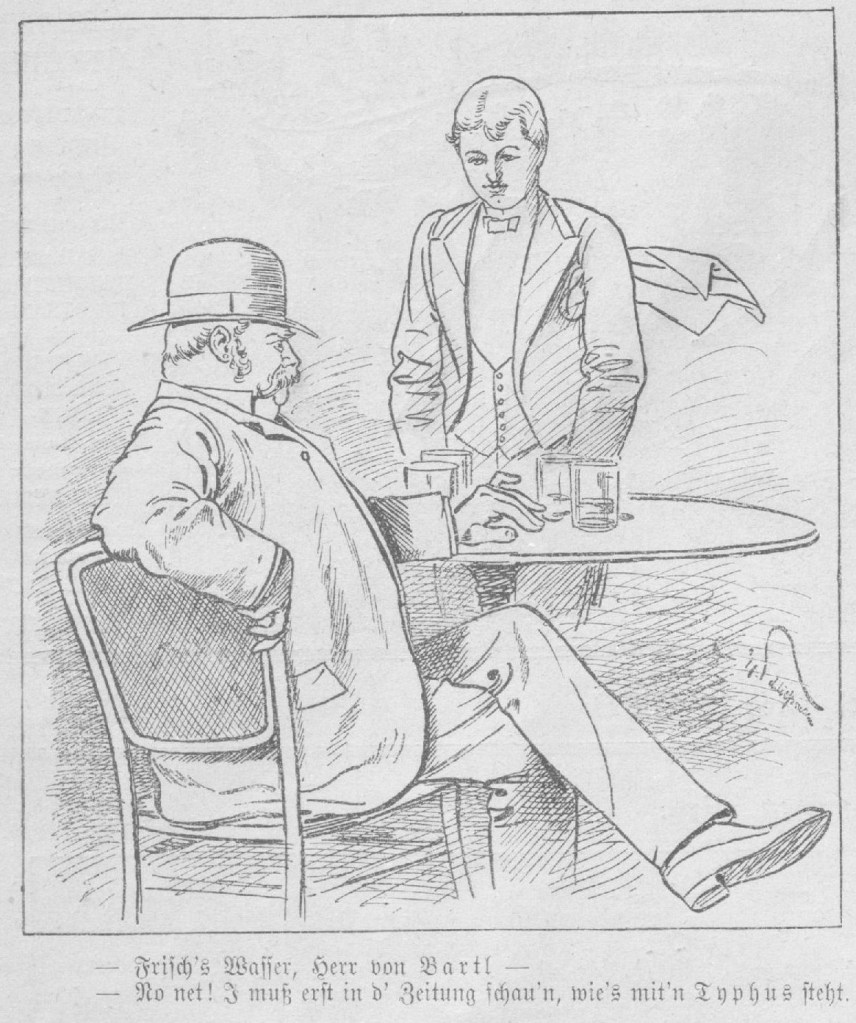
“Some fresh water, Mr. Bartl.”
“Not yet. First I need to look in the newspaper to see how things stand with the typhus.”
(Figaro, Vienna, 1889)
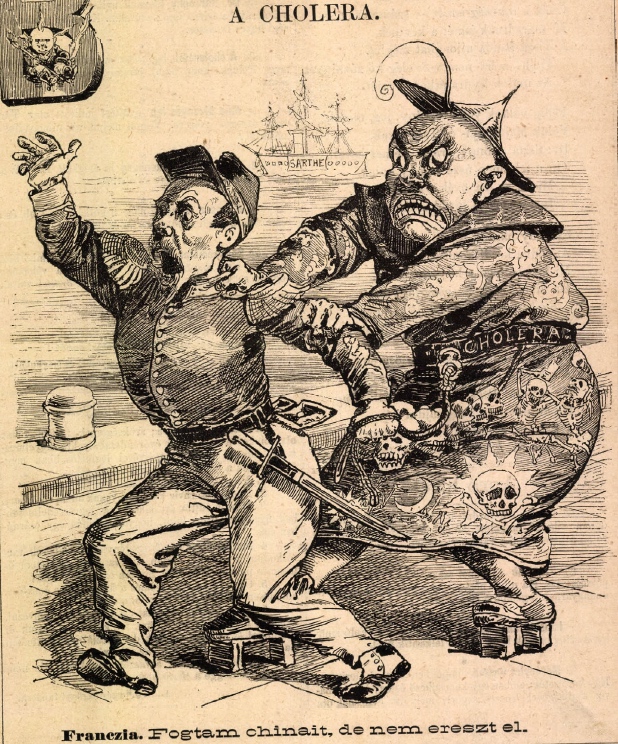
France: “I caught the Chinaman, but he didn’t let go.”
(Borsszem Jankó, Budapest, 1884)
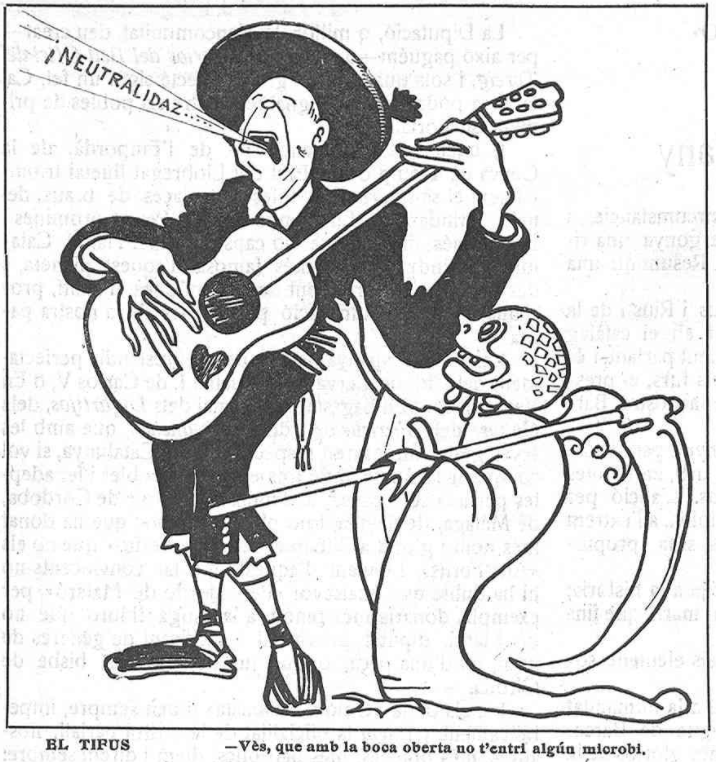
Typhus (to musician singing “Neutrality”): “You see, with your mouth open, germs can’t get in.”
(La Estrella de la torratxa, Barcelona, 1917)
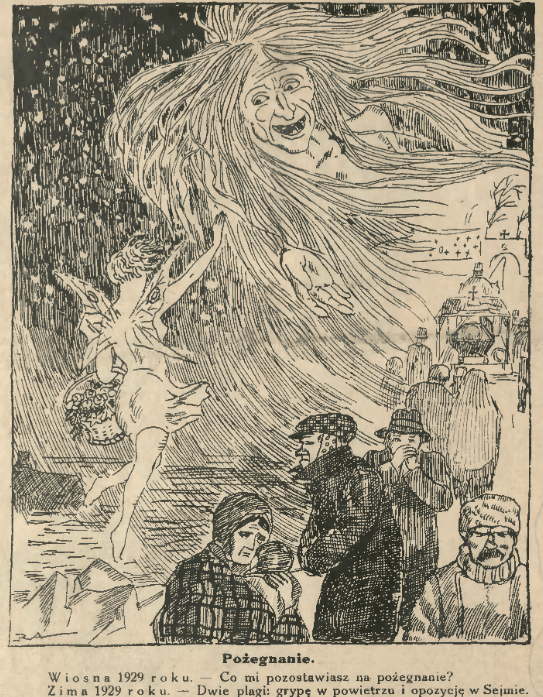
Spring of 1929. What will your farewell gift be?
Winter of 1929. Two plagues: the flu in the air and the opposition in the Sejm.
(Mucha, Warsaw, 1929)
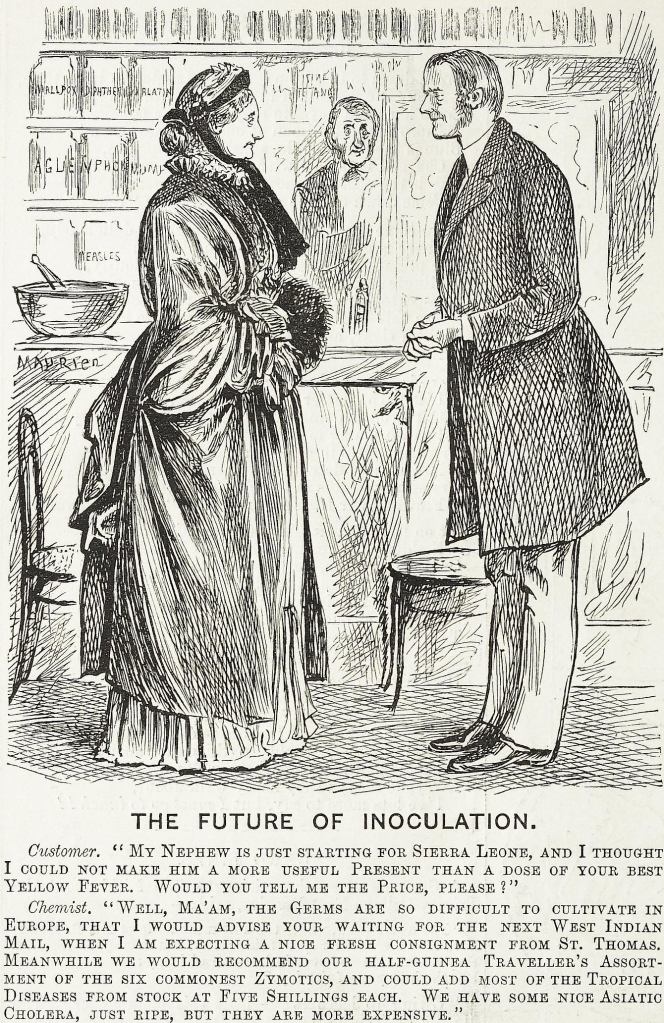
Ah, the spirit of speculation in the vaccination market.
(Punch, London, 1881)
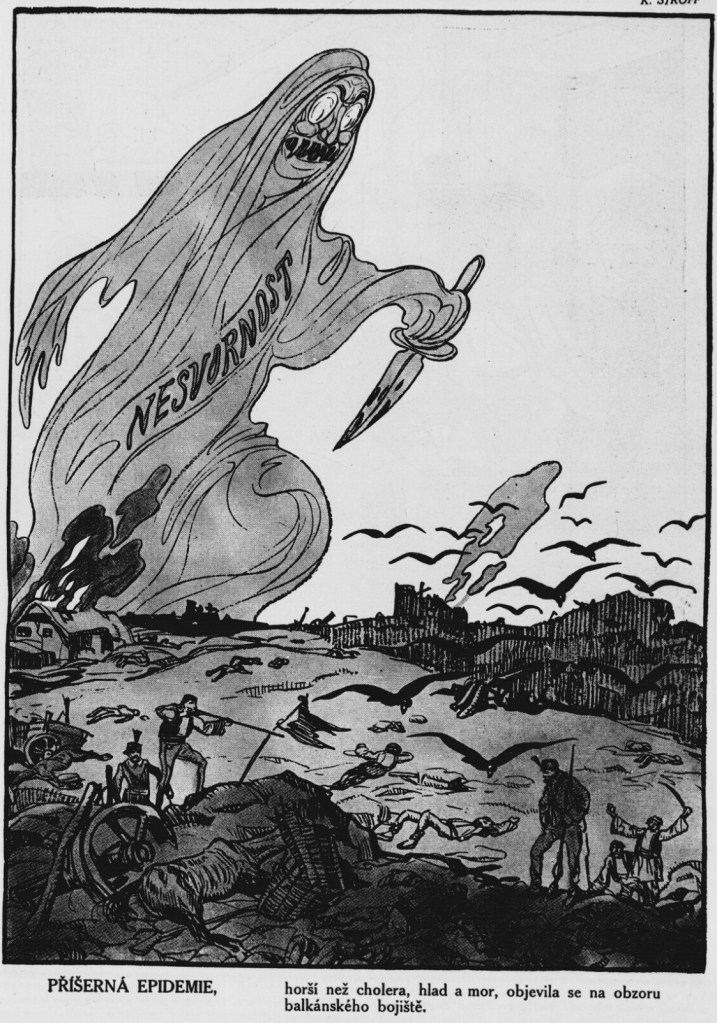
A terrible epidemic, worse than cholera, famine and plague, appeared on the horizon of the Balkan battlefield.
(Humoristické listy, Prague, 1913)
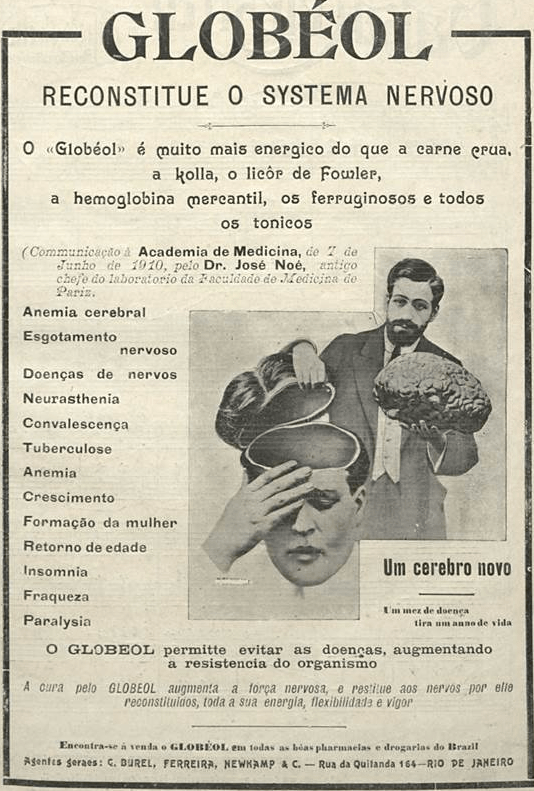
This Brazilian advertisement is a bit distant from our pandemic concerns, but we’ll include on a technicality. In addition to the many nervous ailments it is purported to fight, Globéol also claims to have benefits for tuberculosis. Need we dwell on the horrific brain image?
(O Malho, Rio de Janeiro, 1914)
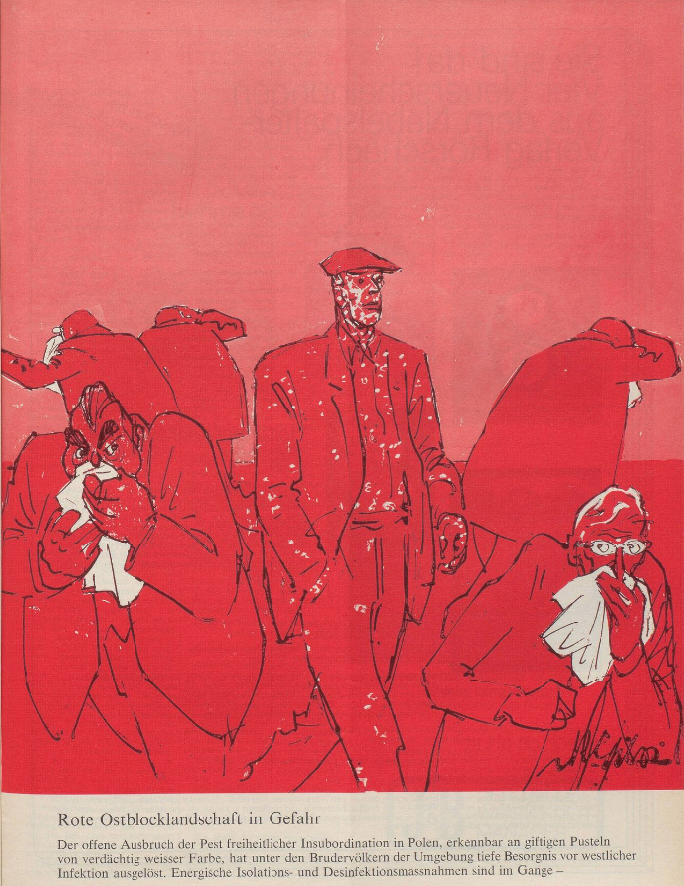
It’s an easy political metaphor unconnected to an actual epidemic, but let’s catalogue it anyway. “The open outbreak of the contagion of insubordination in Poland, recognizable by the poisonous pustules of suspiciously white color, has unleashed deep concern about Western infection among the surrounding fraternal nations. Energetic isolation and disinfection measures are underway.”
(Nebelspalter, Zurich, 1980)
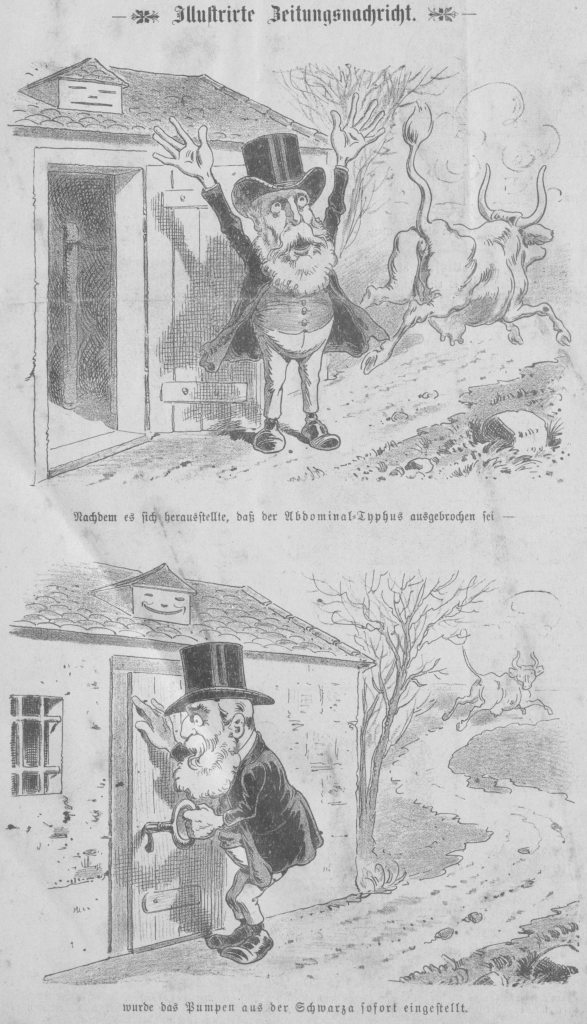
Once it was established that the abdominal typhus has broken out, the pumping station at Schwarza was immediately locked down.
(Kikeriki, Vienna, 1889)
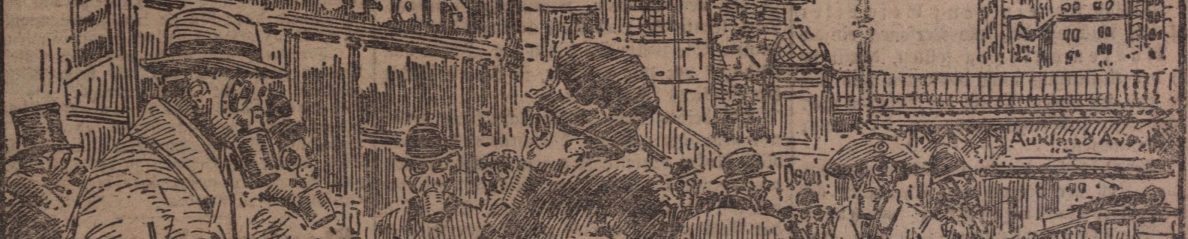
Then they say that I develop among the crowds; and as soon as the people took to the streets to celebrate the triumph of the allies, I had to be moved!
(Caras y Caretas, Buenos Aires, 1918)

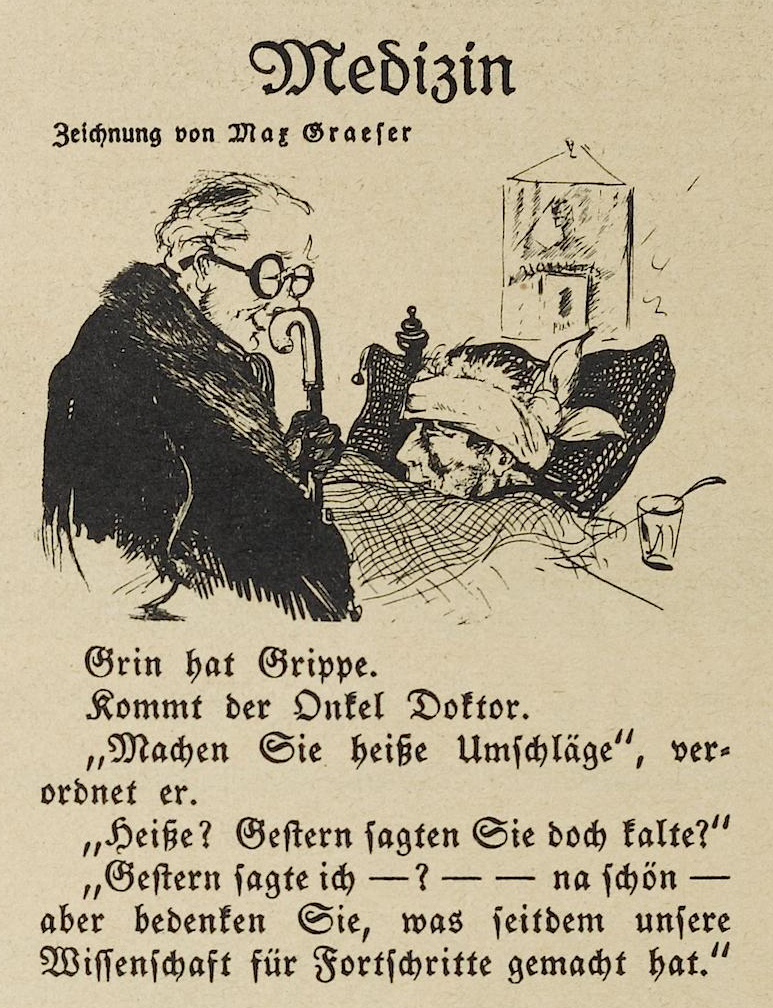
Grin has the flu.
His uncle the doctor arrives.
“Make hot compresses,” he orders.
“Hot? Didn’t you say cold yesterday?”
“Yesterday I said–?–alright–but think about the progress our science has made since then.”
(Lachen links, Germany, 1927)
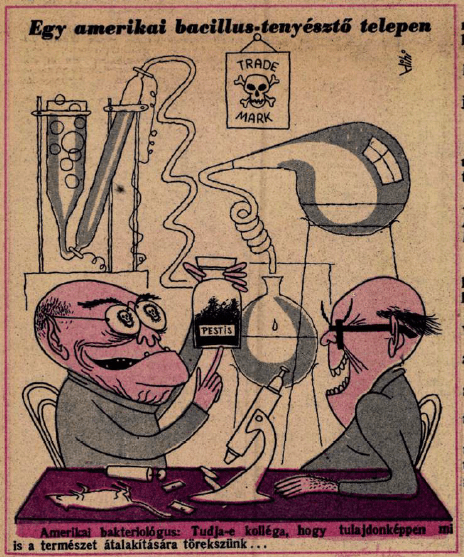
American bacteriologist (holding up flask of plague): “You know what, colleague, we are really striving to transform nature…”
(Ludas Matyi, Budapest, 1951)
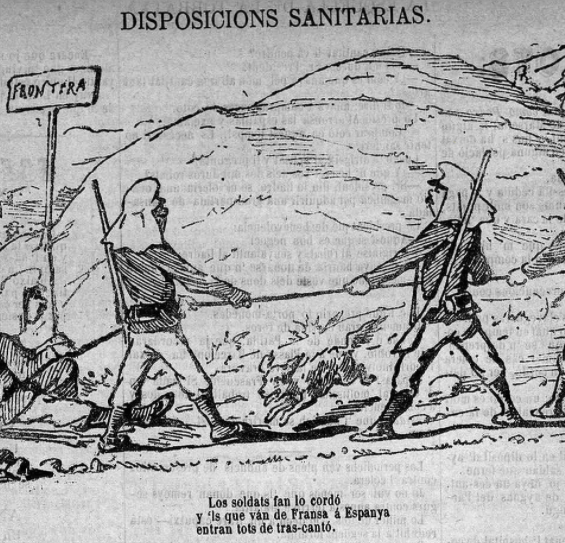
The soldiers make the quarantine cordon, and those who go from France to Spain all enter in improvised fashion.
(La Esquella de la torratxa, Barcelona, 1884)
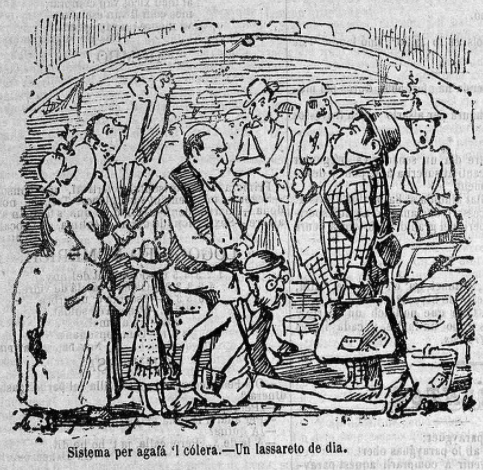
System to catch cholera. A quarantine station by day.
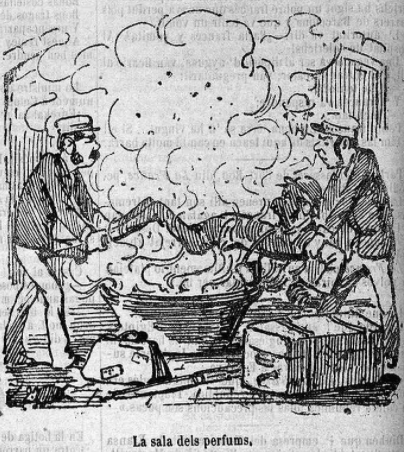
The perfume room.
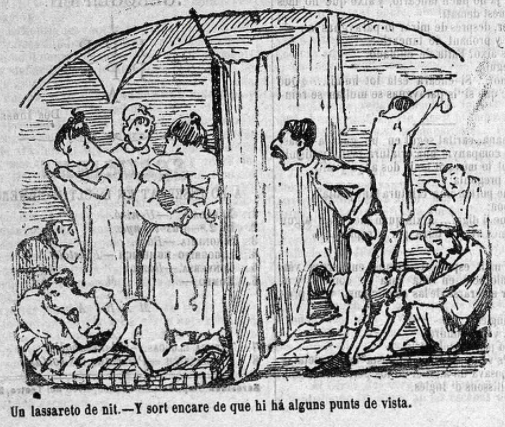
A night-time quarantine station. And luckily there are still some viewing points.
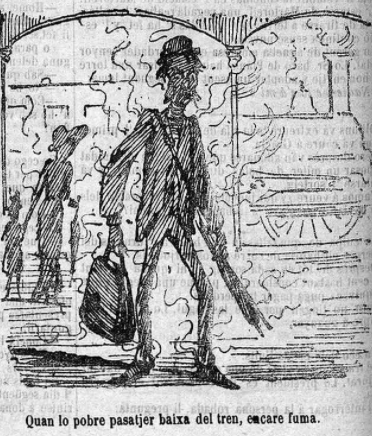
When the poor passenger gets off the train, he is still smoking.
 Sic Transit Pestilentia