(It has been verified that the yellow fever patients admitted to the isolation ward are all from Bahia.) “This is what the relaxation of the Bahia government is exporting to Rio de Janeiro, associated with the sheer (?) disability of its Hygiene” (i.e., public health organizations). (O Malho, Rio de Janeiro, 1914)
Detail from a humorous story in Moravian Illustrated Reporter, subtitled “A few words about flu heroes.” Spraying catarrh (i.e., snot) in the tram: “Oh, please, what are you looking at? Haven’t you ever seen anyone sneeze?” (Moravský illustrovaný zpravodaj, Prague, 1933)
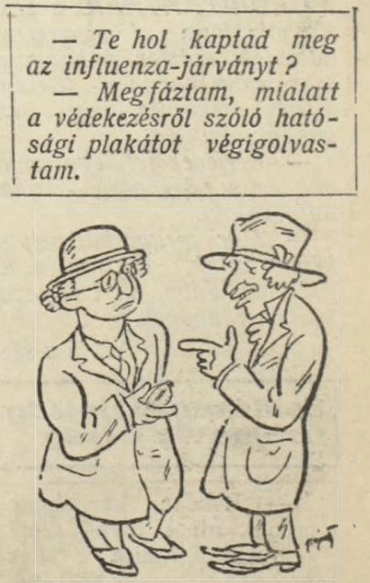
“Where did you get the flu contagion?” “I caught a chill while I was reading all the way to the end of the official poster about how to protect yourself.” (Az Ojság, Budapest, 1927)
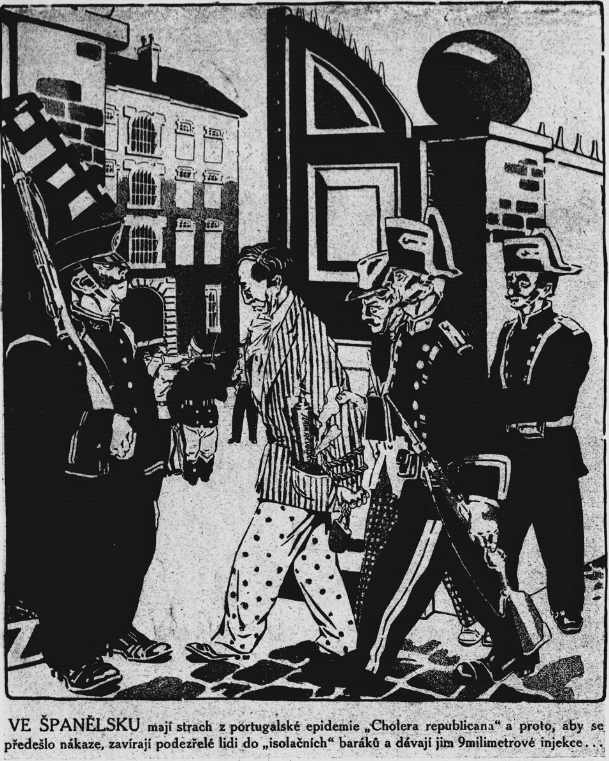
In Spain, they are afraid of the Portuguese epidemic of Cholera republicana, and in order to prevent infection, they lock the suspects in isolation barracks and give them 9-millimeter injections… (Not sure what the object in the prisoner’s pocket is, but it says “Glory to the Republic.”) (Humoristické listy, Prague, 1910)
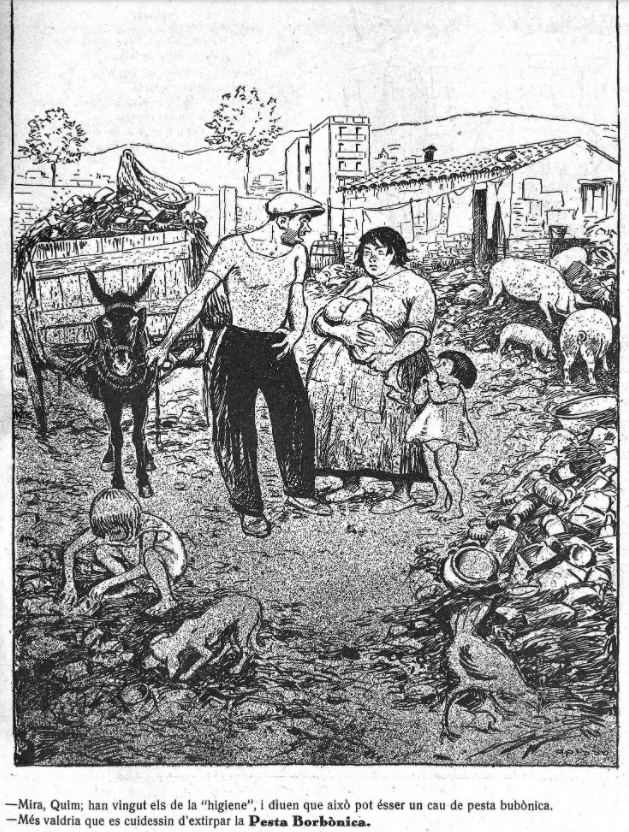
“Look, Quim; those “hygiene” people were here, and they say that this might be a den of bubonic plague.” “It would be better to take care to eradicate the Bourbon Plague.” (La Esquella de la torratxa, Barcelona, 1931)
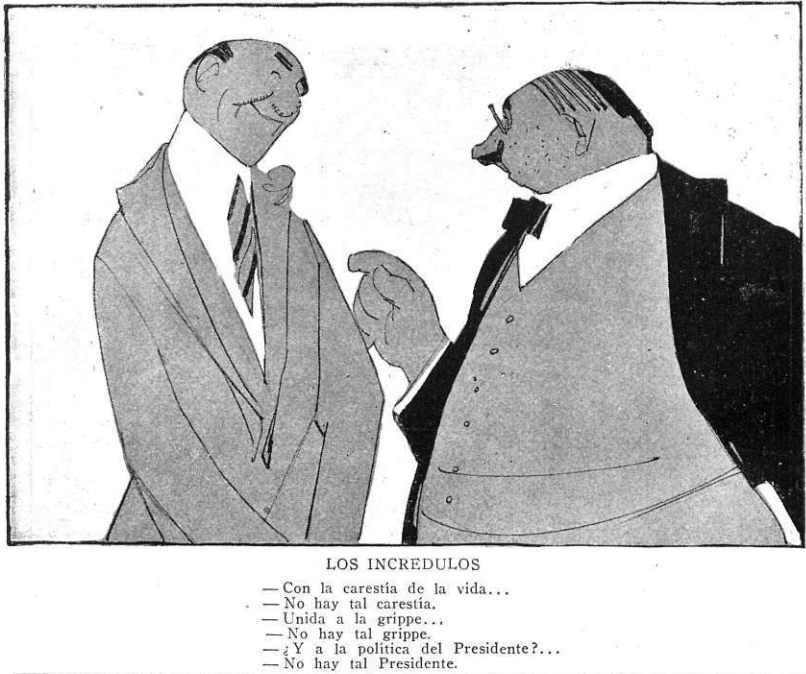
“With the dearth of life …” “There is no such dearth.” “Attached to the flu…” “There is no such flu.” “And to the President’s policy?…” “There is no such President.” (Caras y caretas, Buenos Aires, 1919)
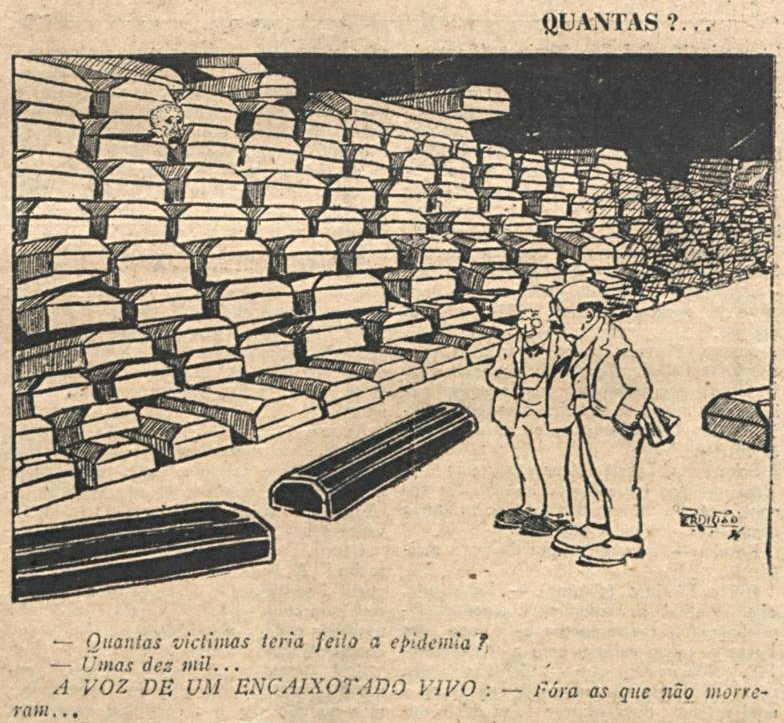
“How many victims has the epidemic caused?” “About ten thousand…” THE VOICE OF SOMEONE TRAPPED IN A COFFIN: “As for those who did not die…” (O Malho, Rio de Janeiro, 1918)
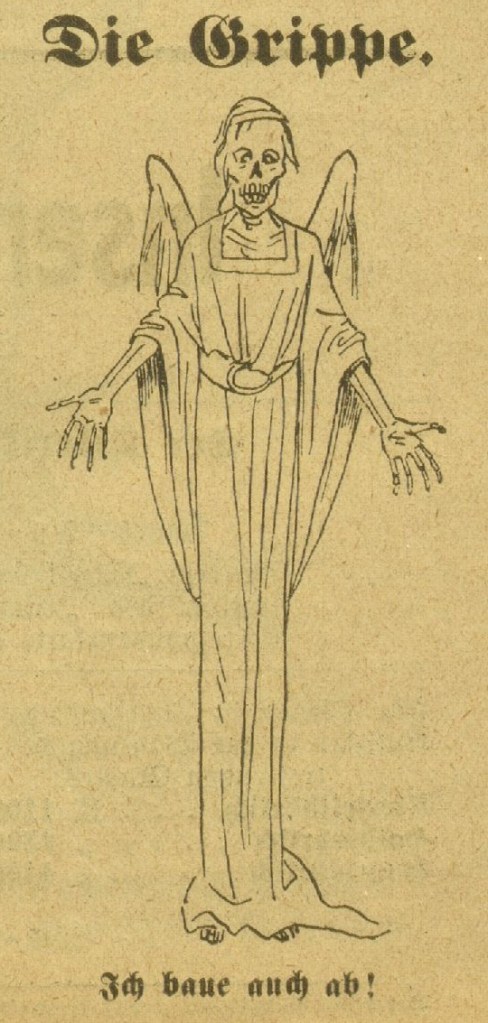
“I’m also cutting back!” (Three years after the Spanish flu epidemic, at a time of reductions in social welfare amid mounting postwar inflation.) (Kikeriki, Vienna, 1922)
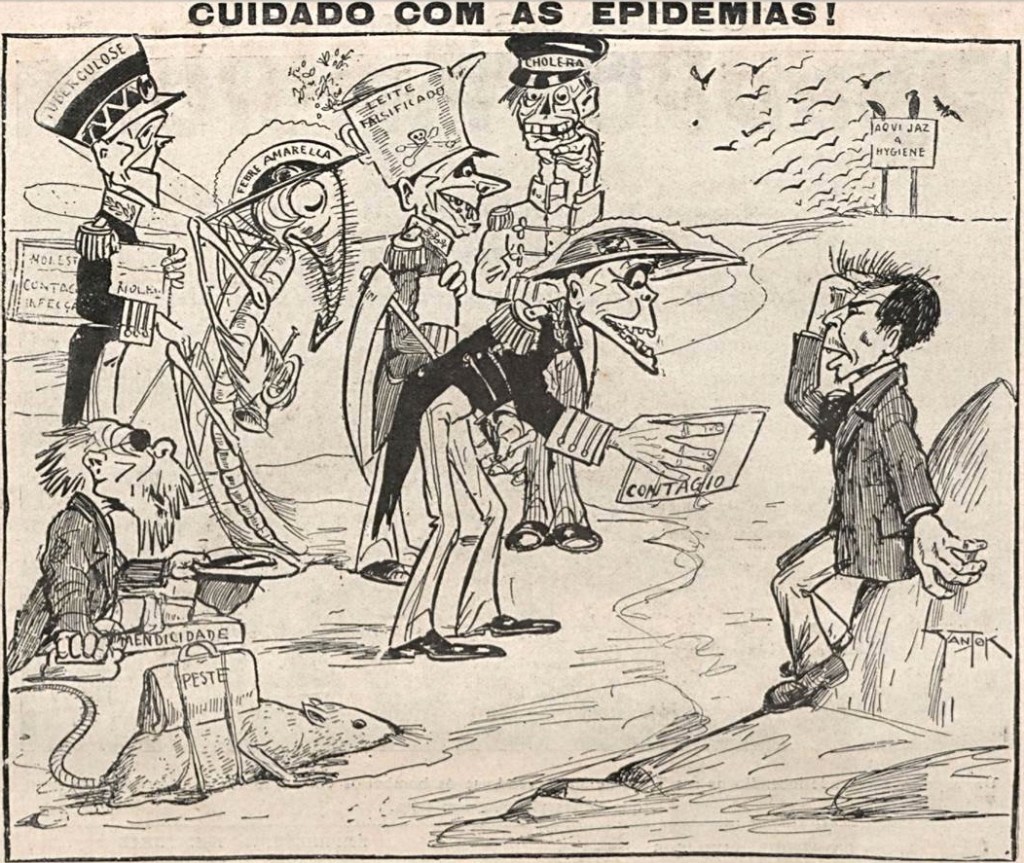
Contagion: “As Minister Plenipotentiary of the Emperor of Infection, I respectfully come forward to present my credentials with the hope that you will want to reestablish the old friendly relations, so unsuccessfully interrupted by the diplomacy of Hygiene. Lady Hygiene having died for lack of care, I do not doubt that our old friendship is now resumed.”
Rio’s poor: “Misericordia! The ambassadors of death are already at the door! [tuberculosis, mendicancy, plague, yellow fever, fake milk, cholera] What kind of diplomacy should I adopt now to drive out such a dangerous band? I will scream and complain at the top of my lungs before tuberculosis destroys us: To arms!” (O Malho, Rio de Janeiro, 1912)
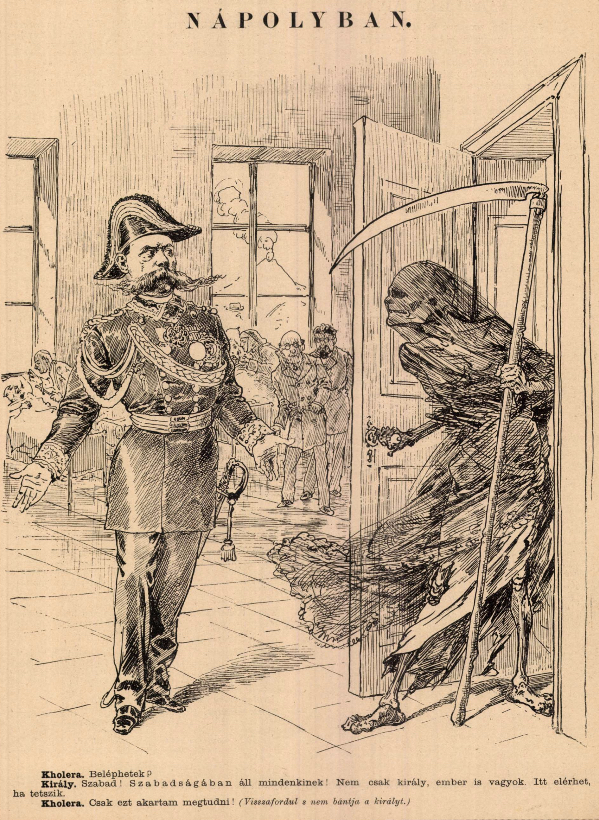
Cholera: “May I come in?” King: “You may! Everyone is at liberty! I’m not only king, I’m a human. Over here, if you like.” Cholera: “That’s all I wanted to know! (Turns around and does not bother the king.) (Bolond Istók, Budapest, 1884)
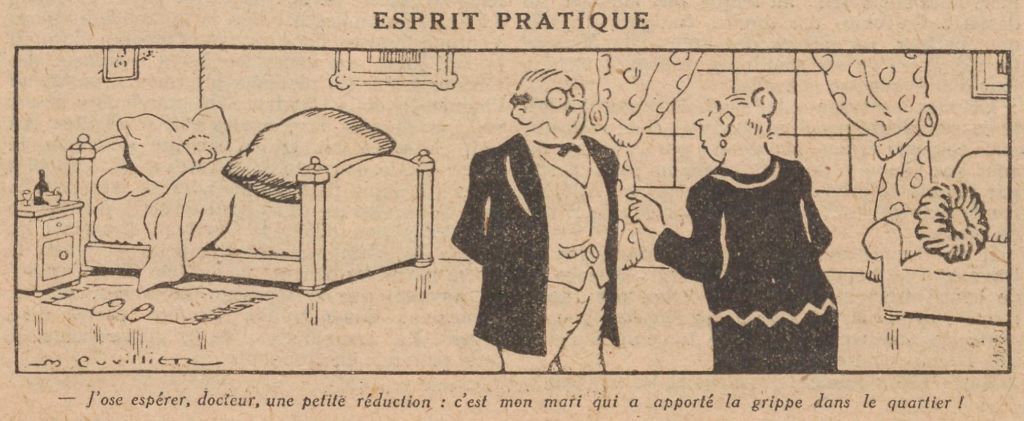
“I dare to hope for a small reduction in your fee, doctor: it was my husband who brought the flu to this neighborhood!” (Le Petit écho de la mode, Paris, 1927)
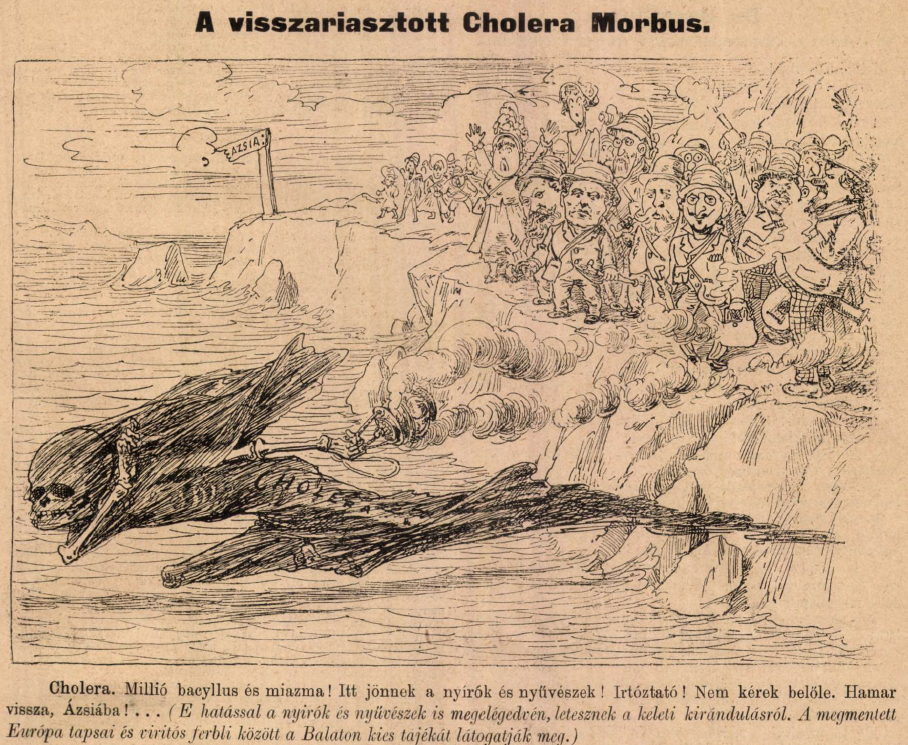
Cholera: Millions of bacteria and miasma! Here come the shearers and wormeaters! Loathsome! I want nothing to do with it. Right back to Asia!… (Bolond Istók, Budapest, 1886)
Scene: Mud-salad market. (Cholera lurking in the miasmatic background) Mr. Punch (Inspector of Nuisances): “Now, then, my noble stick-in-the-mud, I’ve told you to clear up this place long ago, wake up, or it will be too late!” (Punch, London, 1885)



 Sic Transit Pestilentia