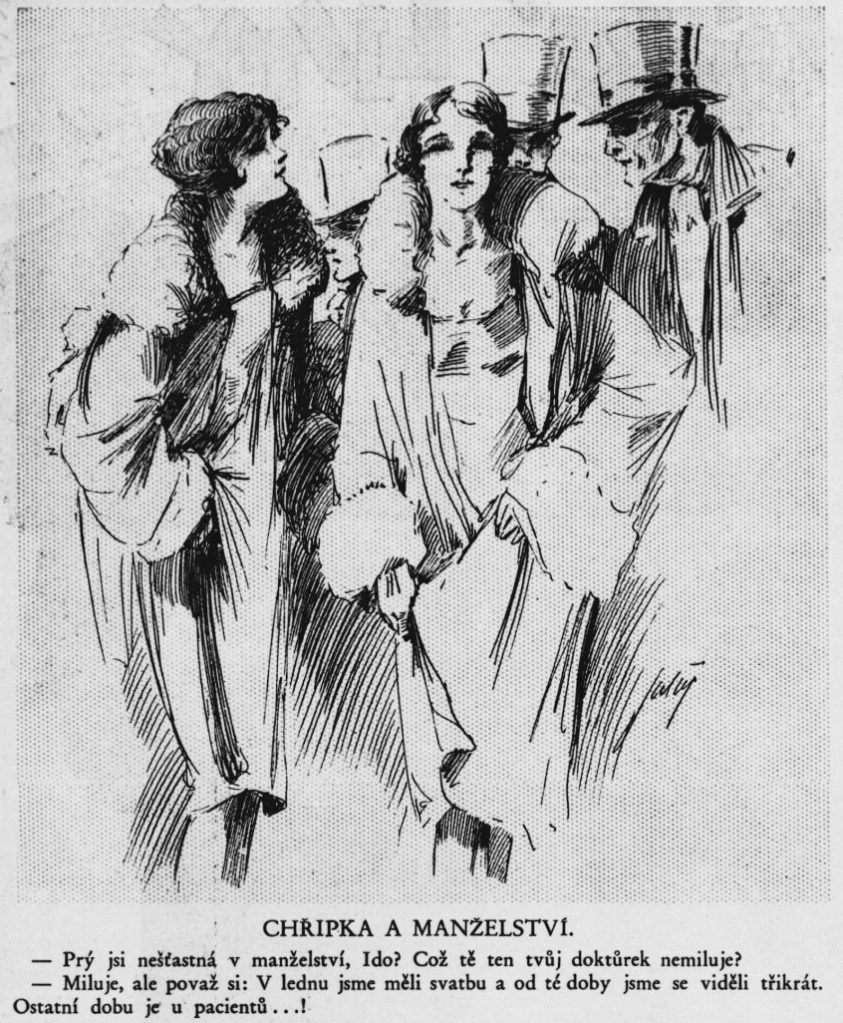
“Are you unhappy in your marriage, Ido? Doesn’t your doctor husband love you?” “He loves me, but consider: Our wedding was in January, and we’ve seen each other three times since then. The rest of the time he’s with his patients…!” (Humoristické listy, Prague, 1929)
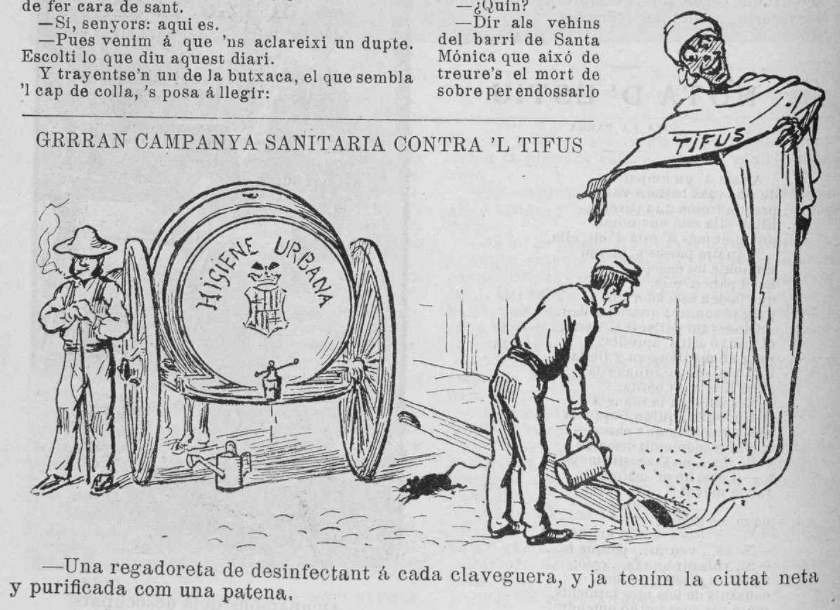
A sprinkling of disinfectant in each sewer, and we already have the city clean and purified like a dinner plate. (La Esquella de la torratxa, Barcelona, 1900)
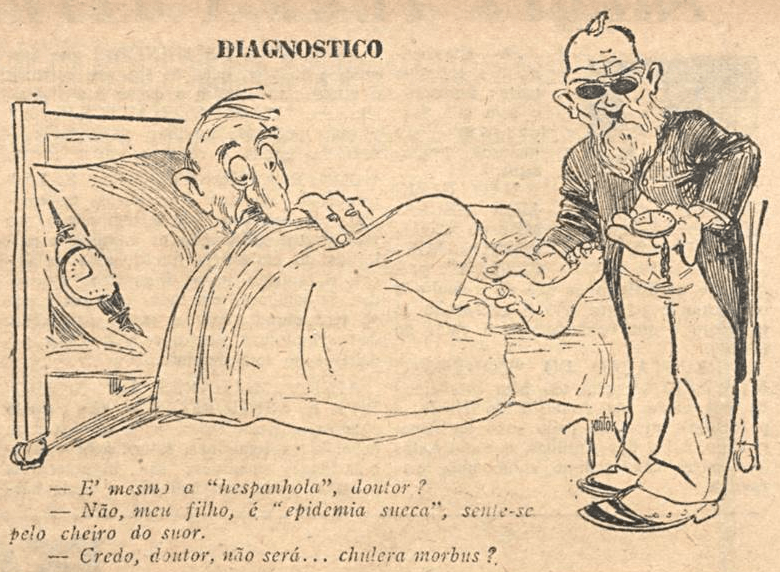
“Is it really the “Spanish,” doctor?” “No, my son, it’s the “juice epidemic,” you’re sensing the smell of sweat.” “Good heavens, doctor, won’t it be … cholera morbus?” (O Malho, Rio de Janeiro, 1918) (Definitely missed some wordplay here…something about “vulgar death”?)
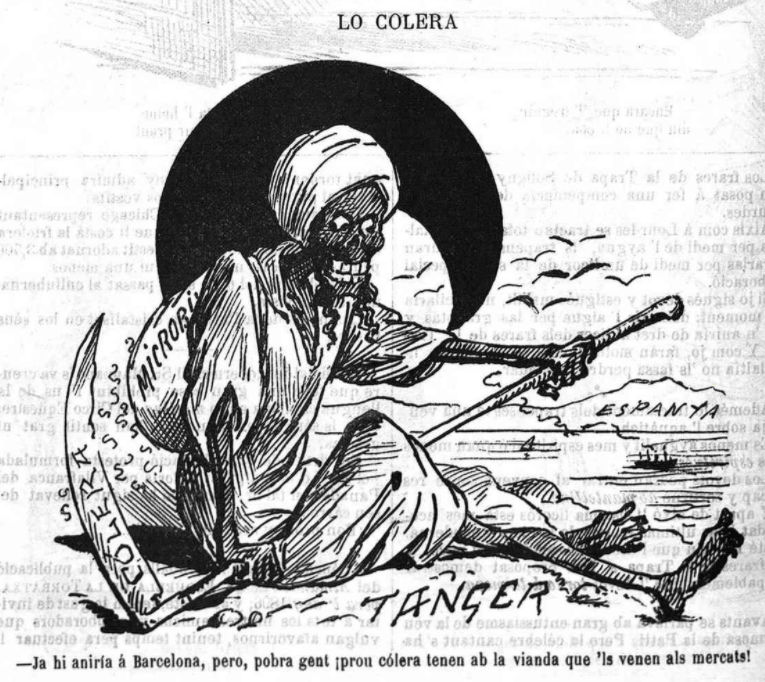
I would go to Barcelona, but, poor people, they have enough cholera with the food they sell in the markets! (La Esquella de la torratxa, Barcelona, 1895)
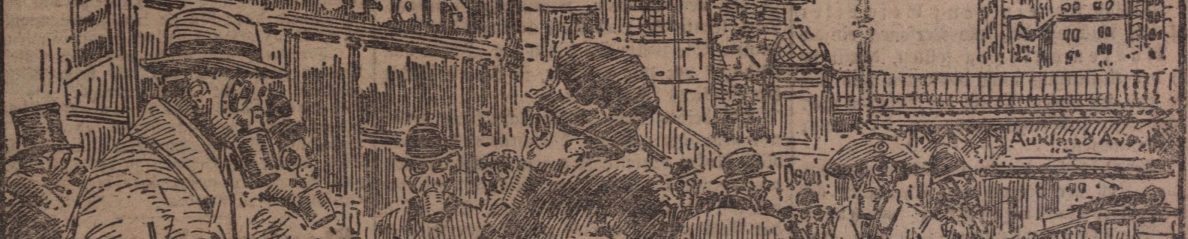
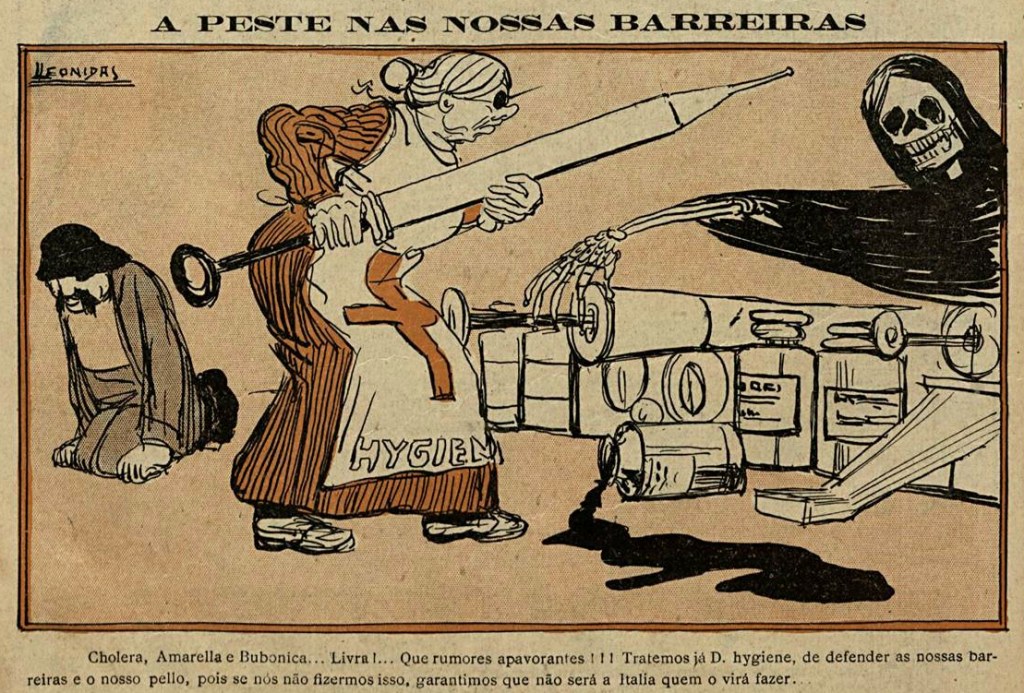
Cholera, yellow fever, bubonic plague… Liberated!… What terrifying rumors!!! Let us now try D. (?) hygiene, to defend our borders and our skins, because if we do not do this, we guarantee that it will not be Italy that comes to do it. (O Malho, Rio de Janeiro, 1911)
(left) “Listen, are these cigars from Valencia?” “Yes, sir.” “Are they already vaccinated?” (right, where sign indicates that inoculation is only available to unmarried single men and widows: married people are forbidden): “Look what trouble it is to be married! You, has it come out in Romero Robledo [Spanish Interior Minister] that married men cannot vaccinate cholera.” [I’ve got this idiom wrong, but you get the idea…] (La Esquella de la torratxa, Barcelona, 1885)
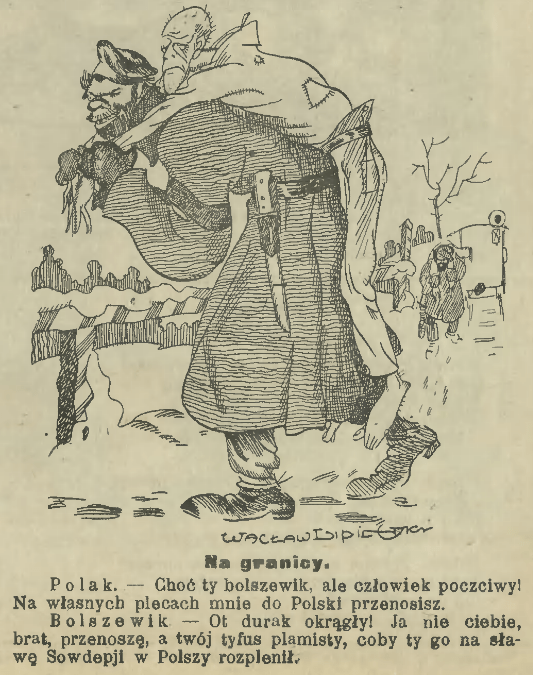
Emaciated Pole: “You may be a Bolshevik, but you are a good man. You are taking me to Poland on your own back.” Bolshevik: “Got it backwards, fool! I’m not carrying you, brother, but your typhoid fever, so that you will spread it to the glory of Soviet power in Poland.” (Mucha, Warsaw, 1922)
First two panels: (Image of a plate of Carioca dust [flour] with typhus, tuberculosis, yellow fever, smallpox, plague, gastroenteritis, etc. “Carioca” is a way of referring to the inhabitants of Rio de Janeiro.) “We knew the dust of Persia, we knew gold dust, monkey dust and Joanna dust, the river Po [“pó” meaning dust], etc., but… we are completely unaware of this new dust that invades us, suffocates us, and that kills us: the dust from Rio de Janeiro.”
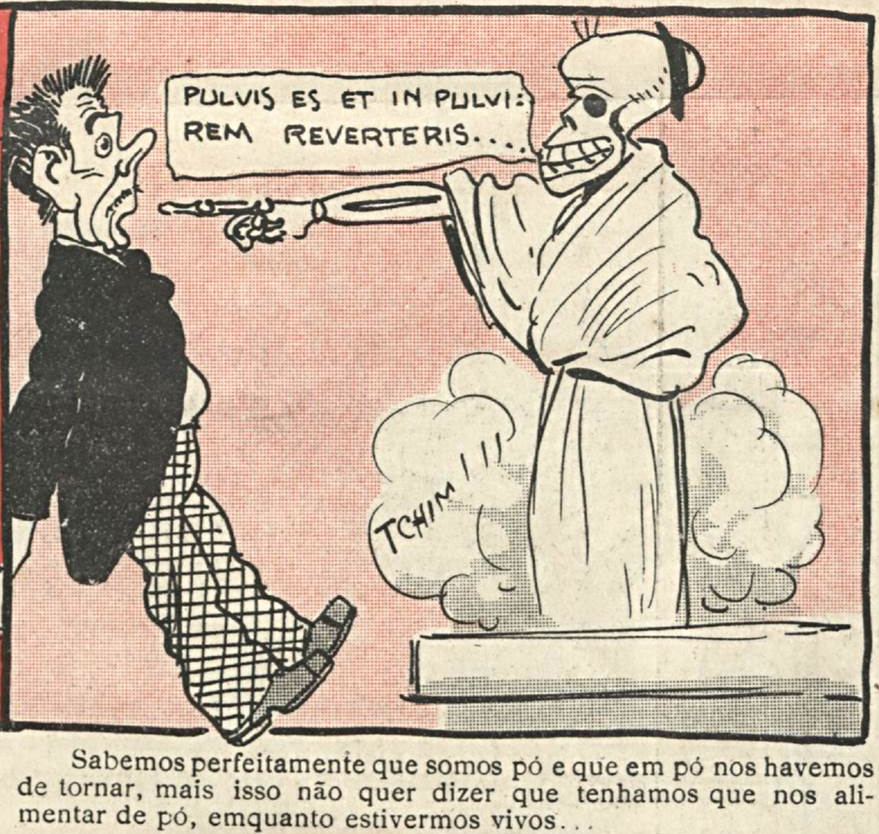
Deathly figure: “Dust thou art, and to dust thou shalt return…” “We know perfectly well that we are dust and that we shall become dust, but that does not mean that we have to feed on dust while we are alive…” (and four more panels of quirky municipal politics…) (O Malho, Rio de Janeiro, 1911)
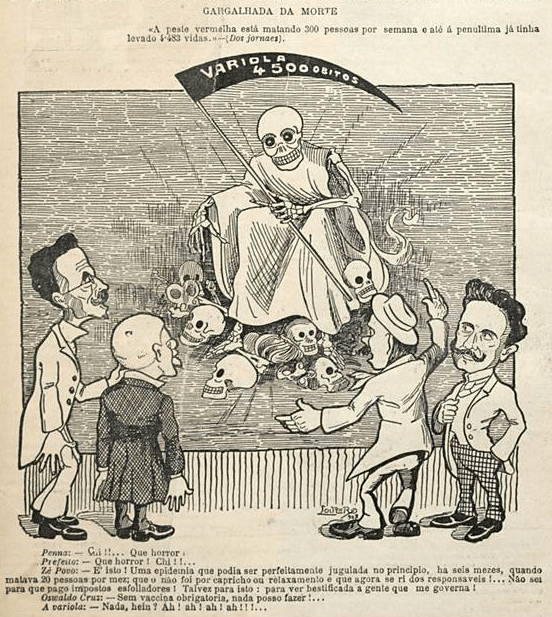
(4500 deaths to date from smallpox) Penna: “How horrible!!…” Mayor: “How horrible!” Joe Public: “This is it! An epidemic that could have been vanquished perfectly well in the beginning, six months ago, when it killed 20 people a month; that it was not on a whim or relaxation and that now it laughs at those responsible!… I don’t know what I pay for these taxes that flay me! Perhaps for this: to see the people who govern me dumbfounded!” Oswaldo Cruz: “Without mandatory vaccines, I can do nothing!…” Smallpox: “Nothing, huh? Hahaha!!!…” (O Malho, Rio de Janeiro, 1908)
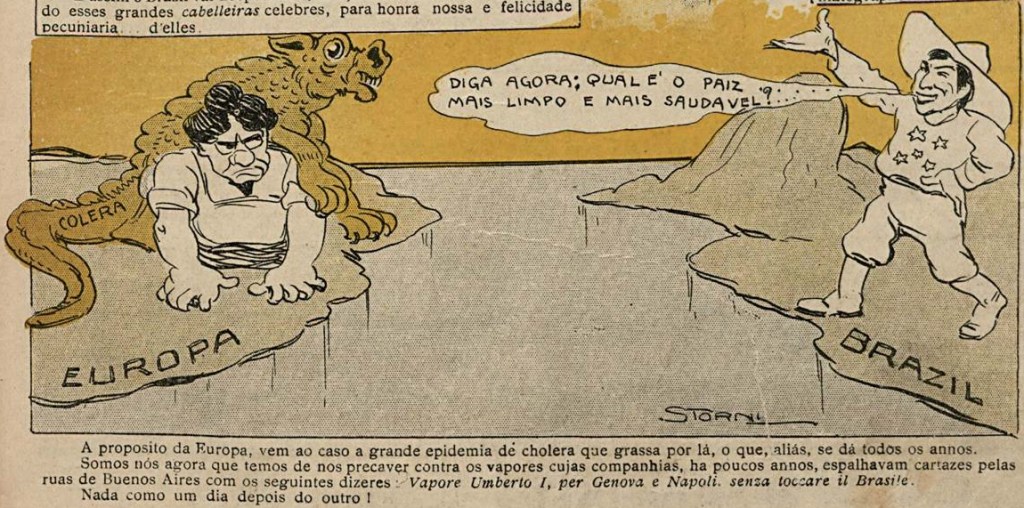
Detail from “Salad of the week”: “Say now: which is the cleanest and healthiest country? As for Europe, the great cholera epidemic that is raging there, incidentally, occurs every year. We are now the ones who have to guard against the steamer lines that were putting up posters on the streets of Buenos Aires a few years ago with the following words (in Italian): Steam ahead for Genoa and Naples on the Umberto I, without touching Brazil. There’s nothing like one day after the other!” (O Malho, Rio de Janeiro, 1911)
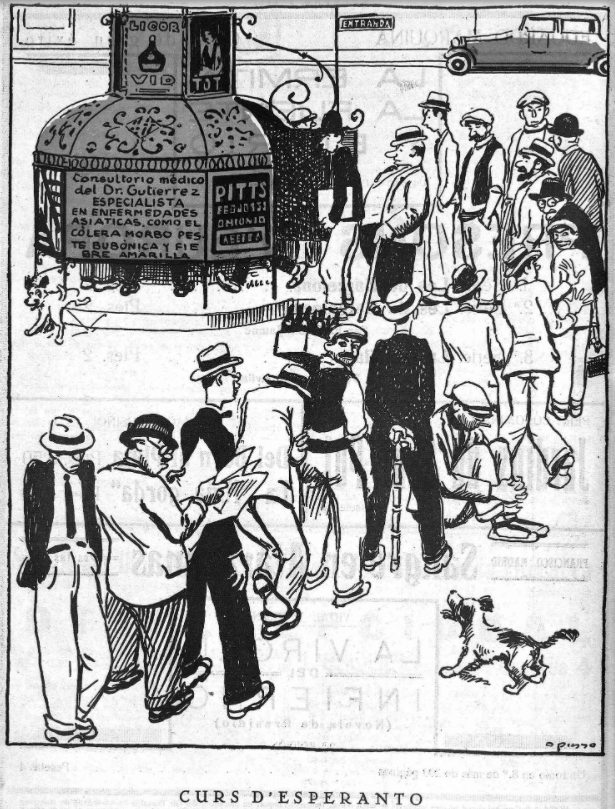
The all-purpose kiosk includes medical consultation with Dr. Gutierrez, specialist in Asiatic diseases like cholera, bubonic plagues, and yellow fever. (La Esquella de torratxa, Barcelona, 1927)
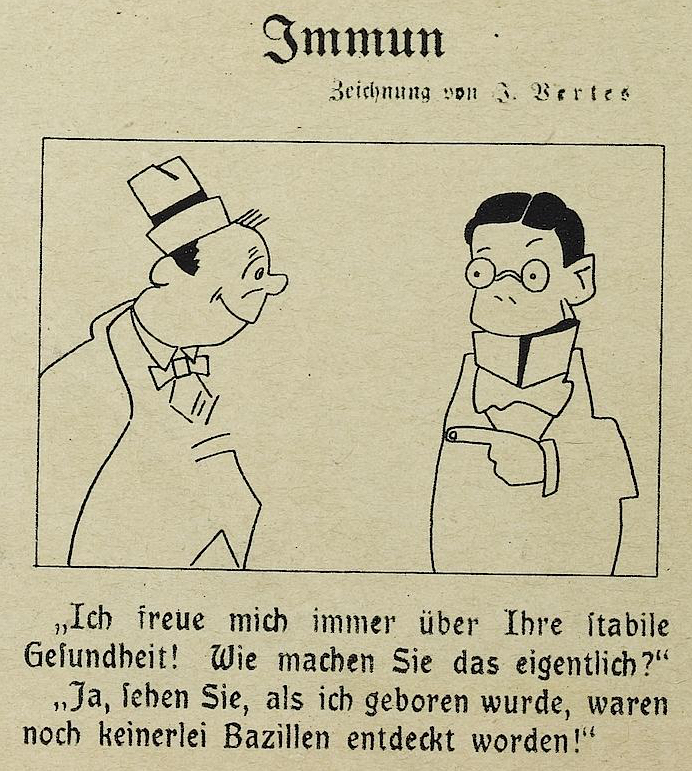
(For devotees of Bruno Latour) “I’m continually pleased by your stable health! How do you actually do it?” “Yes, you see, when I was born, no bacteria at all had been discovered yet!” (Der wahre Jacob, Stuttgart, 1929)
I lack the Portuguese knowledge to translate all these cartoons in full, but in this post I just want to highlight the iconic status of bacteriologist and public health leader Oswaldo Cruz (1872-1917). For an avowedly secular publication like O Malho, Cruz as the standard-bearer of modern medicine clearly exerted tremendous appeal, though of course its satire often drew attention to the many obstacles in the way of achieving his aims. (Each image links to the appropriate issue.)
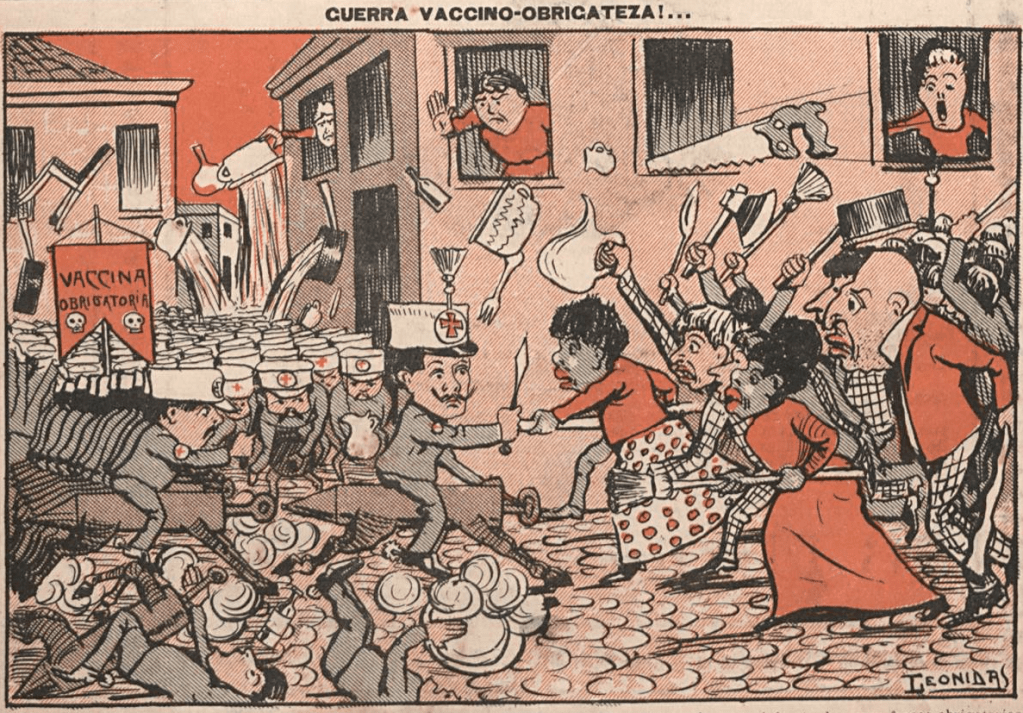
Vaccine-mandate war!… (1904)
Brazilian public health cartoon
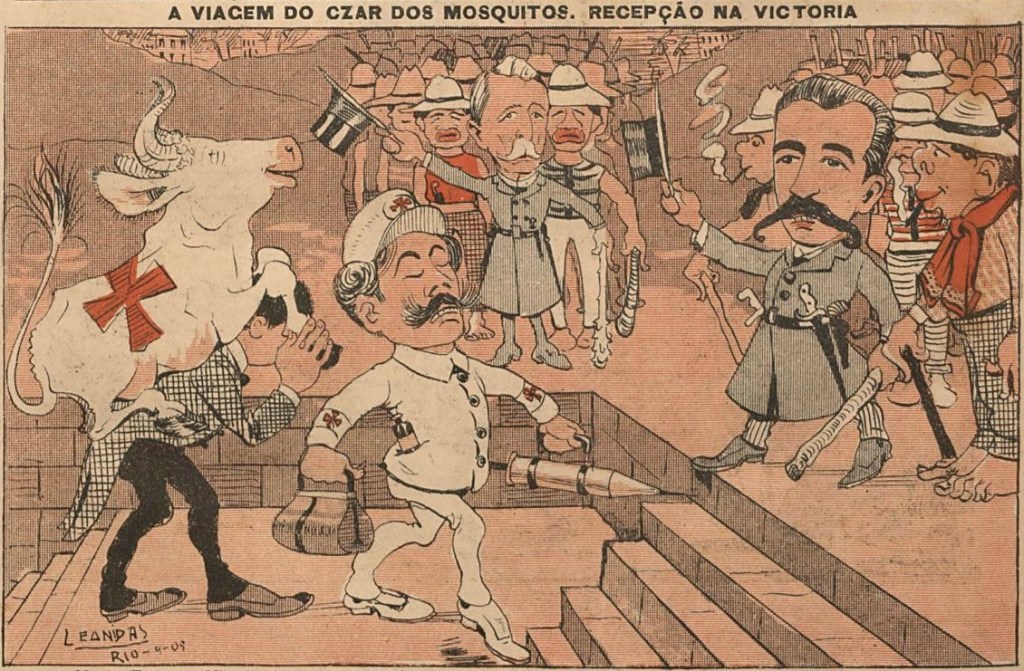
The journey of the mosquito czar. Reception in Victoria (1905)
Brazilian public health cartoon
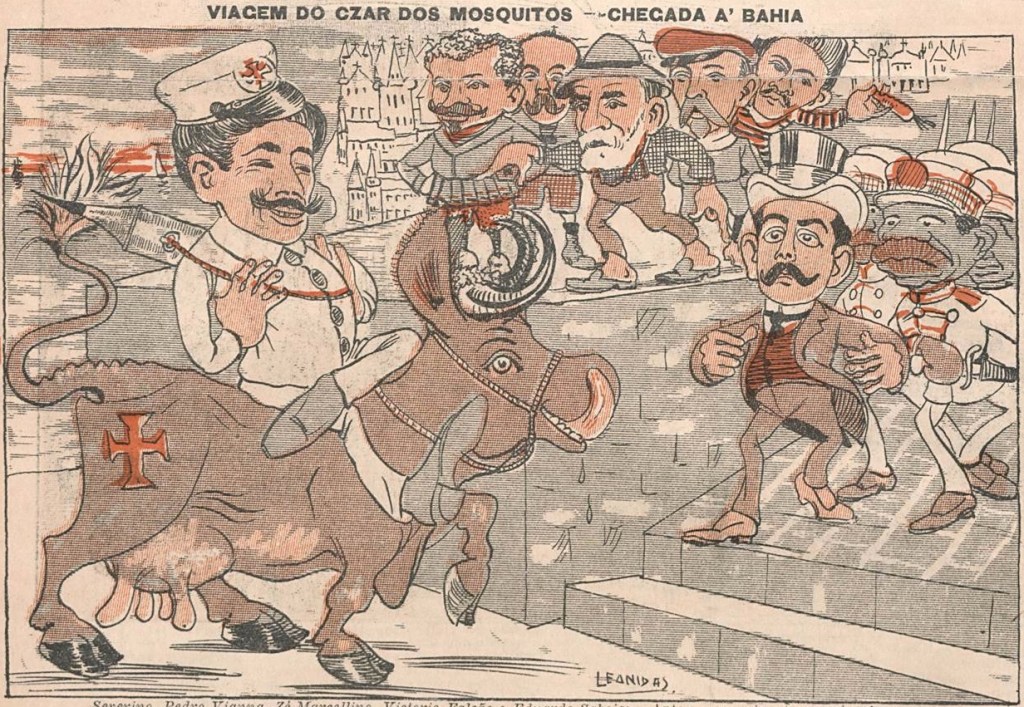
Journey of the mosquito czar — arrival in Bahia (1905)
Brazilian public health cartoon
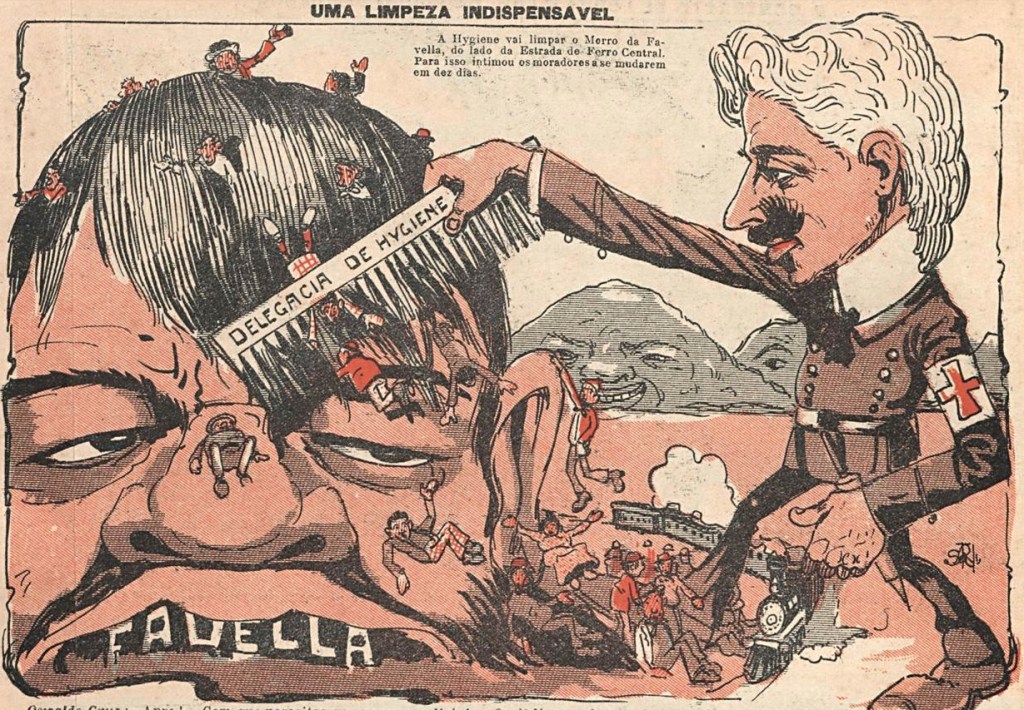
Essential cleaning (1907)
Brazilian public health cartoon
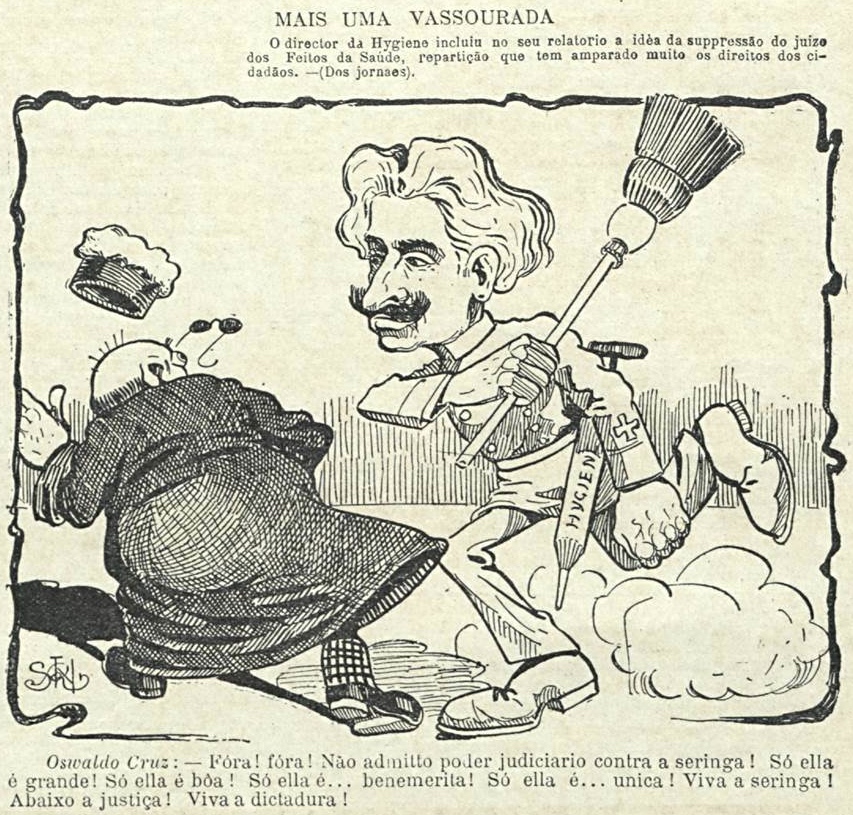
One more broom… (1907)
Brazilian public health cartoon
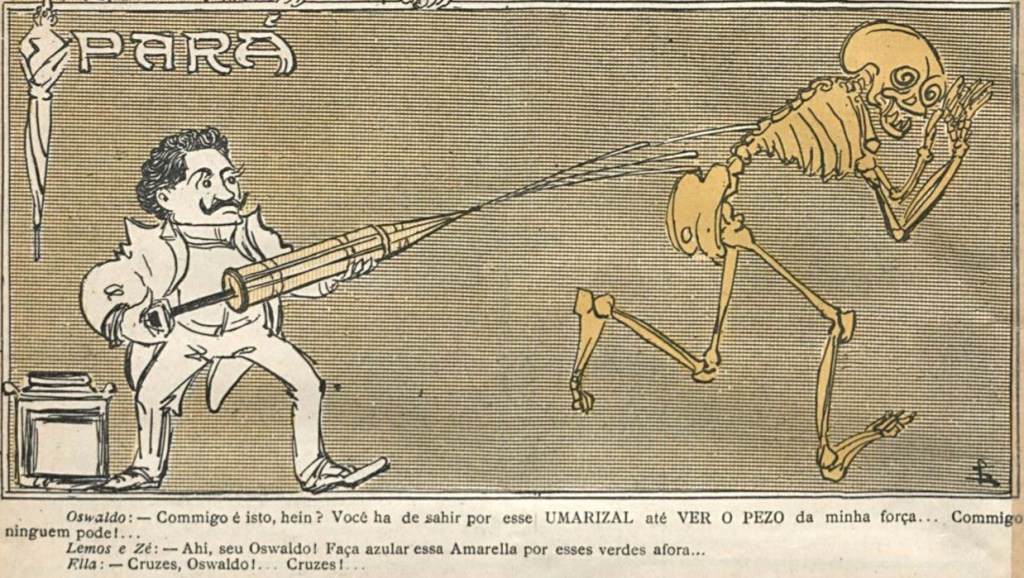
Cruz in provincial Pará (1910)
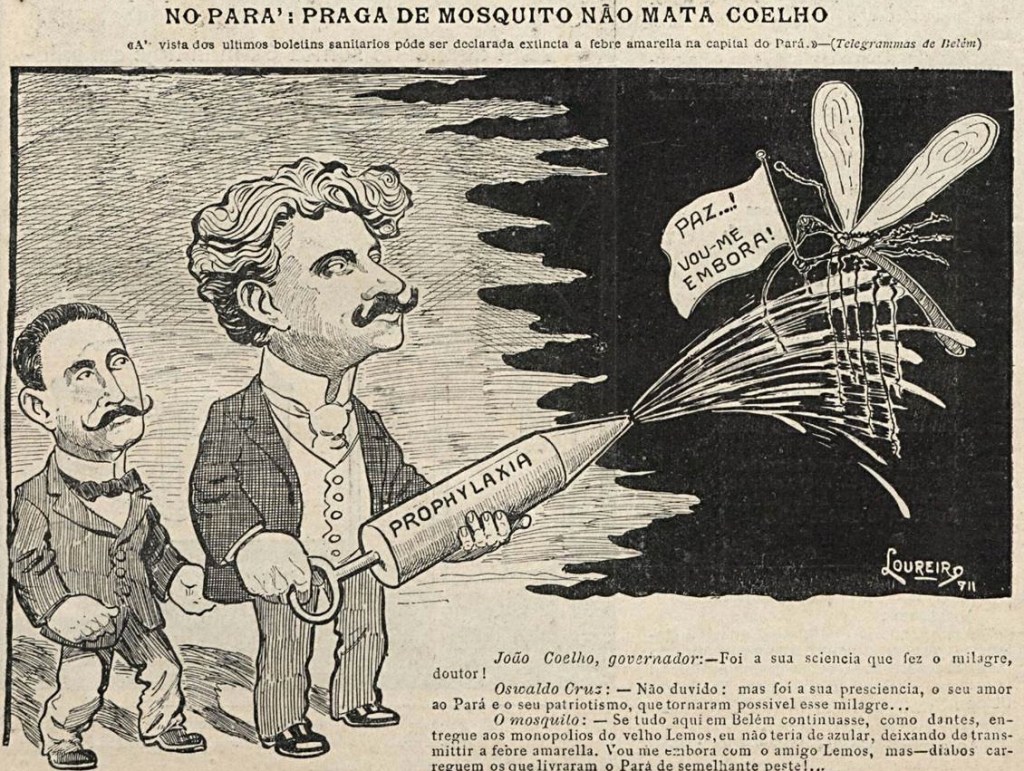
In Pará: Mosquito plague does not kill Governor Coelho (1911)
Brazilian public health cartoon
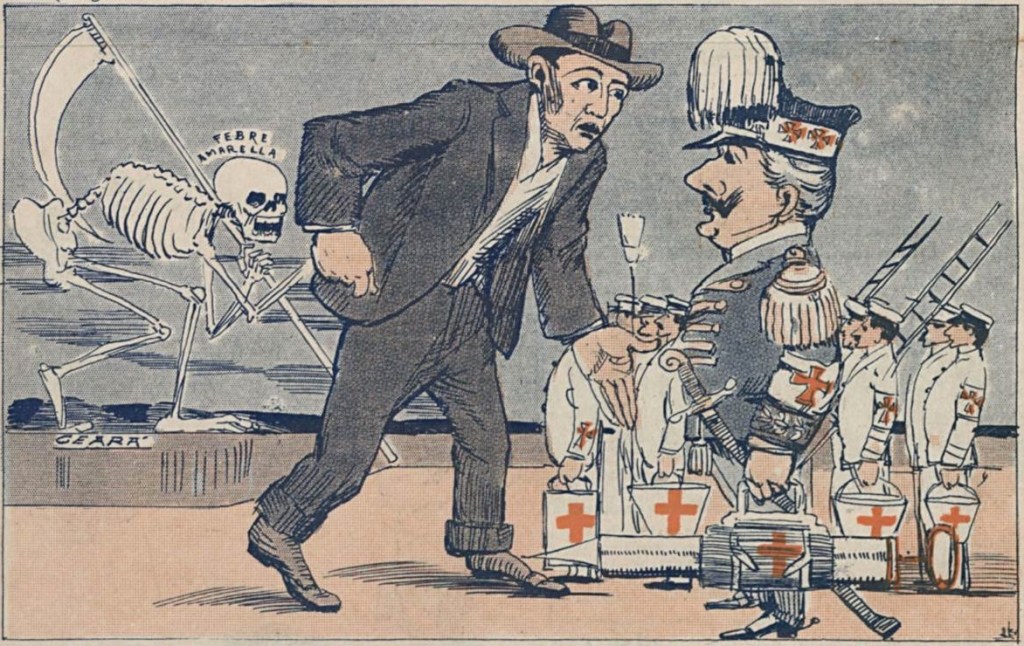
Federal intervention in Ceara (1914)
Brazilian public health cartoon
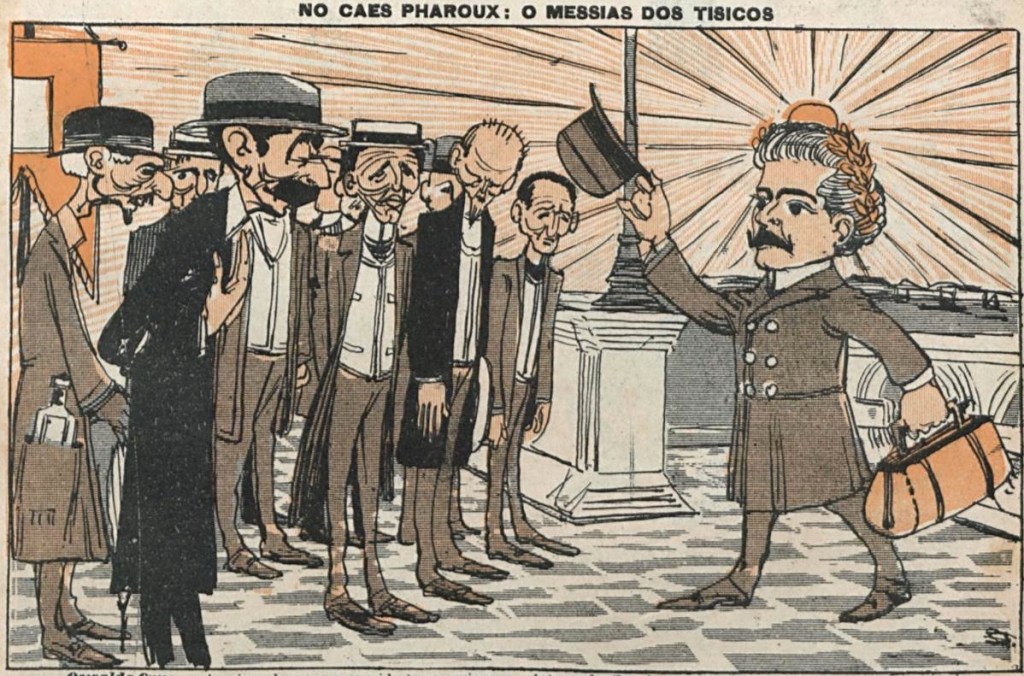
At the Pharoux Quay: The messiah of consumption (1908)
Brazilian public health cartoon
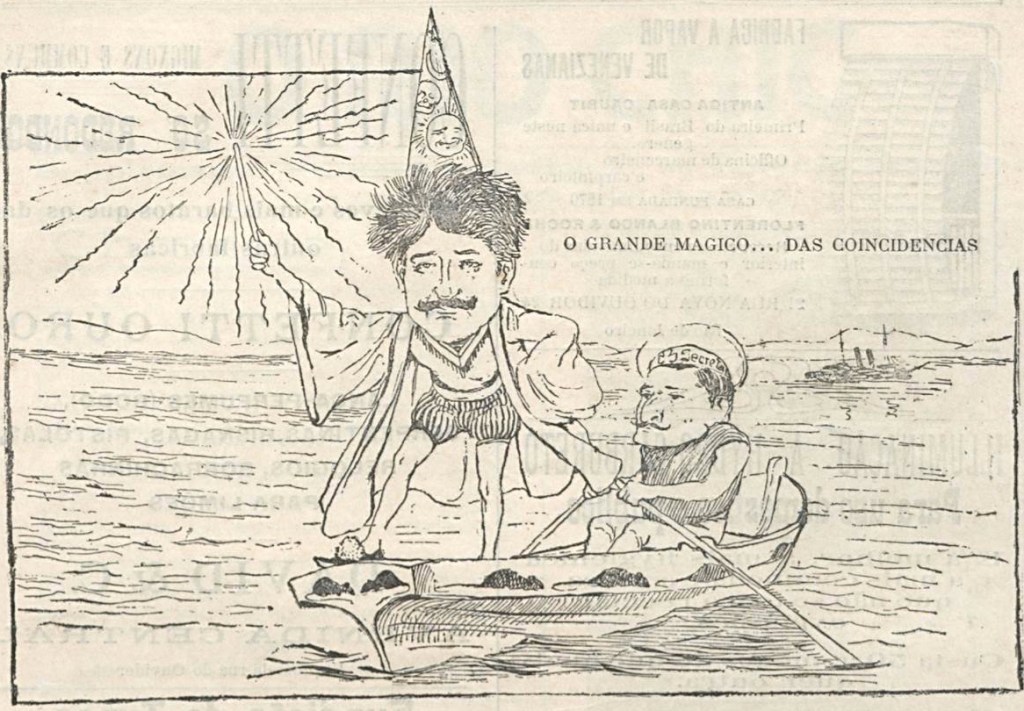
The great magician… of coincidences
Brazilian public health cartoon
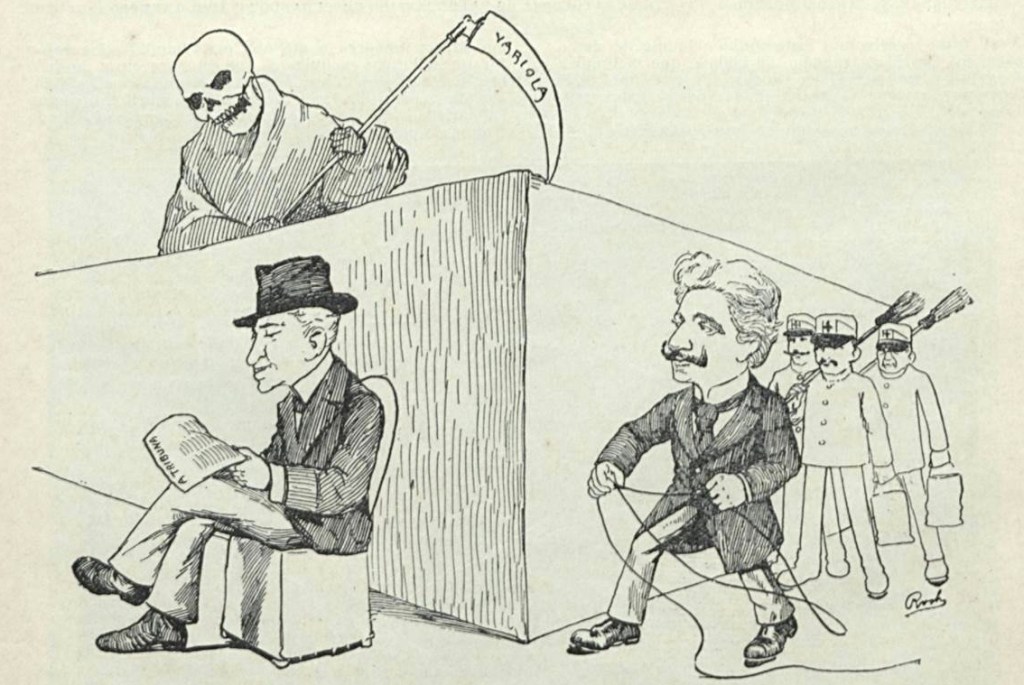
Roping it in time (1908)
Brazilian smallpox cartoon
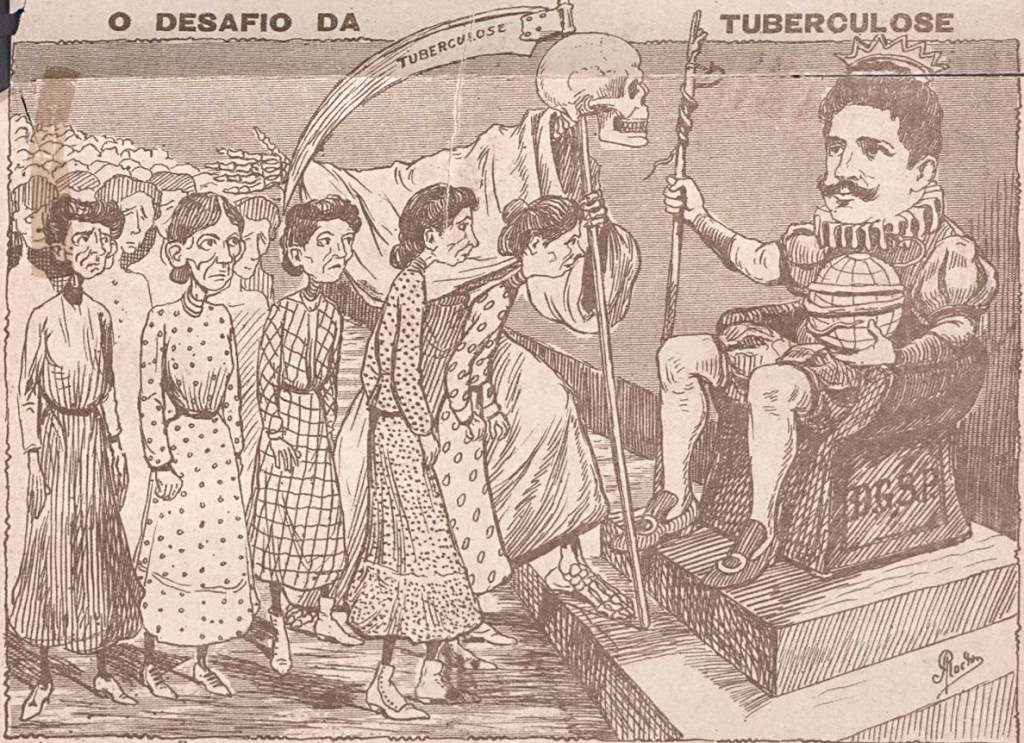
The challenge of tuberculosis (1906)
Brazilian tuberculosis cartoon
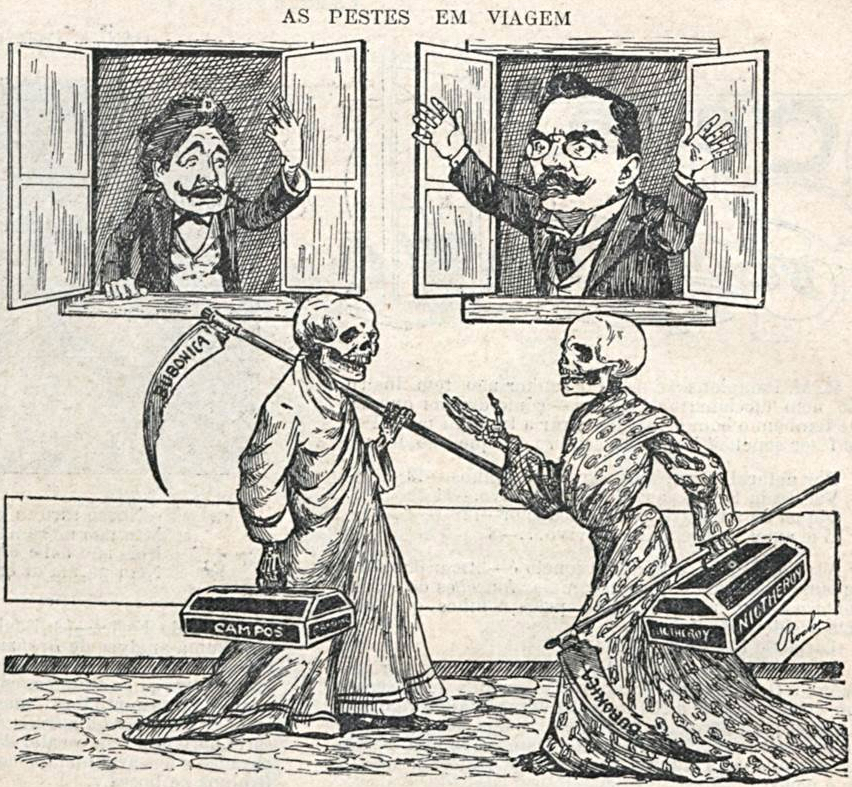
Plagues on the go (1907)
Brazilian plague cartoon
See also this multi-panel cartoon from 1905. And another from 1908. And a marvelous color cartoon from 1907. And this vaccination cartoon from 1904. Ditto.
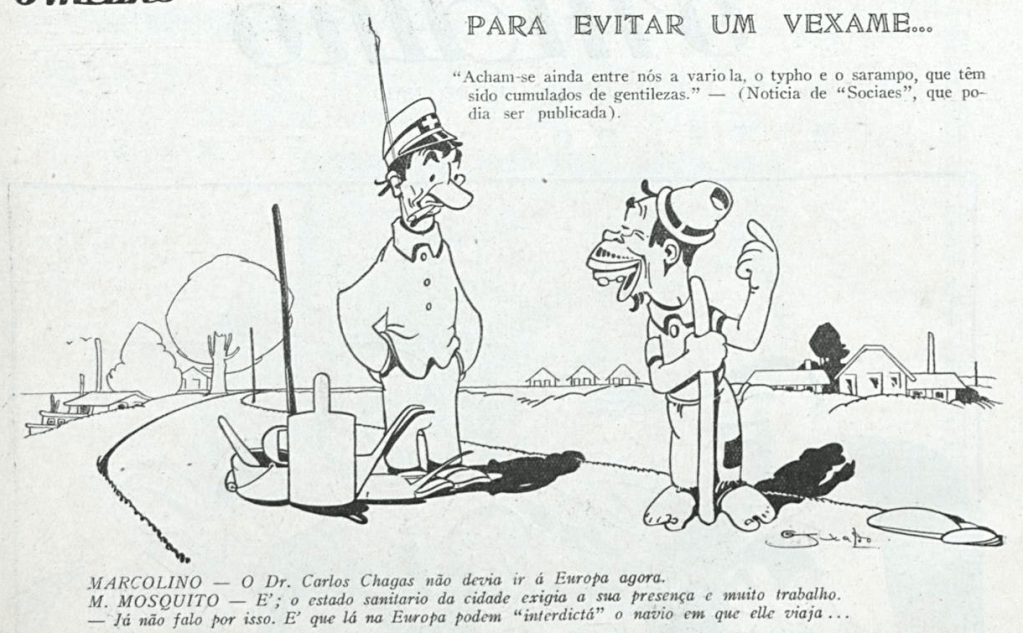
(Smallpox, typhus, and measles are still among us, which have been full of pleasantries.) (?) Marcolino: “Dr. Carlos Chagas [discoverer of the eponymous disease, AKA trypanosomiasis] shouldn’t be going to Europe now.” Mr. Mosquito: “And; the sanitary state of the city demands his presence and a lot of work.” “I’m not lacking for that. And in Europe, the ship on which he travels can be “interdicted”…” (O Malho, Rio de Janeiro, 1926) (This translation clearly wants improvement.)
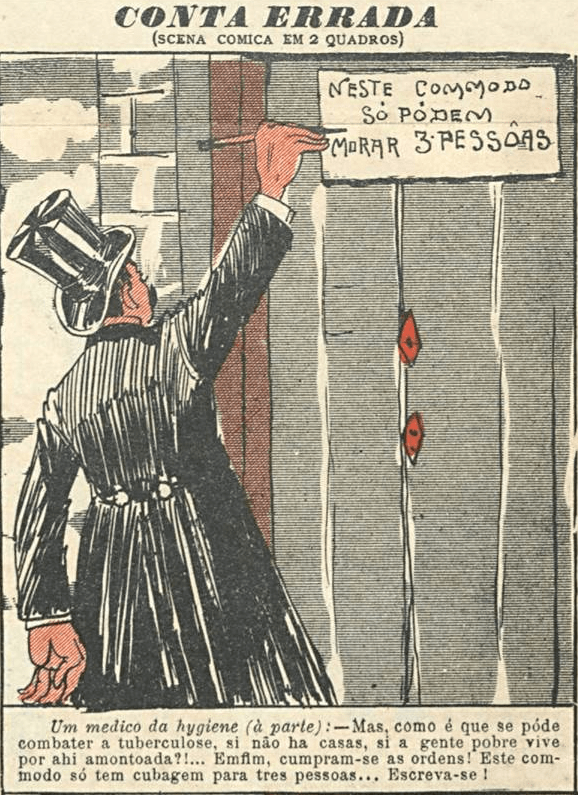
Public health physician writing official order that no more than three persons can live in this room: “But how can we fight tuberculosis if there is no housing, if poor people live piled up together?!… Carry out the orders at last! This room only has space for three people… Write!”
Brazilian tuberculosis cartoon
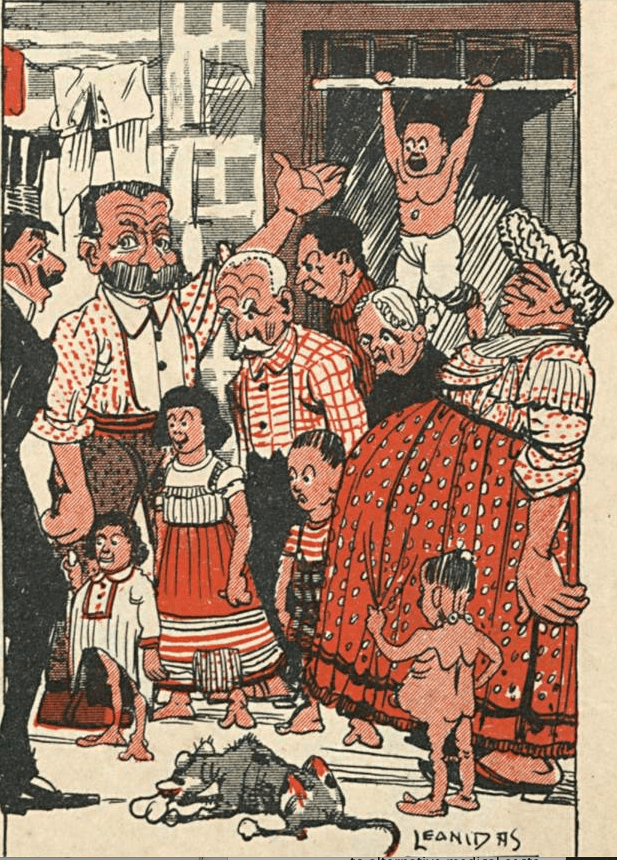
A tenant next door to the crowded room: “Hey, doc! I saw that sign you made and I’m telling you that your account is wrong! This room is the same size as that one, and all the people you see live here: me, my wife, my six–nearly seven–children, my father-in-law, my mother-in-law, and… Physician: “What! Even more people?” Tenant: “… and inside, Doctor, I still have a painting with the Three Persons of the Holy Trinity!” (O Malho, Rio de Janeiro, 1907)


 Sic Transit Pestilentia