“Have you been vaccinated against the plague?”
“I think that this bite from my mother-in-law is enough…”
(O Malho, Rio de Janeiro, 1903)
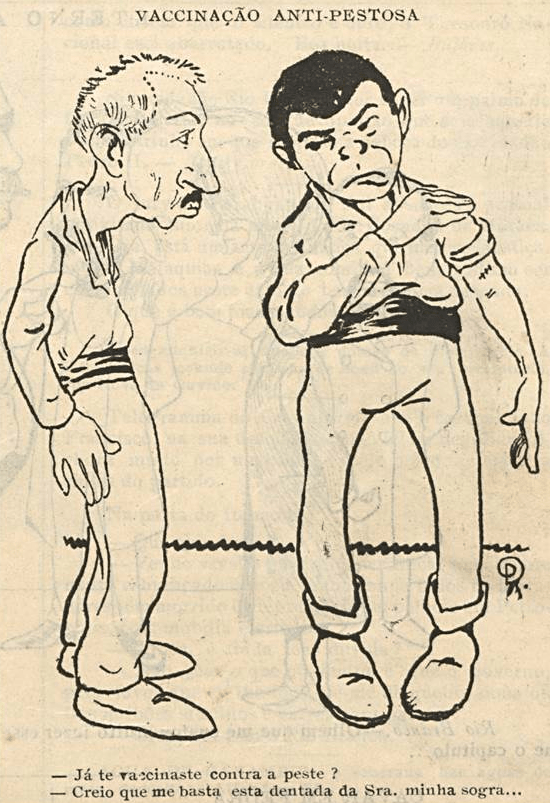
“Have you been vaccinated against the plague?”
“I think that this bite from my mother-in-law is enough…”
(O Malho, Rio de Janeiro, 1903)
(Concerns that cholera is transported in the holds of ships are leading to rigorous disinfection of parcels at ports of entry.)
Postman: “Even more of this!… In addition to being poorly paid, I have to work with this devil in sight, promising me a scythe in the neck.
Not even carrying it with tongs am I free of… fear!”
(O Malho, Rio de Janeiro, 1910)

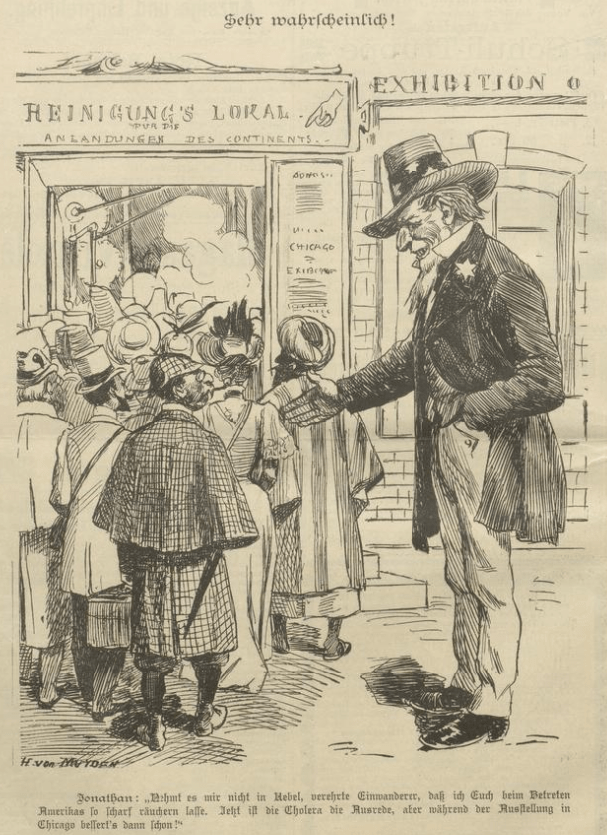
This was published shortly before the Chicago World’s Fair opened in 1893.
Brother Jonathan [the icon did not fully stabilize under “Uncle Sam” until World War I]: “Don’t be angry with me, dear immigrants, for having you fumigated so severely as you enter America. Right now cholera is the excuse, but then it will improve during the exhibition in Chicago!”
(Nebelspalter, Zurich, 1892)
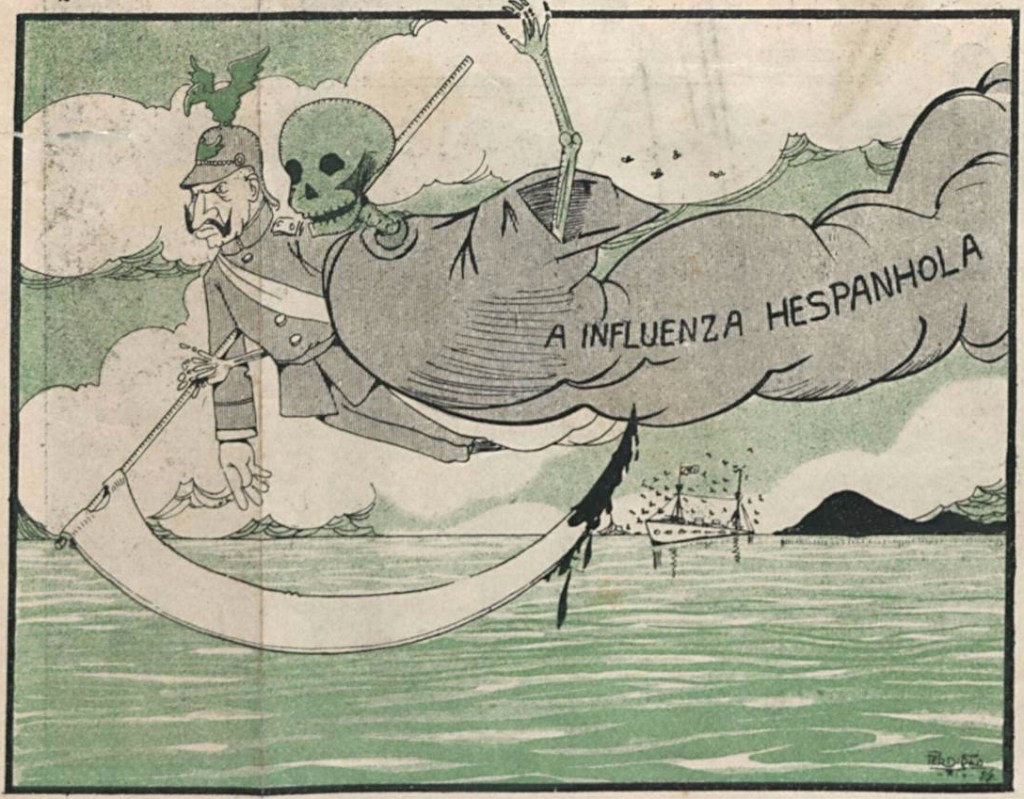
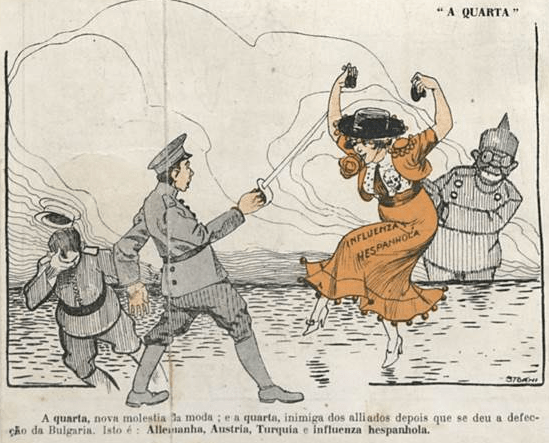
The Spanish flu, the new ally of the Kaiser.
(O Malho, Rio de Janeiro, 1918)
“The Quartet” is the new fashionable disease; and the Quartet is enemy of the Allies since Bulgaria’s defection. This is: Germany, Austria, Turkey, and Spanish flu.”
(O Malho, Rio de Janeiro, 1918)
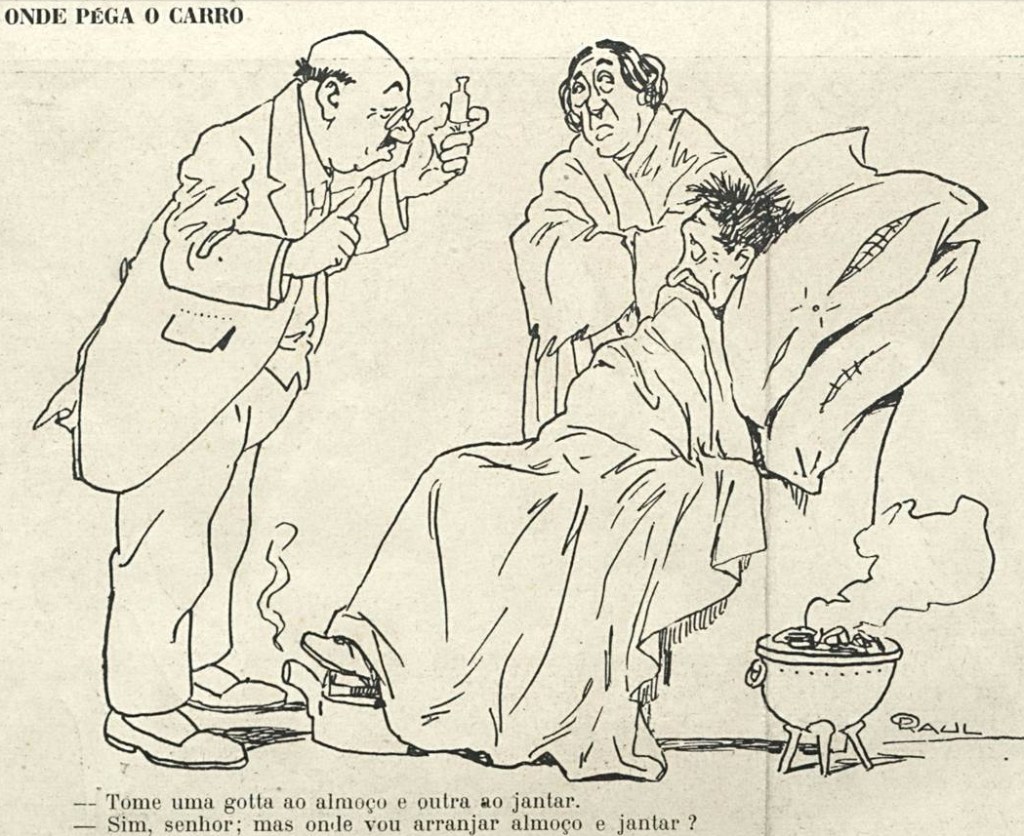
“Take one drop at lunch and another at dinner.”
“Yes, sir, but where am I going to get lunch and dinner?”
(O Malho, Rio de Janeiro, 1918) (I might have missed the idiom in the title.) (A later German cartoon with a similar motif.)
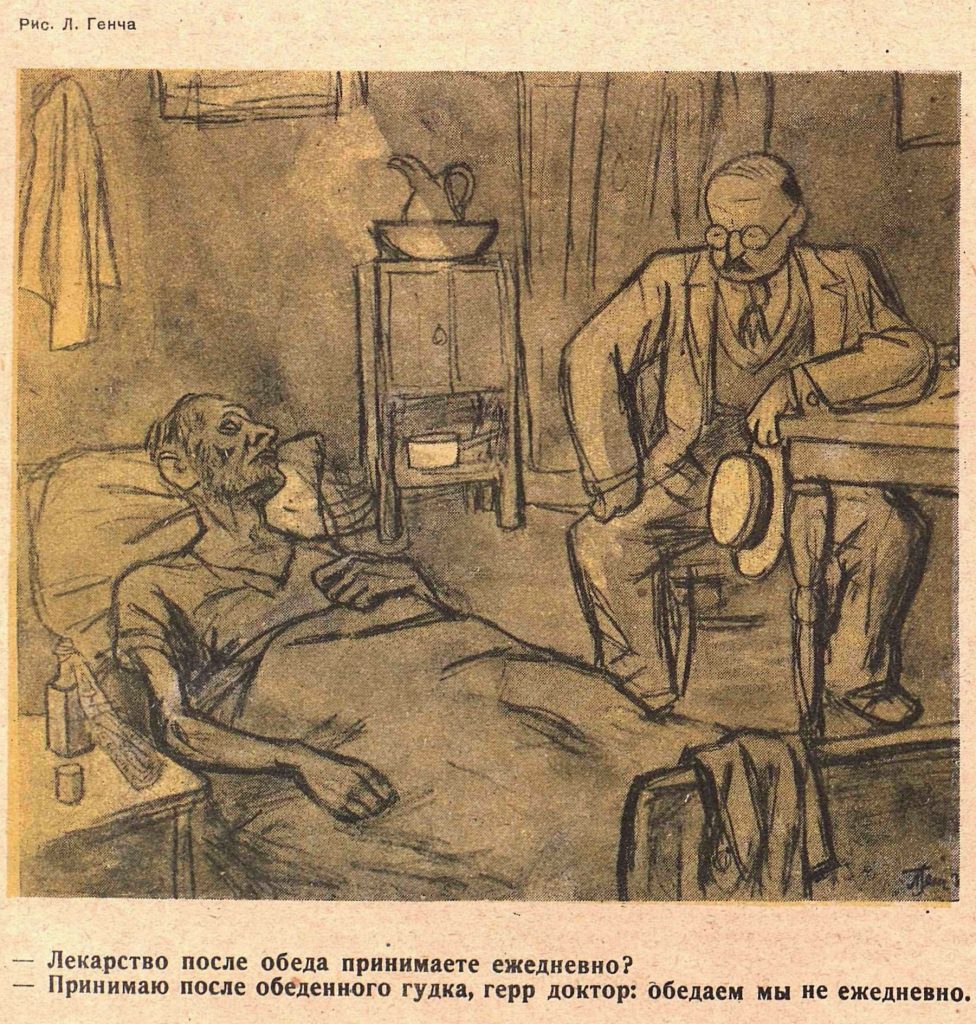
A nearly identical Soviet cartoon aimed at contemporary Germany:
“Are you taking the medicine daily after lunch?”
“I take it after the lunch bell, Herr Doctor: we don’t have lunch every day.”
(Krokokil, Moscow, 1936)
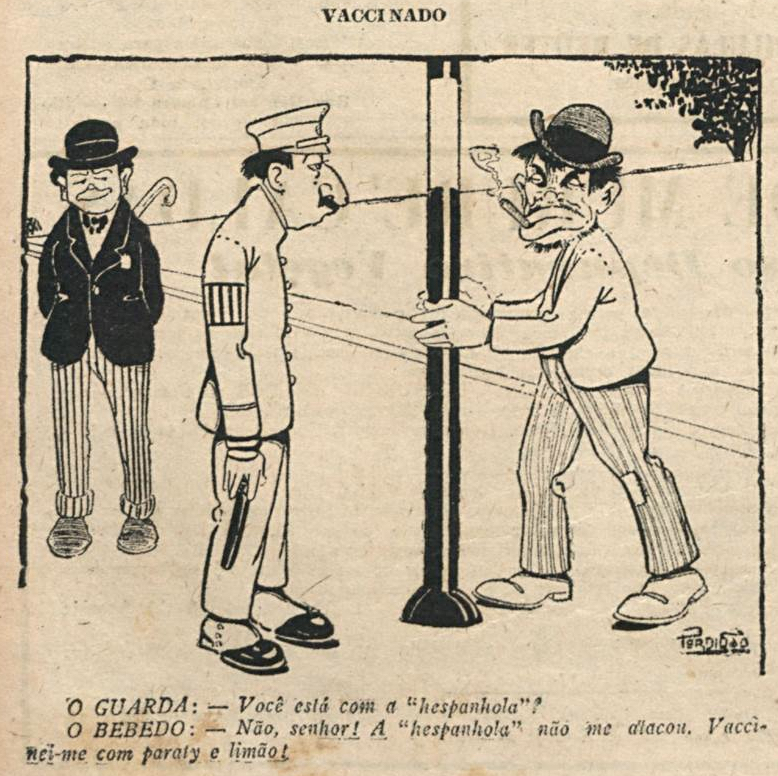
Guard: “Have you had the “Spanish” thing?”
Drunk: “No, sir! The “Spanish” thing does not attack me. Vaccinate me with rum and lemon!”
(O Malho, Rio de Janeiro, 1918)
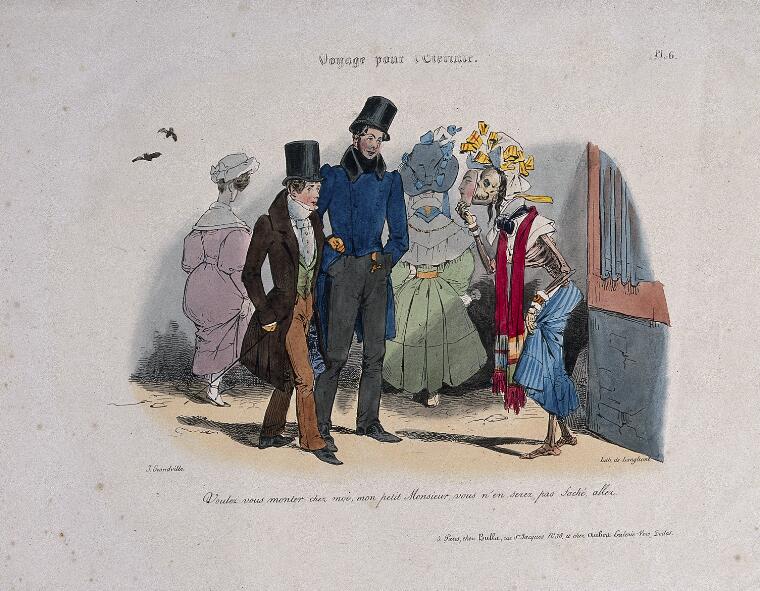
Two young men are approached by a prostitute: she is a clothed skeleton holding a made-up mask in front of her face, representing syphilis. Lithograph by J.J. Grandville, 1830.
(Wellcome Collection)
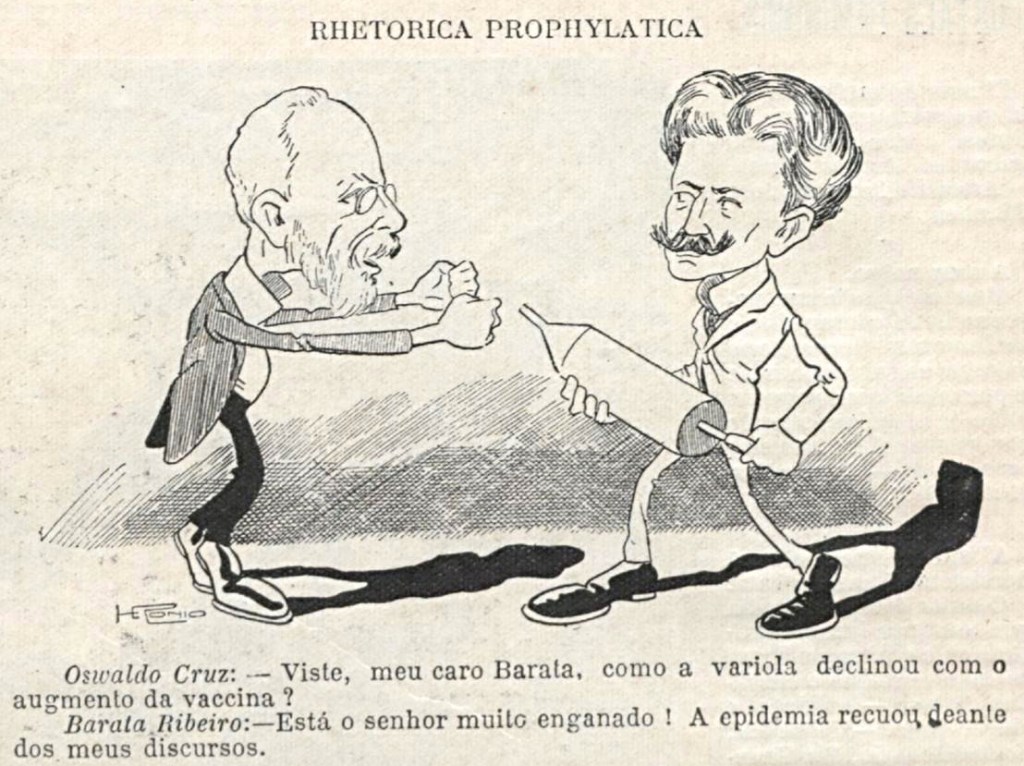
Oswaldo Cruz [famous Brazilian bacteriologist]: “Did you see, my dear Barata, how smallpox declined with the increase in vaccination?”
Barata Ribeiro [mayor of Rio de Janeiro, but as it happened, also trained as a physician]: “You are very mistaken! The epidemic has retreated in the face of my speeches.”
(O Malho, Rio de Janeiro, 1908)
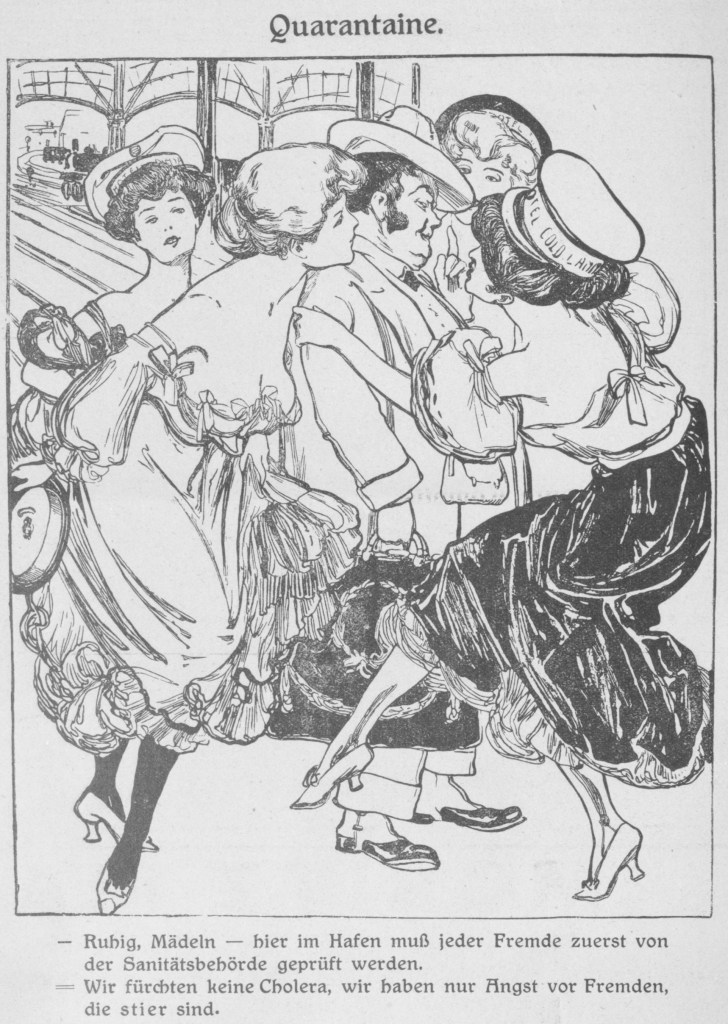
“Calm down, girls, every foreigner here in port must first be examined by the public health authorities.”
“We’re not afraid of cholera, we’re only afraid of foreigners who are broke.”
(Wiener Caricaturen, Vienna, 1911)
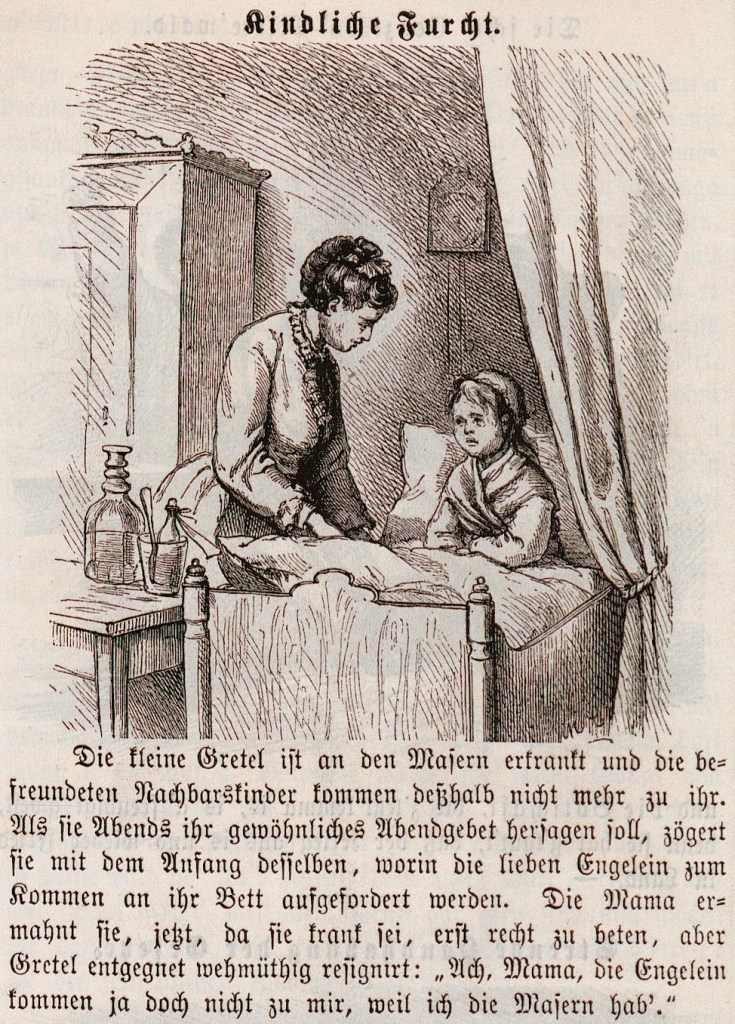
Little Gretel is sick with measles and her neighborhood friends are no longer visiting her because of this. When she is supposed to say her nighttime prayer, she hesitates at its beginning, where the dear little angels are summoned to her bedside. The mother admonishes her, since now that she is sick, she should pray correctly, but Gretel responds in poignant resignation: “Oh, Mama, the little angels won’t come to me, because I have the measles.”
(Fliegende Blätter, Munich, 1872)
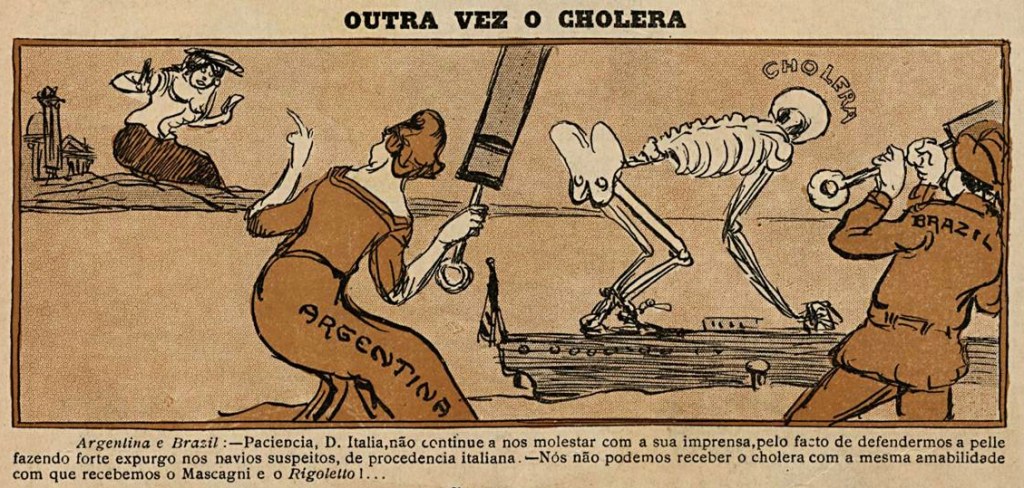
Argentina and Brazil: “Patience, Lady Italy, don’t keep harassing us with your press, because we defend the perimeter by inducing a strong purge on the suspicious ships of Italian origin. We cannot receive cholera as kindly as we received Mascagni and Rigoletto!…” (Argentine and Brazil are preparing to apply clystères to cholera’s rear. Such purging was a recurrent theme during earlier epidemics.)
(O Malho, Rio de Janeiro, 1911)
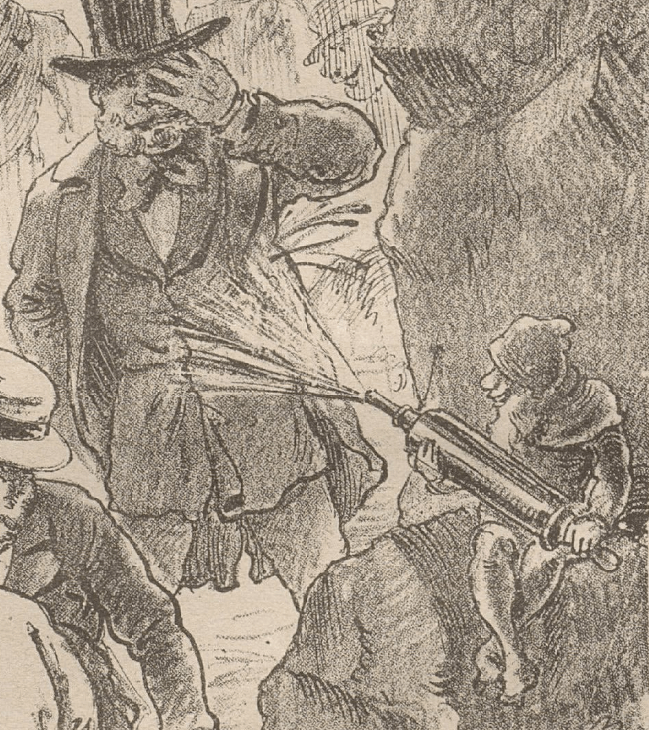
This cartoon depicts Swiss naturalists on a field trip to nearby caves during their annual congress in 1875. The caption pretends to report from the proceedings: “Even in Gotthard we were received extremely courteously; the bones found, tools of all kinds, etc. obviously belong to the Bronze Age.” The iconic Darwin, shown holding a bone, surely did not attend, but the man behind him strongly resembles Arnold Dodel (albeit unduly gray), the botanist who was his strongest ally in Switzerland. The source of amusement for present purposes would be the gnome on the right spritzing the naturalists with disinfectant. (Scroll down for detail.) Switzerland had not been spared during the upsurge of cholera less than two years earlier…
(Nebelspalter, Zurich, 1875)

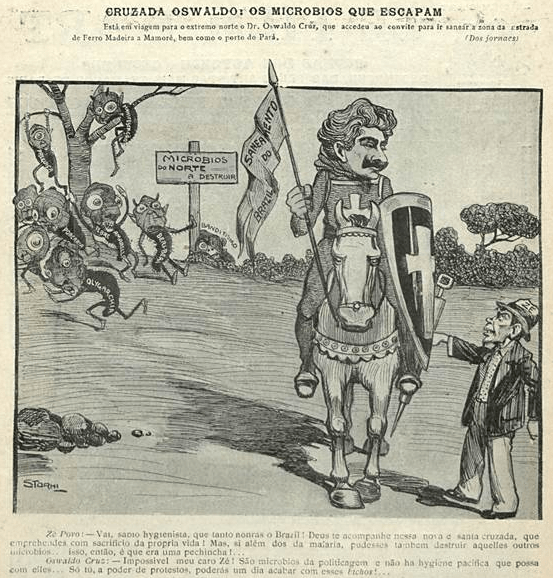
(Brazil’s great public health crusader Oswaldo Cruz intends to spread his measures to the distant provinces.)
Joe Public: “Go, wise hygienist […]! God be with you in this new and holy crusade, which you undertake with the sacrifice of your own life! But, in addition to malaria, you could also destroy those other microbes… [depicted are idleness, filth, oligarchy, yellow fever, demonstrations, beri-beri, and banditry] then that would be a bargain!…”
Oswaldo Cruz: “Impossible, my dear Joe! They are microbes of politics and there is no peaceful hygiene that I can use with them… Only you, with the power of protests, can one day put an end to these beasts!…”
(O Malho, Rio de Janeiro, 1910)
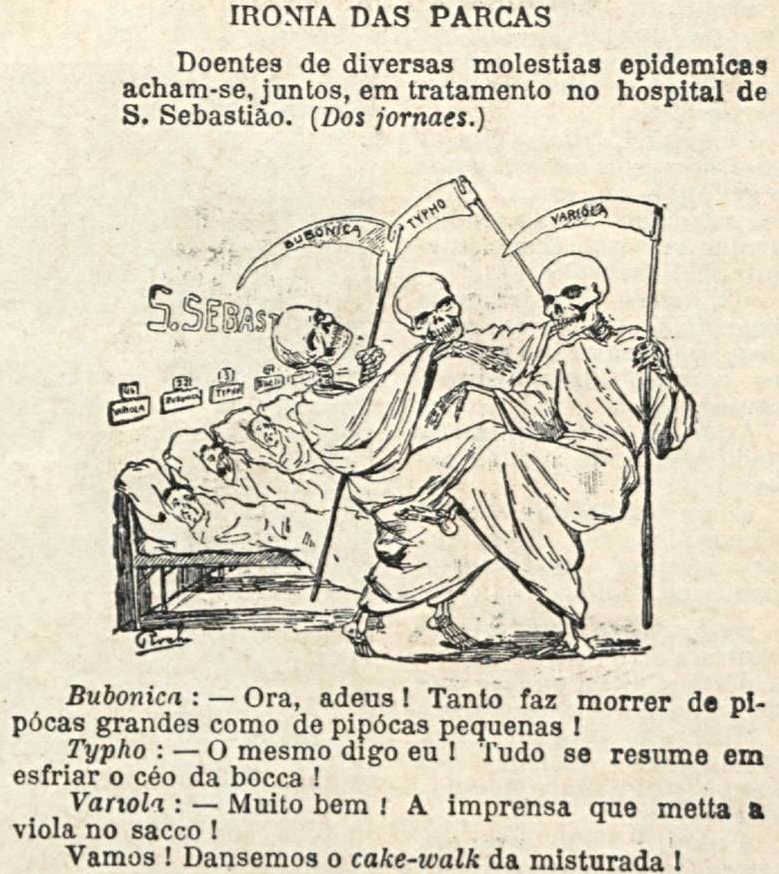
(Patients with different epidemic diseases are being treated together at the St. Sebastian hospital.)
Plague: “Well, goodbye! It doesn’t matter if you die from large pox or small ones!
Typhus: “The same, I say! It all comes down to cooling the roof of the mouth!”
Smallpox: “Very well! It’s the press that got their berries back in the basket!” (Better idiom needed!)
“Let’s go! Let’s dance the cake-walk of mixing!”
(O Malho, Rio de Janeiro, 1908)
 Sic Transit Pestilentia