Image of a fumigation chamber used in Geneva during the cholera pandemic as it spread in 1884.
(Vasarnapi Ujság, Budapest, 1884)
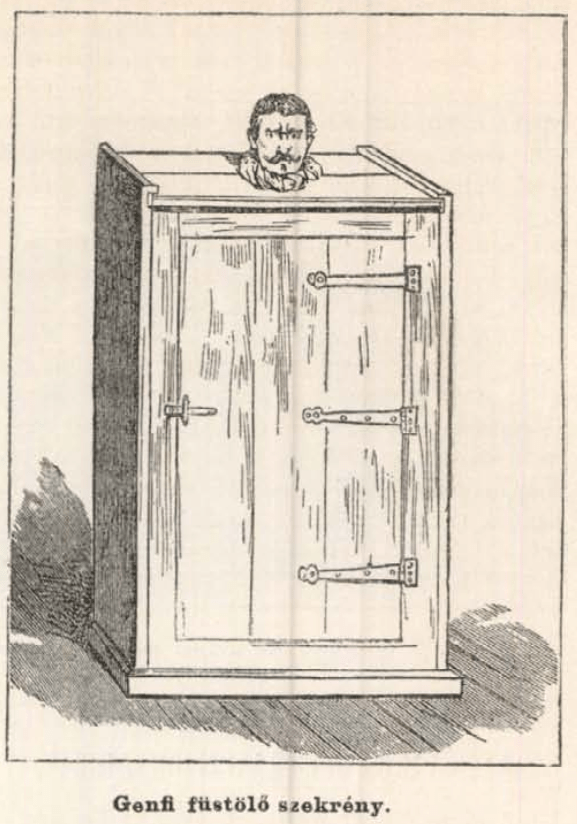
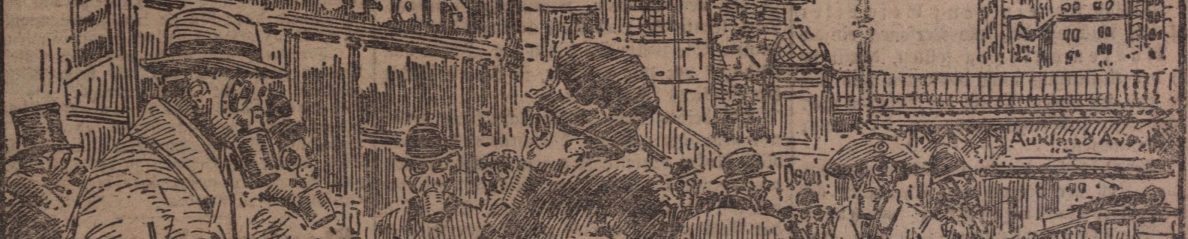
Image of a fumigation chamber used in Geneva during the cholera pandemic as it spread in 1884.
(Vasarnapi Ujság, Budapest, 1884)
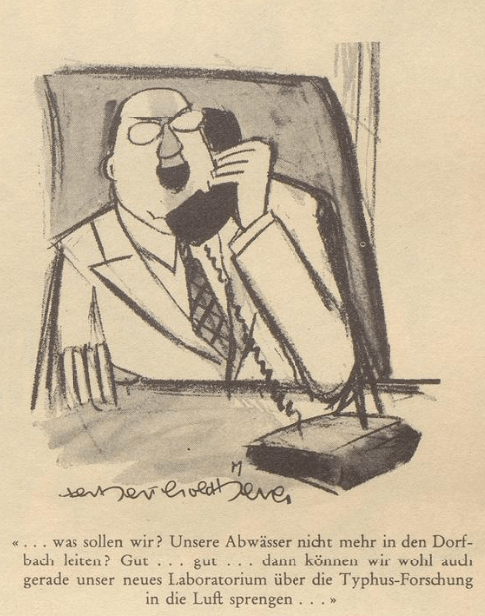
“… what should we do? No longer discharge our wastewater into the village stream? Alright… alright… then we can probably just blow up our new laboratory for typhus research…”
(Nebelspalter, Zurich, 1971)
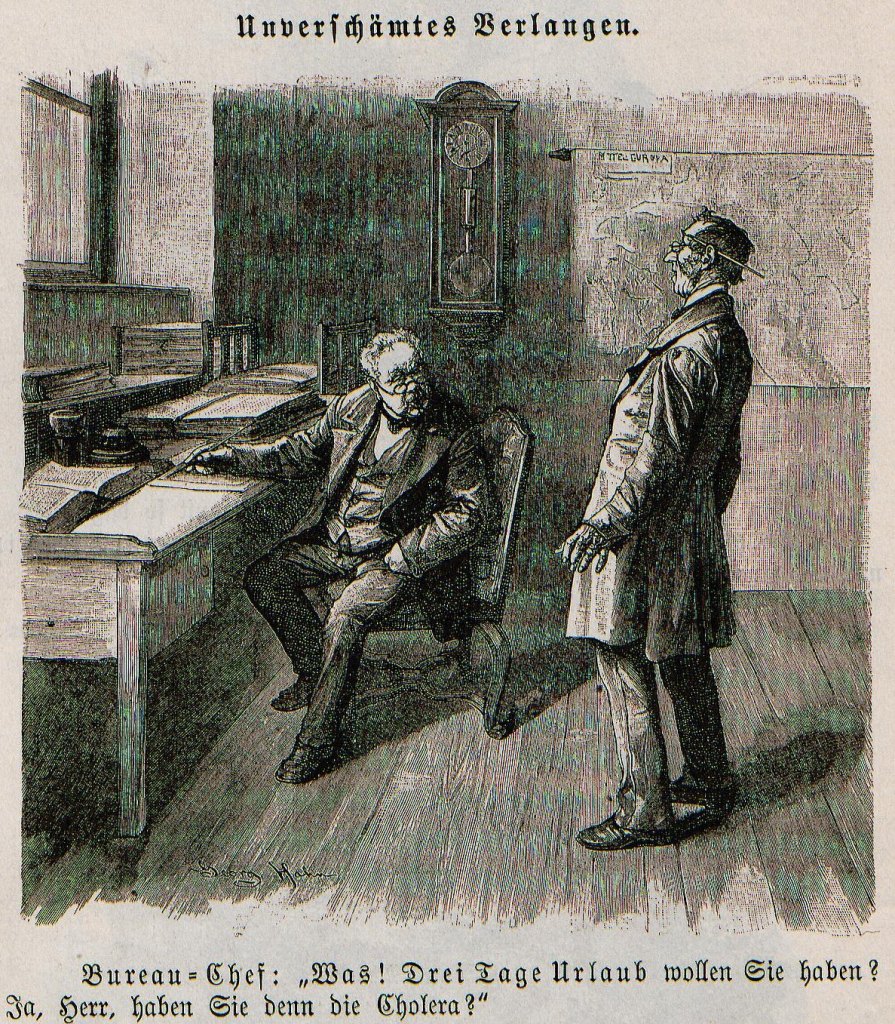
Office manager: “What! You want three days vacation? Indeed, sir, do you have the cholera?”
(Fliegende Blätter, Munich, 1886)
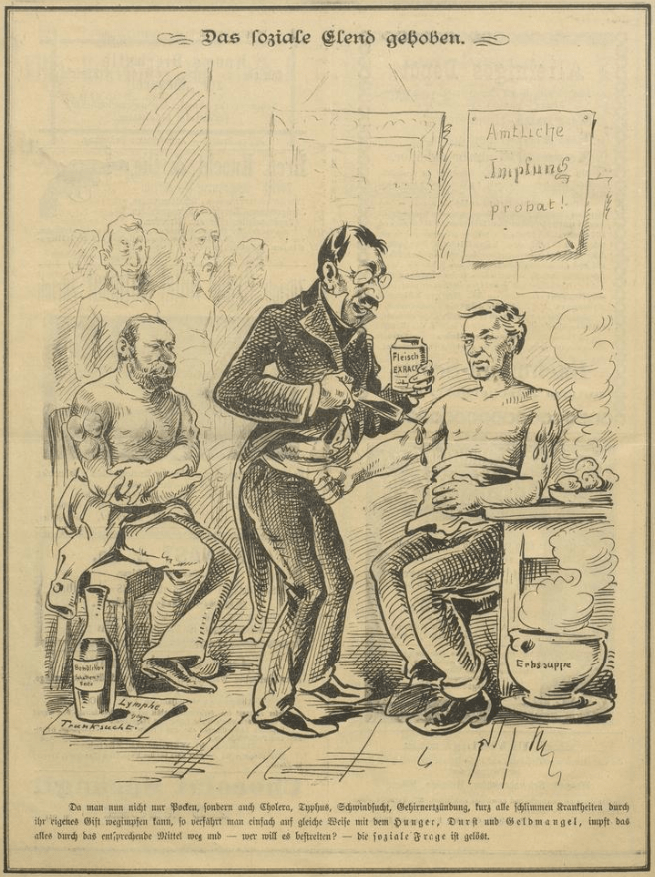
A physician injecting small quantities of meat extract: “Since we can now inoculate away via its own poison, not only smallpox, but also cholera, typhus, consumption, brain inflammation, in short, all bad diseases, we simply proceed in the same manner with hunger, thirst, and lack of money, inoculate it away via the corresponding medium and — who would deny it? — the social question is solved.”
(Nebelspalter, Zurich, 1885)
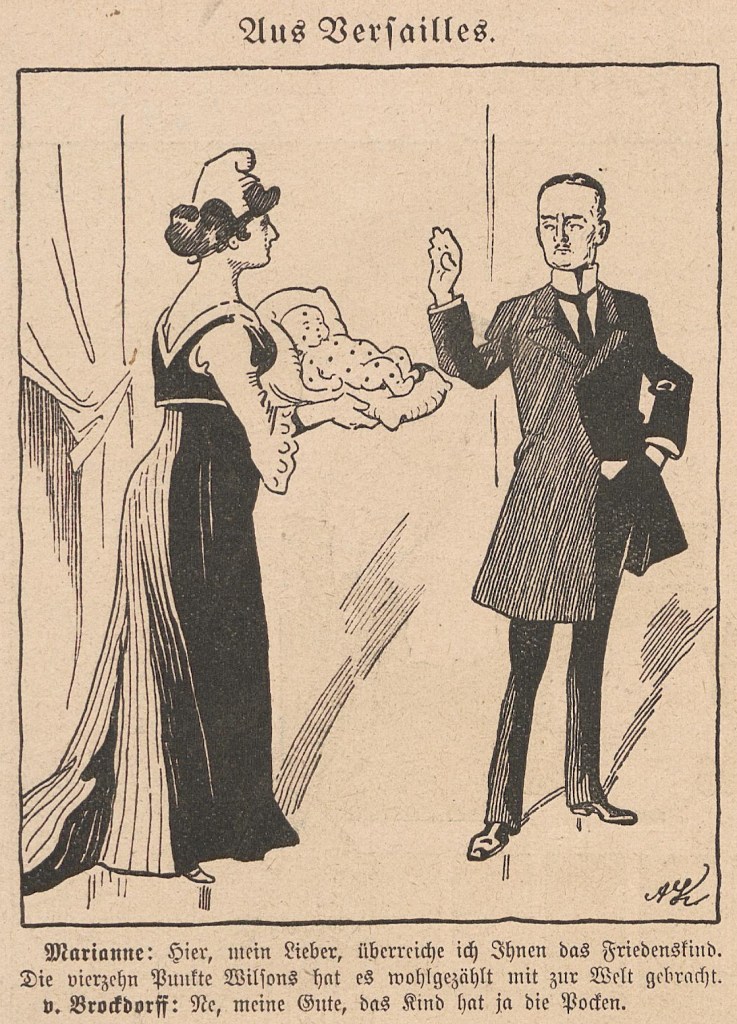
Marianne [the French Republic]: “Here, my dear, may I present you with the peace child. Wilson’s Fourteen Points has brought it well reckoned into the world.”
[Baron] v. Brockdorff [first foreign minister of the Weimer Republic]: “Nope, the child has the pox.”
(Der wahre Jacob, Stuttgart, 1919)
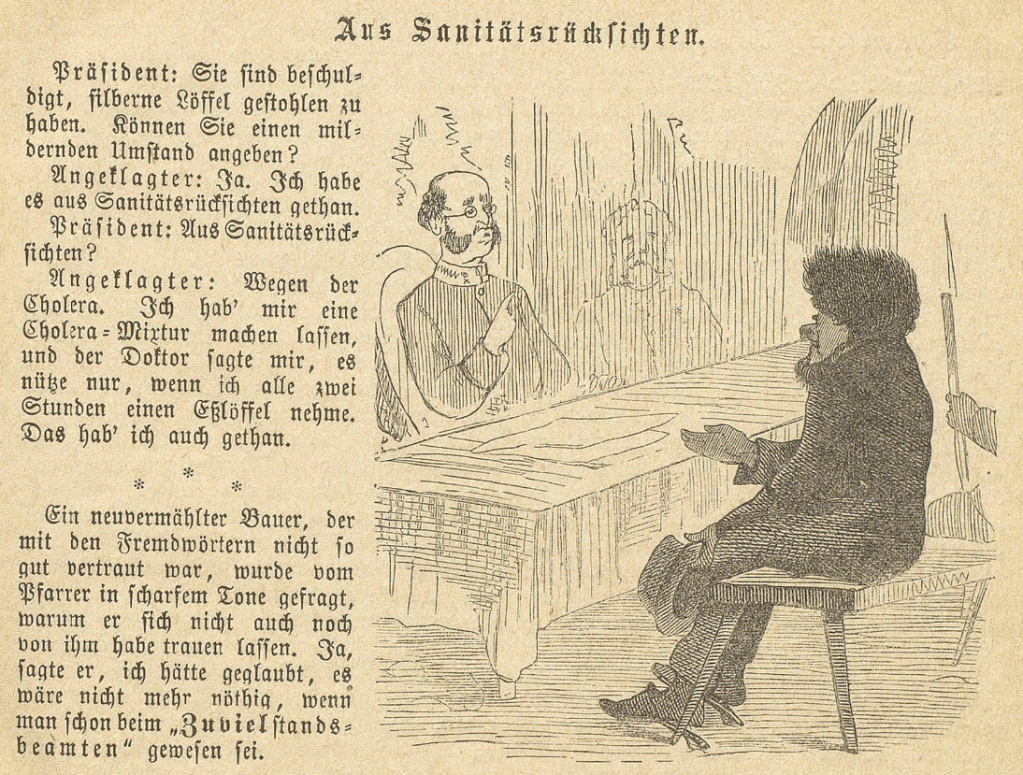
Presiding magistrate: “You are accused of stealing silver spoons. Can you offer any extenuating circumstances?”
Accused: “Yes. I did it for sanitary reasons.”
Presiding magistrate: “For sanitary reasons?”
Accused: “Because of the cholera. I had a cholera concoction made for myself, and the doctor said that it would be effective only if I took a tablespoon every two hours. And that’s what I did.”
(Appenzeller Kalender, Zurich, 1877)
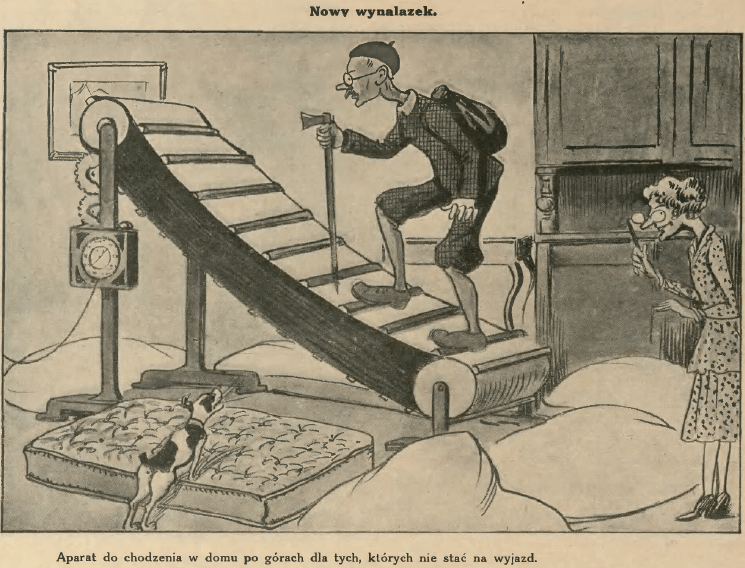
Apparatus for mountain hiking at home, for those who can’t afford to go out.
(Mucha, 1931) (Compare this earlier version in Fliegende Blätter, 1892)
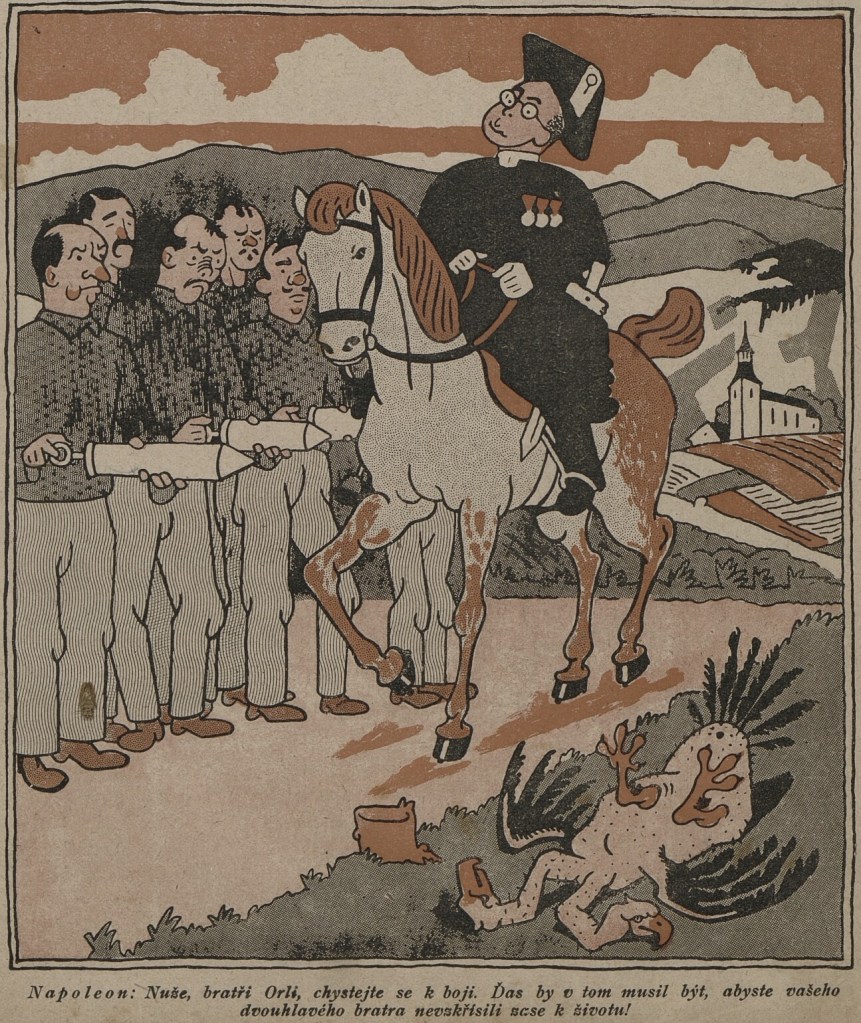
This image is taken a bit out of context. It is mocking the supposedly Napoleonic ambitions of a Moravian nationalist and Catholic literary figure named Karel Dostál-Lustinov, who was the driving figure behind a fraternal gymnastics movement known as the Eagles (think of parallels with the YMCA). What is striking for present purposes is that the Eagles are being called to prepare for battle (against the Republic?), and they are doing so with disinfection spritzers. (In Czech the verb seems to hint at an adjacent meaning of “cleansing.”)
(Rašple, Brno, 1920)
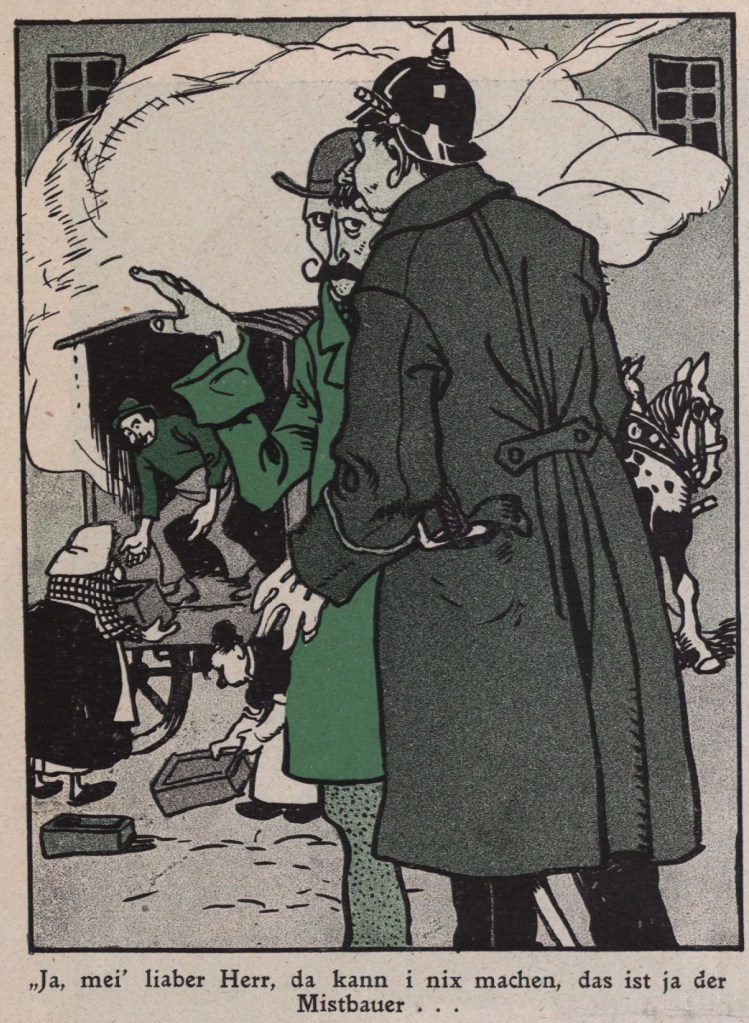
“Yes, my dear man, I can’t do anything here, that is the rubbish hauler…”
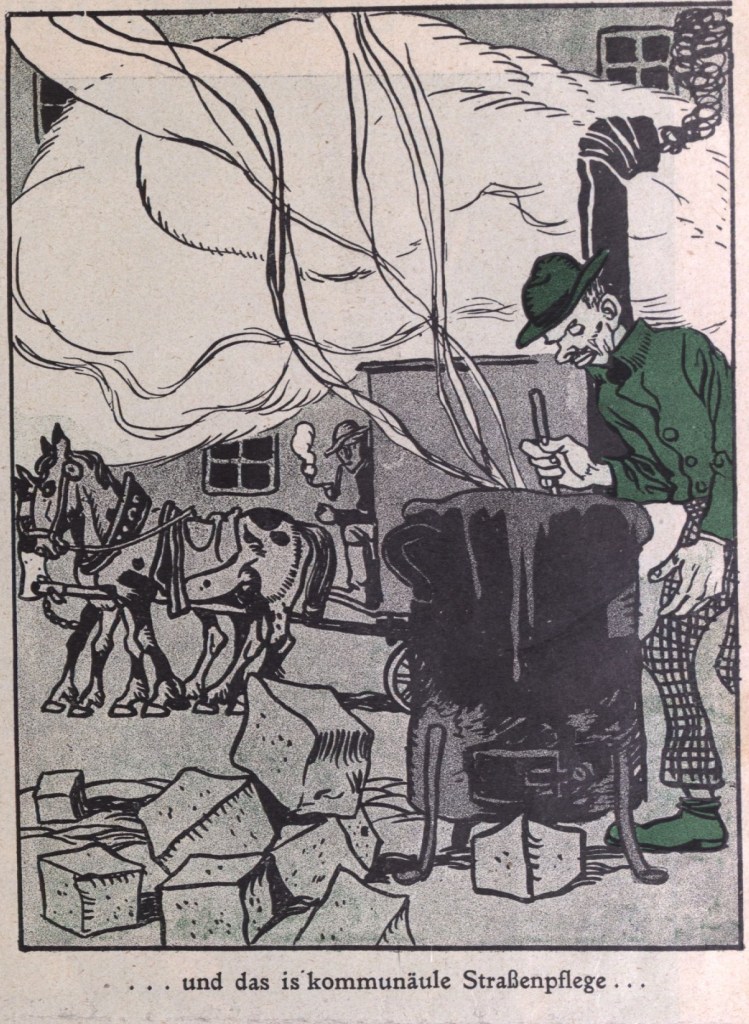
“… and that is the communal street maintenance…”
“… and that is an officially licensed vehicle…”

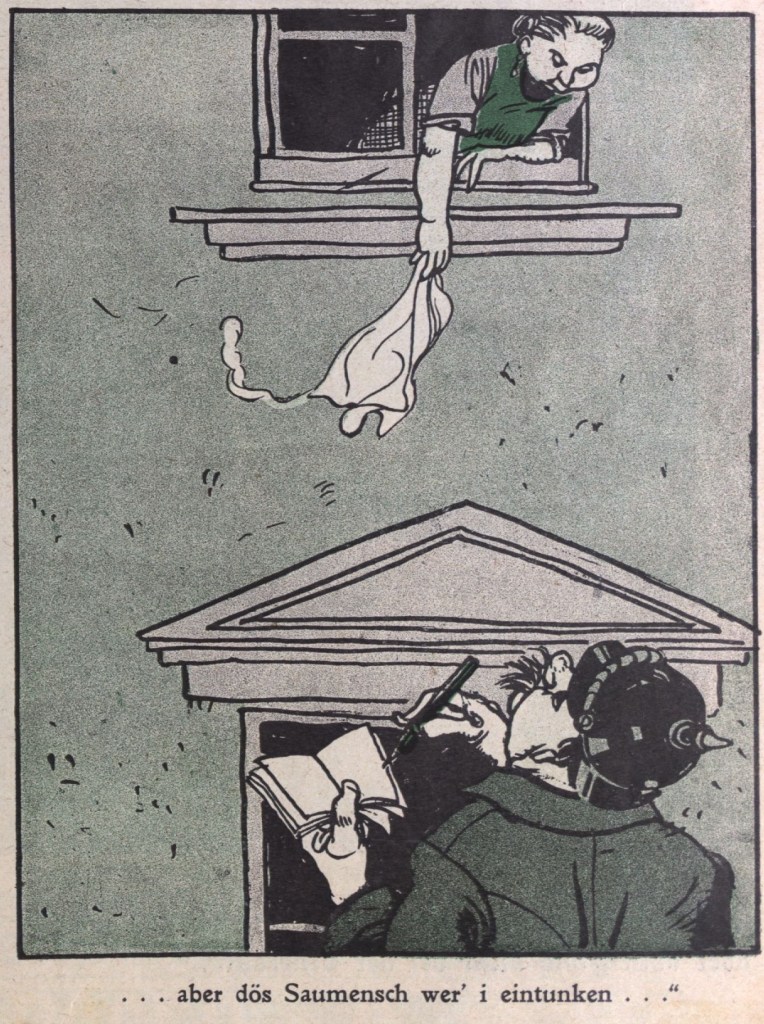
“… but I would slap a fine on this slob…”
(Die Muskete, Vienna, 1909)
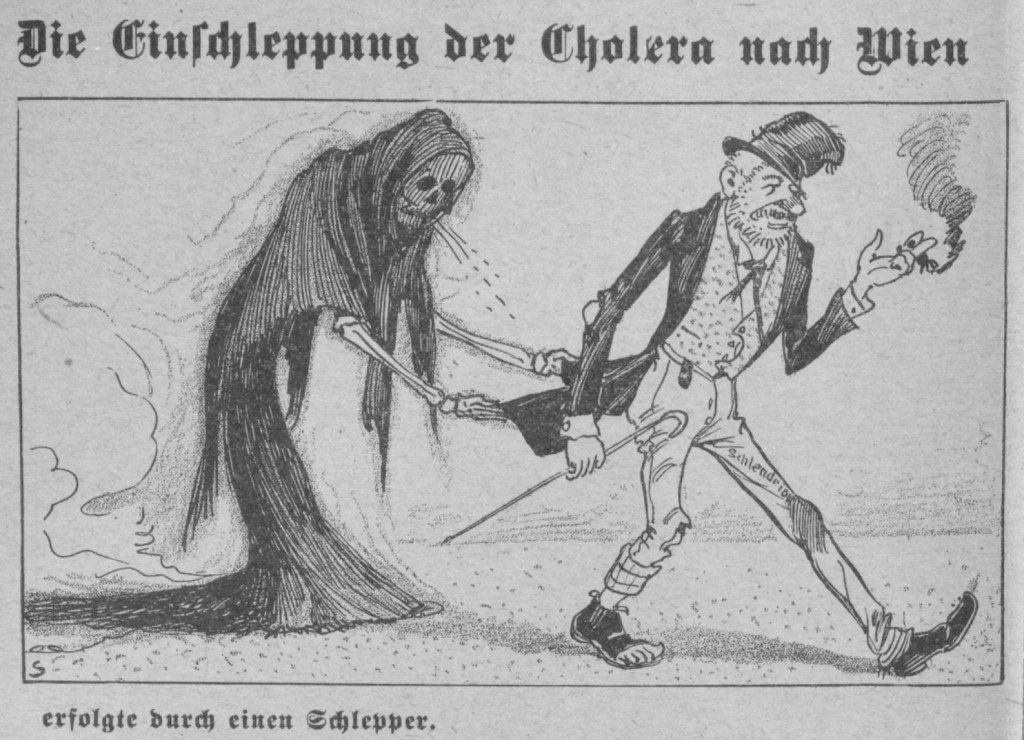
The introduction of cholera to Vienna was effected by a “coyote.” Actually many English speakers will be able to recognize the wordplay on “schlep,” but just to make clear the negative connotations, the cartoonist marks the man as a careless ambler.
(Kikeriki, Vienna, 1911)
Avoid the tram; get spritzed at the office; smoke to protect yourself (!); be cautious, carry supply of lime, carbolic acid, lysol; defend yourself using the epidemic, proclaim yourself infectious when the bill collector shows up.
(Borsszem Jankó, Budapest, 1918)

A sickly-looking man enters a bookstore and asks: “Is it here that you sell those stamps that are so good against tuberculosis?”
My colleague Riikkamari Muhonen explains that for much of the twentieth century special charity stamps known as “tuberculosis stamps” were sold around Christmas, and the money raised was used to research cures for tuberculosis and to build special homes for consumptive families.
(Tuulispää, Helsinski, 1911)

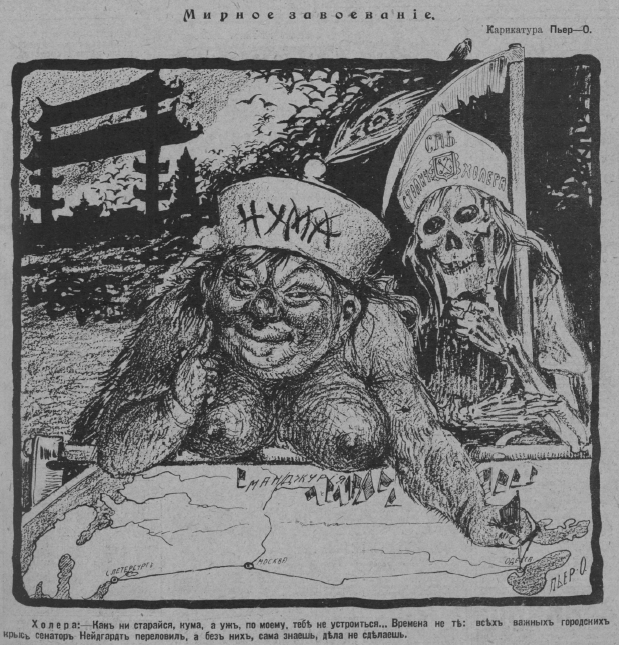
St. Petersburg cholera (to Mother Plague reaching over site markers in Manchuria and points east in the Empire toward Odessa on the Black Sea): “However hard you try, Mother, I think you can no longer get settled there… The times have changed: Senator Neidgardt [Dmitrii Borisovich, who had once served as mayor of Odessa] caught all the important municipal rats, and without them, as you know, you won’t get anywhere in these matters.”
(Ogonek, Russia, 1911)
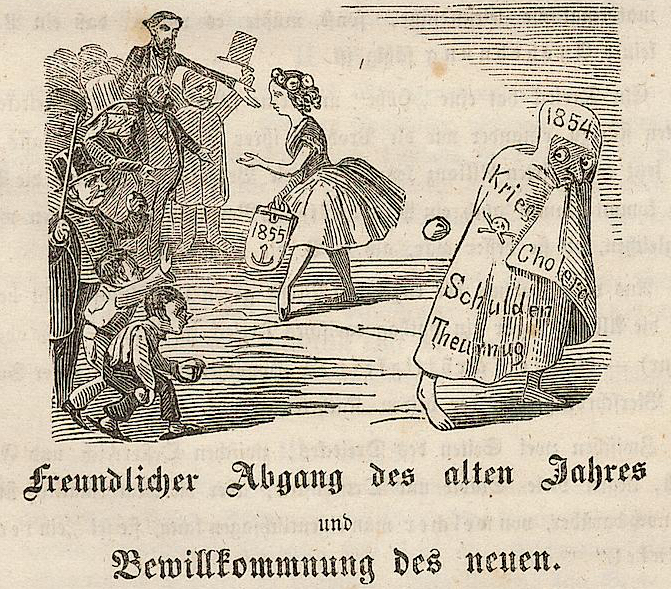
Friendly departure of the old year and welcoming of the new one. (The departing figure is shrouded in War, Cholera, Debts, and Inflation.)
(Punsch, Munich, 1854)
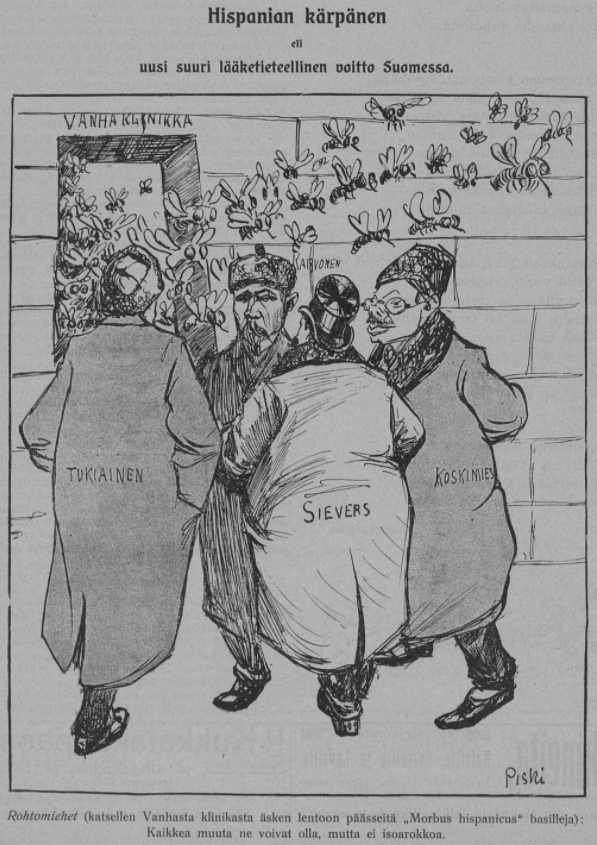
Spanish fly, a great new medical victory in Finland.
Herbalists (watching the Morbus hispanicus bacilli just flown in from the Old Clinic): They could be anything else, but not smallpox.
Among the figures depicted, Richard Sievers was a Finnish-Swedish physician with German roots who was credited with sparing Finland from the cholera epidemic then developing in Russia.
(Tuulispää, Helsinki, 1908)
 Sic Transit Pestilentia