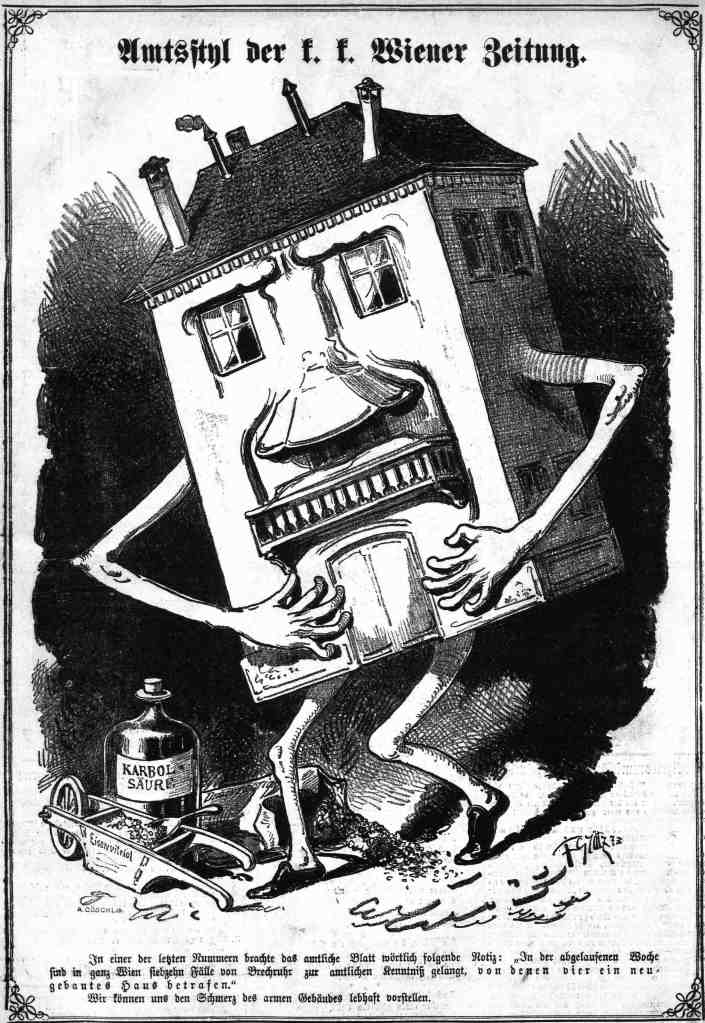
Kikeriki mocking the imperial royal newspaper of Vienna, Wiener Zeitung (supplied with “iron vitriol” and carbolic acid): “In a recent issue the official newspaper included the following literal notice: ‘In the past week seventeen cases of dysentery have come to official attention in all of Vienna, of which four pertained to a newly constructed residence.’ We can vividly imagine the pain of the poor building.” (Kikeriki, Vienna, 1873)
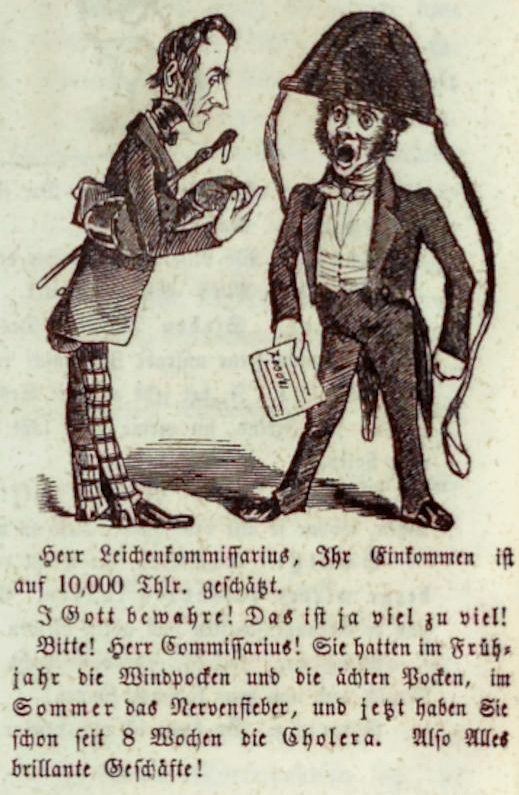
“Mr. Coroner, your income is estimated at 10,000 thaler.” “God help me! That is far too much!” “Please, Mr. Coroner! In the spring you had chicken pox and the real smallpox, in the summer you had nervous fever, and now you’ve already had cholera for eight weeks. So it’s all brilliant dealings!” (Kladderadatsch, Germany, 1850)
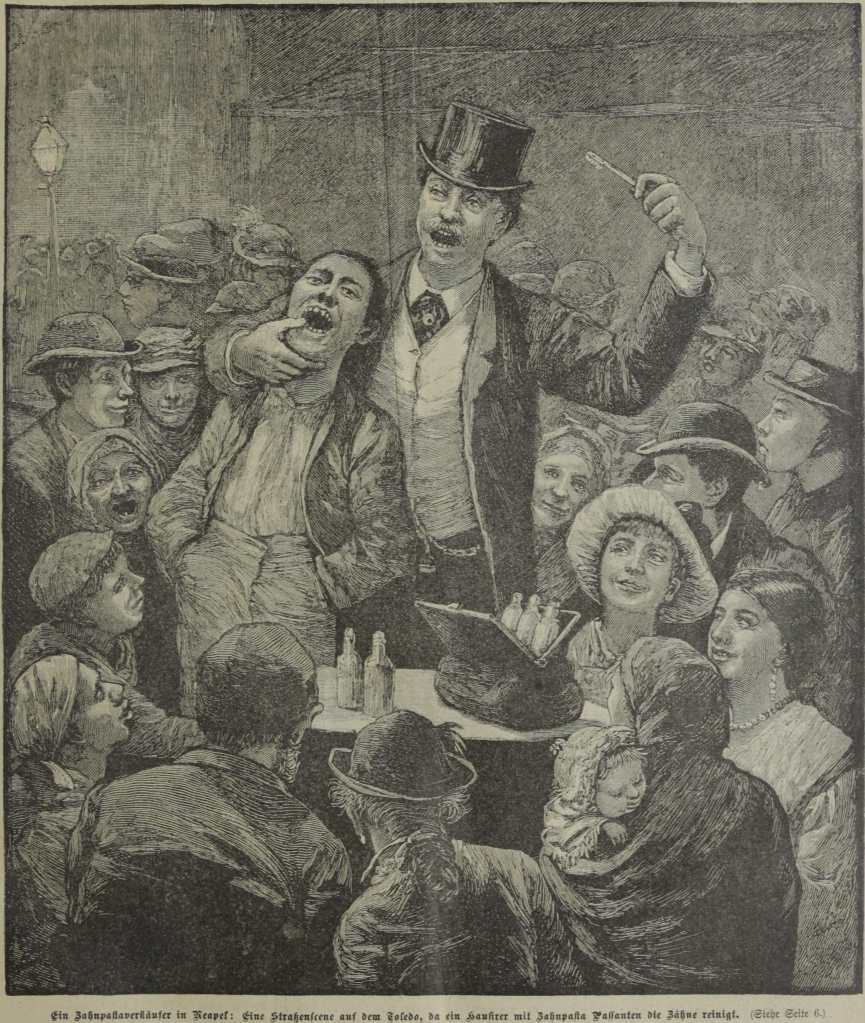
A street scene from the Toledo, where a toothpaste pedlar cleans the teeth of passers-by. That same year, Naples was hit by the fifth global cholera epidemic. (Das interessante Blatt, Vienna, 1884)
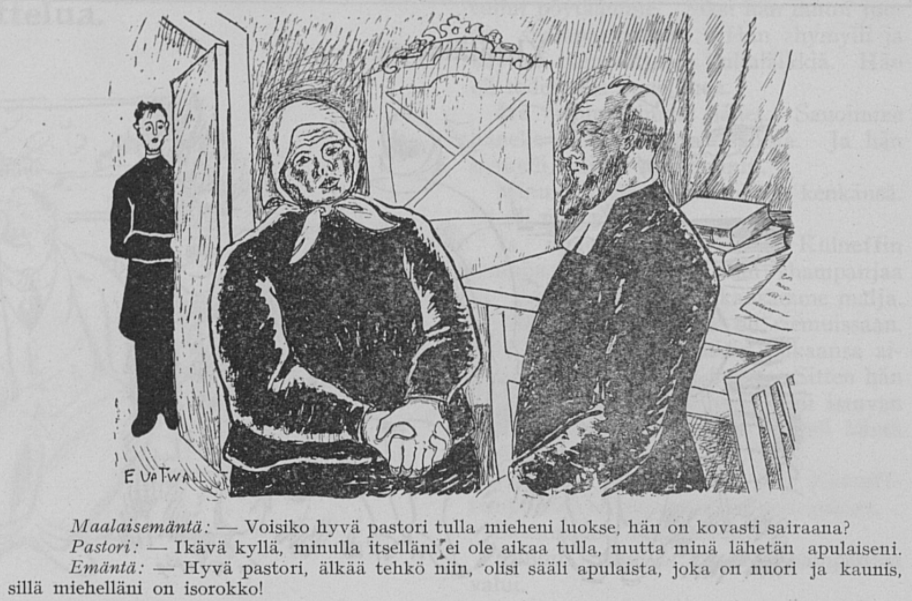
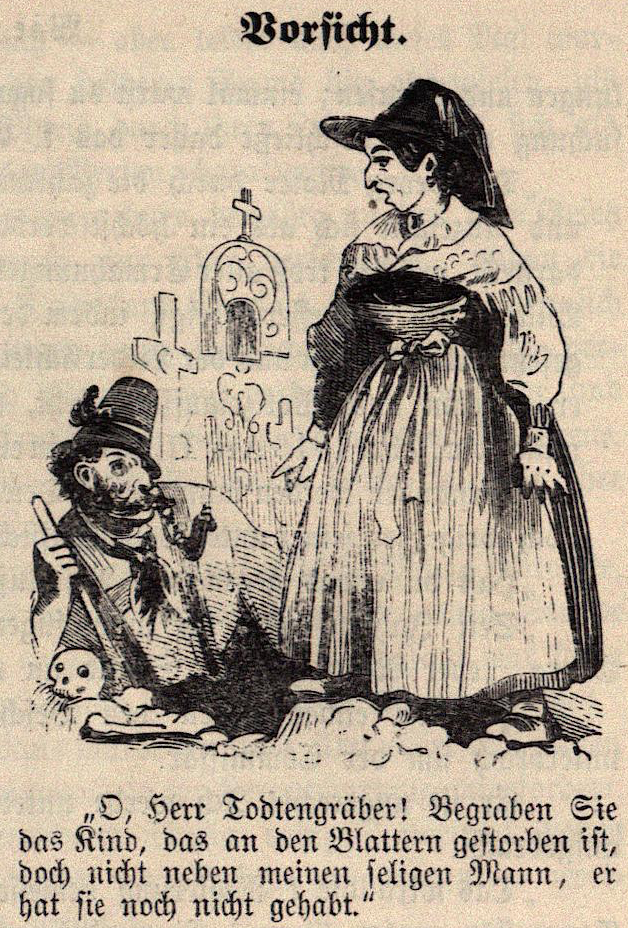
Country lady: “Could the good pastor come to my husband? He is very sick.” Pastor: “Sadly, I don’t have time to come myself, but I’ll send my assistant.” Lady: “Dear pastor, don’t do that, it would be a shame to have an assistant who is young and beautiful, because my husband has smallpox!” (Tuulispää, Helsinki, 1929)
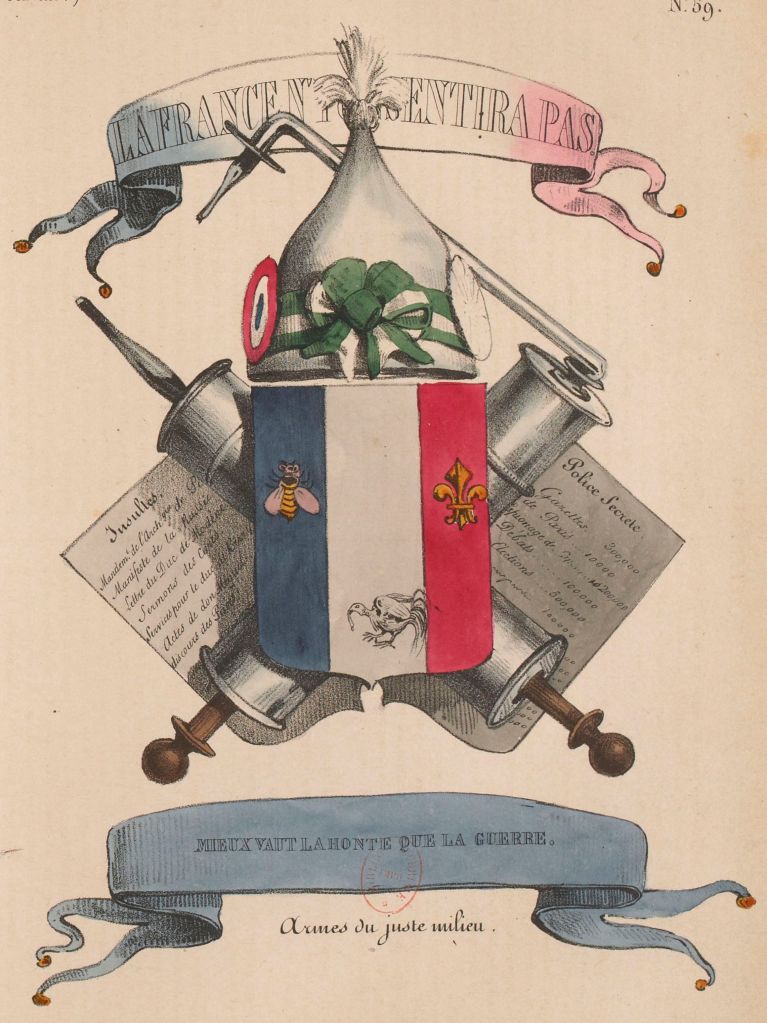
This coat of arms with list of Insults on the left and Secret Police overseeing newspapers and political life on the right prominently features two crossed clystères, syringes suitable for administering enemas. (Note that the one on the right seems designed for self-administration.) At the height of the second cholera epidemic, the slogans at the bottom captured contemporary sentiments: “Better shame than war” and “Judicious moderation in arms.” (La Caricature, Paris, 1831; this was a recurrent theme)
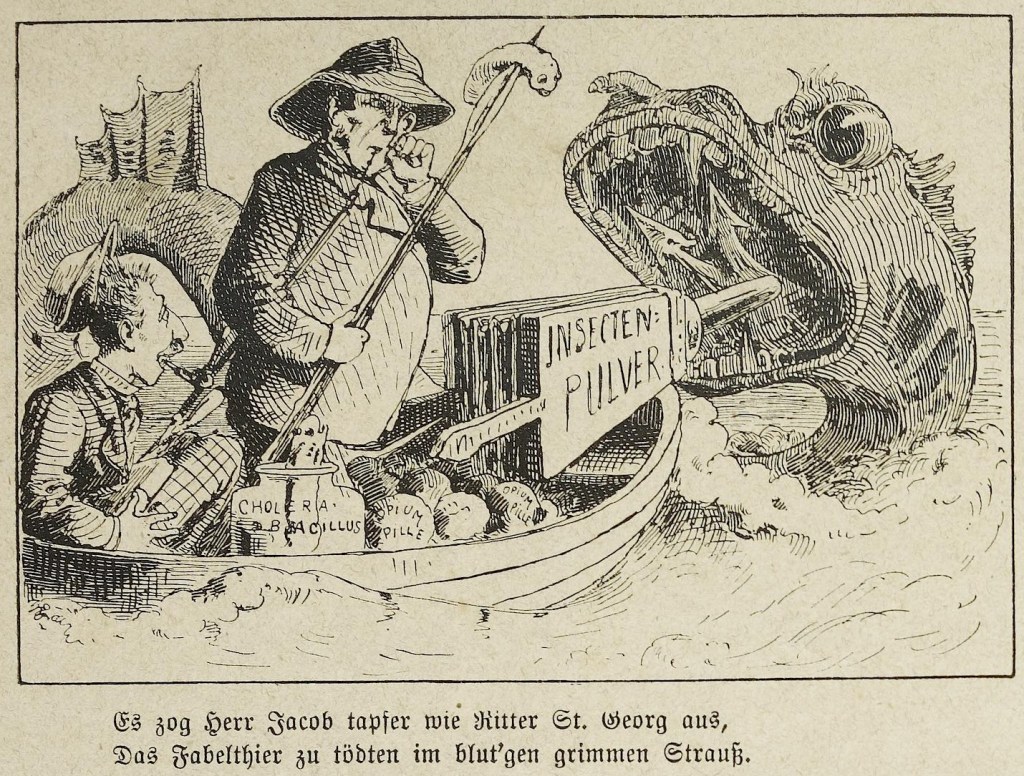
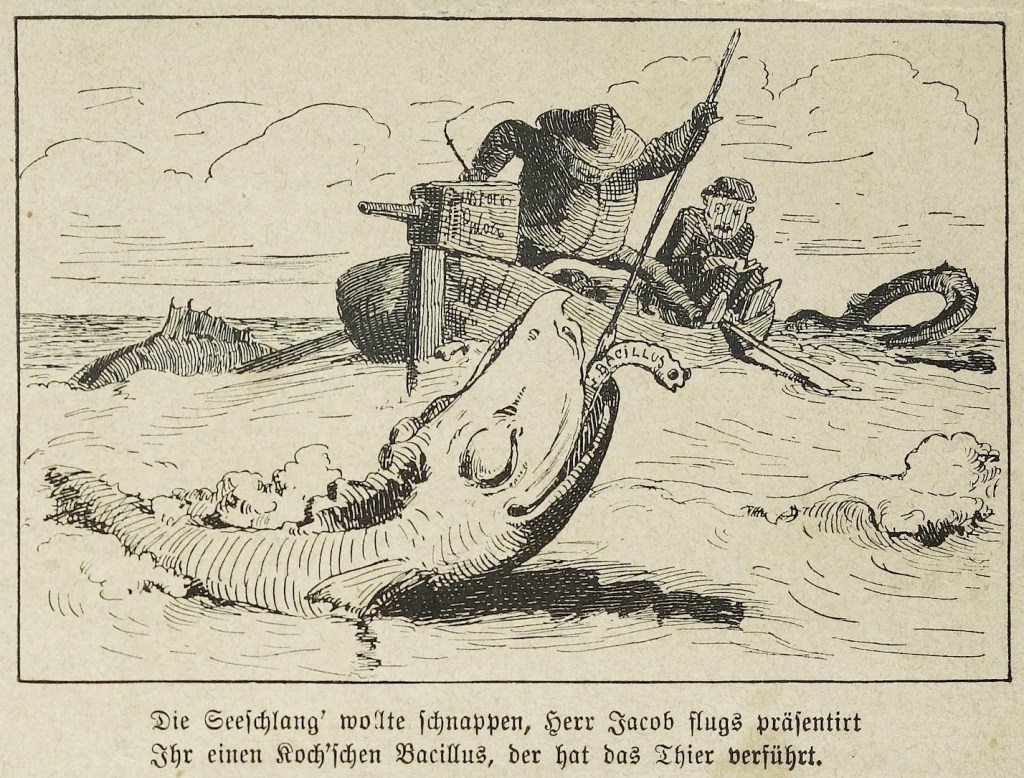
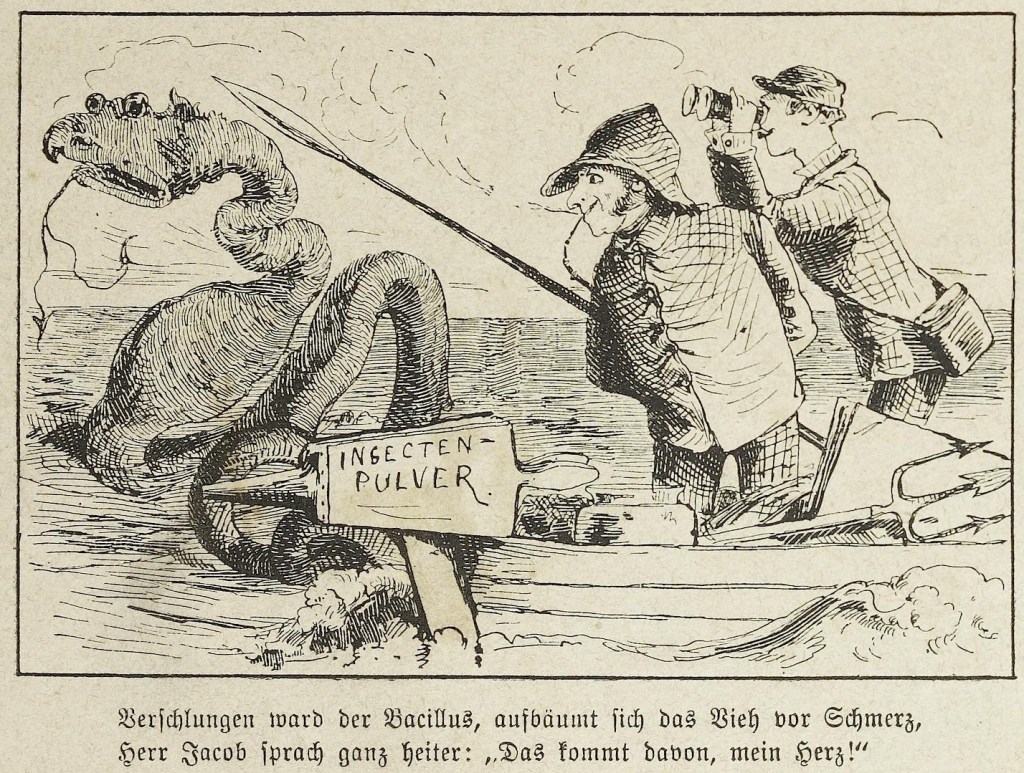
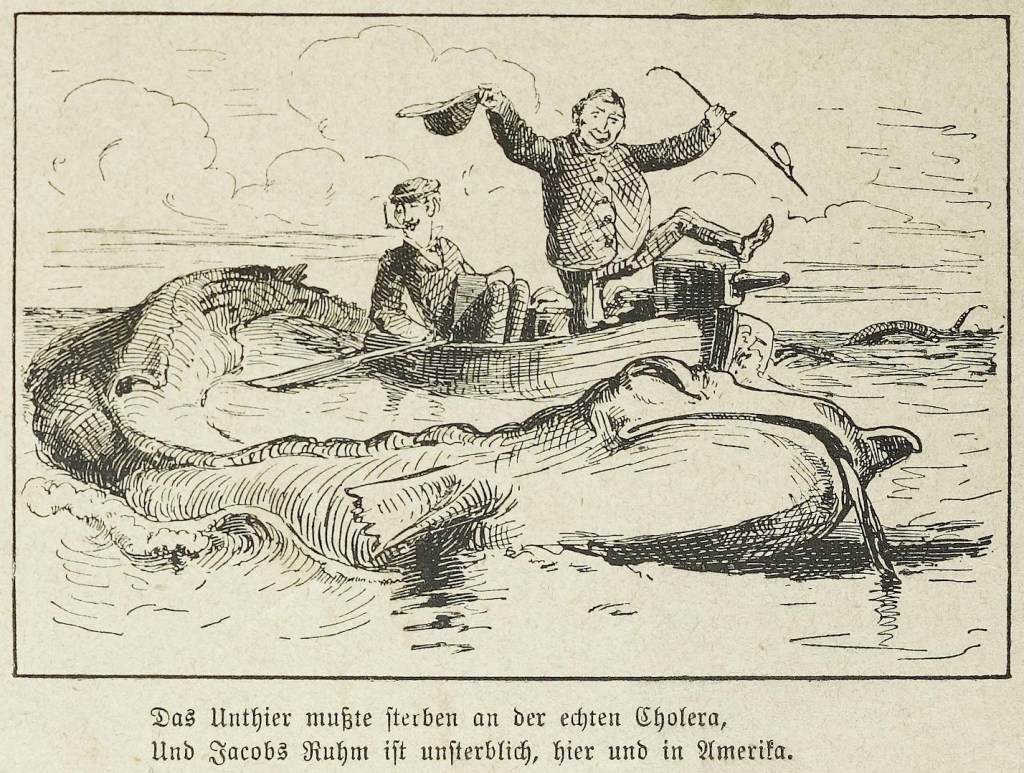
A saga from the early days of germ theory: Mr. Jacob bravely set forth like St. George the Knight, To kill the mythical creature in bloody grim spray. (The boat is laden with cholera bacteria, opium pills, and bellows full of insect dust.)
German cholera cartoon
The sea serpent wanted to snap, Mr. Jacob speedily presented a Koch bacillus to it, it had enticed the creature.
The bacillus was swallowed, the beast reared up in pain, Mr. Jacob said quite merrily: “It comes from that, my dear!”
The monster had to die from real cholera, And Jacob’s fame is immortal, here and in America. (Der wahre Jacob, Stuttgart, 1884)
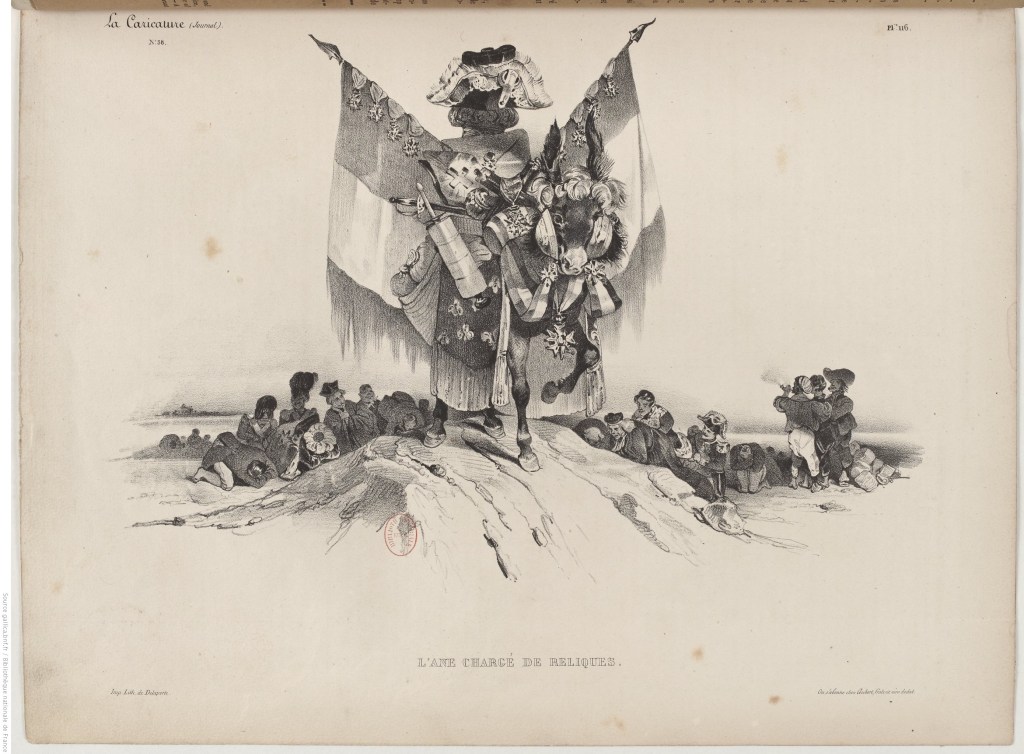
The constitutional monarchy created by the July Revolution of 1830 had placed a distant cousin from the House of Orléans on the French throne, an arrangement supported more by the liberal bourgeoisie than by royalists. This image would appear to comment ironically on the reinvention of monarchical icons of rule, something I cannot evaluate more broadly. But there is one element that does concern us, the giant clystère at center left, a syringe suitable for enemas. (Not the first time we have encountered this.) Paris was struggling with the worst of the second cholera pandemic at the time, so it remains for me to understand more precisely why this epidemic icon was incorporated in this satirical image. (La Caricature, Paris, 1831)
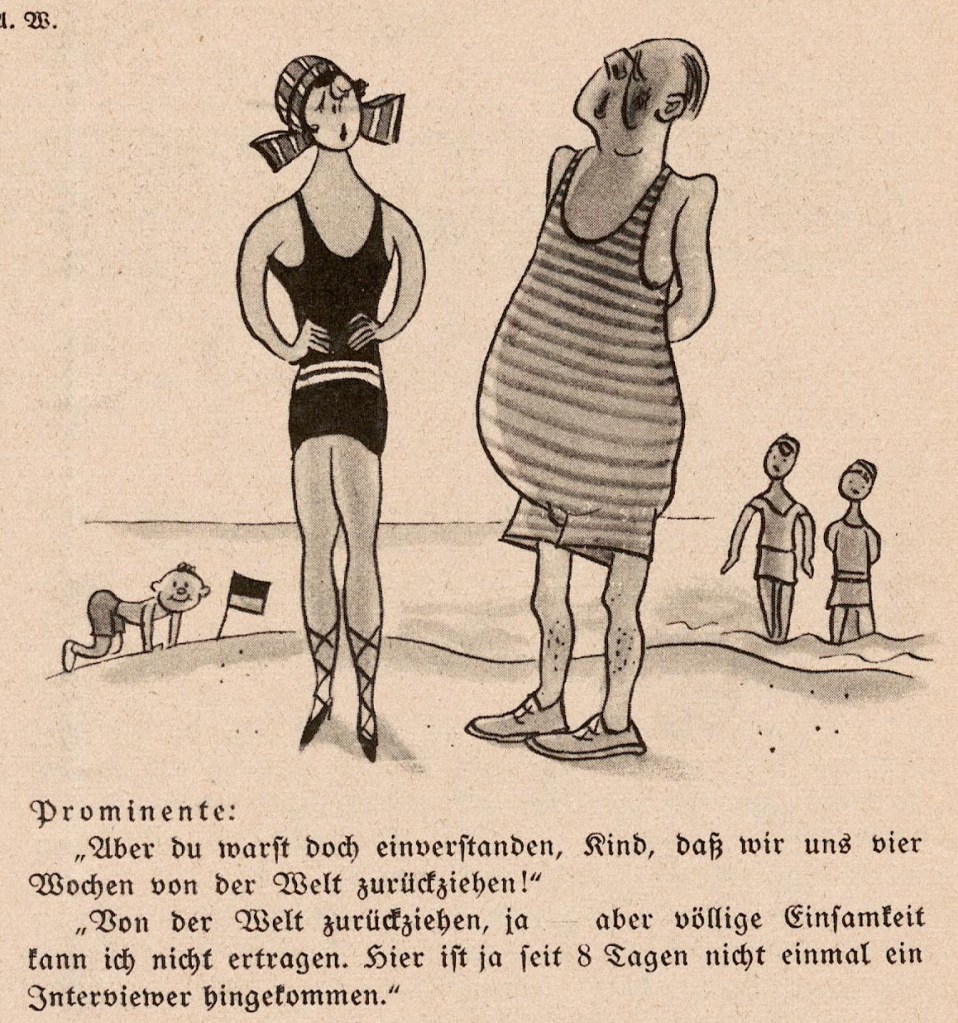
On a lighter note in our time of quarantine: Man: “But you agreed, my child, that we would retreat from the world for four weeks!” Woman: “Retreat from the world, sure, but I cannot bear complete solitude. Not a single interviewer has come here for eight days.” (Fliegende Blätter, Munich, 1931)
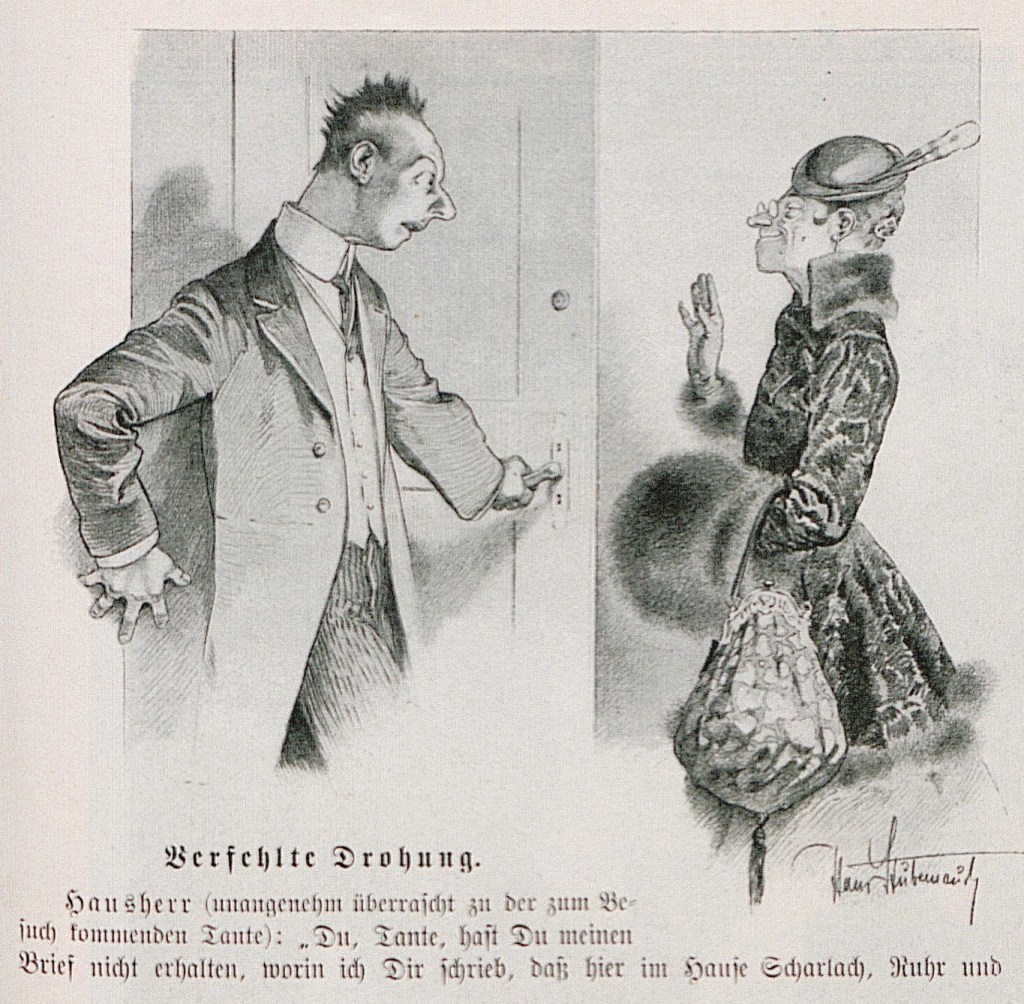
Landlord (unpleasantly surprised by visiting aunt): “Aunt, didn’t you get my letter where I wrote to you that scarlet fever, dysentery, and smallpox are prevalent in the building?” Aunt: “It’s nothing, dear young man… I had myself vaccinated against all three diseases!” (Fliegende Blätter, Munich, 1916)
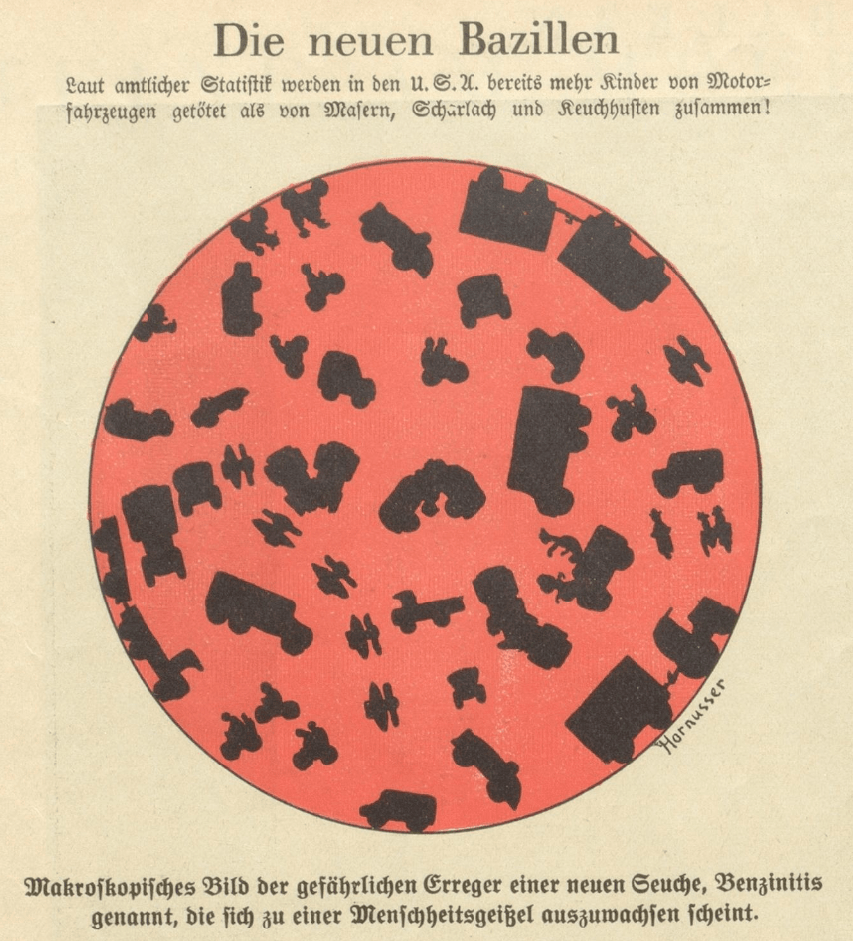
When the germ metaphor becomes prevalent enough to turn it to new ends: “Official statistics indicate that in the United States more children will soon die from automobiles than from measles, scarlet fever, and whooping cough together!” Below: “Macroscopic image of the dangerous pathogens of a new plague called benzinitis that seems to have grown into a hostage of humanity.” (Nebelspalter, Zurich, 1930)

 Sic Transit Pestilentia