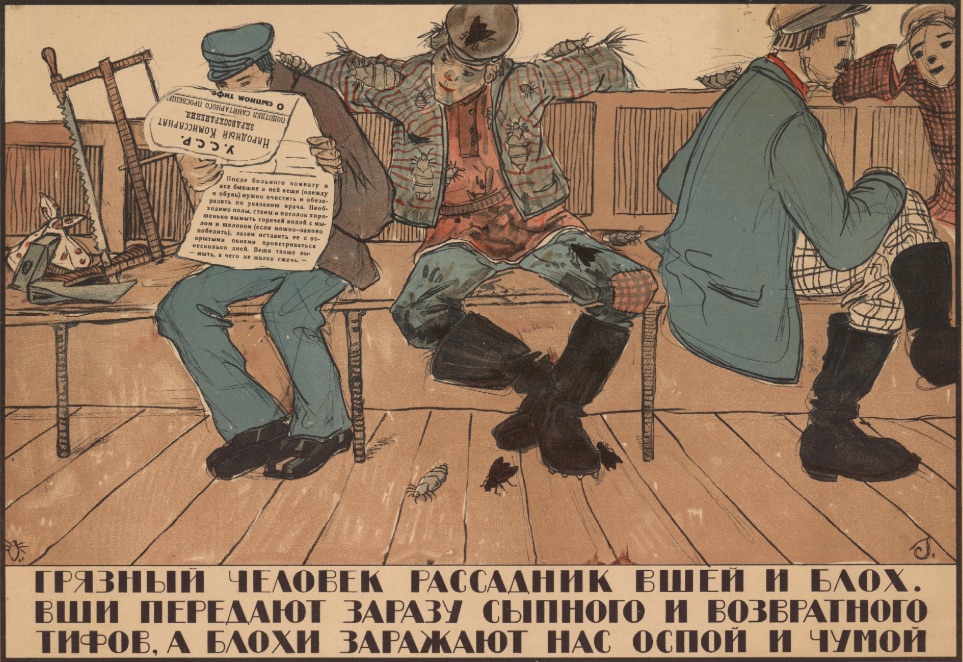
“A filthy man is a hotbed of lice and fleas. Lice transmit the typhus contagion and relapsing fever, and fleas infect us with smallpox and plague.” (Ukrainian People’s Commissariat of Health, 1920) A pity that Soviet didacticism in service to public health still managed to send mixed messages about class. (Russian State Library)
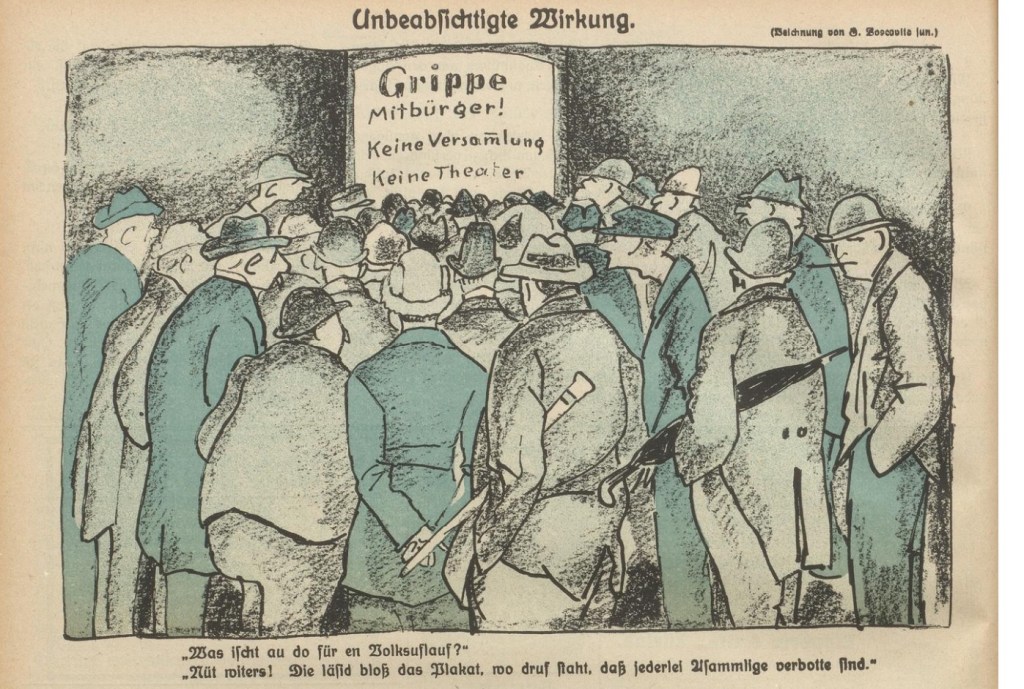
“What sort of popular outcry is this?” “It’s not, they’re just reading the poster where it states that any kind of assembly is forbidden.” (Nebelspalter, 1918)
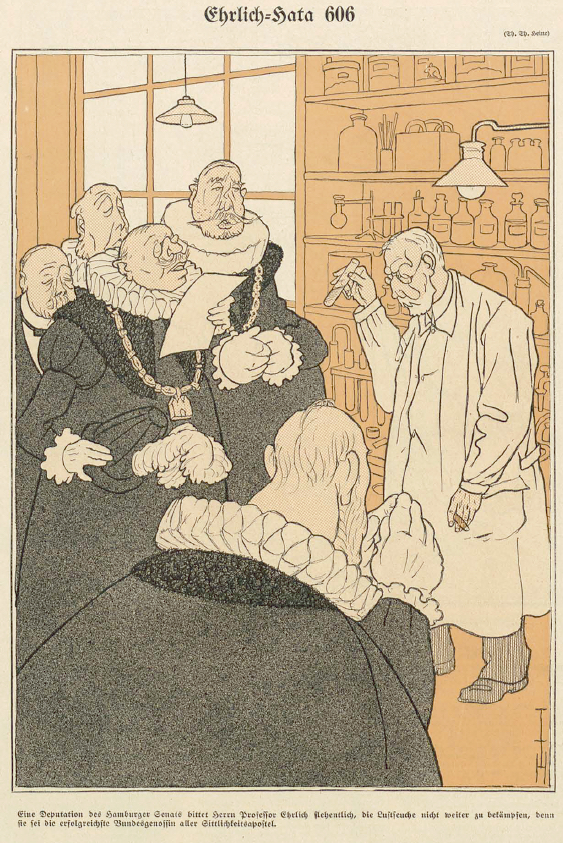
German satirical magazine Simplicissimus, 1910. A deputation of the Hamburg Senate implores Professor Ehrlich not to do battle with venereal disease any longer, for it is the most successful ally of all apostles of morality.
Tourist woman (“the Spanish disease”): “Ha ha ha! I will do very well here!!” Decree: Adequate nutrition is best against the Spanish disease Announcement: Since flour has not been allocated, bread is not being distributed this week (Humoristické listy, 1918)
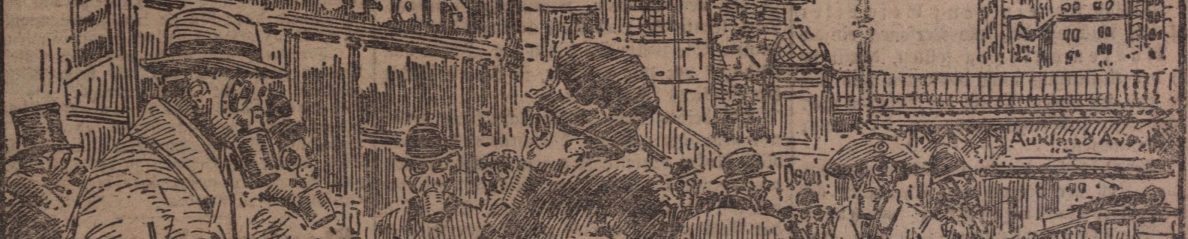
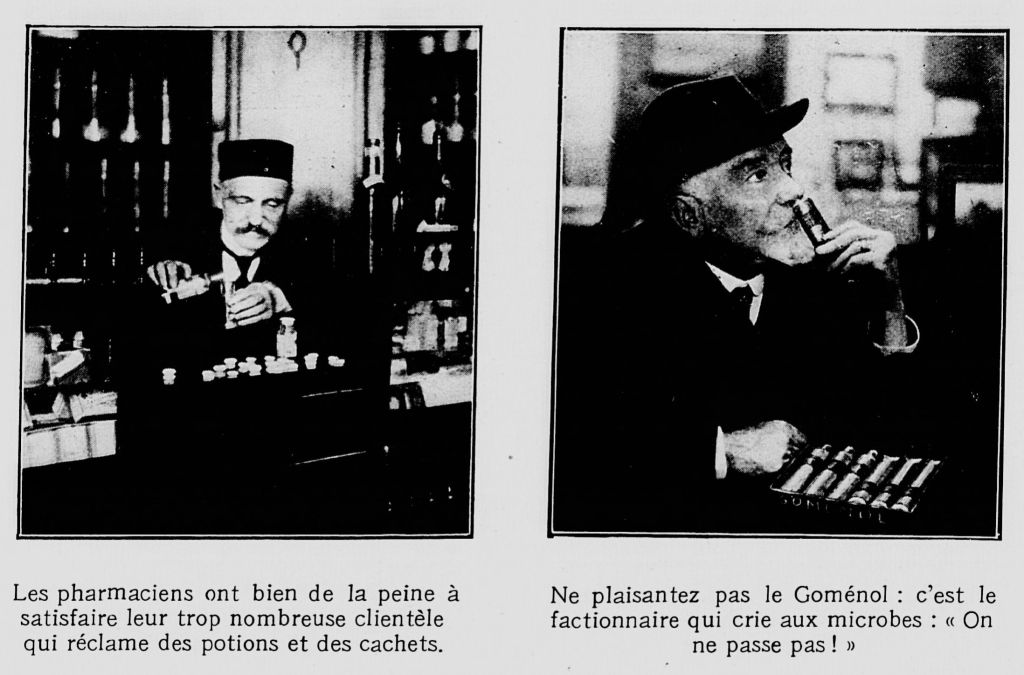
Le Monde illustré editor Alfred-Jousselin reporting on remedies for the Spanish flu in November 1918. Photo caption: Pharmacists are having a hard time satisfying an excess of customers demanding potions and pills. Do not trifle with Goménol: it is the sentry who shouts at the microbes: “They shall not pass!” (Goménol was the trademark for a concoction of Melaleuca quinquenervia from New Caledonia.) From the main text: Alfred-Jousselin reports on the British reaction to influenza: “they told themselves that living as much as possible in the open air was the best way to avoid contagion; they went out a great deal and remained outside their home throughout the day: but, calamity of calamities, here is what an investigation done very scrupulously has revealed, that the trades most cruelly affected by influenza were precisely those whose practitioners were constantly in the open air: drivers of cars, of buses, road workers, policemen, letter carriers, firefighters, etc. So we wondered with concern if it was not the air that was developing the flu, and making it more dangerous. A new party was formed: that of the stay-at-home types, who no longer risk the tip of their noses outside: we will soon know the results that the cloistered life will have given. To avoid a confined existence, or to heal if one is affected by malady, is there some sovereign panacea, some saving remedy? Well, no.” (Gallica)
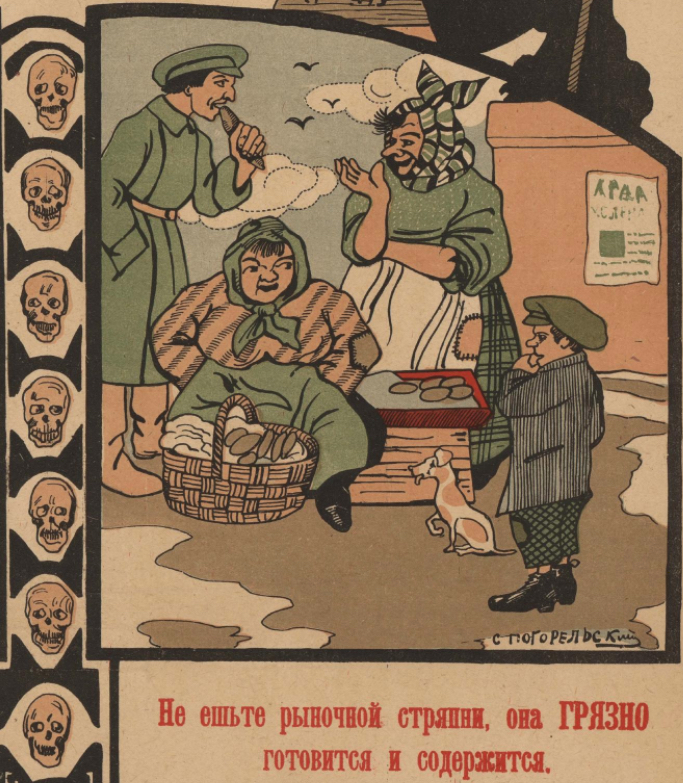
“Don’t eat street food, it’s FILTHILY prepared and stored.” Detail from cholera public health poster, Orel, Russia, c. 1920. (Full image at Russian State Library)
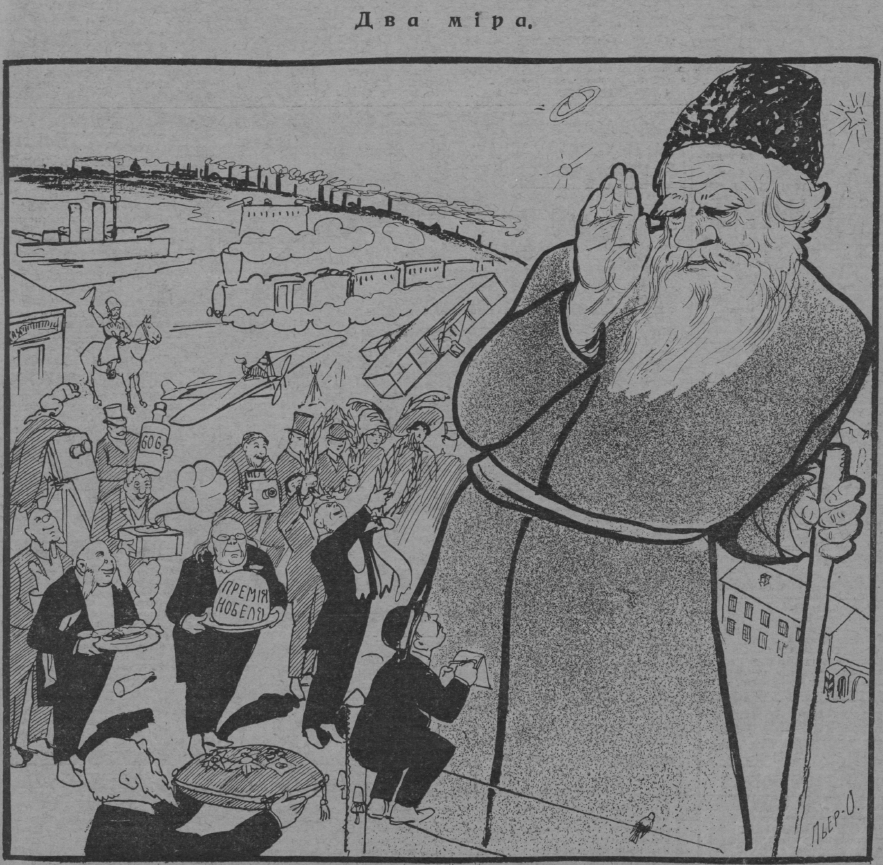
This image appeared in the Russian weekly magazine Ogonek (no. 45) on the eve of Leo Tolstoy’s death in 1910. Russia’s most famous anti-modernist is depicted turning away from the benefits and blandishments of the modern world. What is the connection between this image and our ongoing epidemic theme? (Hint: not the waiter with the tray labeled “Nobel Prize.” See this post for the answer.)
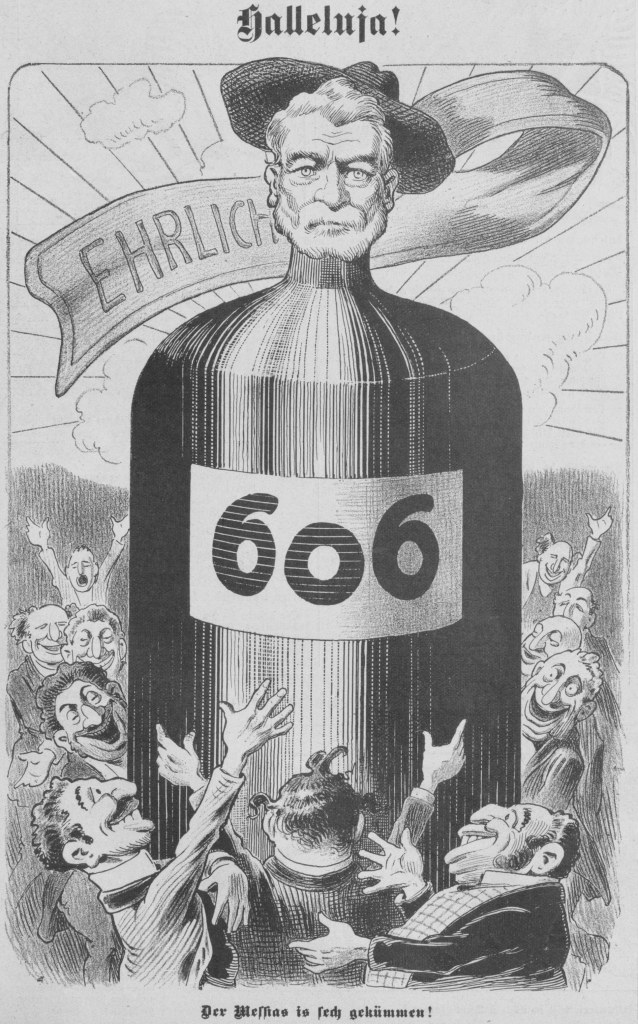
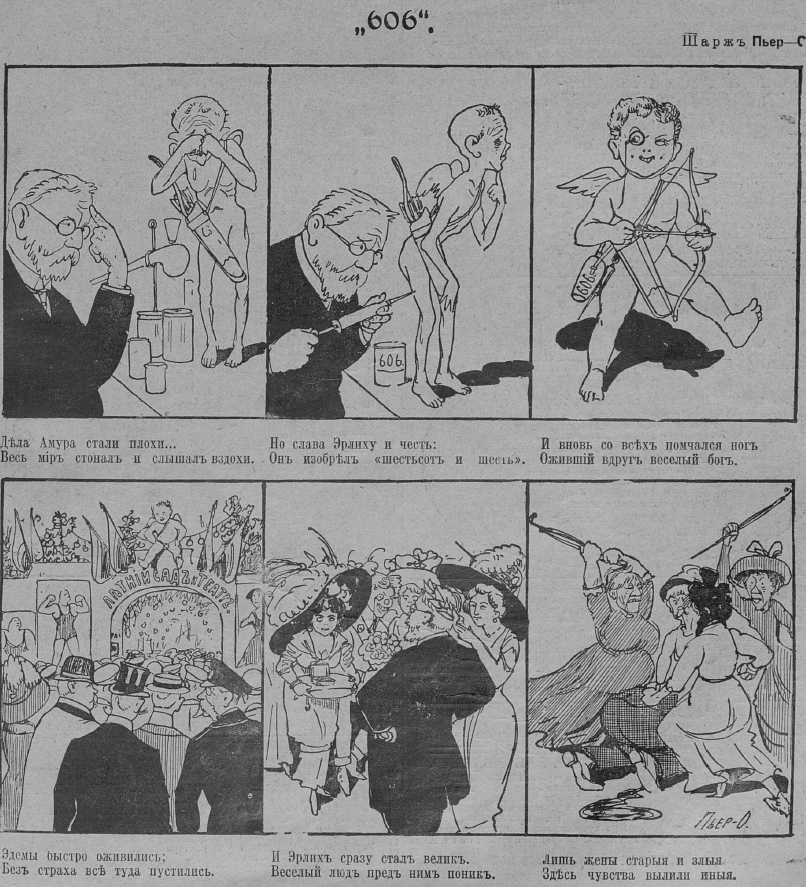
In 1910 German bacteriologist Paul Ehrlich became world famous when Hoechst AG began marketing Salvarsan, or “compound 606,” the first organic anti-syphilitic drug. Ehrlich’s laboratory colleague Sahachiro Hata first noted its toxicity to the syphilis spirochete, but Ehrlich’s “magic bullet” strategy for fighting epidemic diseases was what captured public attention. (Kikeriki, 1910) If you look carefully at this Tolstoy image from another post, you will see that Salvarsan is the connection.
Ode to Paul Ehrlich’s “compound 606,” the magic bullet against syphilis. Cupid’s affairs were in decline… The whole world groaned and heard his sighs. But glory and honor to Ehrlich: He invented “six hundred and six.” And suddenly back on his feet again The merry deity was revived. Pleasure spots quickly revived; Everyone headed there without fear. And Ehrlich immediately became great. People gaily bowed before him. Only old and malicious wives Unleashed other feelings here. (Ogonek no. 31, 1910)
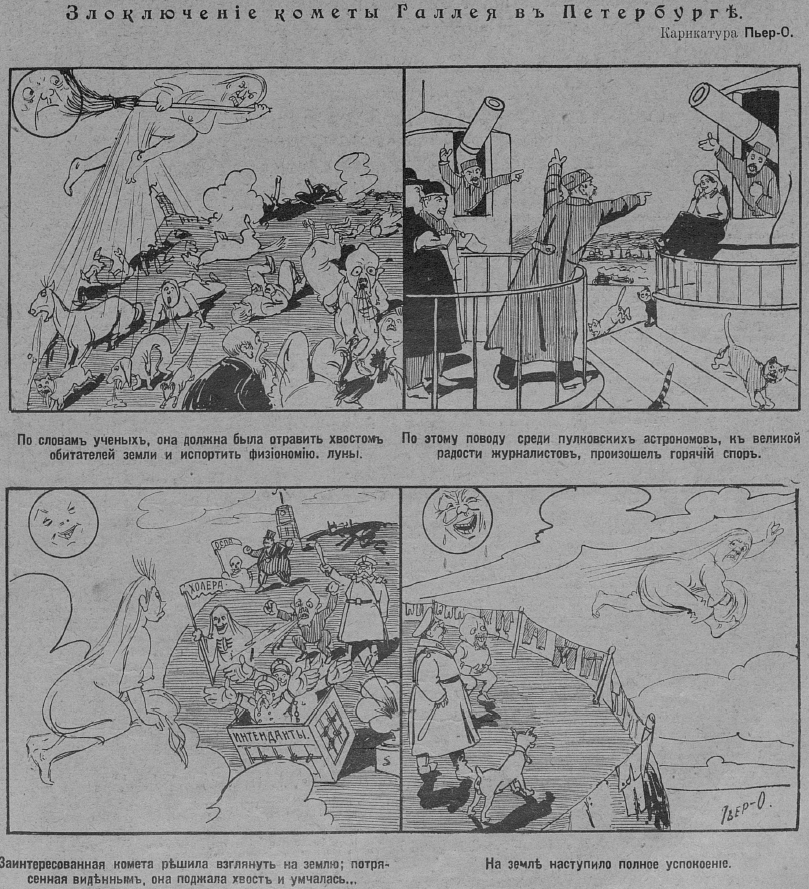
According to scientists, she was supposed to have poisoned the inhabitants of the earth with her tail and ruined the shape of the moon. In this regard there was a heated debate among the Pulkovo astronomers, to the great joy of journalists. Her interest piqued, the comet decided to take a look at the earth; shocked by what she saw [cholera, smallpox, quartermasters, gramophones], she pulled in her tail and sped away… Complete calm settled upon the earth. (Ogonek no. 20, 1910)
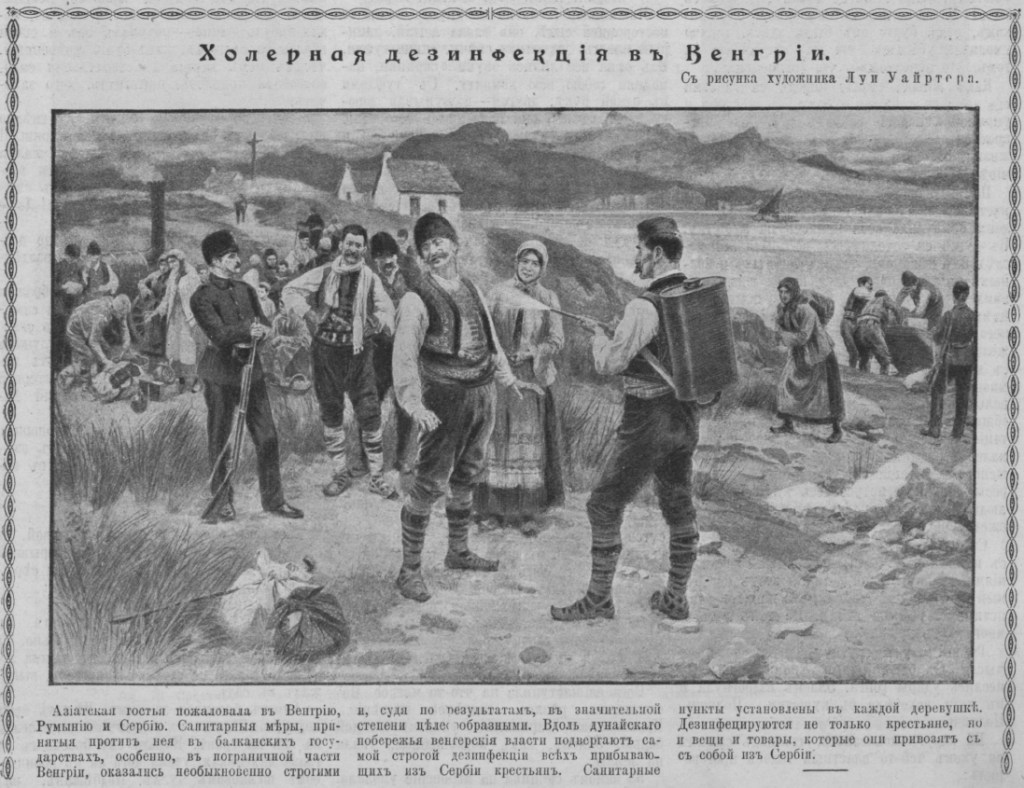
This image by the Scottish illustrator Louis Whirter was reprinted in the Russian magazine Ogonek no. 50 in 1910, but I have not been able to find anything further about its provenance. From the accompanying text: The Asian visitor (i.e., cholera) is welcomed to Hungary, Romania, and Serbia. Public health measures undertaken against it in the Balkan states, especially along Hungarian border areas, have been exceptionally strict, and judging by the results, quite expedient. Along the banks of the Danube the Hungarian authorities subject all arriving peasants from Serbia to strict disinfection.

 Sic Transit Pestilentia