Finnish satirical magazine Tuulispää, 1908. Note the timely fieldwork by the dedicated bacteriologist.
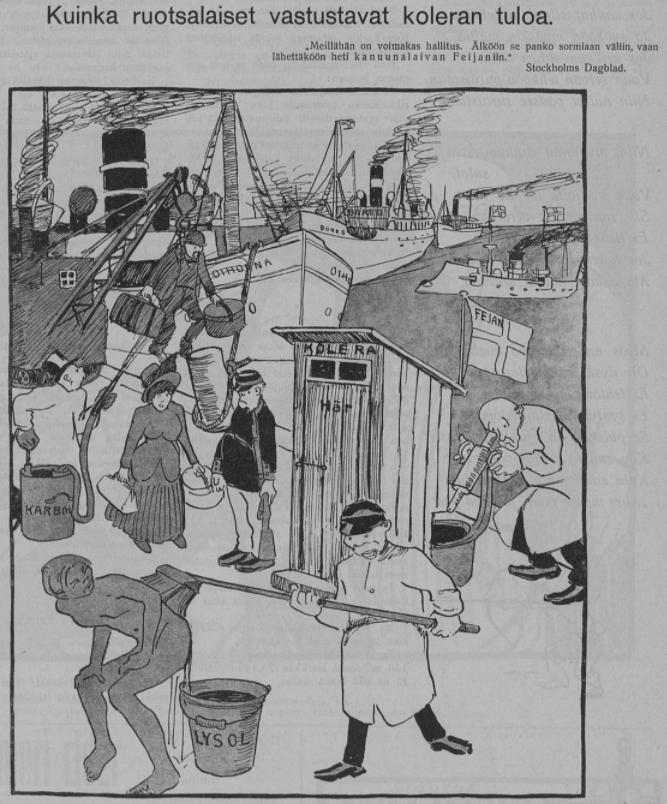
Finnish satirical magazine Tuulispää, 1908. Note the timely fieldwork by the dedicated bacteriologist.
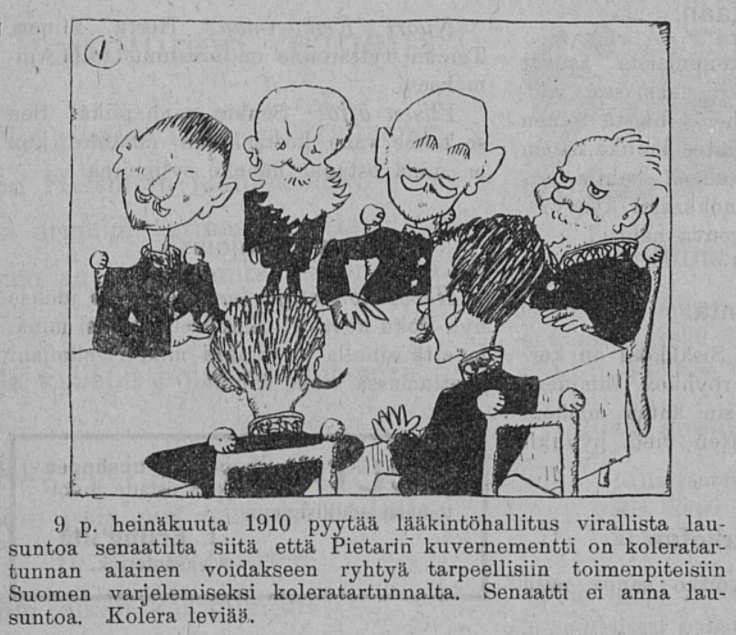
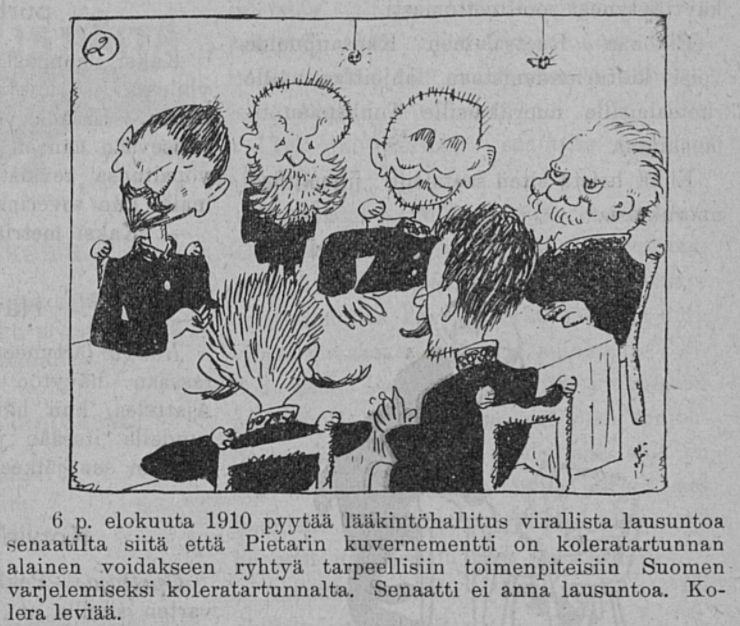
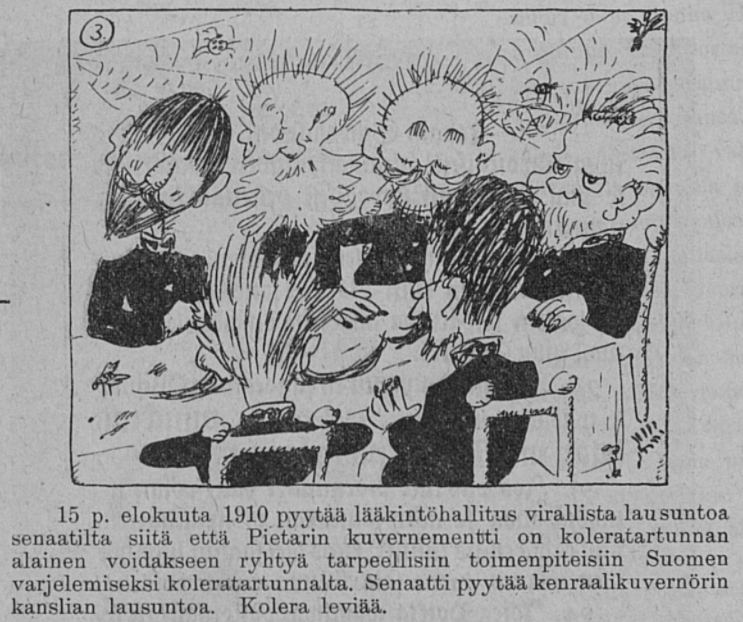
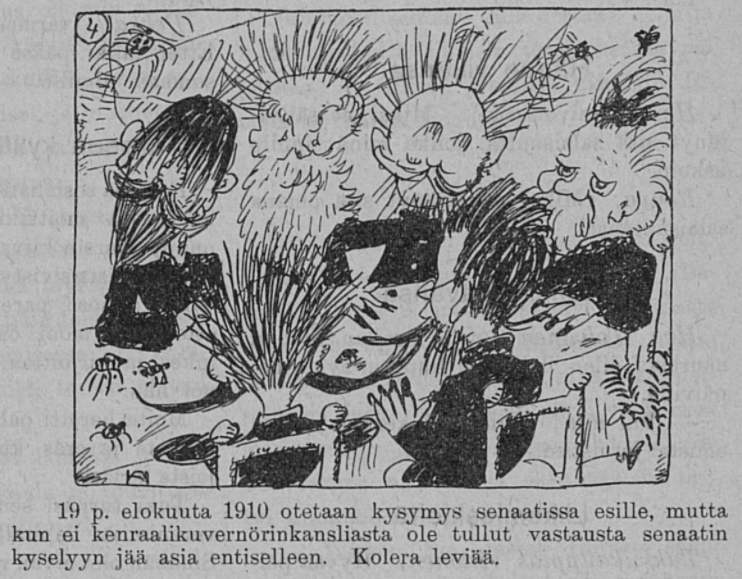
A Finnish cartoon from 1910 mocking the inaction of the Russian Imperial government during a cholera epidemic. (Tuulispää)
First panel: “On July 9, 1910, the Medical Board issued an official statement from the Senate that the St. Petersburg District was under cholera infection, in order to be able to take the necessary measures to protect Finland from cholera infection. The Senate does not issue an opinion. Cholera spreads.”
Fourth panel: “On August 19, 1910, the issue is raised in the Senate, but when the Office of the Governor-General does not receive an answer to the Senate’s inquiry, the matter remains as before. Cholera spreads.”
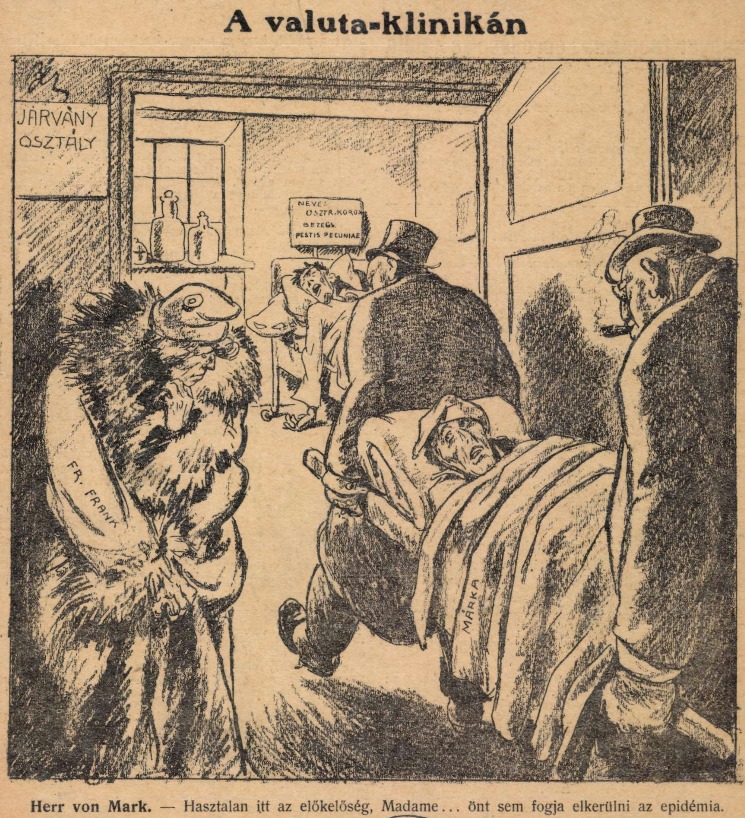
When contagion metaphor and economic analogy join forces to manifest our anxieties at a time of high inflation: “At the currency clinic” (epidemic department). Patient name: Austrian crown. Disease: Pestis pecuniae. Fur-swathed French franc in the waiting room. German Herr von Mark: “Your prominence is useless here, Madame… The epidemic will not avoid you.” (Borsszem Jankó, Budapest, 1922)
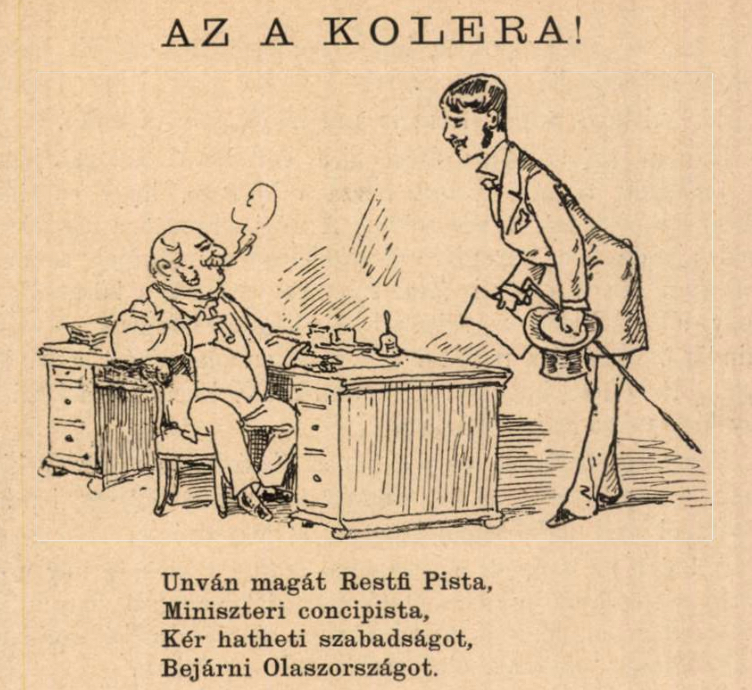
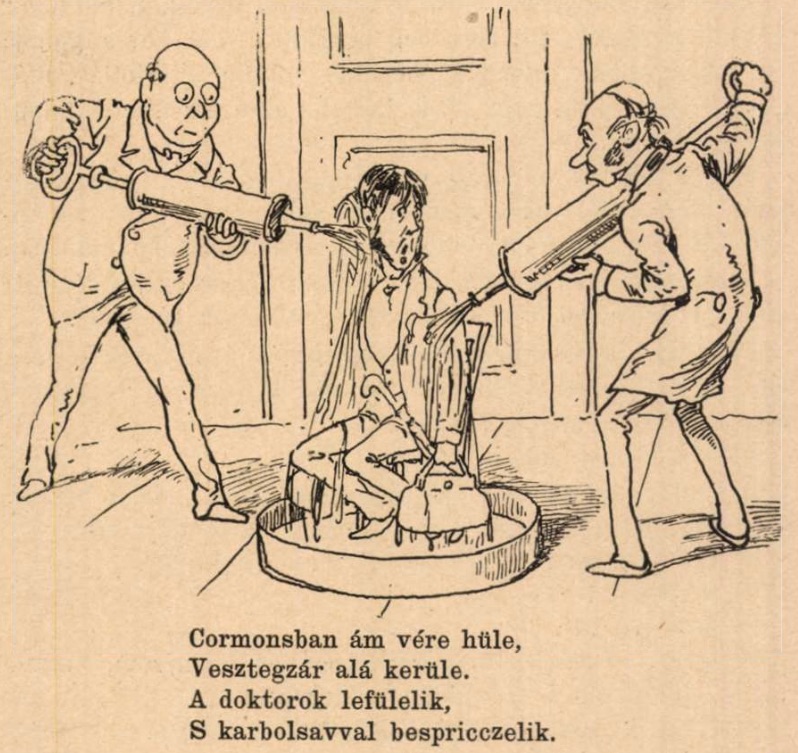
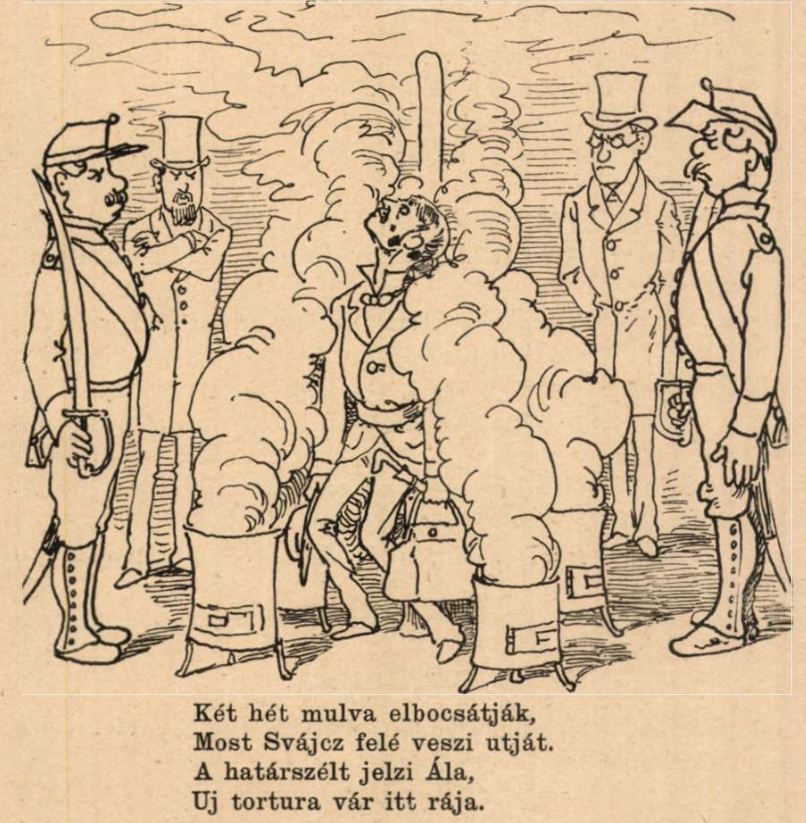
Ballad of the Hungarian ministerial aide who begs leave to visit Italy, suffers the indignities of quarantine and spritzes of carbolic acid, then continues to the Swiss border to experience new tortures.
(Bolond Istók, Budapest, 1884)
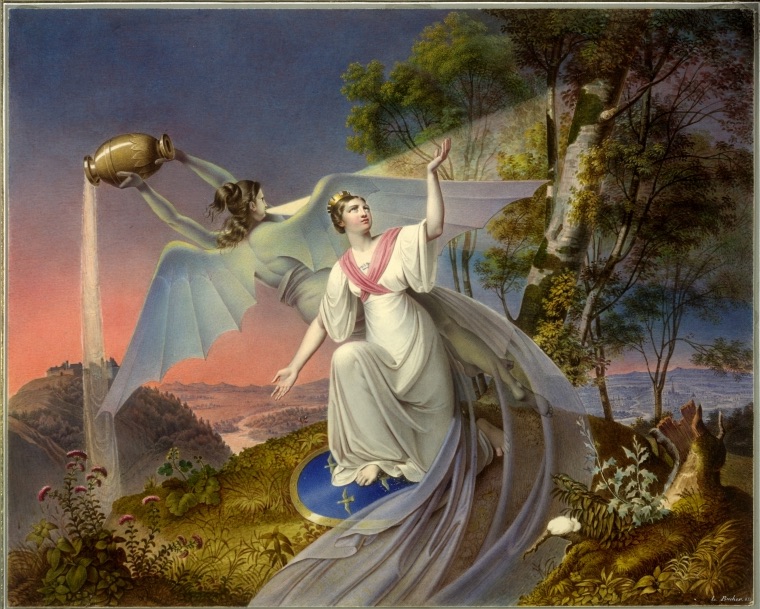
Allegory of the threat to Vienna from the cholera epidemic in 1831/32: The personification of Austria kneels on the coat of arms with five eagles (larks) and looks imploringly to the sky. Hovering behind her is the personification of cholera with bat wings and a vessel that she empties into the Danube. The scene takes place on the Kahlenberg with a view of the Leopoldsberg and the Danube valley, with the city of Vienna at dawn on the right in the background. Leopold Bucher, 1832.
(Austrian National Library)
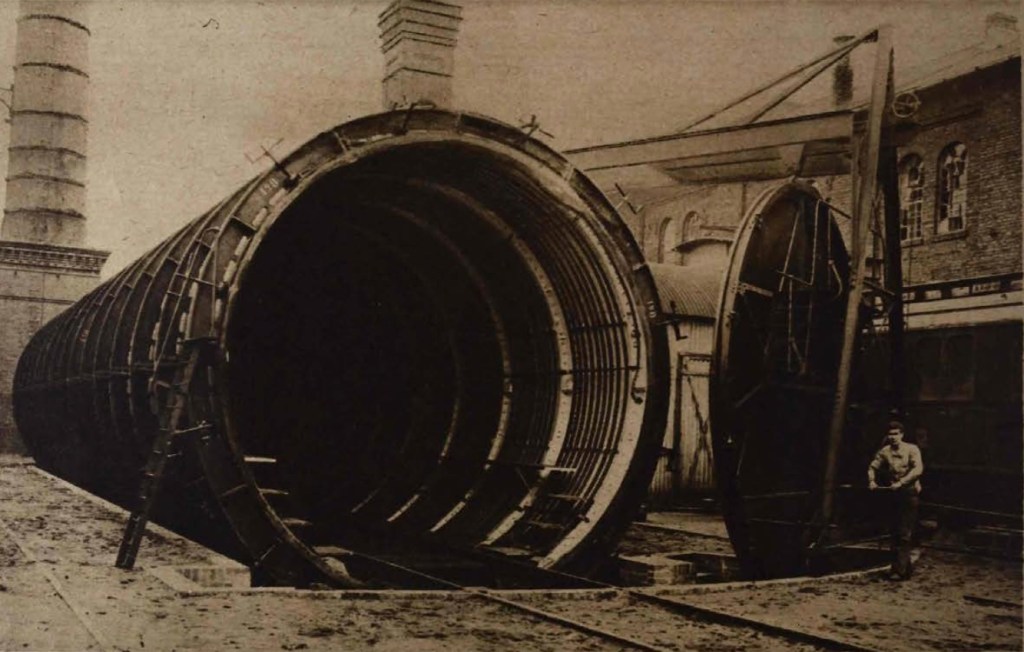
With typhus endemic on the eastern front during World War I, trains returning from the front had to be fumigated.
(Tolnai Világlapja, Budapest, 1916)
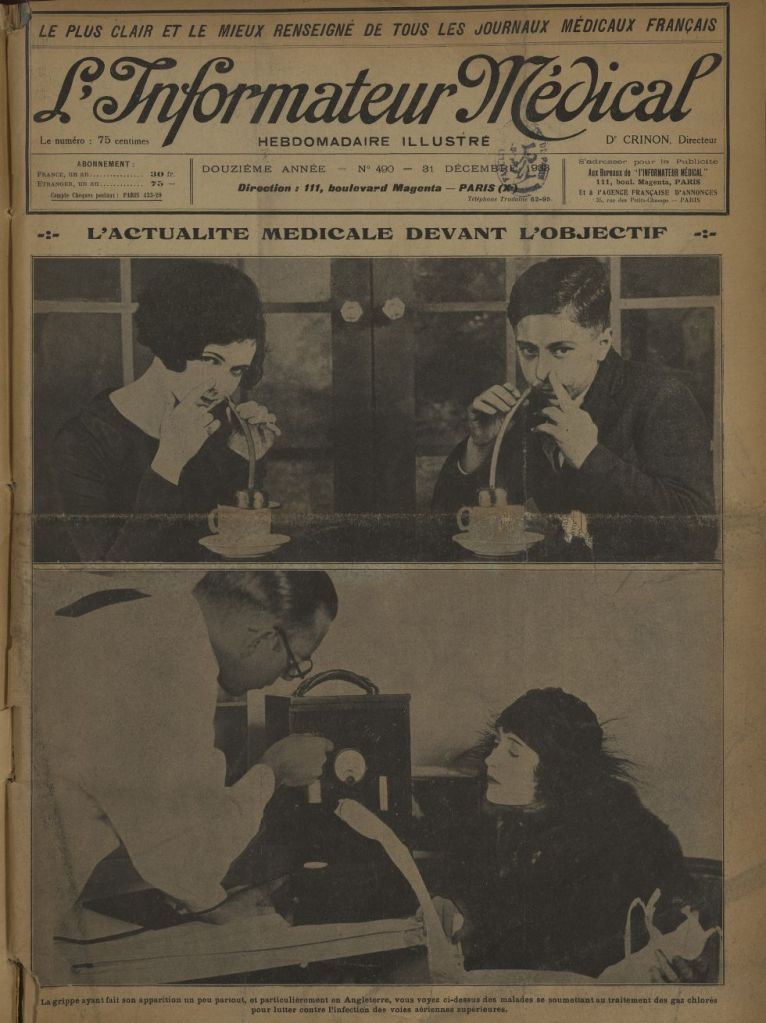
“The flu having appeared everywhere, and particularly in England, one sees the patients above undergoing chlorine gas treatment to fight against infection of the upper airways.”
(l’Informateur Médical, Paris, 1933)
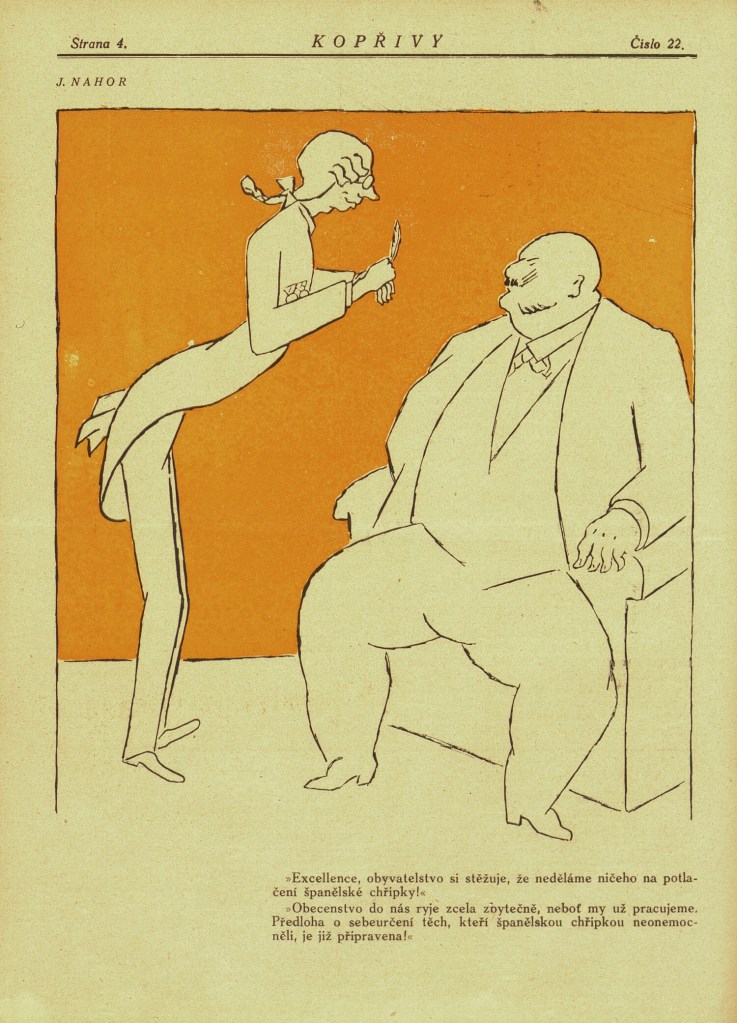
No echoes at all in our own day: “Excellency, the populace is complaining that we are doing nothing to suppress the Spanish flu.”
“The public is agitating against us quite needlessly, because we are already working. The self-determination bill for those who have not become ill with the Spanish flu is already prepared.”
(Kopřivy)
 Sic Transit Pestilentia