“Don’t leave us, don’t leave us! Don’t leave your native lands!”
(Sign in the background signals that pharmacists are singing the lament. Note the clystère under one pharmacist’s arm, a recurring theme.)
(Razvlechenie, Moscow, 1866)
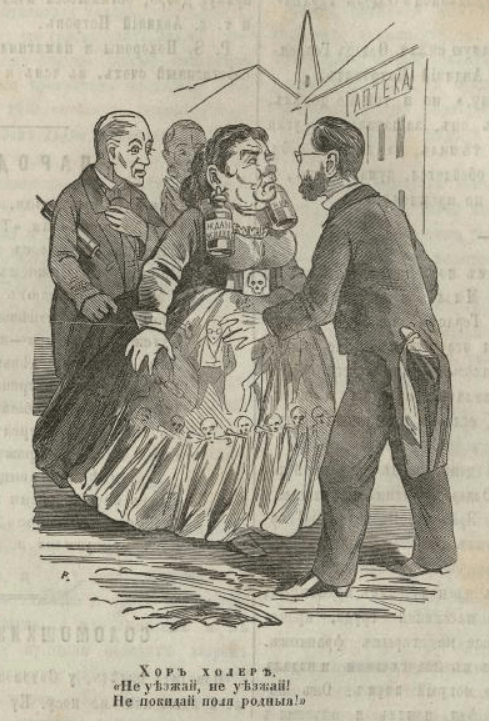
“Don’t leave us, don’t leave us! Don’t leave your native lands!”
(Sign in the background signals that pharmacists are singing the lament. Note the clystère under one pharmacist’s arm, a recurring theme.)
(Razvlechenie, Moscow, 1866)
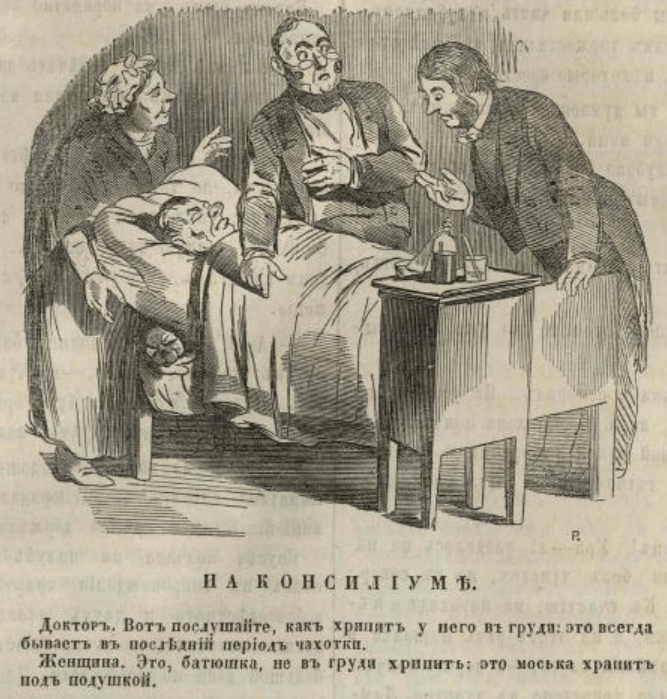
(From the annals of diagnostic nihilism)
Doctor: “Listen here to how his chest is wheezing: you always get this in the final stage of consumption.”
Woman: “It’s not wheezing in his chest, mister: it’s a pug snoring under the cushions.”
(Razvlechenie, Moscow, 1866)
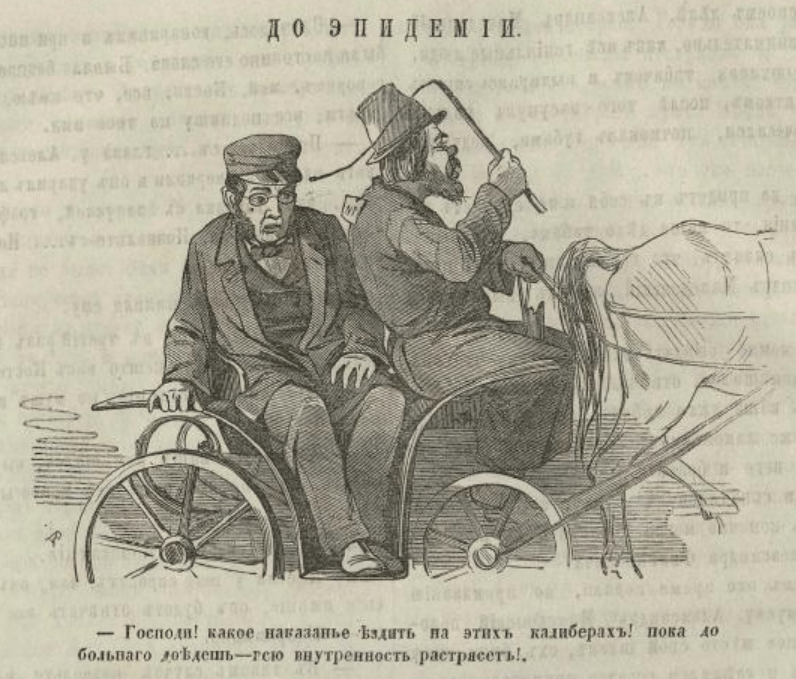
“Heavens! Such punishment to ride in these tiny carriages! By the time you get to the patient, all your insides will get shaken up!”
(Razvlechenie, Moscow, 1866)
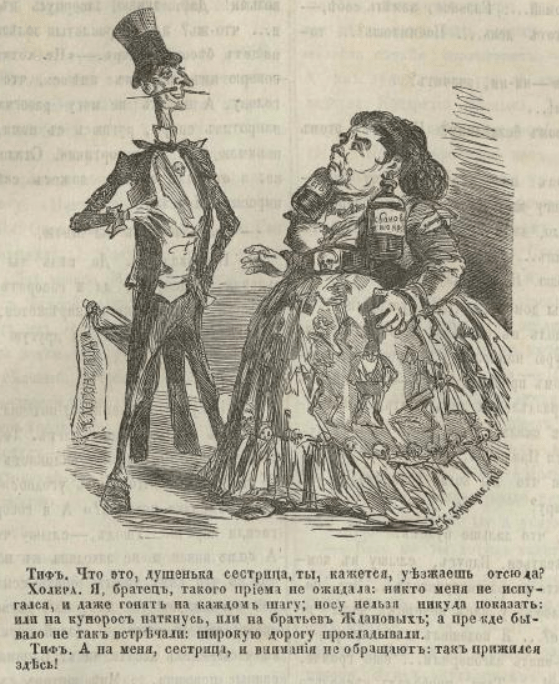
Typhus: “What is it, darling sister, are you going away?”
Cholera: “Brother, I did not expect such a reception: no one was afraid of me, and they are even dogging me at every step. You can’t show your face anywhere: either I’ll run up against vitriol, or the Zhdanov brothers [purveyors of a sulphuric deodorant concoction since the 1840s; “Zhdanov liquid” was indeed tested for its effects on cholera and typhus in 1893]. But there was a time when I wasn’t greeted like this: I was given lots of leeway.”
Typhus: “And as for me, they don’t pay attention, sister: I have taken root here!”
(Razvlechenie, Moscow, 1866)
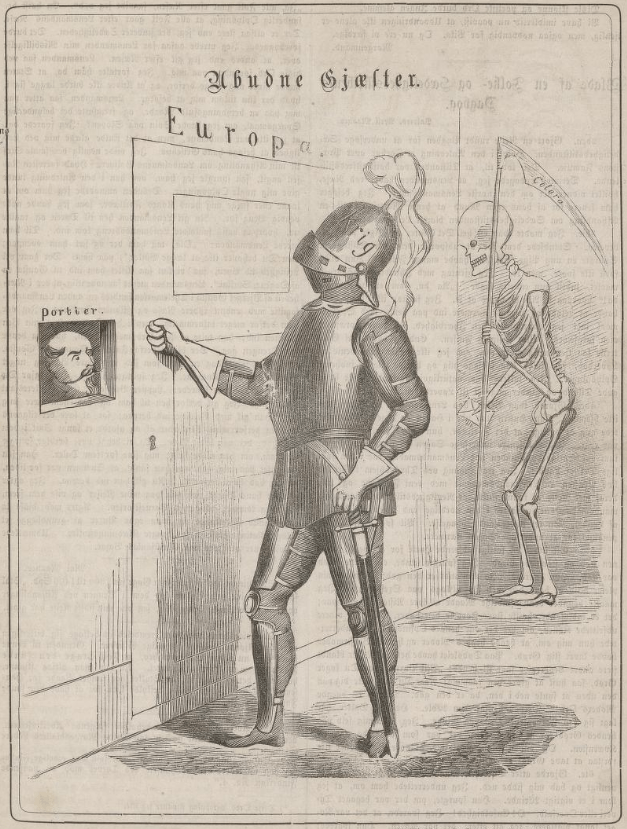
War and cholera
(Vikingen, Oslo, 1866)
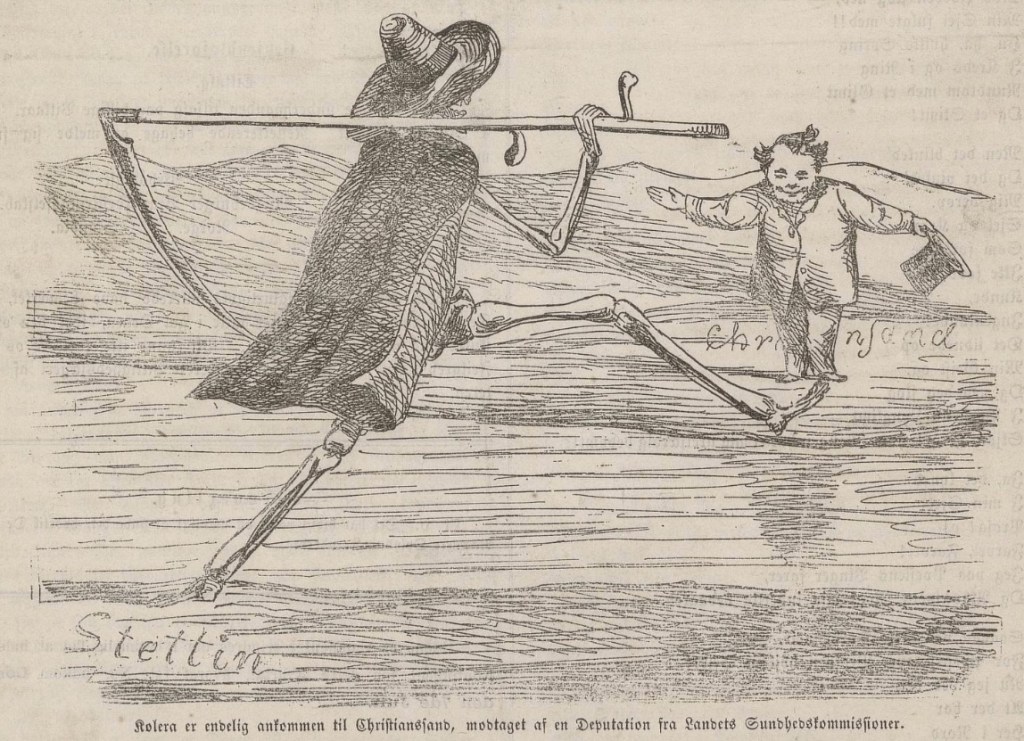
Cholera has finally arrived in Oslo, received by a deputation from the country’s health commissions.
(Vikingen, Oslo, 1866)
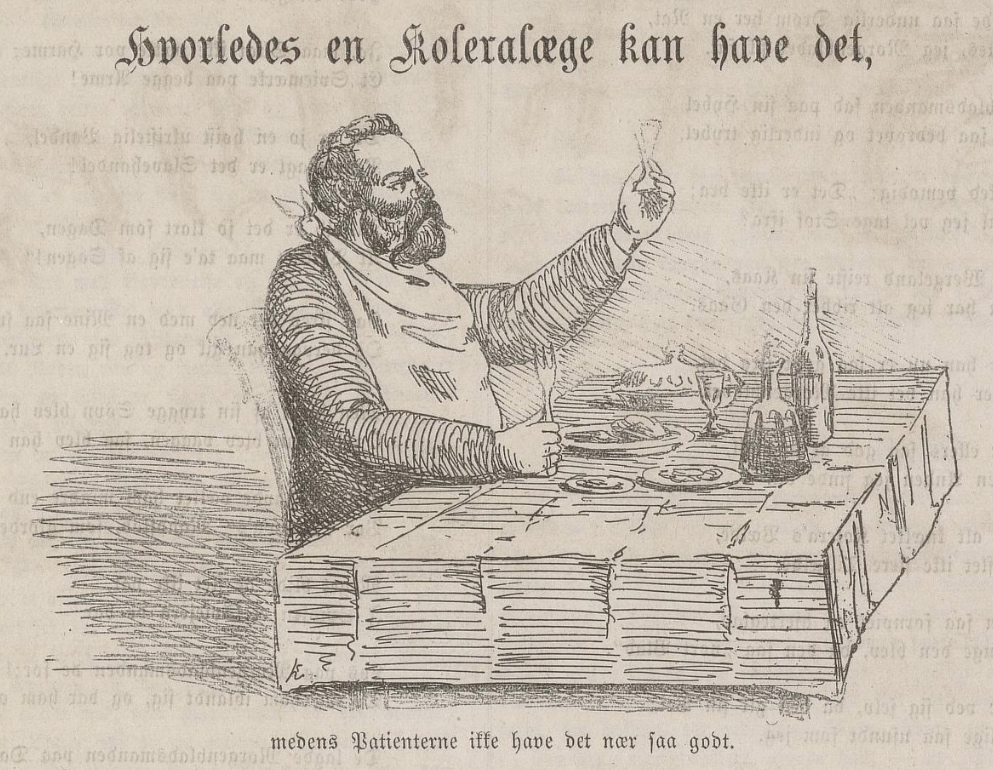
How is it that a cholera doctor can feel fine while patients aren’t.
(Vikingen, Oslo, 1866)
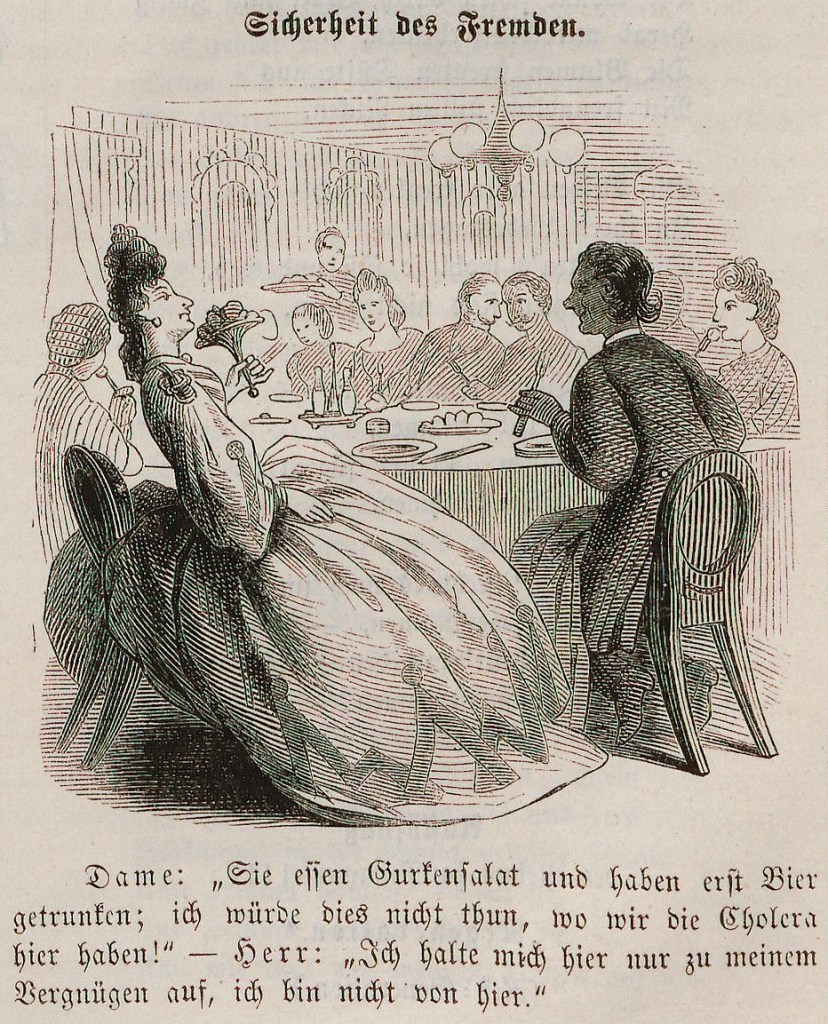
Lady: “You are eating cucumber salad and drank your beer first; I wouldn’t do that here where we have the cholera!”
Gentleman: “I am only staying here for my pleasure, I’m not from here.”
(Fliegende Blätter, Munich, 1866)
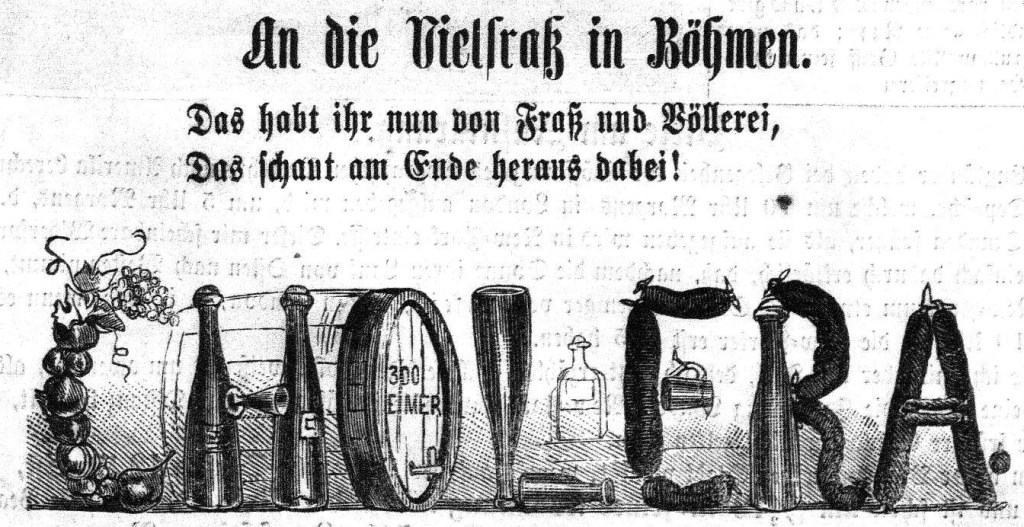
You got it from gulping and gluttony,
It shows in it in the end!
(Kikeriki, Vienna, 1866)
 Sic Transit Pestilentia