Marfugas del cólera

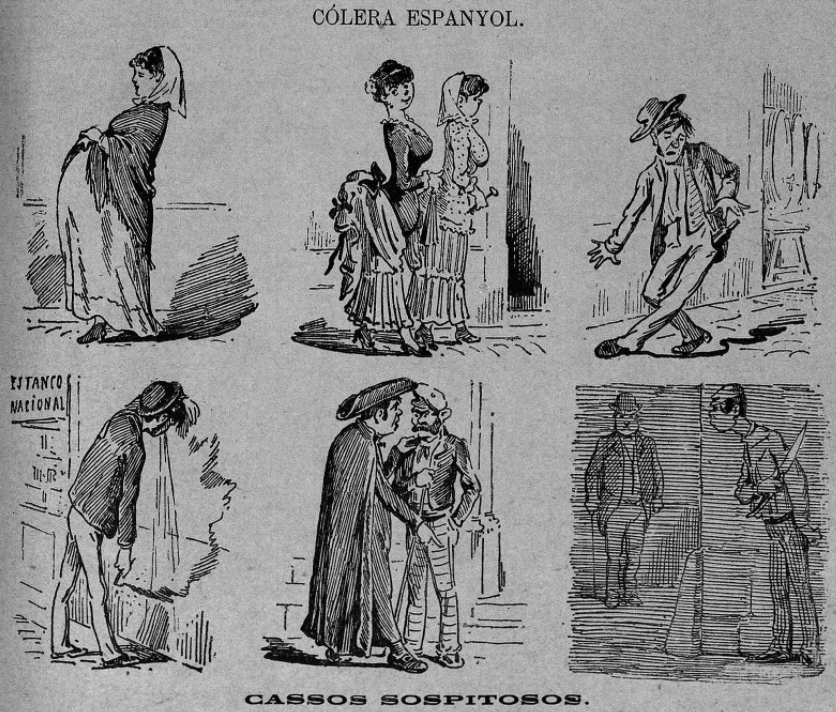
Marfuga is an olive oil producing region in Perugia, but I have no idea what the title signals. The individual panels in this cholera cartoon are amusing, however, mocking the urge to flee Barcelona for the countryside when news arrives of cholera in the French port of Toulon. (Apologies for the inept translations.)
(La Esquella de la torratxa, Barcelona, 1884)

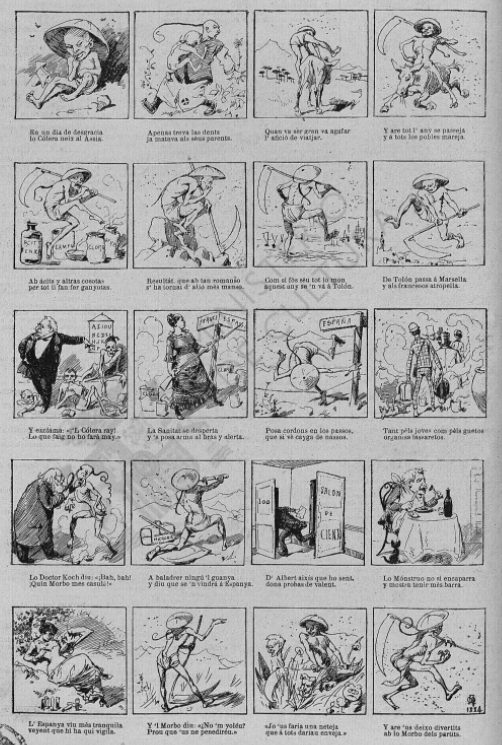
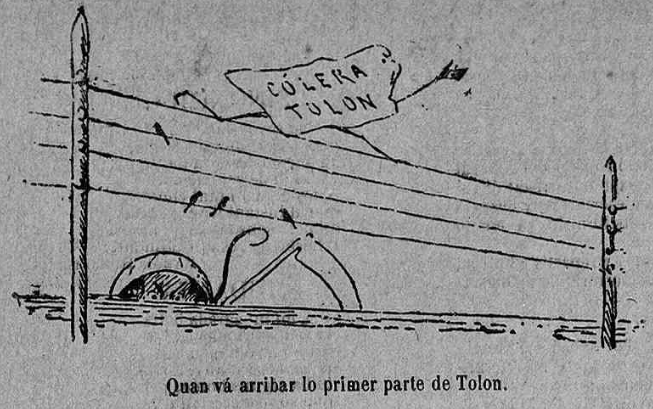
When the leading role arrived from Toulon.
Catalan cholera cartoon

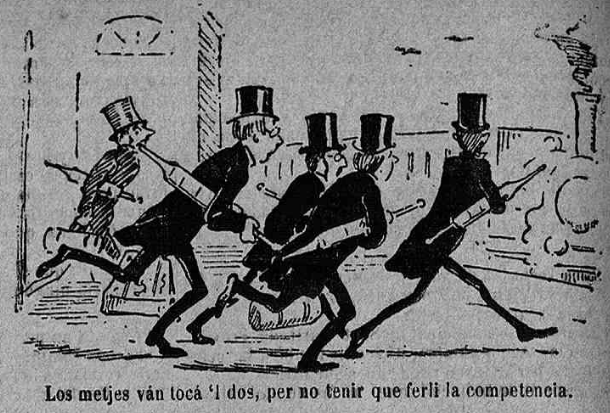
The doctors will play the secondary role, so as not to have to demonstrate expertise.
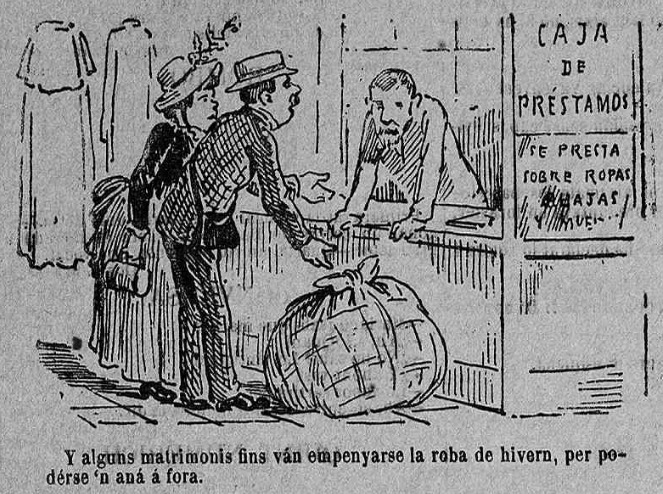
And some couples even pawned their winter clothes, to be able to go outside the city.
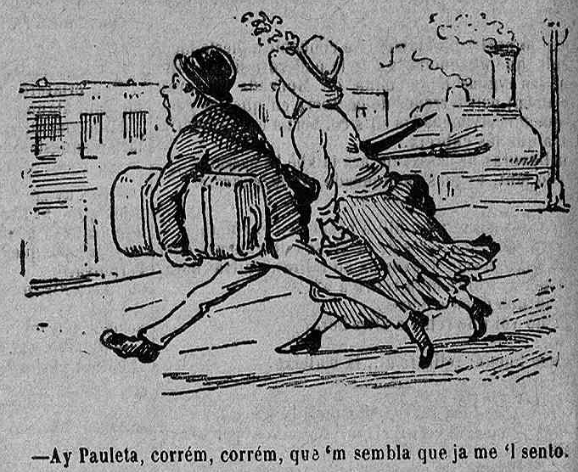
Oh Pauleta, run, run, it seems to me that I’ll be sorry.
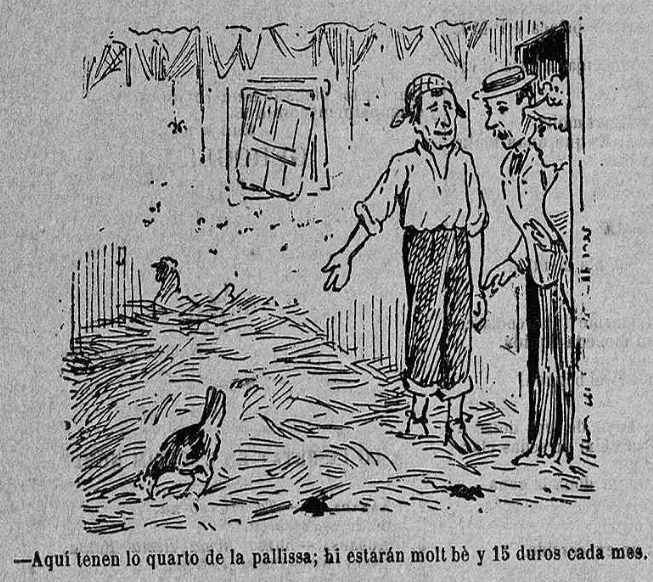
Here you have the quarter of the hayloft; it will be very nice and 15 duros per month.
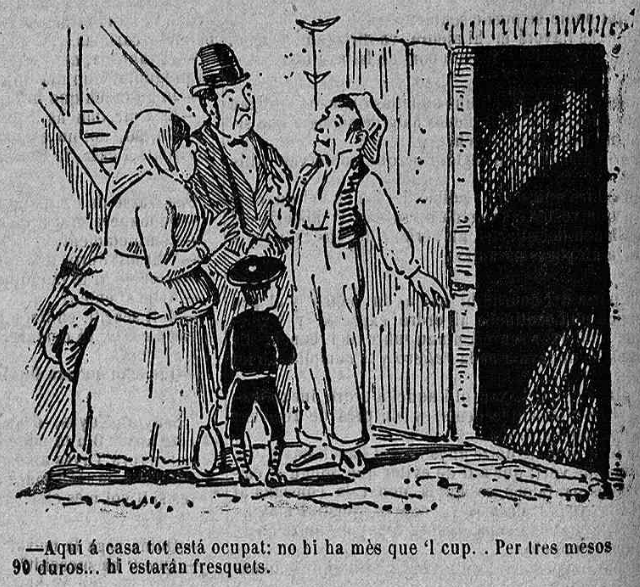
Here at home everything is occupied: there is nothing but the winepress… It’s 90 duros for three months… it will be cool.
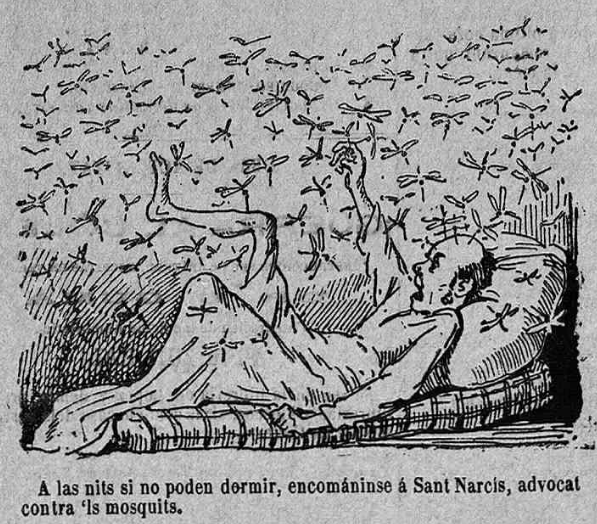
At night, if you can’t sleep, entrust yourself to St. Narcissus, a lawyer against mosquitos.
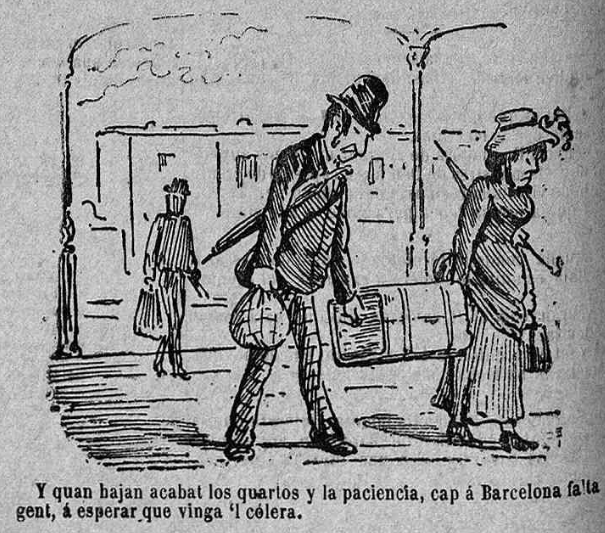
And when the quarters and patience are exhausted, the people missing out in Barcelona wait for the cholera to come.
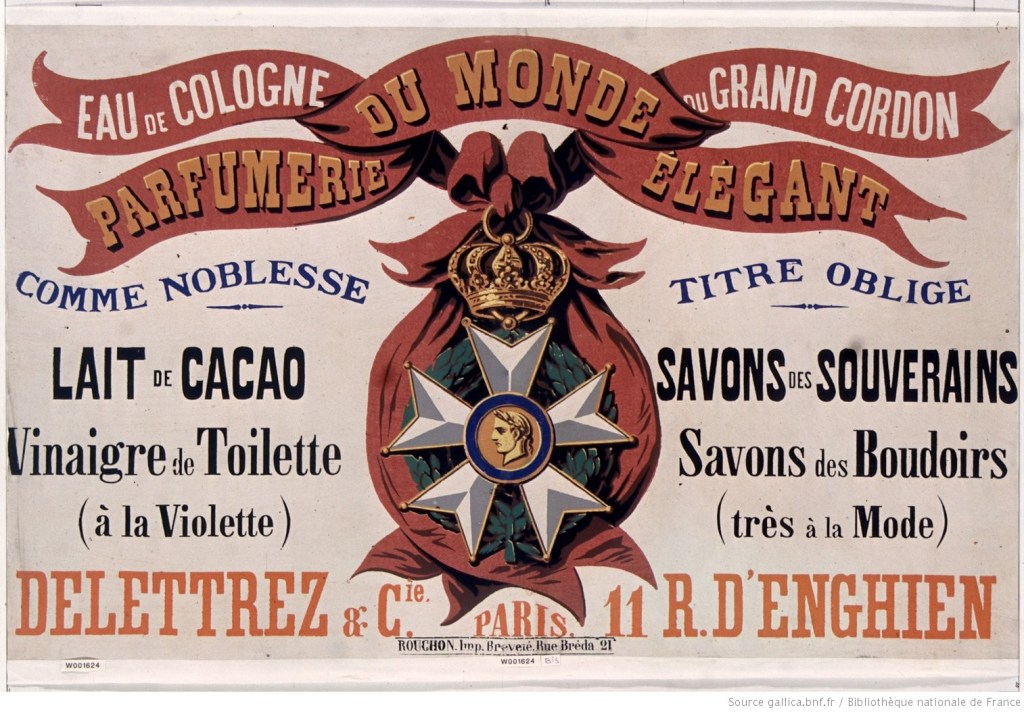
L’eau de cologne du Grand-Cordon

Though we are archiving visual epidemic humor, a brief gesture toward the sense of smell seems appropriate. The Parisian parfumerie Delettrez began selling L’eau de cologne du Grand-Cordon in 1857, and this unisex perfume seems to have established the Delettrez brand. Less expected (at least for me) was its embrace by the Parisian public as one of the many elixirs against cholera. Although Pasteur’s germ theory was beginning to make headway at the time of the 1884 epidemic resurgence, miasmatic theories still predominated in the general public.

Consider this endorsement from Le Voleur illustré: “We could not recommend too much to our readers of both sexes the use of l’eau de cologne du Grand-Cordon, which is not only a first-rate perfume and cosmetic, but also a very effective product against the miasmas and unhealthy fumes so dangerous in times of cholera. It is wise to use l’eau de cologne du Grand-Cordon every morning, to soak your handkerchief and linen with it, and to carry a bottle with you. Such precautions, even if exaggerated, never hurt anyone.”

A different sense of “cordon sanitaire“?

French perfume advertisement

Trock on cholera

Gabriel Liquier penned cartoons under the aliases Trick and Trock for La Caricature in Paris. Around the time that cholera was peaking again in France in 1884, some of his miscellaneous drawings touched on the epidemic, and we shall collect them together here. (As usual, links to sources are embedded in the images.)

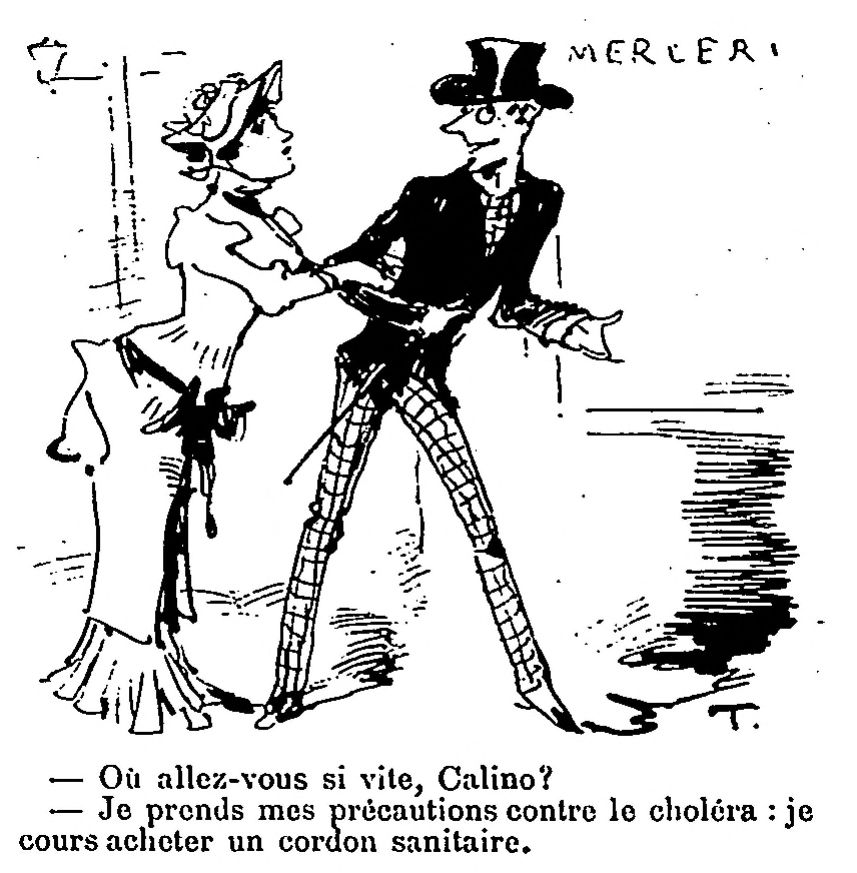
“Where are you going so quickly, Calino?”
“I am taking precautions against cholera: I’m off to buy a cordon sanitaire.”

French cholera cartoon

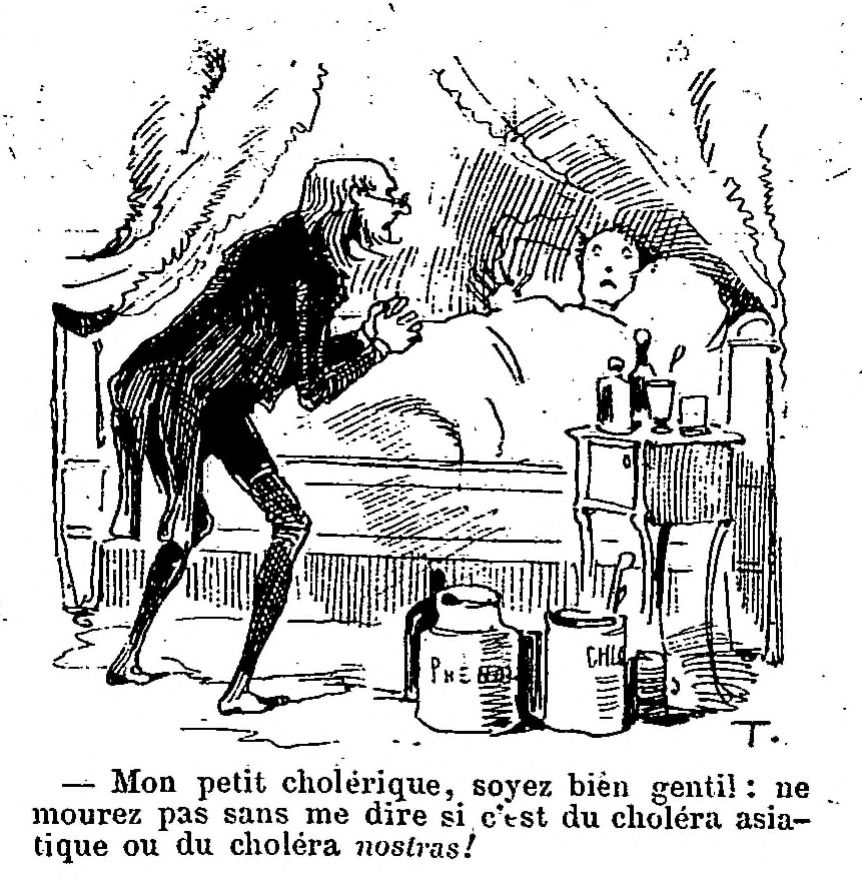
“My little choleric, be very nice: don’t die without telling me if it’s Asian cholera or our cholera!”

French cholera cartoon

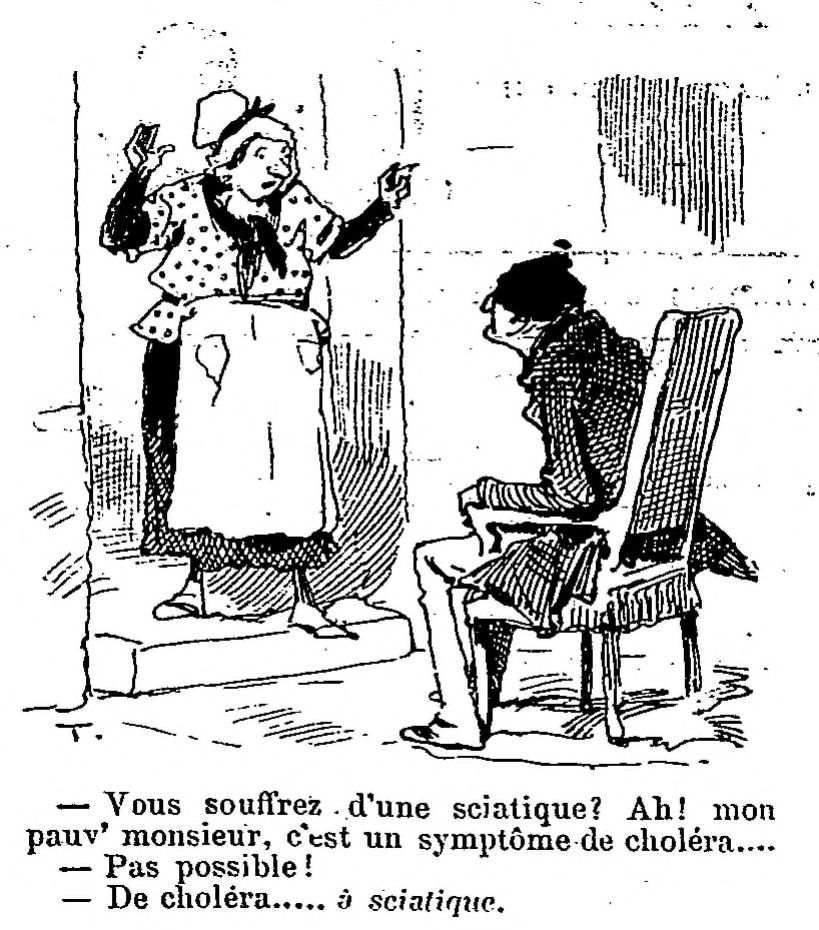
“Are you suffering from sciatica? Oh, my poor sir, that is a symptom of cholera…”
“Not possible!”
“It’s a sciatic cholera.” (“Asiatic”)

French cholera cartoon

(The same pun was recycled in 1892 in Le Journal amusant.)

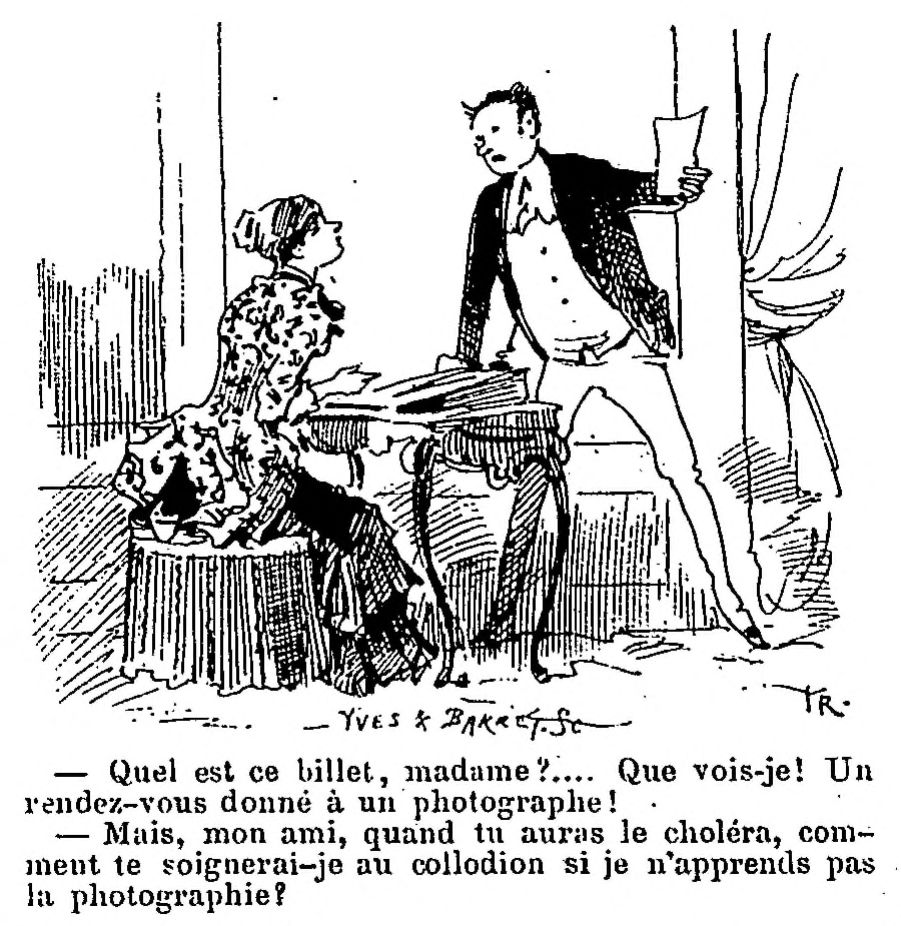
“What is this note, madame?… What am I looking at! An appointment granted to a photographer!”
“But, my love, when you have cholera, how will I cure you with collodion if I don’t learn photography?”

French cholera cartoon

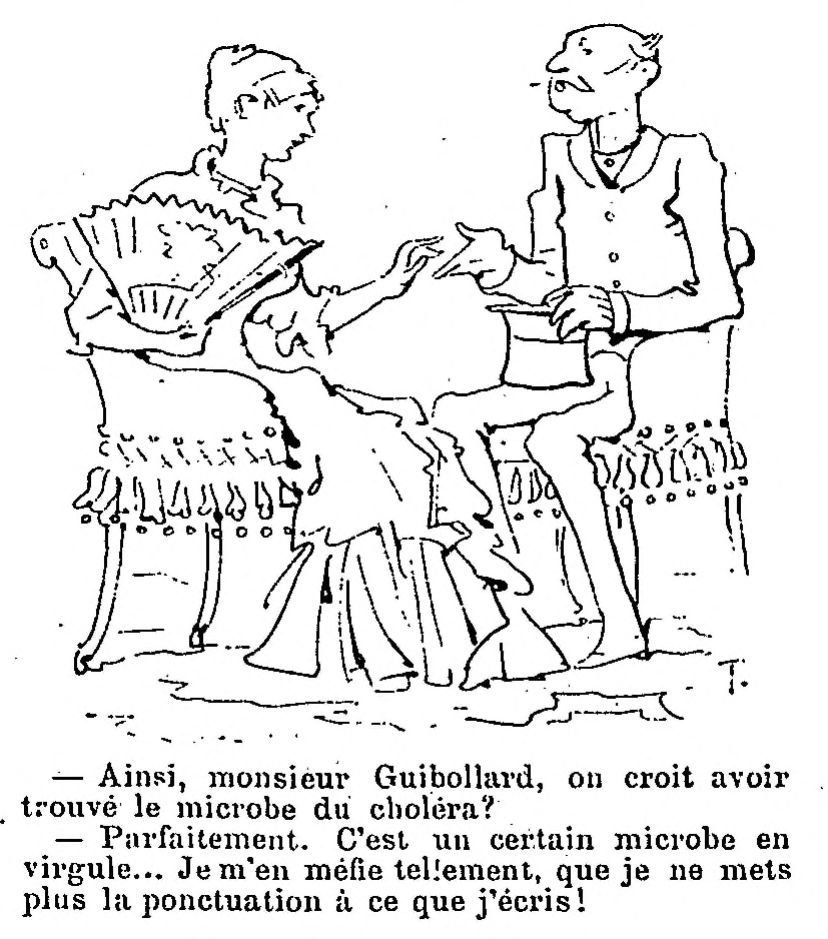
“So, Mr. Guibollard, do they think the cholera microbe has been found?”
“Perfectly. It’s a certain comma microbe… I’m so sure of it that I no longer put punctuation in what I write!”

French cholera cartoon

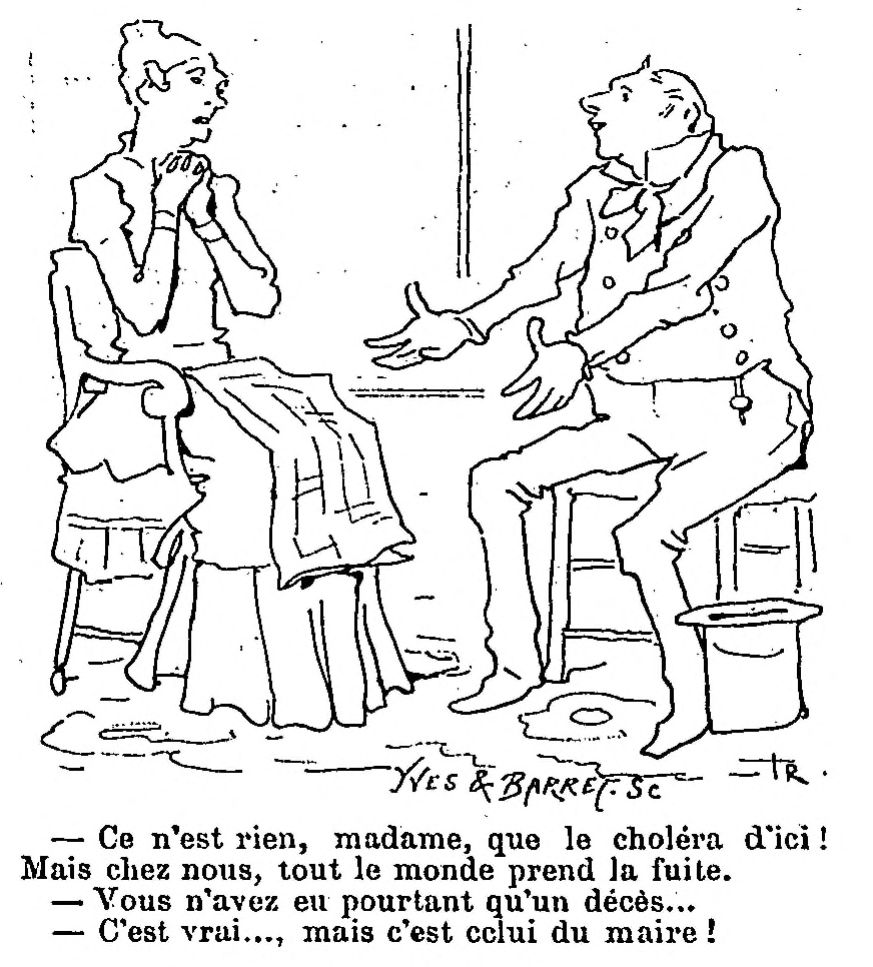
“The cholera from here is nothing, madame! But with us, everyone flees.”
“Yet you have only had one death…”
“That is true…, but it is that of the mayor!”

French cholera cartoon

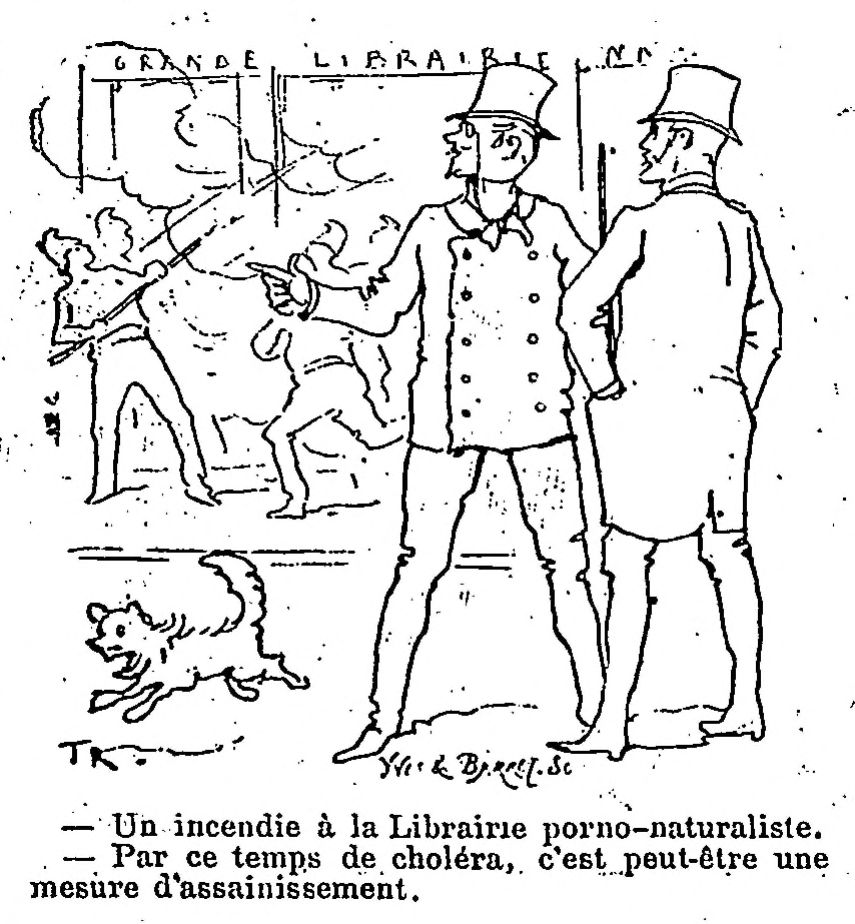
“A fire at the Porno-Naturalist Library.”
“In this time of cholera, it may be a sanitation measure.”

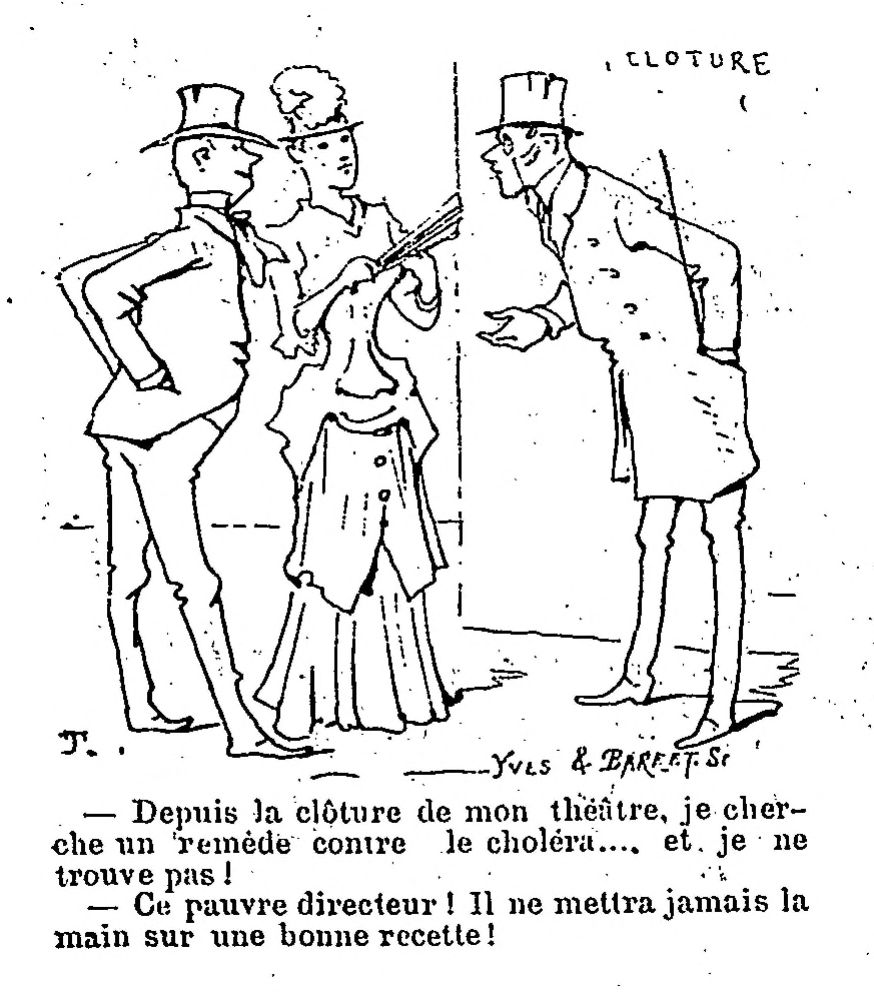
“Since the closing of my theater I have been looking for a remedy against cholera…. and I haven’t found it!”
“This poor director! He will never get his hands on a good formula!”

French cholera cartoon

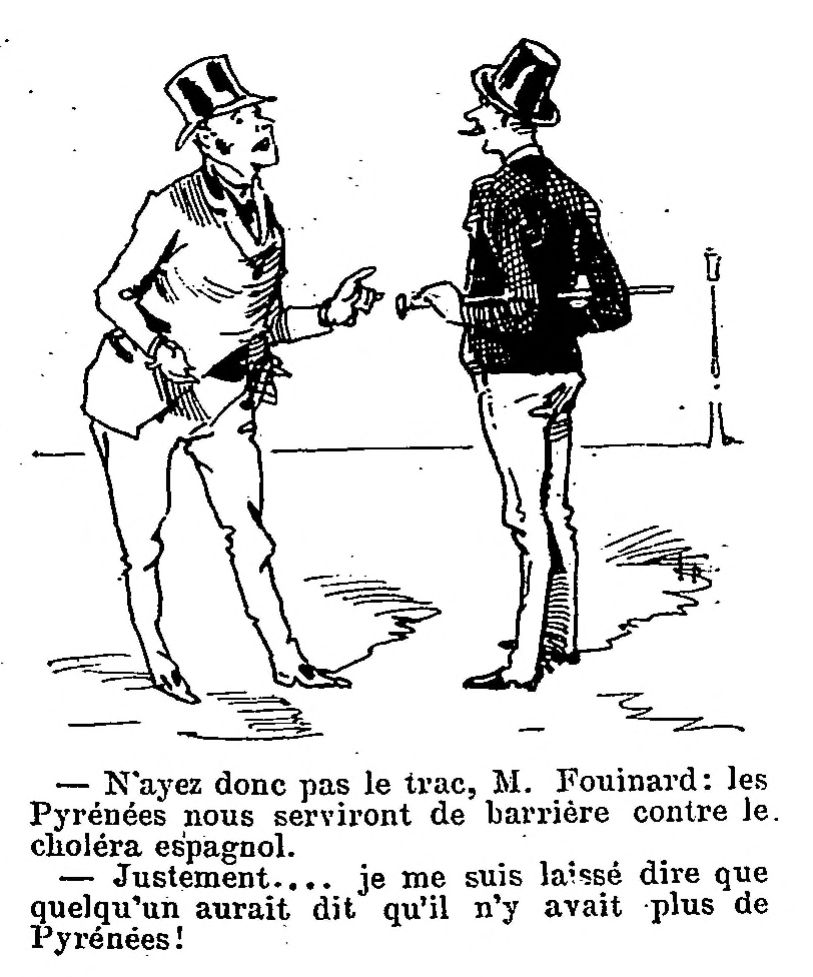
“So don’t be nervous, Mr. Fouinard: the Pyrenees will serve as a barrier against Spanish cholera.”
“Precisely… I let myself be told that someone would have said that there were no more Pyrenees!”

French cholera cartoon

Microbo-political miscellany

From Cosmorama pittorico, Milan, 1884:

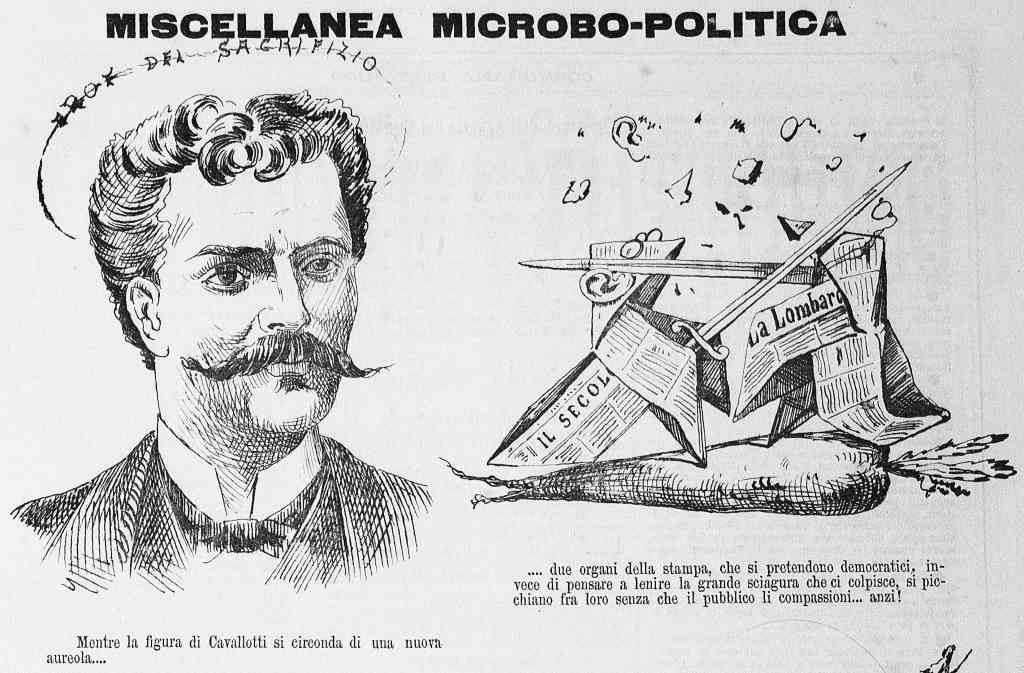
While the figure of Cavallotti surrounds himself with a new halo…. [Here labeled “Professor of Sacrifice,” leftist Italian politician Felice Cavallotti was notoriously combative and, as it happens, known for his gift for satire. It seems he led the fight against the cholera epidemic then underway in the city.]

… two organs of the press that claim to be democratic, instead of thinking of alleviating the great disaster that strikes us, beat each other without the public sympathizing with them… on the contrary!

Italian quarantine cartoon

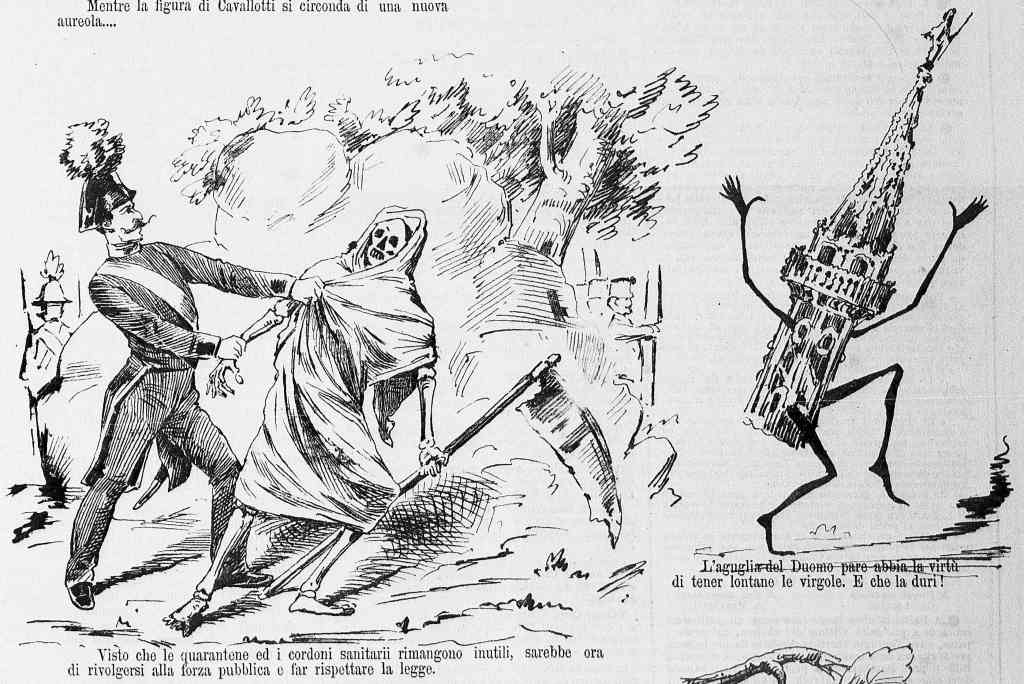
Since quarantine and sanitary cordons remain useless, it is time to turn to the public authorities and enforce the law.

The needlefish of the Duomo seems to have the virtue of keeping commas away. And make it last! [“Comma” meaning the comma-bacillus associated with cholera.]

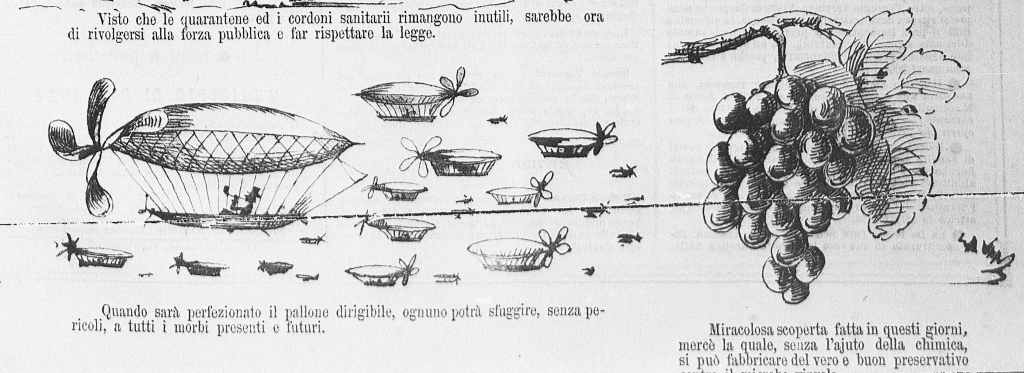
When the flying dirigible is perfected, everyone can safely escape all present and future diseases.

Miraculous discovery made in these days, by which, without the help of chemistry, you can make real and good protections… [last line obscured]
 

Salti di grillo

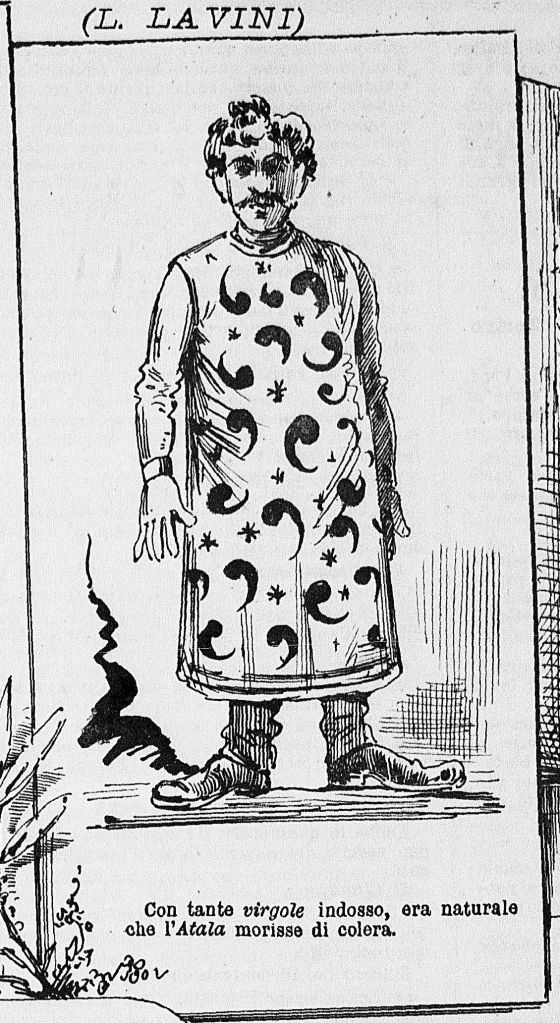
“Wearing so many commas, it was natural for Atala to die of cholera.” In 1884 Filippo Guglielmi’s Atala (libretto by G. Cappuccini) premiered in Milan to mixed reviews, apparently too Wagnerian for Lombard critics. Based on Chateaubriand’s 1801 novella Atala, Guglielmi’s opera presumably featured a Frenchman named René who joined an American Indian tribe, though I haven’t seen the libretto. Chateaubriand was arguing against “noble savage” narratives, and–bypassing a more complex story of intermarriage–for present purposes it is mainly relevant that René eventually meets a violent end. The image must be an inside joke about the costumes, at a time when cholera was resurgent in Naples. We have previously encountered the comma bacillus as proxy for cholera.
(Cosmorama pittorico, Milan, 1884)

Italian cholera cartoon

Cholera, fear, and other tragedies

(La Esquella de la torratxa, Barcelona, 1884)

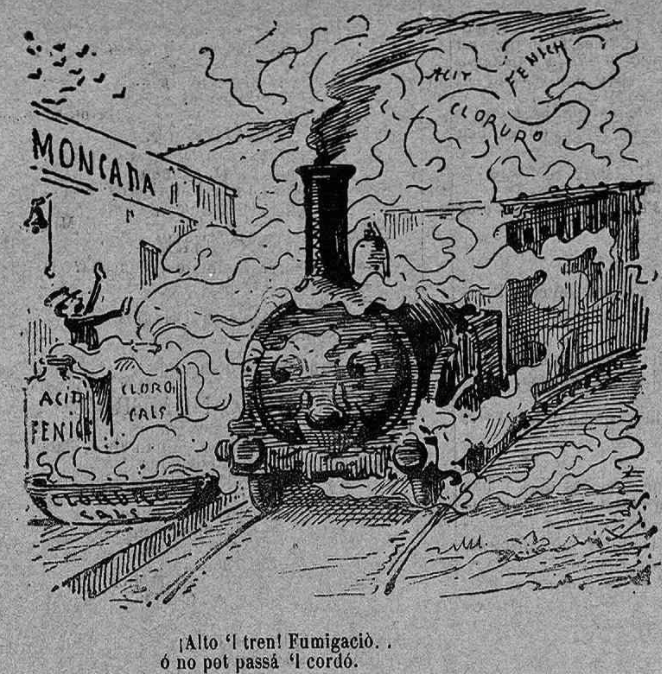
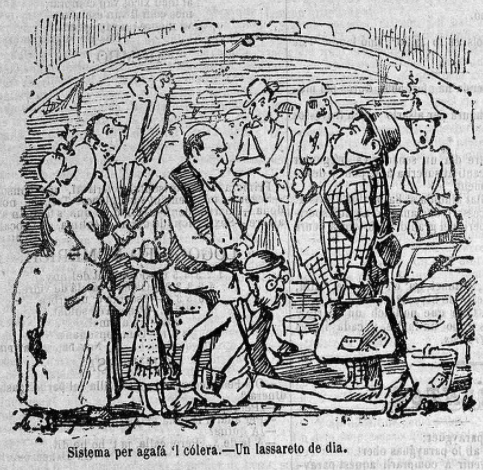
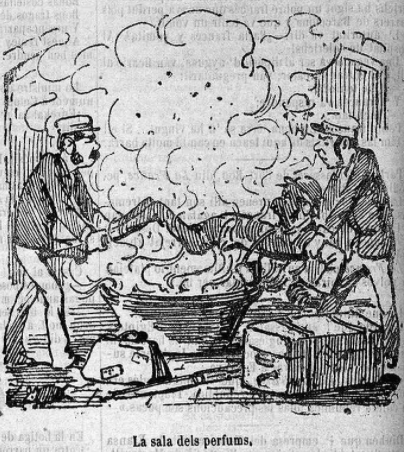
Stop the train! Fumigation… or no fart shall pass through the cordon.

Catalan cholera cartoon

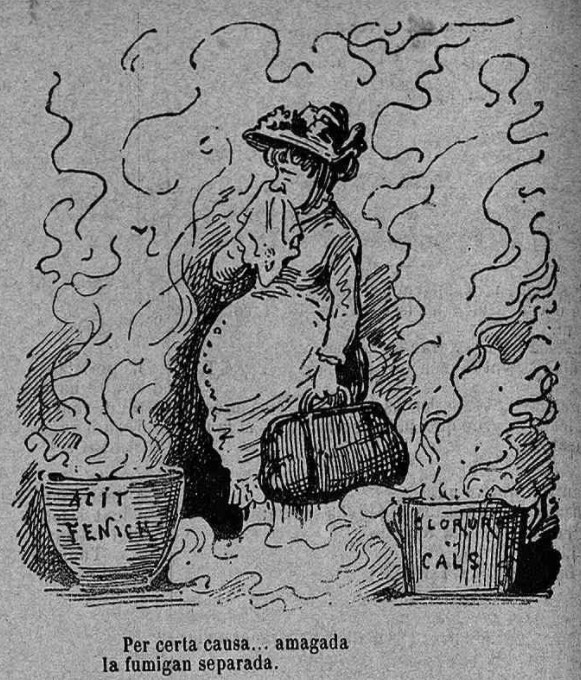
For some reason… the separate fumigant is hidden.

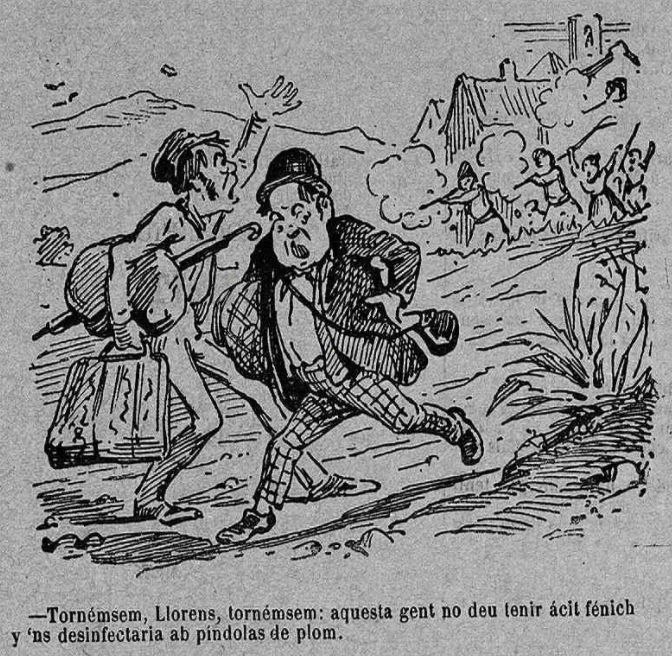
“Let’s go back, Laurence, let’s go back: these people must not have phoenix acid and they would like to disinfect us with lead pills.”

“Give me a piece of cord.”
“Young lady, I don’t have any, nor is it easy for me to find it anywhere: they have spent everything to cordon off the province.”

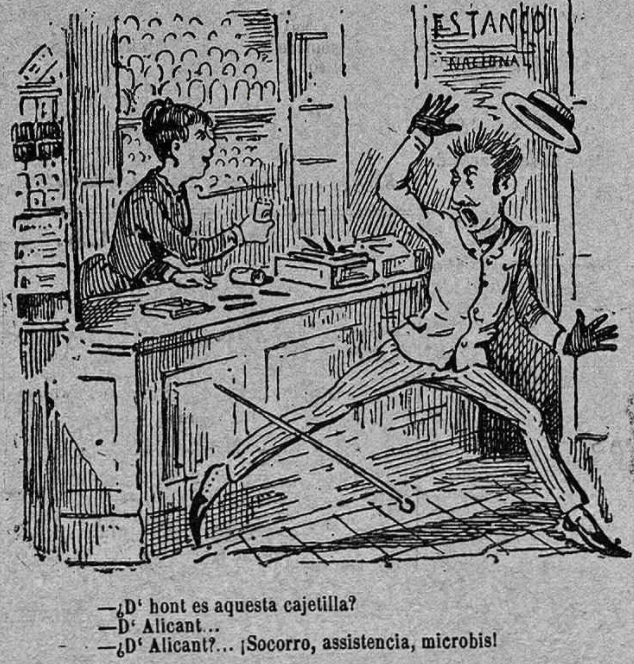
“Where is this box from?”
“From Alicante…”
“From Alicante?… Help, assistance, microbes!”

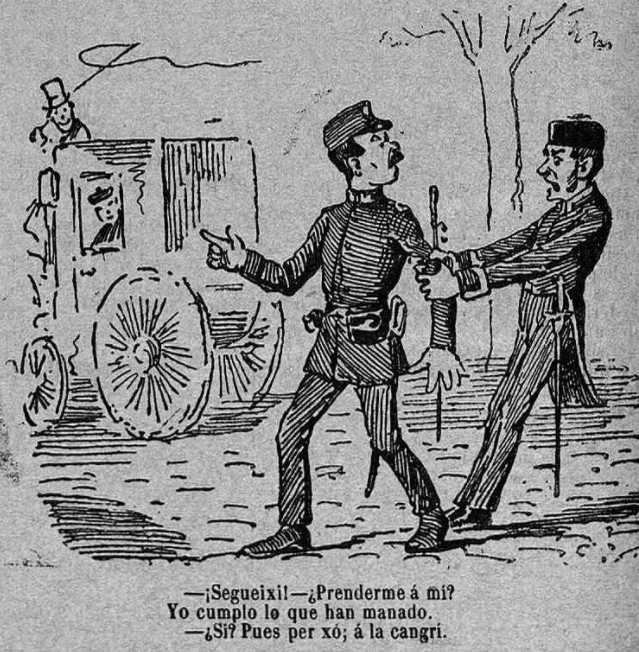
“Carry on!”
“Take me? I do what they have commanded.”
“Yes? Well, that’s how; like a kangaroo.” (??)

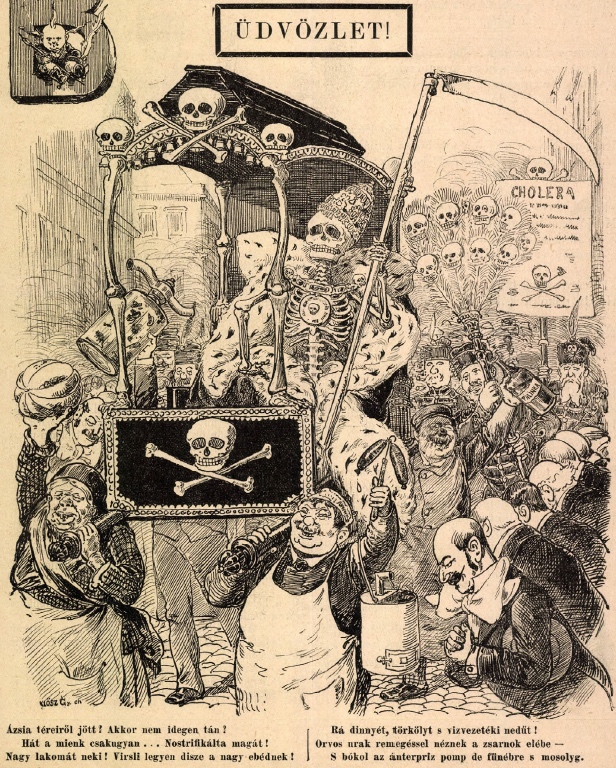
Welcome!

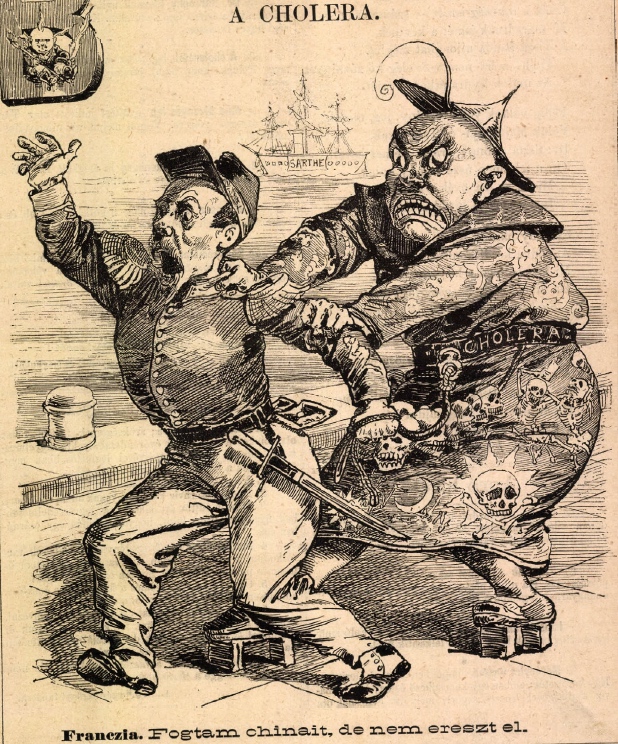
He came from the Asian spaces! Isn’t he a stranger then?
Well, indeed he’s ours… He’s certified!
A great feast for him! Make sausage centerpiece of the great meal!
Put melon and brandy on it, and the nectar of water straight from the tap!
Medical gentlemen look at the tyrant with trembling —
And smiling he compliments the funereal pomp of the enterprise.
(Borsszem Jankó, Budapest, 1884)

Hungarian cholera cartoon

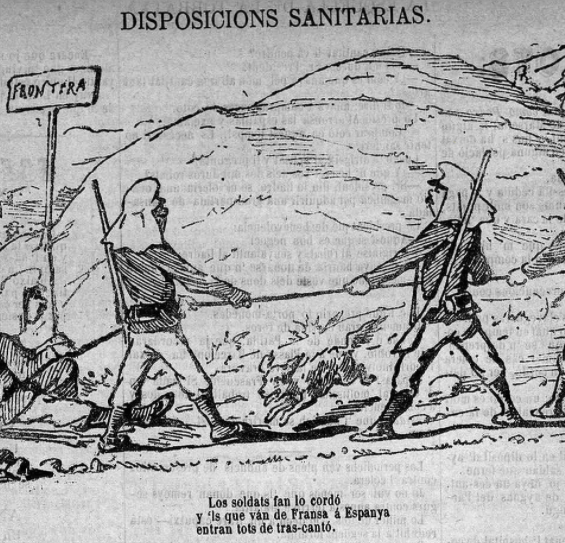
Sanitary provisions

The soldiers make the quarantine cordon, and those who go from France to Spain all enter in improvised fashion.
(La Esquella de la torratxa, Barcelona, 1884)

Catalan hygiene cartoon

System to catch cholera. A quarantine station by day.

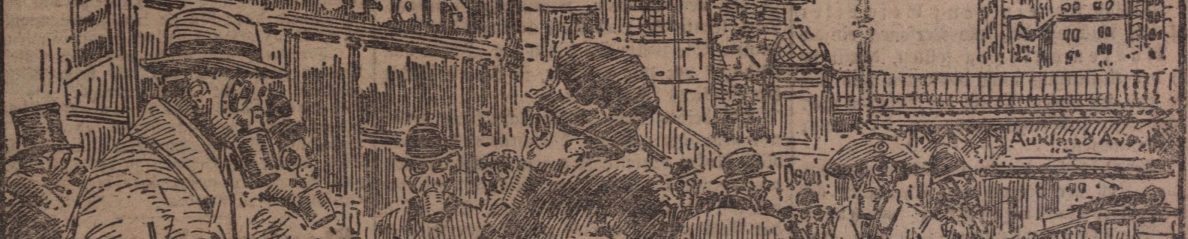
The perfume room.

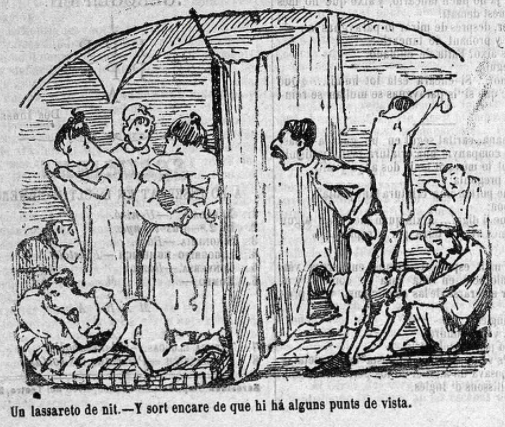
A night-time quarantine station. And luckily there are still some viewing points.

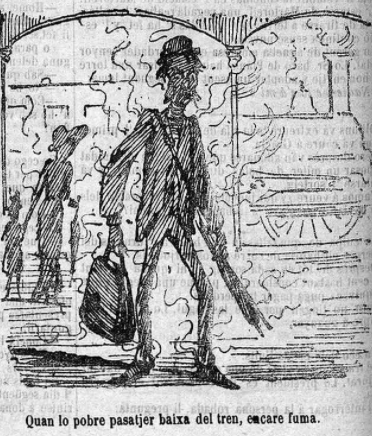
When the poor passenger gets off the train, he is still smoking.