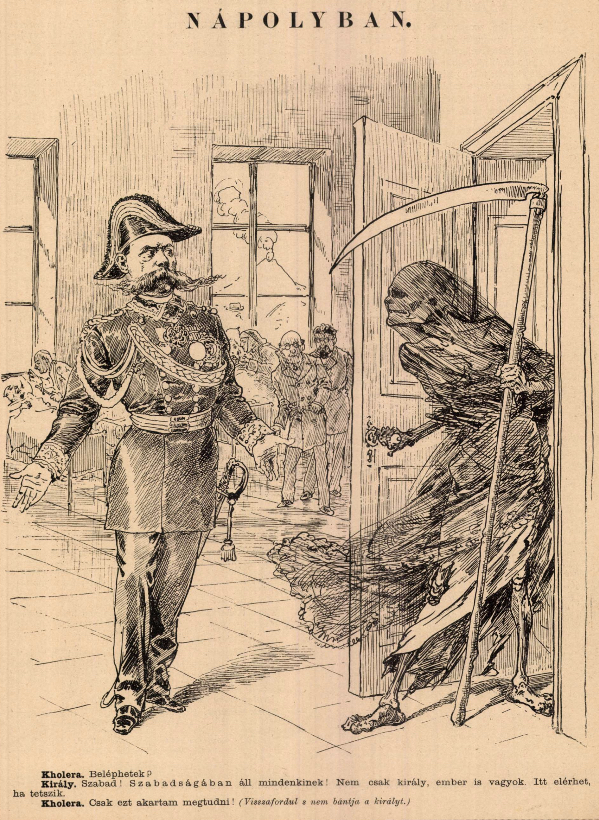
Cholera: “May I come in?”
King: “You may! Everyone is at liberty! I’m not only king, I’m a human. Over here, if you like.”
Cholera: “That’s all I wanted to know! (Turns around and does not bother the king.)
(Bolond Istók, Budapest, 1884)
Cholera: “May I come in?”
King: “You may! Everyone is at liberty! I’m not only king, I’m a human. Over here, if you like.”
Cholera: “That’s all I wanted to know! (Turns around and does not bother the king.)
(Bolond Istók, Budapest, 1884)
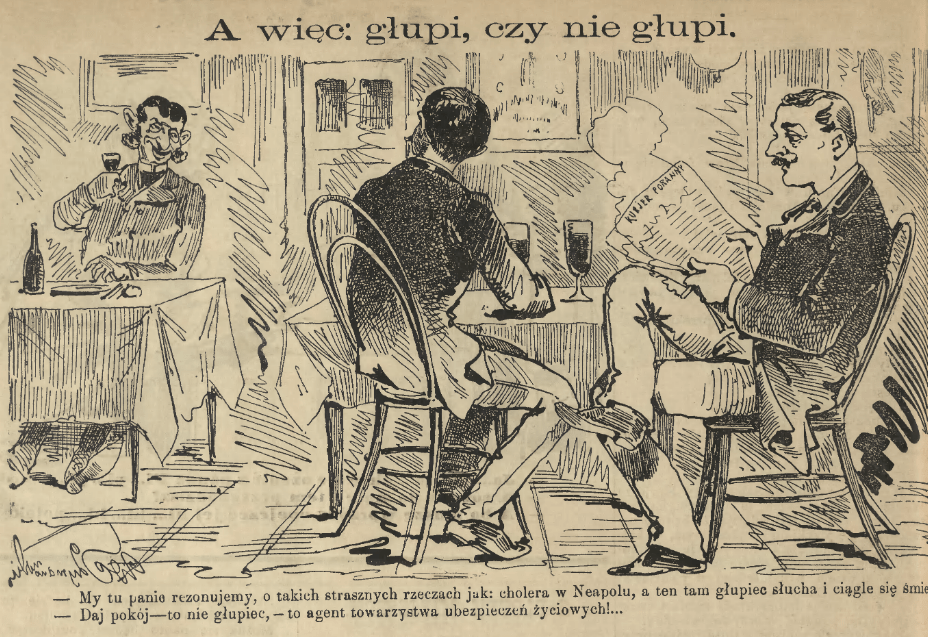
“We’re reasoning to that gentleman about such terrible things as cholera in Naples, and that fool there is listening and constantly laughing.”
“Give it a rest, that is no fool, he is a life insurance company agent.” (No bonus points for noticing the anti-Semitic caricature.)
(Mucha, Warsaw, 1884)
“But you’re not afraid to go to the Pyrenees, where cholera is so close?”
“I was afraid, but my wife advised an excellent method to me: after the border I will travel under an assumed name.”
(Mucha, Warsaw, 1884)

Pastor: “Hey, you kids, why aren’t you going to school today?”
Kids: “We’re sick, Pastor, we have the measles.”
(Fliegende Blätter, Munich, 1884)
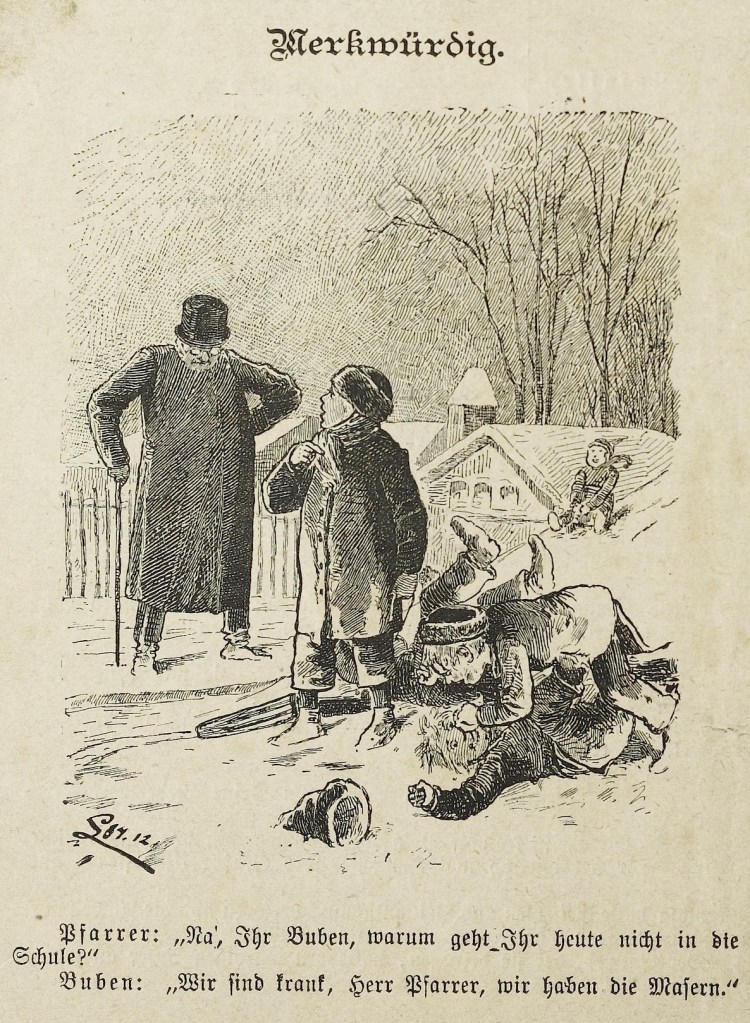
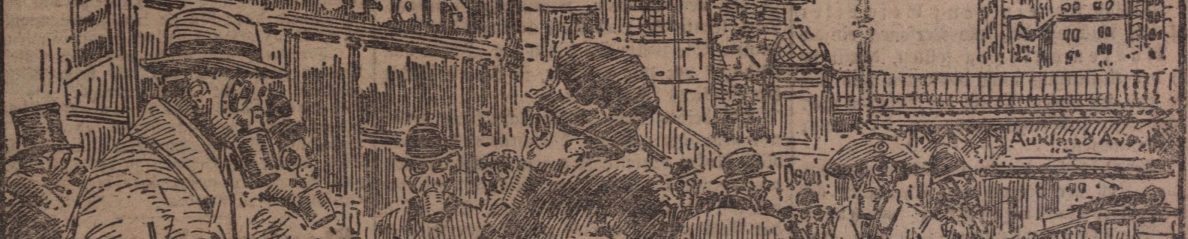
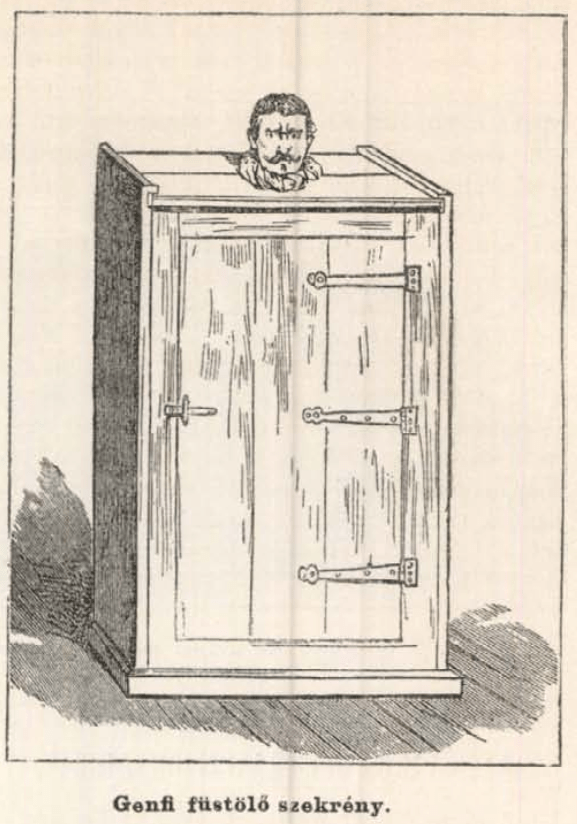
Image of a fumigation chamber used in Geneva during the cholera pandemic as it spread in 1884.
(Vasarnapi Ujság, Budapest, 1884)
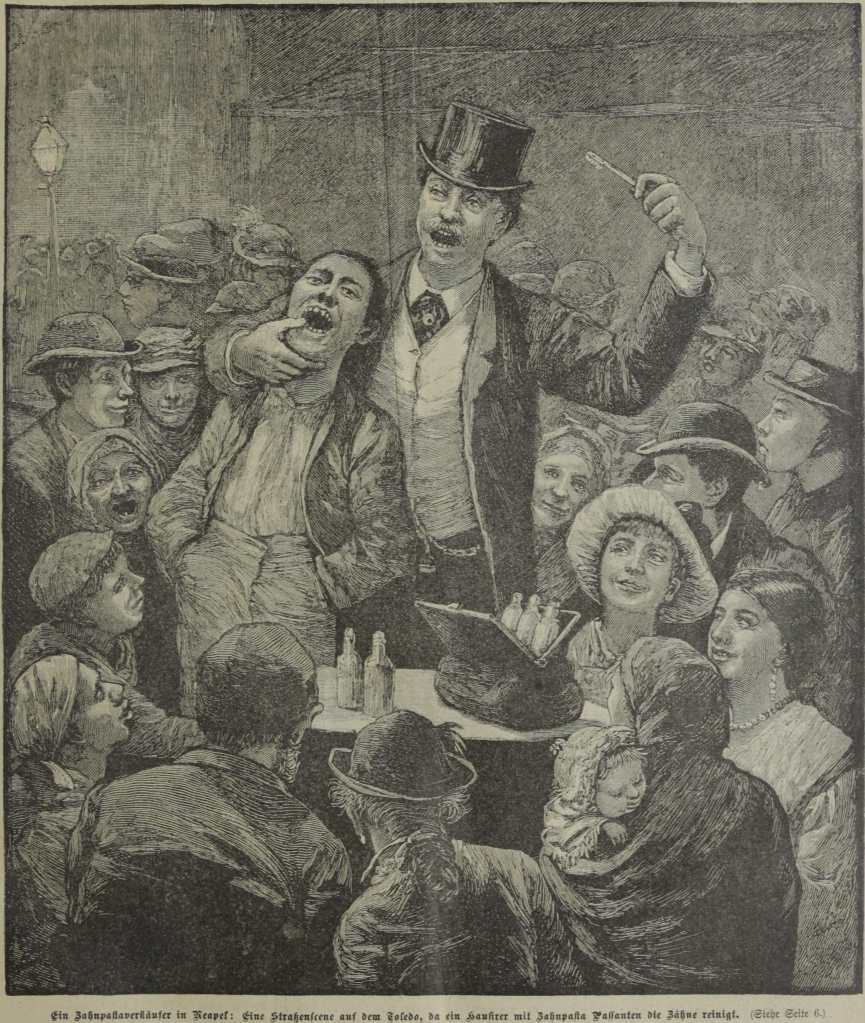
A street scene from the Toledo, where a toothpaste pedlar cleans the teeth of passers-by. That same year, Naples was hit by the fifth global cholera epidemic.
(Das interessante Blatt, Vienna, 1884)
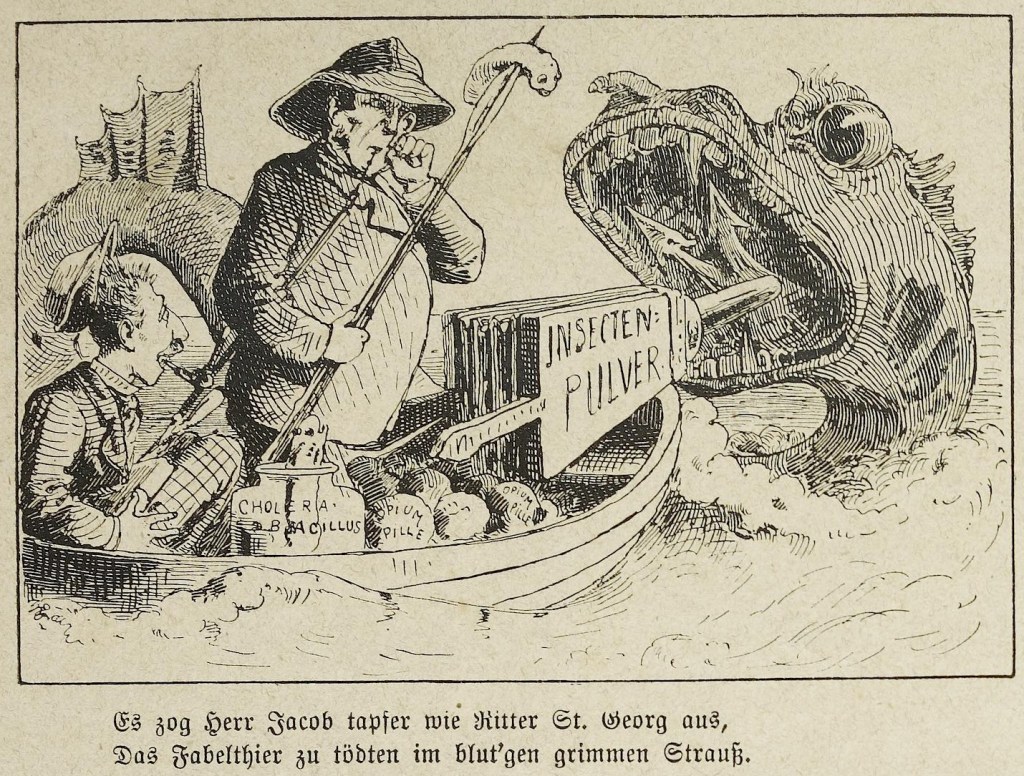
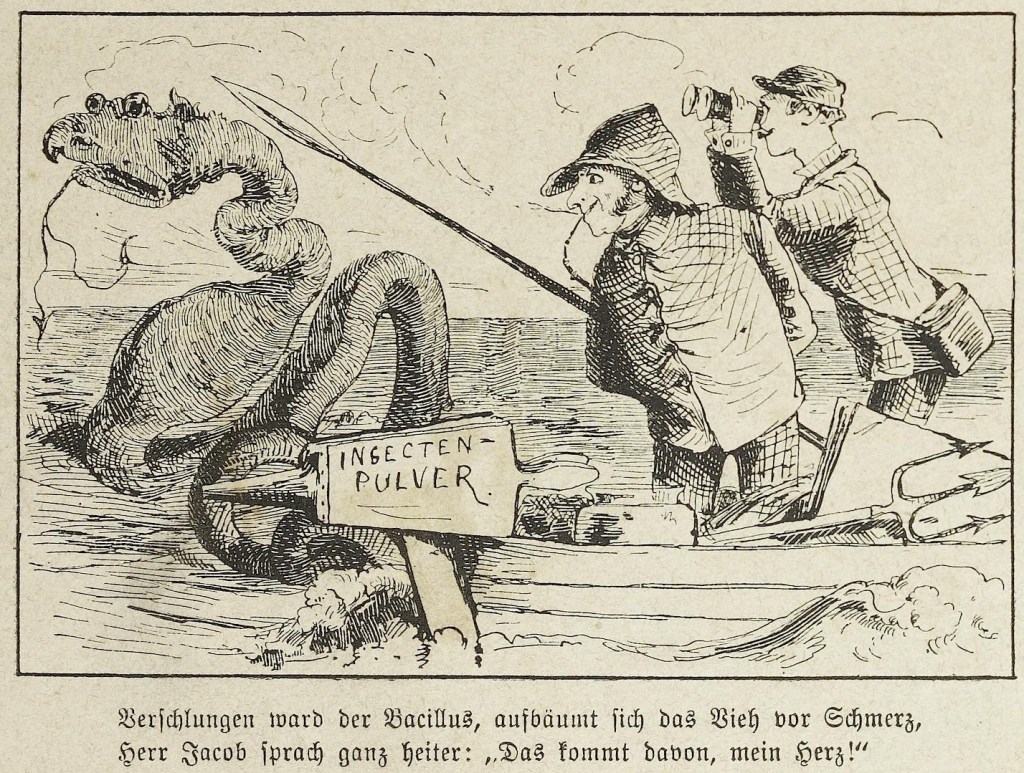
A saga from the early days of germ theory:
Mr. Jacob bravely set forth like St. George the Knight,
To kill the mythical creature in bloody grim spray.
(The boat is laden with cholera bacteria, opium pills, and bellows full of insect dust.)
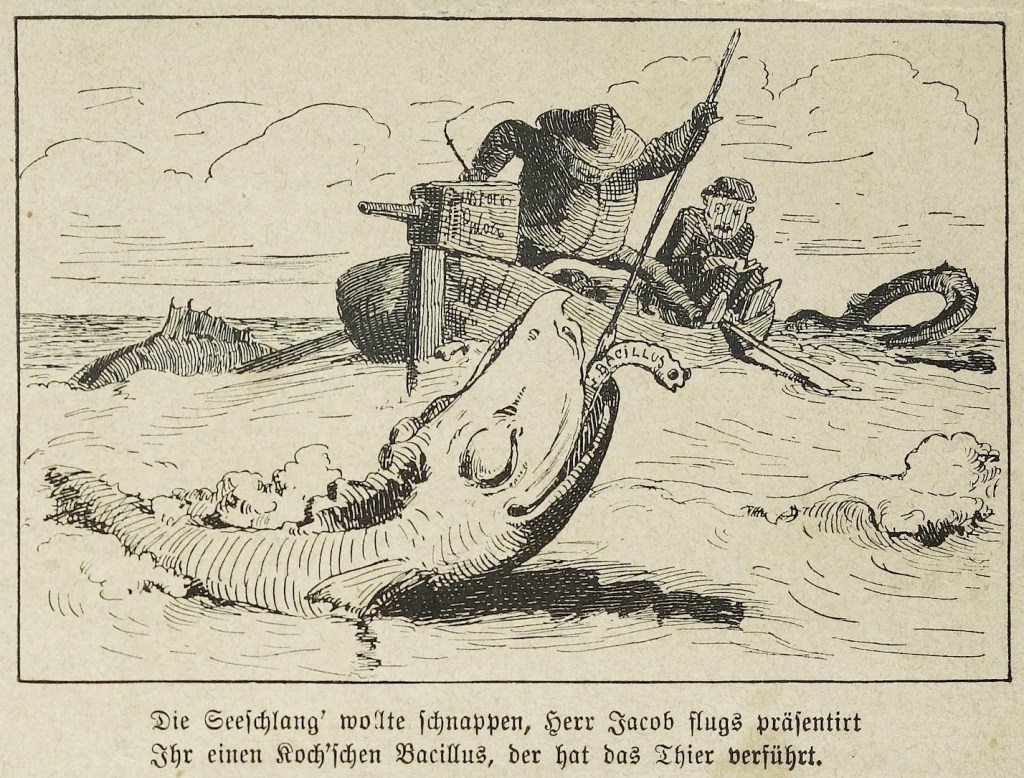
The sea serpent wanted to snap, Mr. Jacob speedily presented
a Koch bacillus to it, it had enticed the creature.
The bacillus was swallowed, the beast reared up in pain,
Mr. Jacob said quite merrily: “It comes from that, my dear!”
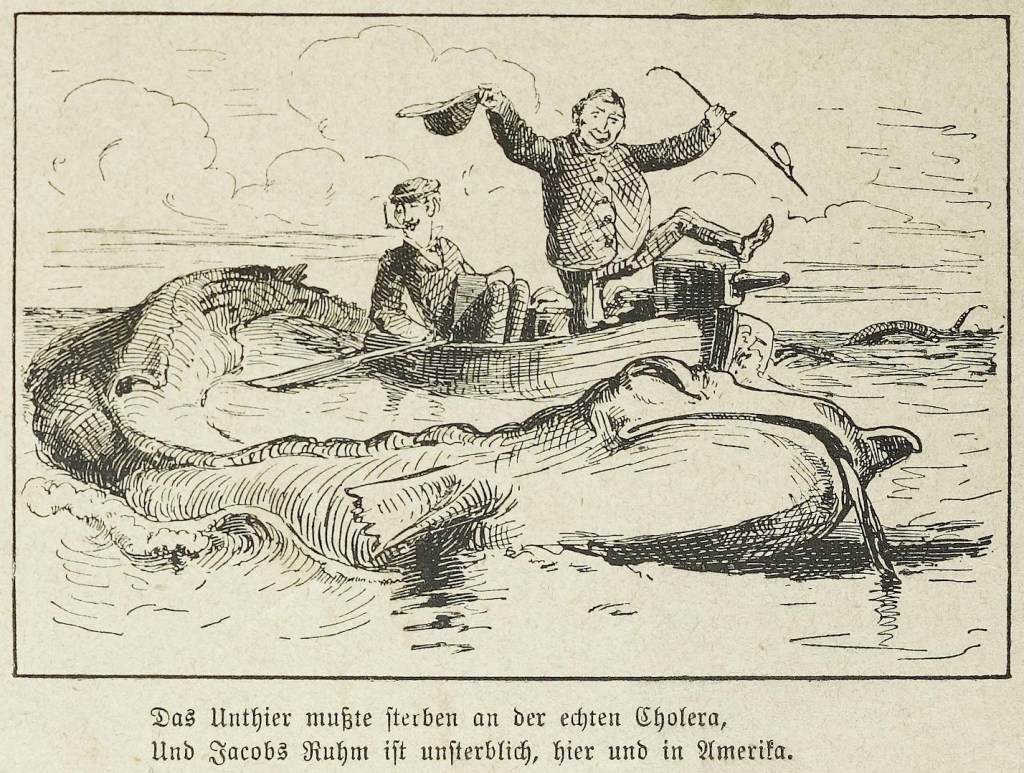
The monster had to die from real cholera,
And Jacob’s fame is immortal, here and in America.
(Der wahre Jacob, Stuttgart, 1884)
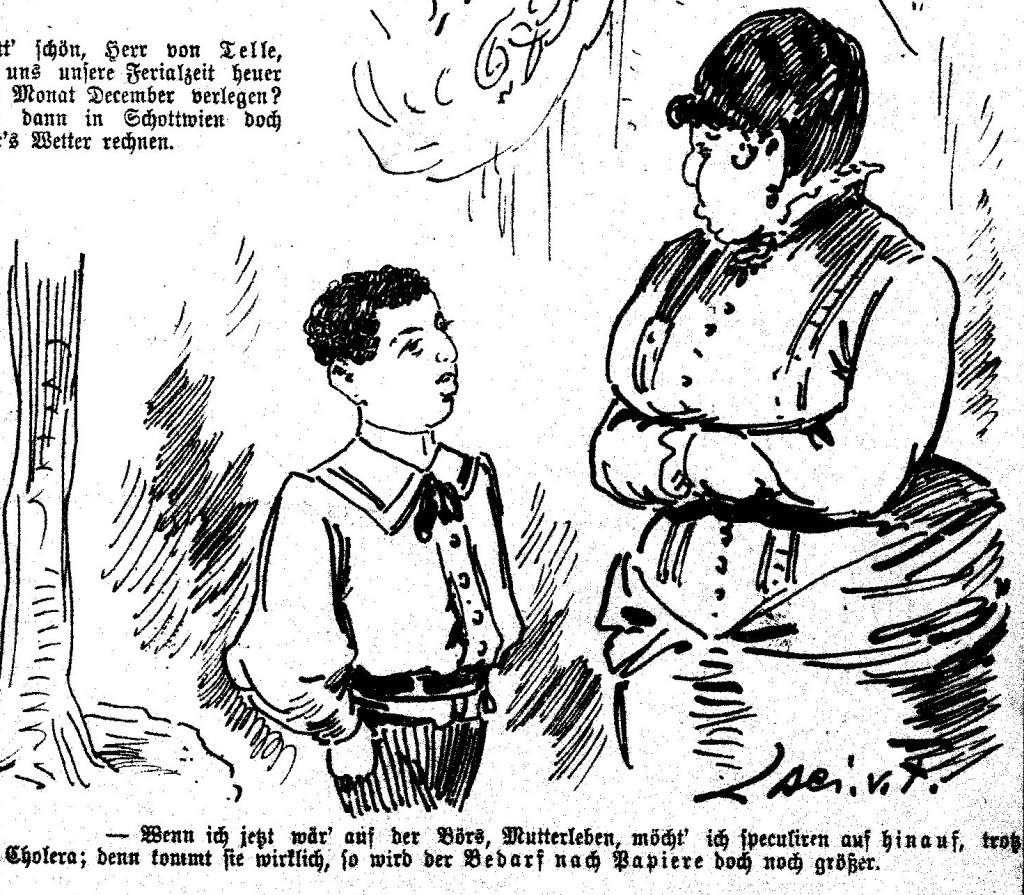
“If I were playing the stock market, mummy dearest, I would like to speculate, despite cholera, for when it really comes, the demand for paper goods will surely be even greater.” (No bonus points for noting the unsubtle ethnic signaling here.)
(Die Bombe, Vienna, 1884)
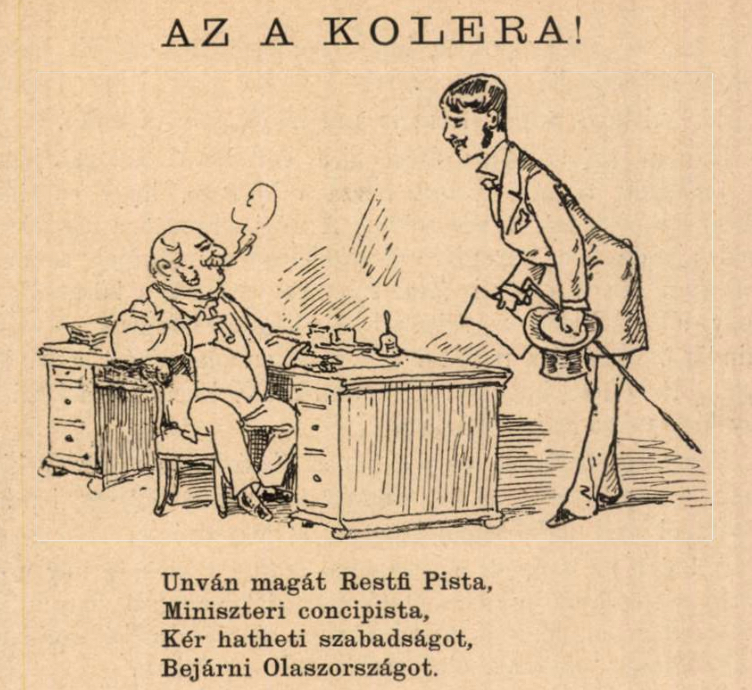
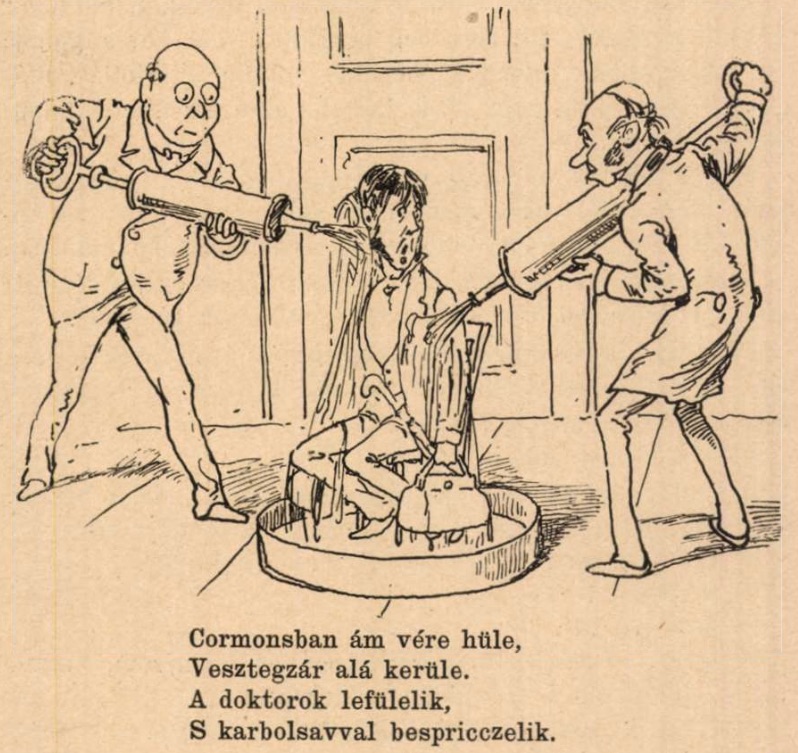
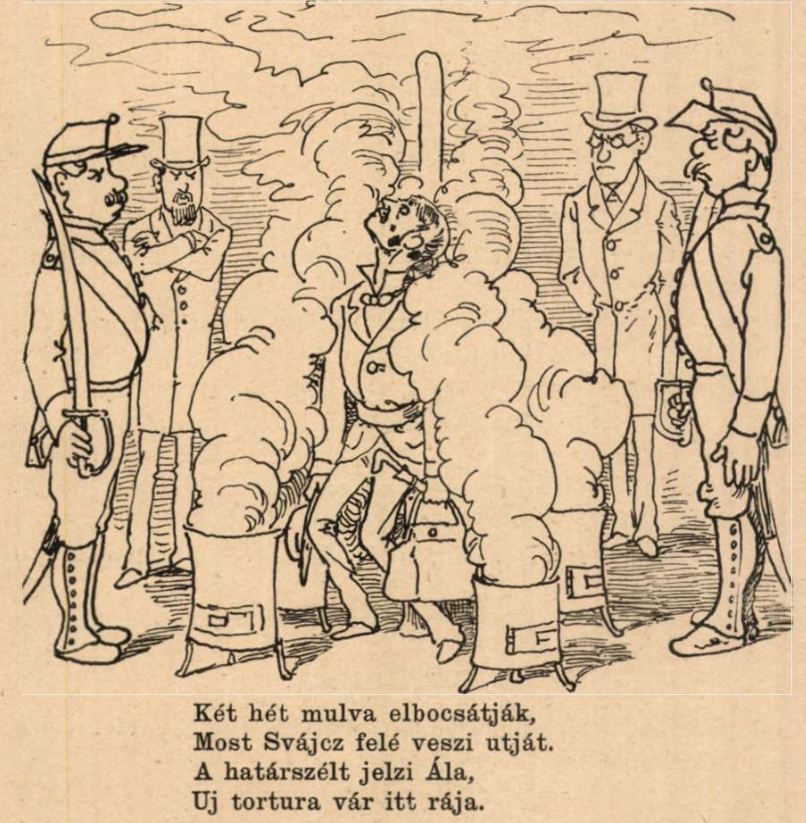
Ballad of the Hungarian ministerial aide who begs leave to visit Italy, suffers the indignities of quarantine and spritzes of carbolic acid, then continues to the Swiss border to experience new tortures.
(Bolond Istók, Budapest, 1884)
 Sic Transit Pestilentia