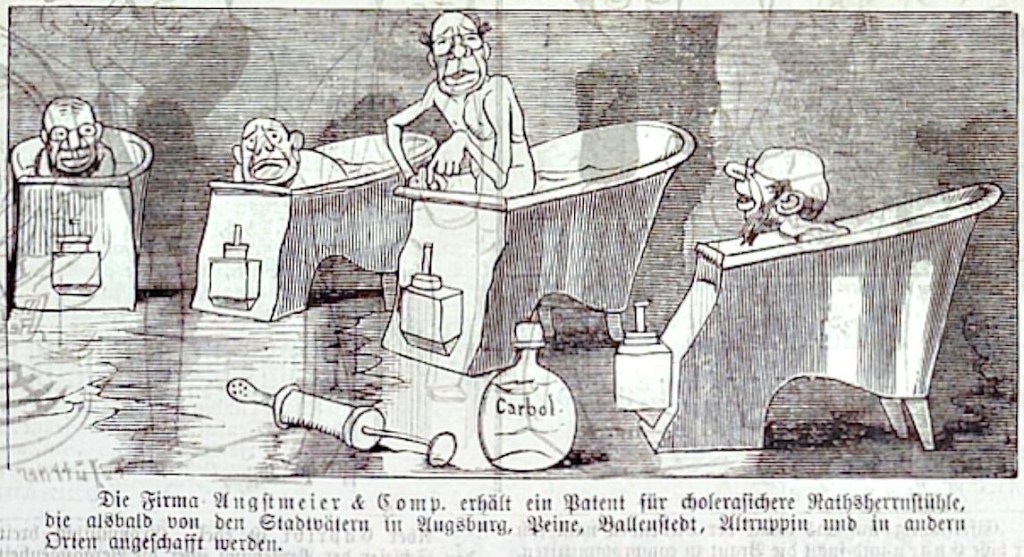
The firm Angstmeier & Co. holds a patent for cholera-safe aldermen’s chairs that will shortly be purchased by the city fathers in Augsburg, Peine, Ballenstedt, Altruppin, and in other locales. (Kladderadatsch, Berlin, 1892) (Note the familiar clystère theme.)
“It’s strange how such a tiny bacillus can keep such a big guy like me in a constant state of agitation…” (Kladderadatsch, Berlin, 1892) (My first instinct is that this supposed to be a Russian peasant, but when you look at the “comma bacilli” of cholera, it’s not entirely clear who is being represented. In any event I wouldn’t wager that the figures with crowns are Tsar Nicholas II, and some have top hats.)
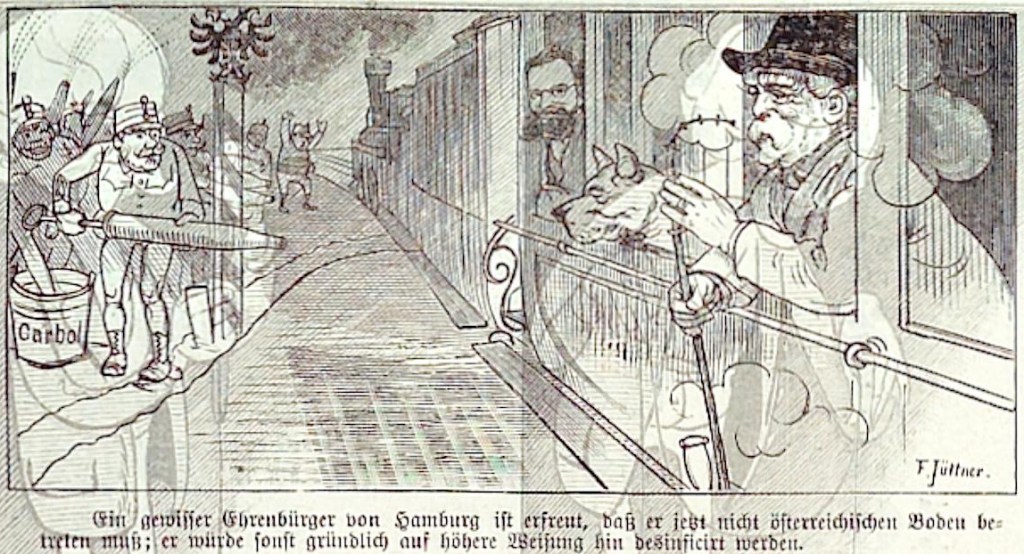
A certain honorary citizen from Hamburg [site of the last major cholera outbreak in Germany] is gratified that he now does not have to set foot on Austrian soil; otherwise he would have been thoroughly disinfected upon instructions from higher up. (Kladderadatsch, Berlin, 1892)
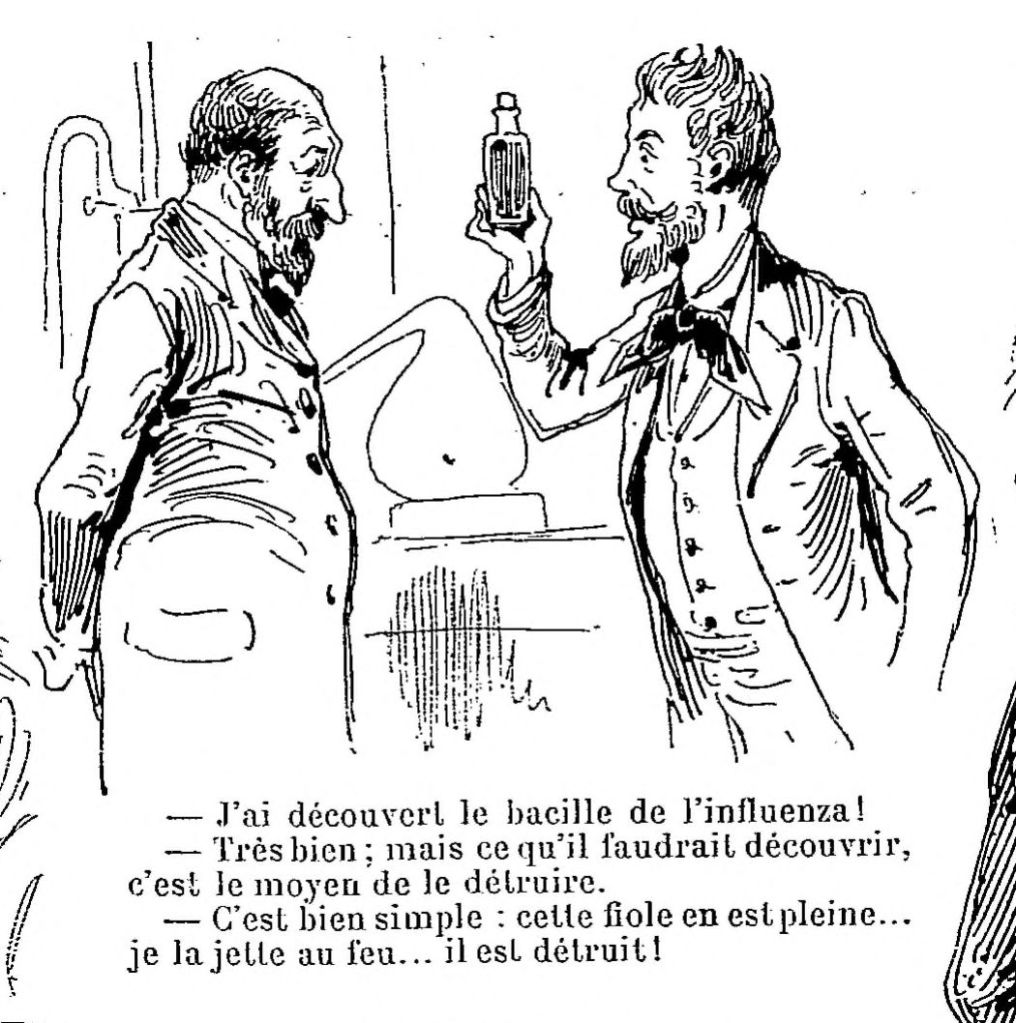
“I’ve discovered the influenza bacillus!” “Very good; but what needed to be discovered is the means to destroy it.” “It’s very simple: this vial is full… I throw it into the fire… it is destroyed!” (Le Journal amusant, Paris, 1892)
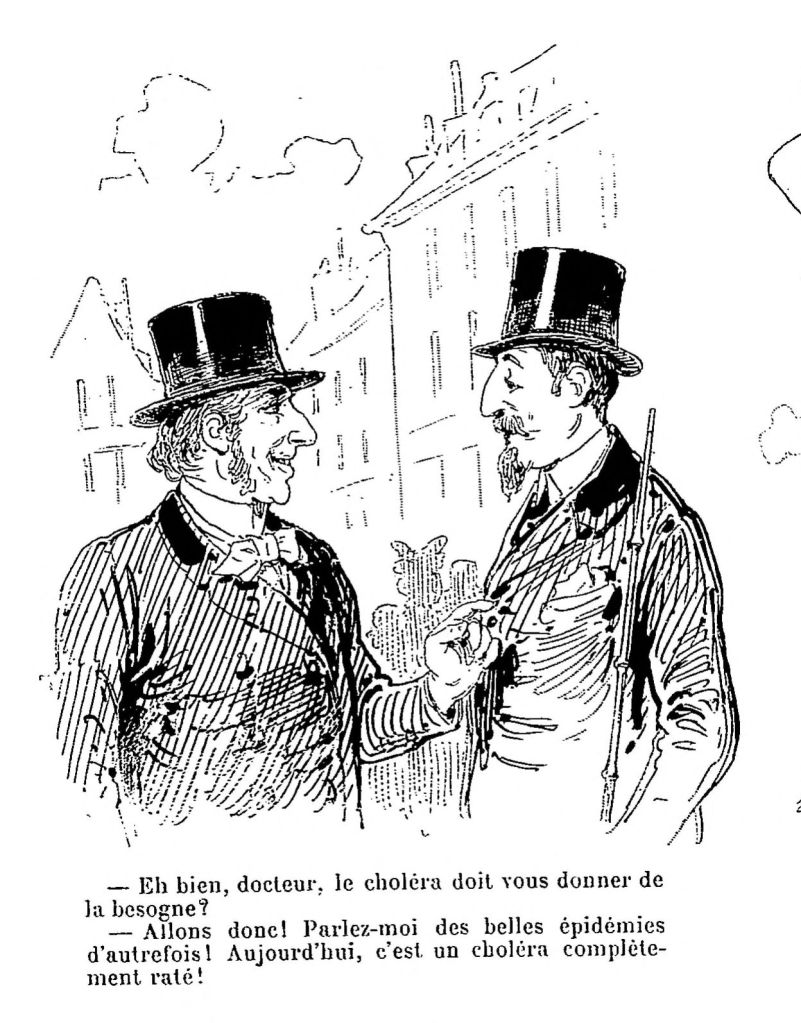
“Well, doctor, the cholera must be making work for you?” “Come on! Tell me about the beautiful epidemics of yesteryear! Today it’s a completely failed cholera!” (Le Journal amusant, Paris, 1892)
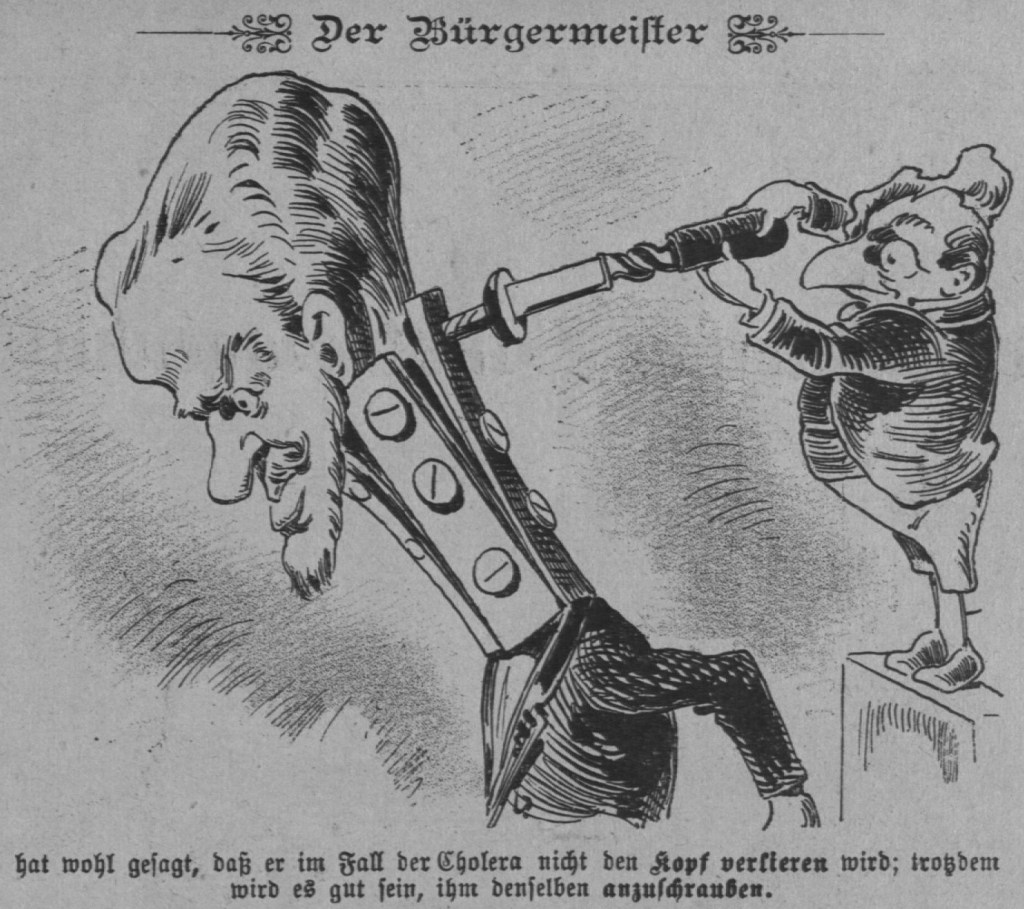
Johann Prix, b. 1836, member of the Progressive Party; presided over the legal expansion of the Vienna municipality. “The major did say that he would not lose his head in case of cholera; it would nonetheless be good to tighten his screws.” (Kikeriki, Vienna, 1892)
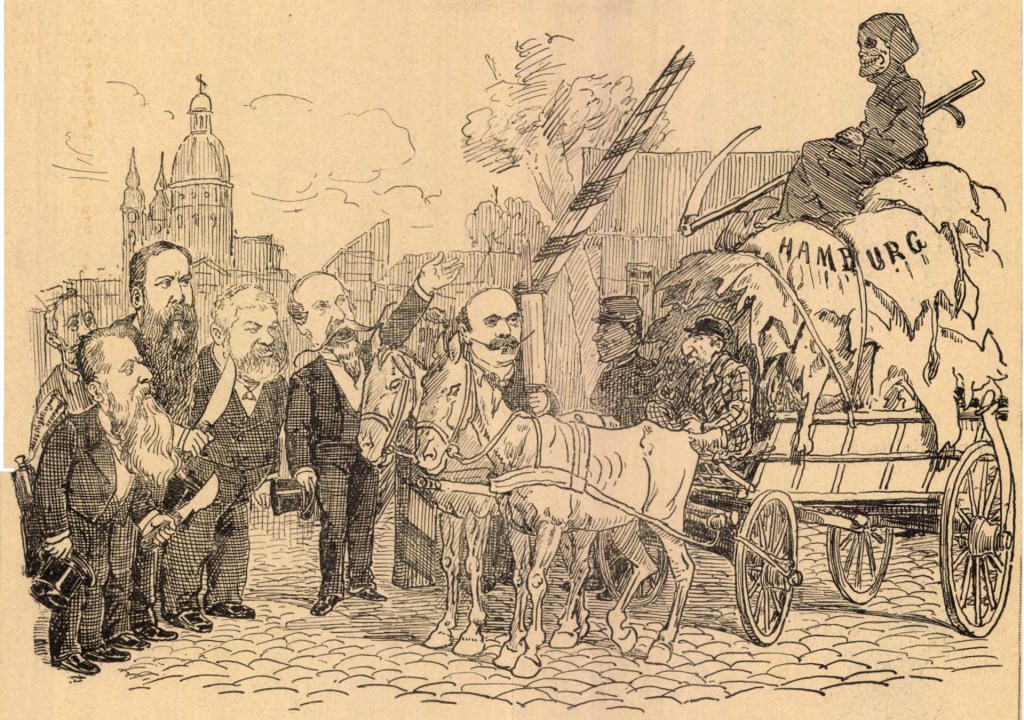
or, Hamburg wines in Budapest, or, the brilliant march of Cholera into the capital city. (This comic exchange is littered with malapropisms that I have doubtless failed to convey properly, but the arrival of cholera from Hamburg in 1892 played into Budapest municipal politics in complex ways. The city was growing extremely rapidly and becoming more Hungarian in the process, but German-speaking burghers still played important mediating roles, and they are the main object of satire here.) Mr. Finances: “Halt! Vere do your horsehides come from, Schlesinger?” Schlesinger [caricatured here as Jewish]: “Vere vould zey come from if not Hamburg?” Mr. Finances: “Then you won’t be held up!… Let him pass!…” Dr. Müller: “St. Roch, in the name of public health! I forbid it!” Dr. Farkas: “They are importing cholera germs. It is forbidden!” Dr. Csatáry: “To battle against cholera! Down with the horsehides! In particular, Dr. Schwimmer will make a declaration next to the horsehides in his capacity as dermatologist!” Dr. Farkas: “Quite so! And Dr. Krebs as the head of the emergency services association will find it desirable to create a situation where he has to save everyone!” Dr. Gebehart: “The question is, is it true that it comes from Asia? Isn’t it just a forged thing, this cholera? It ought to be done here!” District mayor Gerlóczy: “Quite so, it ought to be eaten here! Organize a capital city banquet in honor of cholera!” Monsignor Mayor Ráth: “Deeply respected Madame Cholera! Welcome, we did not expect you! You are most welcome within the visitor-friendly walls of the capital city, you should feel right at home among us, so that you may be our constant good fortune. We also hope that you will be satisfied with the precautionary measures we have taken in receiving your eminence. May the god who is kind feed our high guest to the very limits of the human age!” (Noisy cheering. Harnessing the horses, the eastern guest is solemnly drawn to the town hall.) (Bolond Istók, Budapest, 1892)
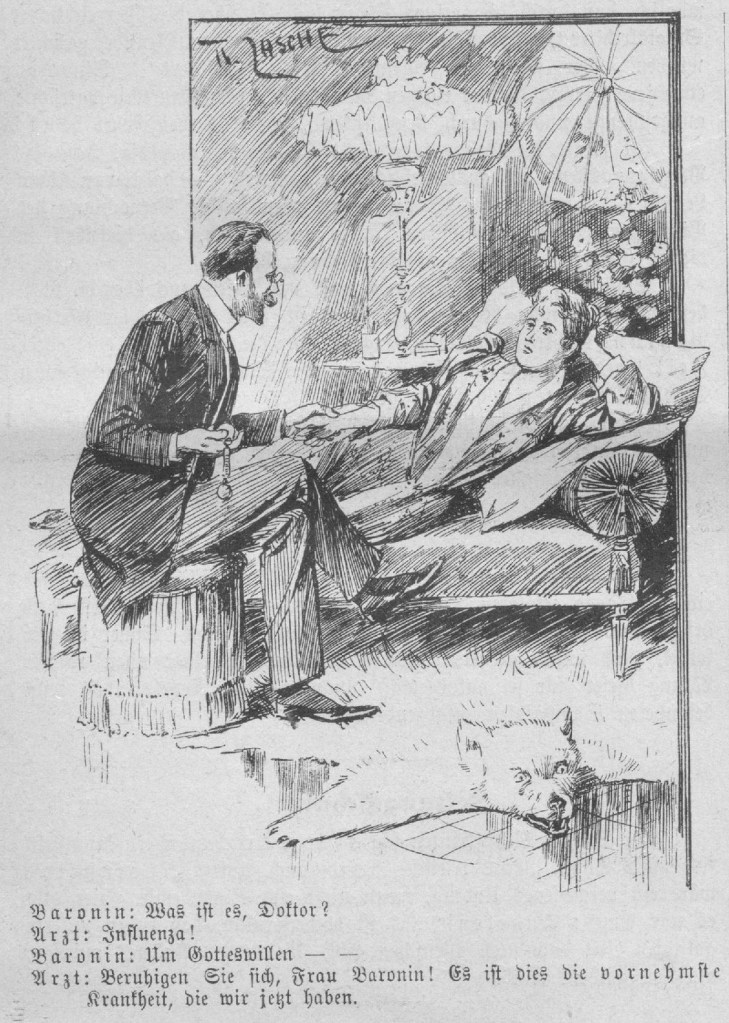
Baroness: “What is it, doctor?” Doctor: “Influenza!” Baroness: “Oh my goodness…” Doctor: “Calm yourself, Madame Baroness! This is the noblest illness there is right now!” (Figaro, Vienna, 1892)
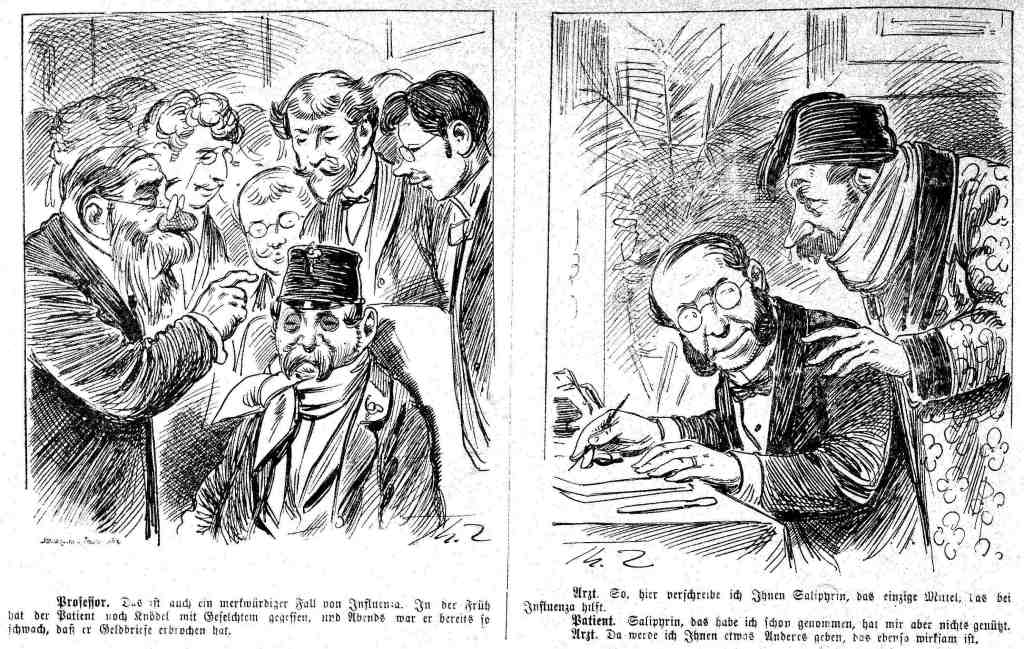
(left) Professor: This is also a remarkable case of influenza. In the morning he ate dumplings with smoked meat, and in the evening he was already so weak that he broke money orders. (right) Physician: OK, I’m prescribing you Salipyrin, the only remedy that helps with influenza. Patient: Salipyrin, I’ve already taken that, but it was no use to me. Physician: Then I’ll give you something else that is just as effective. (Der Floh, Vienna, 1892)
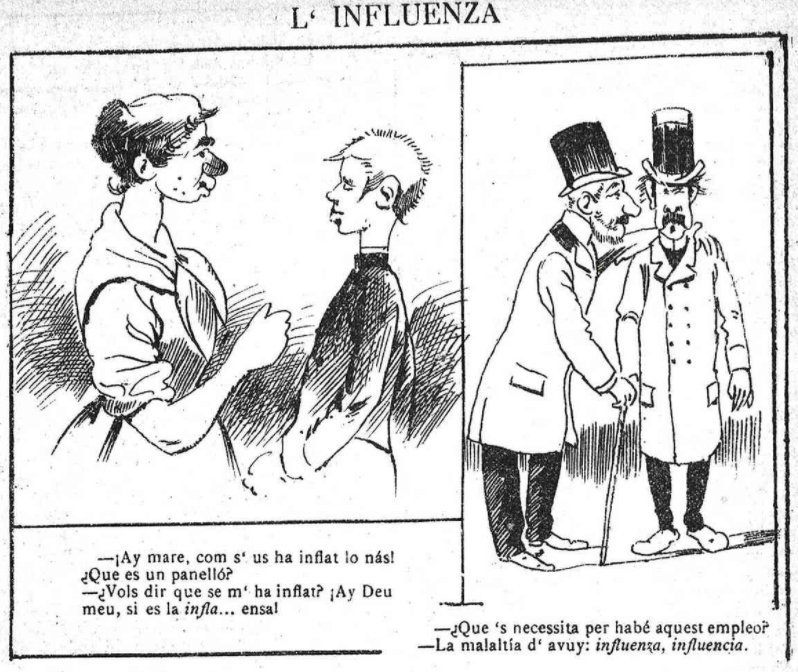
First panel: “Oh mother, how your nose is swollen! Is it chilblains?” “You mean, it’s inflated? Oh my God, if it’s the infla…enza!” Second panel: “What’s needed for this job?” “The disease of the day: influenza, influence.” (La Tomasa, Barcelona, 1892)
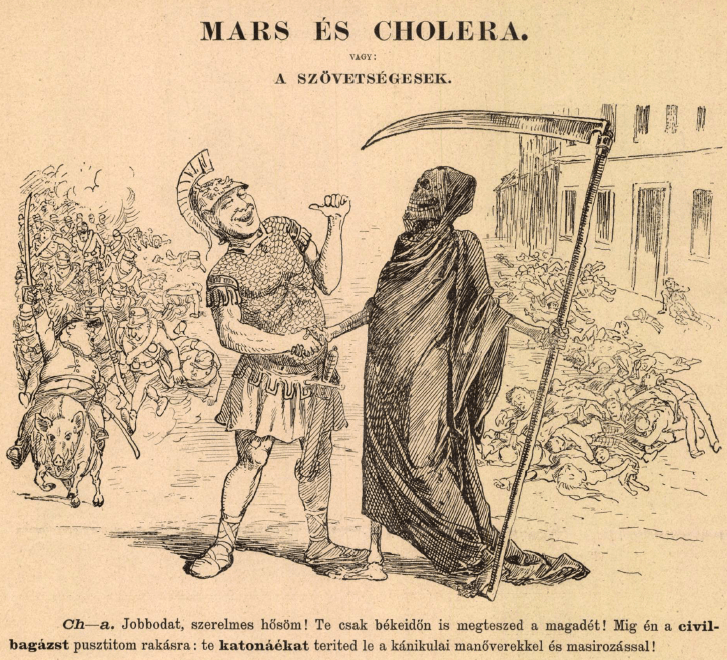
Or: Allies. Cholera. I yield to you, my beloved hero! You only do your thing in peacetime! Whereas I destroy the civilian luggage, you prostrate your soldiers with heatwave maneuvers and marching! (Bolond Istók, Budapest, 1892)
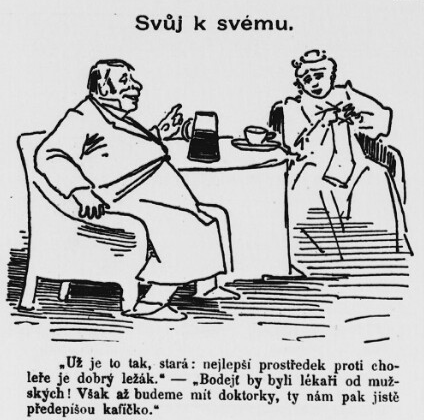
“That’s right, old girl: the best remedy for cholera is a good lager.” “That would be coming from male doctors! But when we have female physicians, they will surely prescribe us coffee.” (Humoristické listy, Prague, 1892)
“Listen, overseer: since my son got his medical degree yesterday, let the tenants know that I am adding a dozen crowns to all their rents; because when cholera really breaks out, it’s a great advantage to have a doctor in the house.” (Humoristické listy, Prague, 1892)


 Sic Transit Pestilentia