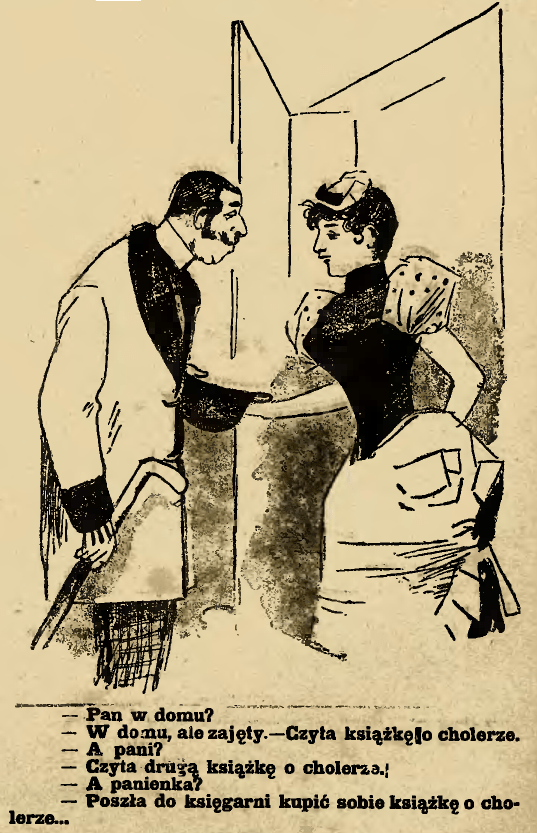
“Is the man of the house at home?” “He’s at home, but he’s busy. He’s reading a book about cholera.” “And the lady?” “She’s reading another book about cholera.” “And mademoiselle?” “I’m off to the bookstore to buy myself a book about cholera…” (Mucha, Warsaw, 1892)
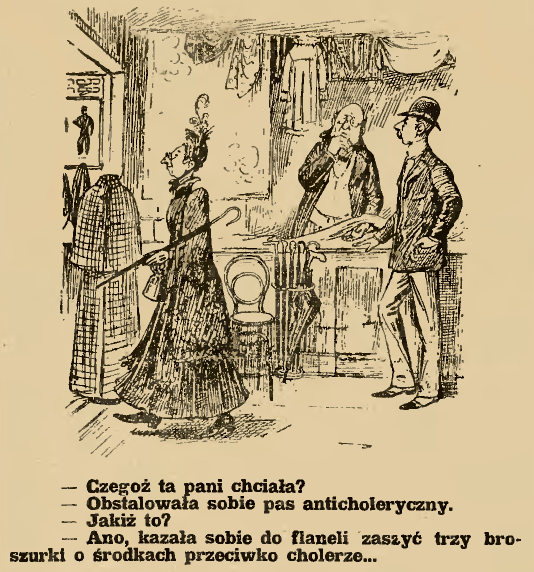
“What did that lady want?” “She arranged for an anti-cholera waistband.” “What is that?” “Well, she ordered three brochures on anti-cholera measures sewn into the fabric…” (Mucha, Warsaw, 1892)
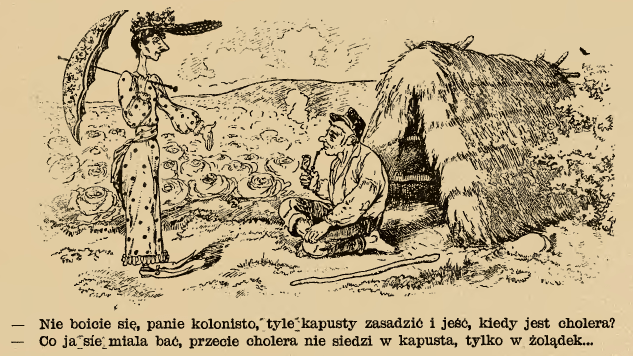
“Mr. Settler, aren’t you afraid to plant and eat so much cabbage when there is cholera?” “What do I have to fear, after all cholera is not in the cabbage, but in the stomach…” (Mucha, Warsaw, 1892)
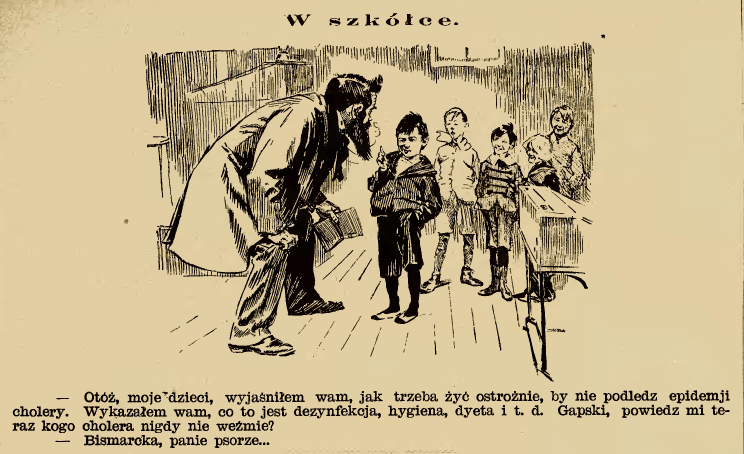
“Well, my children, I explained to you how to live carefully so as not to be subject to the cholera epidemic. I showed you what disinfection, hygiene, diet, and so on are. Gapski, tell me who the cholera will never take?” “Bismarck, sir…” (Mucha, Warsaw, 1892)
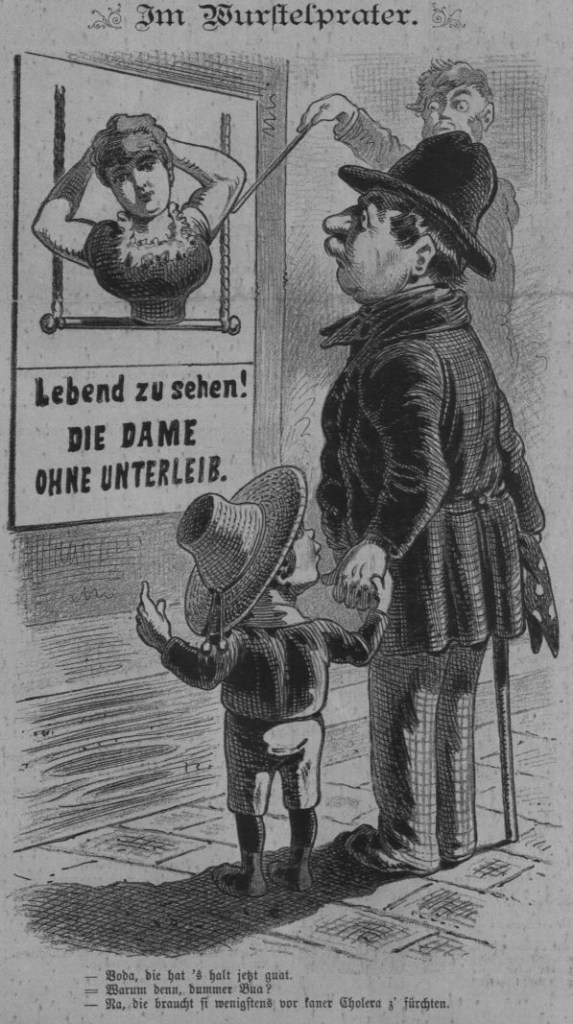
This may be the weirdest cartoon in the entire collection, yet once you know about the intestinal agonies experienced by cholera victims, the child’s observation somehow seems very relatable.
Carnival poster: See her live! The lady with no lower abdomen.
Little boy: “Boda, she must have it good now.” “Why, foolish boy?” “Well, at least she doesn’t have to be afraid of any cholera.” (Kikeriki, Vienna, 1892)
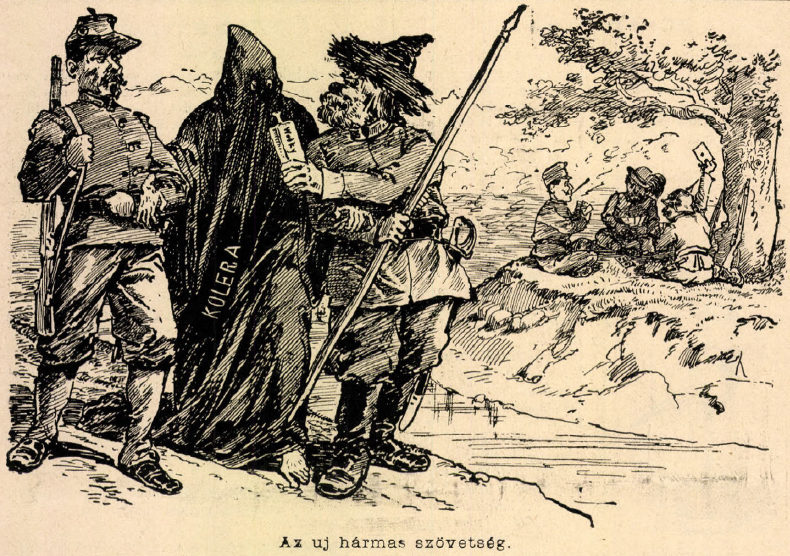
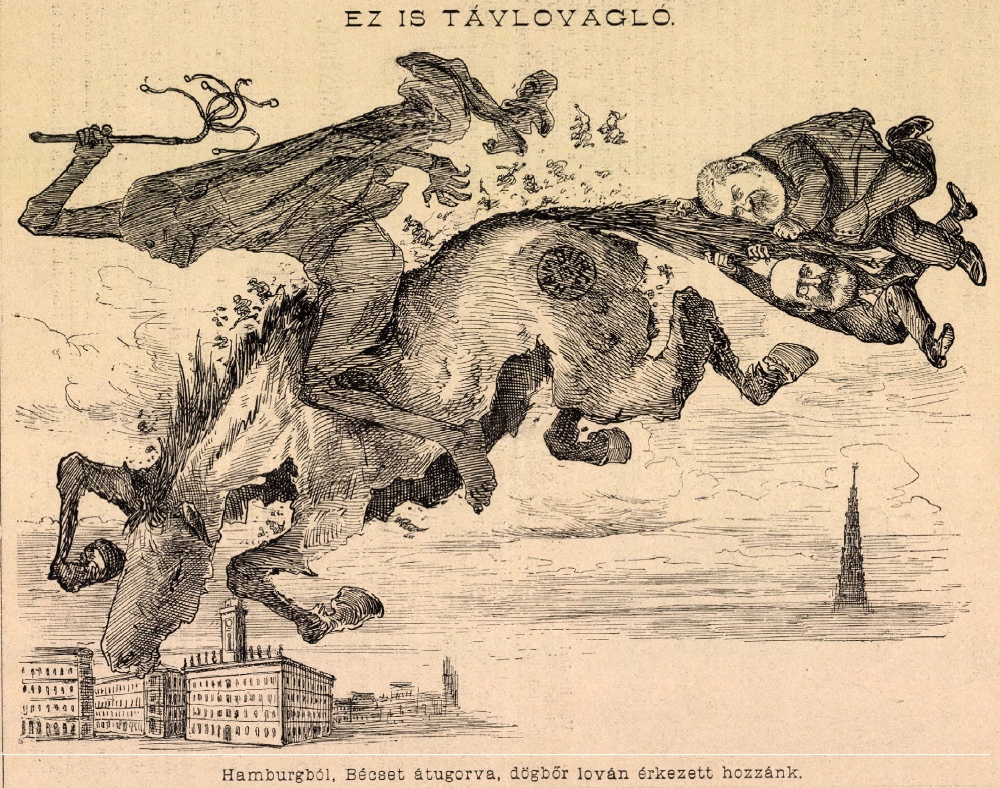
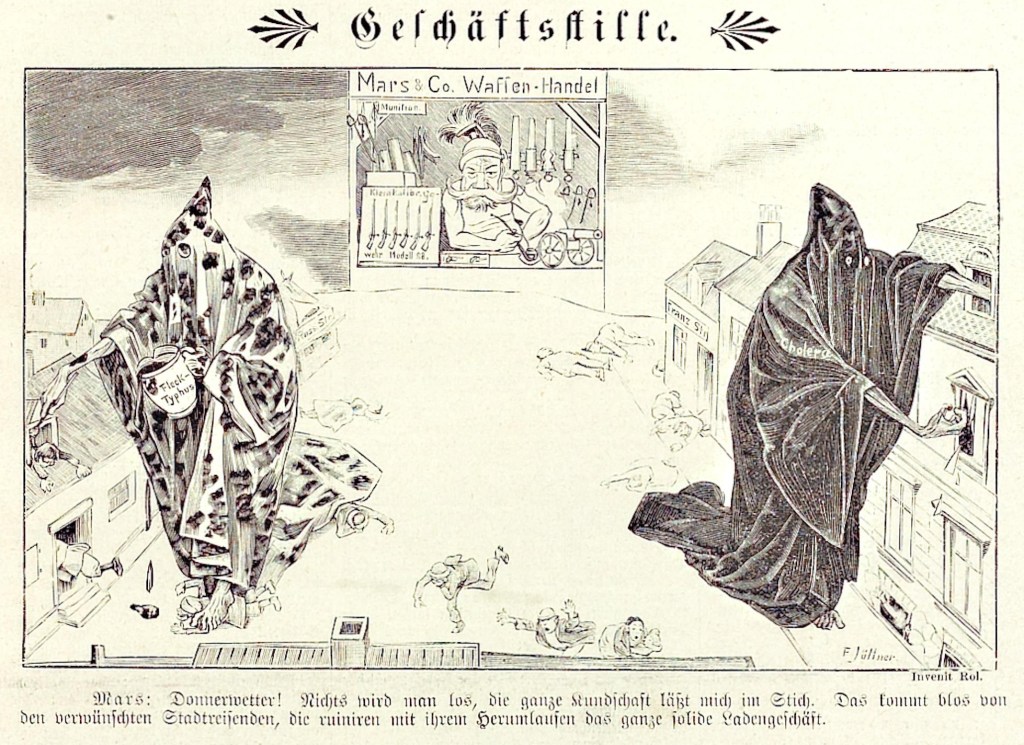
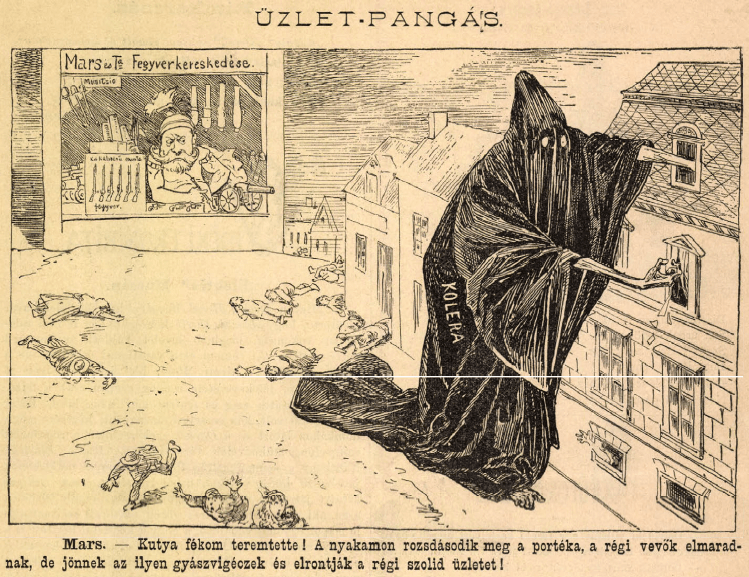
These two cartoons were published in quick succession as the cholera epidemic worsened in 1892, first in May in Germany, then in July in Hungary. Note what the Hungarian version leaves out, though it is nearly a copy of the German original.
Mars & Co. Arms Dealers: “Darn it! Nothing is moving off the shelves, all my customers are leaving me in the lurch. It’s simply because of these accursed city travelers who are ruining a perfectly solid retail enterprise with their running around.” (Kladderadatsch, Berlin, 1892)
German cholera cartoon
Mars & Co. Arms Dealers: “Well, I declare! My wares are rusting around my neck, old customers are staying away, but these peddlers in mourning clothes come and ruin the old solid business!” (Borsszem Jankó, Budapest, 1892)
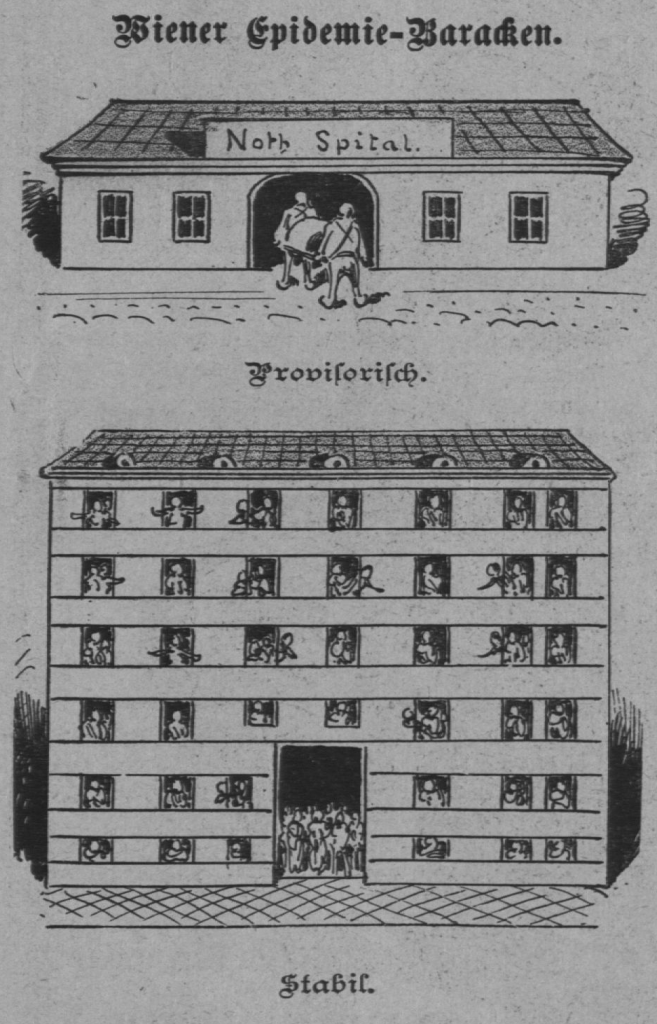
Provisional. Stable. (Kikeriki, Vienna, 1892) An adjacent story lists the epidemic illnesses then prevailing in the city: street-paving-disease; city-theater-Sunday-afternoon-performance-fever; stock-market-congestion with migraine effects and scenery-typhus; general-intestinal-contraction among small business as a consequence of great virulence of intermittent brokeness; prizewinning-Danube-dropsy; robbery-fear in the watchmaker association; acute tram-crowding; catalepsy of the greater Vienna roadworks commission; food-marasmus; cholera-comma-bacillus-mania.
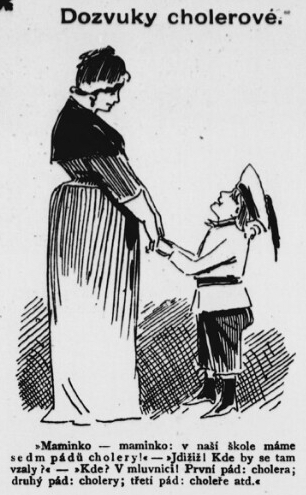
(This will make sense for those who appreciate grammatical cases in Slavic languages) “Mommy, mommy: we have seven cases of cholera in our school!” “Come now! Where did they all come from?” “Where? In grammar! First case: cholera [nom.]; second case: cholera [acc.]; third case: cholera [dat.], etc.” (Humoristické listy, Prague, 1892)
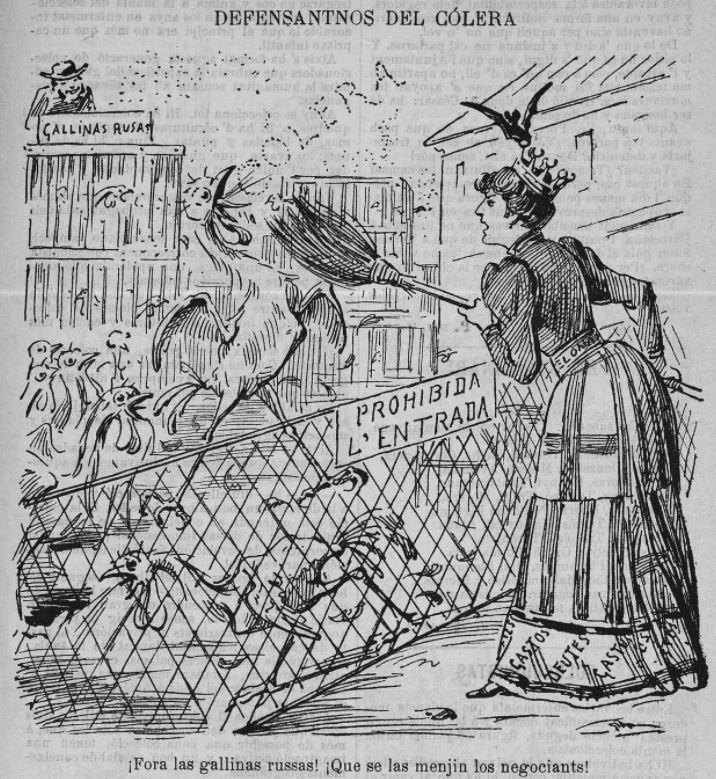
The Spanish monarchy guarding the “No entry” gate. “Out with the Russian chickens! Let the merchants handle them!” (I’m ignorant of the politics, but the dress has “debt expenses” stenciled on it, and we may presume that the state minimizing its role in fighting the cholera epidemic is being derided here.) (La Esquella de la torratxa, Barcelona, 1892)
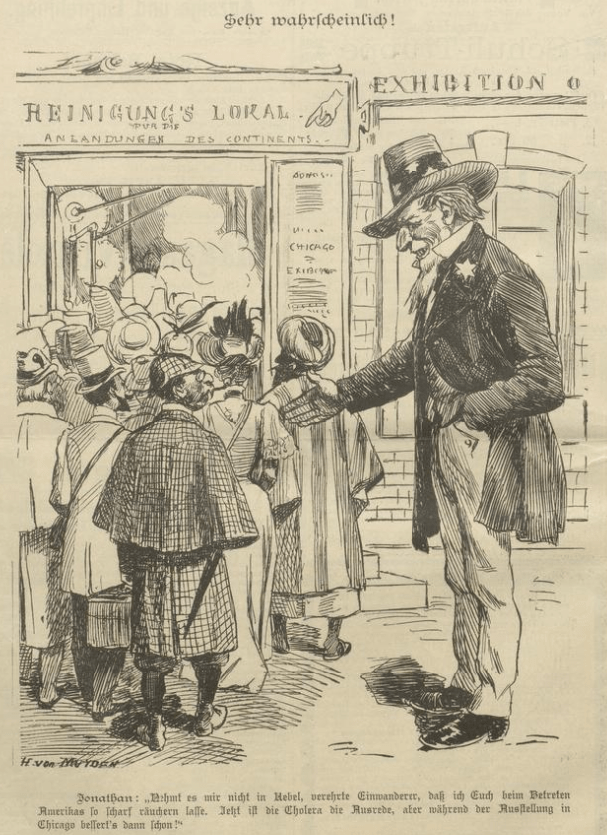
This was published shortly before the Chicago World’s Fair opened in 1893. Brother Jonathan [the icon did not fully stabilize under “Uncle Sam” until World War I]: “Don’t be angry with me, dear immigrants, for having you fumigated so severely as you enter America. Right now cholera is the excuse, but then it will improve during the exhibition in Chicago!” (Nebelspalter, Zurich, 1892)
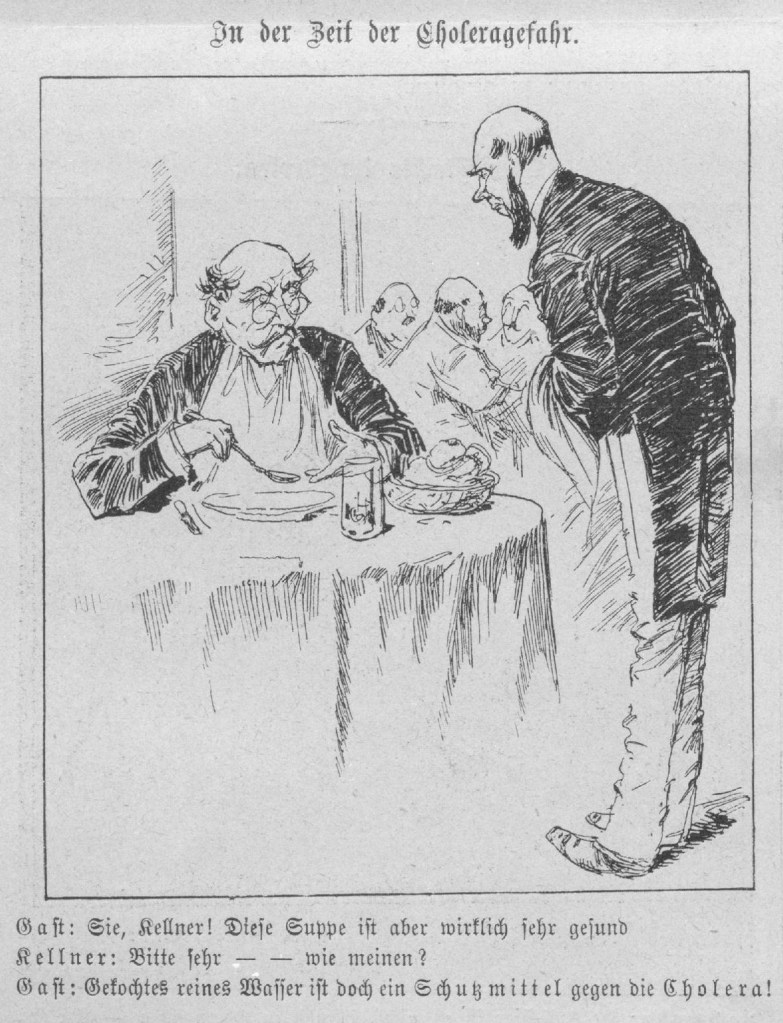
Guest: “Waiter! This soup is really very healthy.” Waiter: “You’re welcome — how do you mean?” Guest: “Pure boiled water is a prophylactic against cholera!” (Figaro, Vienna, 1892)
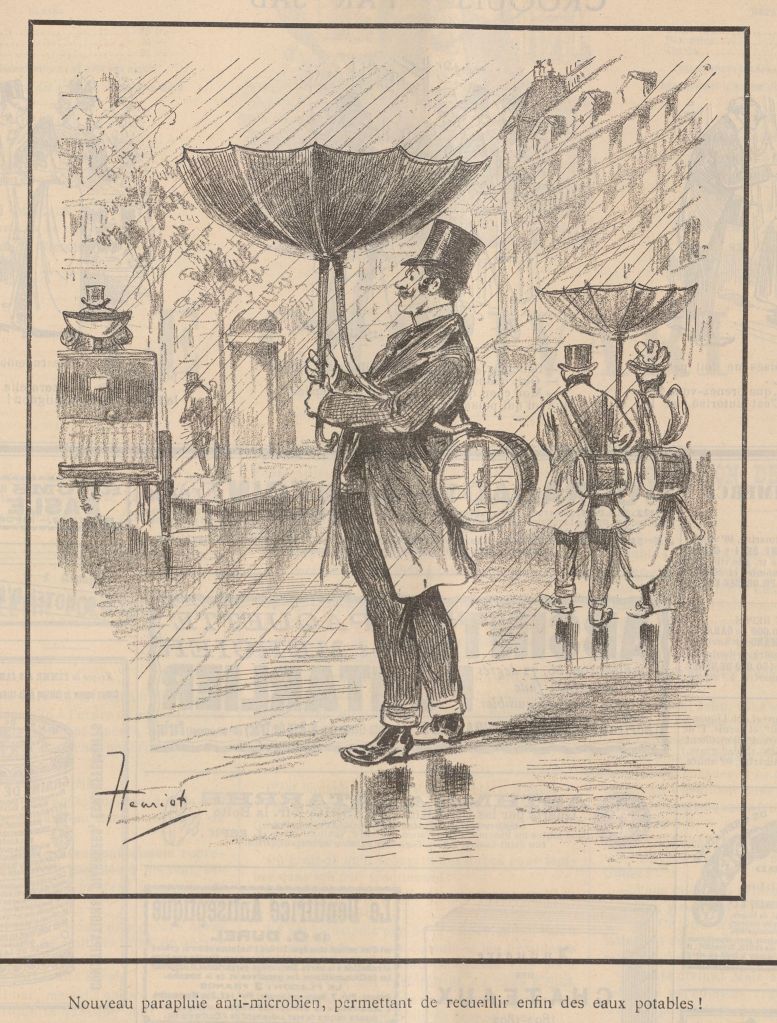
 Sic Transit Pestilentia