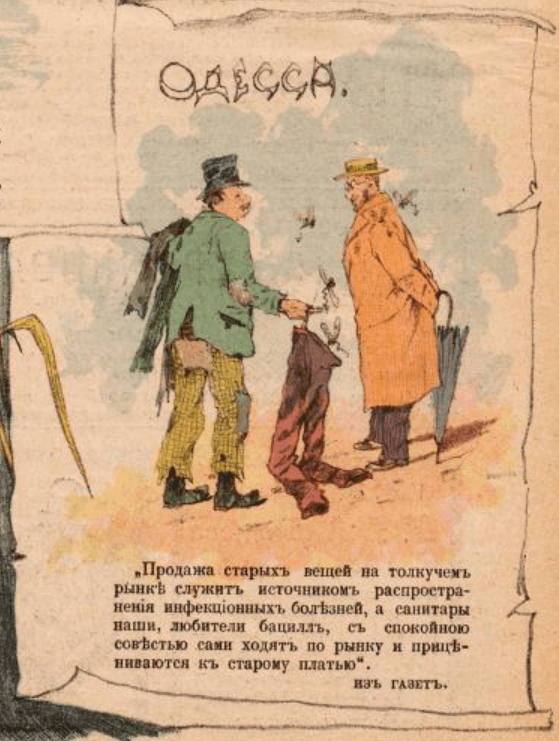
From the newspapers: “The sale of old items at the flea market is a source of the spread of infectious diseases, yet our public health workers, these lovers of bacilli, themselves frequent the market with clean conscience and ask about the price of old clothes.” (Razvlechenie, Moscow, 1897)
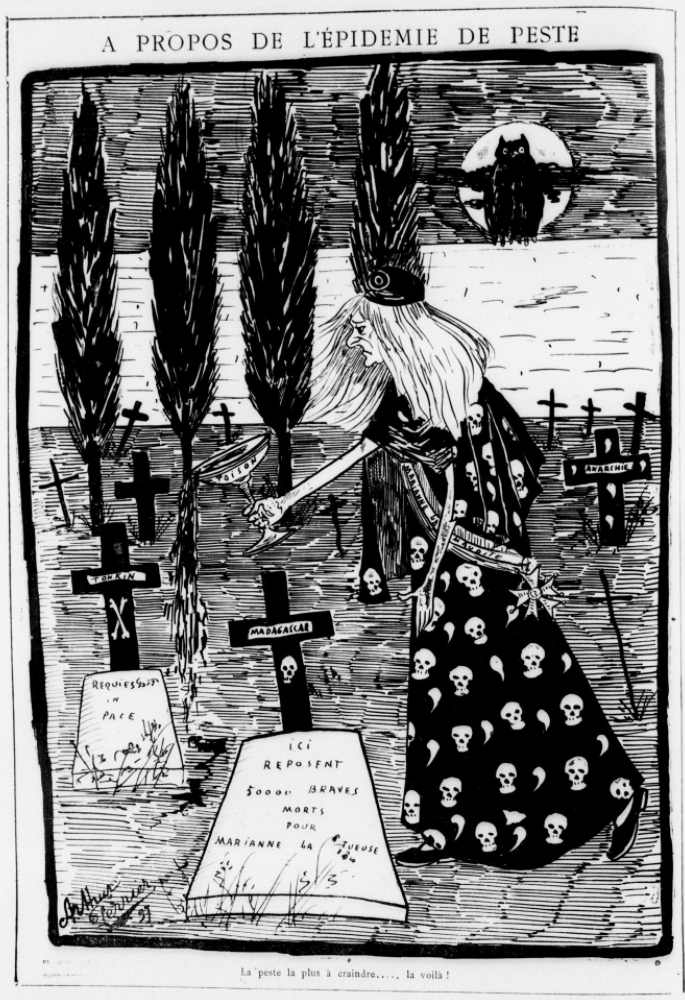
“The plague to fear the most… here it is!” (The woman’s sash reads “Marianne the cursed,” and given the tombstones, this seems like a gesture toward the costs of French colonialism. In 1897 there was news of an outbreak of plague in India, sparking fears that it would make an appearance in Europe. The tenth international sanitary conference was held in Venice that same year, devoted to discussion of bubonic plague.) (Le Triboulet, Paris, 1897)
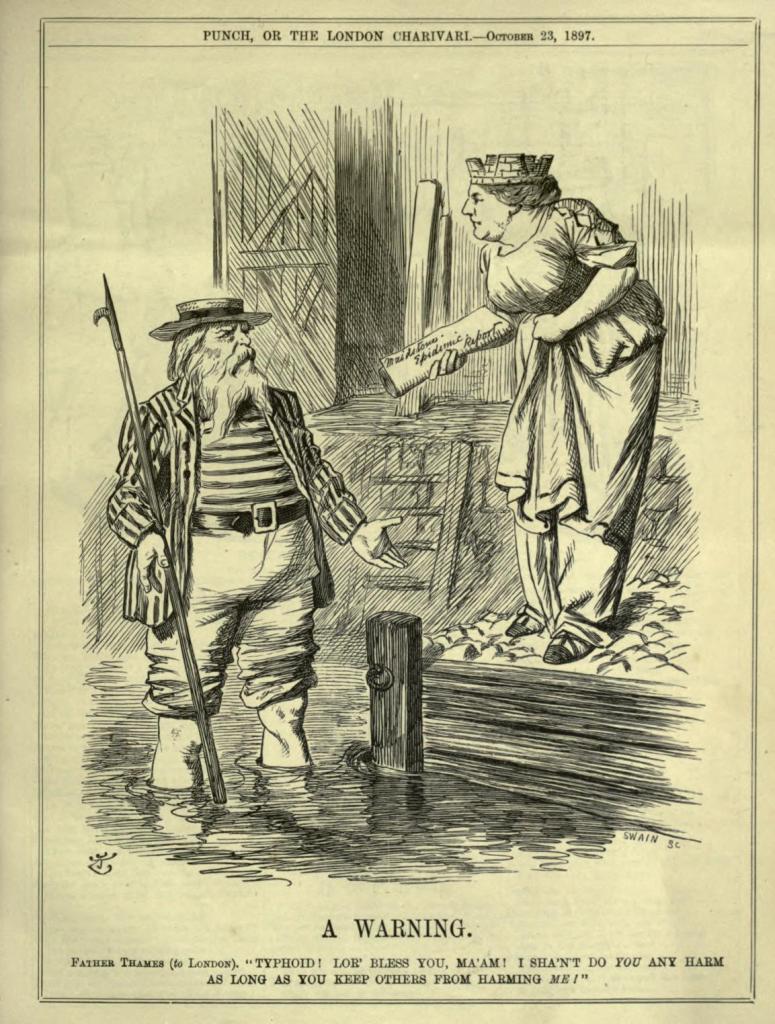
Father Thames (to London): “Typhoid! Lor’ bless you, ma’am! I shan’t do you any harm as long as you keep others from harming me!”
The Maidstone Epidemic Report in the hand of Lady London followed upon an outbreak of typhoid fever in Kent in September 1897 that eventually cost more than a hundred lives. The commission reporting on the causes of the epidemic found fault in the provision of water services by the Maidstone Company, in violation of the Public Health Act of 1878. The outbreak prompted an early successful experiment with immunization among nurses at a local hospital, according to this history. (Punch, London, 1897)
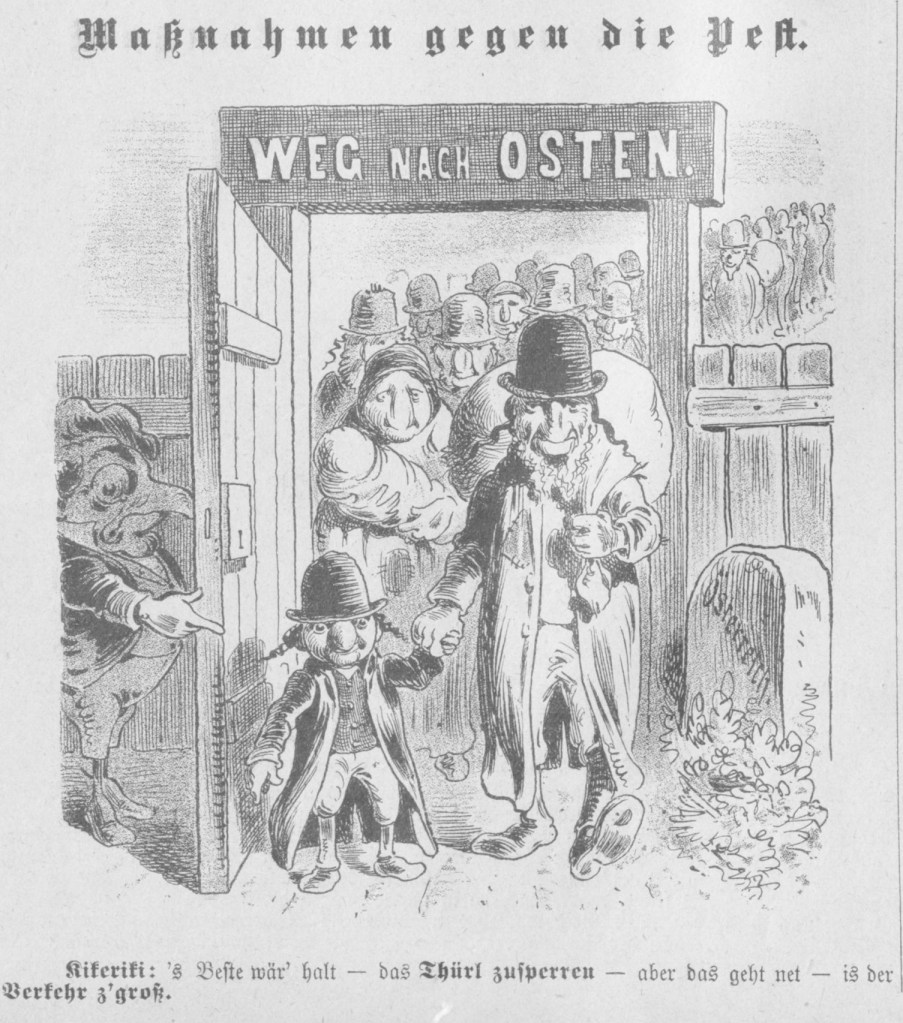
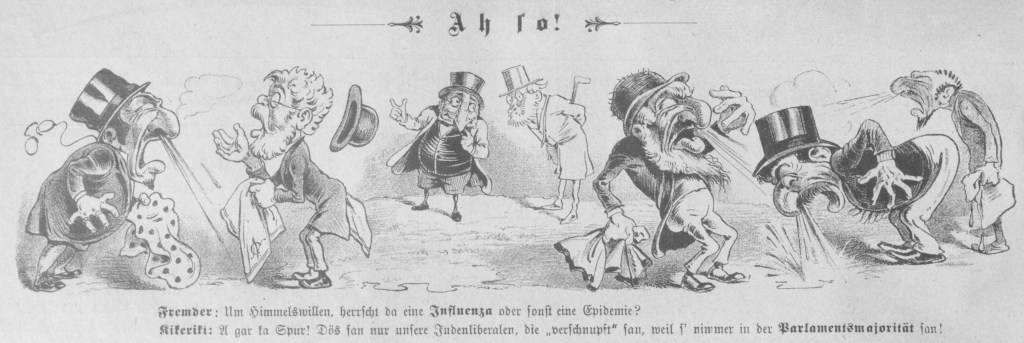
It may not feature much in this pandemic-themed archive, but it is worth pausing to acknowledge the relentless anti-Semitism of the Viennese satirical journal Kikeriki. In 1897 there was news of an outbreak of plague in India, sparking fears that it would make an appearance in Europe. The tenth international sanitary conference was held in Venice that same year, devoted to discussion of bubonic plague.
Entitled “Measures against the plague,” the cartoon depicts a gate into Austria with a sign above it: “The way to the East.” Kikeriki: “The best thing would be to lock the doors, but that won’t do, the traffic is too large.” (Kikeriki, Vienna, 1897)
An uncomfortable reminder of the prevalent anti-Semitism in Vienna at the fin-de-siècle. Stranger: “For heaven’s sake, does an influenza prevail there or some other kind of epidemic?” Kikeriki: “Not a trace! This is only coming from our Jewish-Liberals, who are “sniffing” in irritation because they’re never in the parliamentary majority!” (Kikeriki, Vienna, 1897)
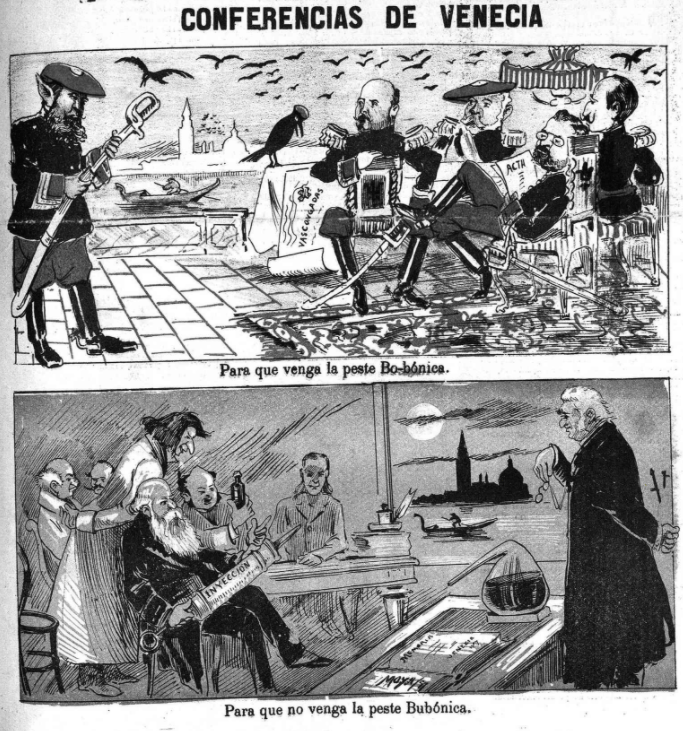
1) So that the plague of fools comes. [something to do with the need to negotiate with the Basque Provinces] 2) So that the bubonic plague does not come. [The tenth international sanitary conference was held in Venice this year, and devoted to discussion of bubonic plague.] (Gedeón, Madrid, 1897)
 Sic Transit Pestilentia