Doctor: “Your ailment isn’t really all that dangerous — but three out of every ten people still die from it!”
Patient: “Pardon, Doctor, are the three already dead?”
(Fliegende Blätter, 1904)
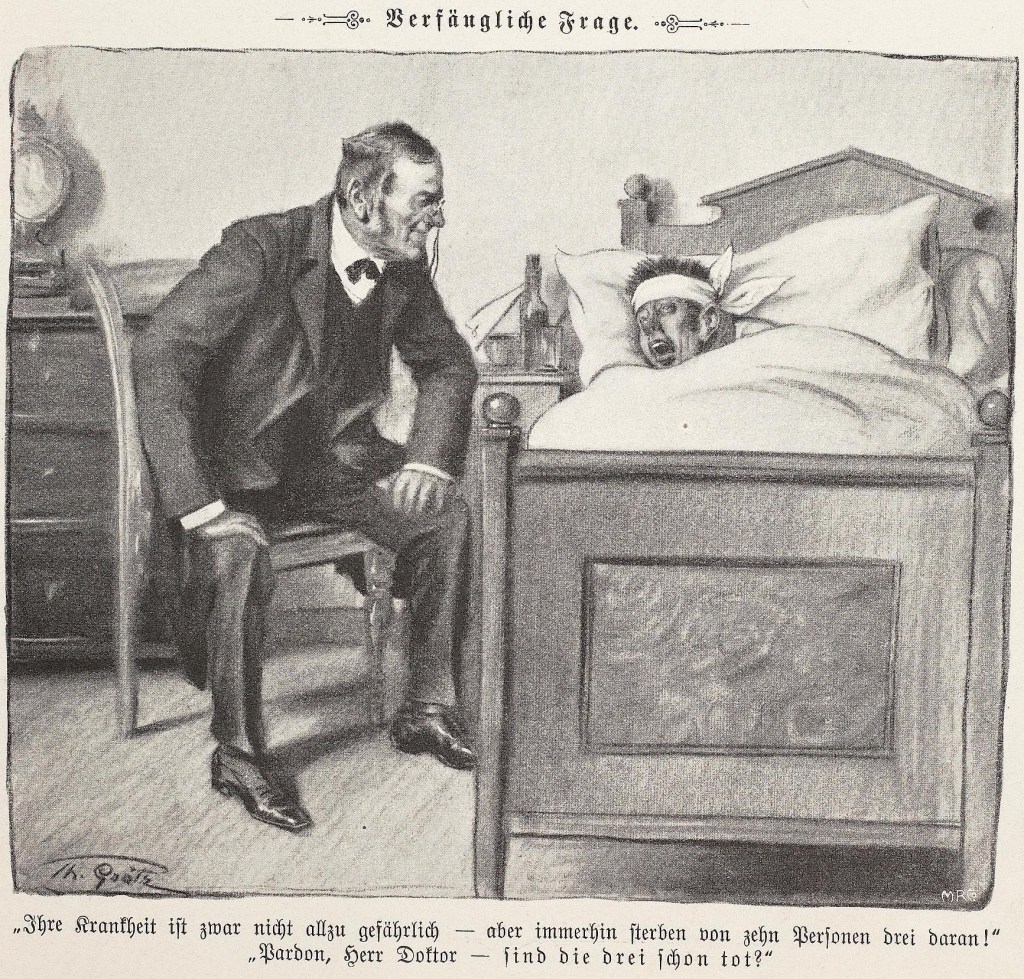
Doctor: “Your ailment isn’t really all that dangerous — but three out of every ten people still die from it!”
Patient: “Pardon, Doctor, are the three already dead?”
(Fliegende Blätter, 1904)
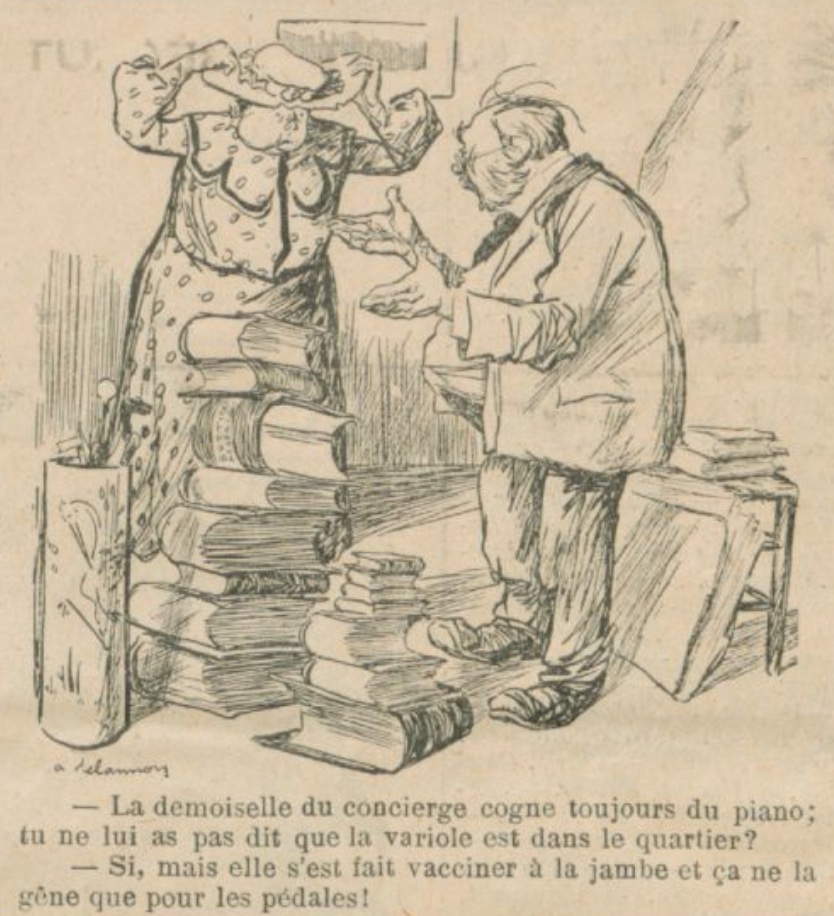
“The concierge’s maid is always banging on the piano; didn’t you tell her that smallpox is in the neighborhood?”
“Yes, but she was vaccinated in her leg and it only bothered her for the pedals!”
(Journal de Dreux Illustré, Dreux, 1904)
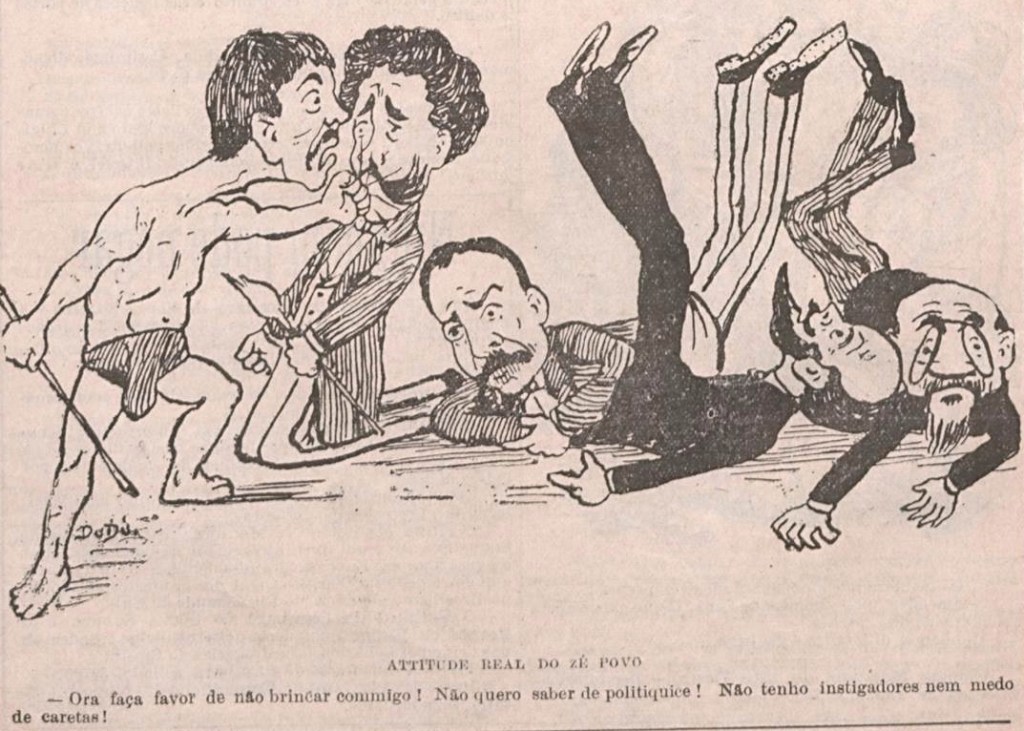
Joe Public’s attitude as imagined by Mr. Oswaldo Costas Quentes, in view of the geniality of his German regulation… [Biologist and public health official Oswaldo Cruz is at the head of the spear pressing at the breast of Joe Public.]
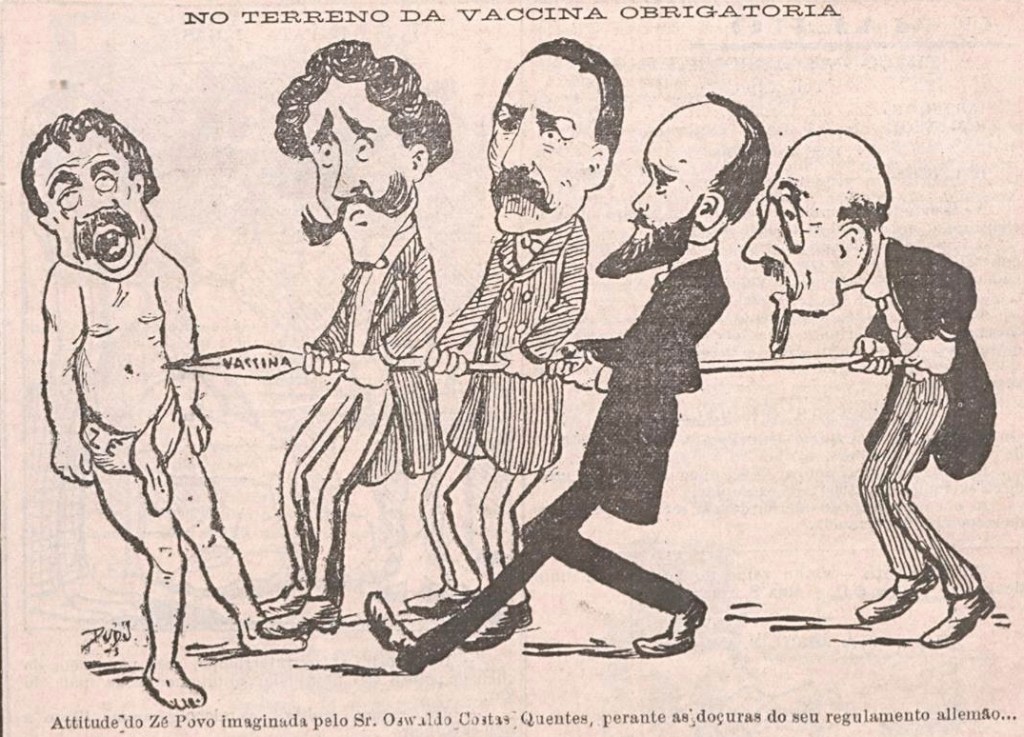
Joe Public’s actual attitude
Now please don’t toy with me! I don’t want to know about politics! I won’t have any instigators and I’m not scared of your antics!
(O Malho, Rio de Janeiro, 1904) (On the complicated politics of obligatory vaccination in Brazil, see also this cartoon.)
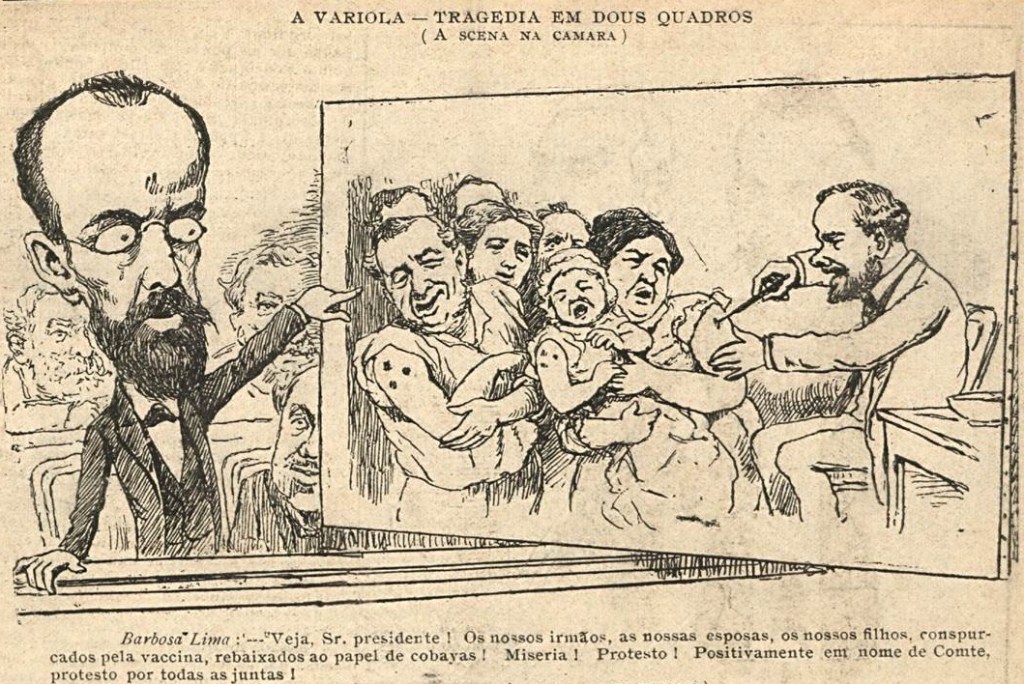
(A scene in the Chamber)
Brazilian parliamentary deputy, military officer, and sometime ally of the Church of Positivism Alexandre José Barbosa Lima: “Look, Mr. President! Our brothers, our wives, our children, fouled by vaccine, demoted to the role of guinea pigs! Misery! Protest! In the name of Comte, I positively must protest for all the juntas!” [“Junta” might simply mean “committee,” but Barbosa Lima ended up supporting the oligarchical politics which the Positivists had opposed.]
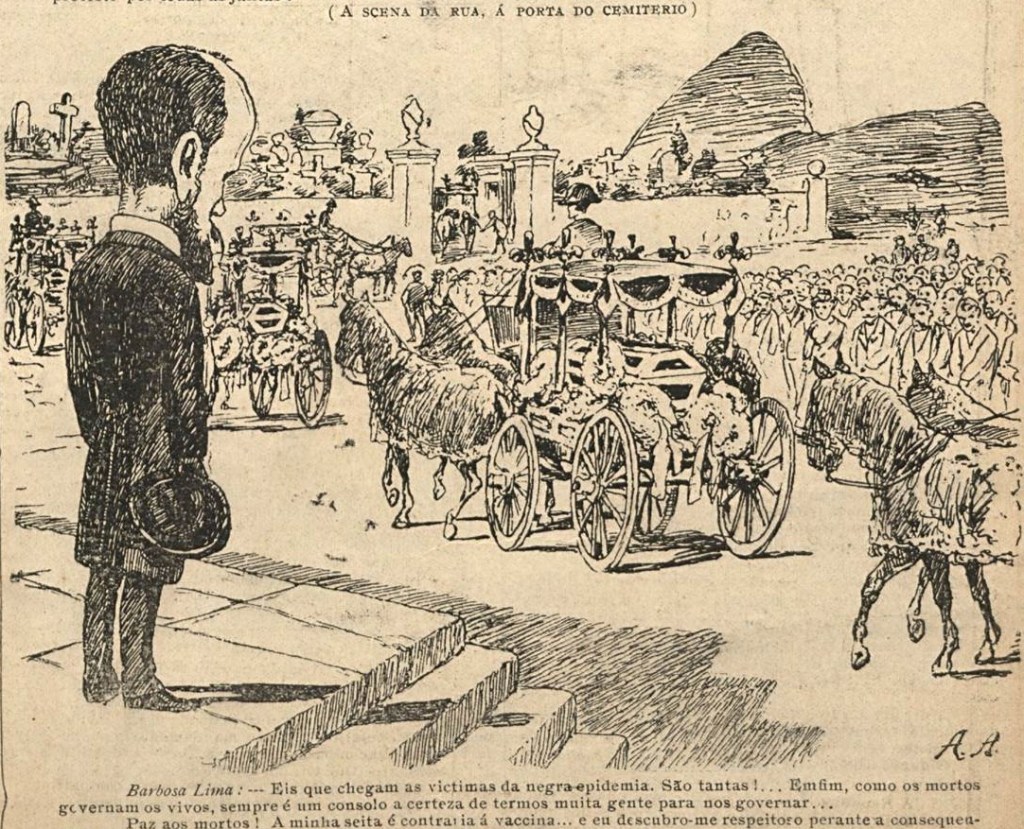
(Street scene, the cemetery entrance)
Barbosa Lima: “Behold, the victims of a black epidemic arrive. There are so many! Finally, as the dead govern the living, it is always a comfort to be sure that we have many people to govern us…
Peace to the dead! My sect [the Church of Positivism] is against the vaccine… and I find myself respectful of the consequences of its dogmas. Health and fraternity, oh! The dead are passing!”
(O Malho, Rio de Janeiro, 1904)
For more on the complicated politics of Positivist opposition to compulsory vaccination, see Robert Nachman.
I lack the Portuguese knowledge to translate all these cartoons in full, but in this post I just want to highlight the iconic status of bacteriologist and public health leader Oswaldo Cruz (1872-1917). For an avowedly secular publication like O Malho, Cruz as the standard-bearer of modern medicine clearly exerted tremendous appeal, though of course its satire often drew attention to the many obstacles in the way of achieving his aims.
(Each image links to the appropriate issue.)
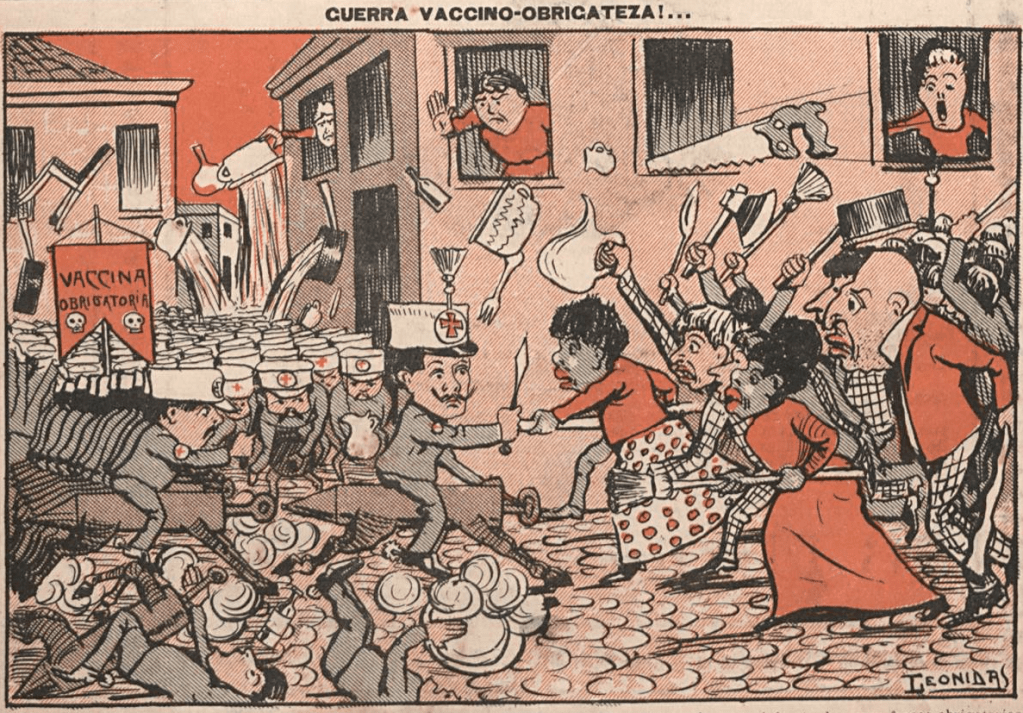
Vaccine-mandate war!… (1904)
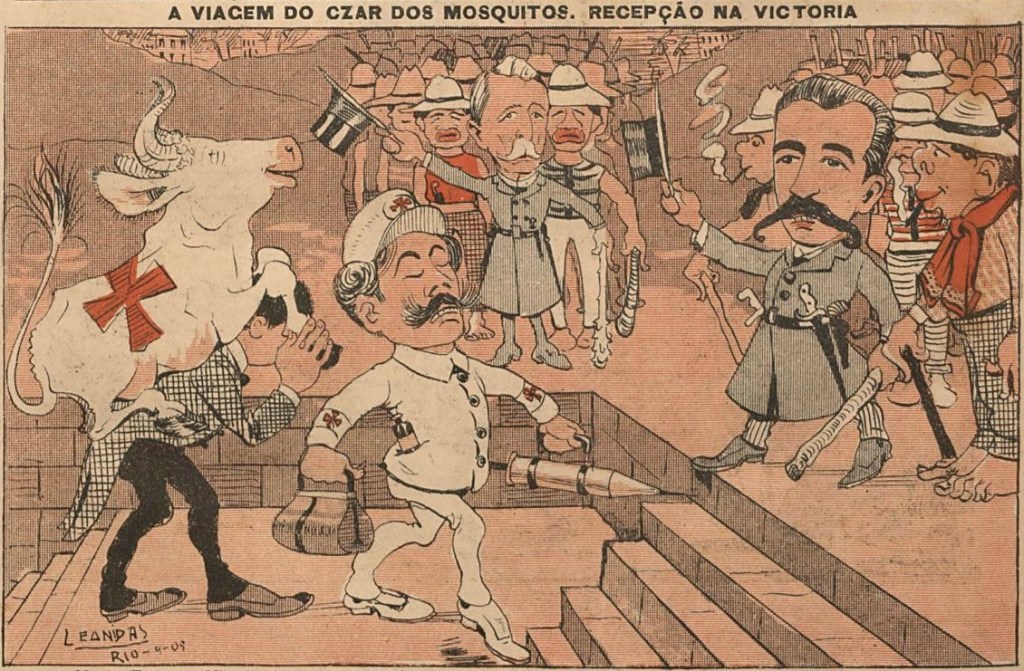
The journey of the mosquito czar. Reception in Victoria (1905)
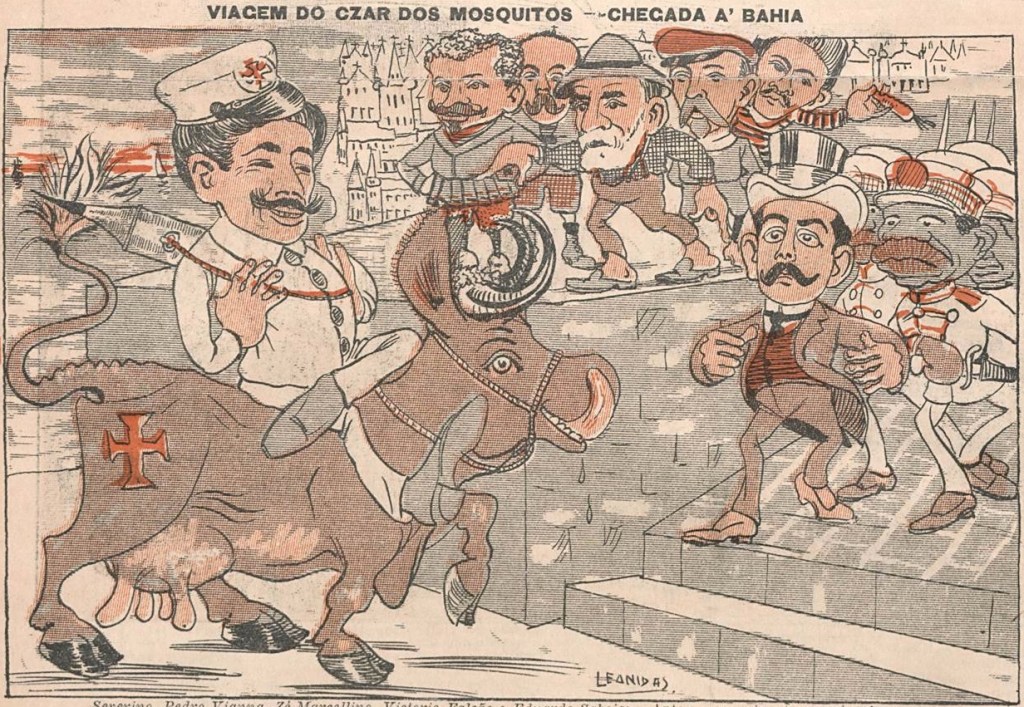
Journey of the mosquito czar — arrival in Bahia (1905)
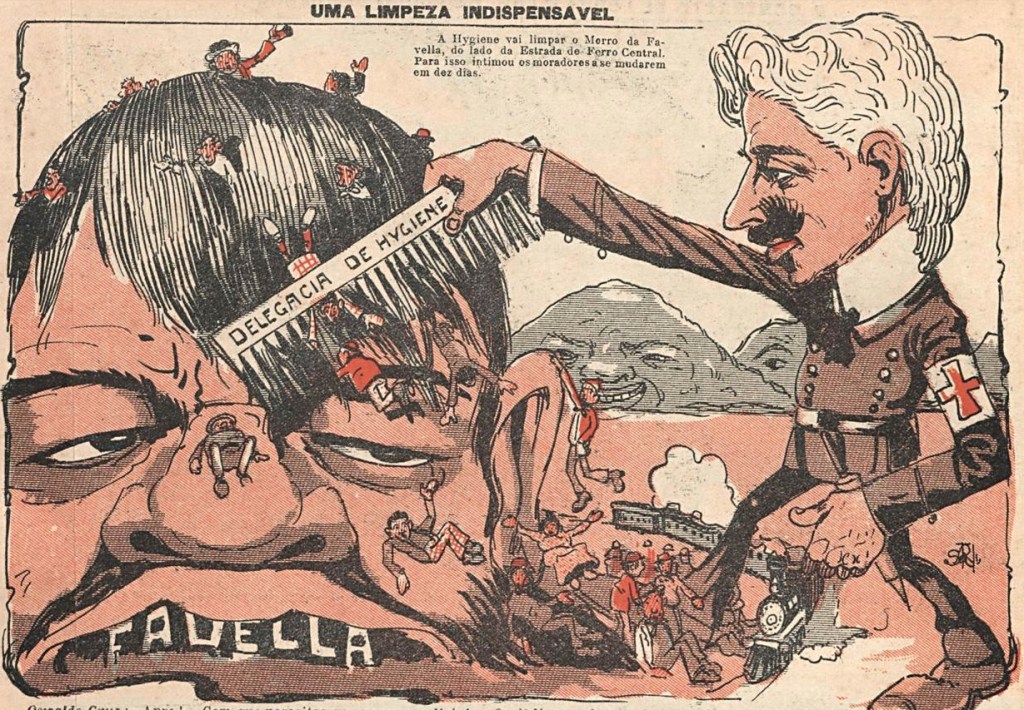
Essential cleaning (1907)
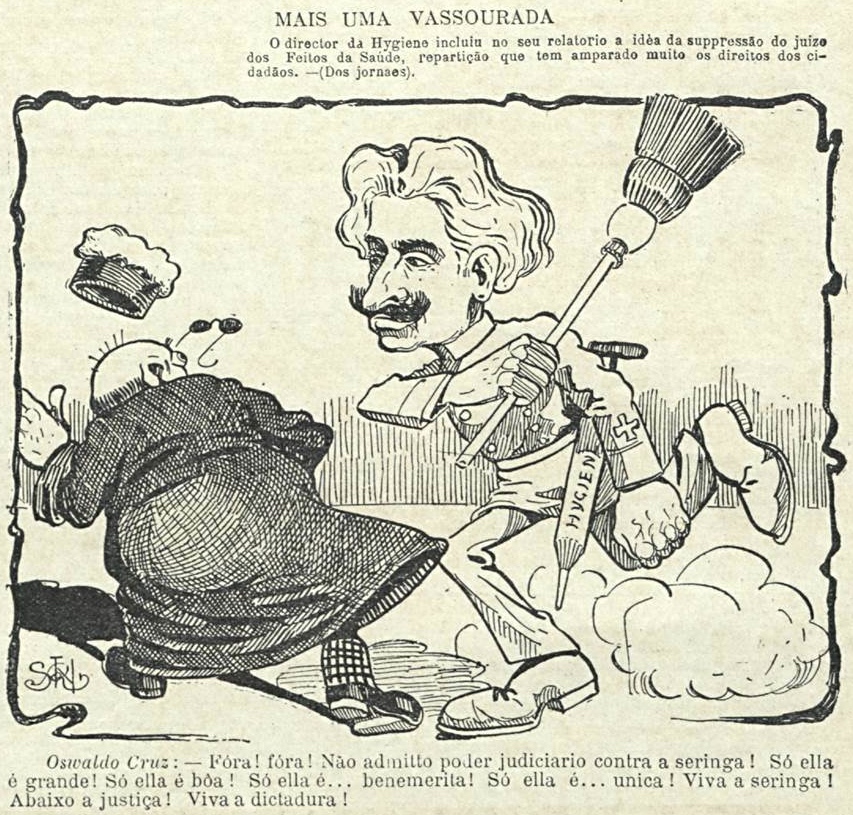
One more broom… (1907)
Cruz in provincial Pará (1910)
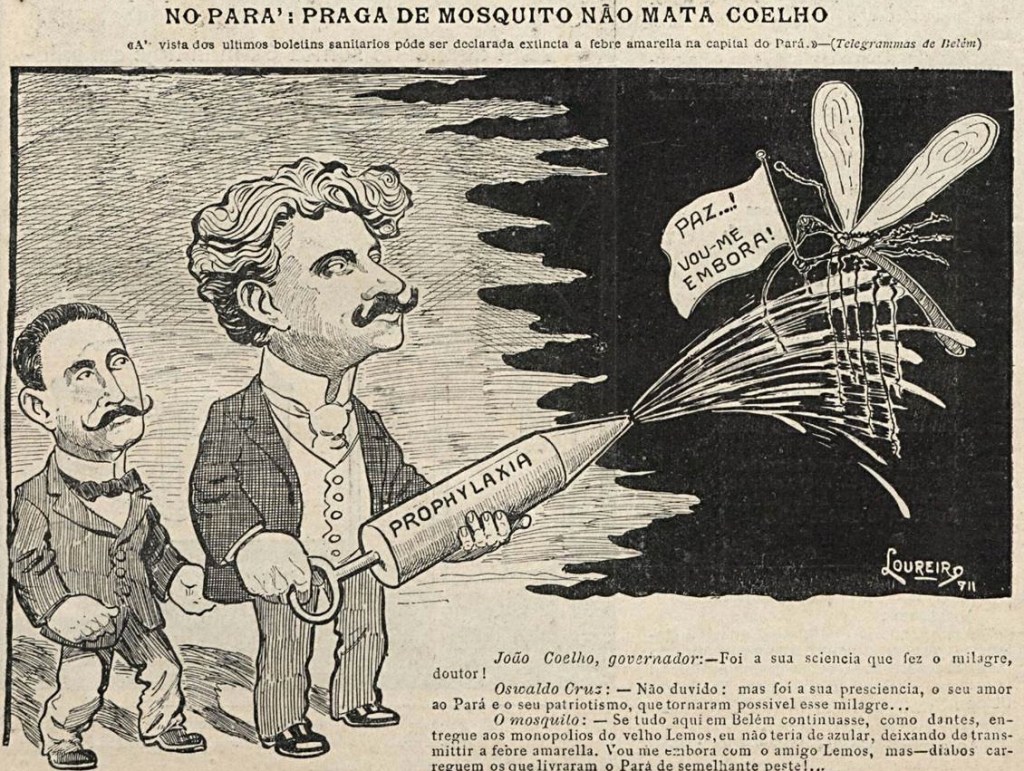
In Pará: Mosquito plague does not kill Governor Coelho (1911)
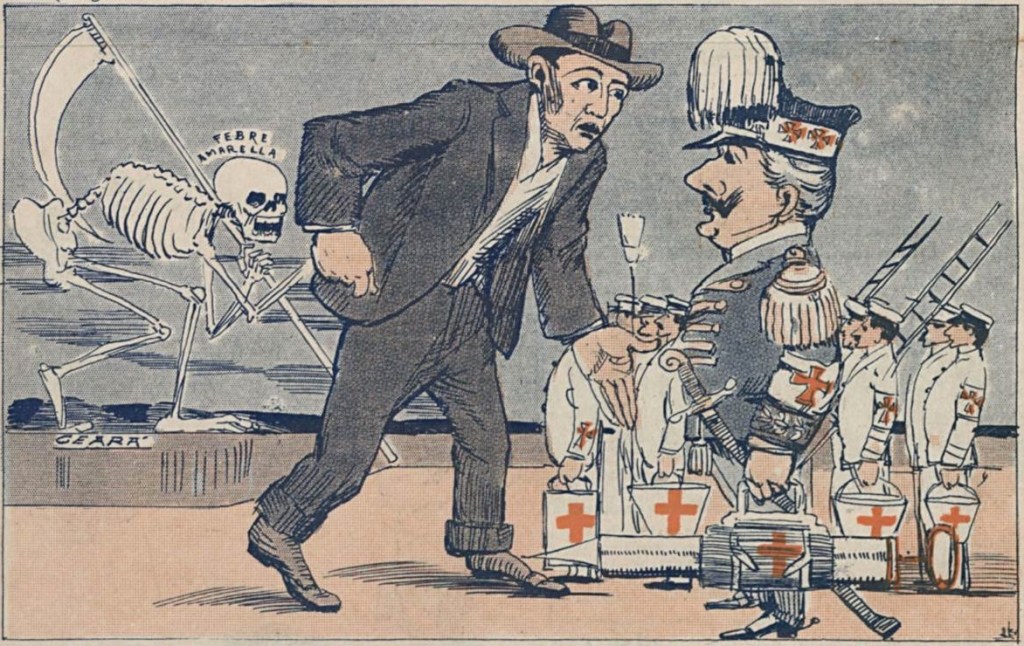
Federal intervention in Ceara (1914)
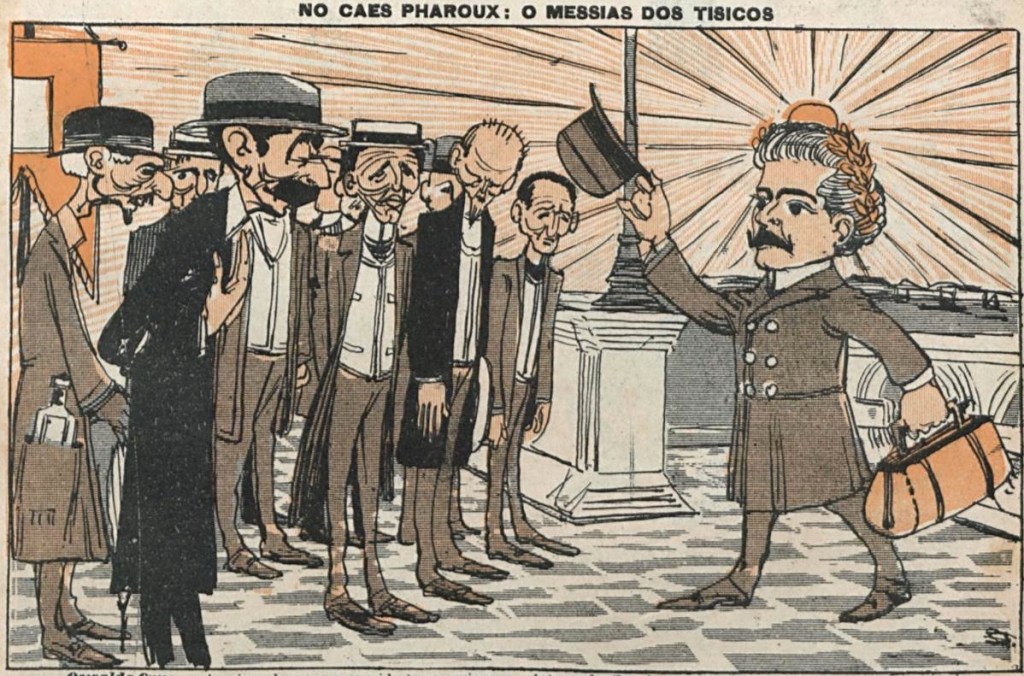
At the Pharoux Quay: The messiah of consumption (1908)
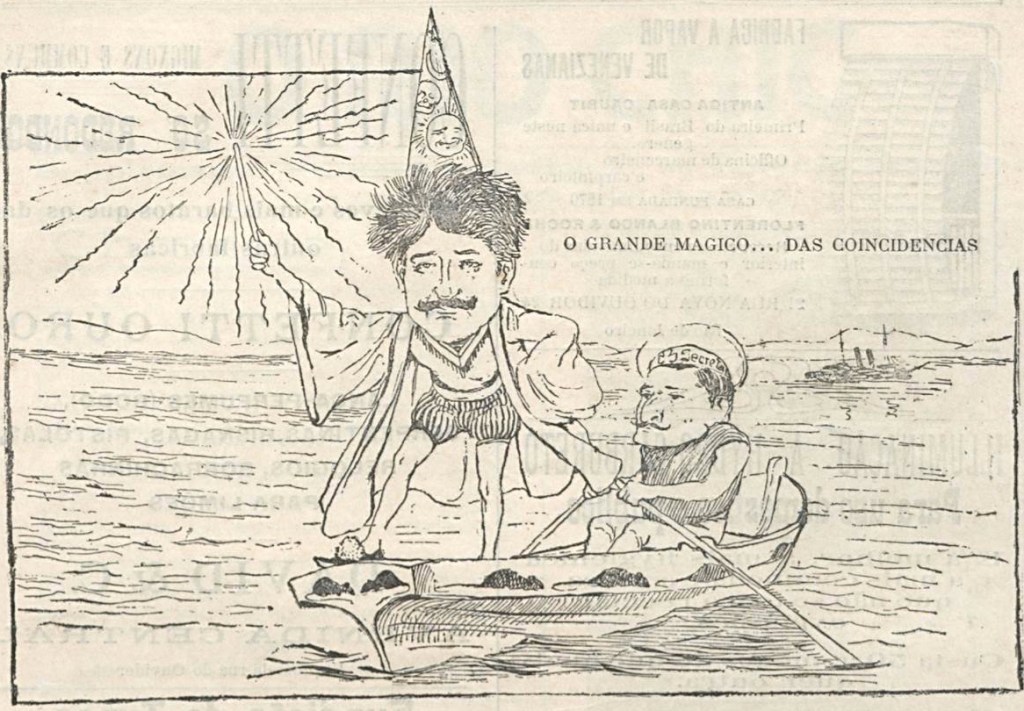
The great magician… of coincidences
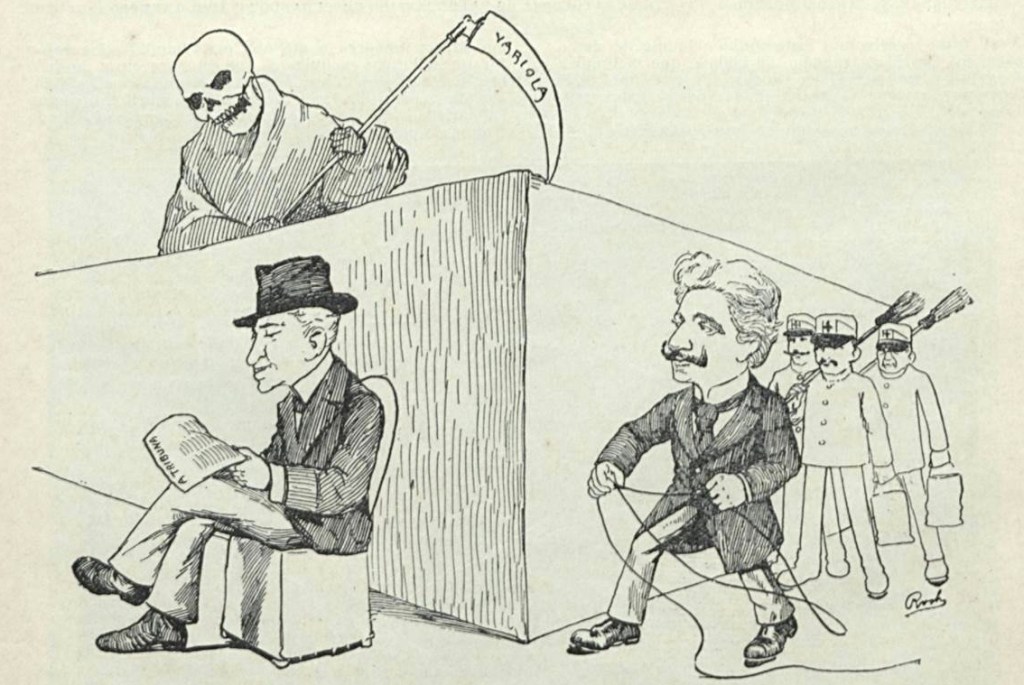
Roping it in time (1908)
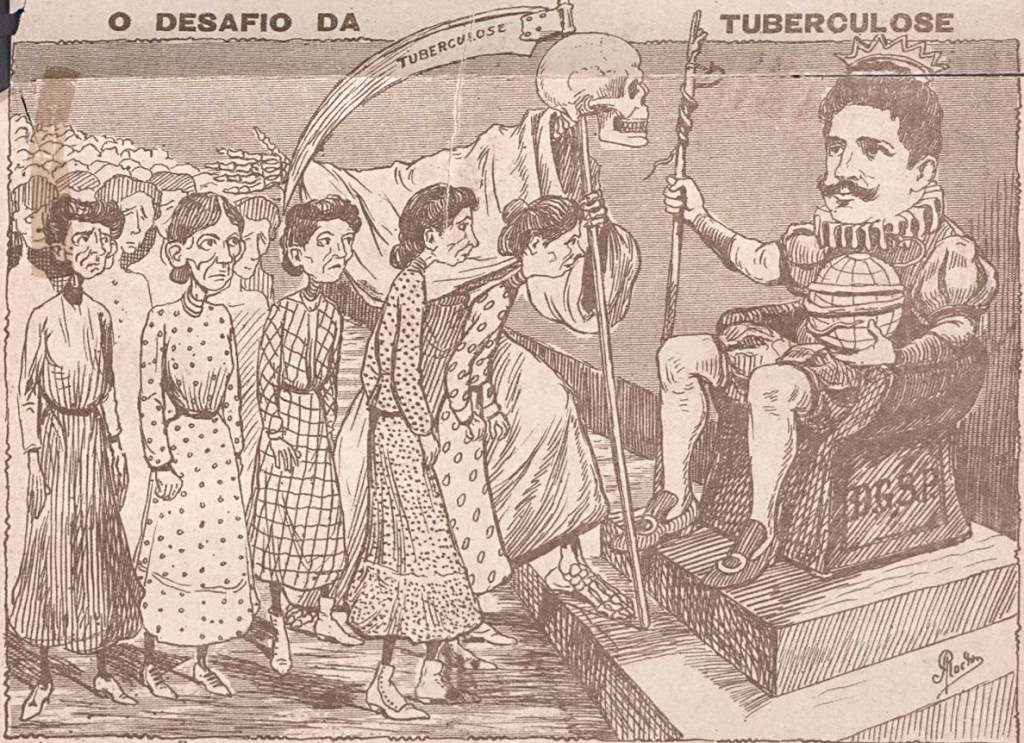
The challenge of tuberculosis (1906)
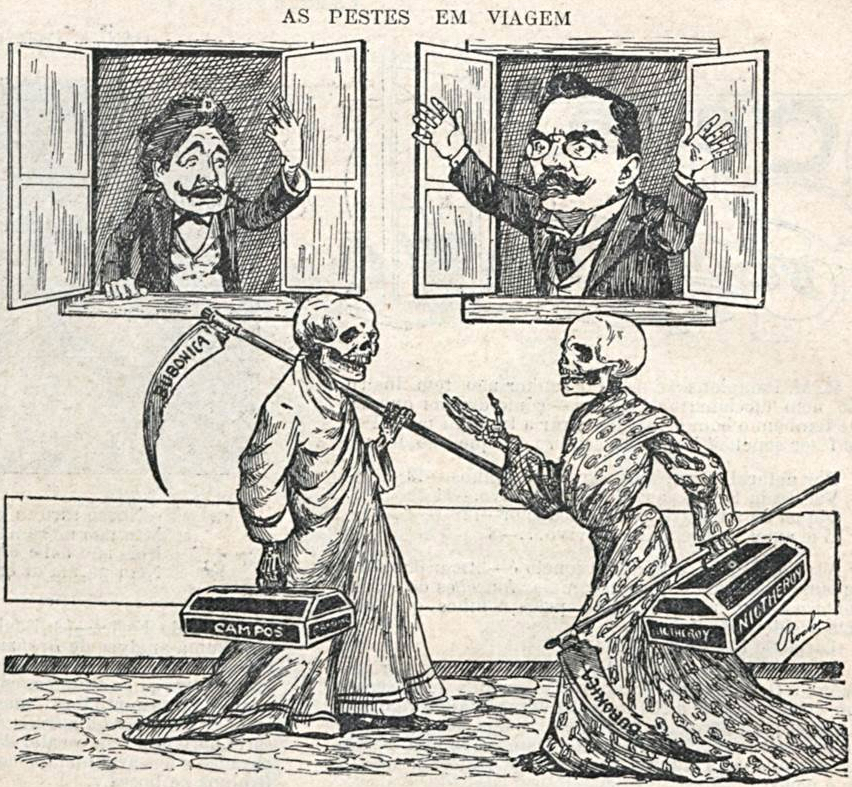
Plagues on the go (1907)
See also this multi-panel cartoon from 1905. And another from 1908. And a marvelous color cartoon from 1907. And this vaccination cartoon from 1904. Ditto.
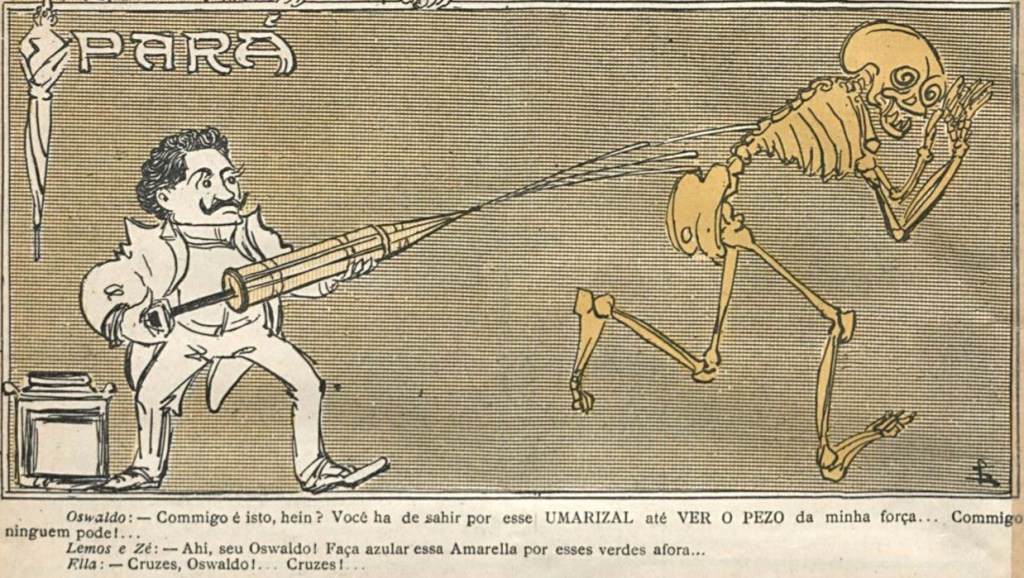
“Now, with the arrival of German doctors, is yellow fever turning blue? I’m purple for seeing this…”
(O Malho, Rio de Janeiro, 1904)

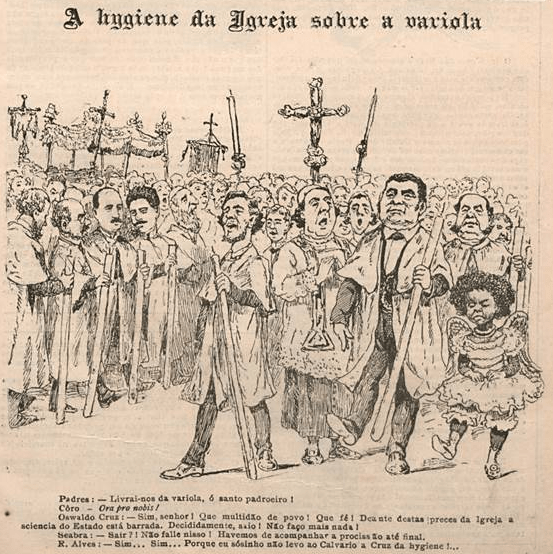
Priests: “Deliver us from smallpox, o patron saint!”
Chorus: “Ora pro nobis!“
Oswaldo Cruz [pioneering Brazilian bacteriologist, on the left, with full head of hair and mustache]: “Yes, sir! What a multitude of people! What faith! Before these prayers of the Church the science of the State is barred. I shall decidedly leave! There is nothing else I can do!”
[Minister of Justice J.J.] Seabra: “Leave ?! Don’t talk about it! We will follow the procession to the end.”
[President Francisco de Paula Rodrigues] Alves: “Yes… Yes… Because I am not carrying the Cross [Cruz!] of hygiene to Calvary alone!…”
(O Malho, Rio de Janeiro, 1904) (Compare Seabra versus Oswaldo)
 Sic Transit Pestilentia