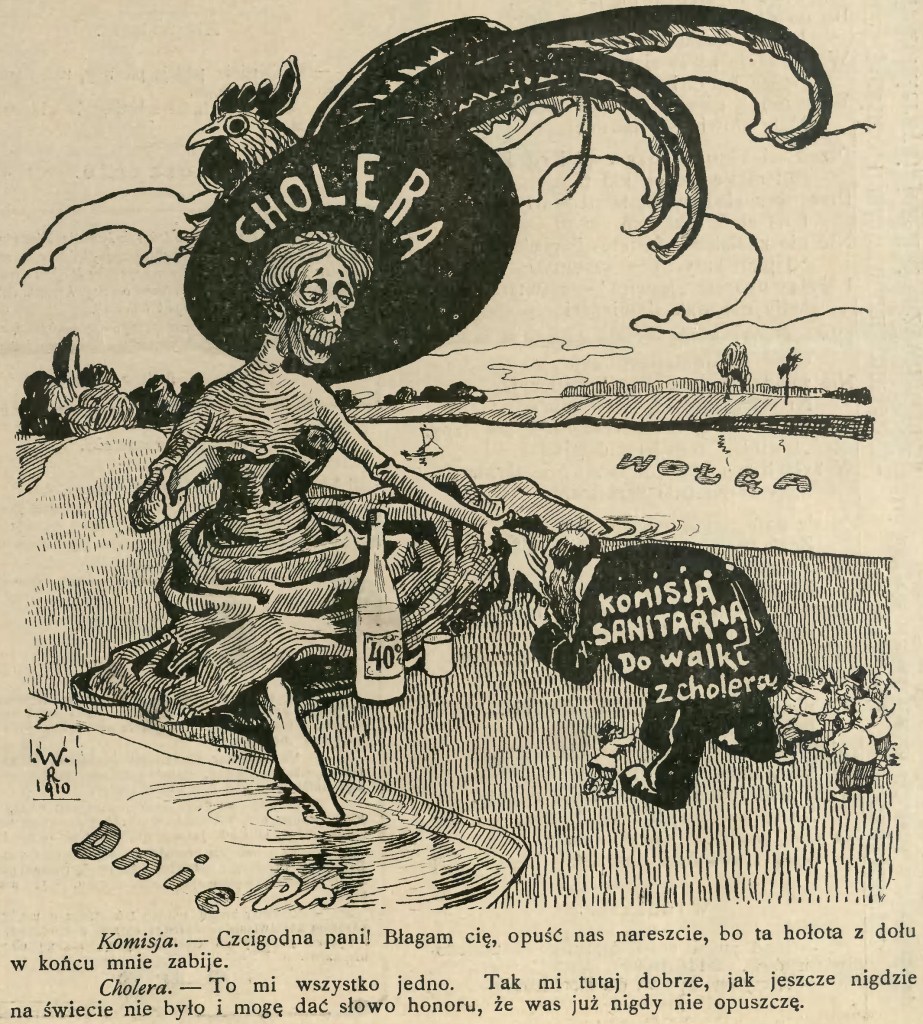
Public Health Commission: “Honorable lady! I am begging you, leave us at long last, because this rabble is going to kill me in the end.” Cholera: “It make no difference to me. It’s better for me here than it’s ever been anywhere in the world, and I can give my word of honor that I will never leave you again.”
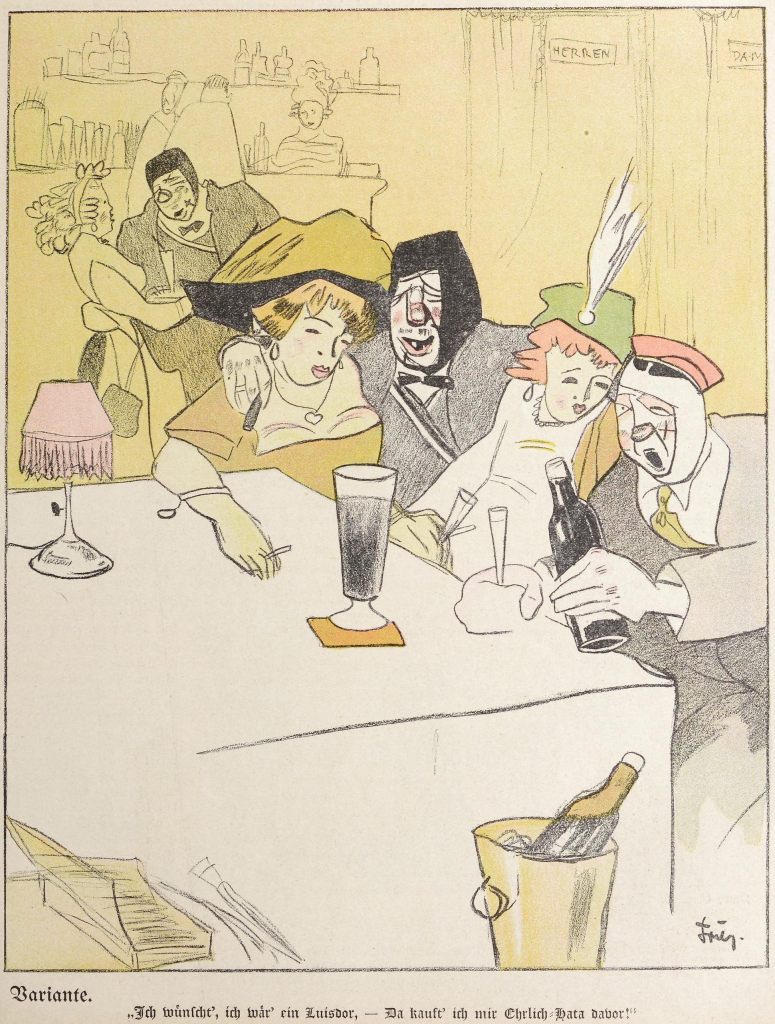
“I wish I were a gold coin, I’d’ve bought the Ehrlich-Hata beforehand!” (Lustige Blätter, Berlin, 1910) (See this cartoon for more context on this syphilis cure.)
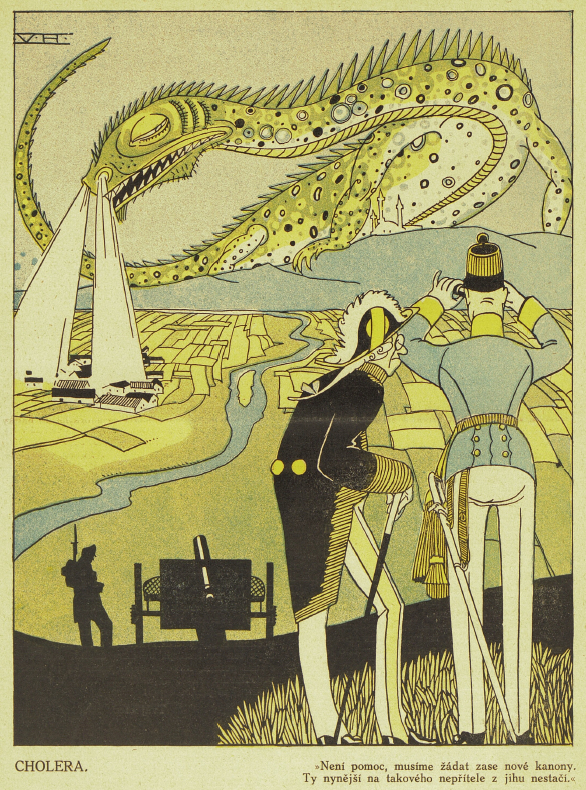
Karl Kramář was the leader of the Young Czech Party in Austria-Hungary. The Austro-Hungarian Minister of the Interior was Guido von Haerdtl, a German nationalist known for his hostility to Czech interests, especially regarding the use of anything but German as the official language in bureaucratic matters. (Kopřivy, Prague, 1910)
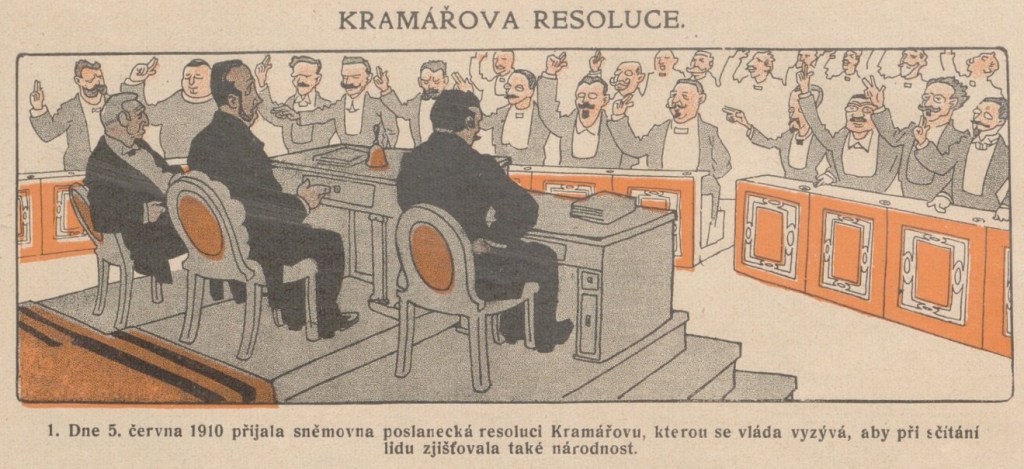
On June 5, 1910, the Chamber of Deputies adopted Kramář’s parliamentary resolution, which called on the government to ascertain nationality during the census.
Czech cholera cartoon
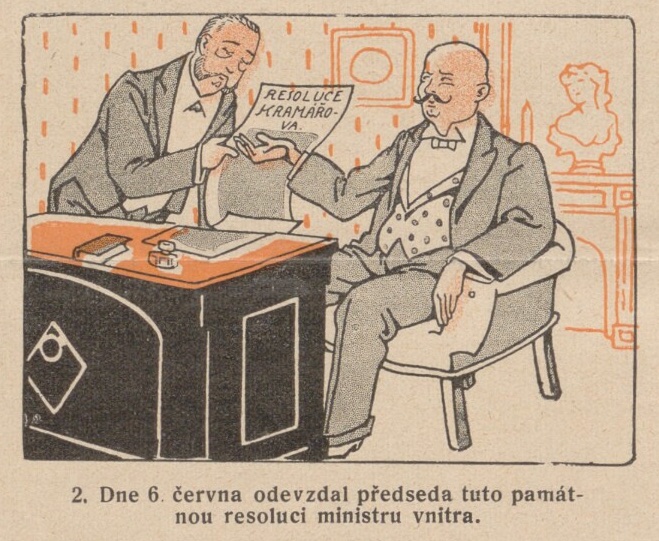
On 6 June, the President forwarded this memorable resolution to the Minister of the Interior.
On June 7, the Minister of the Interior felt that he was experiencing symptoms of cholera.
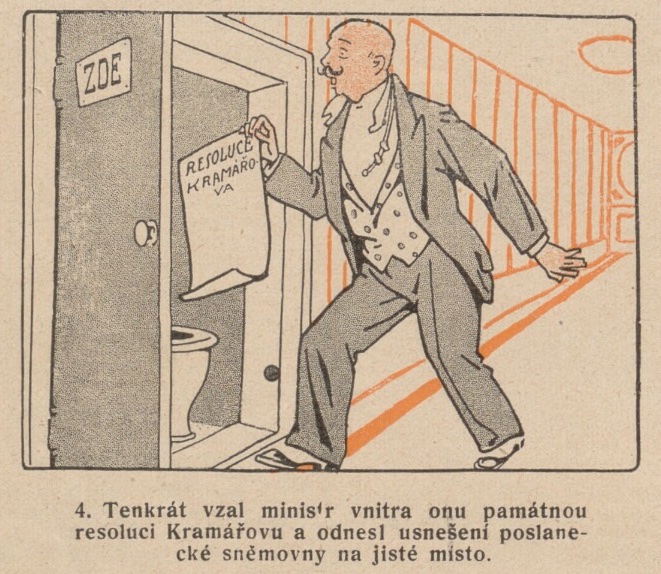
At that time, the Minister of the Interior brought the memorable Kramář resolution and took the decree of the Chamber of Deputies away to a certain locale.
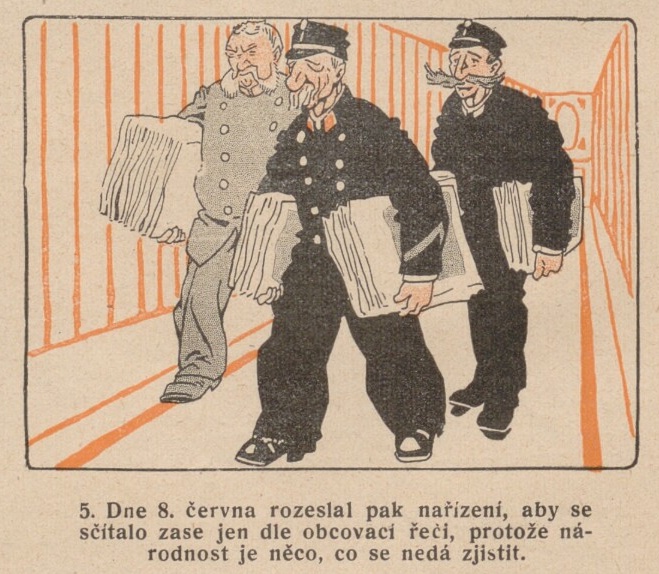
On June 8, he sent out an order to add it again only according to conversational language, because nationality is something that cannot be ascertained.
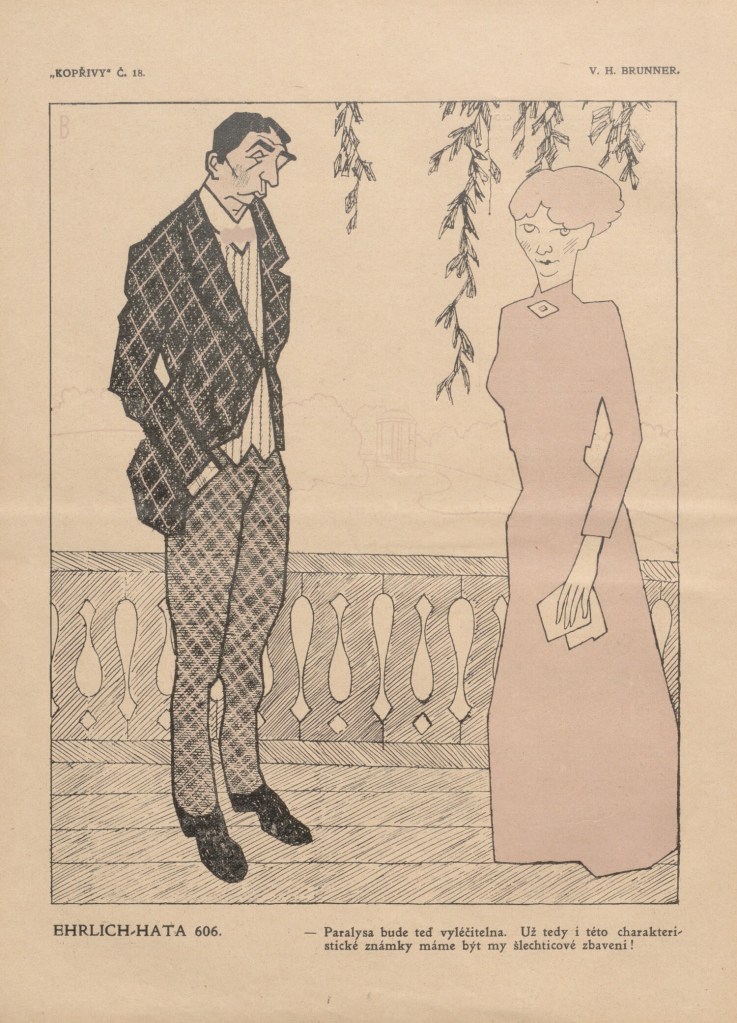
“The paralysis will now be curable. This way we nobles will be deprived even of this characteristic mark.” (Kopřivy, Prague, 1910) (See also this cartoon for the reference to a syphilis cure.)
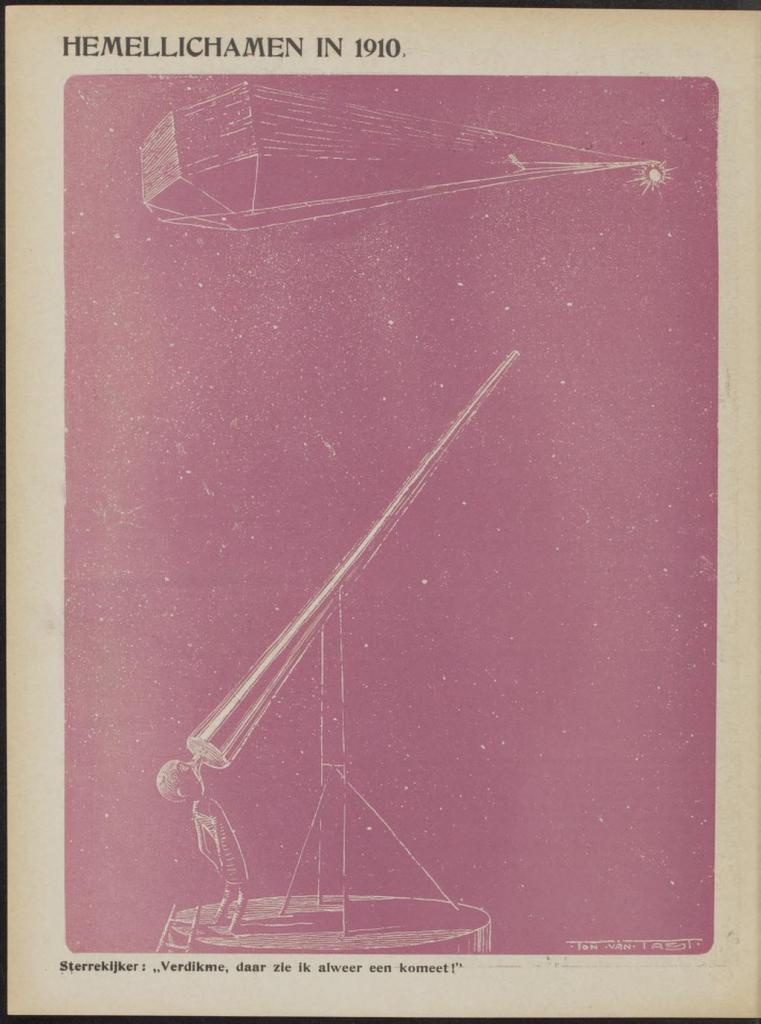
Stargazer: “Damn, I see another comet there!” (De ware Jacob, Rotterdam, 1910) (When this cartoon appeared in 1910, the last great cholera pandemic was slowly petering out. Halley’s comet also returned to earthly view that same year, an ill portent for some. In Dutch the word for body in “heavenly body” can also signal “corpse.” See also a Russian cartoon on the Halley’s comet theme.)
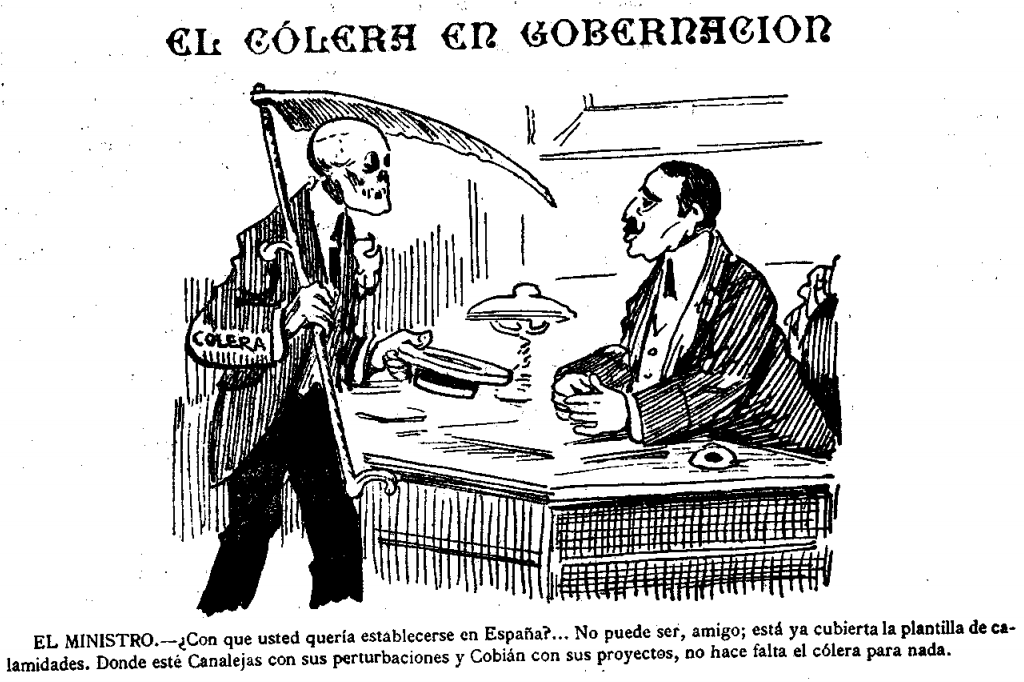
Minister: “What did you want to settle in Spain with?… It cannot be, my friend; emergency scenarios are already covered. Wherever there is [prime minister José] Canalejas with his disturbances and [Liberal Party politician and member of the Council of Ministers Eduardo] Cobián with his [tax reform] projects, there is no need for cholera at all.” (El Fusil, Madrid, 1910)
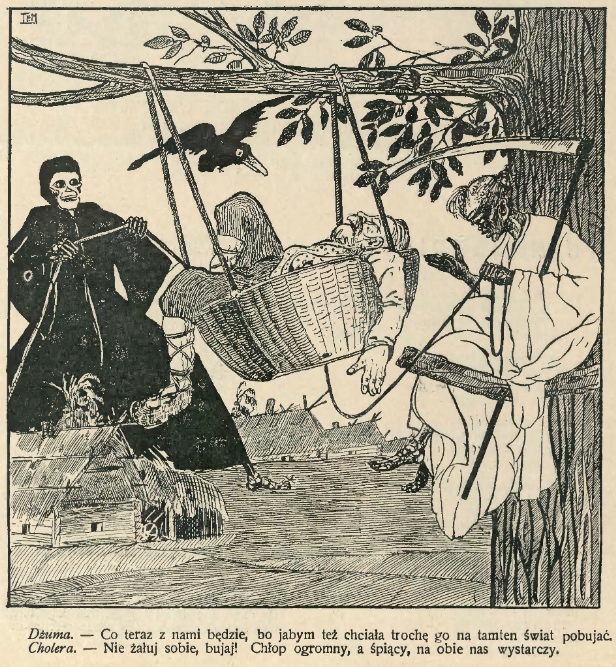
Plague: “What will happen with us now, because I would also like to nudge him a bit to the netherworld.” Cholera: “Don’t feel sorry for yourself, get to it! A huge and sleepy peasant, enough for both of us.” (Mucha, Warsaw, 1910, p. 4)
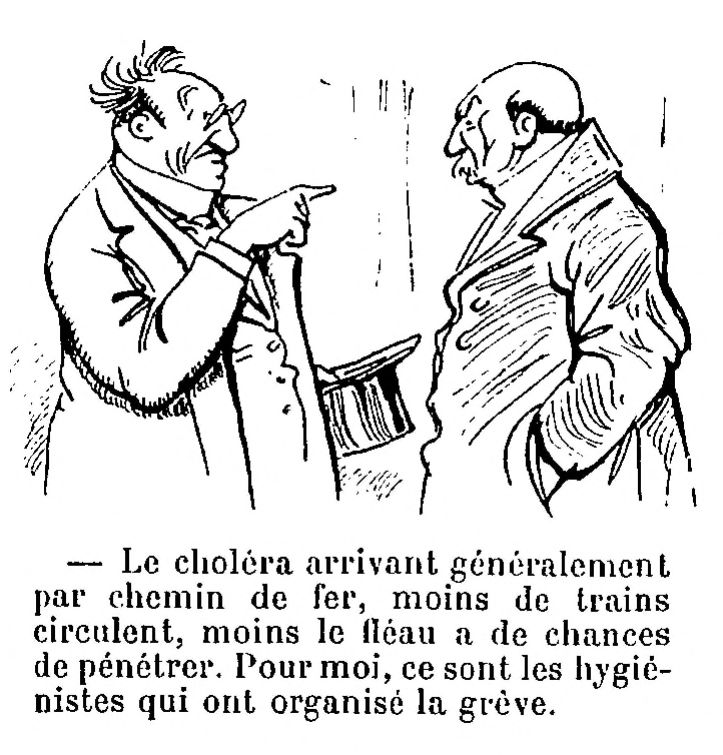
(“Frenchmen are quarreling with their government about their daily bread,” reported The New York Times in October 1910. “Dissatisfaction regarding their wages translates into dissatisfaction with the Republic.” French railway men went on strike, and “before it has lasted a single day, it is discussed whether or not it is revolutionary in character.” Prime Minister Briand managed to quash the strikes, earning him the enmity of former allies among the socialists.) “Cholera generally arrives by trains, the fewer trains are running, the less chance the scourge will get in. As far as I’m concerned, it’s the hygienists who are organizing the strike.” (Le Journal amusant, Paris, 1910)
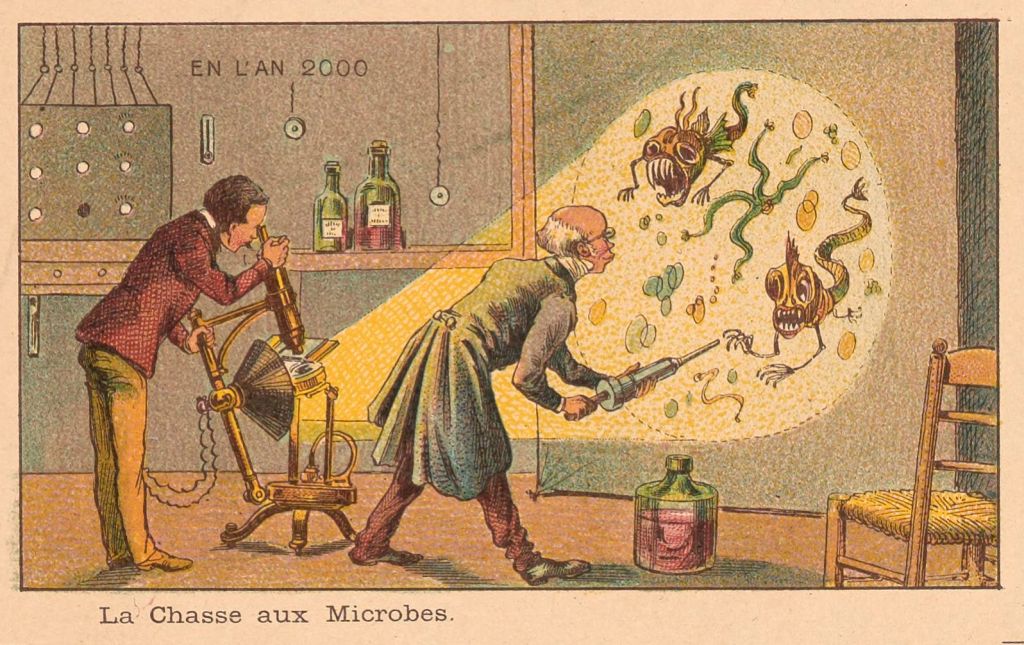
From Jean-Marc Côté, In the Year 2000 (Paris, 1910). (Note the familiar clystère seen in many other settings. Thanks to Theresa Levitt for directing me to this image.)
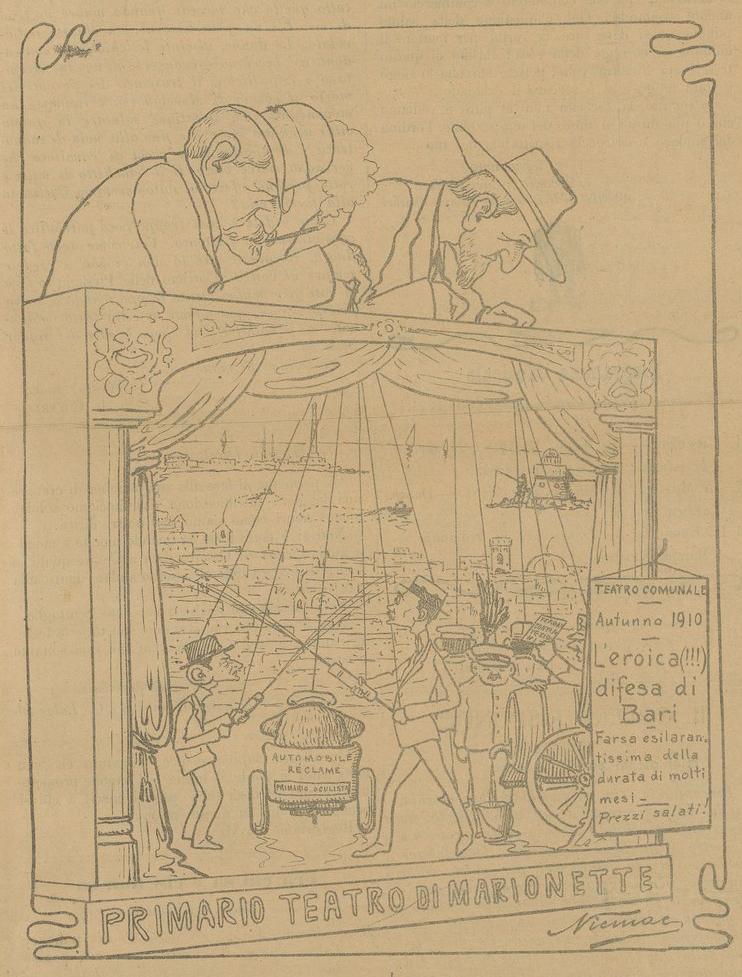
The Main Puppet Theater. Accompanying text describes the image as follows: “In the almost natural reproduction above, an attempt is made to make a theatrical representation of the current immortal era. And this illustration was necessary given the decline of the puppet masters, at other times intelligent artists and dear to the people.” I cannot do justice to the municipal politics being satirized here, but the text indicates that they want to show how people dealt with the cholera. The sign refers to the “Heroic defense of Bari” in autumn 1910, featuring an “Extremely hilarious farce lasting many months,” with “Terrific prices!” What drew my eye was of course the clystères employed by the officials disinfecting the streets, a device oft encountered among our images. (Pss… Pss…, Bari, 1910)
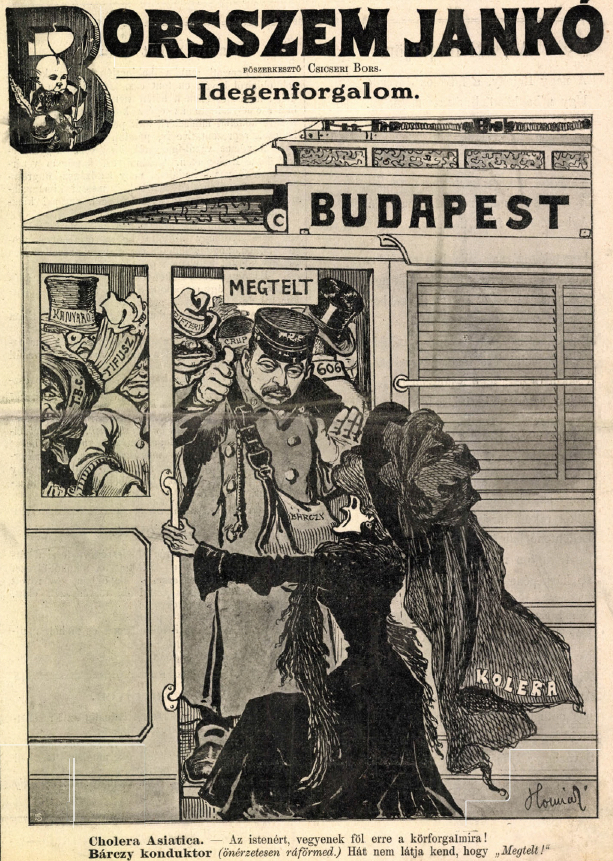
(Riders of the tram include measles, tuberculosis, typhus, diphtheria, croup, and syphilis–the “606” signals Ehrlich’s Salvarsan remedy.) Cholera Asiatica: “For heaven’s sake, let me onto this route!” [Budapest mayor István] Bárczy the Conductor (confidently denigrating her): “Well, don’t you see the sign saying it’s ‘Full!’?” (Borsszem Jankó, Budapest, 1910)
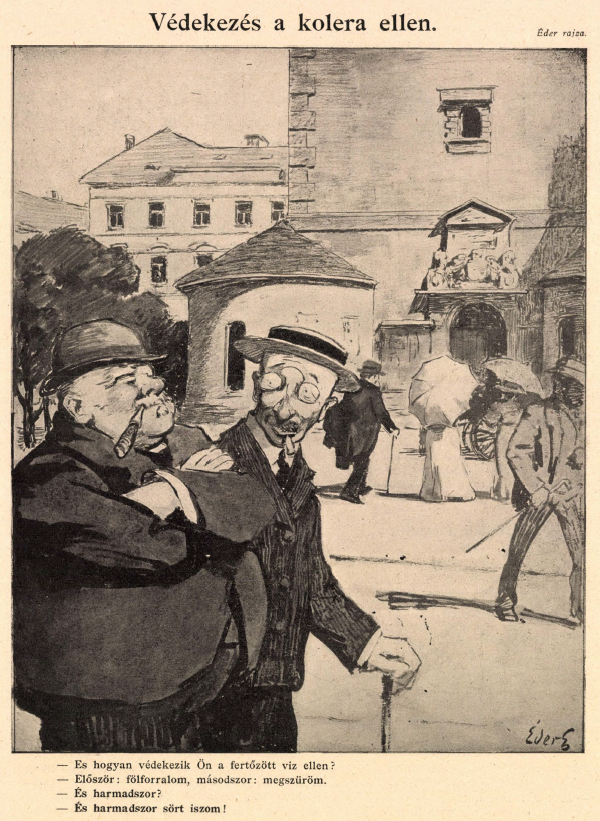
“And how do you protect yourself against contaminated water?” “First of all: I boil everything, second: I sip it.” “And third?” “And third I drink beer!” (Kakas Márton, Budapest, 1910)


 Sic Transit Pestilentia