“Bravissimo… Now that the cholera and in [Spanish Prime Minister José] Canalejas, they can already come when they want.”
(La esquella de la torratxa, Barcelona, 1911) (Clearly I’m missing some wordplay here.)
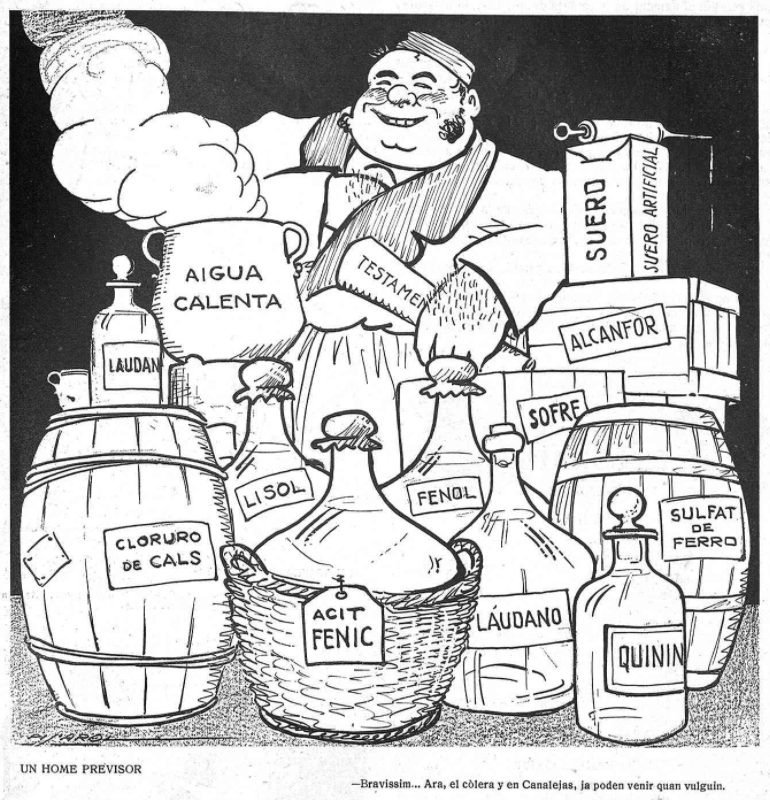
“Bravissimo… Now that the cholera and in [Spanish Prime Minister José] Canalejas, they can already come when they want.”
(La esquella de la torratxa, Barcelona, 1911) (Clearly I’m missing some wordplay here.)
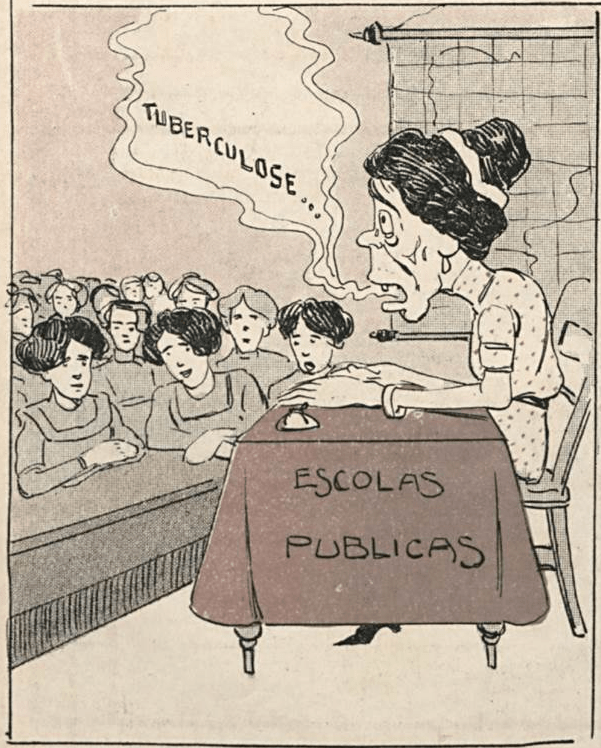
(Detail from “Salad of the Week”) “Discussions and opinions on the hygienic inspection of schools continue; but, like all the serious assumptions of this country, they never go beyond the theoretical and verbose terrain, and it is likely that this will also be seen now… How many adjuncts, teachers and students do not drag an existence already reached by tuberculosis, living in a criminal promiscuity!… Why not take an energetic decision to avoid a greater harm?”
(O Malho, Rio de Janeiro, 1911)
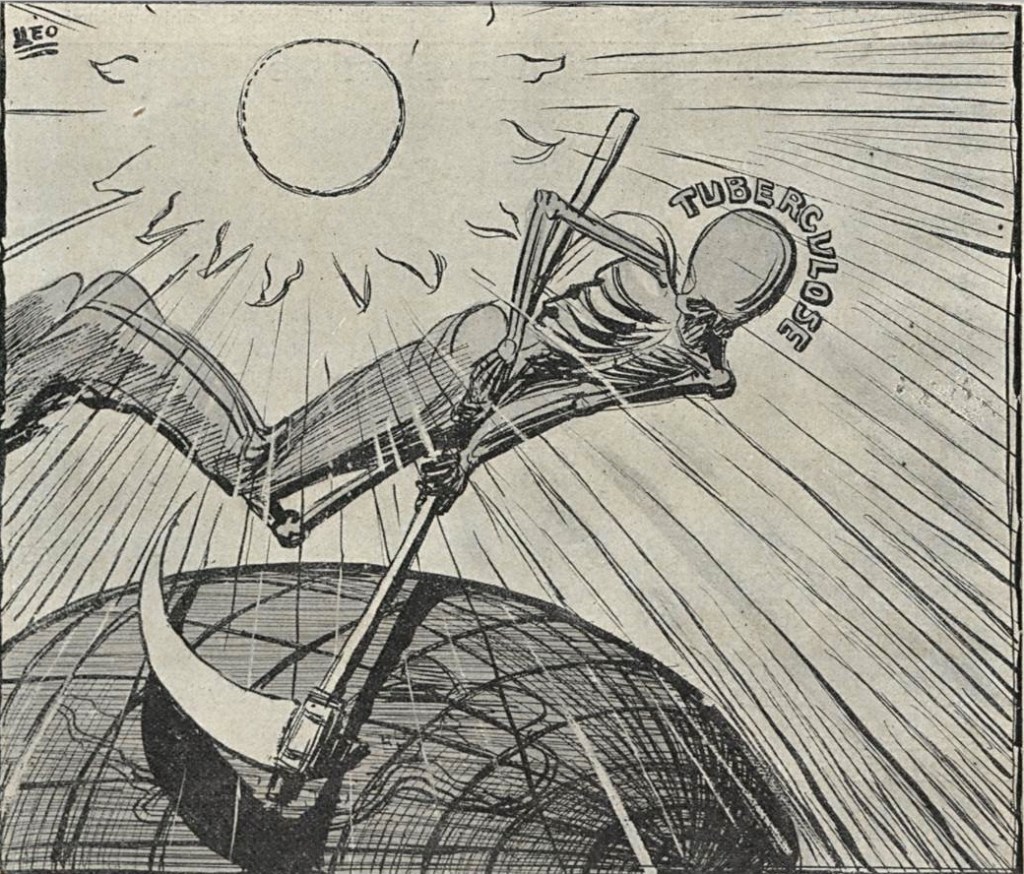
In the winter with humidity, in summer with the oppressive sun, here it is always making its terrible harvest!
(O Malho, Rio de Janeiro, 1911)
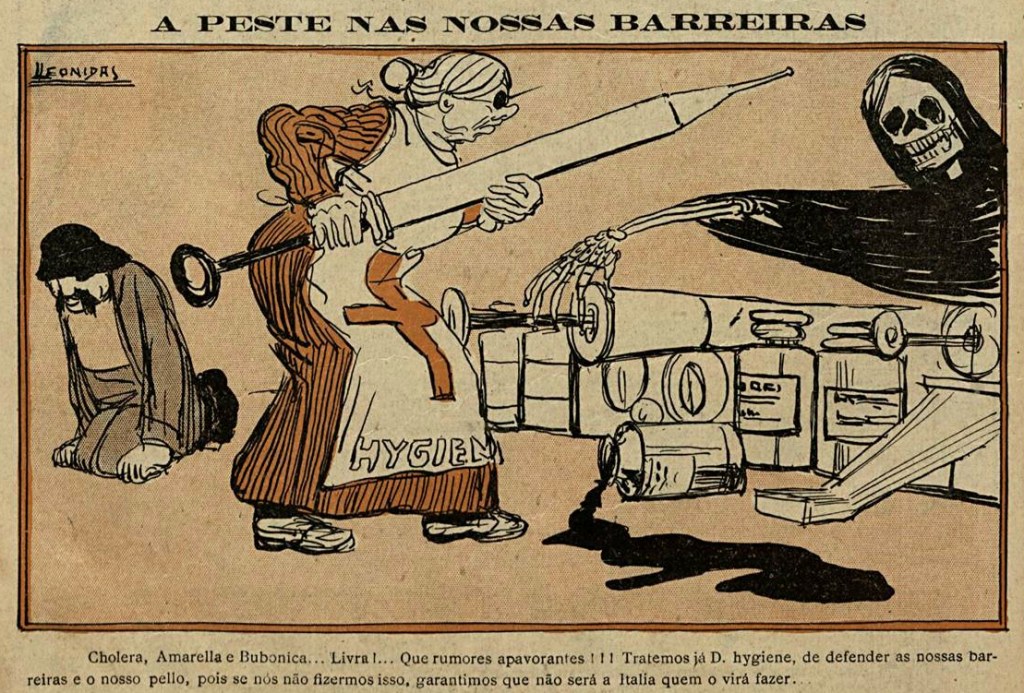
Cholera, yellow fever, bubonic plague… Liberated!… What terrifying rumors!!! Let us now try D. (?) hygiene, to defend our borders and our skins, because if we do not do this, we guarantee that it will not be Italy that comes to do it.
(O Malho, Rio de Janeiro, 1911)
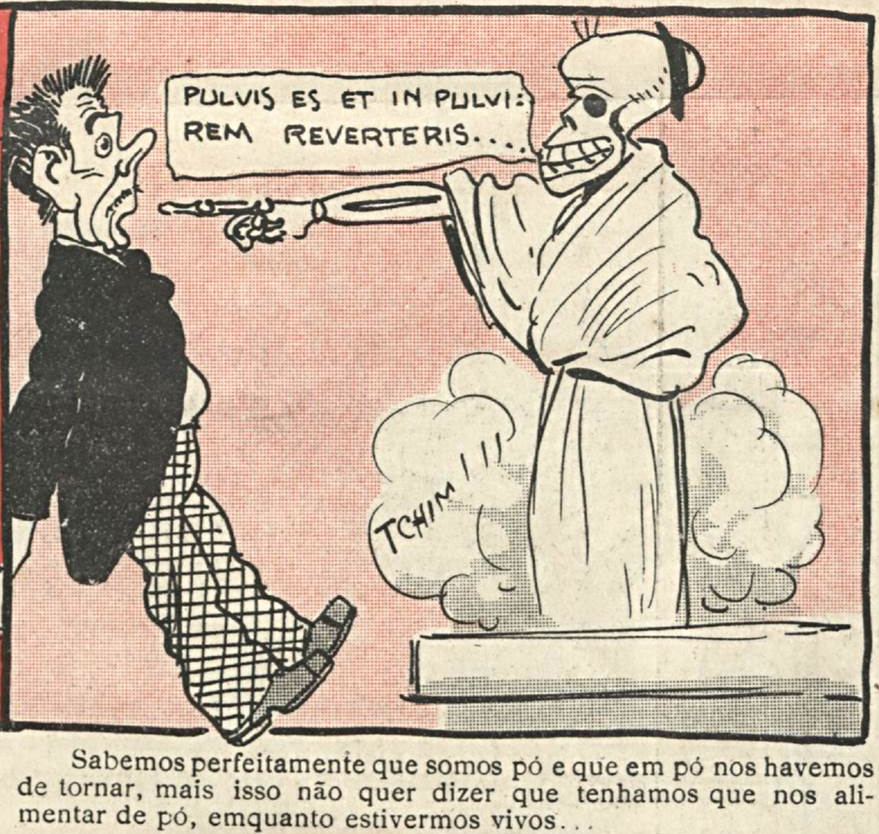
First two panels:
(Image of a plate of Carioca dust [flour] with typhus, tuberculosis, yellow fever, smallpox, plague, gastroenteritis, etc. “Carioca” is a way of referring to the inhabitants of Rio de Janeiro.)
“We knew the dust of Persia, we knew gold dust, monkey dust and Joanna dust, the river Po [“pó” meaning dust], etc., but… we are completely unaware of this new dust that invades us, suffocates us, and that kills us: the dust from Rio de Janeiro.”

Deathly figure: “Dust thou art, and to dust thou shalt return…”
“We know perfectly well that we are dust and that we shall become dust, but that does not mean that we have to feed on dust while we are alive…”
(and four more panels of quirky municipal politics…)
(O Malho, Rio de Janeiro, 1911)
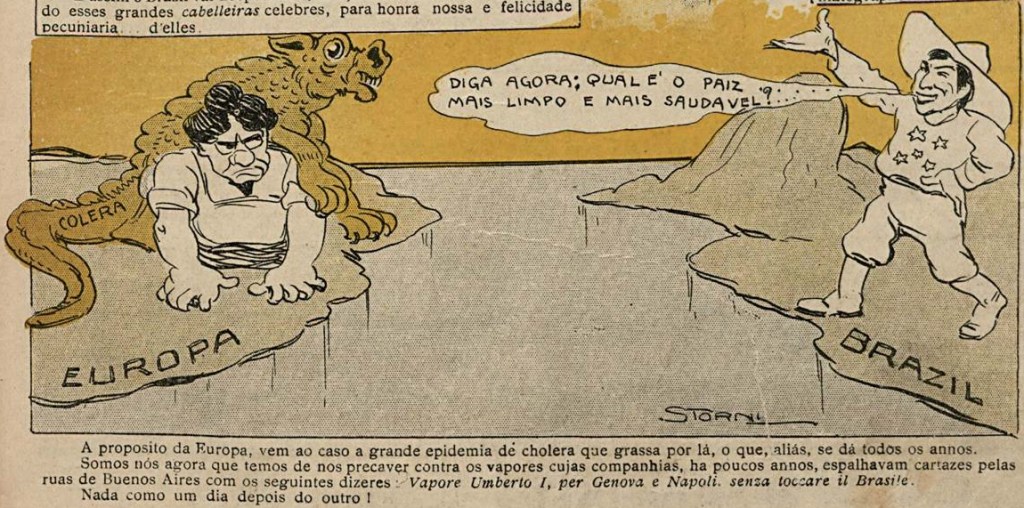
Detail from “Salad of the week”: “Say now: which is the cleanest and healthiest country? As for Europe, the great cholera epidemic that is raging there, incidentally, occurs every year. We are now the ones who have to guard against the steamer lines that were putting up posters on the streets of Buenos Aires a few years ago with the following words (in Italian): Steam ahead for Genoa and Naples on the Umberto I, without touching Brazil.
There’s nothing like one day after the other!”
(O Malho, Rio de Janeiro, 1911)
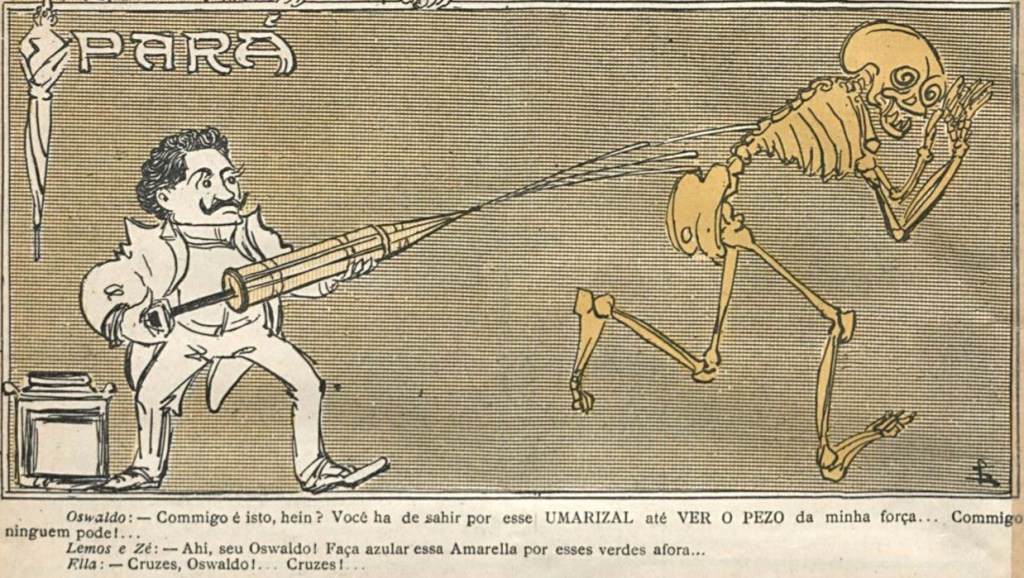
I lack the Portuguese knowledge to translate all these cartoons in full, but in this post I just want to highlight the iconic status of bacteriologist and public health leader Oswaldo Cruz (1872-1917). For an avowedly secular publication like O Malho, Cruz as the standard-bearer of modern medicine clearly exerted tremendous appeal, though of course its satire often drew attention to the many obstacles in the way of achieving his aims.
(Each image links to the appropriate issue.)
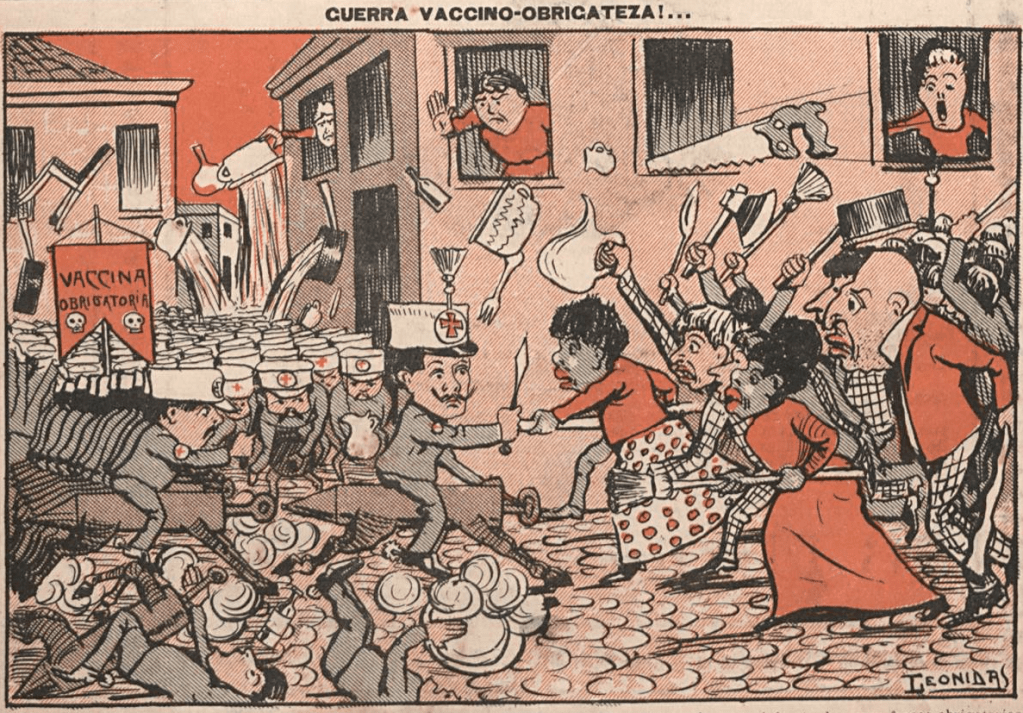
Vaccine-mandate war!… (1904)
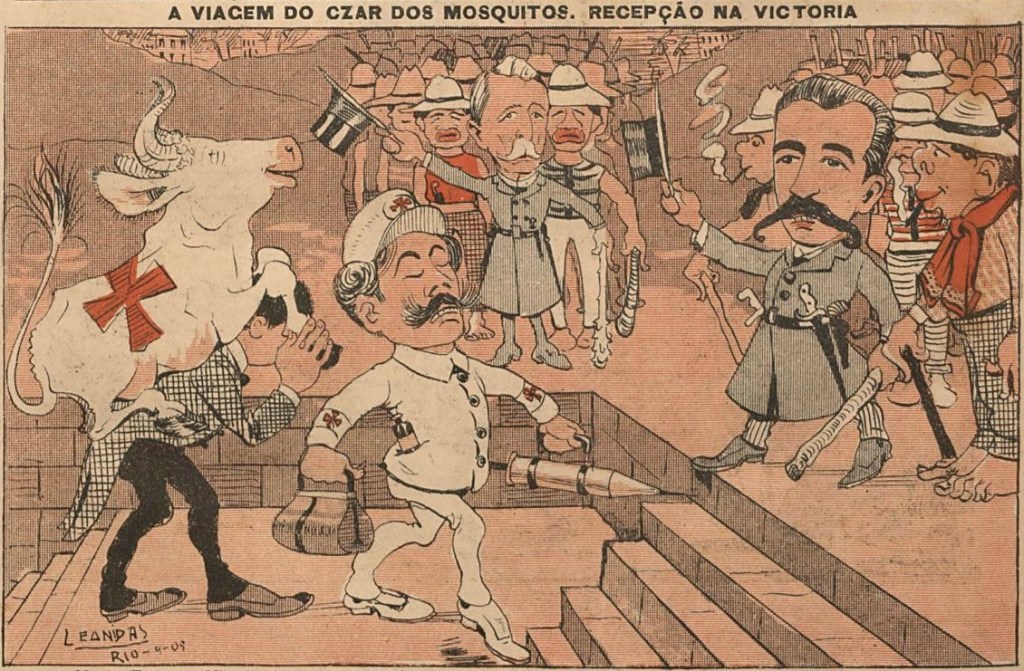
The journey of the mosquito czar. Reception in Victoria (1905)
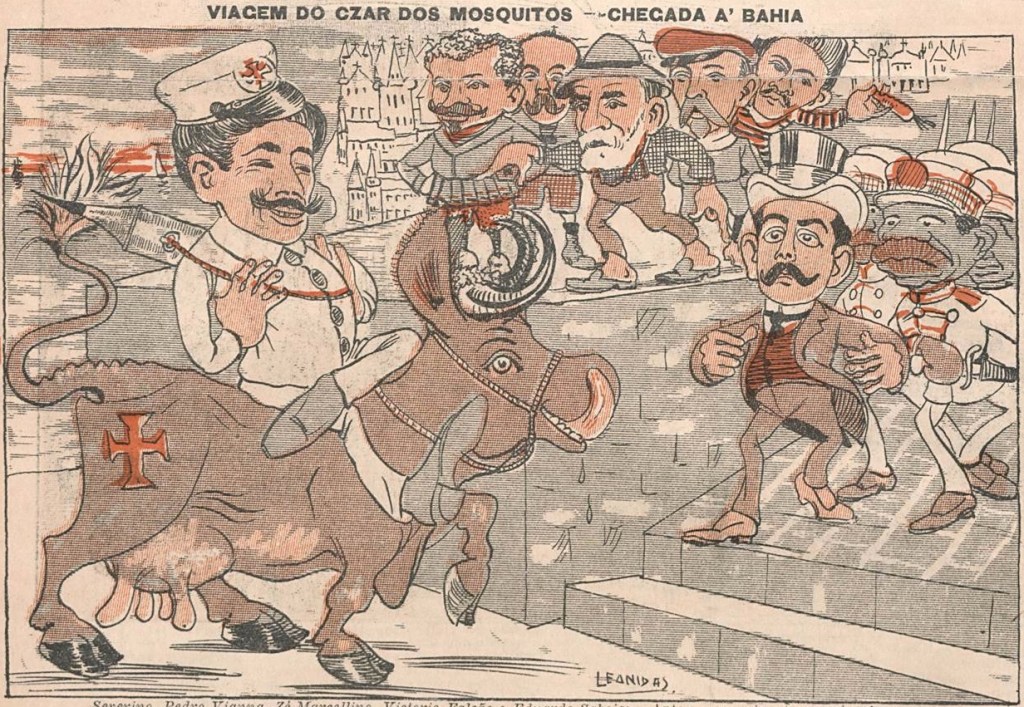
Journey of the mosquito czar — arrival in Bahia (1905)
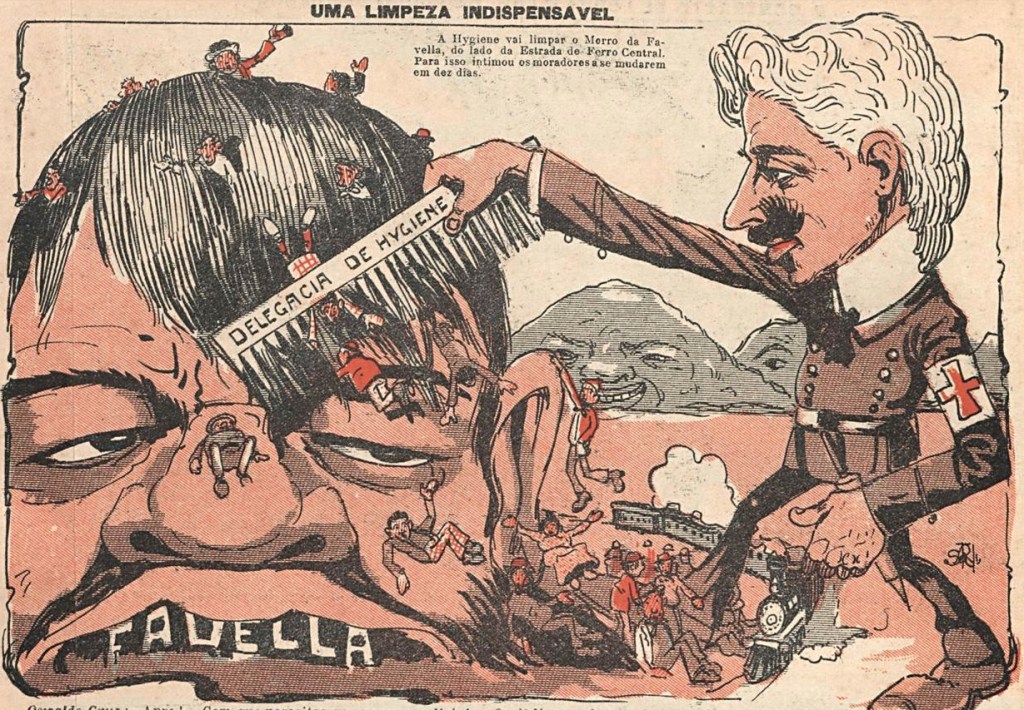
Essential cleaning (1907)
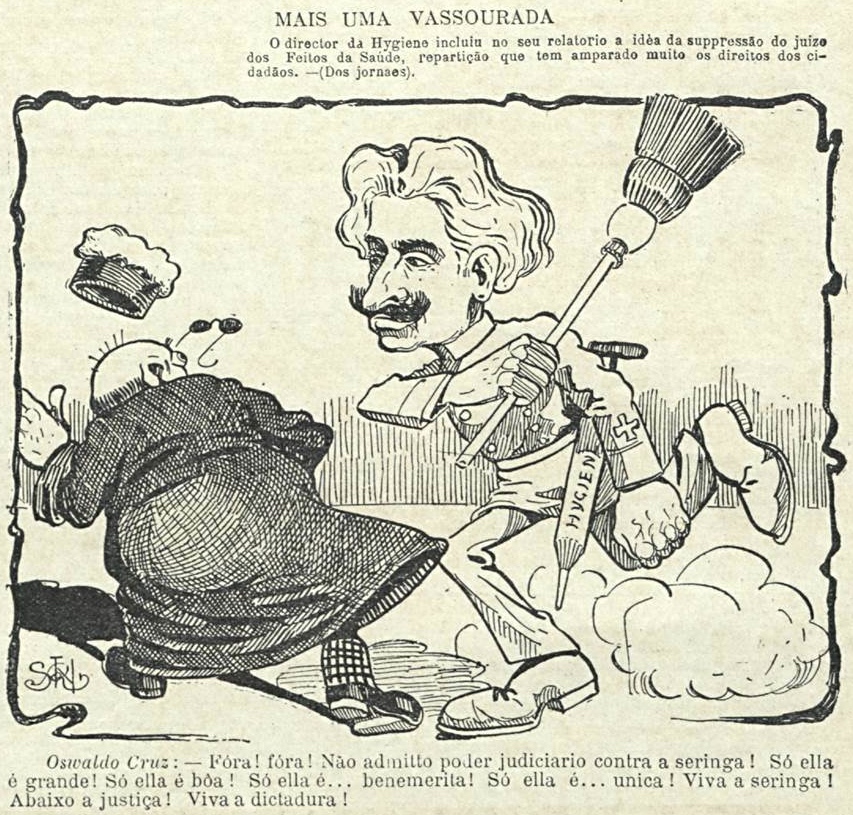
One more broom… (1907)
Cruz in provincial Pará (1910)
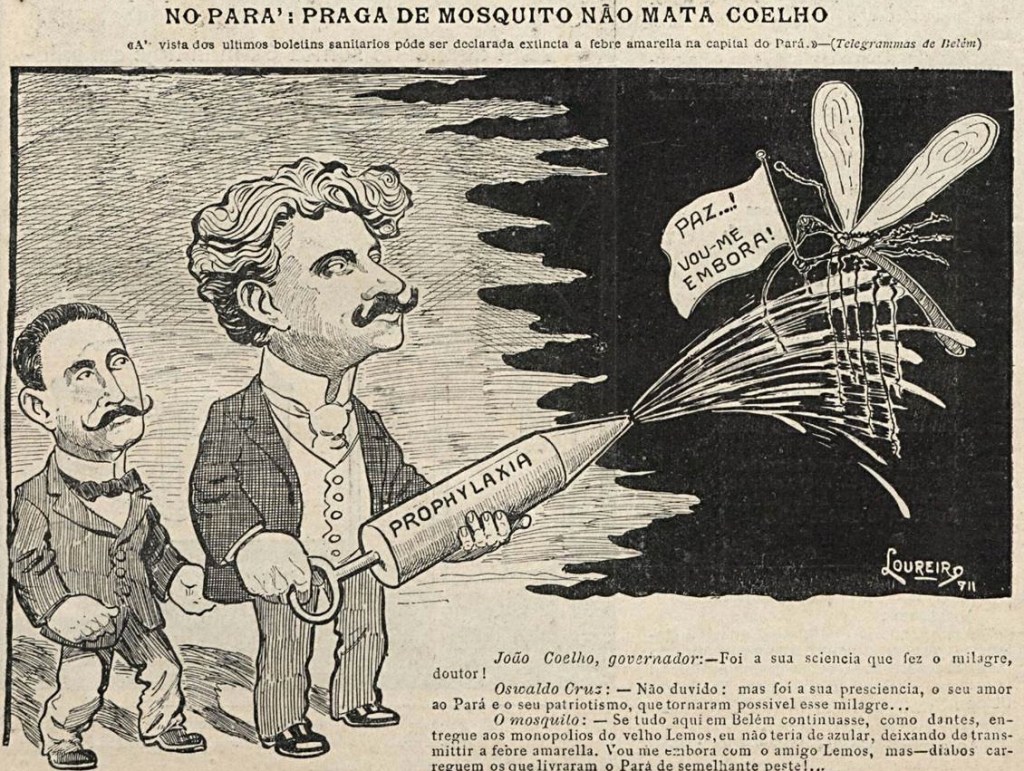
In Pará: Mosquito plague does not kill Governor Coelho (1911)
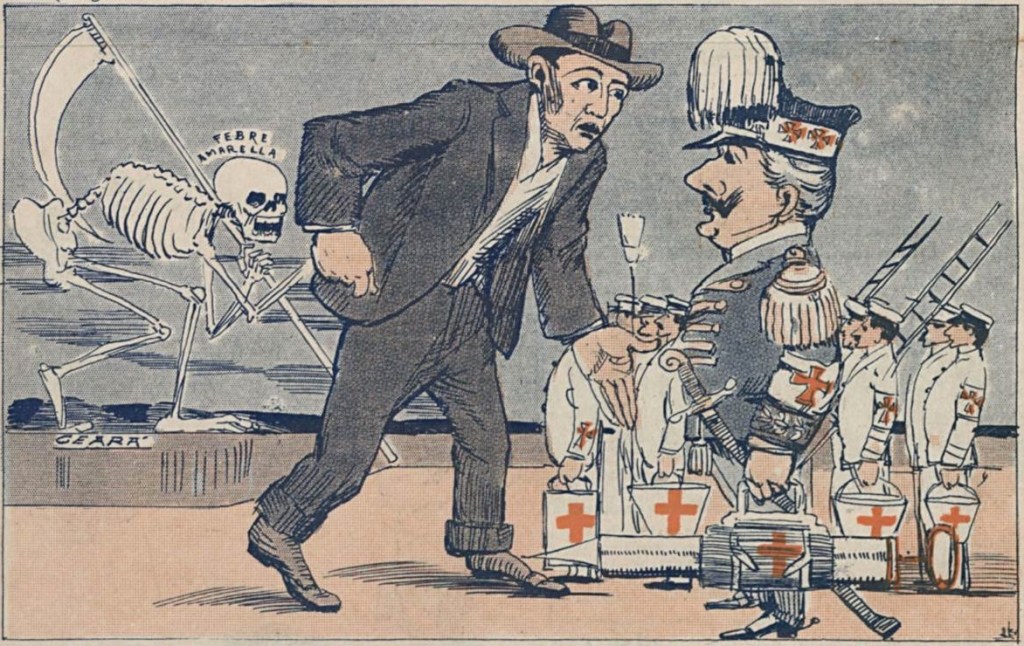
Federal intervention in Ceara (1914)
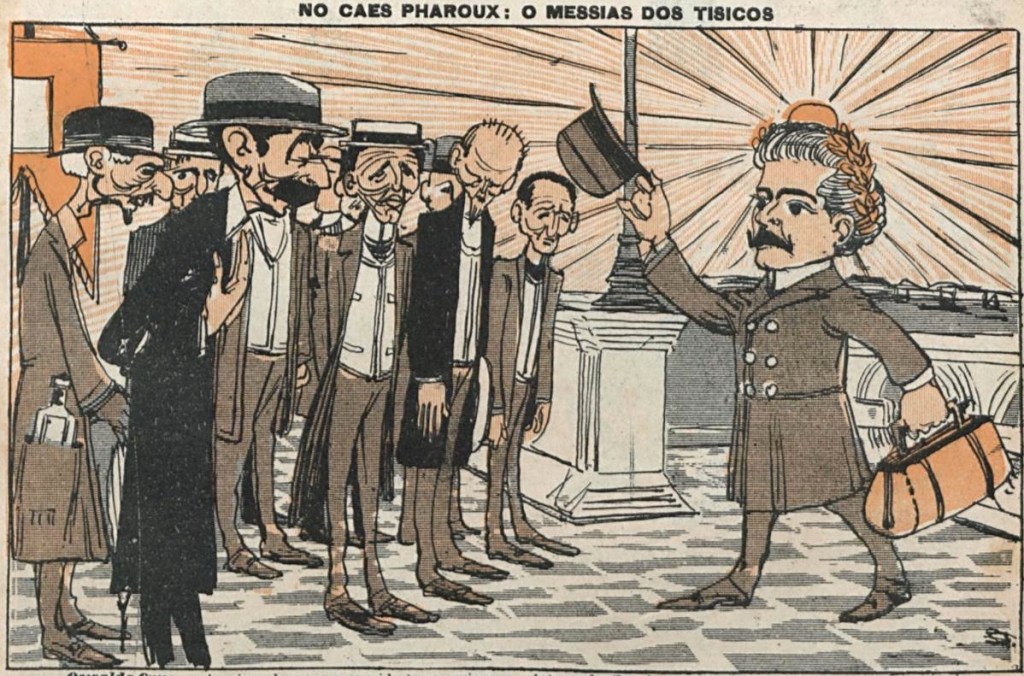
At the Pharoux Quay: The messiah of consumption (1908)
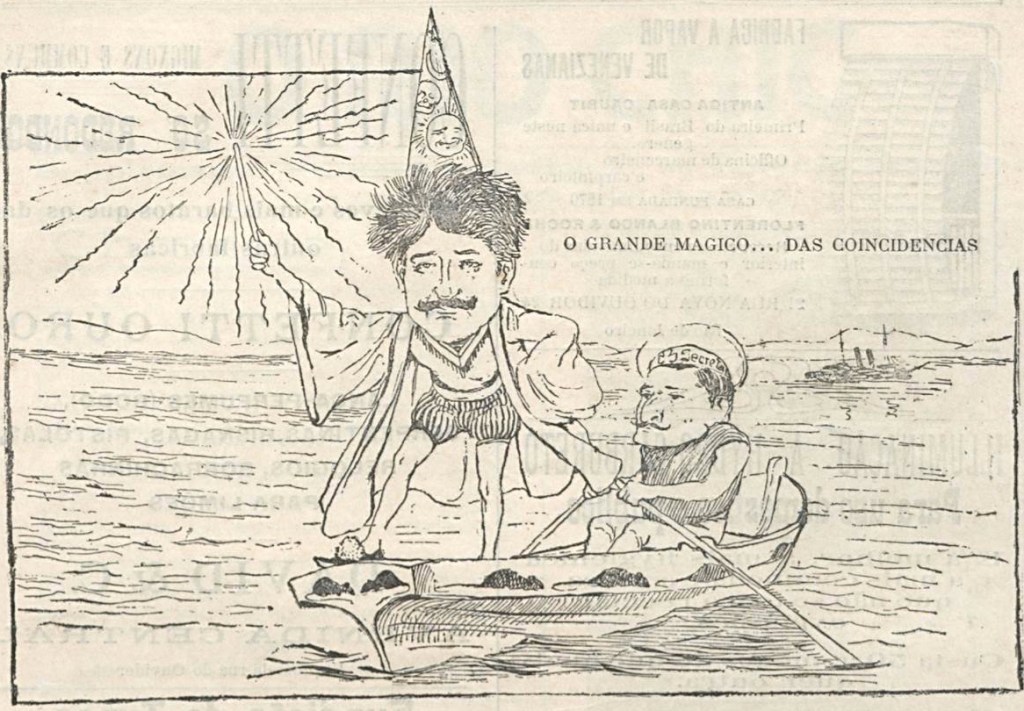
The great magician… of coincidences
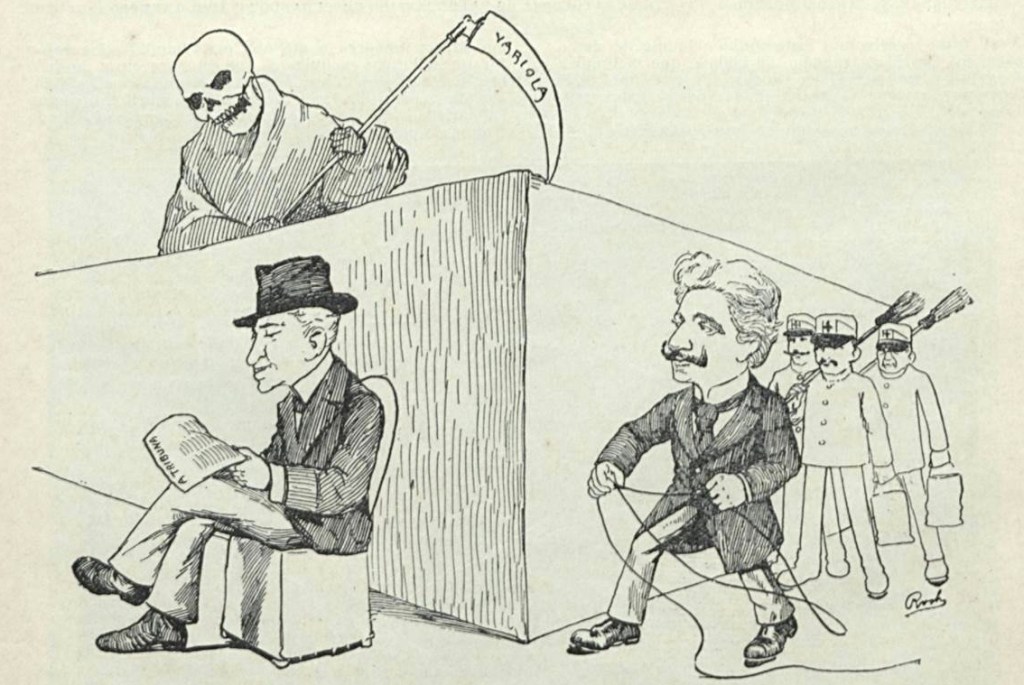
Roping it in time (1908)
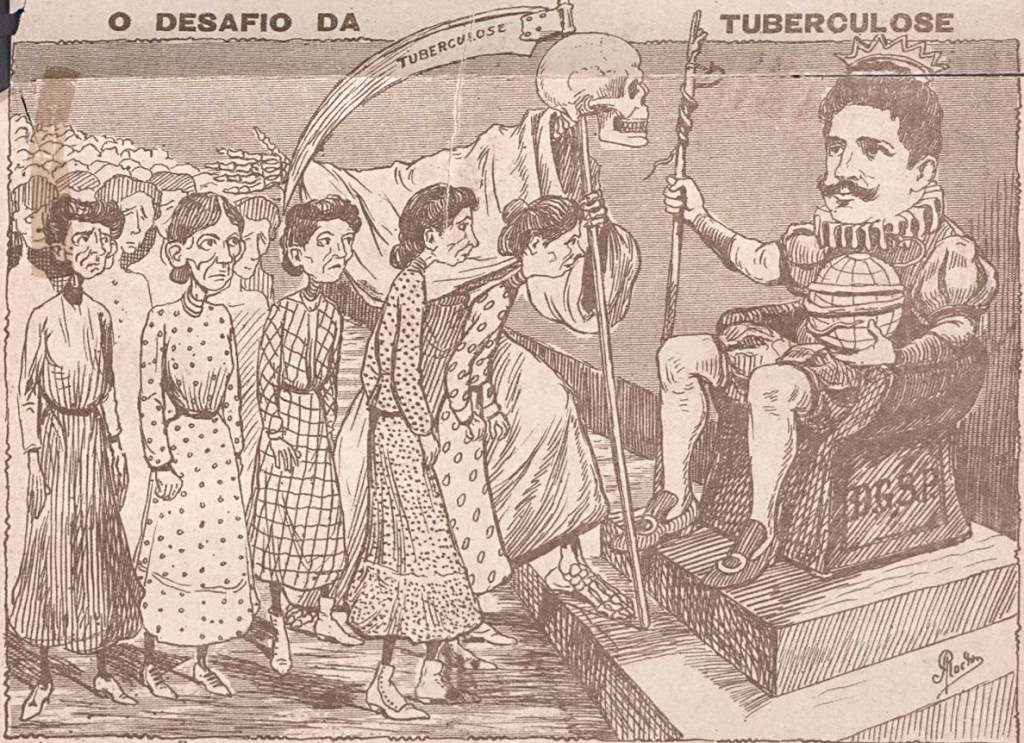
The challenge of tuberculosis (1906)
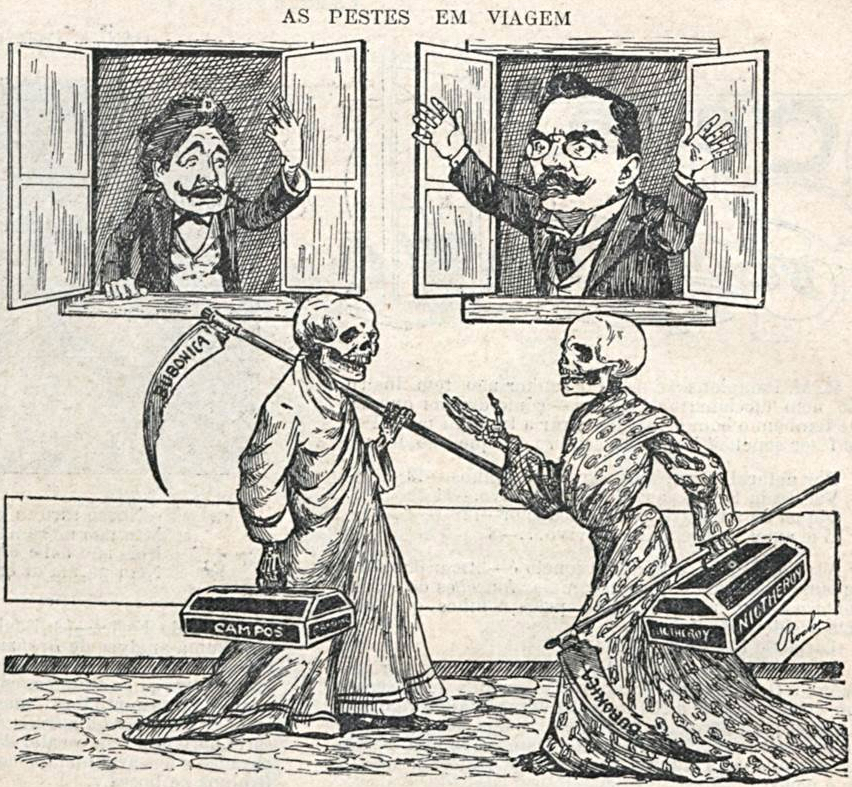
Plagues on the go (1907)
See also this multi-panel cartoon from 1905. And another from 1908. And a marvelous color cartoon from 1907. And this vaccination cartoon from 1904. Ditto.
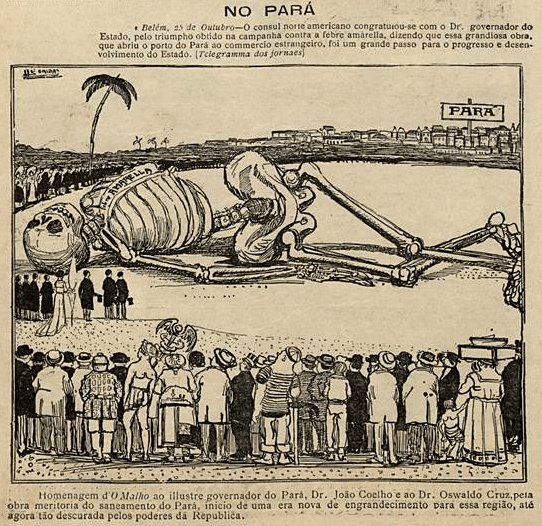
(The American consul congratulates Brazilians on their progress in the campaign against yellow fever in the northern state of Pará. I think the title puns on the sense of “stopping.”)
O Malho‘s homage to the illustrious governor of Pará, Dr. João Coelho, and to Dr. Oswaldo Cruz, for the meritorious public health work of Pará state, the beginning of a new era of growth for this region, until now so neglected by the powers of the Republic.
(O Malho, Rio de Janeiro, 1911)
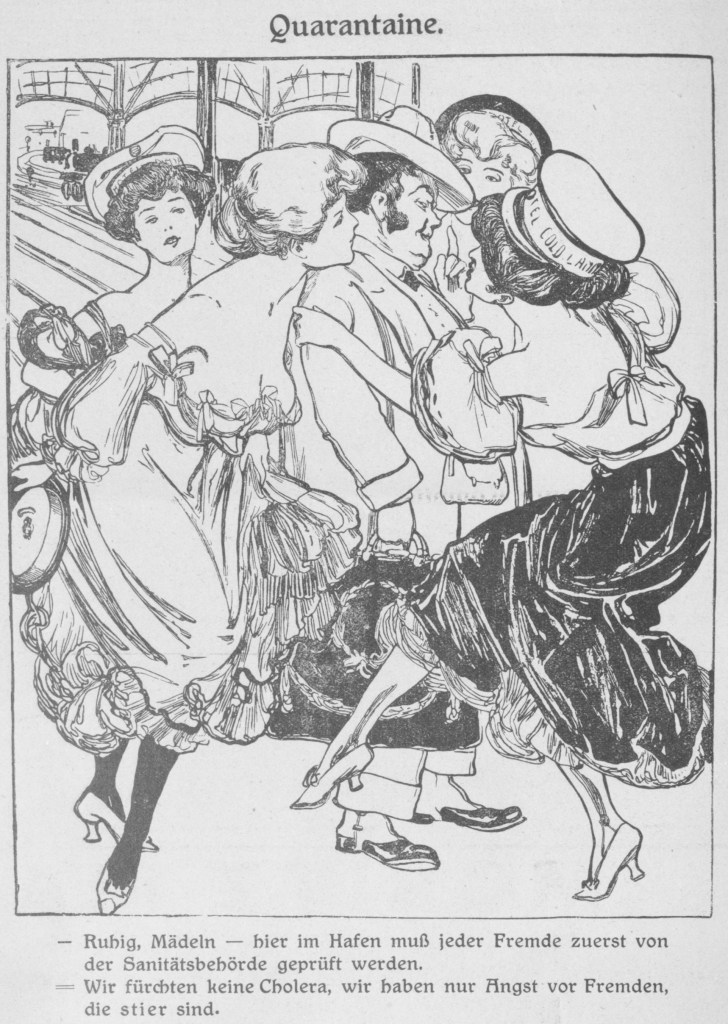
“Calm down, girls, every foreigner here in port must first be examined by the public health authorities.”
“We’re not afraid of cholera, we’re only afraid of foreigners who are broke.”
(Wiener Caricaturen, Vienna, 1911)
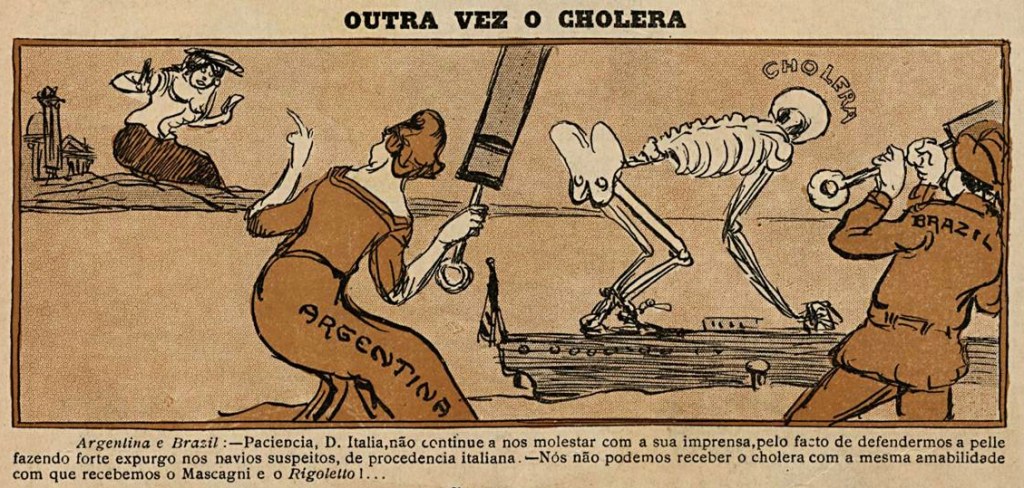
Argentina and Brazil: “Patience, Lady Italy, don’t keep harassing us with your press, because we defend the perimeter by inducing a strong purge on the suspicious ships of Italian origin. We cannot receive cholera as kindly as we received Mascagni and Rigoletto!…” (Argentine and Brazil are preparing to apply clystères to cholera’s rear. Such purging was a recurrent theme during earlier epidemics.)
(O Malho, Rio de Janeiro, 1911)
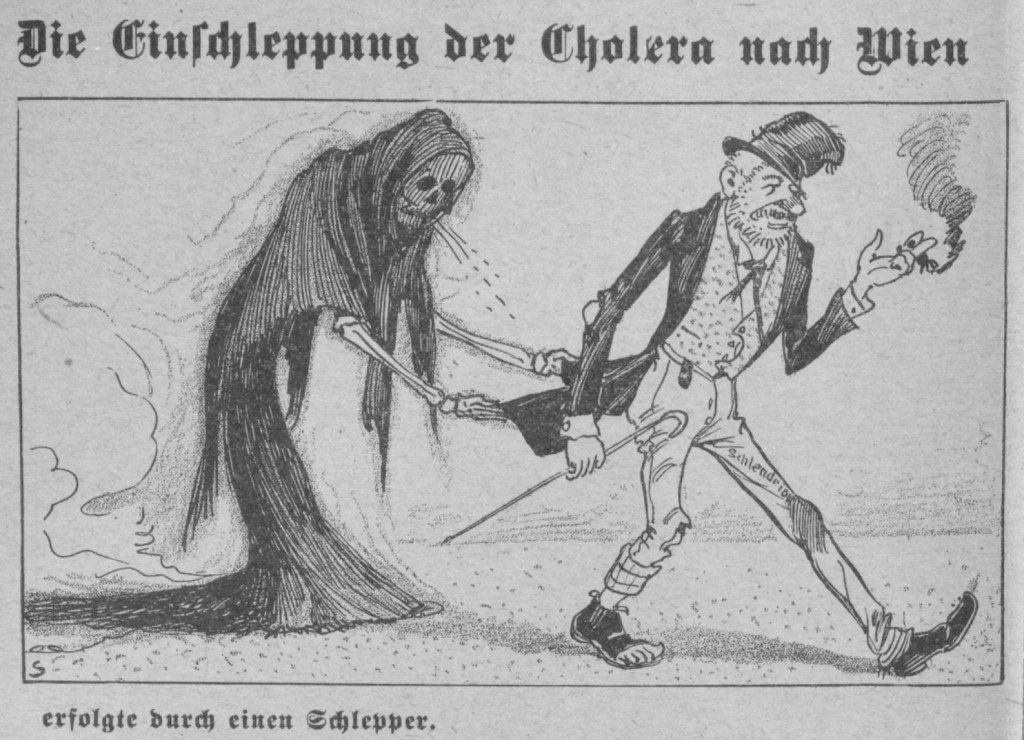
The introduction of cholera to Vienna was effected by a “coyote.” Actually many English speakers will be able to recognize the wordplay on “schlep,” but just to make clear the negative connotations, the cartoonist marks the man as a careless ambler.
(Kikeriki, Vienna, 1911)
A sickly-looking man enters a bookstore and asks: “Is it here that you sell those stamps that are so good against tuberculosis?”
My colleague Riikkamari Muhonen explains that for much of the twentieth century special charity stamps known as “tuberculosis stamps” were sold around Christmas, and the money raised was used to research cures for tuberculosis and to build special homes for consumptive families.
(Tuulispää, Helsinski, 1911)

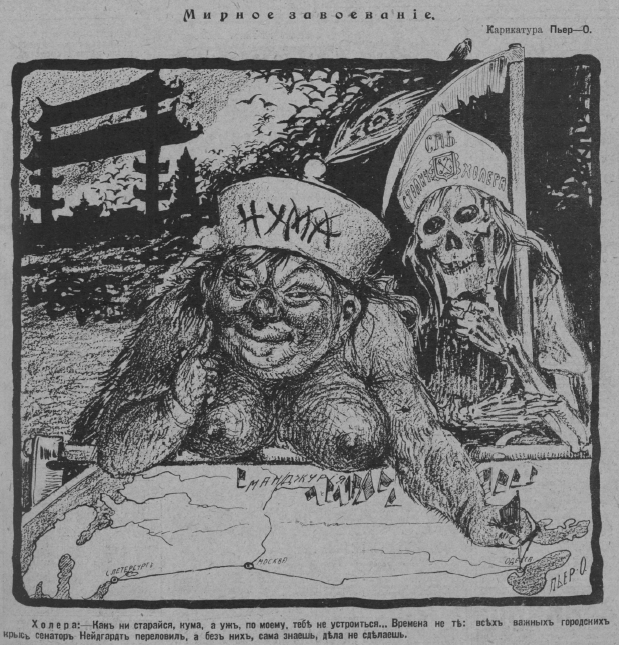
St. Petersburg cholera (to Mother Plague reaching over site markers in Manchuria and points east in the Empire toward Odessa on the Black Sea): “However hard you try, Mother, I think you can no longer get settled there… The times have changed: Senator Neidgardt [Dmitrii Borisovich, who had once served as mayor of Odessa] caught all the important municipal rats, and without them, as you know, you won’t get anywhere in these matters.”
(Ogonek, Russia, 1911)
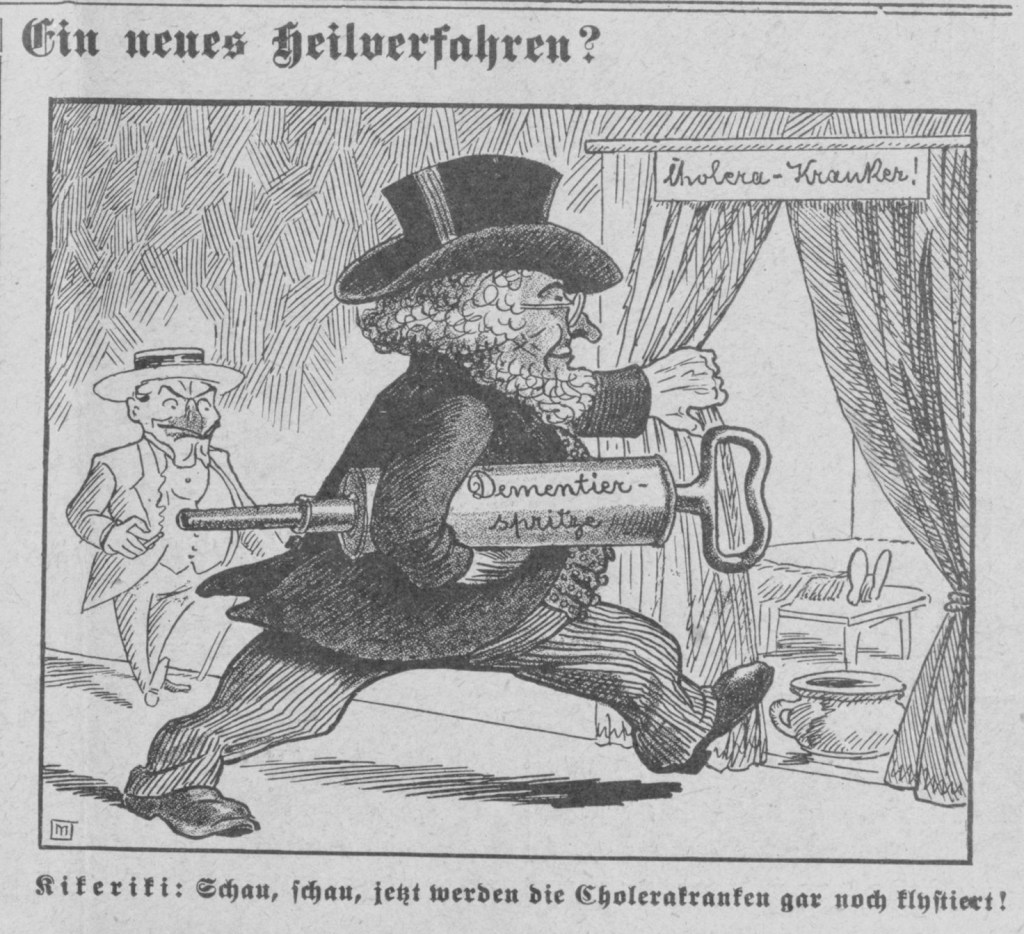
Kikeriki: “Look, look, now the cholera patients won’t be purged at all!”
(Doctor heading towards cholera ward with syringe labeled “denial shots.”)
(Kikeriki, Vienna, 1911)
Cholera (to the Italians and Turks): “Why are you fighting about joint possession in Tripoli? You have the best company in me right now.”
(Wiener Caricaturen, Vienna, 1911)

 Sic Transit Pestilentia