“Let’s give the Russians a fever remedy — I mean something to raise the fever!”
(Ulk, Berlin, 1918)
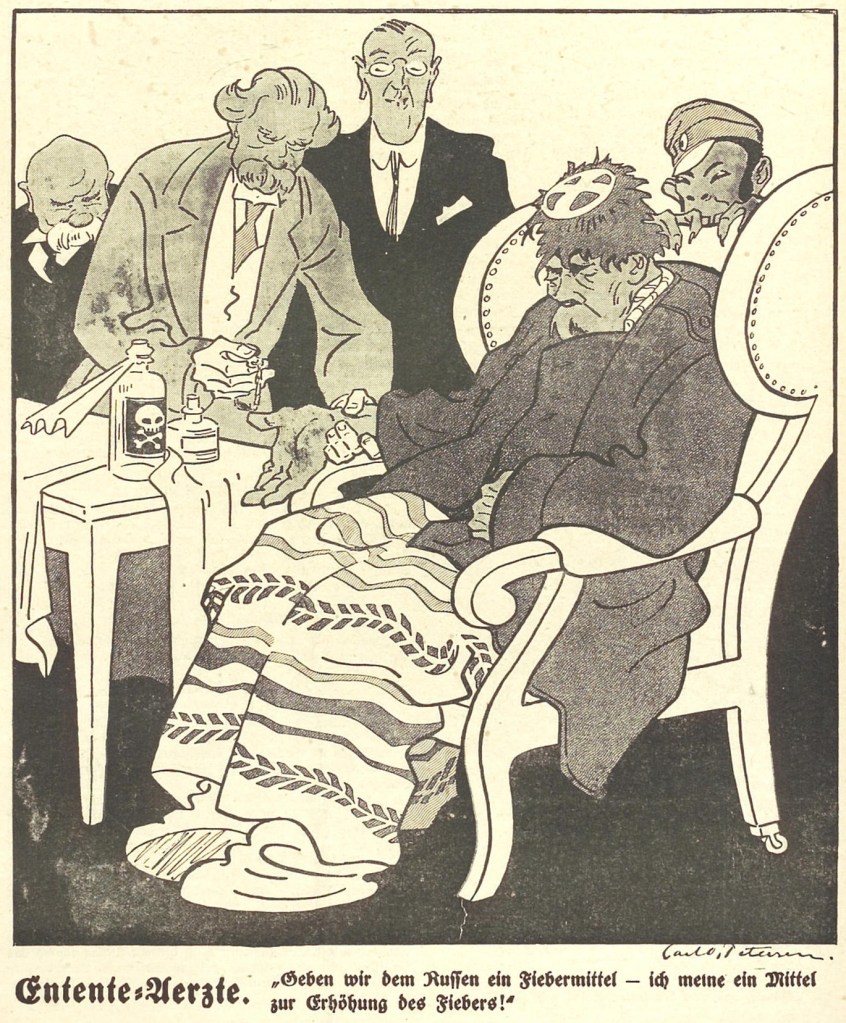
“Let’s give the Russians a fever remedy — I mean something to raise the fever!”
(Ulk, Berlin, 1918)
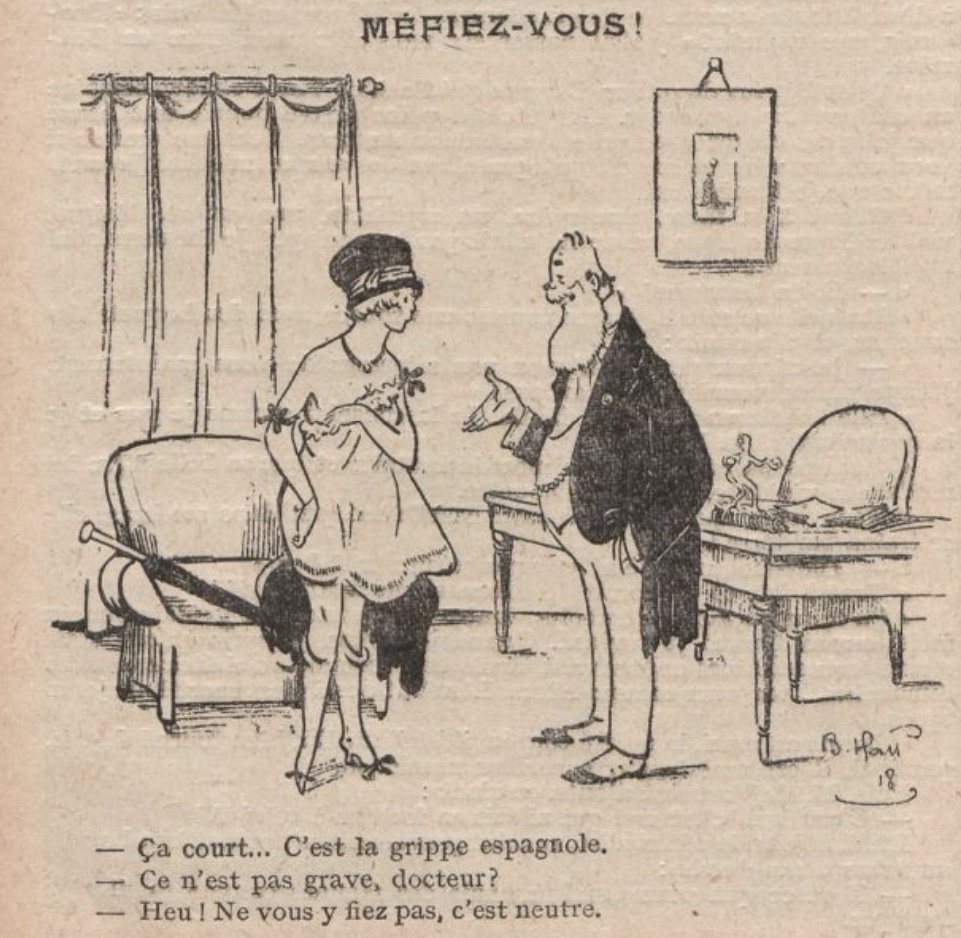
Yet another French pun about Spanish neutrality during the war:
“It won’t last long… It’s the Spanish flu.”
“It’s not serious, is it, doctor?”
“Heh! Don’t be fooled, it’s neutral.”
(Le Régiment, Paris, 1918)
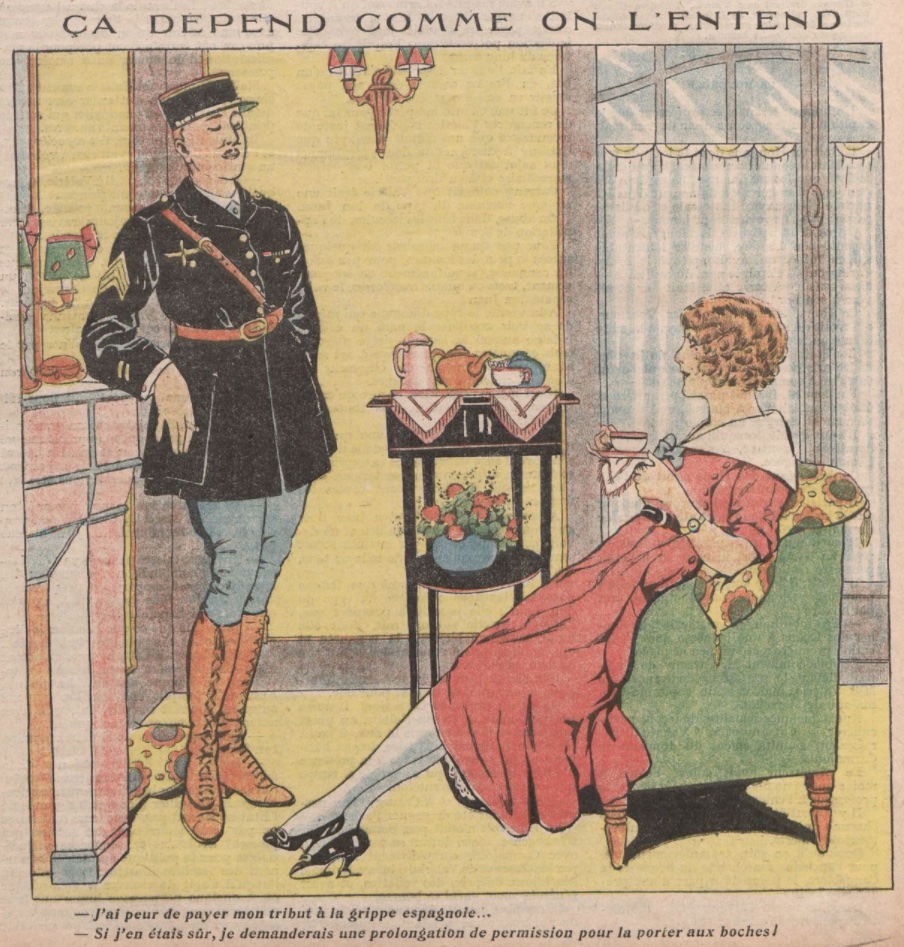
“I’m afraid to pay my tribute to the Spanish flu…”
“If I was sure, I would ask for an extension of permission to carry it to the Krauts!”
(Le Régiment, Paris, 1918)
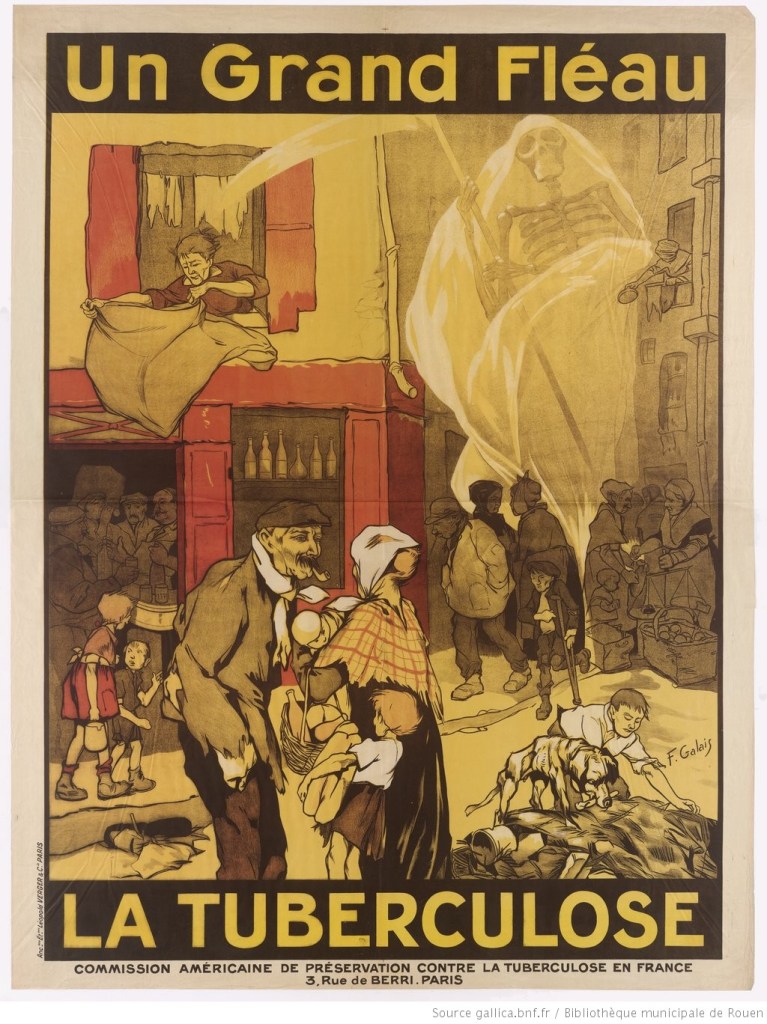
F. Galais, 1918, via Gallica.
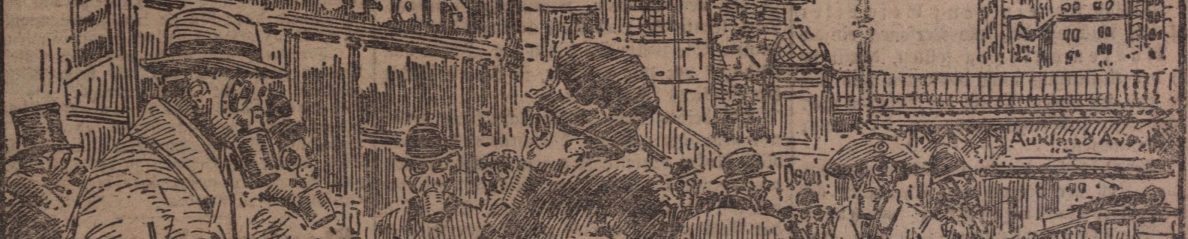
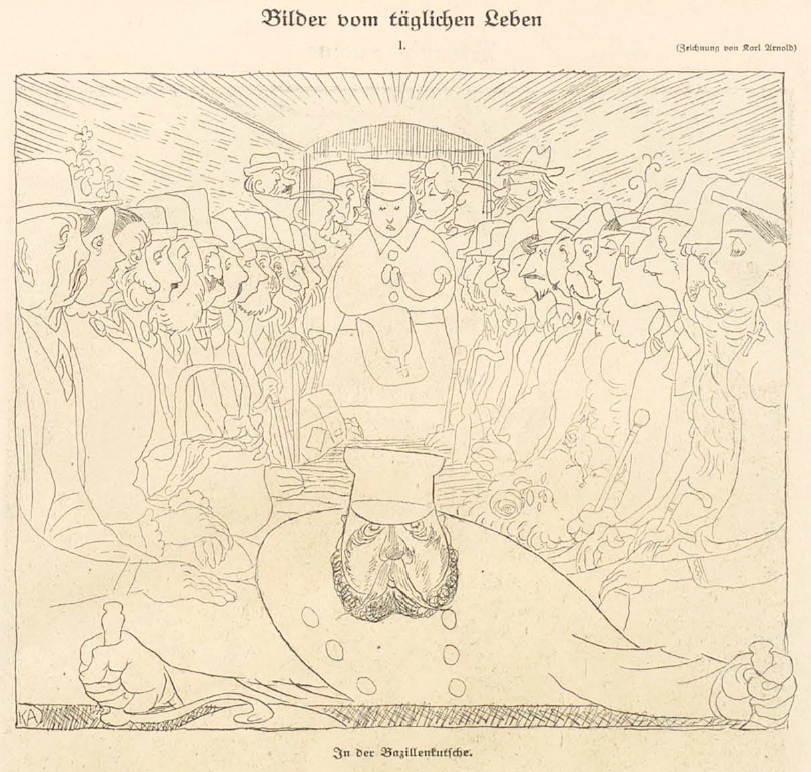
“In the germ car.”
Depicting the close quarters of public transportation during the flu pandemic of 1918. It is worth noting that this may be the only such flu-related image in Simplicissimus that fall. The unusual term “Bazillenkutsch” is sometimes attributed to Robert Koch at the time of the opening of the U-Bahn in working-class Kreuzberg in 1902, perhaps via a 1908 novella by Eduard Goldbeck (not confirmed). Kaiser Wilhelm later gave the term wider notoriety when he visited a new stretch of the U-Bahn and insisted that he would only sit in a brand-new subway car, fearing infection from previous riders. This in turn moved the Berliner Volks-Zeitung to reassure its readers that this perception of germs ran counter to years of medical and scientific efforts to demonstrate otherwise, and the average subway car was not, in fact, the center of an epidemic.
(Simplicissimus no. 33, Munich, 1918)
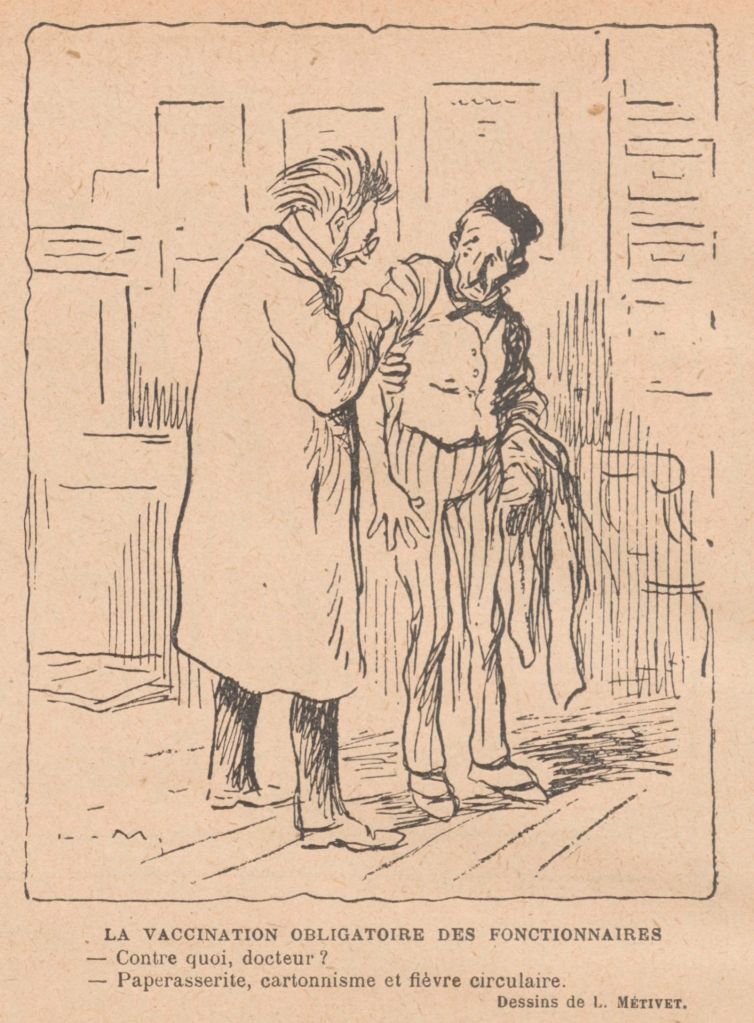
“Against what, doctor?”
“Paperworkitis, file-ism, and memo fever.”
(Le Rire, Paris, 1918)
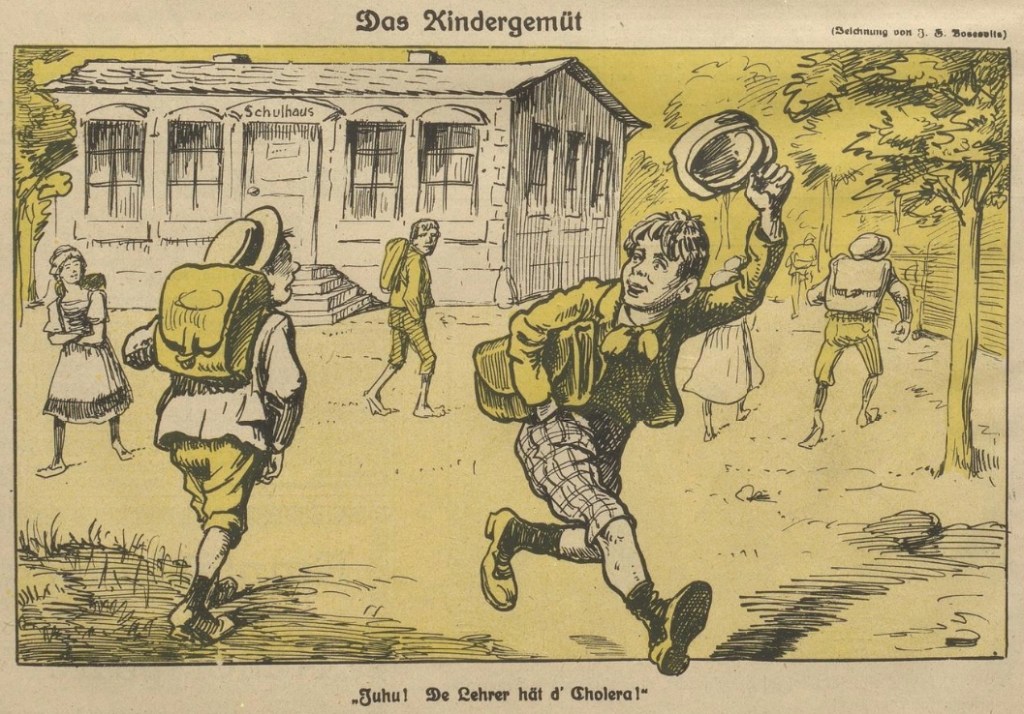
“Woohoo! The teacher has cholera!”
(Nebelspalter, Zurich, 1918)
A similar American cartoon from 1914.
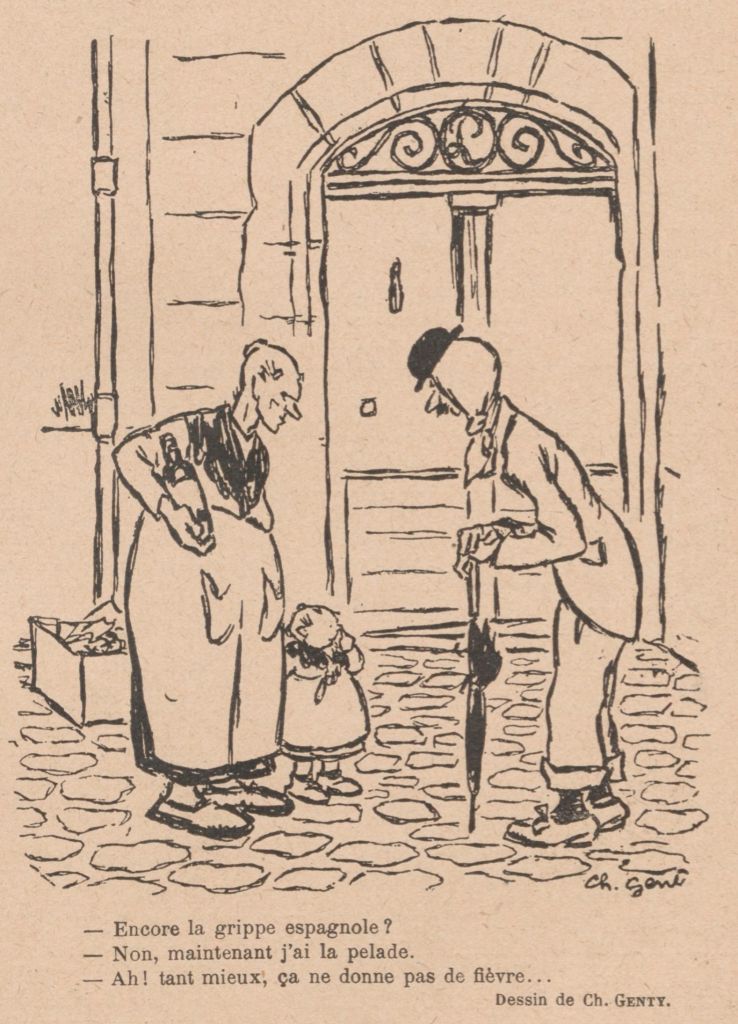
“The Spanish flu again?”
“No, now I have alopecia.”
“Ah! so much the better, it won’t give you fever…”
(Le Rire, Paris, 1918)
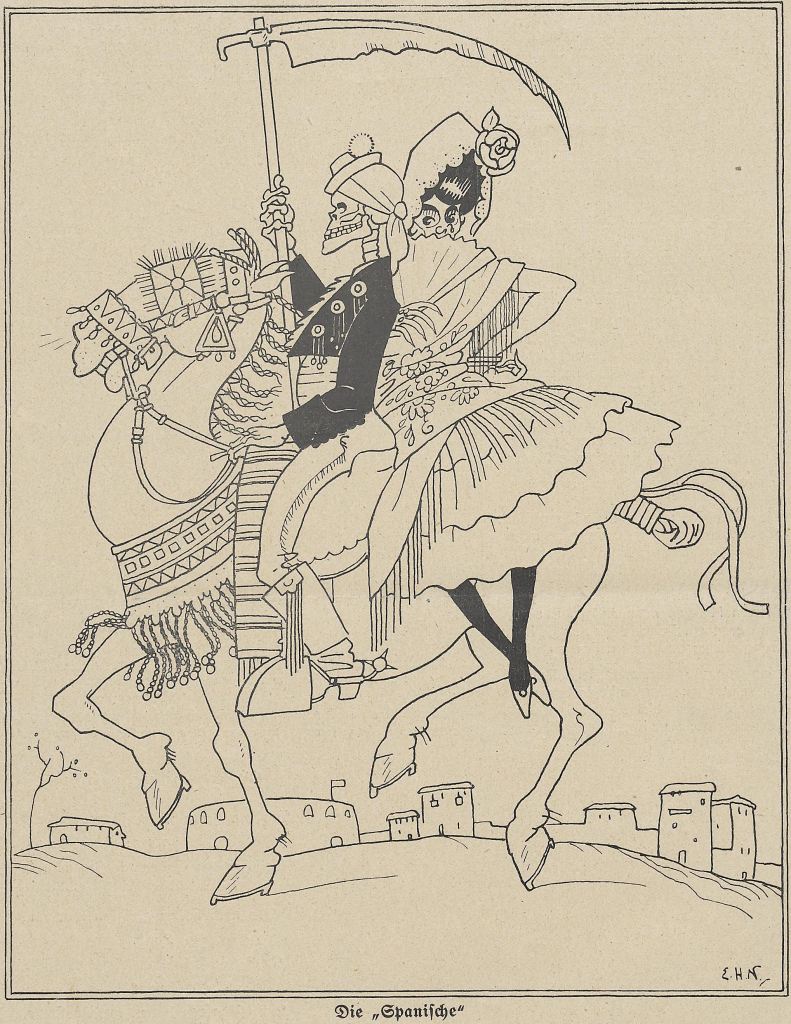
(Der Guckkasten, Munich, 1918)
(Bicycle agents directly fill prescriptions by service pharmacists.)
“Do not worry… In the police, we know the ‘prescriptions’!”
(Excelsior, Paris, 1918)

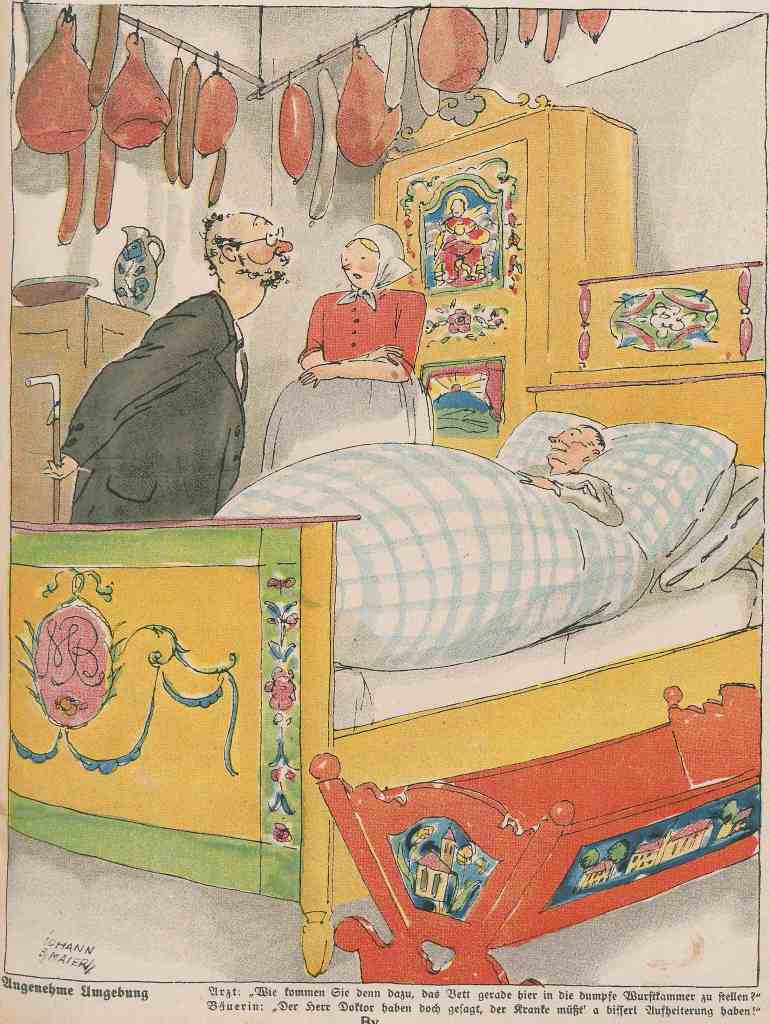
Doctor: “How is it that you are putting the bed right here in this damp room for curing sausages?”
Farmer’s wife: “But Doctor, you said that the patient has to have a little bit of cheering up!”
(Der Guckkasten, Munich, 1918)
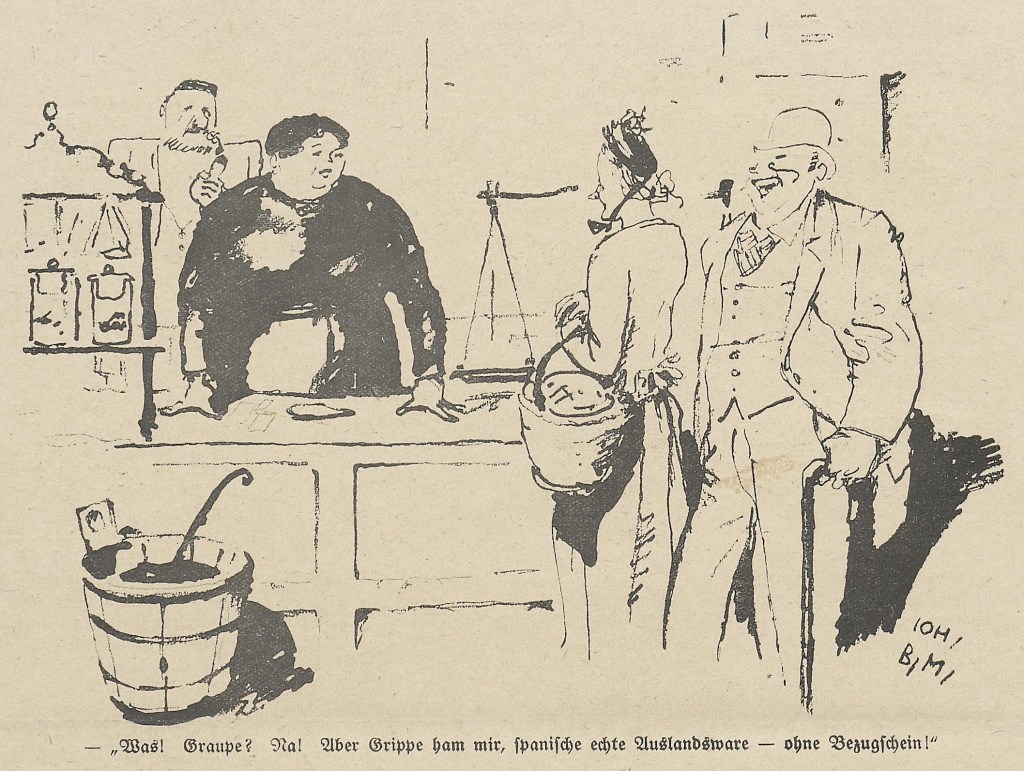
“What? Grappa? Nah! But we have grippe, genuine imported Spanish wares, no ration card required!”
(Guckkasten, Germany, 1918)
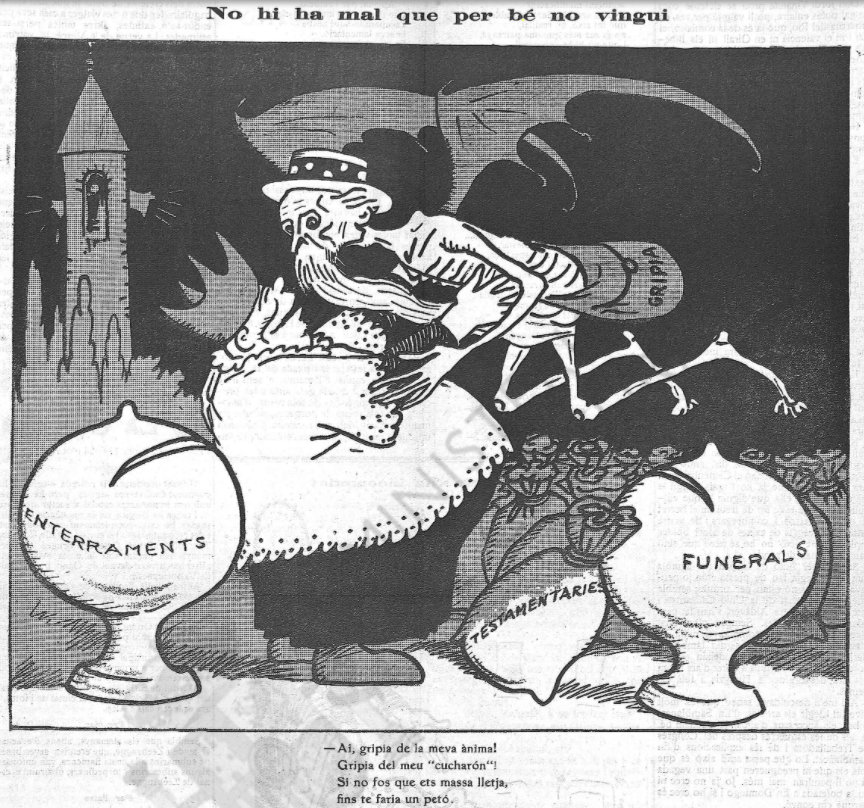
Alas, the flu of my soul! If it weren’t for you being too ugly, I would even kiss you. (Interments, wills, funerals enriching the Church during the pandemic.)
(La Campana de Gracia, Barcelona, 1918)
(Caras y Caretas, Buenos Aires, 1918)
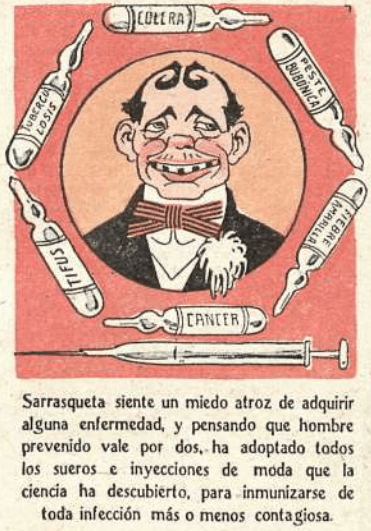
Sarasqueta feels an atrocious fear of acquiring some disease, and thinking that a protected man is worth two, he has adopted all the fashionable serums and injections that science has discovered, to immunize himself from any more or less contagious infection.
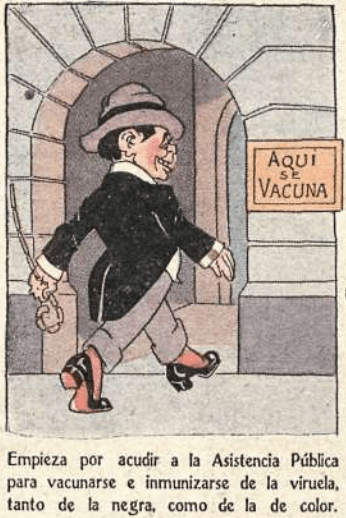
He starts by going to Public Assistance to get vaccinated and immunized from smallpox, both black and colored.
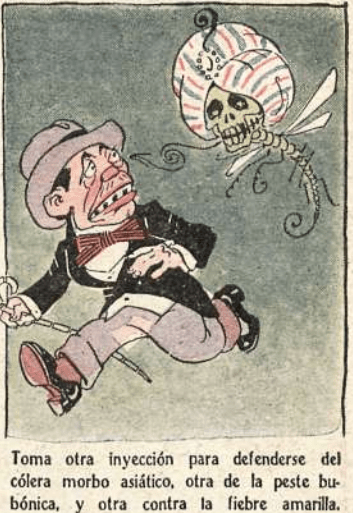
He takes another injection to defend himself from Asian cholera morbus, another against bubonic plague, and another against yellow fever.
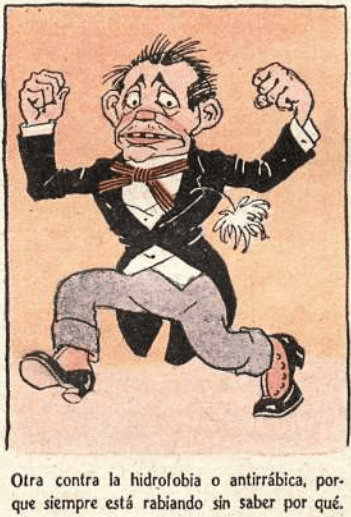
Another against hydrophobia or anti-rabies, because he is always raging without knowing why.
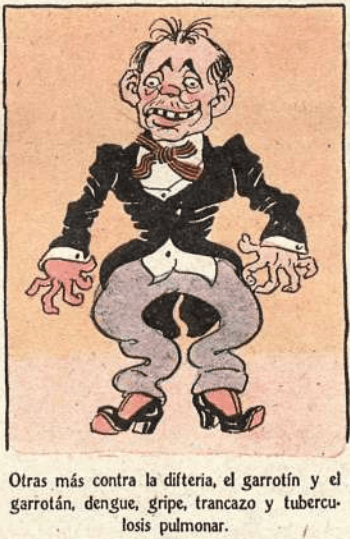
Still others against diphtheria, flamenco, dengue, influenza, flu, and pulmonary tuberculosis.
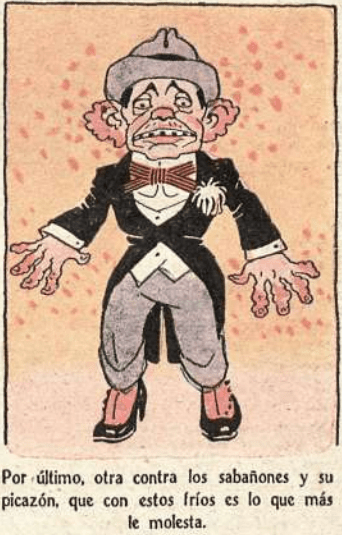
Finally, another against the chilblains and their itching, which with these colds is what bothers him most.
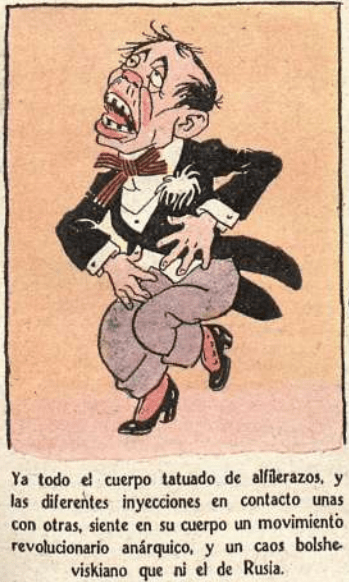
With his entire body already tattooed with needles, and the different injections in contact with each other, he feels an anarchic revolutionary movement inside, and a Bolshevik chaos that is not the Russian one.
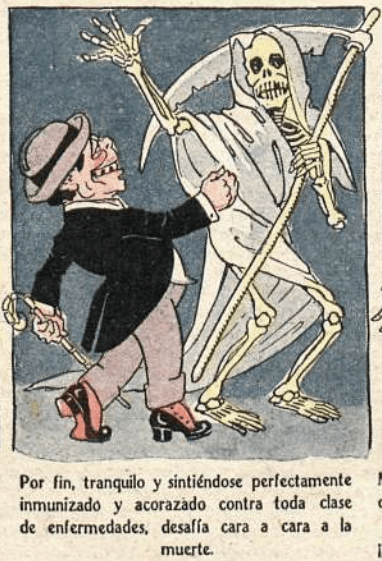
Finally, calm and feeling perfectly immunized and armored against all kinds of diseases, he defies death face to face.
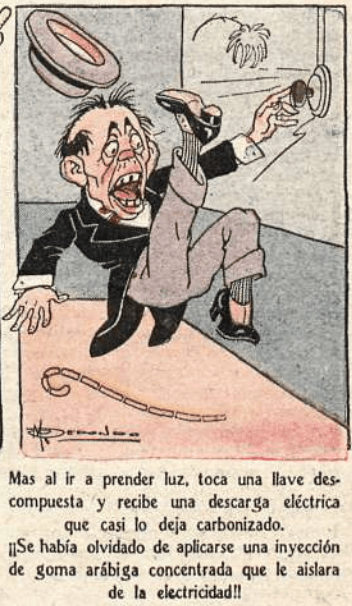
But when he goes to turn on the light, he touches a broken switch and receives an electric shock that almost leaves him charred.
He had forgotten to apply a concentrated gum acacia injection that would insulate him from electricity!
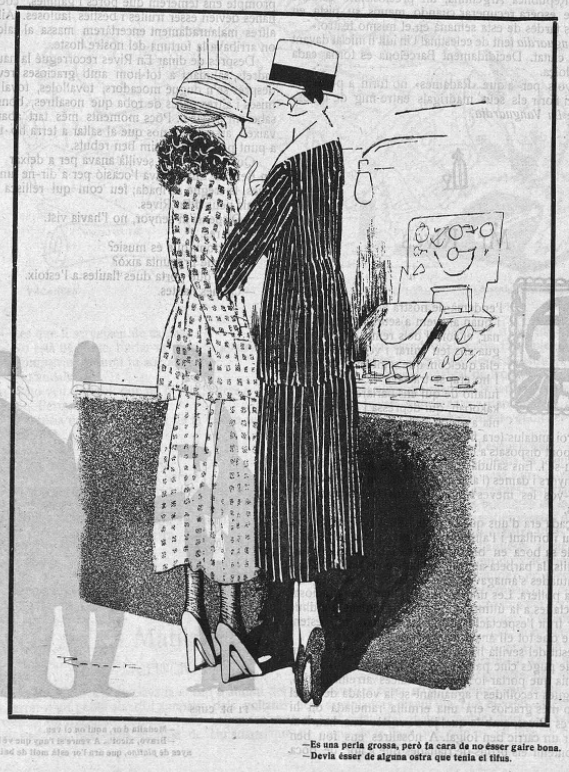
“It’s a big pearl, but it doesn’t look very good.”
“It must have been from some oyster that had typhus.”
(La Esquella da la torratxa, Barcelona, 1918)
 Sic Transit Pestilentia