“You passed this year by a miracle. Now try to study for real.”
“There’s no need. The flu is coming back.”
(O Malho, Rio de Janeiro, 1918)
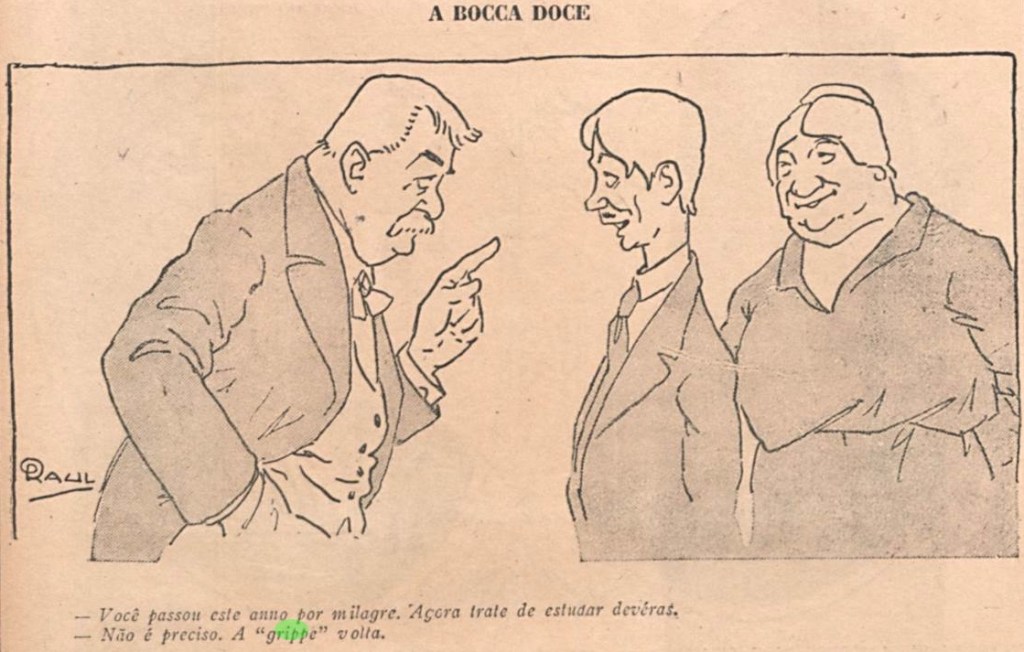
“You passed this year by a miracle. Now try to study for real.”
“There’s no need. The flu is coming back.”
(O Malho, Rio de Janeiro, 1918)
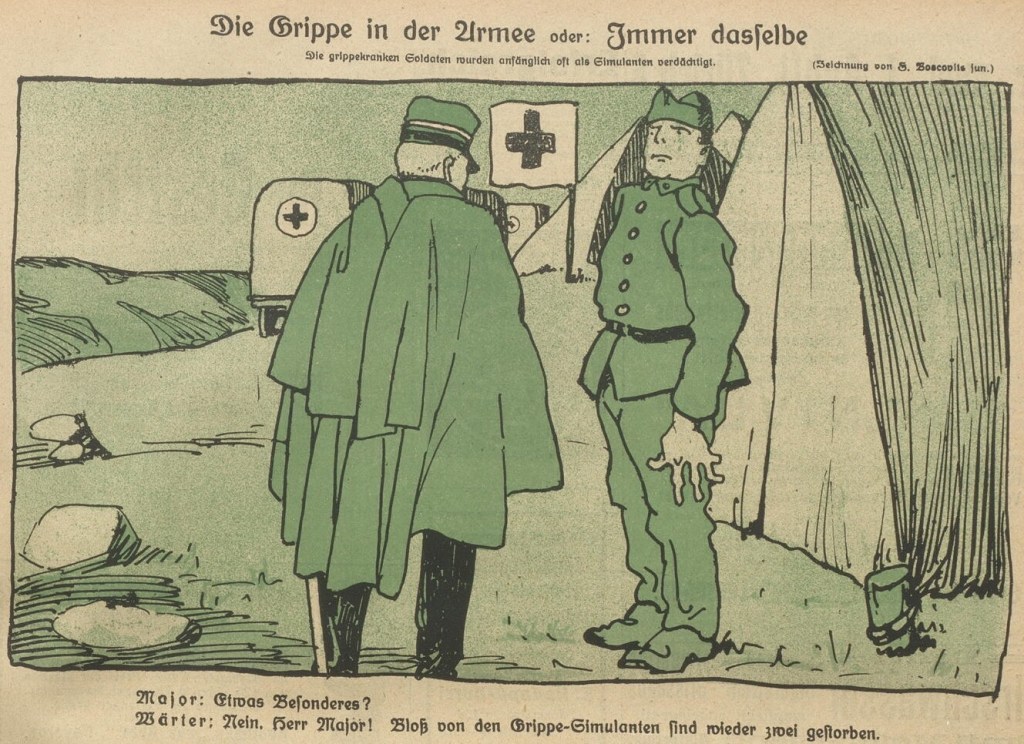
The flu in the army or: Always the same thing. The soldiers sick with flu initially were often suspected of faking it.
Major: “Anything special?”
Attendant: “No, sir! Just that two of the flu fakers have died again.”
(Nebelspalter, Zurich, 1918)
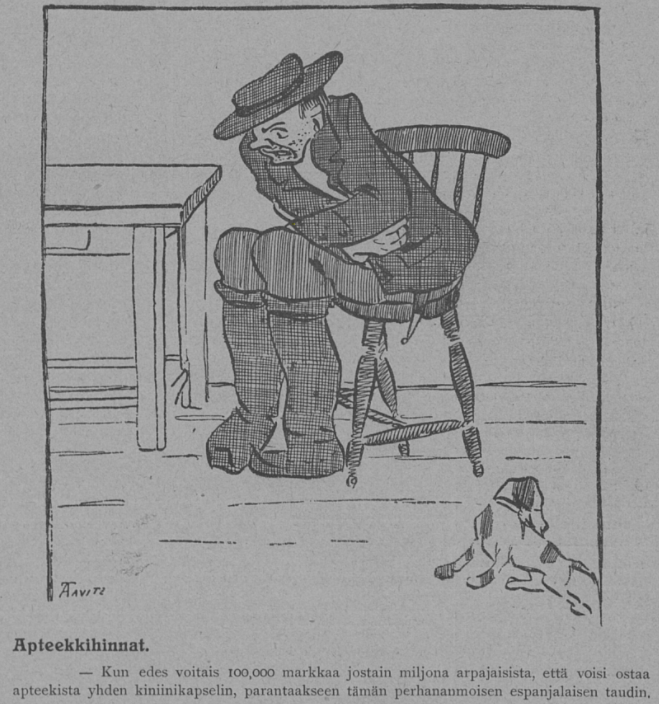
When you could win 100,000 marks from one of a million lotteries so that you could buy one capsule of quinine from a pharmacy to cure this awful Spanish disease.
(Tuulispää, Helsinki, 1918)
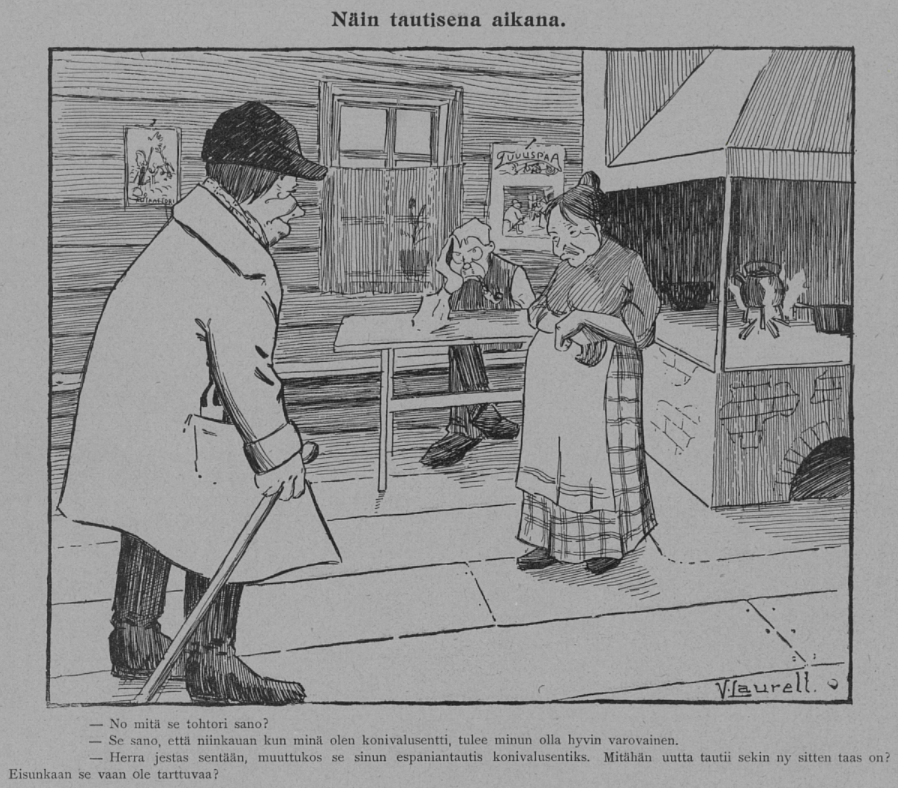
“Well, what does that doctor say?”
“He said that as long as I’m convalescing, I need to be very careful.”
“At least the gentleman said it would turn your Spanish disease into a convalescent. What’s new about the disease then again? Isn’t that contagious?”
(OK, I’ve surely botched the wordplay here, but it’s clearly about “convalescence” as medical neologism.)
(Tuulispää, Helsinki, 1918)
Avoid the tram; get spritzed at the office; smoke to protect yourself (!); be cautious, carry supply of lime, carbolic acid, lysol; defend yourself using the epidemic, proclaim yourself infectious when the bill collector shows up.
(Borsszem Jankó, Budapest, 1918)

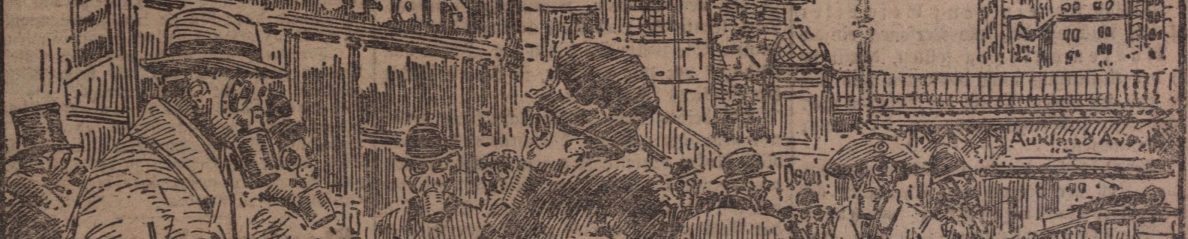
(Punch, London, 1918)

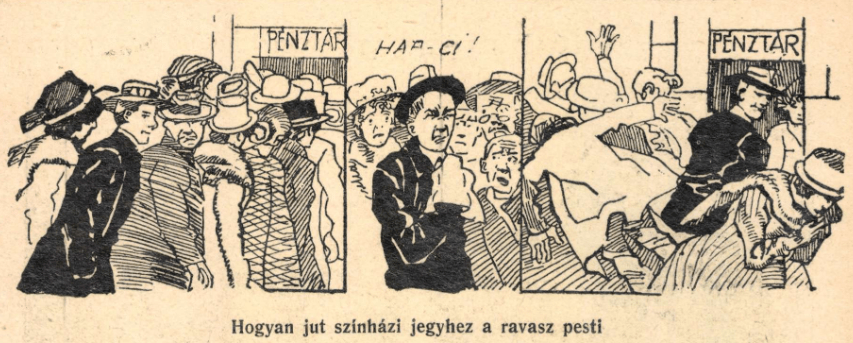
“How a cunning Pest resident gets his hands on a theater ticket.” (Man sneezes at the ticket office and the crowd scatters. This was at the height of the influenza epidemic.)
(Borsszem Jankó, Budapest, 1918)
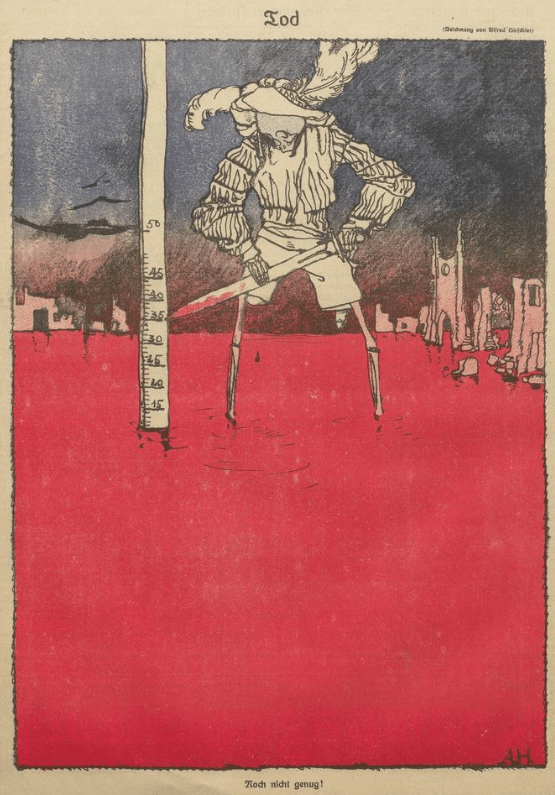
“Not enough yet!” (From the Spanish attire we may assume that Death was hoping for influenza to contribute its part.)
(Nebelspalter, Zurich, 1918)
(Nebelspalter, Zurich, 1918)
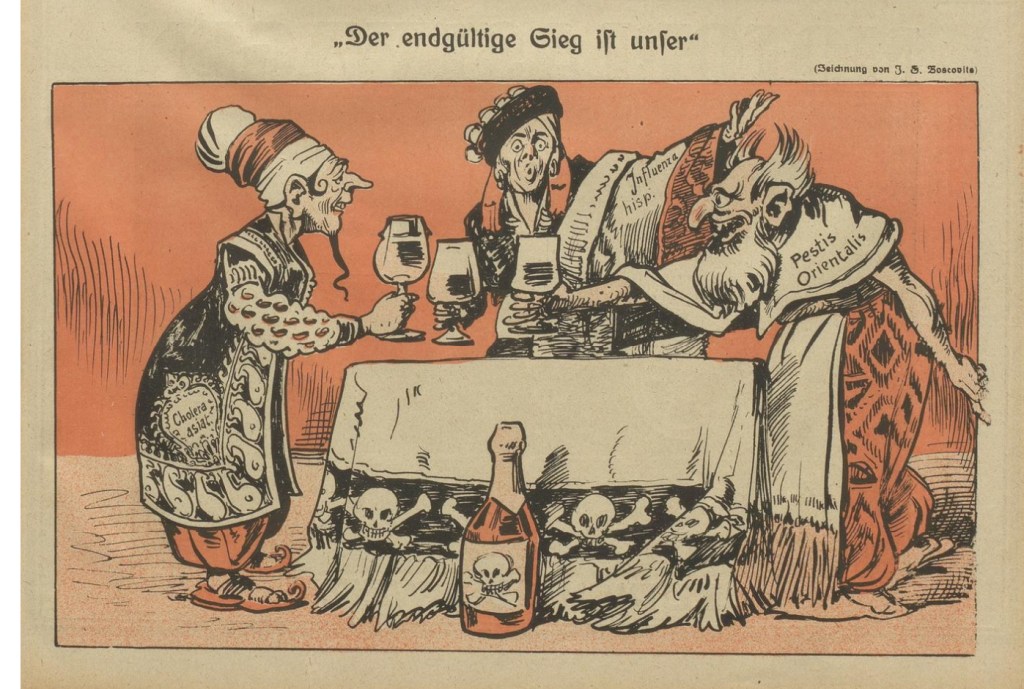
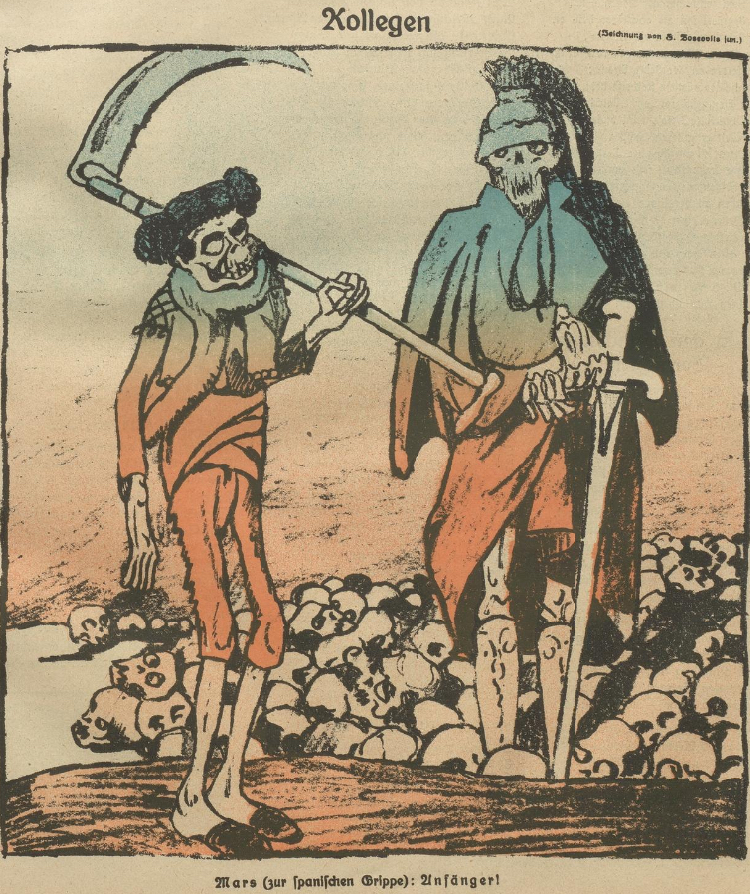
Mars (to the Spanish flu): “Beginner!”
(Nebelspalter, Zurich, 1918)
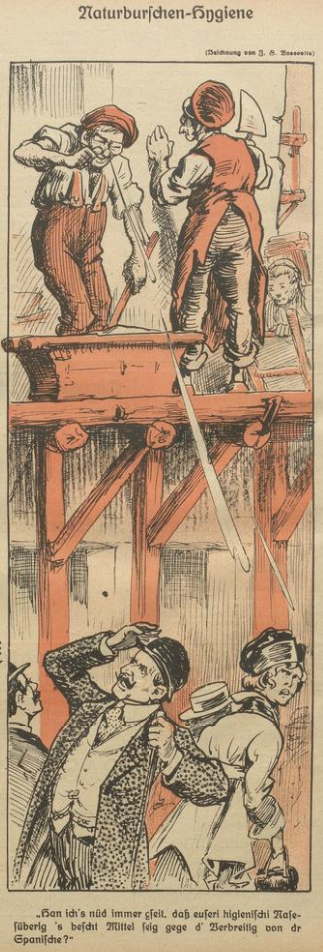
As always in matters of hygiene, delicate questions of class are lurking in the foreground. I can’t pretend to translate Schweizerdeutsch properly, but the basic sentiment of the fellow clearing his nose seems to be that he’s always said that their hygienic nose-clearing is the best means against the spread of Spanish flu. Clearly the good bourgeois passers-by feel differently.
(Nebelspalter, Zurich, 1918)
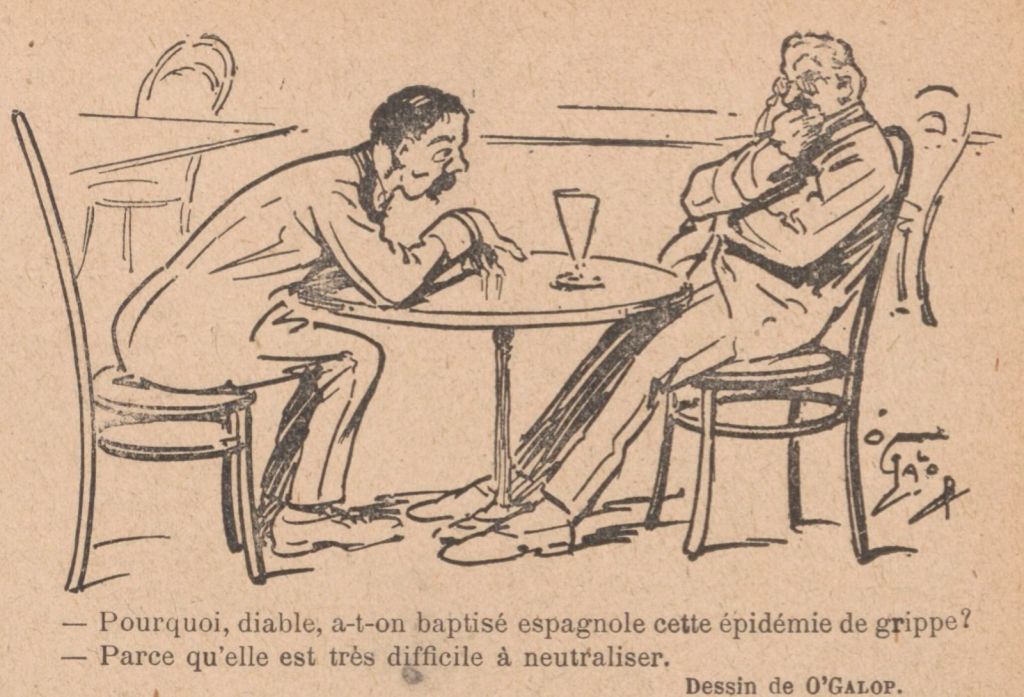
“Why the hell has this flu epidemic been dubbed Spanish?”
“Because it is very difficult to neutralize.”
(Le Rire, Paris, 1918)
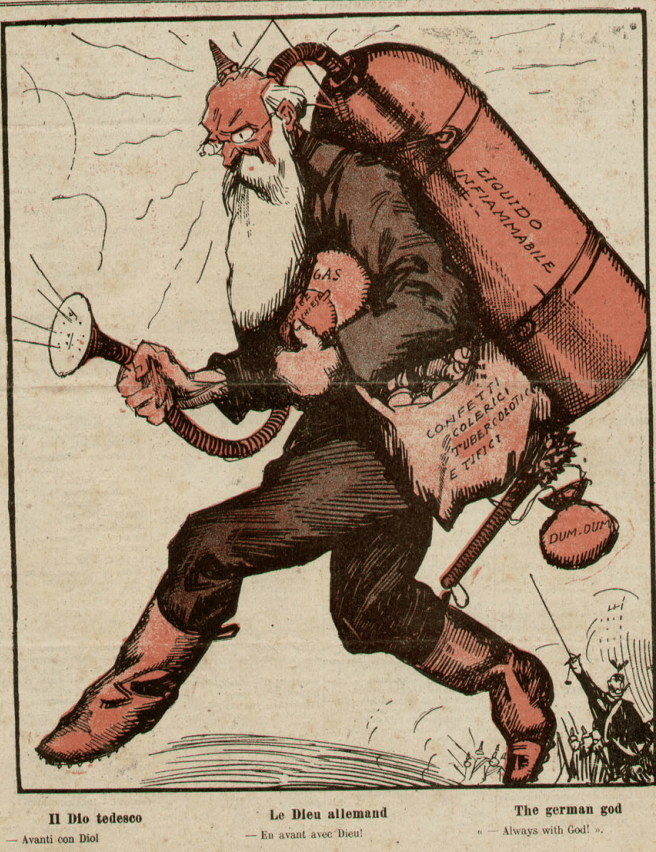
“Always with God!” Note the conflation of poison gas with spreading bacterial contagion. The man is carrying inflammable liquid along with cholera, tuberculosis, and typhus “confetti.”
(L’Asino, Rome, 1918)
“Come on, handsome, censor me!” (La Esquella de la torratxa, Barcelona, 27 September 1918)

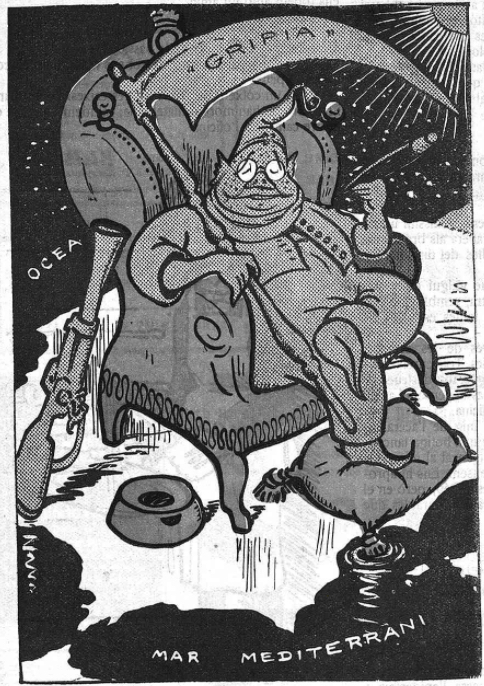
Because wartime censorship was less strict in Spain, more newspapers reported on the rising epidemic of influenza in 1918, and much of the rest of Europe thus came to refer to it misleadingly as the “Spanish flu.” But in Spain itself the occasional Orientalism remained useful in depicting the origin of the disease. (La Esquella de la tarratxa, Barcelona, 11 October 1918)
 Sic Transit Pestilentia