The angel of death on public transportation.
(Buen Humor, Madrid, 1922)
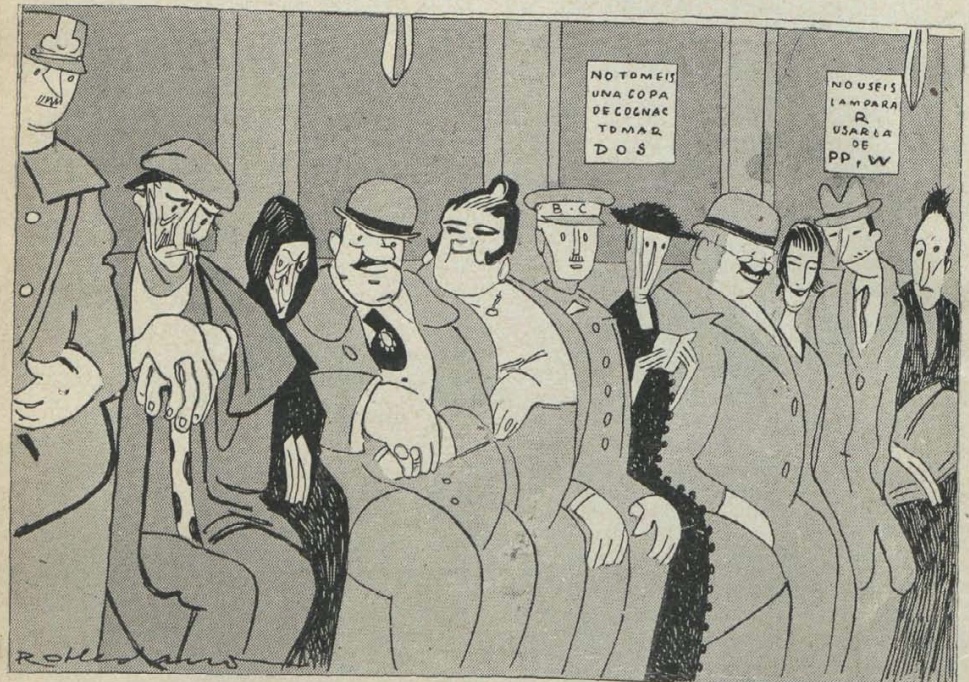
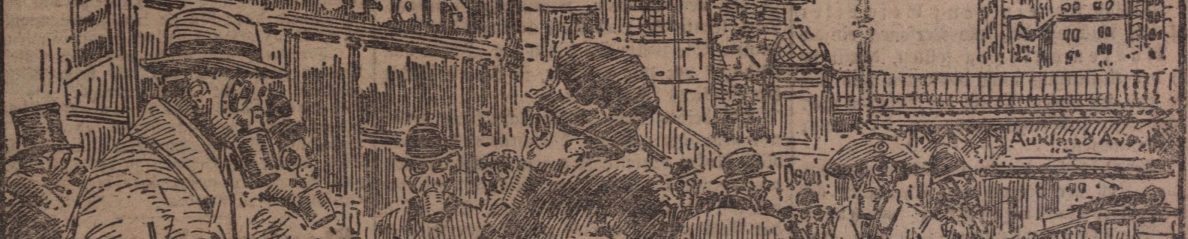
The angel of death on public transportation.
(Buen Humor, Madrid, 1922)
(one panel of eight featuring this recurrent character)
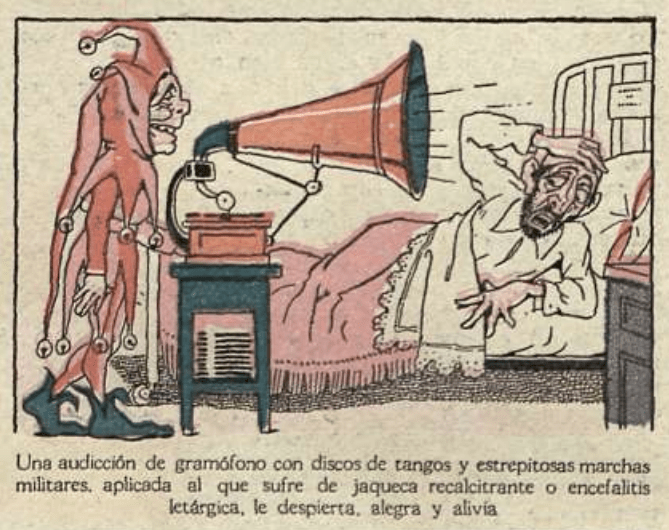
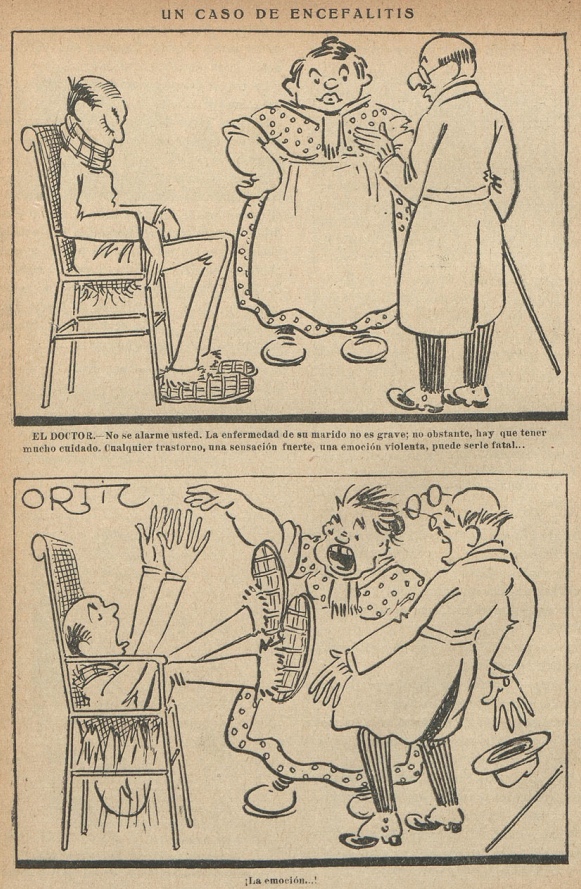
Playing the gramophone with tango records and noisy military marches, applied to those who suffer from persistent migraine or encephalitis lethargica, awakens, rejoices, and relieves them.
(Caras y Caretas, Buenos Aires, 1922)
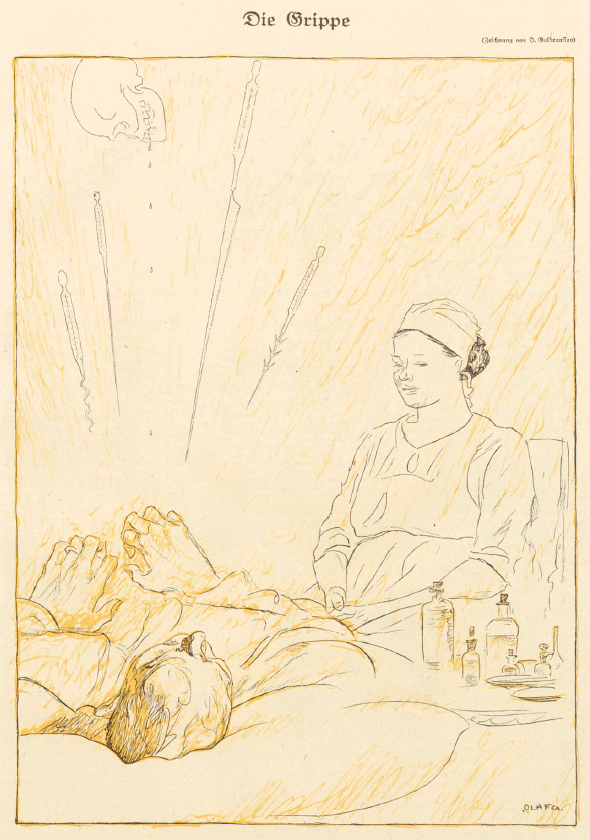
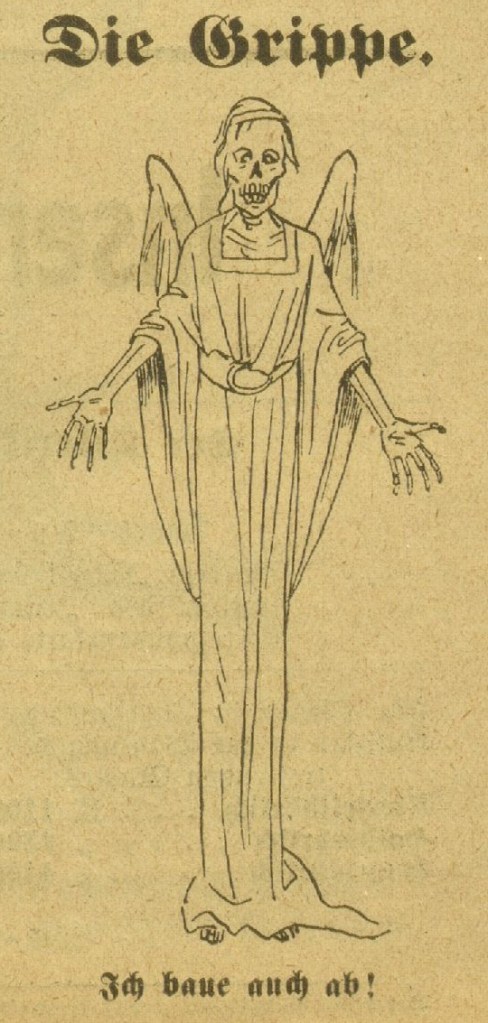
Simplicissimus no. 44 (Munich, 1922)
Doctor: “Don’t be alarmed. Your husband’s illness is not serious; however, you have to be very careful. Any disorder, a strong sensation, a violent emotion, can be fatal…”
(second panel) The emotion!
(La Risa, Madrid, 1922)
“I’m also cutting back!” (Three years after the Spanish flu epidemic, at a time of reductions in social welfare amid mounting postwar inflation.)
(Kikeriki, Vienna, 1922)
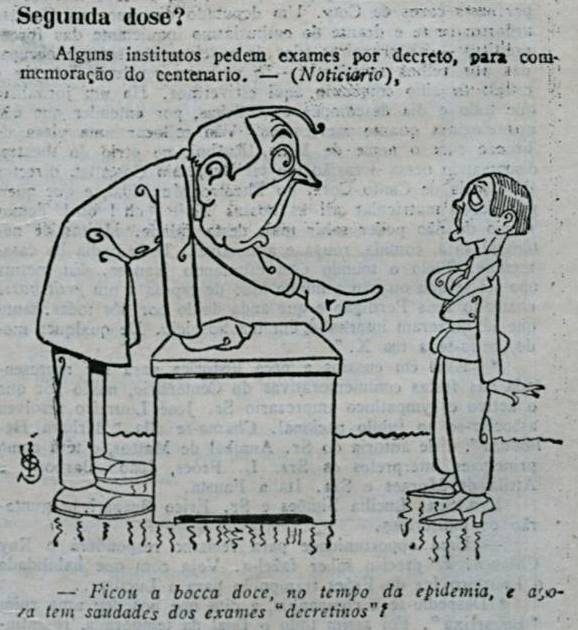
(Some institutes are requesting examinations by decree, to commemorate the centenary of the Brazilian War of Independence)
“I became a sweet talker during the epidemic, and now I miss the little decree exams!”
(O Malho, Rio de Janeiro, 1922)
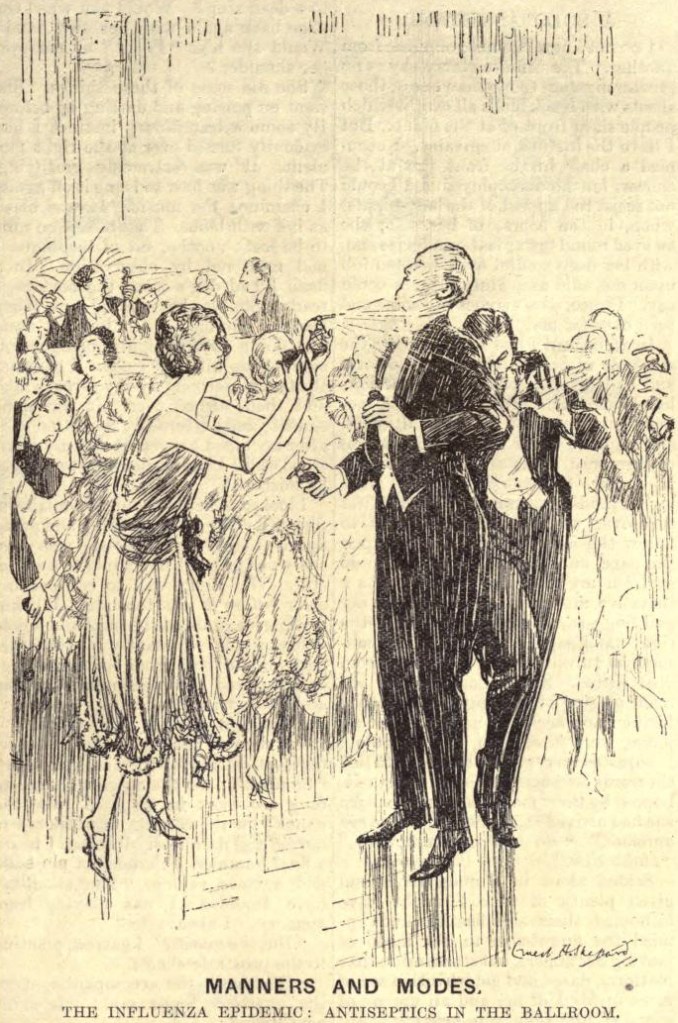
The influenza epidemic: Antiseptics in the ballroom.
(Punch, London, 1922)
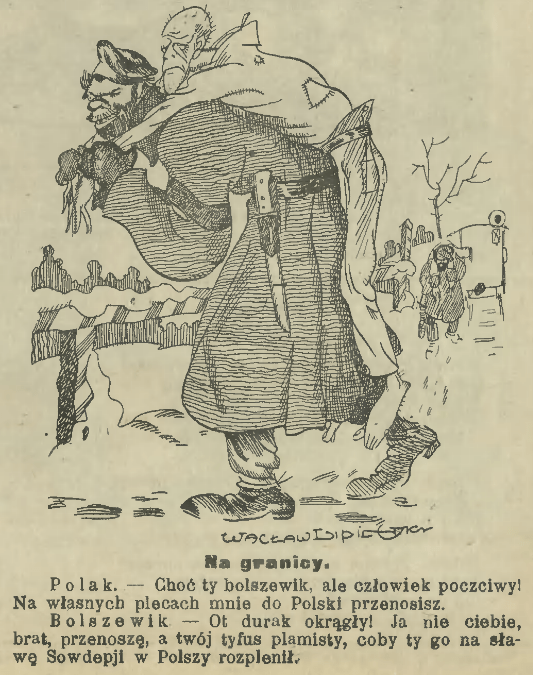
Emaciated Pole: “You may be a Bolshevik, but you are a good man. You are taking me to Poland on your own back.”
Bolshevik: “Got it backwards, fool! I’m not carrying you, brother, but your typhoid fever, so that you will spread it to the glory of Soviet power in Poland.”
(Mucha, Warsaw, 1922)
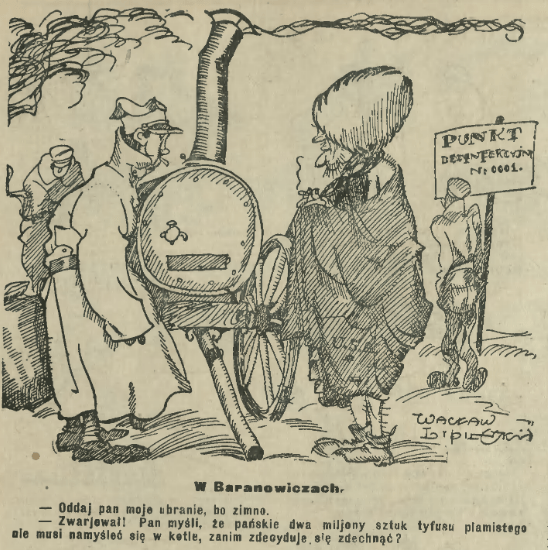
Disinfection Site No. 0001
“Give me my clothes, it’s freezing.”
“You’re crazy! Do you think your two million bits of typhus don’t have to meditate in the boiler before deciding to die?”
(Mucha, Warsaw, 1922)
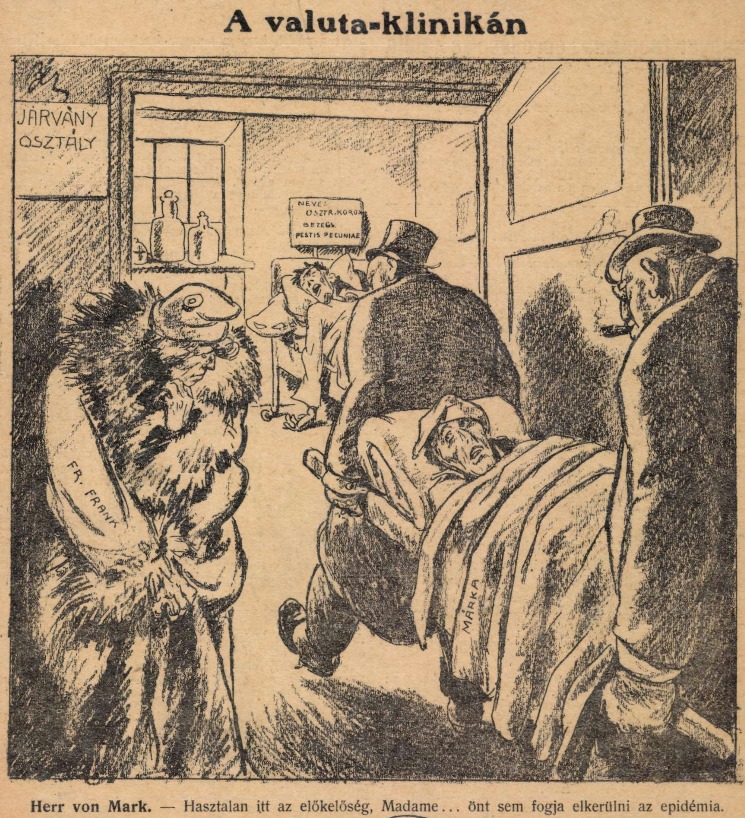
When contagion metaphor and economic analogy join forces to manifest our anxieties at a time of high inflation: “At the currency clinic” (epidemic department). Patient name: Austrian crown. Disease: Pestis pecuniae. Fur-swathed French franc in the waiting room. German Herr von Mark: “Your prominence is useless here, Madame… The epidemic will not avoid you.” (Borsszem Jankó, Budapest, 1922)
 Sic Transit Pestilentia